Best Pilates Reformers for Home of 2026

A studio reformer is bolted to the floor, weighs as much as a small refrigerator, and never has to move. The one in your spare room has to do the same job while folding up, rolling into a closet, and staying quiet enough that the neighbors downstairs don't complain. That trade-off is where cheap home reformers fall apart — sometimes literally, at the joints. What you're paying for is a carriage that glides the same way on day one and day three hundred.

I'm 5-foot-2, my testing partner is 6-foot-1, and between us we've spent the past eight months on six reformers, from fold-flat frames to studio beds that never budge. Height and fit matter more than any spec sheet lets on: a foot bar that's perfect for me is a knee-banger for him. The thing I'd tell a first-time buyer is that a spring bar with a wide adjustment range does more for how versatile a reformer feels than the number of springs on it. The six below are the ones we kept coming back to.

1

Best Overall

LeisureKing Oak Reformer

92 /100
Trail Score Outstanding

Key details

Folded Size
25.98 x 15.0 in
Tension Range
18.5 lb- 234lb
Machine Weight
143 lb
Weight Capacity
440 lb
Check Price on Amazon

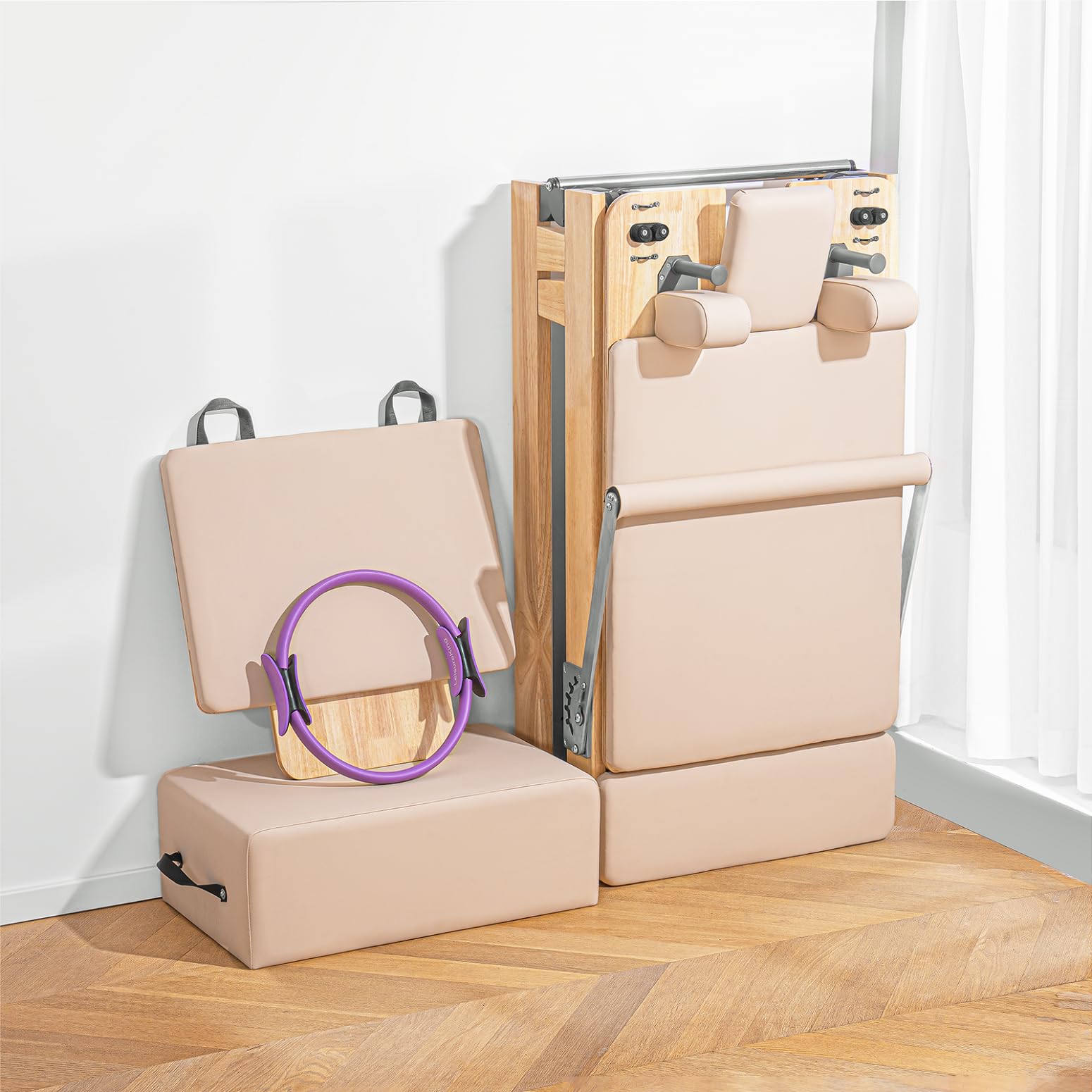
Folded, this one measures 25.98 by 15 inches — roughly the footprint of a hall closet shelf. That single number is why it tops our list. A home reformer lives or dies on whether you can clear it out of the living room, and the LeisureKing is the only machine here that pairs a real studio build with a fold that small.

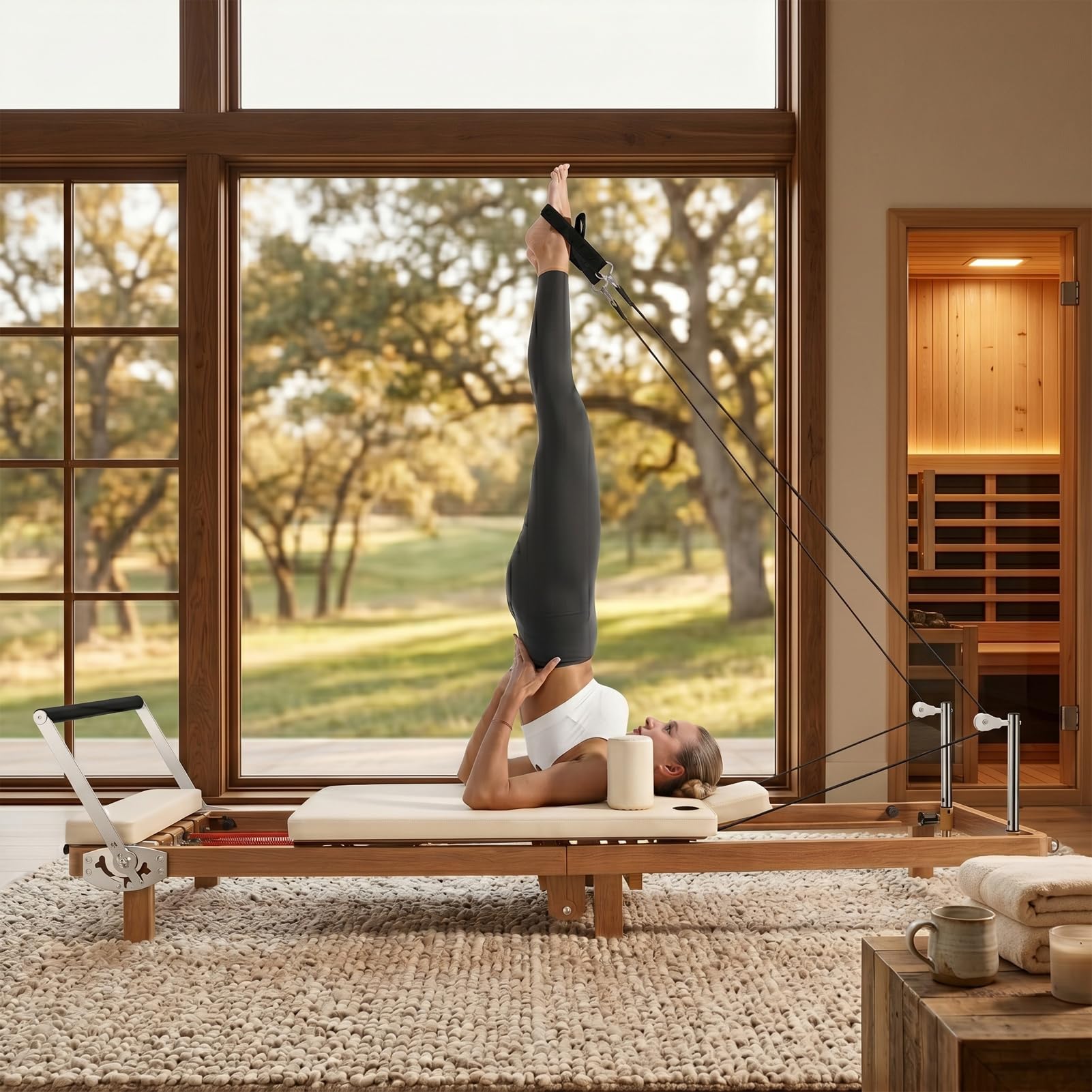
The build backs it up. The frame is solid oak joined with mortise-and-tenon joints and rated to 440 pounds, and the carriage rides aluminum rails. In our sessions the glide stayed smooth and quiet, with none of the knocking you learn to tune out on cheaper rails. Five springs — three red, one green, one yellow, spanning 18.5 to 234 pounds of tension — let you drop to a light setting for footwork and load up for a hard arm series without swapping machines.

Setup is the other pleasant surprise. It ships about 80 percent assembled, and the remaining work is four steps: shoulder blocks, handles, risers, ropes. The box, jump board, and foot strap come with it, so the short-box and jump work you do in class is available on day one. The parts that usually feel cheap on a home reformer — the handles, the risers, the strap loops — are metal here, and the dual-loop straps are the same style you would clip into in a studio.

Pros

  • Folds to a 25.98 by 15 inch footprint
  • Oak frame rated to 440 pounds
  • Five springs spanning 18.5 to 234 pounds
  • Box, jump board, and foot strap included

Cons

  • 143 lb, so folding takes two people
Our verdict

Our pick for most homes: a genuinely studio-grade oak reformer that folds to about 26 by 15 inches, so it gives your floor space back between sessions.
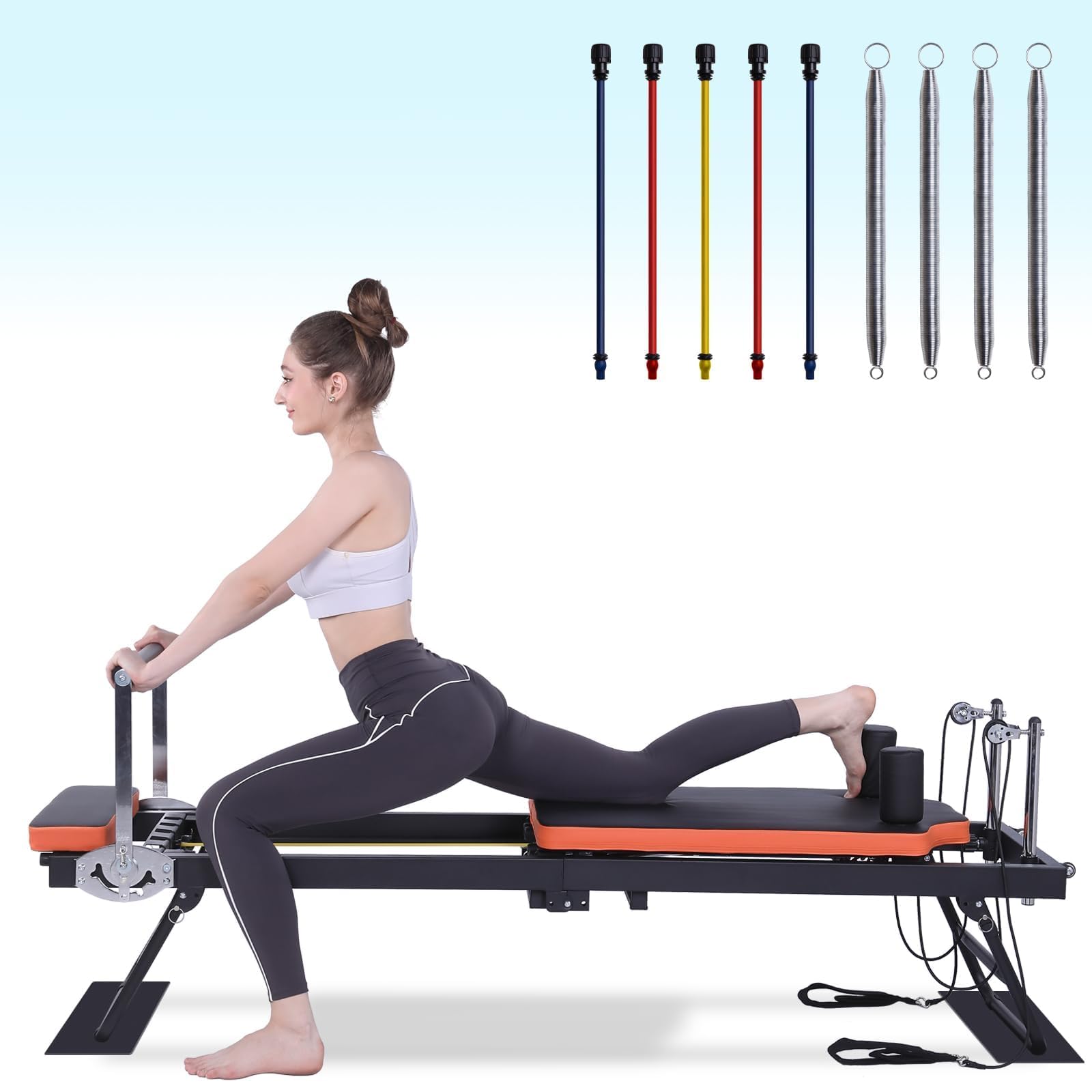
Check Latest Price
2

Best Solid-Wood Studio Feel

PAETA 92-Inch Wooden Reformer

87 /100
Trail Score Excellent

Key details

Frame
Solid oak
Dimensions
92" D x 26" W x 8" H
Machine Weight
140 lb
Weight Capacity
500 lb
Check Price on Amazon

Solid oak, a 500-pound rating, and a 92-inch bed: this is the closest thing in the guide to the reformer you use in class, and we think it is the best value among the serious machines. The frame never shifted under us, and the carriage has the long, even glide that makes footwork feel like footwork instead of a scramble.

Length is the reason to choose it. At 92 inches, with a 26-inch-wide frame, there is room for taller users and for the long-box work that gets cramped on shorter beds, and the extra width gives you a stable base for side-lying and single-leg work. PAETA includes the sitting box and jump board plus an adjustable headrest and shoulder pads, so the equipment list matches a class rather than just the machine.

Two things to know. A 140-pound oak frame stays where you build it, so measure the wall before you order and assemble it in place. And the springs and screws can develop a squeak over months of use, which a screwdriver and five minutes will usually settle. Neither changes what this is: a heavy, honest studio bed for someone with a spare corner and no interest in folding anything.

Pros

  • Solid oak frame rated to 500 pounds
  • 92-inch bed suits taller users
  • Sitting box and jump board included
  • Adjustable headrest and shoulder pads

Cons

  • Squeaks and loosening screws need attention
Our verdict

The pick for a permanent studio setup: solid oak, a 500-pound rating, and a 92-inch bed, with nothing to fold and nothing to fuss over.

Check Latest Price
3

Best Budget

Dpiolrcag Foldable Reformer

91 /100
Trail Score Outstanding

Key details

Dimensions
15" D x 74.6" W x 19.6" H
Resistance
4 springs at 22 lb, 5 cords at 15-27 lb
Machine Weight
70 lb
Weight Capacity
250 lb
Check Price on Amazon

At just under 75 inches, this is the shortest bed in the guide, and that one measurement decides who should buy it. Shorter users get a machine that fits their stride and their spare room; anyone taller should be looking at the 86- and 90-inch machines instead. It is worth knowing that before you fall for the rest of the package, because the rest of the package is genuinely good.

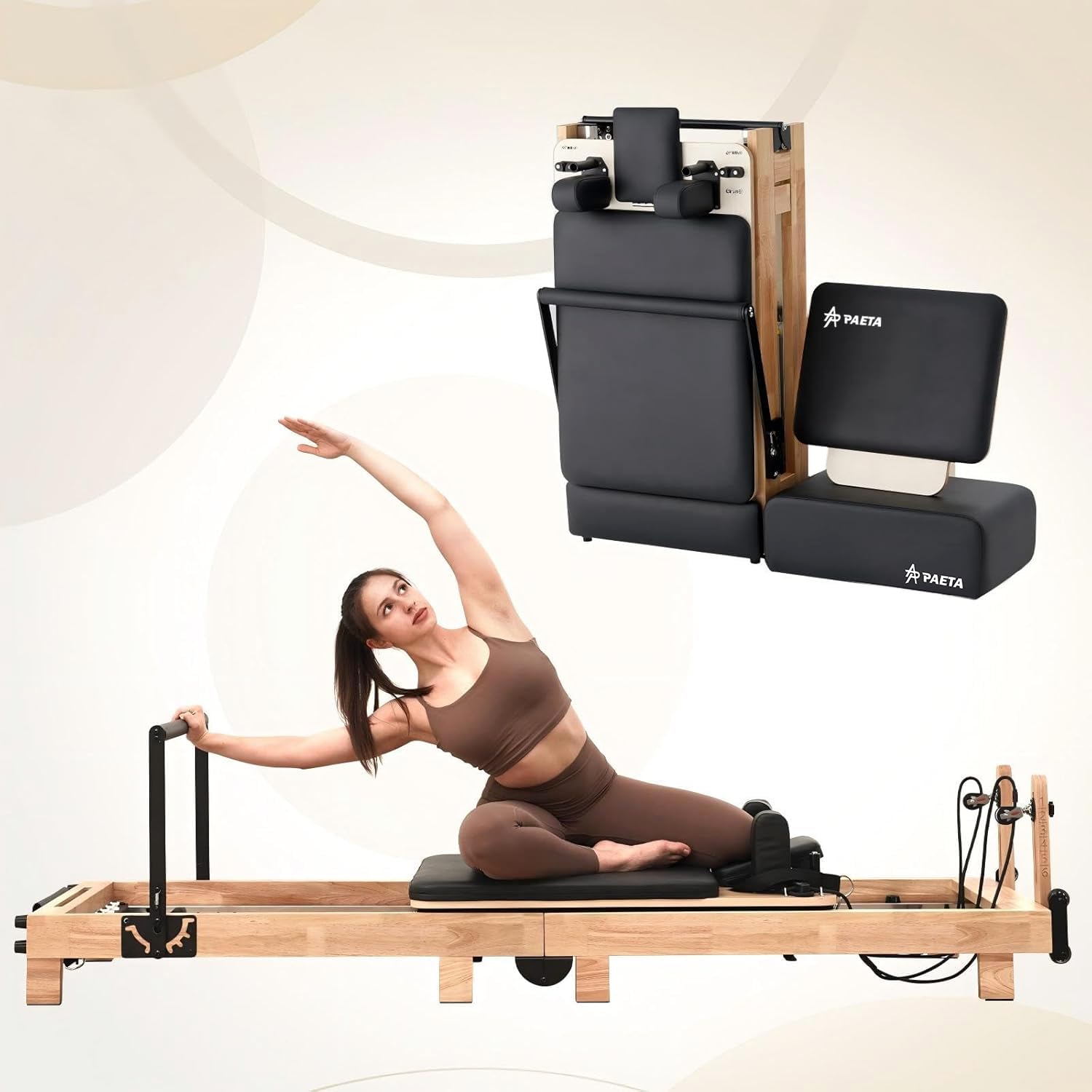
We get more machine for the money here than anywhere else in this guide. Four 22-pound springs plus five cords running from 15 to 27 pounds give you five resistance levels — more graduations than most of the machines on this page — and the carriage rolls on wheels that do not bump. It arrives 90 percent assembled, so setup is minutes rather than an evening, and at 70 pounds it folds and wheels into a corner between sessions.

The compromises are narrow. The arm straps run long, so smaller users end up tying off the slack, which is a two-minute fix you make once. The padded mat is sweat-proof and wipes down easily, which matters more than it sounds when the machine lives in a bedroom. Buy it as a first reformer and it will carry you until your practice outgrows the bed length, not the resistance.

Pros

  • Four springs plus five cords, five levels
  • 70 lb frame folds and rolls away
  • 90 percent pre-assembled
  • Smooth carriage on non-bumpy rollers

Cons

  • Three-month warranty is the shortest here
Our verdict

The best first reformer here: four springs, five cords, and a 70-pound folding frame, provided you are around average height or shorter.

Check Latest Price
4

Best for Cardio

AeroPilates Premier 700

89 /100
Trail Score Excellent

Key details

Included
Reformer, stand, rebounder, neck pillow, DVDs
Dimensions
85" D x 23" W x 27" H
Resistance
4 elastic bungee cords
Weight Capacity
300 lb
Check Price on Amazon

The stand is the whole argument. This reformer sits 27 inches tall at the rail, high enough that you are not lowering yourself to the floor for every exercise — the detail we think decides whether a machine gets used on a Tuesday night. The cardio rebounder clips over the footbar, so a spring series and a few minutes of low-impact bouncing live on the same piece of equipment.

It is also the longest-running design in this guide, and that shows in the small things: a flared, padded 24-inch platform, a substantial rebounder and foot bar, and a stand you can break down if you would rather work closer to the ground. The steel frame carries a three-year warranty with 90 days on parts, which is a fair statement of how long the company expects it to hold up.

Where it gives ground is resistance and refinement. Four elastic bungee cords change tension in coarse steps — you add or drop a whole cord — and cords stretch, so January's setting is not June's. The pulleys are the least convincing part of an otherwise sturdy machine. For cardio intervals, stretching, and anyone working around a bad knee or a stiff back, the stand and rebounder outweigh both complaints.

Pros

  • Stand keeps you off the floor
  • Rebounder adds low-impact cardio intervals
  • Three-year frame warranty
  • Wide, padded 24-inch platform

Cons

  • Elastic cords give coarse, drifting resistance
  • Pulleys feel lighter-duty than the frame
Our verdict

Buy it if you want cardio with your strength work: the stand and rebounder turn the carriage into a low-impact cardio machine you never have to meet on the floor.

Check Latest Price
5

Best Full-Length Foldable

PAETA 86-Inch Foldable Reformer

87 /100
Trail Score Excellent

Key details

Springs
Piano-wire springs
Dimensions
90.6" D x 22.8" W x 15.6" H
Machine Weight
109.3 lb
Weight Capacity
500 lb
Check Price on Amazon

The red springs are where our patience thinned. Loaded to the heaviest tension, this reformer's springs can screech through a set — a high metallic sound that does not affect the workout but does affect how much you want to do one. It is the only real fault we found on an otherwise well-sorted folding machine.

Everything else is engineered for a shared house. Ninety inches of rail and a 500-pound rating give most users room to extend, and the removable stands let you drop the whole bed to a lower height, which steadies the frame and suits anyone who would rather not climb onto a tall machine. Six legs carry it, and the piano-wire springs feel like springs rather than rubber bands.

What we like most is how quick that height change is: pull the stands, and the machine sits lower in minutes, so two people of different sizes can share it without either one working around the other's setup. The value is real — this is a lot of rail, a lot of capacity, and proper springs for less than the oak machines — as long as you accept 109 pounds and springs that announce themselves.

Pros

  • Removable stands adjust bed height
  • 90-inch rail with a 500-pound rating
  • Metal piano-wire springs
  • Six legs for stability

Cons

  • 109 lb is heavy for a folding frame
  • Stated to fit users up to 5 feet 9 inches
Our verdict

The pick for a household of different heights: a 90-inch rail that folds, with removable stands that drop it to a lower, steadier stance.

Check Latest Price
6

Tower Exercises

nexace Wood Reformer with Tower

89 /100
Trail Score Excellent

Key details

Frame
Solid oak, eight legs
Resistance
6 springs
Machine Weight
150 lb
Weight Capacity
400 lb
Check Price on Amazon

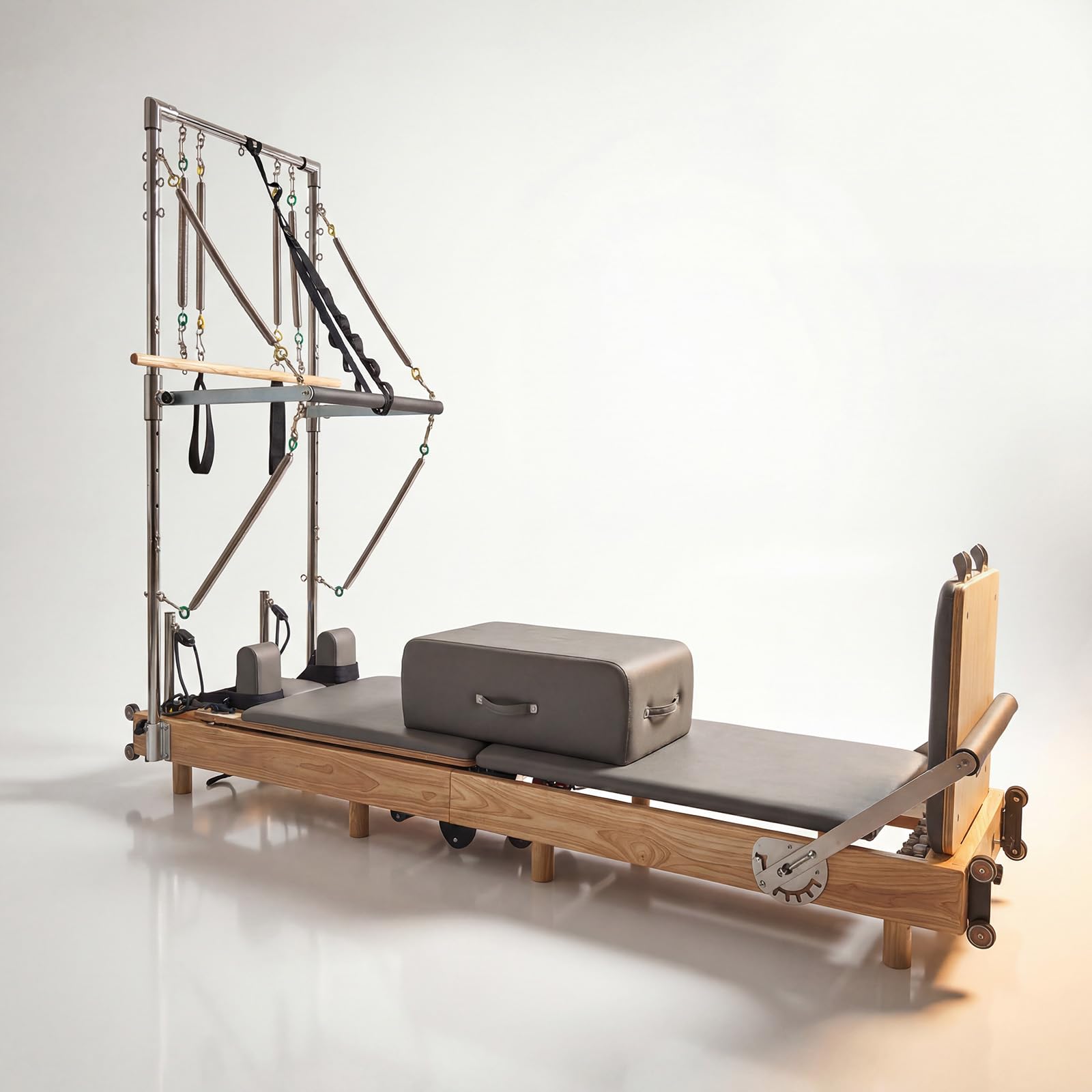
The tower is what separates this from every other reformer in the guide: a vertical frame at one end that opens up the arm, leg, and push-through work you would otherwise only do on a cadillac. If your practice has moved past mat-and-carriage basics, that is a meaningful expansion of what a home machine can do, and it is the reason to pay attention to this one at all.

Behind the tower sits a solid oak frame put together with traditional joinery, eight legs, and a 400-pound rating — the most furniture-like machine here, and the one most likely to pass as a permanent studio fixture in a spare room. Six springs give a wider spread of resistance than the four-spring machines, and we found the accessory list unusually complete: box, a taller jump board, padded platform extender, and foot strap, with very little left to buy afterward.

It folds in half, which sounds like the answer to a small room, but 150 pounds arriving in three packs makes the fold a project rather than a habit, and the one-year warranty is thin for a machine at this level. Buy it for the tower and the oak, not for the storage.

Pros

  • Tower adds cadillac-style exercises
  • Oak frame with eight legs, 400 lb
  • Six springs for a wider resistance spread
  • Box, jump board, and platform extender included

Cons

  • 150 lb across three packs to set up
  • One-year warranty is thin at this level
Our verdict

For tower work at home, this is the only machine here that offers it: a 150-pound oak frame with six springs and a full accessory set.

Check Latest Price
7

Moving Room to Room

DWKWE Wood-Grain Foldable

82 /100
Trail Score Excellent

Key details

Dimensions
88" D x 21.3" W x 11" H
Resistance
4 steel springs + 5 latex cords
Machine Weight
63.9 lb
Weight Capacity
242.5 lb
Check Price on Amazon

The wood grain is a finish, not a species: the frame underneath is steel, and the listing says so plainly. We prefer that honesty to a veneered board pretending to be oak. The metal keeps the price down and the frame stiff, and from across the room it still reads as furniture rather than gym equipment, which counts for something when the machine lives in your living space.

At 29 kilograms it is light enough for one person to fold and wheel, and that is the entire point of a folding frame. Four steel springs plus five latex cords give a dual-resistance setup you can dial from light to firm, and the adjustable foot bar covers the standard positions without tools. In a small apartment, this is the machine that comes out and goes away in the same minute.

The compromise is capacity. A 110-kilogram limit is the lowest in this group, so heavier users should move up to the PAETA or the LeisureKing, both rated far higher. Under that line, it does the exercises quietly and without asking for a dedicated room, which is more than most machines at this level can say.

Pros

  • Lightest folding frame here at 29 kg
  • Steel frame under a wood-grain finish
  • Four springs plus five cords
  • Adjustable foot bar

Cons

  • 110 kg weight limit is the lowest here
Our verdict

The lightest folding frame here, light enough for one person to move, as long as you are under the 110 kg weight limit.

Check Latest Price

How We Chose and Tested Six Home Reformers

We started with close to 30 home reformers and cut anything that wouldn't fold or stand upright, whose folded footprint wouldn't clear a closet door, or whose spring bar offered only two positions. That left six, ranging from fold-flat frames to studio-style beds that stay where you put them. I assembled every one myself, stopwatch running, with the manual and a screwdriver on the floor beside me.

My colleague and I — 5-foot-2 and 6-foot-1 — ran the same 25-minute sequence most mornings for eight months: footwork, elephant, long box, short box, and a teaser we both regret. We recorded where the shoulder rests and foot bar landed for each of us, since a setting that suits one body can be unusable for the other. Sturdiness got tested less politely: I pulled hard on the straps from a side angle to see whether the frame walked across the floor. For smooth operation, we ran the carriage on one spring and then on all of them, listening for a scrape or a catch on the return.

Noise got taken downstairs. Each reformer got an early session in a second-floor room while a housemate below reported what carried. Weight we judged at the end of the day — fold or stand it up, roll it to the closet alone, lift the heavy end over a doorsill. Eight months in, we re-checked every machine for flat spots on the wheels, stretched springs, frayed rope, and any new shimmy, then weighed what shipped in the box against what the machine cost.

How to Choose a Home Pilates Reformer

Measure the Floor, Not Just the Fold

Full-size machines here run from about 75 to 92 inches long, and that is the number that decides whether a reformer works in your space. A folding frame solves storage, not daily use: a 143-pound machine still needs two people and a clear path to put away. When a listing calls a reformer compact, check whether it is describing the footprint in use or folded against a wall.

We taped the full length out on the floor before ranking these, and it reordered the list — a machine that is 15 inches shorter buys you a walkway. If the reformer has to come down every week, keep the frame under about 80 pounds. Above that, plan on a permanent spot and treat the fold as seasonal.

Match the Bed Length to Your Height

A short bed is the most common regret in this category. The Dpiolrcag runs just under 75 inches and suits shorter users well; PAETA rates its 86-inch model to 5 feet 9 inches. Above that, shop the 90- and 92-inch machines, where the carriage has room to travel before your knees run out of rail.

Two details travel with length. Check the width across the shoulder rests if you have broad shoulders, and check the straps: long arm straps on a compact machine leave smaller users tying off slack before every exercise.

Springs, Cords, or Both

Metal springs hold their rated tension and change in repeatable steps: a red spring is the same red spring next year. Elastic cords are quieter and cheaper, but they stretch, so the resistance you set in January softens by June. Machines that combine both — four springs plus five cords in this set — give you the finest gradations, which matters most for arm and leg work where one whole spring is too big a jump.

Whatever the system, look for a stated tension range and at least four resistance elements. Two or three cords is a starter setup you will outgrow in a season.

Weight, Entry, and Bed Height

Machine weight is the spec buyers ignore and then live with. The range here runs from about 64 to 150 pounds; the lighter machines fold and roll, the heavier ones are furniture. Decide which of those you are buying before you order, because it decides where the machine goes and whether it ever comes out.

Bed height matters as much as weight if anyone in the house has knee or back trouble. A reformer on a stand sits around 27 inches at the rail; a low frame sits between 8 and 16, which is steadier but harder to get onto. Assume assembly either way: even 90 percent pre-assembled means attaching risers and ropes, and the crates are heavy, so build it where it will live.

Frequently Asked Questions

Final Verdict

For most homes, buy the LeisureKing. It is the only reformer here that pairs a genuine studio build — oak frame, aluminum rails, five springs spanning 18.5 to 234 pounds — with a fold small enough to hand the room back, and that combination is what keeps a home machine in use.

If your priority sits elsewhere, the pick changes: the AeroPilates Premier 700 for cardio intervals and a stand that keeps you off the floor, the Dpiolrcag if this is your first machine and you are not tall, or the PAETA 92-inch if you have a permanent corner and want solid oak under you.