Best Office Chairs for Lower Back Pain of 2026

Lower back pain rarely announces itself at your desk. It turns up later — on the walk to the train, or on the floor trying to tie a shoe — and by then the chair has been quietly working against you for weeks. The right office chair won't fix a bad back, but it does two things the wrong one can't: it holds your pelvis where your spine isn't fighting gravity all day, and it lets you shift position often enough that nothing locks up by 3 p.m.

I've spent the past nine months working in eight different chairs, and the gap between a genuinely supportive one and a good-looking imposter is obvious by day three. The surprise, for me, was firmness: the cushiest seats felt wonderful for twenty minutes and like a mistake by Thursday. We weighed comfort over full workdays, where the lumbar curve actually landed on a real back, how much adjustability there was and whether those settings held, how miserable assembly turned out to be, and whether each chair earned its price. The ones below are the ones I kept sitting back down in.

1

Best Overall

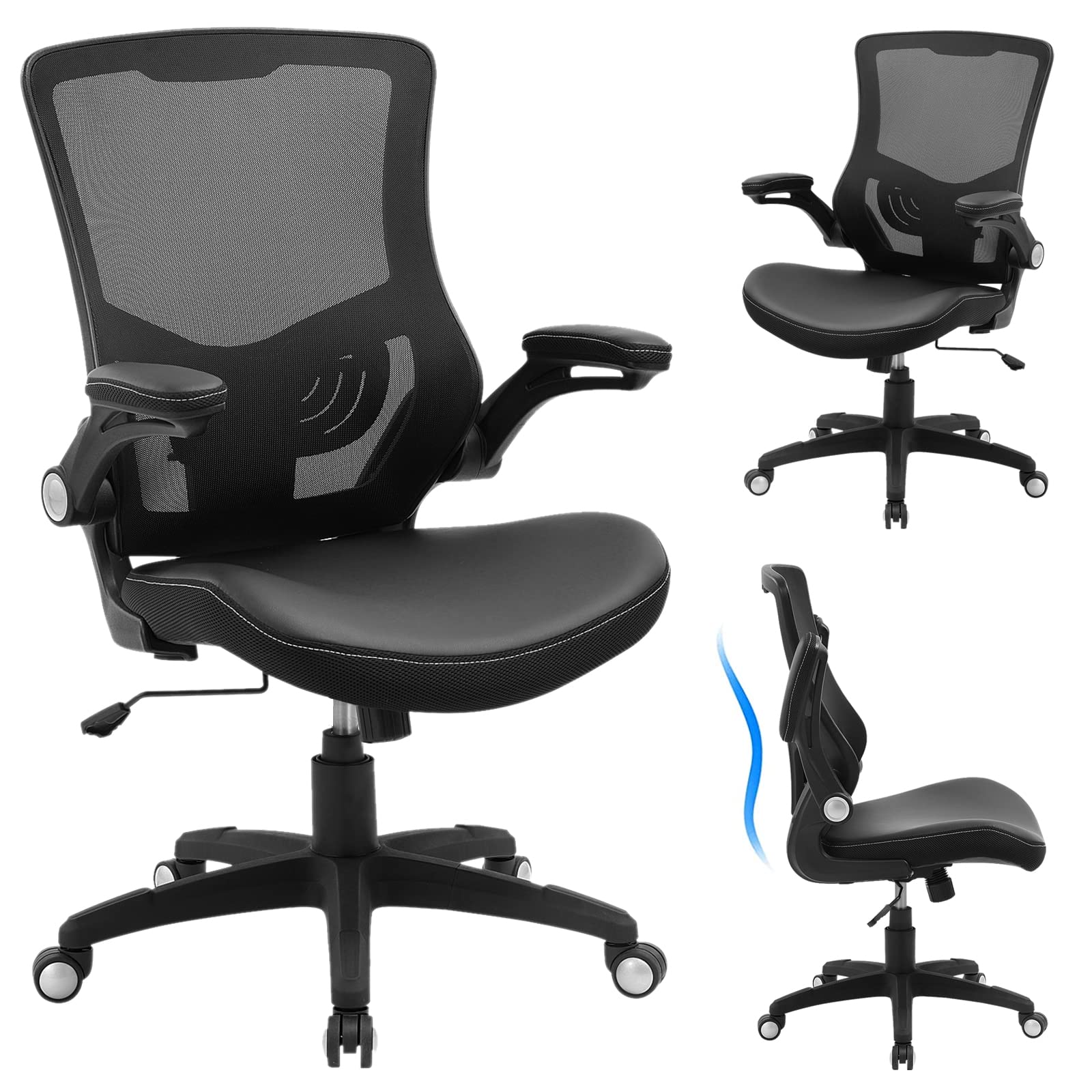
X XISHE Ergonomic Desk Chair

90 /100
Trail Score Outstanding

Key details

Seat Depth
19.3 in
Seat Height
20.5 in
Lumbar Support
Adjusts up and down
Weight Capacity
300 lb
Check Price on Amazon

The lumbar pad slides up and down the backrest, and that single piece of adjustability is why this chair takes the top spot over better-known names. A fixed pad is the designer's guess at where your lower back curves; when the guess is an inch off, you spend the day arching away from the chair instead of settling into it. Here you move the pad to the spot that fills the small of your back and leave it there. For anyone shopping specifically because their lower back hurts, that is the feature that matters most.

The rest of the chair backs up that choice. There's an 18-inch mesh back to keep air moving and a thick sponge seat under PU leather, which is a better split for a home office than it sounds: your back stays cool while your seat gets the cushioning an eight-hour day wants. Comfort is where it separates from the rest of the group — the padding is generous without going soft, the cushioning holds its shape, and the frame is sturdy enough that you stop thinking about it.

Two practical details we appreciate. The arms flip up 45 degrees, so the chair slides under a desk that would otherwise catch them, which matters in a small room where the chair doubles as seating for something else. And the frame is BIFMA-tested with a 300-pound rating and a three-stage cylinder. Assembly runs about 15 to 20 minutes with the tools in the box.

What you give up is fine-tuning beyond the lumbar pad: the arms flip but don't adjust in height, and there's no headrest for reclined breaks. The one figure to check before ordering is the 20.5-inch seat height, which sits at the taller end of this group — if you're short and your desk is standard height, measure from the floor to the back of your knee first.

Pros

  • Lumbar pad adjusts up and down
  • Mesh back with a thick padded seat
  • BIFMA-tested with a 300 lb rating
  • Flip-up arms clear the desk

Cons

  • Armrests adjust only by flipping up
  • No headrest
Our verdict

For most people with lower back pain, we think this is the one: the lumbar pad moves to the right spot, the seat holds up all day, and the price stays midrange.
Check Latest Price
2

Best for Fine-Tuned Lumbar Support

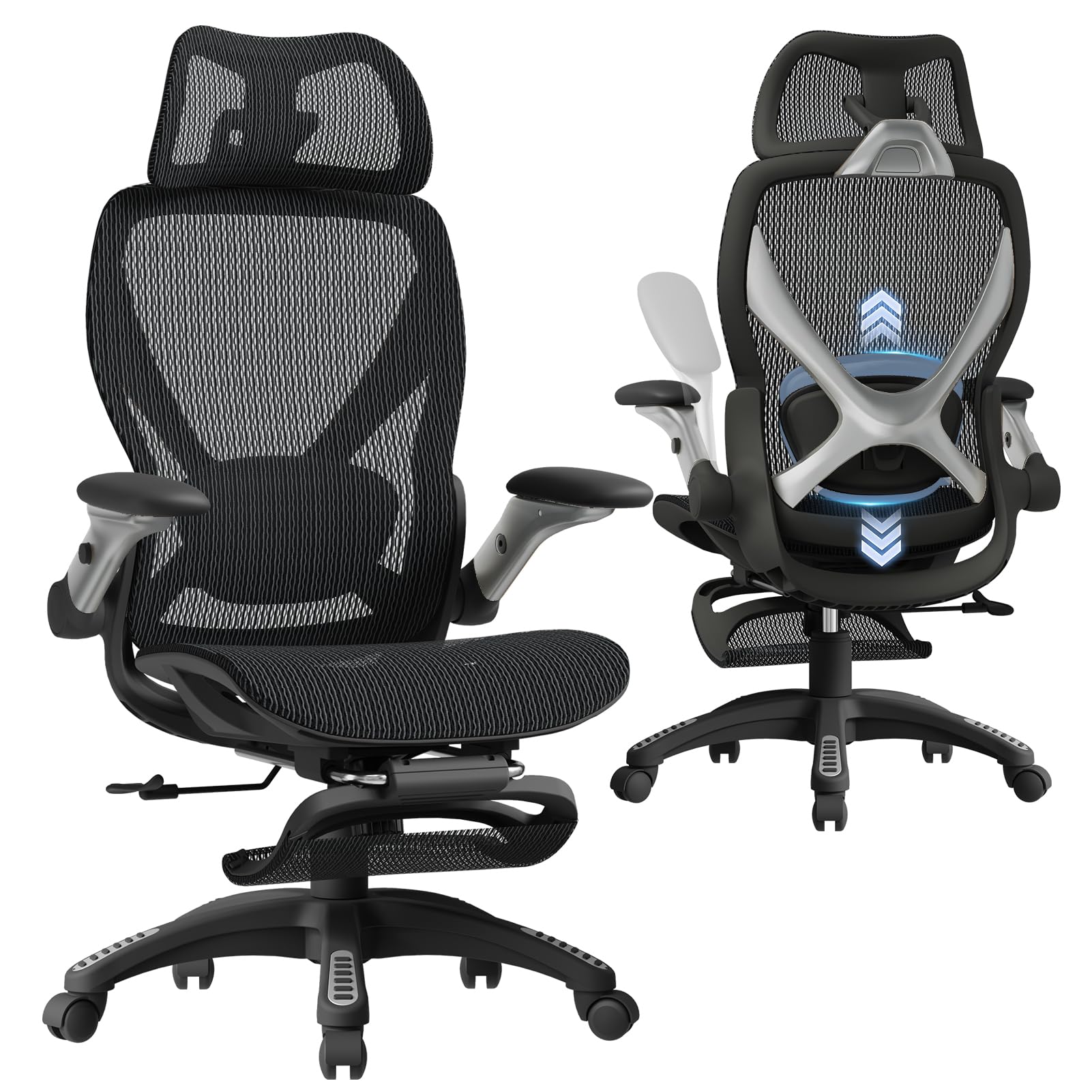
ELABEST X100 Ergonomic Mesh Chair

91 /100
Trail Score Outstanding

Key details

Armrests
5D, flip-up
Seat Height
18.3 in
Weight Capacity
300 lb
Lumbar Adjustment
±1.6 in depth, ±2 in height, 15° rotation
Check Price on Amazon

This is the most adjustable chair in the set and also the most expensive, and the gap between those two facts is the decision you're making. The lumbar panel moves about 1.6 inches in and out on spring-loaded tracking, two inches up and down, and rotates 15 degrees — a different order of adjustment from the simple sliders most chairs here offer.

We think that range is worth paying for when your pain changes with posture. A spring-loaded panel follows you as you lean in to type and back to read, so no gap opens up between your spine and the support. The arms adjust in five directions and fold up, the back locks in three recline positions, and an 18-inch footrest slides out when you want to take the weight off entirely. This is the chair here that lets you change position most completely, and for a back that complains after two hours in one posture, that's the whole argument.

It is also 43 pounds, the heaviest here, so it stays where you put it. The seat height is a low 18.3 inches, which suits a shorter sitter or a lower desk and can feel cramped at a tall one, and the headrest has a habit of drifting out of the angle you set when you're leaning back. None of that touches the lumbar mechanism. Set it up properly once and the adjustment range stops being fiddly and starts being invisible.

Pros

  • Lumbar panel moves in depth, height and rotation
  • 5D arms, three-stage recline and footrest
  • Rated to 300 lb

Cons

  • Heaviest chair here at 43 lb
  • Headrest drifts out of position
Our verdict

We think it's worth the premium if you want lumbar support that moves with you rather than sitting in one place: depth adjustment plus a three-stage recline.

Check Latest Price
3

Best for Firm, High-Capacity Support

TRALT Ergonomic Office Chair

88 /100
Trail Score Excellent

Key details

Seat Depth
17.3 in
Seat Height
21.7 in
Lumbar Support
Adjustable depth
Weight Capacity
330 lb
Check Price on Amazon

The seat is the argument. It's molded high-resilience foam rather than the cut slab used on cheaper chairs, and the difference shows up in the second year, when a soft cushion has compressed into a bowl and left your hips lower than your knees. Firm is the right word for it. This is not a chair you sink into, and after a long day that's a feature rather than a shortfall.

The lumbar pad adjusts in and out as well as up and down, which is rare below the premium tier, and the base carries a metal core inside the nylon with a BIFMA-certified class 3 gas lift holding it at height. At 330 pounds it's rated for more weight than almost anything else in this group, and at 28 pounds it still moves when you want it to.

We point heavier sitters and anyone who has flattened a cheap seat cushion at this one. Two things to go in knowing. At 21.7 inches the seat height is tall, which pairs well with a taller desk and longer legs and badly with the opposite. And the seat pan has a forward tilt that can push you out of the backrest; if you like a level or slightly reclined seat, try this one before you commit.

The 17.3-inch seat depth is the other number to check — it's the shortest here, and long thighs will hang off the front. Get the fit right and the reward is a chair that holds its shape and its height, at a price that undercuts most of this group.

Pros

  • Depth-adjustable lumbar pad
  • Molded foam that resists flattening
  • 330 lb capacity and a metal-core base

Cons

  • Seat depth runs short at 17.3 in
Our verdict

We recommend it for heavier sitters and anyone who has flattened a cheap cushion: a firm molded seat, depth-adjustable lumbar and a 330-pound rating.

Check Latest Price
4

Best with a Headrest

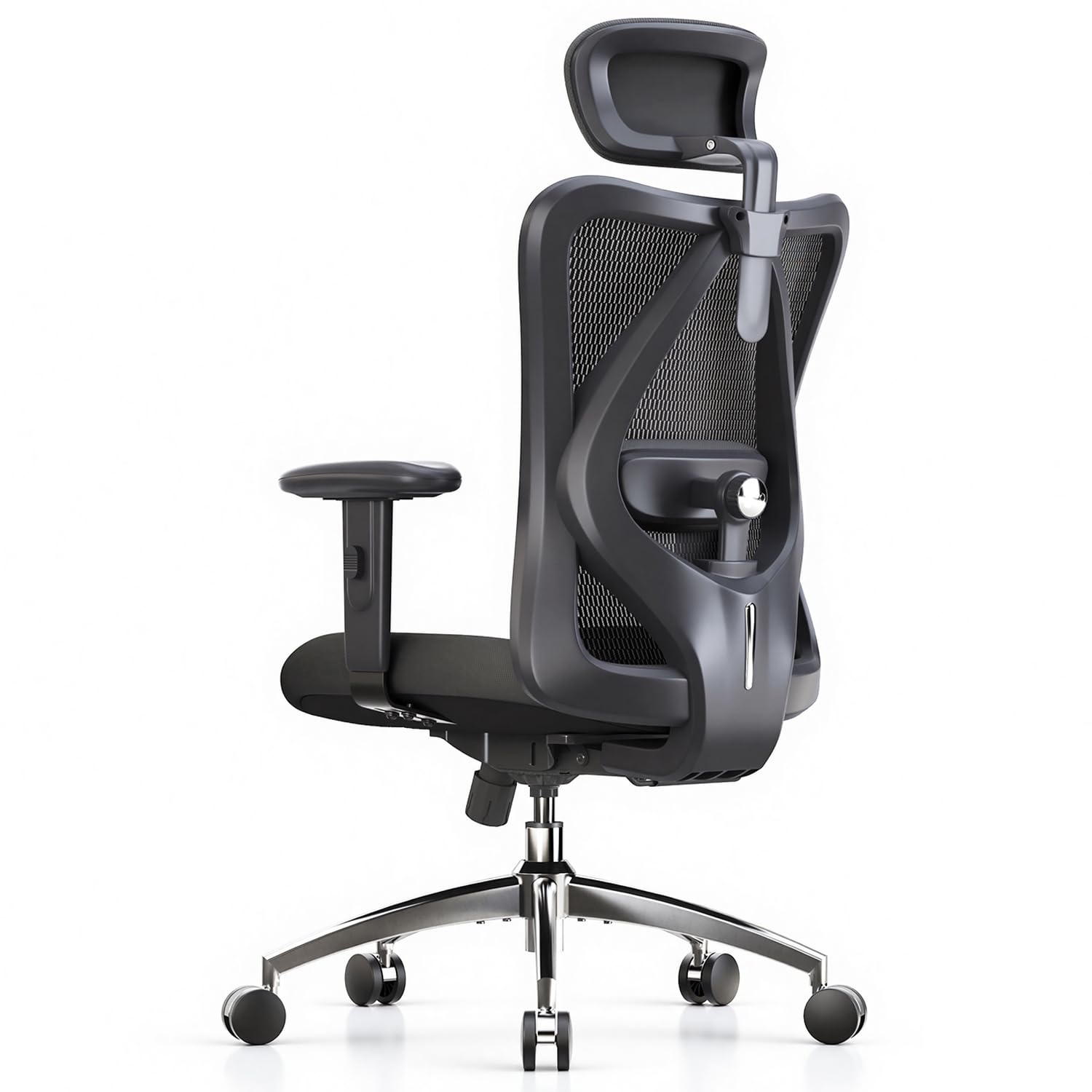
SIHOO M18 Ergonomic Office Chair

88 /100
Trail Score Excellent

Key details

Headrest
Adjustable
Back Width
20.5 in
Lumbar Support
Adjustable
Weight Capacity
330 lb
Check Price on Amazon

Start with the cushion, because it decides whether you'll get along with this chair. It's memory foam over sponge and it is genuinely firm — noticeably harder than the padded seat on our top pick — which some backs love and others don't. Over a long session it's the part you notice first, so treat it as the deciding factor rather than a detail.

The top half is why it's here. The back is 20.5 inches wide with an adjustable headrest that actually reaches the neck and a lumbar pad you can raise and lower, and the whole chair is rated to 330 pounds. If you lean back between tasks or take calls reclined, this is the one we reach for; the headrest does what a headrest is supposed to do, which is more than most of them manage.

The arms are the compromise. They adjust up and down but not in or out, and they're cupped, which pins your elbows to a width the chair chose. The instruction sheet is printed small enough that you'll want to photograph it and zoom in, though assembly is otherwise straightforward and the box includes spare hardware.

Pros

  • Adjustable headrest and lumbar pad
  • Wide 20.5-inch back
  • 330 lb capacity

Cons

  • Very firm seat cushion
  • Armrests adjust in height only
Our verdict

We keep coming back to it for reclined work: the adjustable headrest and 20.5-inch back are the best here, and the 330-pound rating doesn't hurt.

Check Latest Price
5

Best for Adjustable Seat Depth

HOLLUDLE V-Back Ergonomic Chair

88 /100
Trail Score Excellent

Key details

Armrests
3D adjustable
Seat Depth
17.3 in, adjustable
Lumbar Support
3D adjustable
Weight Capacity
350 lb
Check Price on Amazon

Most chairs give you a height lever and call it adjustability. This one slides the seat pan forward and back as well, and that's the feature we rate highest on it: a pan that's too deep leaves the backrest an inch away from your spine, and a pan that's too short puts all your weight on your thighs. Set the depth first and the rest of the chair starts making sense.

From there the lumbar panel moves up, down, forward, back and rotates, the arms adjust in three directions under a headrest that tilts, and the frame is rated to 350 pounds with BIFMA and EN1335 behind it. That combination — a seat you can size and a lumbar pad you can aim — makes it the most tunable chair here short of the ELABEST, for considerably less.

The catch is that all those adjustments take setting up, and the seat is firm rather than plush, which reads as supportive to one back and hard to another. Assembly is a 20-to-30-minute job rather than the 15 minutes some of these claim. With this many levers, the chair rewards a buyer who will spend an evening getting it right; leave everything at the factory settings and you've paid for adjustments you aren't using.

Pros

  • Seat pan slides to set depth
  • Five-way lumbar pad and 3D arms
  • 350 lb capacity

Cons

  • Firm seat cushion
  • 20-30 minute assembly
Our verdict

We rate it highest for seat-depth fit: a sliding pan, a five-way lumbar panel and 350-pound capacity for far less than the premium pick.

Check Latest Price
6

Best Budget

Amseatec Mesh Office Chair

89 /100
Trail Score Excellent

Key details

Backrest
Fixed mesh
Warranty
5 years
Seat Cushion
3 in foam
Weight Capacity
300 lb
Check Price on Amazon

A five-year warranty is the first thing that made us take this chair seriously. It covers the gas lift and the frame, the two parts that end a chair's working life, and it's unusual at the bottom of the price range.

The seat is a 3-inch slab of high-density foam under breathable mesh, and the back is a fixed curve rather than a pad on a track. The arms flip up, the tilt rocks between 90 and 110 degrees with a tension knob so you can set how much it fights back, and assembly is a 15-minute job with the tools in the box.

For a spare-room desk, a dorm room or a first apartment, this is the chair we point to. The fixed back is the trade: it holds a reasonable curve, but it can't be moved to the spot where your particular back needs it, so if that's the problem, a strap-on lumbar roll or a more expensive chair is the fix. For a room where the chair is occasional seating as much as a desk chair, that's the right set of compromises.

Pros

  • 300 lb rating on a reinforced steel base
  • 3-inch high-density foam seat
  • Five-year warranty

Cons

  • Fixed back with no lumbar adjustment
  • Rocker only, no lockable recline
Our verdict

Our budget pick: a 300-pound-rated frame, a 3-inch foam seat and a five-year warranty, with a fixed back you can't adjust.

Check Latest Price
7

Leather Executive Look

COLAMY High Back Executive Chair

87 /100
Trail Score Excellent

Key details

Seat Depth
21.1 in
Seat Height
22.4 in
Lumbar Support
Inflatable airbag
Weight Capacity
300 lb
Check Price on Amazon

There's a rubber bulb under the seat, and squeezing it pumps air into a lumbar cushion built into the backrest. It sounds like a gimmick and it isn't. Firmness is the one thing a foam pad can't change — you can move foam, but you can't make it softer on a good day and firmer on a bad one. Pump the bulb and the pad firms behind your belt line; press the release and it eases off.

The rest is an executive chair done properly: leather-look upholstery over overstuffed panels, a 25.6-inch back that reaches the shoulders, a lockable synchro tilt, and 90-degree flip-up arms on a base rated to 300 pounds.

The compromises sit in the arms and the recline. The arms flip up but don't adjust in height, which is a real loss on a chair this tall, and the recline can stop short of the lounge angle the mechanism suggests. The vinyl on the armrests is the first thing to show wear. At 22.4 inches the seat height is the tallest here, and the 21.1-inch seat depth suits a long leg rather than a short one.

We recommend it for someone who wants a chair that belongs in an office and wants to change lumbar firmness by feel rather than by lever. The pump doubles as a diagnostic: if you find yourself topping it up every afternoon, the chair is telling you something about your desk height.

Pros

  • Inflatable lumbar you firm up by feel
  • 25.6-inch high back with leather upholstery
  • Flip-up arms and lockable tilt

Cons

  • Armrests don't adjust in height
  • Recline stops short of a lounge angle
Our verdict

We like it for anyone who wants to tune lumbar firmness by feel instead of by lever, in a chair that looks like an executive's.

Check Latest Price
8

Smaller Sitters

MUXX.STIL Ergonomic Mesh Chair

87 /100
Trail Score Excellent

Key details

Warranty
15 years
Seat Height
21.6 in
Lumbar Support
Adjustable cushion
Weight Capacity
264 lb
Check Price on Amazon

Fifteen years is the longest warranty in this group by a wide margin, and it comes on a chair priced alongside our top pick. Warranty length is a maker's own estimate of how long the gas lift and frame will last, so it's worth more than a line about durability in a marketing bullet.

The lumbar support is a large sponge-filled cushion on the backrest that adjusts to sit where you need it, and the seat is a U-shaped pad with a waterfall front edge, which keeps pressure off the backs of your thighs. Rubber casters roll quietly and don't scratch wood floors, and the arms flip up 90 degrees so the chair tucks away.

It's rated to 264 pounds, the lowest capacity on this page, so heavier sitters should look at the TRALT or the HOLLUDLE instead. The arms flip but don't adjust in height, the seat cushion divides opinion between soft and too firm, and the 21.6-inch seat height is on the tall side for a compact chair.

For a smaller sitter, this is the sleeper pick: light enough to move with one hand, quiet on hard floors, and covered for longer than anything else here. The casters are the detail we appreciated most — nothing else in this group rolls as quietly across a wood floor.

Pros

  • Fifteen-year warranty
  • Adjustable sponge lumbar cushion
  • Quiet rubber casters

Cons

  • 264 lb capacity, the lowest here
  • Armrests flip but don't adjust in height
Our verdict

We suggest it for smaller sitters and shared rooms: an adjustable lumbar cushion, a light frame and the longest warranty in this group.

Check Latest Price

How We Tested, and How Long We Sat

We started with a shortlist of roughly 40 chairs and cut hard on specs: seat-height range, weight capacity, warranty length, and whether the lumbar support could be moved at all. Anything with a fixed lumbar pad, height-only adjustment, or a warranty under five years came off the list. From there we bought eight chairs across the price spectrum, from budget-friendly to several hundred dollars, so we could judge whether the extra money bought anything you'd actually feel.

Each chair was assembled solo with a stopwatch running. We counted the steps, noted whether holes lined up or needed convincing, and checked whether the necessary tool came in the box. Over the first week we ran every chair through its full range — seat depth, armrest height and width, tilt tension, lumbar height — then marked the settings with tape and checked a month later to see what had slipped. Testers ranging from 5'2" to 6'3" sat in each one, and we specifically tested flip-up arms by rolling straight under a standard desk.

Then came the part that matters: nine months of real workdays, with at least two people using each chair for full eight-hour stretches plus a few long ones. We logged where the lumbar curve hit — too high, too low, or pressing in like a thumb — whether the seat bottomed out before lunch, which recline positions were actually usable, and whether the chair stayed quiet. Once a month we checked for mesh sag, pilling at the upholstery edges, casters that stopped rolling cleanly, and new creaks. Value was the last call: at each price step, we asked what the added money bought and whether we'd spend it again.

How to Choose an Office Chair for Lower Back Pain

Start With the Lumbar Support, Not the Cushion

A lumbar pad fills the inward curve above your pelvis so your back muscles can stop bracing. A fixed pad is the designer's guess at where that curve sits, and it is wrong for plenty of people: too high and it pushes your shoulders forward, too low and it does nothing at all. Height adjustment is the minimum.

Depth matters more than most shoppers realize, because depth is what makes a pad felt rather than merely present. The ELABEST's panel moves about 1.6 inches in and out on springs; the COLAMY's airbag changes firmness instead. Set the pad so it fills the curve without moving your ribcage, and if you can't get there, the chair is wrong for you however plush it feels.

Set Seat Height and Depth Before You Judge Anything Else

Feet flat, thighs roughly level, and the seat height that gets you there is the only one worth having. Seat depth then decides whether the backrest can do its job: leave about two fingers of clearance behind your knee, because a pan that runs long pushes you forward out of the lumbar pad and a pan that runs short puts all your weight on your thighs.

Across these picks, seat depth runs from 17.3 inches on the TRALT to 21.1 on the COLAMY, and seat height from 18.3 to 22.4 — that spread is the difference between a chair built for a long leg and one built for a compact frame. A seat set at 21 inches or more will leave shorter sitters with their feet off the floor, so compare the number with your own leg length before ordering.

Match the Backrest and Recline to How You Actually Sit

If you work upright and rarely lean back, a taller back with a firm lumbar panel does more for you than a recliner mechanism does. If you take calls leaning back, a headrest and a tilt lock earn their place — that's the SIHOO's strength, and the ELABEST adds a footrest so the break is real.

Check that the tilt locks at the angle you'll actually use. A chair whose recline stops well short of where you want to sit has sold you a mechanism you won't use, and an upright-only lock is worth less than a headrest that reaches your neck.

Weigh Firmness, Materials and What Holds Up in Year Two

Seat foam is where cheap chairs fail first. Soft foam feels wonderful for a month and then compresses into a bowl, leaving your hips below your knees — the opposite of what a sore back needs. Molded high-resilience foam, like the TRALT's, is the more durable choice, and firm is not the same thing as uncomfortable.

Mesh backs breathe and suit warm rooms; leather-look upholstery runs warmer but wipes clean. The other long-term parts are the gas lift and the base, so look for a stated cylinder class or BIFMA certification, and a warranty that covers more than the first year.

Arms, Capacity and the Details That Decide It

Armrests do more for a bad back than they get credit for. If your elbows can't rest near desk height, your shoulders creep up and your lower back takes the slack. Height-adjustable arms are worth paying for; flip-up arms are the next best thing, since they let the chair tuck under the desk and let you sit square without the arms steering you sideways.

Rated capacity across this group runs from 264 to 350 pounds, and it's a limit rather than a suggestion — the gas lift and base are the parts that give way. If you're near the number, choose a chair with headroom.

Frequently Asked Questions

Final Verdict

For most people shopping because their lower back hurts, the X XISHE is the chair to buy: the lumbar pad moves to where your back actually curves, the seat stays comfortable through a full day, and the price stays midrange. It is the least risky choice on the page.
If your pain shifts with posture and you want the support to follow you, the ELABEST X100's spring-loaded depth adjustment and footrest justify the jump. If the budget is tight, the amseatec gets the seat and frame right and asks you to give up lumbar adjustment.