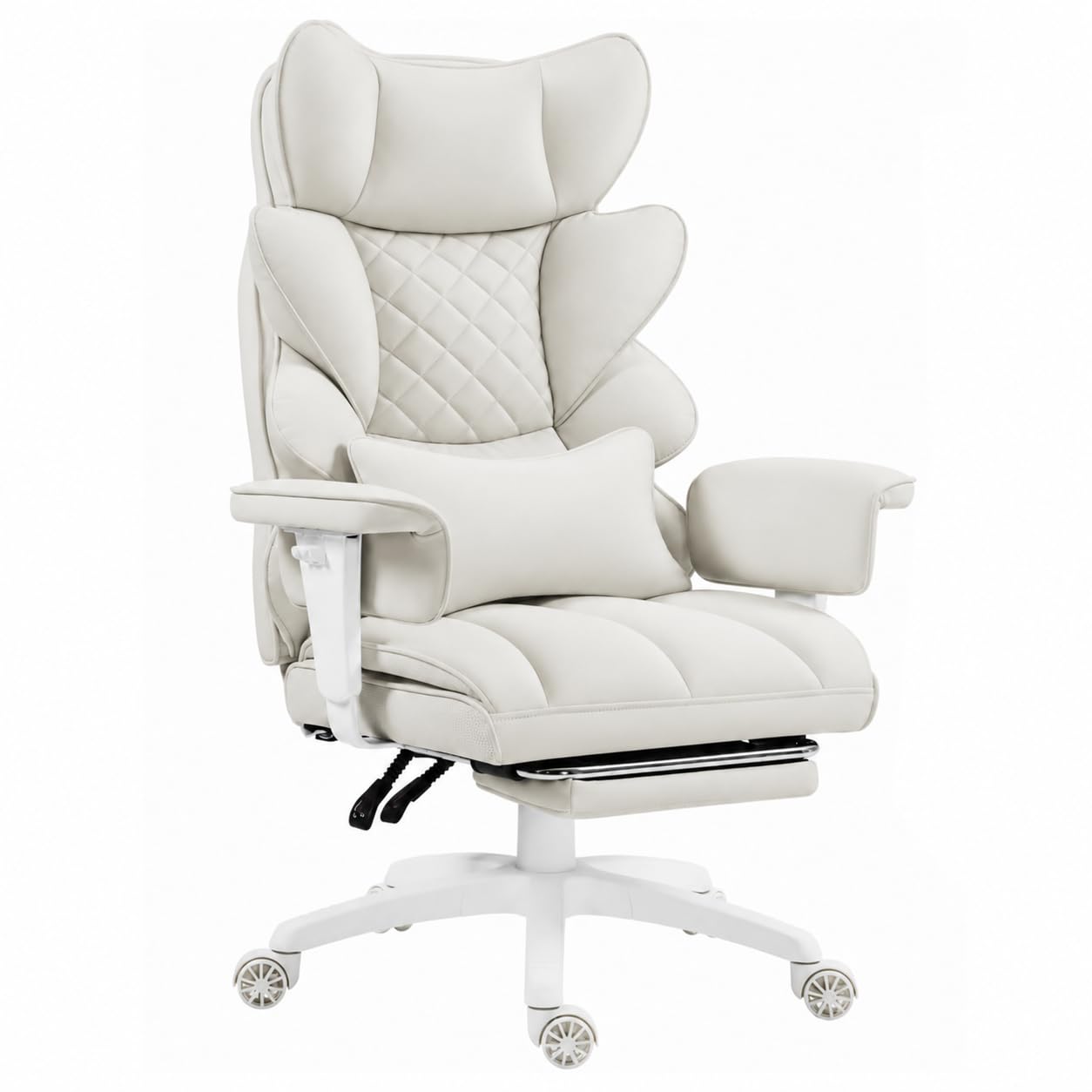
Best Gaming Chairs for Back Pain of 2026

A gaming chair is one of the few pieces of furniture you buy hoping to notice it less. The first hour is easy; almost anything with foam feels fine. It's hour four, when your lower back has given up and you're sitting sideways with a throw pillow jammed behind you, that separates a good chair from a bad one. Most of the category sells the silhouette — bolsters, color blocking — and treats back support as a footnote. The right chair takes the ache out of long sessions, work or play, so you stop fidgeting by mid-afternoon.

We've spent the past seven months with 12 gaming chairs, and the differences show up where product photos never look. Assembly is one: a chair that goes together crooked tends to wobble forever, no matter how good the foam is. My advice to any first-time buyer is to check the seat-height range against your desk before you fall for the recline — if your feet dangle or your knees ride high, no amount of lumbar padding rescues you. The picks below are the ones that held up.

1

Best Overall

N-GEN NG2601A Gaming Chair

91 /100
Trail Score Outstanding

Key details

Armrests
Linkage, move with backrest
Seat Depth
21 inches
Recline Range
90° to 135°
Weight Capacity
300 lb
Check Price on Amazon

Armrests that tilt with the backrest are the first thing we check on a chair meant for a sore back, and this one has them. Lean back and the arms travel with you, so your elbows stay supported and your shoulders don't roll forward — the exact motion that turns a long session into an ache. The recline runs from 90 to 135 degrees and holds where you leave it, which is enough range to change position without turning the chair into a bed.

The backrest is 21 inches wide with a neck pillow and a lumbar cushion, over a 21-inch-deep seat rated to 300 pounds. We like that the lumbar support is a cushion rather than a molded ridge: you can park it at your belt line instead of wherever the factory decided it should go. The catch is the strap, which lets it creep up your back every few days — a ten-second fix, but a recurring one.

What you give up is heft. At 37.5 pounds this is one of the lighter chairs here, which makes it easy to wheel between rooms but leaves the base feeling less planted than the big-and-tall models. The gas lift is the part we watch over months: a chair that slowly sinks while you work changes your posture all evening, so keep the receipt and lean on the one-year warranty if yours starts to drift.

Assembly is a labeled screw kit and a QR-code walkthrough, finished well before the box is broken down. If you're past six feet or near the top of the weight rating, step up to the GTPLAYER GTP408; for everyone else, this is where we start.

Pros

  • Linked armrests stay with you through the recline
  • Lumbar cushion sits where you place it
  • Reclines to 135 degrees and locks
  • Light enough to move between rooms

Cons

  • Seat foam thins out in long sessions
Our verdict

Our pick for most people with a sore back: linked armrests that follow you into the recline, a repositionable lumbar cushion, and a high back, all at the low end of what chairs here cost.
Check Latest Price
2

Best for Tall and Larger Users

GTPLAYER GTP408 Big & Tall

87 /100
Trail Score Excellent

Key details

Sizing
Up to 6 ft 3 in.
Upholstery
Breathable linen
Recline Range
90° to 125°
Weight Capacity
350 lb
Check Price on Amazon

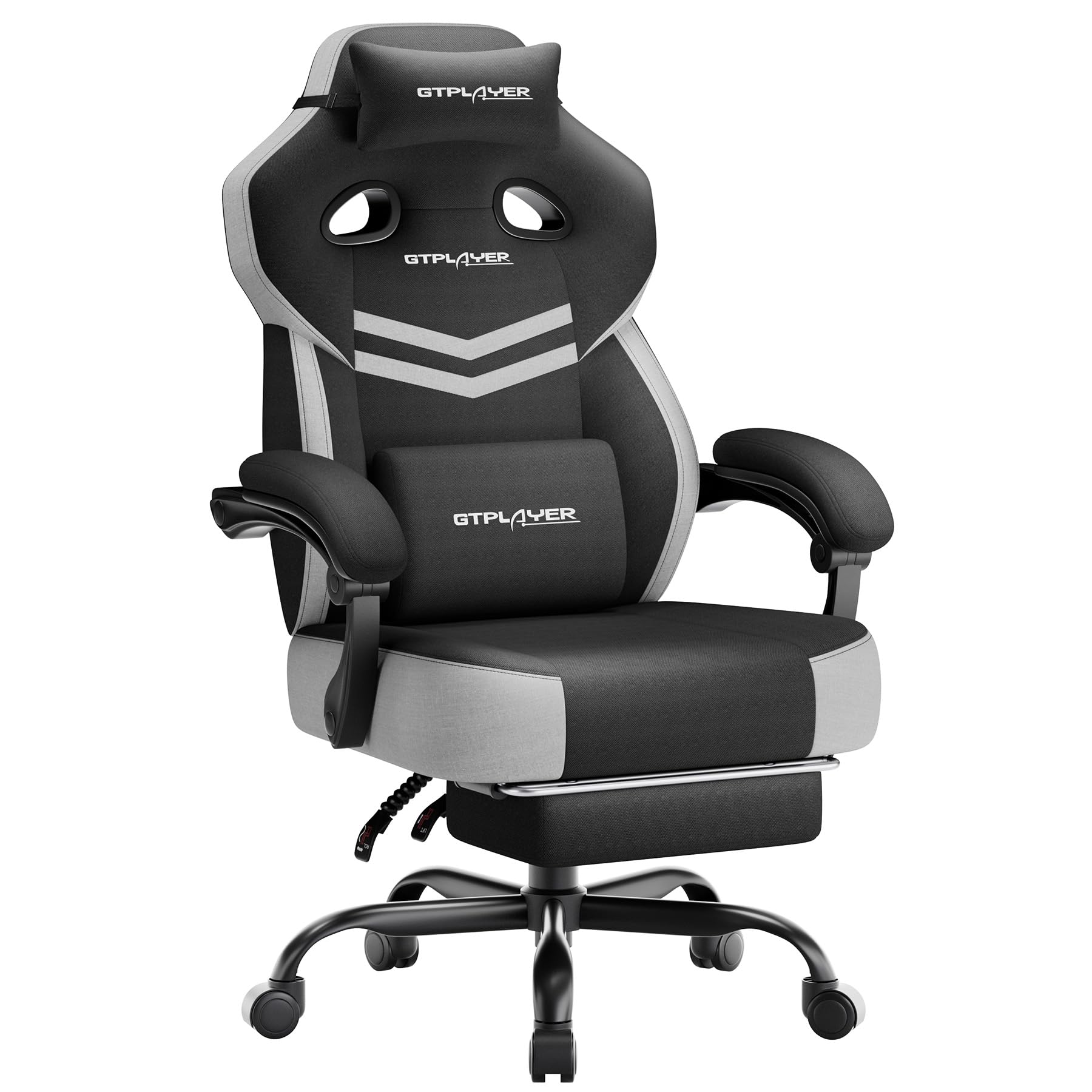
Twenty-six inches across and rated to 350 pounds, this is the chair here built for a body that doesn't fold into a standard racing bucket. The backrest stands 30.7 inches tall and the frame is sized for players up to 6 feet 3, so the top of the seat back reaches the shoulders rather than stopping at the ribs — the difference between a chair that holds your upper back and one that only pokes it.

The upholstery is what we appreciate most. Linen weave breathes where faux leather doesn't, and three hours in a warm room is the difference between sitting still and shifting every ten minutes. The foam is dense rather than plush, and the support comes from the shape of the backrest instead of a strap-on lumbar pillow, so there's nothing to slide out of place mid-session.

The lock is the mechanism to watch. A backrest that stops holding its angle is worse for your back than one that never moved, so test the recline during the first month while a return is still simple, and check the armrest bolts at the same time. For a tall frame, the width is worth the floor space it takes.

Pros

  • 26-inch-wide frame rated to 350 pounds
  • Linen upholstery breathes better than faux leather
  • Backrest stands 30.7 inches tall
  • Linked armrests track the recline

Cons

  • Recline tops out at 125 degrees
Our verdict

The one to buy if you're tall or broad: 26 inches of frame, a 350-pound rating, and a backrest that reaches your shoulders instead of stopping at your ribs.

Check Latest Price
3

Best for Heavier Users

LEMBERI Big and Tall 400 lb

89 /100
Trail Score Excellent

Key details

Seat Height
18.9 inches
Lumbar Support
USB massage cushion
Weight Capacity
400 lb
Seat Cushion Width
21.3 inches
Check Price on Amazon

The lumbar cushion here vibrates off a USB cord, and we treat that as a warm-up rather than a cure — the support comes from the foam behind it, not the motor. What matters is underneath: a seat cushion just over 21 inches across, a 400-pound rating, and a footrest running on dual steel sliders instead of one thin bar.

For a heavier frame, the width is the whole argument. A 20-inch seat squeezes a broad pelvis and rolls the lower back into a curve it doesn't want; the extra inch and change lets you sit square, with both feet down on an 18.9-inch seat. We also like that parts coverage runs a full 12 months and that the whole thing still goes together in well under an hour.

Pros

  • 400-pound rating with a 21-inch seat
  • Footrest built on dual steel sliders
  • Linked armrests and 12-month parts coverage

Cons

  • Seat cushion runs firm
  • Base and casters are the first wear point
Our verdict

The chair for a heavier player: a true 400-pound rating, a 21-inch seat cushion, and a reinforced footrest that doesn't flex when you lean back.

Check Latest Price
4

Best for Shorter Users

Homall VCH-81 Gaming Chair

88 /100
Trail Score Excellent

Key details

Backrest
22.5 by 30.5 inches
Seat Height
17.3 to 21.5 inches
Recline Range
90° to 155°
Weight Capacity
300 lb
Check Price on Amazon

155 degrees is more recline than anything else here, and it changes what the chair is for. Laid all the way back with the rock knob loose, it's closer to a lounger than a desk chair; upright, it locks at five positions between 90 and 155, which is the range where you actually find an angle that takes weight off your lower back.

The number that matters day to day is the seat height. At 17.3 to 21.5 inches it covers the lowest range here, which puts a shorter person's feet flat on the floor instead of dangling — the difference between a chair that supports your back and one that quietly tips your pelvis all evening. Behind you, a 22.5-by-30.5-inch backrest covers tailbone to shoulders, and the 1.8mm steel frame and Class 3 gas lift are sturdier hardware than the price suggests.

We point shorter players here first, and the armrests are the compromise: they're fixed and sit low, which suits a short frame and frustrates a tall one. The lumbar pillow is the usual strap-on, worth re-seating at your belt line before a long session rather than after your back starts complaining.

Pros

  • Seat adjusts down to 17.3 inches
  • Locks at five recline positions to 155 degrees
  • Tall 30.5-inch backrest

Cons

  • Durability is the weak spot over years
Our verdict

The pick for shorter players: a seat that drops to 17.3 inches so your feet reach the floor, and the deepest recline here for leaning back between matches.

Check Latest Price
5

Breathable Seat Comfort

GTPLAYER LR002 Gaming Chair

88 /100
Trail Score Excellent

Key details

Upholstery
Woven fabric
Weight Capacity
300 lb
Recline Positions
3
Seat Construction
Pocket springs
Check Price on Amazon

Pocket springs are the reason to consider this one. Rather than one slab of foam, the seat is built from individually pocketed coils, so it gives where your hips press and stays firm under your thighs — the same logic as a decent mattress, and a better match for a three-hour sit than molded foam. The cover is a quilted woven fabric instead of faux leather, which stays noticeably cooler against your back.

The catch is alignment. A seat that sags forward or a backrest that leans to one side undoes every bit of support the springs provide, and that's the wear this chair shows as it ages — check it in the first weeks, while a return is still straightforward. The linked armrests and the three-position recline are the right hardware otherwise, and the footrest is there for reclined breaks.

Pros

  • Pocket-spring seat spreads pressure
  • Breathable woven cover stays cooler
  • Linked armrests and a three-position recline

Cons

  • Can develop a forward sag or lean
  • Backrest-to-seat seam is a wear point
Our verdict

Worth a look if you want a firmer, springier seat than foam: pocket springs under the cushion and a breathable cover, at a mid-range price.

Check Latest Price
6

Tight Budgets

Kslysuty Pocket-Spring Chair

90 /100
Trail Score Outstanding

Key details

Seat Height
17.72 inches
Lumbar Support
USB massage cushion
Weight Capacity
400 lb
Seat Construction
Pocket springs
Check Price on Amazon

On paper this looks like a chair from a tier above its price: pocket springs in the seat, a 400-pound rating, a metal-and-wood frame, linked armrests, a headrest and a USB massage cushion, for less than anything else in this group.

The seat sits low at 17.7 inches, which suits shorter players and lines the cushion up with a standard desk, and the 20.9-inch seat depth is generous without turning into a sofa. We like the wing-back shape more than we expected — it wraps the shoulders without pushing them forward, the usual failure of a cheap bucket seat.

What we can't tell you is how it ages. This is the newest design in the group and the one with the least behind it, so treat the 400-pound rating and the springs as promising rather than proven. If longevity matters more to you than the price, our top pick has a longer record; if you want the springiest seat for the least money, start here.

Pros

  • Pocket-spring seat at the lowest price here
  • 400-pound rating on a metal-and-wood frame
  • Wing-back shape wraps the shoulders

Cons

No notable drawbacks to flag.

Our verdict

The value gamble here: pocket springs, a 400-pound rating and a massage lumbar for less than anything else in this group, with the shortest track record to back it up.

Check Latest Price
7

Office-Chair Looks

Dowinx 66B1 Big and Tall

88 /100
Trail Score Excellent

Key details

Armrests
Height-adjustable
Seat Depth
20.1 inches
Recline Range
90° to 135°
Weight Capacity
300 lb
Check Price on Amazon

This is an executive office chair with a footrest, not a racing-style gaming chair, and that's the point. The backrest is two layers — a soft cushion over a firmer supportive slab with a 3D-wrapped lumbar curve built in — and the seat is pocket-sprung, so what meets your lower back is a broad shape rather than a pillow on a strap.

The arms adjust up and down, which sounds minor until you've spent an evening with your elbows an inch below the desk. Because it reclines to 135 degrees with a footrest, it does the after-hours job too, and the seat is 20.1 inches deep across a 22.8-inch frame, so a broad build fits without feeling wedged.

The cushioning is the dividing line. This seat is firm, which is right for support and takes a week or two to get used to; a cushion helps in the meantime. If you want to sink into something soft, none of these will do it, and this one least of all.

Where it gives ground is range and money. There's no bucket to fall into, and it's the most expensive chair in the group. For a back that needs support at a desk for eight hours and games after, that's a fair trade; for someone who wants the racing-chair experience, it isn't.

Pros

  • Built-in lumbar curve instead of a loose pillow
  • Height-adjustable armrests
  • Pocket-spring seat holds its shape

Cons

  • Footrest is awkward to slide in and out
Our verdict

The desk-chair option: a two-layer backrest and a pocket-spring seat that hold your lower back without a hard ridge, plus height-adjustable arms — and the highest price here.

Check Latest Price

How We Tested 12 Gaming Chairs (and Sat in Them for Seven Months)

To build the shortlist, I started with chairs that specify an adjustable lumbar support and a seat-height range that clears a standard desk, then cross-checked warranty length, whether replacement parts are actually sold, and whether the casters and gas lift are rated for the chair's stated capacity. That last filter eliminated a surprising number of candidates — a chair you can't buy a new gas cylinder for has a shelf life. Twelve made the cut, spread from budget models to genuinely expensive ones.

Each tester assembled their chair alone with the supplied tools, timing the build and noting whether the holes lined up, whether hardware was missing, and whether the finished chair sat level on a hard floor. We rechecked every bolt at the one-month mark. Then the chairs went to work: full eight-hour desk days, three-hour evening sessions with a controller, reclined console play, and a rotating cast of testers from 5-foot-2 to 6-foot-3 so we could see whose shoulders the bolsters actually fit.

For back support specifically, we logged where soreness appeared — lower back, tailbone, between the shoulder blades — after four-hour stretches and compared notes across chairs. We ran the lumbar cushion through its full range, set armrests for typing and for a controller, and reclined each chair to its furthest stop to see whether the seat pan followed or left a gap behind the hips. Stability got a cruder test: a shove side to side at the armrests, a roll over a rug lip, and one 250-pound tester dropping into the seat rather than lowering himself in. To judge durability we pressed a thumb into the seat foam each month to see how quickly it sprang back and watched the seams for peeling — which also told us how each chair would look a year in. Value got the final word: what the extra money bought, a better mechanism or just contrast stitching.

How to Choose a Gaming Chair for Back Pain

Where the lumbar support actually sits

Most chairs at this level ship with a lumbar pillow on a strap, and that works as long as the pillow lands at your belt line. Sit all the way back, slide a hand behind you, and feel where the cushion meets your spine; if it presses between your shoulder blades, it's too high and will push you forward rather than support you. A tall shaped backrest does the same job with nothing to reposition, which is why the GTPLAYER GTP408 relies on its 30.7-inch back instead of a pillow.

Recline, the lock, and linked armrests

A backrest that locks somewhere around 100 to 115 degrees takes load off the lower back for desk work; the full recline is for breaks, not typing. What shoppers miss is the armrest. Fixed arms stay put while the back tips away, so your shoulders roll forward exactly when you're trying to relax them. Arms linked to the backrest, as on our top pick and the GTP408, are worth more to a sore back than another ten degrees of lean.

Fit: seat height, seat depth, weight rating

Feet flat, thighs supported, a couple of fingers of space behind the knee. Seat heights in this group run from 17.3 to 21.5 inches, and that range decides who the chair is for: short legs need the low end, and anyone over six feet needs width and capacity with margin. A 300-pound chair under a 280-pound player is working at its ceiling all day, so leave roughly 20 percent in hand.

Foam, springs, and the sag problem

Budget chairs use molded foam, which compresses where you sit and stops doing its job after a year or two of daily use. Pocket springs spread the load and hold their shape longer, which is why we favor them for anyone sitting more than four hours a day. A firm seat feels wrong for a week and then right; a soft one feels wonderful and then bottoms out.

Assembly and the first few weeks

Plan on the better part of an hour with two people and a clear floor. Hardware arrives bagged and labeled and the instructions are usually a numbered diagram, so the build itself rarely goes wrong. What follows matters more: retighten the seat and armrest bolts after the first week, then check them monthly. Most of the wobble that develops in these chairs starts as a bolt that worked loose.

Frequently Asked Questions

Final Verdict

For most people with a sore back, the N-GEN NG2601A is the chair to buy. Linked armrests and a lumbar cushion you position yourself do more for your lower back than the extra features on pricier chairs, and the 135-degree recline gives you somewhere to go when sitting upright stops working.

Taller or broader players should take the GTPLAYER GTP408 for the width and the 350-pound rating, and shorter legs do better with the Homall VCH-81's 17.3-inch seat height. If a desk chair that happens to recline suits you better than a racing bucket, the Dowinx is the one.