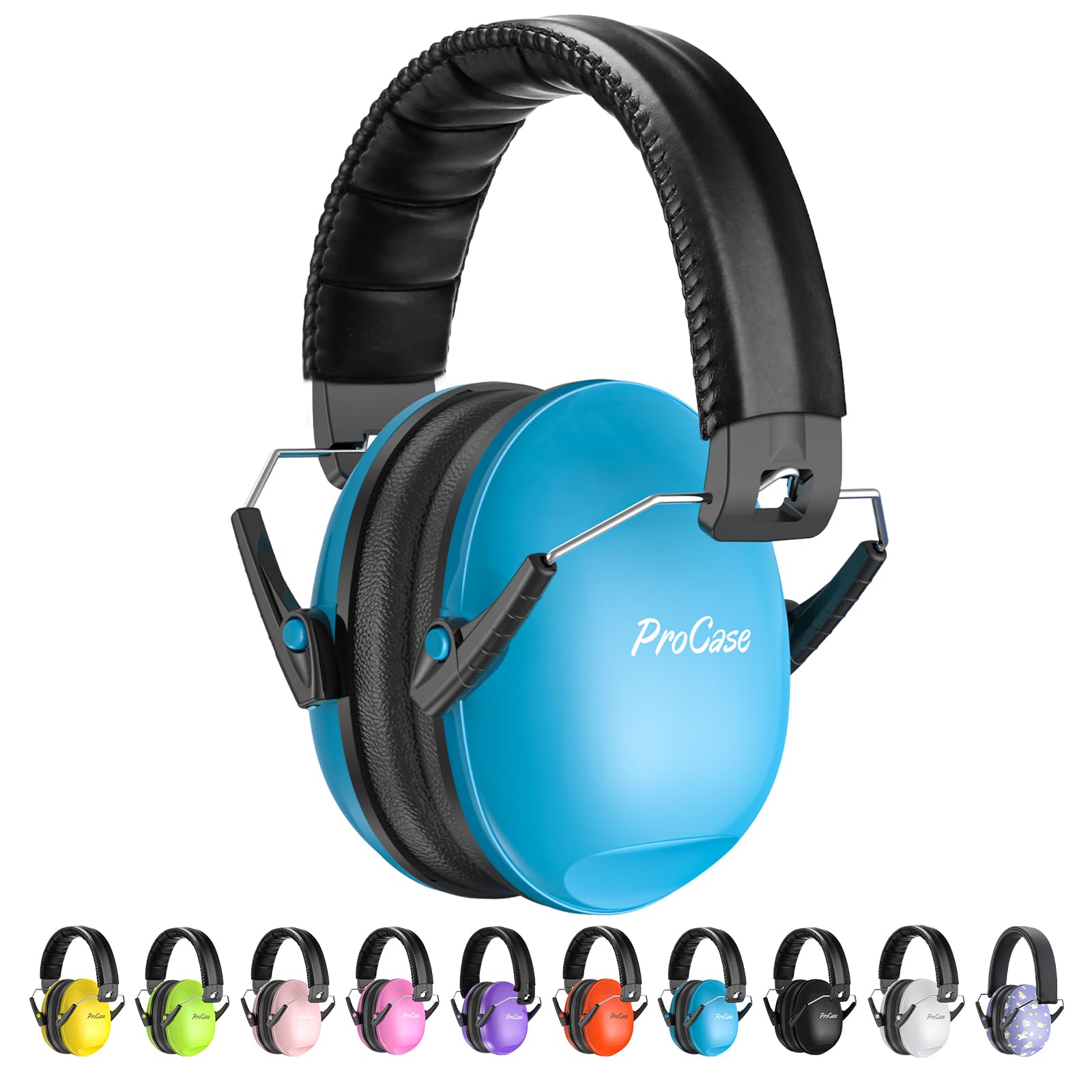
Best Noise-Reducing Earmuffs for Autism of 2026

Big noise-reduction numbers rarely make an earmuff right for a child with autism. A pair that silences everything also cuts off the voices and instructions that keep a child oriented. For most sensory-sensitive kids the useful goal is muffling the harsh peaks — a siren, a hand dryer, a firework — while speech stays audible.

Fit decides whether an earmuff actually gets worn, since an unworn pair protects nothing. Headbands that clamp too tightly, cups that outgrow a toddler, and 'kids to adult' sizing that silently stops at small heads all end up abandoned in a backpack. Every head shape tolerates pressure differently, so comfort comes down to adjustment range more than the number on the box.

What really separates a keeper from a headache is how much blocking a child tolerates at all. Higher attenuation demands a firmer seal, which reads as tight pressure; gentler models fit more freely but pass more sound. The picks here match that trade-off to a specific age and scenario — a baby on a flight, a school-age child in class, an older user at a race.

1

Best Overall

Dr.meter EM100

93 /100
Trail Score Outstanding

Key details

Comfort
Memory-foam soft pads
Fit Range
Toddler to adult
Noise Reduction
SNR 27.4 dB
Check Price on Amazon

The Dr.meter EM100 delivers 27.4 dB of reduction that softens stadium crowds, firework bursts, and assembly applause while a parent's voice stays clear — enough to pull the sting off noisy moments without sealing the world out. Memory-foam cores inside PU-leather cushions keep small ears comfortable for hours, the kind of soft padding that lets a sensory toddler wear them without complaint. An adjustable band with a broad sizing range lets one budget pair rotate across multiple children.

Parents of a noise-sensitive toddler usually start here because comfort makes compliance easier: a pair light enough to be forgotten through classroom hum, birthday parties, and family gatherings. The fit rewards younger heads — snugger on teens and larger adults, who need a longer-band option. Durability is where the budget shows: ear-cushion covers and headband joints can separate over months of heavy handling, so households counting on one pair to survive years of rough daily use get more life from a sturdier mid-priced model.

School assemblies, crowded waiting rooms, and weekend race meets are the settings where this passive muffling shows its value — softening the sharp sounds a sensory-sensitive child reacts to while everyday speech stays in earshot.

💡 Check the fit against the oldest head in the house first, since the band tops out on larger wearers.

Pros

  • Memory-foam cushions stay comfortable through multi-hour events.
  • Softens loud-event noise while keeping voices and speech audible.
  • Budget price makes backup pairs for school and diaper bags painless.

Cons

  • The headband runs snug and stops widening before the teen years.
  • Ear-cushion covers and headband joints can separate under heavy daily use.
Our verdict

The affordable starter pair for everyday loud spots in an autism household — buy a second one so a spare can live in the diaper bag.

Check Latest Price
2

Best for Growing Kids

Alpine Muffy Kids

93 /100
Trail Score Outstanding

Key details

Comfort
Soft, no squeeze
Fit Range
Ages 5-16
Noise Reduction
SNR 25 dB
Check Price on Amazon

Ear cups slide down and the headband stretches as a child grows, so this single pair can span from about age five into the mid-teens. Soft padding keeps the head free of that clamped feeling hour after hour, and the frame holds up to routine classroom knocks and drops far better than the budget multi-packs in this set.

Best for parents of school-age kids with sensory sensitivities who want one pair they will not replace every school year — for homework focus as well as drums, fireworks, or race days. The moderate 25 dB tilts toward comfort and audible conversation over maximum muffling, so at very close-range extreme noise some volume still bleeds through, and loose strands can catch in the pivots during fitting.

Pros

  • True adjustability covers roughly five to sixteen, replacing several budget purchases.
  • Soft cushions children tolerate for hours without head squeeze.
  • Build holds up to years of daily classroom and event wear.

Cons

  • Moderate 25 dB of reduction
Our verdict

For families ready to invest once in a pair that sees a child through grade school, this is the lasting alternative to budget multi-packs.

Check Latest Price
3

Best Versatile Fit

iClever EM01

92 /100
Trail Score Outstanding

Key details

Comfort
Softens after break-in
Fit Range
3+ to small adults
Noise Reduction
SNR 29 dB
Check Price on Amazon

The EM01 carries ANSI S3.19 and CE EN 352-1 certification with a 29 dB SNR claim, and the cups soften surrounding noise while the child still hears parents speaking.

The unusually broad fit — one pair spanning children through small-framed adults — often serves several household members at once. Generous cups won't seal on toddlers under roughly three, so families at that stage should start with a smaller-cup muff instead.

Pros

  • Blocks noisy peaks while leaving a parent's speech clear for the child to hear.
  • One certified pair stretches from children to small-framed adults, growing with the wearer.
  • Certified ANSI and CE shielding, repeatedly effective for special-needs children, at a modest price.

Cons

  • Fresh out of the box the clamp feels snug until the foam pads soften over several wears.
Our verdict

The pair to buy when one child will wear ear defenders for years, not months — certified shielding that never ages out at a grade-school size.

Check Latest Price
4

Best Budget for Toddlers

ProCase Kids 27dB

93 /100
Trail Score Outstanding

Key details

Comfort
Thick foam pads
Fit Range
Toddler, short reach
Noise Reduction
SNR 27 dB
Check Price on Amazon

ProCase brings ANSI S3.19 and CE EN352-1 certification to little heads with an SNR 27 dB rating that dulls fireworks, mowing, and arena crowds while keeping nearby voices audible — a certified starting point for a sensory-sensitive toddler.

This pair fits toddlers and preschoolers who stay inside its short adjustment range; a child who tops out the extensible arms before school age should move to the higher-decibel sibling sized for older heads. Where the price allows a spare in the car and another at daycare, that tradeoff is easy to accept.

💡 Try them on at home before a crowded event — clamp tension follows head shape more than age.

Pros

  • Certified ANSI S3.19 and CE EN352-1 noise reduction at a budget price
  • SNR 27 dB tames fireworks and arena roar without hiding nearby voices
  • Foam-filled ABS cups have lasted years through daily handling

Cons

  • Clamp tension varies with head shape, so the fit can feel tight on some children
  • The short telescopic range means children outgrow these before school age
Our verdict

The certified first pair for a young sensory-sensitive child when budget and spare-pair convenience matter more than growth headroom.

Check Latest Price
5

Best for Babies

Alpine Muffy Baby

89 /100
Trail Score Excellent

Key details

Comfort
Lightweight soft design
Fit Range
Ages 0-4
Noise Reduction
—
Check Price on Amazon

The Alpine Muffy Baby is the one genuinely infant-first design here: padded cups with no hard parts and a strap that sits on the head without pressing the soft spot. At 114 g it is light enough for babies to nap through flights and festival crowds, which explains its standing as the go-to first set for children who are too small for the all-age muffs in this range. The catch is fit behavior, not construction. Very active infants can push it off mid-session, and seating the strap on a restless child takes two calm hands — parents of squirmers should expect a few practice fittings before it becomes second nature.

💡 Fit the strap while your infant is calm, and give the pads a moment to seat fully before the noise starts.

Pros

  • No-hard-parts construction shields a developing head without hard pressure points.
  • At 114 g, the lightweight shell lets babies nap through flights and parades.
  • The strap extends smoothly through early head growth, covering roughly ages 0–4.

Cons

  • Strap needs even hand seating each use, which is awkward with a wriggly baby.
  • Under active play, some mobile infants nudge the cups off, so re-seating becomes part of wear.
Our verdict

For parents taking a child under four somewhere genuinely loud, the premium buys a safety-first, no-hard-parts fit that no all-age muff can match at that stage.

Check Latest Price
6

Best High-NRR for Older Users

Pro For Sho 34dB

91 /100
Trail Score Outstanding

Key details

Comfort
Comfortable all day
Fit Range
Small-average heads
Noise Reduction
NRR 34 dB
Check Price on Amazon

Pro For Sho packs near-professional 34 dB protection into a low-profile 7.2-oz frame that carries easily across loud-event days. Long sessions stay comfortable, and the thin cups clear eyeglass arms without pinching — a real advantage when the venue noise is the point of bringing them.

Best for spectrum teens and adults who want strong suppression at concerts, fireworks, or workshops rather than pillow-soft cushioning. Snug-by-design cups run small on larger heads, and the protective seal depends on that close fit; verify head size before purchase or plan on the firmer seating this design asks for.

💡 Fit the cups over your ears before relying on them — the 34 dB value only holds when the seal sits fully over each ear without gaps.

Pros

  • Strong 34 dB attenuation for loud venues in a light, packable frame that travels well.
  • Low-profile cushions stay comfortable for long sessions and clear eyeglass frames comfortably.
  • Certified to ANSI S3.19 and CE EN 352-1, with consistent behavior across a very large owner base.

Cons

  • Compact cups run small on larger heads, and the snug seal is necessary for protection to hold.
Our verdict

At a mid-range price, this delivers dependable attenuation and all-day comfort for older users who prioritize silencing over plush fit. Larger-headed listeners should measure first; for teens and most adults it is a strong, packable barrier against loud-event peaks.

Check Latest Price
7

Extreme Noise Adults

Decibel Defense 37dB

91 /100
Trail Score Outstanding

Key details

Comfort
Padded, firm seal
Fit Range
Adult, XL option
Noise Reduction
NRR 37 dB
Check Price on Amazon

Industry-leading 37 dB NRR plus a padded headband makes this the deepest-silencing pair for the sound-sensitive teenager or adult who needs relief at ranges, drag strips, or industrial sites. That same depth swallows conversation, so it fits extreme-venue days rather than classrooms or everyday wear, and the firm seal can press on larger heads and under glasses.

Pros

  • Blunts gunshot blast and sharp spikes at ranges and events with exceptional attenuation.
  • Padded headband carries it comfortably through a full day of mowing or event wear.

Cons

  • Firm clamp presses on larger heads and can interfere with eyeglasses.
Our verdict

Best for older teens and adults whose auditory distress comes from genuine blast and roar — if the fit works on their head and deep muting is acceptable, it earns the price; otherwise a lighter muff suits better.

Check Latest Price
8

Everyday Adult Use

3M Pro-Grade Earmuff

92 /100
Trail Score Outstanding

Key details

Comfort
Comfortable w/ glasses
Fit Range
Adults and teens
Noise Reduction
—
Check Price on Amazon

Replaceable ear pads keep this professional-grade muff in service for years, and the cushions stay comfortable through long sessions, even under eyeglasses. The intended buyer is the noise-sensitive adult or older teen — it is sized for mature heads and not shaped around sensory-child needs, so households shopping for a toddler should look to the kids-focused picks.

Pros

  • Cushions hold comfort through long sessions, eyeglasses included
  • Sturdier construction outlasts cheaper muffs under daily use

Cons

  • The headband can feel snug on larger heads during extended wear
Our verdict

For the noise-sensitive adult or older teen who wants one comfortable muff for daily loud settings, this is the low-waste choice.

Check Latest Price
9

Youth Small Heads

ProCase 33dB

89 /100
Trail Score Excellent

Key details

Comfort
Firm clamp
Fit Range
Youth, small heads
Noise Reduction
SNR 33 dB
Check Price on Amazon

Strong 33 dB attenuation at a budget price fits older kids, teens, and smaller-framed adults who have outgrown toddler muffs, taming loud spikes while keeping conversation audible. The non-expanding headband defines the ceiling: it seals properly only on small-to-average heads, so this is a fit-matched purchase rather than a one-size universal.

Pros

  • 33 dB deadening at a low price, taming loud noise while conversation stays possible.
  • Lightweight comfort and low cost make it easy to justify a spare pair.

Cons

  • The snug clamp can grow tiring over long events or study sessions, with no way to widen it.
Our verdict

For a smaller-headed teen at a loud event or study space on a tight budget, this delivers strong protection — provided the headband fit check happens first.

Check Latest Price
10

Sibling Two-Pack

Floriogra 34dB 2-Pack

92 /100
Trail Score Outstanding

Key details

Comfort
Soft foam cups
Fit Range
Kids, smaller heads
Noise Reduction
NRR 34 dB
Check Price on Amazon

Two NRR 34 dB pairs for about the price of one premium muff — the economical way to keep two sensory kids covered or stash classroom spares. The cups run small: on broader adult heads the seal loosens. Smaller heads fit snugly and get full blocking from both pairs.

Pros

  • Pair pricing undercuts a single premium muff, delivering two working pairs for the outlay of one.
  • Double-layer foam cushions stay comfortable across long school or therapy sessions.

Cons

  • Fully extended cups still sit snug on larger adult heads, where the seal weakens.
Our verdict

For homes with two smaller-headed kids or teens, this delivers two dependable high-attenuation pairs at the sharpest price per pair in the set. Have each wearer try one before counting on it — larger adult ears sit past the cups.

Check Latest Price

How to Choose Noise-Reducing Earmuffs for Autism

Attenuation vs. Speech Clarity

SNR and NRR figures on the box describe average sound reduction across a range of test tones — not what your child will actually hear. Passive earmuffs dampen everything by roughly the same amount, voices included, so a 33 dB pair swallows conversation while a 25 dB pair leaves it intelligible. Decide first which environment matters: brute suppression for races and fireworks, or everyday calm for classrooms, restaurants, and travel.

For autism families the practical sweet spot often sits around 25–29 dB, where sharp peaks — sirens, hand dryers, vacuums — drop to tolerable levels while a child still hears instructions and a parent's voice. That speech pass-through is a feature, not a flaw. Reserve 33–37 dB models for genuinely extreme venues and for older users who explicitly want near-total quiet.

True Adjustment Range

Adjustable range is the spec listings overstate most. Telescopic arms have a finite reach, and many 'kids to adult' claims quietly end at the size of an average elementary head while marketing suggests otherwise. If the headband runs out of extension at one head size, the cups sit proud of the ears and a supposedly protective muff becomes decorative.

Check the real span before buying: does the headband expand through the teen years, and do the cups sit deep enough to clear the ears completely? For a growing child, a model with generous extension (roughly through elementary school and beyond) costs more upfront but beats replacing a too-small pair every season.

Cushion Softness and Clamp Pressure

Comfort comes down to two physical forces working against each other. A tighter clamp creates a better acoustic seal, but sustained pressure on the temples hurts after about an hour — especially for a child who is already distressed by noise. Thick, low-density foam with a soft cover spreads that force over more surface area, which is why the most comfortable muffs also feel the softest against the head.

Test-fit at home before a loud event: if the muff leaves red marks after ten minutes or the child pulls it off immediately, the clamp pressure is wrong for that head regardless of the label. Step up cushion depth, choose a wider padded headband, or drop a few decibels of attenuation for a lighter seal.

Hinge and Headband Durability

The headband joint and the pivots where cups attach are where earmuffs fail first, not the cushions. Injected-plastic hinges that flex with every fold and yank can crack after a handful of uses, and this is the failure families report with cheap multi-packs — headbands snapping and ear cups detaching. Steel-wire reinforcement inside a thicker arch survives being dropped, tossed in a school bag, and yanked off a struggling child.

A single quality mid-range pair with a metal-reinforced headband and replaceable cushions routinely outlasts two budget pairs that fail at the same hinge. If you expect years of daily handling rather than occasional event use, that structural difference is worth paying for.

Weight and Foldability

Heavier earmuffs press down on a small neck and feel oppressive over a full school day, which is why the lightest infant models sit around 114 grams while maximum-blocking adult muffs run heavier. For a baby, low weight often decides whether the muff stays on through a flight; for an older user at an event, a few extra ounces is a fair trade for stronger shielding.

Folding arms are convenient for backpacks and diaper bags, but every folding hinge is a potential wear point over months of opening and closing. If a muff lives most of its life in one place — a classroom, a bedside table — skip the fold and favor a sturdier fixed band.

Certification Levels

Certification such as ANSI S3.19 and CE EN 352-1 means the attenuation rating was independently tested rather than estimated by the seller. Many low-cost listings print attractive numbers with no certification behind them, and the actual reduction can fall well short of the claim.

For a child whose comfort depends on predictable protection, an independently certified rating is the difference between a number that works and a number that only prints well. When two models look otherwise equal on paper, the certified one is the safer bet for consistent real-world performance.

Frequently Asked Questions