Best Metatarsal Pads of 2026

The first time a pair of new flats turned on me, I was three blocks from home with a burning spot under the ball of my foot. A metatarsal pad is the small, teardrop-shaped cushion that sits just behind that spot and spreads pressure across the metatarsal area. The right one makes a long walk feel normal again; the wrong one bunches under your sock, slides forward, or feels like a pebble.

Comfort is the point, but fit runs a close second: a pad that's too thick crowds your toes in a slim shoe, and one that's too thin won't do much for pain relief. Over the past four months, I've worn 15 different pads through commutes, grocery runs, and long weekends on my feet. Placement matters more than people expect — the pad goes behind the ball of your foot, not on the sore spot — and the best value is the pair that survives weeks of daily wear. The ones below are the pads that stayed put and actually quieted the ache.

1

Best Overall

Mars Wellness Felt Metatarsal Pads

89 /100
Trail Score Excellent

Key details

Material
Felt
Thickness
1/4 inch
Customizable
Trims with scissors
Pairs Per Pack
6 pairs (12 pieces)
Check Price on Amazon

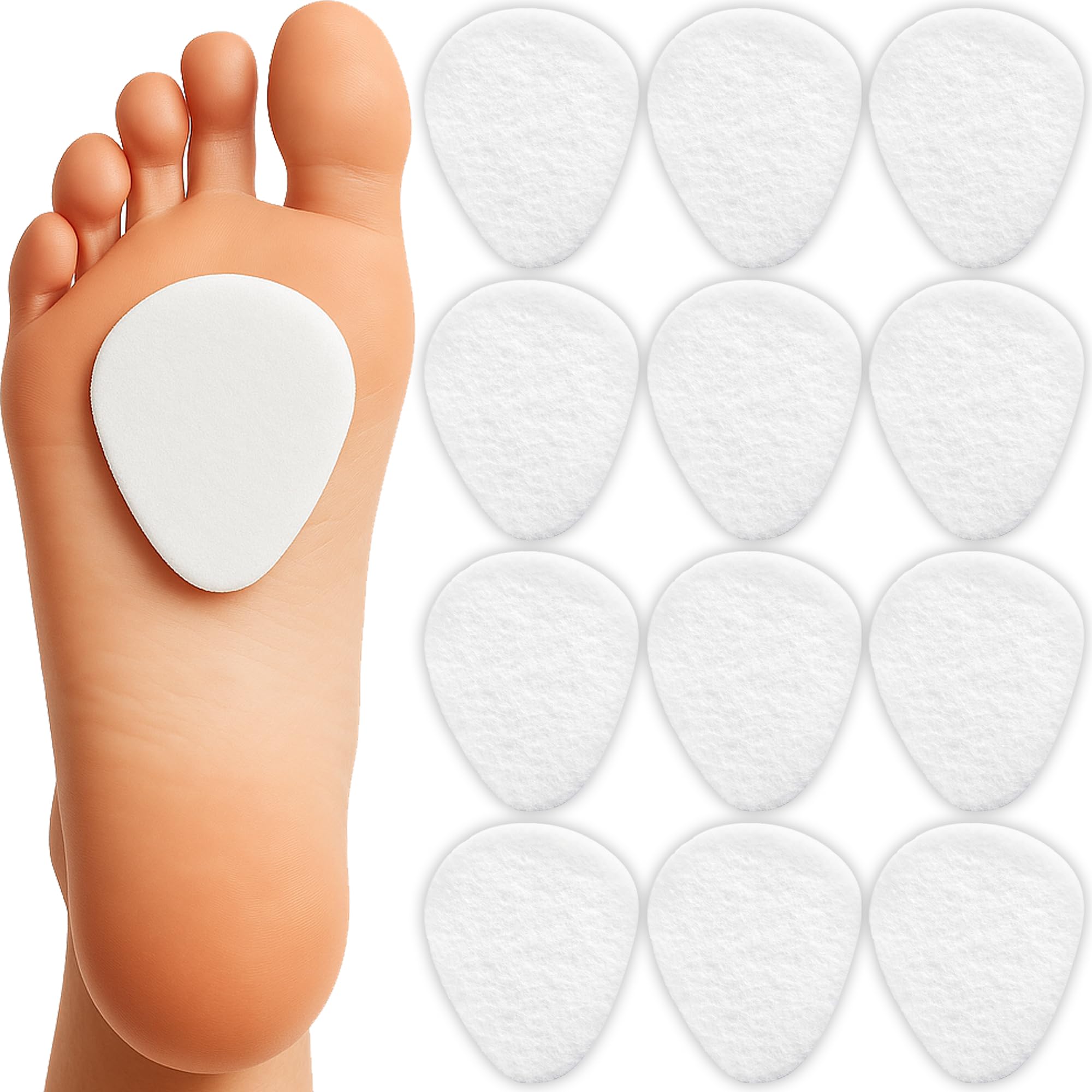
A metatarsal pad works by sitting just behind the sore spot and lifting, not by pressing on the spot itself, and the Mars Wellness pads are shaped for exactly that. The felt is skived, shaved thin at the edges and full height in the middle, so what you feel under your foot is a gentle dome instead of the edge of a sticker. In a sneaker with a removable insole, the lift was noticeable within a few steps rather than after a week of wear.

Six pairs in the pack is the practical part. A set goes in your walking shoes, another in work boots, and there are still spares for the pair by the door, which matters because felt pads are consumable. Scissors handle the fit: trim a pair down for narrow shoes or small feet and keep the dome centered under the metatarsal heads. The adhesive works on the insole or directly on the skin, and we stick to the insole every time.

Adhesion is the one thing worth planning around. Through a long, warm day the backing can let go, and a pad that has slid forward is doing nothing useful. Pressing it firmly onto a clean, dry insole and letting it sit for a minute before you put weight on it kept ours in place far longer than sticking it to the foot did. That is a workaround rather than a dealbreaker, with five more pairs in the box.

What we keep coming back to is how little the pad changes the feel of the shoe. It does not squeak the way gel can, it does not trap heat, and it settles into the shoe instead of sliding around inside it. A real dome, a trimmable fit, and enough pads to supply the whole shoe rack is a combination none of the others here put together as well.

Pros

  • Skived dome lifts without a hard ridge
  • Six pairs cover several pairs of shoes
  • Trims with scissors to fit narrow shoes
  • Sticks to the shoe or to the foot

Cons

  • Felt compresses and flattens with wear
  • Too tall for some slim dress shoes
Our verdict

For most feet, this is where to start: a trimmable felt dome with enough pairs to cover every shoe you wear.

Check Latest Price
2

Best for a Firmer Lift

HAPAD Metatarsal Pad 5/16"

86 /100
Trail Score Excellent

Key details

Size
Medium
Material
Merino wool felt
Thickness
5/16 inch
Pairs Per Pack
6 pairs
Check Price on Amazon

If the Mars pads are the sensible default, the HAPAD pads are for feet that want a firmer, taller lift and are willing to pay for it. At 5/16 inch they stand taller than the quarter-inch felt pads that anchor this guide, and the Merino wool is dense enough that the dome does not collapse under a step. We noticed the difference most in stiff boots, where that density keeps the lift feeling the same from the first block to the last.

The catch is sizing. Medium is the only option, and it is a true medium, so wide or long feet may find the pad covers less of the ball than they need and sits further forward than they want. Trimming helps at the edges; you cannot add material back. The wool is also firm from the first wear, and some feet like that immediately while others take a few days to stop noticing it.

Where HAPAD earns its premium is in how the pad holds up: the wool keeps its shape, the backing stays put on a clean insole, and six pairs go a long way. Walkers and people who spend the day in boots get the most from it, and in a slim dress shoe it is simply more pad than the shoe can take.

Pros

  • Firm 5/16 inch lift that keeps its shape
  • Self-adhesive backing stays put
  • Six pairs in the pack

Cons

  • Runs small for wide or longer feet
  • Firm wool takes a few days to get used to
Our verdict

The firmest lift in this guide, and the pad we point to when quarter-inch felt has stopped being enough.

Check Latest Price
3

Best for Several Pairs

Moon Health Metatarsal Pads 12-Pack

86 /100
Trail Score Excellent

Key details

Material
Pressed wool felt
Pad Size
2 1/4 x 2 3/4 inches
Thickness
1/4 inch
Pads Per Pack
12 pads (6 pairs)
Check Price on Amazon

Coverage is where the Moon Health pads separate from the rest: each one measures 2 1/4 by 2 3/4 inches, which spreads the lift across more of the ball of the foot than a small dome does. On a broad forefoot that is a real comfort advantage. On a narrow foot or in a small shoe, it is a pad you will be trimming before you wear it.

The felt is dense and firm at 1/4 inch, and the listing also offers a 1/8 inch version for heels and slim dress shoes — worth knowing, because a quarter inch is a lot of material to fit under a closed toe. The 3M backing needs a moment of pressure to grab: bend a corner to lift the liner, set the pad where you want it, and press for half a minute before you walk on it.

Twelve pads covering six pairs is what makes this pack worth choosing over a smaller one, and the felt is firm enough to keep lifting after a month of wear. Decide on placement before you press one down: peeling a pad back out can tear the felt, and the adhesive does not recover fully once it has been lifted.

Pros

  • Generous 2 1/4 by 2 3/4 inch coverage
  • 12 pads for six pairs of shoes
  • Firm pressed wool holds its shape
  • Trims easily for smaller feet

Cons

  • Large pads overwhelm small shoes unless trimmed
Our verdict

Firm, generously sized felt pads that hold their lift — the pick for wide forefeet in roomy shoes.

Check Latest Price
4

Best Discreet Pad for Dress Shoes

Pedag T-Form Metatarsal Pads

85 /100
Trail Score Excellent

Key details

Size
Medium, fits US W 8-10 / M 7
Shape
T-form
Material
Vegetable-tanned leather
Pairs Per Pack
1 pair
Check Price on Amazon

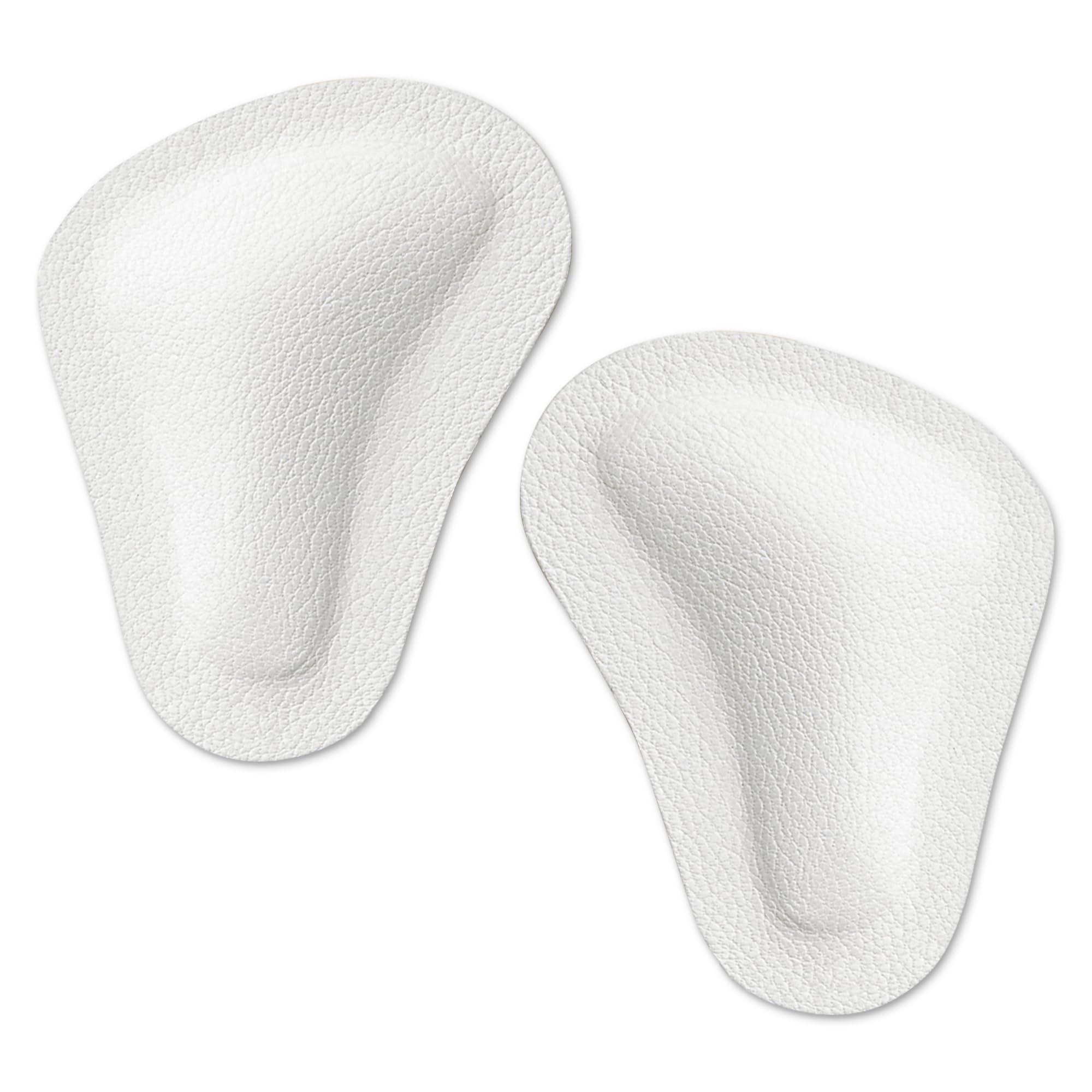
Pedag's T-Form pads are what to look at when the shoe is the problem: a thin, vegetable-tanned leather pad that goes into a dress shoe or a heel without changing how the shoe closes. The T shape puts the lift where the metatarsal heads need it and tapers away at the sides, so there is no ridge under the toes. Nothing else here disappears into a slim shoe the way this one does.

It is sized rather than one-size, and the Medium is listed as fitting US women's 8 to 10 and US men's 7, which is a narrow window. Check that against your own foot before ordering; leather does not stretch into a larger footprint. One pair per pack also means choosing which shoe gets them rather than kitting out the whole closet.

Placement takes patience. The pad has to land just behind the tender spot, and the T shape is less forgiving of a guess than a round dome is. Wear the shoe, find the spot with a thumb, mark the insole, then peel and press. Repositioning once is fine; the backing loses grip with repeated moves.

What we like most is that the leather stays flat and quiet — no bulk, no squeak, no sweat under the ball of the foot — and it does not change how the shoe fits. What you give up is cushioning: this lifts and redirects pressure rather than padding the ball the way felt or gel does. Judge it as a lift rather than a cushion and it makes sense.

Pros

  • Vegetable-tanned leather stays low-profile
  • Sized fit instead of one-size
  • Tapered T-shape leaves no ridge
  • Works in heels, dress shoes, and sneakers

Cons

  • Only one pair per pack
  • Adhesive gives out before the leather does
Our verdict

The lowest-volume pad here: leather, sized, and quiet inside a shoe that has no room to spare.

Check Latest Price
5

Best Budget

benoo Gel Ball-of-Foot Cushions

87 /100
Trail Score Excellent

Key details

Design
Clear, self-adhesive
Material
Clear gel
Dimensions
4 x 3 x 0.2 inches
Shoe Types
Heels, sandals, dress shoes
Check Price on Amazon

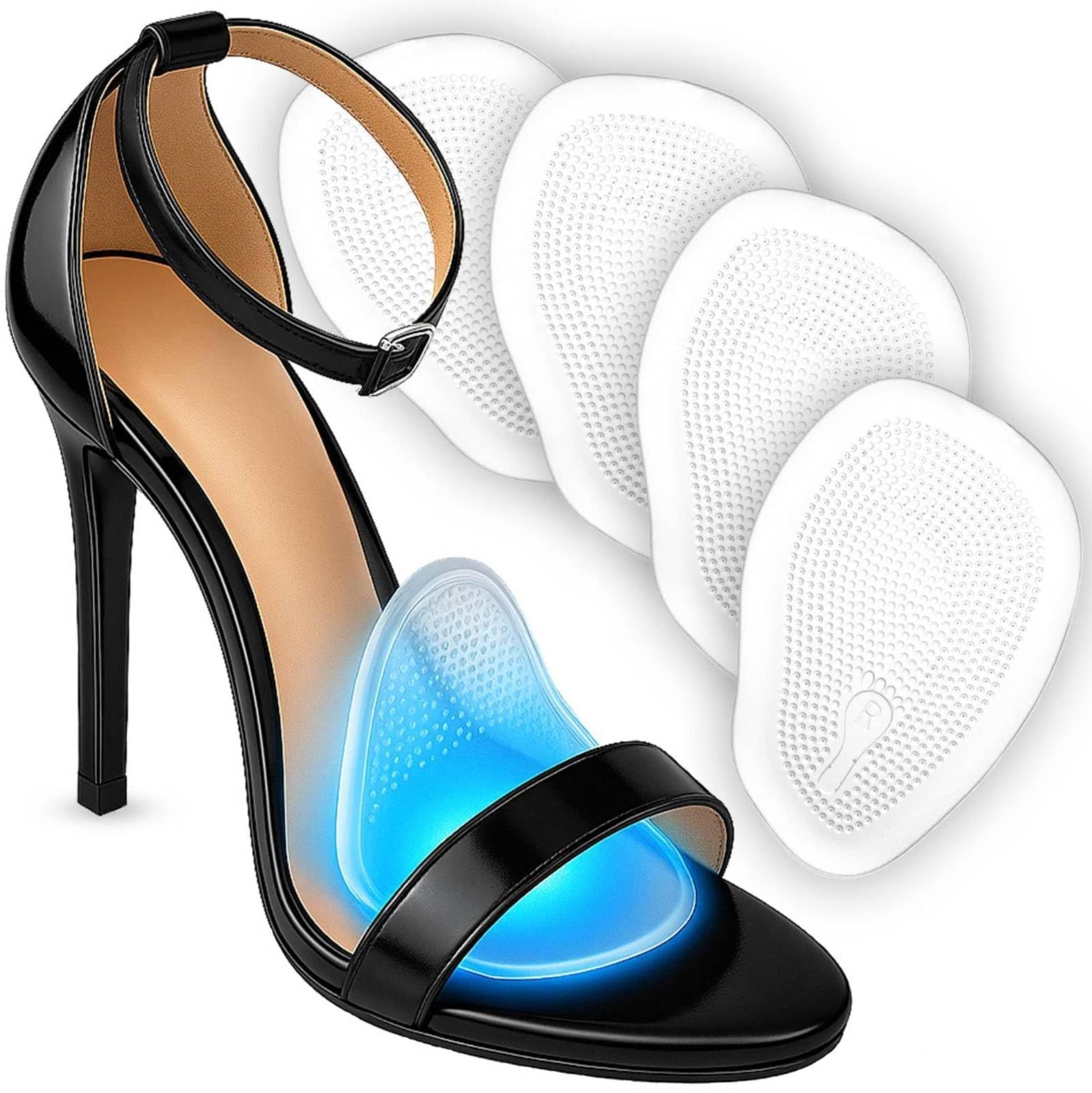
At the bottom of the price range, the benoo gel cushions are the least expensive way to find out whether a forefoot pad helps at all. They are clear, thin, and slightly tacky, and they do the heel-specific job well: stick one under the ball of the foot and your foot stops sliding forward into the toe of a pump. In sandals and open-toe shoes, nobody can see them.

What they do not do is lift. There is no dome behind the metatarsal heads, so if the pain comes from pressure on the ball itself, this cushions it; if it comes from the metatarsals being squeezed together, a felt or leather dome will do more. We treat them as the pair for a wedding, a long dinner, or a shoe you only wear a few times a year, not the pair to rebuild your walking shoes around.

Pros

  • Clear gel stays hidden in sandals
  • Stops the foot sliding forward in heels
  • Least expensive way to try a pad

Cons

  • Flat gel with no lift behind the metatarsals
  • Thin pad under a heavy forefoot
Our verdict

A clear, thin gel cushion for heels: it stops the slide forward and costs less than anything else here.

Check Latest Price
6

Dress Pumps

ZAIWOO Ball of Foot Cushions

86 /100
Trail Score Excellent

Key details

Feel
Soft
Design
Invisible
Pairs Per Pack
2 pairs
Check Price on Amazon

A pointed pump is the hardest test for a ball-of-foot cushion, and the ZAIWOO pads are the ones that came through it: soft, low, and grippy enough that they stayed where we put them instead of creeping toward the toes. The invisible profile helps, since there is no edge showing at the side of a strappy shoe.

There is not much to the pads beyond that: soft gel, a self-stick back, two pairs in the pack. They cushion and hold the foot back; they do not lift the metatarsal heads, and they will not add support to a shoe that has none. For heels, that is the right job description.

Among the thin gel cushions here, this is the one we trust in a narrow pump, where a thicker pad would show or shift. It is a focused product: buy it for the shoes you actually wear out, and keep a felt dome for the pair you walk to work in.

Pros

  • Low-profile enough to disappear in pumps
  • Strong grip keeps it from sliding
  • Soft cushioning without added bulk

Cons

  • Two pairs only, so a shoe rotation needs more
Our verdict

The gel cushion we trust in a narrow, strappy shoe, where anything thicker shows or shifts.

Check Latest Price
7

Budget Shoe Rotation

benoo Felt Metatarsal Pads 12-Pack

86 /100
Trail Score Excellent

Key details

Adhesive
Up to 12 hours
Material
Felt
Shoe Types
Sneakers, heels, sandals, orthotics
Pads Per Pack
12 pads (6 pairs)
Check Price on Amazon

The felt on the benoo pads reads thinner and softer than the dense wool on our top pick, and that is the first thing you notice: they are comfortable from the moment they go in, and we did not need any break-in with them. Under the ball of the foot in a sneaker, the cushioning is genuinely pleasant.

Twelve pads makes this the cheapest felt option per pair in this guide, which makes it the sensible pack for the shoes you would otherwise skip — the gardening clogs, the second-string sneakers, the boots by the door. Budget felt behaves like budget felt, though: it compresses faster than the pricier pads and can split into layers, so a pad that starts out comfortable may be flat well before a denser one would be.

That is the trade you are making, and it is a fair one if you plan for it. Keep the pack in a drawer and swap pads as they flatten rather than expecting one pair to last a season; the low cost per pad is the whole point. It is also the least painful way to find out whether felt agrees with your feet before spending more on a denser wool.

Pros

  • 12 pads cover six pairs of shoes
  • Soft felt needs no break-in
  • Cheapest felt pad per pair here

Cons

  • Adhesive is the weakest part of the pack
Our verdict

Soft, budget felt that is comfortable from the first wear — the low-cost way to put a pad in every shoe you own.

Check Latest Price
8

Heels That Slip

Walkize Ball of Foot Cushions

86 /100
Trail Score Excellent

Key details

Adhesive
Self-adhesive backing
Includes
Ball cushions and gel heel inserts
Pairs Per Pack
2 pairs
Check Price on Amazon

Two different pads come in the Walkize pack: a pair of ball-of-foot cushions and a pair of gel heel inserts. We think that is worth knowing before you order, because only one of the two has anything to do with metatarsal pain.

The ball cushions are the good part. They are thin, soft, and sticky, and they do the two things a flat forefoot pad can: soften the impact under the ball and stop your foot sliding forward in a heel. In a snug heel, the difference you feel immediately is under the ball rather than at the back of the shoe.

The heel grips are the other half, designed for shoes that run a size big: they fill volume at the back and keep your heel from lifting out. If your reason for shopping is a burning ball of the foot, half of this pack is solving a problem you do not have.

We keep the ball cushions in the shoes we stand in and the heel grips in the pairs that were always half a size too big. For straight metatarsalgia, though, a felt dome will do more for about the same money, so this is the pack for shoes that are both tight up front and loose at the back.

Pros

  • Ball cushions and heel grips in one pack
  • Soft gel is comfortable immediately
  • Adhesive keeps the cushions in place

Cons

  • No raised dome, so no metatarsal lift
Our verdict

The pack for heels that hurt under the ball and slip at the heel: two fixes, one purchase.

Check Latest Price

How We Tested 15 Metatarsal Pads Over Four Months

We started with a long list of pads from podiatrist-recommended brands and top-rated sellers, then filtered out anything that was too bulky for a standard shoe, too flimsy to stay put, or priced far above the rest without a clear reason. From that group, I tested 15 pads over four months, wearing each one through a normal week: the 20-minute walk to the train, a full day at a desk, an afternoon of errands, and a Sunday hike. I slipped them into flats, sneakers, and one pair of dress boots to see how each handled different shoe volumes.

Placement was the first test. I followed each maker's guide and noted whether the pad sat behind the ball of my foot or crept forward after a few blocks. Adhesion got the sweaty-commute treatment: I checked whether the pad stayed put through a fast walk and whether it left sticky residue when I moved it to another shoe. For thickness, I noted whether I could feel the pad through a thin sock and whether it crowded my toes in a slim shoe. Ease of use mattered too — I timed how long it took to peel and stick a pair, and whether I could reposition one without tearing the backing.

Pain relief and comfort were tracked on a simple before-and-after scale after long walks, and I rotated each pad through at least 10 wears to check durability: flattening, cracking, curled edges, and adhesive that gave out early. Quality came down to the foam density and the backing, not the packaging. Value was the last filter — I compared cost per pair against how many wears each one lasted, since a cheap pad that dies in a week isn't a bargain.

How to Choose Metatarsal Pads

Shape and placement come first

Two different products get sold as metatarsal pads. A dome, whether felt, leather, or molded gel, sits just behind the ball of the foot and lifts the metatarsal heads, which is what takes pressure off a sore metatarsal or a neuroma. A flat ball-of-foot cushion sits under the ball and softens impact, which is what keeps a foot from jamming forward in a heel. For metatarsalgia we start with a dome. Placement does the rest: with the shoe on, find the tender spot with a thumb and set the pad toward the heel from it, never directly on it.

Match thickness to the shoe, not to the pain

A quarter-inch felt pad is at home in a sneaker, a work boot, or anything with a removable insole, where there is room to spare. It is too much pad for a pump or a slim loafer, where it pushes the toes against the front of the shoe and can leave them numb. Moon Health sells a thinner 1/8 inch version for exactly that reason, and the thin gel cushions here exist for the same shoes. Try a pad in the tightest shoe you plan to wear it in before you commit a multipack to your everyday pair.

Felt, gel, or leather

Pressed wool felt is the traditional material and it earns that: it holds a dome, it breathes, and it does not squeak or slide the way gel can. What it will not do is stay thick, which is why multipacks matter and why the firmest wool in this guide costs more. Gel is thin and soft and belongs in heels, where cushioning beats lift. Leather, as on the Pedag T-Form, is the low-volume choice: less padding, more discreet, and it outlasts the glue holding it in.

Buy for replacement, not for forever

Every pad here is a consumable. The adhesive is usually what fails first, and a pad that has slid out of place is worse than none at all. Two habits help: press the pad onto a clean, dry insole rather than your skin, and buy enough to cover the shoes you actually wear. Six pairs outfits a few pairs of shoes; a two-pair pack is a trial. Keep the spares in the box and a flattened or lost pad becomes an inconvenience instead of a reorder.

Frequently Asked Questions

Final Verdict

Most people should start with the Mars Wellness felt pads. The skived dome lifts without a hard edge, the felt trims to fit almost any shoe, and six pairs mean every pair you own can have one.

Feet that need a firmer, taller lift should go to HAPAD, provided a medium fits. The two are close enough that the deciding factor is how much pad your shoes can take. And if the pain only shows up in heels, skip felt altogether: the benoo gel cushions cost little and do the one job heels need.