Best Knee Braces for Running of 2026

A knee brace has one job: stay in place while you run. Everything else — the compression, the padding, the straps — is wasted the moment it slides down your leg and you're hiking it back up at a crosswalk. The right one keeps your kneecap tracking where it should and takes load off a sore tendon so you finish the run instead of cutting it short. This spring, my team and I put 14 braces through four months of real training to find the ones that actually hold.

The thing I didn't expect: size is everything, and the chart isn't optional. Most brands size by knee circumference, and a brace two inches off will either cut circulation behind the knee or go baggy by mile two, so measure with a soft tape before you order. Type matters as much — a compression sleeve, a patellar strap, and a hinged brace solve three different problems, and buying the wrong one is why plenty of runners decide braces don't work. The picks below earned their place on long runs, track workouts, and the stairs the next morning.

1

Best Overall

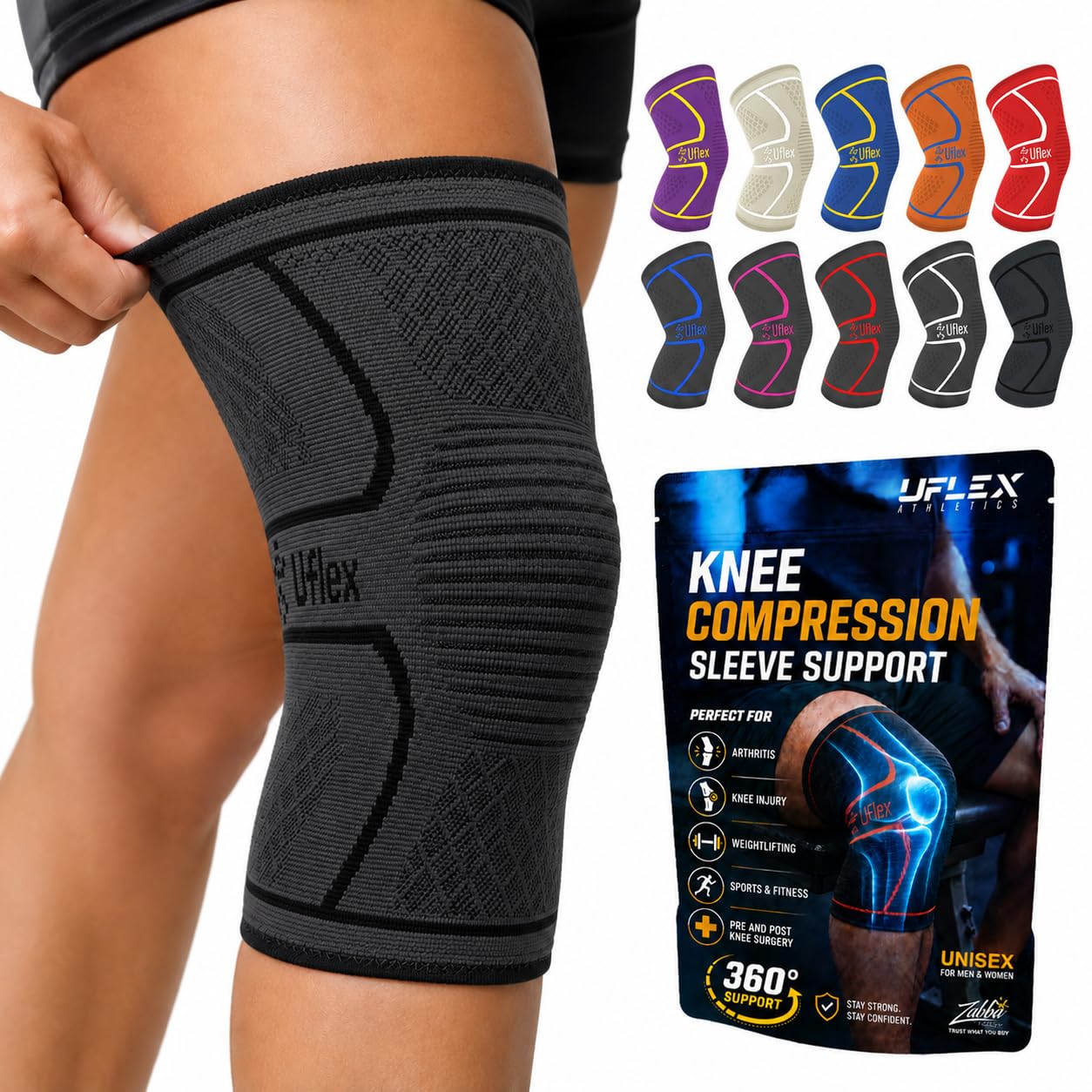
UFlex Athletics Compression Knee Sleeve

89 /100
Trail Score Excellent

Key details

Weight
2.12 oz
Closure
Pull-on
Material
52% nylon, 26% polyester, 20% rubber, 2% spandex
Anti-slip Grip
Double silicone
Check Price on Amazon

Silicone grip is the least glamorous part of a knee sleeve and the part that decides whether you finish a run thinking about your knee or about hitching the thing back up. The UFlex carries a double silicone grip, two bands running around the inside of the sleeve, and it held its position better than any other sleeve in this guide, including on warm days when the leg gets slick and the others started to creep. That is the finding the whole recommendation rests on.

The rest of the design is quiet in a good way. Four-way stretch moves with the knee instead of resisting it, the nylon-heavy blend is thin enough to disappear under shorts, and at about two ounces it never feels like a device strapped to your leg. We wore it for an easy hour and stopped noticing it, which is the highest compliment a running brace can earn.

Two things to settle before you order. UFlex sells one sleeve at a time, so both knees means two orders. And sizing matters more than usual with this much grip: the brand suggests going a size smaller for a snugger feel, which for running is the wrong instinct. Take your measured size instead. A sleeve that leaves a mark at rest will be miserable at mile six.

Pros

  • Double silicone grip holds position on runs
  • Four-way stretch moves with the stride
  • Thin and light under shorts
  • Comfortable enough to forget you have it on

Cons

  • Sold as a single sleeve, not a pair
Our verdict

Two silicone bands held it in place on every run we took, and the four-way stretch never fought the stride. If slipping is why you gave up on sleeves, start here.
Check Latest Price
2

Best for Size Range

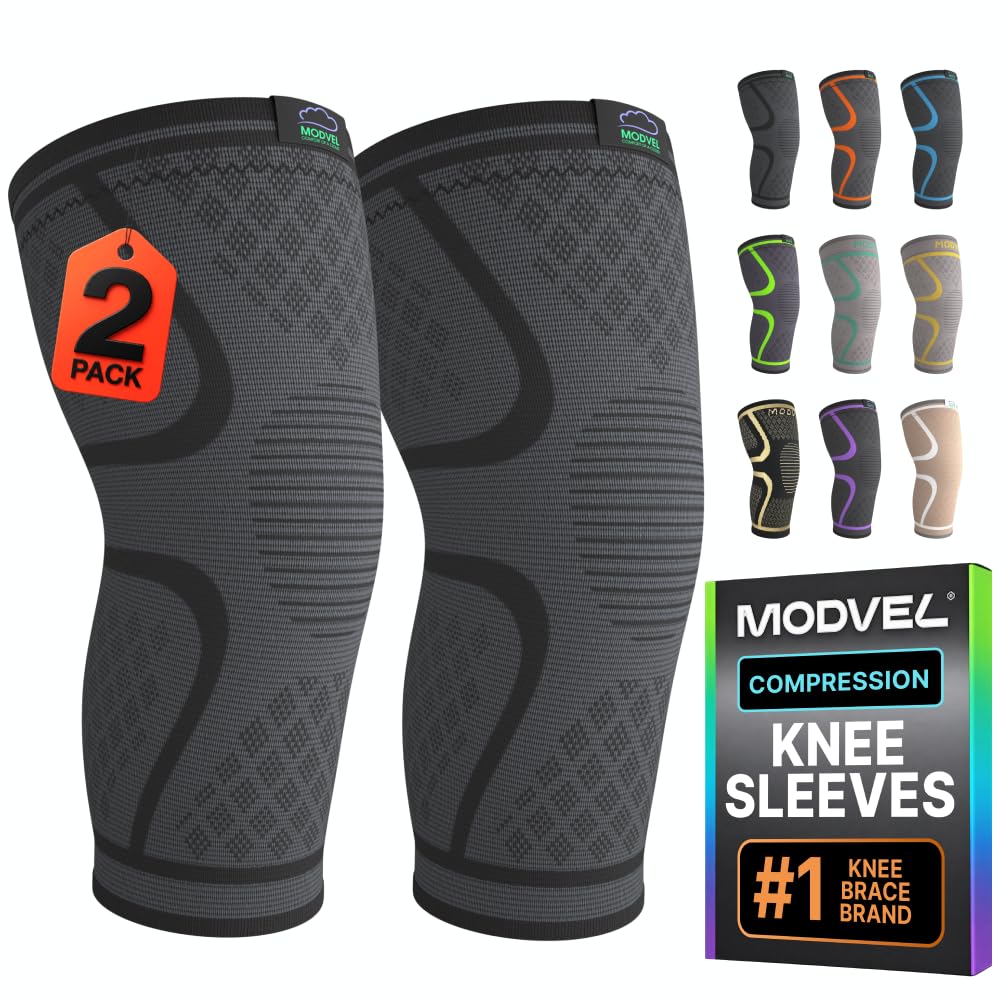
Modvel Compression Knee Brace 2-Pack

89 /100
Trail Score Excellent

Key details

Pack
2 sleeves
Sizes
S to 3XL
Weight
3.88 oz
Material
Nylon and latex blend
Check Price on Amazon

Six sizes, small through 3XL, is the widest spread in this guide, and for a sleeve that has to grip without pinching, range is the feature. If you have been stuck between a medium that cut in and a large that slid down, a brand with more rungs on the ladder is worth taking seriously.

The catch is the chart. This one runs small against the other sleeves here, so the size you wear in a UFlex is not automatically your Modvel size. Measure the thigh above the knee, buy from that number, and go up if you land between two. Get it right and the sleeve does what the price promises: a latex-blend knit that wicks, does not trap heat, and stays put through a run. Get it wrong and it rolls at the top edge inside a mile, which is the failure the sizing decides.

The two-pack is the other half of the argument. Two sleeves means one on and one in the wash, and the pair covers both knees for roughly what a single premium sleeve costs here. That makes it the low-risk way to find out whether compression helps your knee at all. The blend includes latex, though, so it is not the pick for sensitive skin.

Pros

  • Six sizes from S through 3XL
  • Two sleeves in every pack
  • Breathable, moisture-wicking knit
  • Strong value for a pair

Cons

  • Size chart runs small against the other picks
Our verdict

Six sizes from small to 3XL make this the easiest sleeve in the guide to fit, and you get two of them. Measure your thigh first, because this chart runs small.

Check Latest Price
3

Best for Patellar Tendon Pain

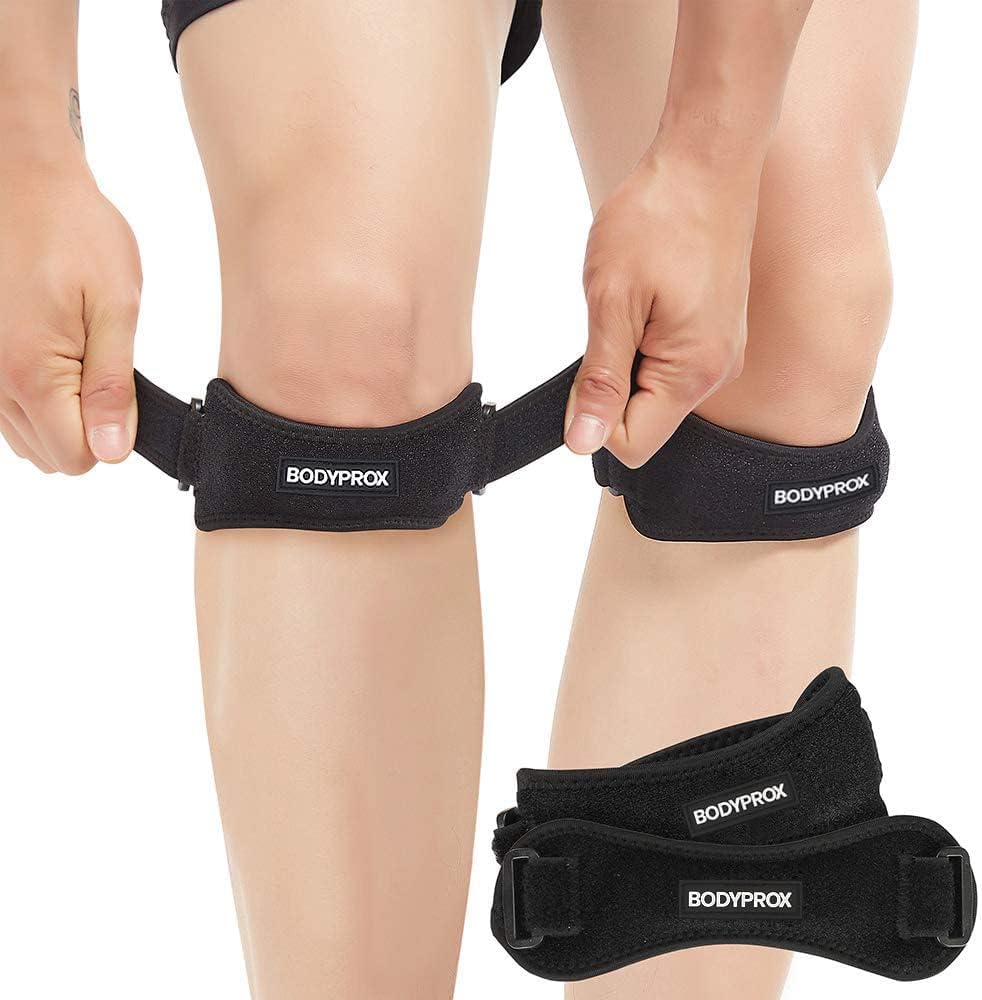
Bodyprox Patella Tendon Knee Strap 2-Pack

88 /100
Trail Score Excellent

Key details

Pack
2 straps
Closure
Hook and loop
Material
59% nylon, 28% SBR, 8% spandex, 5% cotton
Fit Range
13 to 18 inches
Check Price on Amazon

If the pain sits in the soft spot just under your kneecap, a full sleeve is more coverage than you need. This is the support we reach for in that case: a gel pad presses on the patellar tendon, the band wraps below the knee, and nothing crosses the back of the joint where sleeves bunch and chafe. It is the simplest brace in this guide to get right and the easiest to wear for an hour without thinking about it.

Adjustment is the whole design. The strap is rated for 13 to 18 inches of knee circumference with a hook-and-loop closure, so you can tighten it before a climb and ease it off for the flat without stopping. Two come in the pack, one for the shoe bag and one for the car, and the neoprene has venting holes punched through it to keep the back of the leg from cooking.

Where it runs out of road is at the edges of that range. One size covers a lot of legs, but a very slim or very heavy one lands at the end of the strap and the fit gets less certain; the CAMBIVO straps come with extra lengths for exactly that reason. It can also creep out of position on a long run and needs resetting more often than the UFlex sleeve does.

Pros

  • Targeted gel pressure under the kneecap
  • Adjustable across 13 to 18 inches
  • Open behind the knee, no bunching
  • Two straps per pack

Cons

  • One size is a gamble at the ends of the range
  • Can creep out of place on long runs
Our verdict

For the ache directly under the kneecap, this is the most targeted support here: adjustable from 13 to 18 inches, open behind the knee, and easy to reset mid-run.

Check Latest Price
4

Best Firm Compression

POWERLIX Leg Sleeve

88 /100
Trail Score Excellent

Key details

Care
Machine wash gentle
Size
X-Large
Material
80% nylon, 20% spandex
Anti-slip
Two silicone gel strips
Check Price on Amazon

Twenty percent spandex is a lot for a knee sleeve, and you feel it as soon as you pull this one on. The POWERLIX snaps back rather than easing out over a run, which is the difference between support and a warm sock, and it is why the compression still feels like something at the end of a long effort.

Two silicone gel strips, one at each opening, do the holding. We found this among the more secure sleeves here, close to the UFlex without quite matching it, and for anyone who has watched a cheap sleeve slide toward the ankle by mile three, that is the thing that matters. The cut is generous too, and between the firm knit and the extra room it is the pick here for a heavy thigh that tends to get pinched.

Sizing is where this one bites. A firm sleeve has less tolerance for a loose fit, and the top edge is the first place it shows, so measure the thigh rather than the knee and resist the urge to size up for comfort. Care is unusually easy for the category: gentle cycle, air dry, no sink washing.

Pros

  • Firm 80/20 knit holds its shape
  • Silicone gel strips at both openings
  • Machine washable on a gentle cycle
  • Generous cut for bigger legs

Cons

  • Sold as a single sleeve
  • Dense knit can gather behind the knee
Our verdict

Firmer than most sleeves here and cut generously enough for a heavy thigh, with silicone strips at both openings. Choose it if a soft sleeve feels like it is doing nothing.

Check Latest Price
5

Best for Swelling and Recovery

Incrediwear Knee Sleeve

89 /100
Trail Score Excellent

Key details

Care
Tumble dry low
Size
Large
Weight
2.4 oz
Material
Polyester, nylon, cotton, spandex
Check Price on Amazon

Incrediwear is the most expensive sleeve in this guide, and the pitch is not grip. It is a fabric blend the brand says works on circulation and inflammation, a mechanism we cannot verify and do not need to in order to describe the sleeve: a soft knit that feels more like a compression garment than a brace and disappears under trousers with no visible edge.

On comfort it earns the money. There is none of the rubbery snap of the cheaper sleeves, the seams sit flat, and at 2.4 ounces it barely registers on the leg. We wore it through a workday and a short run without a mark or a pinch, which is more than the firmer knits here can claim.

Where the premium buys you nothing is staying up. On our runs it needed more adjusting than the UFlex or the POWERLIX, and by the end of a warm-weather effort it had slid enough to notice. That is the trade for the softness: the fabric that makes it comfortable all day is the fabric with less bite against the skin. If your knee is the reason a run is uncomfortable rather than the reason you are not running, that is a fair swap. If you want a brace that stays put through an hour of intervals, it is not.

Care is the quiet advantage. Machine wash warm or cold and tumble dry low, which means it actually gets washed instead of living at the bottom of a bag. Sizing runs true, and measuring properly matters more here than with the stretchier sleeves, because this knit has less give to rescue a wrong choice.

Pros

  • Soft knit that layers under trousers
  • Machine wash and tumble dry low
  • Light on the leg at 2.4 ounces
  • Gentle on a swollen knee between runs

Cons

  • Most expensive sleeve in the guide
  • Slides more than cheaper sleeves here
Our verdict

The softest sleeve here and the one we put on a swollen, cranky knee on recovery days, though it will not out-grip the cheaper picks on a hard run.

Check Latest Price
6

Best Strap for Narrow Legs

CAMBIVO Patella Tendon Straps 2-Pack

88 /100
Trail Score Excellent

Key details

Pad
Silicone compression pad
Size
One size
Material
60% SBR (neoprene), 30% polyester, 10% spandex
Straps Included
2 standard, 2 short
Check Price on Amazon

Two standard straps and two short ones come in the box, and that is the detail separating these from every other strap here. One-size bands either reach around your leg or they do not; the short lengths give a slim knee or a teenager a proper fit instead of a strap that bottoms out on itself.

The working part is conventional and well executed: a contoured silicone pad that presses under the kneecap, a hook-and-loop closure you can tighten from either side, and a profile low enough to wear under shorts without a bulge. Hand wash only is the one chore in the deal.

For a household with two very different sets of legs, this is the pack we hand over, because one pair covers a small knee and a large one. The trade is grip at speed: the straps move around more than a sleeve does during hard efforts, and for intervals rather than easy miles the UFlex is the steadier choice.

Pros

  • Two strap lengths in every pack
  • Silicone pad targets the tendon
  • Low profile under shorts
  • Comfortable enough to forget

Cons

  • Can slip out of position on hard efforts
  • Hand wash only
Our verdict

Four interchangeable straps in two lengths make this the pair to buy when one size never quite fits, and the silicone pad lands right under the kneecap.

Check Latest Price
7

Dial-In Compression

Bracoo KS10 Knee Brace

86 /100
Trail Score Excellent

Key details

Design
Open patella, stabilizer ring
Weight
3.53 oz
Closure
Hook and loop straps
Material
5% Spandex, 10% Polyester, 25% Nylon, 60% Neoprene
Check Price on Amazon

Every other pick in this guide is a tube you pull on or a band you set once. The KS10 wraps: an open patella with a horseshoe stabilizer ring and adjustable hook-and-loop straps, so you can change the compression without taking it off. For a knee that swells over a long run, that is a real advantage, since you can start snug and ease off at the halfway point.

The stabilizer ring does the work. It sits around the kneecap and keeps it tracking through flexion, which is what you want when the knee feels loose rather than sore in one spot. The neoprene is genuinely warm, welcome on a cold morning and too much in July, and it is the bulkiest thing here under trousers.

Grip is where it loses ground. The same straps that let you dial in the fit are the ones that work loose once you sweat, and among the braces we wore this was the one that needed the most re-adjusting mid-run. Starting snug and checking the straps after the first mile is the difference between a wrap that behaves and one that ends up around your calf.

So it is a specific tool rather than a default. Choose it if your knee swells during long efforts, if you have had patellar tracking trouble, or if you want one brace you can shift between knees. For a straightforward ache that a sleeve handles, the simpler picks here are less fuss. One warning worth repeating from the maker: it is neoprene, and a rash means stop wearing it.

Pros

  • Change the compression without taking it off
  • Open patella with a stabilizer ring
  • Warm neoprene for cold mornings

Cons

  • Straps work loose once you sweat
  • Bulky and hot under trousers
Our verdict

The only wrap here you can loosen mid-run, with an open patella and a stabilizer ring. Best for a knee that swells and needs the fit changed on the move.

Check Latest Price
8

Everyday Easy Runs

Bodyprox Knee Compression Sleeve 2-Pack

91 /100
Trail Score Outstanding

Key details

Pack
2 sleeves
Size
Medium
Weight
6 oz
Material
Nylon, spandex, latex
Check Price on Amazon

Pull one of these on cold and it feels like a mistake, softer and looser than the firm sleeves here, with none of the bite you associate with compression. Give it ten minutes of running and the fit makes sense: the leg fills out, the knit takes up the slack, and the pressure settles where you want it. Judging this sleeve standing in a bedroom is how people talk themselves out of the right size.

The knit is nylon, spandex and latex, thin enough to wear under trousers and light enough to forget. Compression is mild by the standards of the POWERLIX or the UFlex, closer to gentle all-over pressure than a brace, which suits easy miles, walking, and the days when a knee is grumbly rather than painful.

Two come in the pack, and that is the real argument. Sleeves get washed, lost, and left in a gym bag; a second one means you actually wear the thing instead of saving it. The chart is the usual trap: measure the thigh, and do not go down a size because the sleeve feels slack before you warm up.

What you give up is stability. This is the least supportive of the sleeves we recommend, and the top edge can work its way down over a long run once you are sweaty. As a first sleeve, or a pair to keep for easy days, it earns its place. As the only brace you own through a marathon block, it does not.

Pros

  • Two sleeves per pack
  • Thin enough to wear under trousers
  • Mild compression for easy days

Cons

  • Lighter support than the firm sleeves here
  • Top edge can slide down on long runs
Our verdict

A gentle, inexpensive pair for easy runs and everyday wear, and the sleeve to try first if you are not sure compression will help at all.

Check Latest Price

How We Tested 14 Running Knee Braces

We started with roughly 60 braces sold through running shops and the big retailers, then narrowed by three things: whether the brand published a real sizing chart by knee circumference, whether the material was thick enough not to roll, and whether it was built for running rather than post-surgical wear. That left 14 — compression sleeves, patellar straps, and a couple of hinged designs — each assigned to a tester whose knee circumference fell inside the manufacturer's range.

Testing ran four months and followed the testers' actual training: three or more runs a week on pavement and track, one longer weekend effort, plus stairs, squats, and the stiff walk to the kitchen the morning after a hard session. Runners with runner's knee, patellar tendon pain, and general instability each wore their brace for the whole block.

We marked the brace's starting position on the leg with a fabric pen so we could measure how far it migrated after five miles, and noted whether it bunched behind the knee, rolled at the top edge, or needed re-adjusting mid-run. Testers rated comfort at mile one and mile ten, and logged knee pain before and after each run to see whether the brace changed anything beyond the reassurance of having something on. Each one went through a weekly wash, which is where cheaper elastic gave out — several stretched permanently by week six. Fit got checked twice, once against the sizing chart and once on the leg, because a brace that measures right can still slide if the taper is wrong.

How to Choose a Knee Brace for Running

Match the shape to the pain

Three shapes cover almost every runner. A pull-on sleeve wraps the whole joint in compression and warmth, which suits a knee that aches generally, feels weak, or complains the day after a run rather than during it. A patellar strap is a band under the kneecap with a pad over the tendon, and it is the right tool when the pain has a point to it: that sharp ache below the kneecap on stairs, hills, or the day after a hard session. An adjustable wrap with an open patella sits between the two, with more coverage than a strap and more control than a sleeve.

Start with where the pain is, not with how much support sounds reassuring. A runner who buys a full sleeve for a pinpoint tendon ache ends up with more fabric than the problem needs, and one who buys a strap for a knee that swells all over gets less compression than the joint wants.

Size from measurements, not from your usual size

Every pick here is sized by a number you take yourself, whether that is thigh circumference, knee circumference, or both, and the charts do not agree with each other. A medium in one brand fits like a large in another, which is why the same runner can be a medium in one sleeve and a large in the next.

Measure the thigh a few inches above the kneecap with a soft tape, check that figure against that brand's own chart, and when you land between two sizes on a sleeve, take the larger one. A brace that is too tight does not support more; it rolls, it chafes, and it ends up in a drawer.

Staying put is a design feature, not a sizing trick

Grip comes from silicone and from anchoring. A sleeve with two silicone bands at the openings holds better than one with a single band, and a strap with a pad under the kneecap stays put because it is anchored to the tendon rather than relying on the taper of your leg.

The trap is sizing down to stop a slide. A tighter sleeve bunches behind the knee, digs into the thigh, and often migrates more rather than less. If slipping is your main complaint, change the style before you change the size: a strap will hold on a leg that a tube will not, particularly on a calf that is much narrower than the thigh.

Fabric, warmth, and washing

Most sleeves here are nylon and spandex, sometimes with latex or rubber for rebound; the wraps are neoprene. Neoprene is warm, bulky, and holds compression well, while knits are cooler and thinner but can lose their snap sooner. None of that is a fault, but it decides where a brace is comfortable: neoprene on a July run is a different experience from a thin knit in February.

Check the care label before you commit, because several of these are hand wash only, and a brace you will not wash is a brace you will stop wearing. Two sleeves in rotation outlast one washed every night, and anyone who reacts to latex or neoprene should settle the material question before the first run rather than after it.

Frequently Asked Questions

Final Verdict

The UFlex Athletics sleeve is the one we point most runners to, because two silicone bands and a four-way stretch gave it the best record on staying put of anything here. A running brace that migrates is a running brace you stop wearing, and that single quality decides more than any compression claim.

If your pain has a point under the kneecap rather than spreading across the joint, the Bodyprox strap is the more targeted buy. And if you want two sleeves to rotate without spending much, the Modvel pair is the practical answer, provided you measure your thigh and size up from the chart.