Best Ankle Braces for Sprains of 2026

A sprained ankle turns ordinary surfaces into surprises—a curb, a stair, a sock left on the floor. The right brace should steady the joint without making you feel like your foot is in a cast, and it should stay where you put it when you stand, walk, and climb. I learned that the hard way after enough rolled ankles to keep a brace in my bag, and it's why I care less about how much compression a brace promises and more about whether it actually holds the heel and midfoot in place. A good one gives you confidence to move normally while the ligament heals, not just a tighter sock.

Over four months, my team and I tested 12 ankle braces for sprains in real life—on stairs, around the house, through the grocery store, and during easy balance drills at the gym. We judged support, comfort, quality, effectiveness, pain relief, and value, plus the practical stuff: fit, sizing, ease of use, and durability. The pattern was clear: the best braces are the ones you forget you're wearing until you need them, not the ones with the most straps.

1

Best Overall

Med Spec ASO Ankle Stabilizer

89 /100
Trail Score Excellent

Key details

Care
Machine wash
Size
Medium
Closure
Lace-up with figure-8 straps
Material
Nylon with padded tongue
Check Price on Amazon

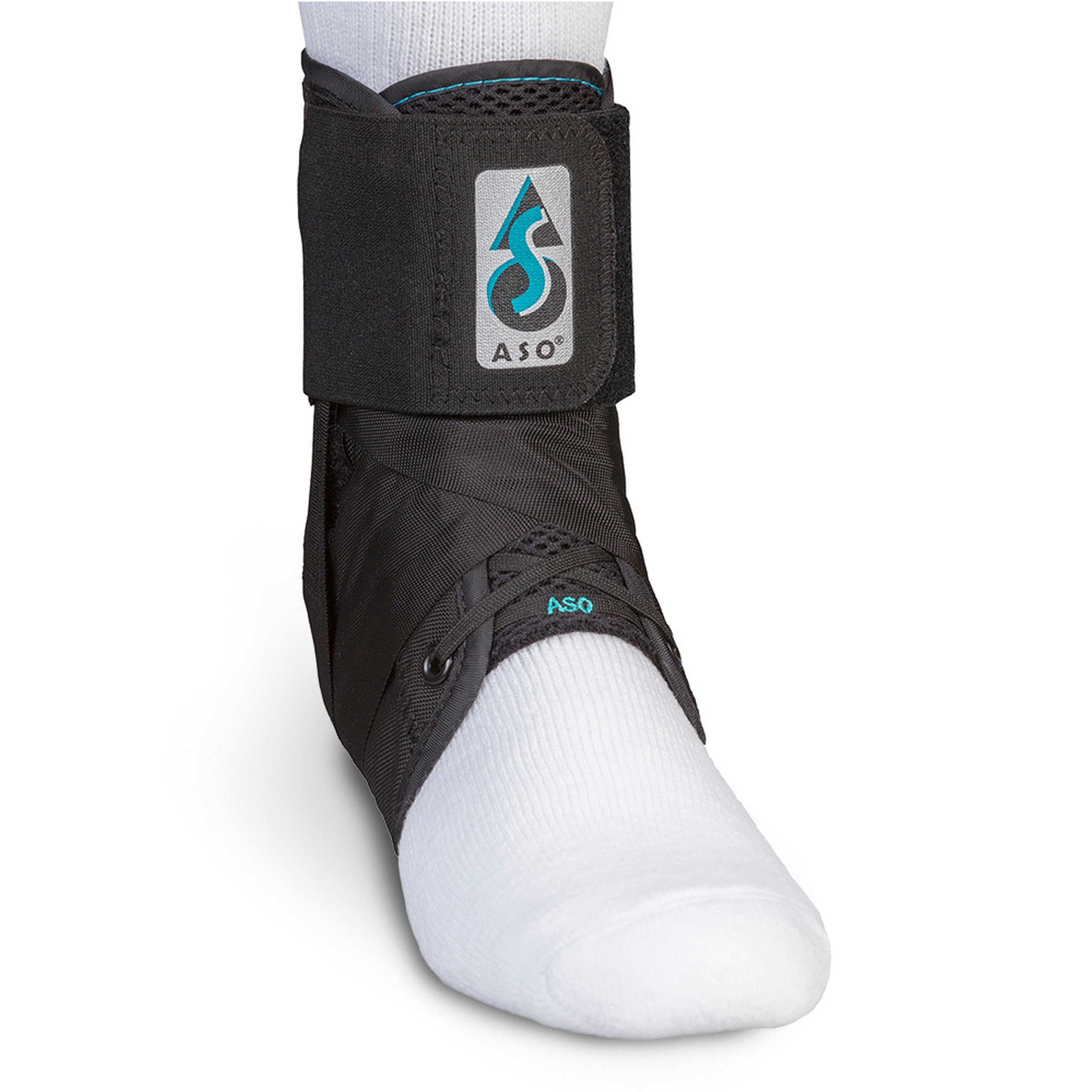
Two nylon straps do most of the work here. They anchor at the sides of the ankle, cross over the laces and lock under the heel, so tightening them pulls the heel back into the brace and puts a hard limit on the roll in both directions. That figure-8 is why the ASO is our top pick for a moderate sprain: it does much of what a tape job does, and you can take it off at night.

It also disappears into a shoe. The nylon is thin, the padded tongue keeps the laces off the top of your foot, and it slides under a normal sneaker or a cleat without forcing you up half a size. Machine washable, which matters more than it sounds when you are wearing the same brace every day for a month.

The trade-off is putting it on. Laces plus two straps take a couple of minutes, and it is a two-hands, sit-down job over an ankle that is still angry. Loosen everything wide, slide the foot in, snug the laces, then pull the straps, and practise it once before the morning you actually need it. Sizing runs generous, so measure your ankle circumference rather than ordering from your shoe size, and drop down if you are between.

A six-month limited warranty is part of the package, though the detail we ended up appreciating most is the padding: the CoolFlex tongue sits between the laces and the top of the foot, which is exactly where a lace-up usually starts to ache by mid-afternoon.

Pros

  • Figure-8 straps limit rolling in both directions
  • Thin enough for sneakers and cleats
  • Machine-washable nylon resists stretching
  • Fits either ankle

Cons

  • Runs generous, so measure your ankle
Our verdict

The brace we hand to anyone with a moderate sprain: figure-8 straps genuinely limit the roll, and it still slides inside a normal sneaker.
Check Latest Price
2

Best for Sports

McDavid 195 Lace-Up Ankle Brace

91 /100
Trail Score Outstanding

Key details

Care
Hand wash
Size
Medium
Closure
Lace-up with hook-and-loop straps
Side Support
Rigid side stabilizers
Check Price on Amazon

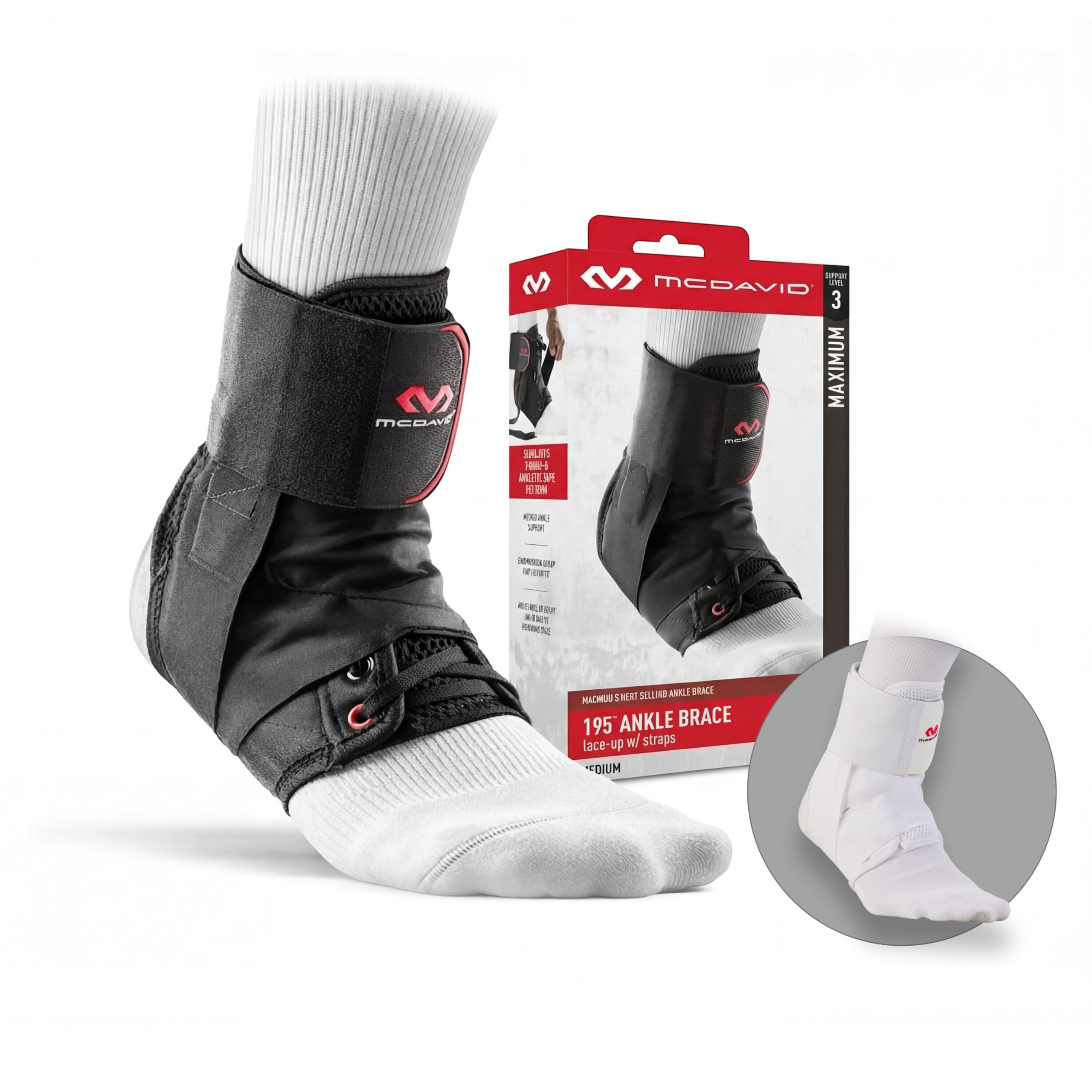
Rigid side stabilizers down each side of the ankle are what separate the McDavid 195 from the softer lace-ups here. They do not bend with the joint, so when the ankle starts to turn the brace stops it early, before the ligaments take the load.

For volleyball, basketball or anything with lateral cutting, we want that hard stop. The figure-8 cross straps pull the whole assembly tight over the laces, and the result is a firmer, more locked-in feel than the ASO gives, which is exactly what a return to court sports asks for. It is the one we point to for a player heading back into cutting and jumping.

The costs are real but narrow. It is hand wash only, which gets old when the brace is soaked after every practice, and the stiffness that makes it protective also makes it slower to pull on over an ankle that is still puffy. Longevity is the other thing to weigh: the straps are the part that gives out first, so treat it as a brace you replace after a hard season rather than one you keep for years.

Low profile is the quiet advantage. It is built to sit inside low-top court shoes, and it does, which means you are not choosing between support and the shoe you actually play in.

Pros

  • Rigid side stabilizers resist the roll
  • Fits inside low-top court shoes
  • Figure-8 cross straps lock the laces down

Cons

  • Hand wash only
  • Straps wear under heavy use
Our verdict

Rigid side stabilizers give it the firmest lateral control in this group, and it is our pick for cutting sports and a comeback season.

Check Latest Price
3

Best Easy-On Lace-Up

WHCOOL Slim-Fit Lace-Up Ankle Brace

89 /100
Trail Score Excellent

Key details

Size
M, 12-13 in ankle
Closure
One-pull hook-and-loop
Padding
2 auto-shaped pads
Material
Nylon with air fabric lining
Check Price on Amazon

Threading laces over a sore ankle is the least appealing part of wearing a brace, and the WHCOOL sidesteps most of it: one hook-and-loop closure pulls the whole figure-8 system tight in a single motion.

Underneath that fastening sits the same non-stretch strapping idea as the lace-ups above, so you give up less control than the convenience suggests. Two auto-shaped pads tighten around the ankle as you pull, and the lined fabric is soft against skin.

Where it earns its place is inside a shoe. The fabric is thin, the edges are soft, and it goes into a normal sneaker without a fight, which makes it the one we reach for on days that involve a lot of walking and a brace that has to stay quiet. Size it by ankle circumference: the medium is cut for 12 to 13 inches, and that measurement is best taken in the morning, before a day on your feet adds swelling.

Two things to accept going in. The side straps can press when the shoe is snug, and this size covers a fairly narrow band of ankles; anyone outside it is better served by the ASO or the McDavid.

Pros

  • Fastens in one pull with hook-and-loop
  • Thin, soft-edged build for casual shoes
  • Auto-shaped pads spread pressure
  • Sized by ankle measurement

Cons

  • Side straps can press in tight shoes
  • Fits a narrow 12-13 inch ankle range
Our verdict

Our choice when laces are the obstacle: figure-8 control that fastens in one pull, thin enough to vanish inside a sneaker.

Check Latest Price
4

Best Budget Wrap

Bodyprox Ankle Support Brace

88 /100
Trail Score Excellent

Key details

Size
One size, 7.8-11 in arch
Design
Open heel
Closure
Hook-and-loop wrap
Material
Neoprene blend
Check Price on Amazon

This is not a stabilization brace, and that is the point. The Bodyprox is a neoprene wrap that closes with hook-and-loop, leaves the heel open and puts compression around the ankle and arch. It is the right tool for a mild sprain, an ankle that swells by dinner time, or the weeks after you come out of something firmer.

We like it best as the second brace: the one that lives by the couch, or the one you wear when a lace-up is more than the ankle needs that day. The open heel lets the foot flex normally, and the wrap works on either foot, so there is nothing to sort out in the morning.

Where a wrap like this runs out is lateral load. If the ankle gives way when you cut or land, you want a lace-up with straps; if it mostly aches and puffs, this is plenty and it is far easier to put on and forget. The hook-and-loop holds firmly, the neoprene stays breathable through a workday, and hand washing keeps it in shape.

Pros

  • Wraps on one-handed, no laces
  • Open heel keeps the foot moving
  • Breathable neoprene for all-day wear
  • One wrap works on either foot

Cons

  • One size covers a limited arch range
  • Strap edges fray with steady use
Our verdict

A soft, adjustable wrap for a mild sprain or an ankle that swells by evening, and the easiest brace here to live with.

Check Latest Price
5

Best Value Two-Pack

INDEEMAX Copper Ankle Brace (2 Pack)

89 /100
Trail Score Excellent

Key details

Pack
2 sleeves, 2 straps
Size
Medium
Closure
Pull-on sleeve plus strap
Material
Copper-infused nylon
Check Price on Amazon

Two sleeves and two separate straps come in the pack, and the strap is the argument for the INDEEMAX over a plain compression sleeve. Slide the sleeve on, wrap the strap over the top of the foot and around the ankle, and you can add or drop compression without taking anything off.

That adjustability matters most in the first fortnight, when swelling climbs through the day and a fixed sleeve is either too tight at breakfast or too loose by late afternoon. The knitted fabric is soft and thin enough to wear under a work shoe for a full shift, and the compression is graded, firmer at the ankle and easier toward the foot. What it does not do is stop a roll; there is no rigid structure here, so a moderate sprain with real instability belongs in one of the lace-ups instead.

The two-pack is the practical part: one on, one in the wash. Expect the knit to fray with repeated washing, so use a mesh bag and air dry rather than tumble drying, and check the size chart against a measured ankle.

Pros

  • Strap adds adjustable compression
  • Two sleeves and two straps per pack
  • Soft graded knit for all-day wear
  • Machine washable

Cons

  • Knit frays with repeated washing
  • Sizing is inconsistent, so measure
Our verdict

Two sleeves and two straps for a mild sprain, with compression you can loosen at lunchtime without taking anything off.

Check Latest Price
6

Adjustable Side Support

ACE Deluxe Ankle Stabilizer

89 /100
Trail Score Excellent

Key details

Closure
Adjustable hook-and-loop
Material
Breathable fabric
Side Support
Reinforced side stabilizers
Check Price on Amazon

The ACE Deluxe is the adjustable brace you have probably seen on a pharmacy shelf: a wrap with hook-and-loop straps and reinforced side stabilizers, no laces anywhere. The stabilizers are stiffened panels rather than metal stays.

It goes on over a thin sock, adjusts without unwrapping, and slips into a walking shoe or a mid-height hiking boot without much bulk, which makes it a comfortable, unfussy thing to pull on in the morning. For daily life with a mild sprain, that combination is easy to recommend.

Keep the job in mind. This is a brace for walking and errands, not for a return to cutting sport, and it is at its best in the middle of its one-size range, since the panels are generous on a narrow foot and have little room to cinch over a heavily swollen ankle. If you fall outside that middle, the Bodyprox wrap or a sized lace-up will serve you better.

Pros

  • Side stabilizers without any lacing
  • Adjusts without re-wrapping
  • Low bulk in walking shoes

Cons

  • Generous fit will not cinch on narrow feet
  • Soft panels limit how much roll it stops
Our verdict

A sensible adjustable brace with soft side stabilizers for a mild sprain, at its best on feet in the middle of its size range.

Check Latest Price
7

Return to Sport

Z Athletics Reinforced Lace-Up Brace

88 /100
Trail Score Excellent

Key details

Care
Hand wash
Size
Medium
Closure
Lace-up with side straps
Material
Neoprene and nylon
Check Price on Amazon

Getting the Z Athletics on is the hardest part of owning it. The laces run over the instep and the whole brace has to be pulled on before you tighten anything, which is unpleasant over an ankle that has just been injured and uncomfortable if the top of your foot is bruised.

Once it is on, the lockdown is serious. Figure-8 lacing plus side straps hold the ankle in a way that feels close to taping, and the stitching and side straps are built heavier than most of the sleeves here. Air-mesh panels keep it from cooking through a long practice.

Sizing is where it gets tricky. The medium runs small for a lot of adult feet and the fit across the top of the foot is the tightest in this group, so if you are between sizes or have a high instep, size up and expect to loosen the bottom two eyelets.

So this one earns its place for a specific buyer: someone heading back to a running or court sport who wants maximum lockdown and can put up with a fiddly, firm-fitting brace. As a first brace to wear around the house, it is more hassle than it is worth.

Pros

  • Near-taping figure-8 lockdown
  • Heavier stitching and side straps
  • Mesh panels breathe during practice
  • Fits inside sneakers once on

Cons

  • Runs small across the instep
  • Hand wash only
Our verdict

A firm, near-taping lace-up for a return to sport; the catch is a stiff fit that is hard to get on over a fresh sprain.

Check Latest Price
8

Light Compression

LISEPWU Copper Ankle Sleeve (Pair)

89 /100
Trail Score Excellent

Key details

Pack
2 sleeves
Size
Large
Closure
Pull-on
Material
Copper-infused nylon
Check Price on Amazon

At the far end of the range from the lace-ups: a knit sleeve with no straps, no closure and nothing to adjust. The LISEPWU pair uses a three-dimensional knit that applies graduated pressure, firmer at the ankle and lighter toward the foot, and that is the entire mechanism.

For light compression it works. Two sleeves come in the pack, thin enough to wear under any shoe, machine washable, and soft enough that you stop noticing them. As a liner under a firmer brace, or for an ankle that aches and swells instead of giving way, that covers a real need.

Copper-infused nylon is the headline, and it is the compression doing the work, not the copper. The knit is also fixed: if the ankle swells through the day you cannot loosen it, which is exactly where a strap or a wrap earns its keep.

So this is the least supportive product in this guide, and we recommend it for that role rather than in spite of it: a mild ache, a long flight, the weeks when the brace comes off. If the ankle has actually rolled, start with the ASO or the McDavid instead.

Pros

  • Two sleeves per pack
  • Graded knit compression
  • Slim under any shoe
  • Machine washable

Cons

  • No straps or side support
  • Fixed compression you cannot loosen
Our verdict

Two soft sleeves for light compression and nothing more, the least supportive option here and the right one for a mild ache.

Check Latest Price

How We Tested Ankle Braces for Sprains

We started by pulling every ankle brace we could find that was sold for lateral ankle sprains and had a real sizing chart, then cut anything that relied on one-size-fits-all sizing or gave no measurement for the instep. That left 12 braces, which we tested over four months. I wore each one through the same ordinary routines: the stairs at home, the walk to the car, grocery aisles, a few balance drills at the gym, and the uneven sidewalk by my office.

To check fit and sizing, I tried each brace over a thin sock and a thick sock, first in the morning when my ankle was stiff and again after a day on my feet. I put each one on seated, timed how long it took, and noted whether I could re-tighten it without taking off my shoe. Then I walked up and down stairs, stepped off a curb, and did a slow lateral shuffle; if the heel lifted, the straps migrated, or the brace pressed into my instep or Achilles, it went into the no pile.

Comfort and durability got the same treatment: I wore each brace for a full day with sneakers, checked for bunching and hot spots after an hour, and kept track of how the Velcro and elastic held up after repeated on-and-off use. For effectiveness and pain relief, I noted whether stairs and uneven ground felt steadier and whether I could walk normally without wincing, not just whether the brace felt tight. Value came down to whether the materials, stitching, and fit held up after weeks of use—not how many straps came in the box.

How to Choose an Ankle Brace for a Sprain

Match the Brace to the Injury, Not the Sport

A knit sleeve is enough for an ankle that aches and swells. A wrap adds adjustable compression and suits a mild sprain. Once the ankle actually gives way, with a roll that leaves it swollen and stiff the next morning, you want a lace-up with figure-8 straps, because that is the only design here that puts a mechanical limit on the joint instead of just squeezing it.

If you cannot put weight on the foot or the swelling is severe, get the ankle looked at before you shop. A brace supports a healing ankle; it does not tell you what is damaged.

What Each Style Actually Does

Lace-ups pull the heel into the back of the brace and use straps to resist the ankle turning inward or outward, which is why they feel firm and take a couple of minutes to apply. Wraps give compression and an adjustable fit with far less mechanical control. A knit sleeve only compresses: useful for swelling and light support, close to useless against a roll.

Measure the Ankle, Not the Shoe

Ordering by shoe size is the most common mistake in this category. Fit is set by ankle circumference, sometimes arch circumference, and the two do not track: a medium in one brand is a large in another, and one size here is cut for a 12 to 13 inch ankle while another is built around a 7.8 to 11 inch arch.

Measure around your ankle at its widest point in the morning, before a day on your feet adds swelling, and go up a size if you land between two.

Check It Fits Inside Your Shoe

All of these braces are meant to be worn in a shoe, but they do not take up the same room. A lace-up with rigid side stabilizers adds the most volume; a knit sleeve adds almost none. Try the brace on with the sock and shoe you will actually wear, because a snug sneaker plus a firm brace is a half-size problem you only discover at lunchtime.

Frequently Asked Questions

Final Verdict

Most sprained ankles do best in a lace-up, and the Med Spec ASO is the one we recommend: the figure-8 straps limit the roll, the nylon disappears inside a normal shoe, and it goes in the washing machine. If laces are the obstacle, the WHCOOL gives you the same strapping with a one-pull fastening.

For a mild sprain or an ankle that swells by evening, the Bodyprox wrap is the easier thing to live with. And if the ankle still gives way when you cut or land, go firmer with the McDavid.