Best Insoles for Work Boots of 2026

Somewhere around hour seven of a shift on concrete, every work boot starts telling the truth. The stock insole that felt fine in the store has flattened into a stiff sheet, and the ache that began in your heel is now reaching your lower back. A good insole is the cheapest fix in the whole footwear equation — it puts real cushioning and actual arch support under the parts of your foot that take the beating, without asking you to break in a new pair of boots or spend a week's pay.

Here's what nobody tells you first: thicker isn't automatically better. Pile in too much foam and your heel starts lifting, or your toes crowd the steel cap by lunchtime. Over the past four months my team has rotated 16 pairs of insoles through boots on real shifts, and the ones that earned a permanent spot got there by matching arch height and footbed thickness to the person wearing them, not by adding another layer of gel. The picks below run from a trim-to-fit budget pair to firm, molded supports for anyone who stands the whole shift.

1

Best Overall

CRUVHEAL 220+ lbs High Arch Insoles

88 /100
Trail Score Excellent

Key details

Cushioning
Gel heel and forefoot pads
Arch Height
1.4 in
Insole Weight
9.17 oz
Weight Rating
220+ lbs
Check Price on Amazon

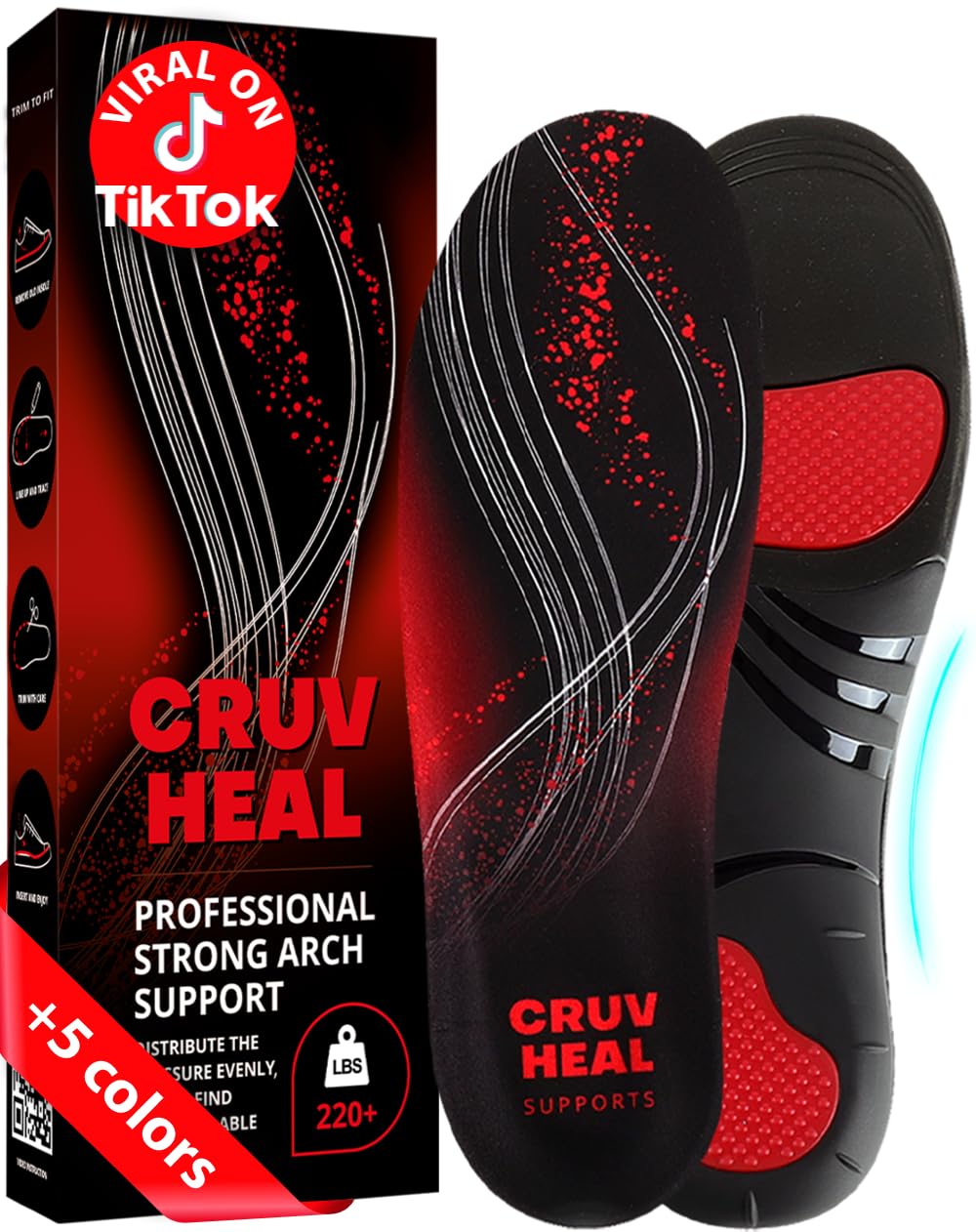
An arch stated at 1.4 inches is the tallest anyone in this group puts a number on, and inside a work boot that height is the difference you feel by the end of a shift. Factory footbeds in work boots are thin and nearly flat, so the space under your midfoot never gets filled. This insole puts a firm shell there, then adds gel at the heel and the ball of the foot, so the support is structural while the landing stays soft.

What settled it for us is that the two halves do not cancel each other out. Most insoles here ask you to pick a side: cushy and shapeless, or firm and unforgiving. The CRUVHEAL holds an arch you can feel through a long day and still takes the sting out of a concrete floor, and it is rated for wearers over 220 pounds, which is the number that decides whether an insole keeps its shape under you or slowly disappears.

Sizing runs by shoe size, and the manufacturer asks you to check the insole against your boot before you commit. Do that, because length is the one thing you cannot change later.

The first few shifts will feel like a lot of arch. That is the design working, and it settles. Wear them a few hours at a time for the first week rather than straight into a ten-hour day, and the shape stops announcing itself.

Pros

  • Firm 1.4-inch arch that holds under load
  • Gel pads at the heel and forefoot
  • Rated for wearers over 220 lbs

Cons

No notable drawbacks to flag.

Our verdict

We recommend it for long shifts on concrete: a firm 1.4-inch arch that holds its shape, with gel under the heel and ball.

Check Latest Price
2

Best Firm Orthotic

PowerStep Pinnacle Work

89 /100
Trail Score Excellent

Key details

Made In
USA
Support
Firm orthotic arch
Targets
Plantar fasciitis, pronation
Package Weight
6.38 oz
Check Price on Amazon

The Pinnacle Work is the firmest insole in this guide, and it makes up its mind about your foot in the first minute. There is no gel masking the shape. The arch is right there under the midfoot, holding it up rather than cushioning it. If that is what your boots have been missing, you will know immediately, and if it is not, you will know that too.

Everything else about it is built for a working boot. It is made in the USA, shaped for plantar fasciitis and pronation rather than general softness, and it stays where you put it. Of the picks here, this is the one least likely to slide forward and bunch under your toes after a morning of walking.

We keep it for the buyer who has been told to try an orthotic and does not want to go custom. The support is honest and the shape is stable, and it never pretends to be a cushion, so pair it with a boot that already fits well and it disappears into the job.

Two things to weigh. The layers can start separating where they meet when a boot gets worn hard day after day, which is the trade for a shell this firm, and it is the priciest pair here. If you want firm without the premium, the WalkHero gets you most of the way.

Pros

  • Firm orthotic arch that holds the midfoot
  • Stays in place inside work boots
  • Shaped for plantar fasciitis and pronation

Cons

  • Too much arch for genuinely flat feet
Our verdict

For a rigid, high-arch orthotic that stays put in a work boot, this is our pick, as long as you want support rather than a pillow.

Check Latest Price
3

Best Cushioning

KEEN Utility K20 Cushion

91 /100
Trail Score Outstanding

Key details

Use
Work shoes and boots
Size
Men's 11-12 (LG)
Weight
7.37 oz
Arch Profile
Low to medium
Check Price on Amazon

Cushion is the whole case for the K20, and it is a strong one. This is the thickest, plushest insole in the group: a deep, dense layer that takes the edge off concrete and keeps taking it, with no rigid shell trying to lift your arch. Dropped into a roomy pair of safety-toe boots, it is the closest thing here to spending the shift on an anti-fatigue mat.

The large is cut for men's 11 to 12, and it is shaped for work shoes and boots rather than sneakers. Wear is the least of the worries. This is the one pick in the guide whose longevity reads as a strength instead of a question mark, and the cushioning keeps its give rather than packing down into a flat slab.

It is thick, and that decides which boot it goes in. Pull the factory footbed out first. If the boot is already snug across the instep, or your toes graze the inside of the cap, the extra volume makes that worse rather than better. In a boot with room to spare it vanishes underfoot, and all you notice is that the floor stopped hurting.

Pros

  • Deep, dense cushioning for hard floors
  • Holds up better than most here
  • Fits wide work boots well

Cons

  • Built for low to medium arches only
Our verdict

For roomy work boots and low-to-medium arches, this is the most comfortable insole we tried, a deep cushion with nothing rigid in it.

Check Latest Price
4

Best for Heel Pain

Spenco PolySorb Heavy Duty

89 /100
Trail Score Excellent

Key details

Heel
Deep cup, SpenCore pad
Weight
4.8 oz
Forefoot
SpenCore crash pad
Material
Nylon
Check Price on Amazon

The heel cup is the reason to look at this one. It is deep, it wraps the back of the foot rather than sitting flat underneath it, and there is a thick SpenCore pad right where your heel lands. If the ache in your work boots starts at the heel, in those first steps across the parking lot, that is the part doing the work.

The rest of the design follows the same idea: a SpenCore crash pad under the forefoot to soften the front of the step, and a drop zone that lets the toes roll off naturally instead of fighting the insole. PolySorb foam on a nylon base keeps the weight down. It is a shock-absorption insole rather than an arch-correction one, and in work boots that is a job worth doing well.

Give them a break-in. The first few shifts feel firm and slightly foreign, and then they settle into the boot. Going straight into a ten-hour day is how you decide you do not like them.

Where they earn their place with us is heel pain specifically. They are not the arch pick in this guide, since the CRUVHEAL and the PowerStep go higher and firmer, but for taking the hit at heel strike the cup and the pad do more than a flat layer of gel. If the soreness sits under your midfoot instead, start with one of those two.

Pros

  • Deep heel cup with SpenCore pad
  • Forefoot crash pad for smoother toe-off
  • Cushioned without much weight

Cons

  • Modest arch support for a heavy-duty insole
  • Sizing can run large for some boots
Our verdict

Our pick for heel pain: the deep cup and SpenCore pads soften the landing in a way flat gel insoles cannot.

Check Latest Price
5

Best Budget

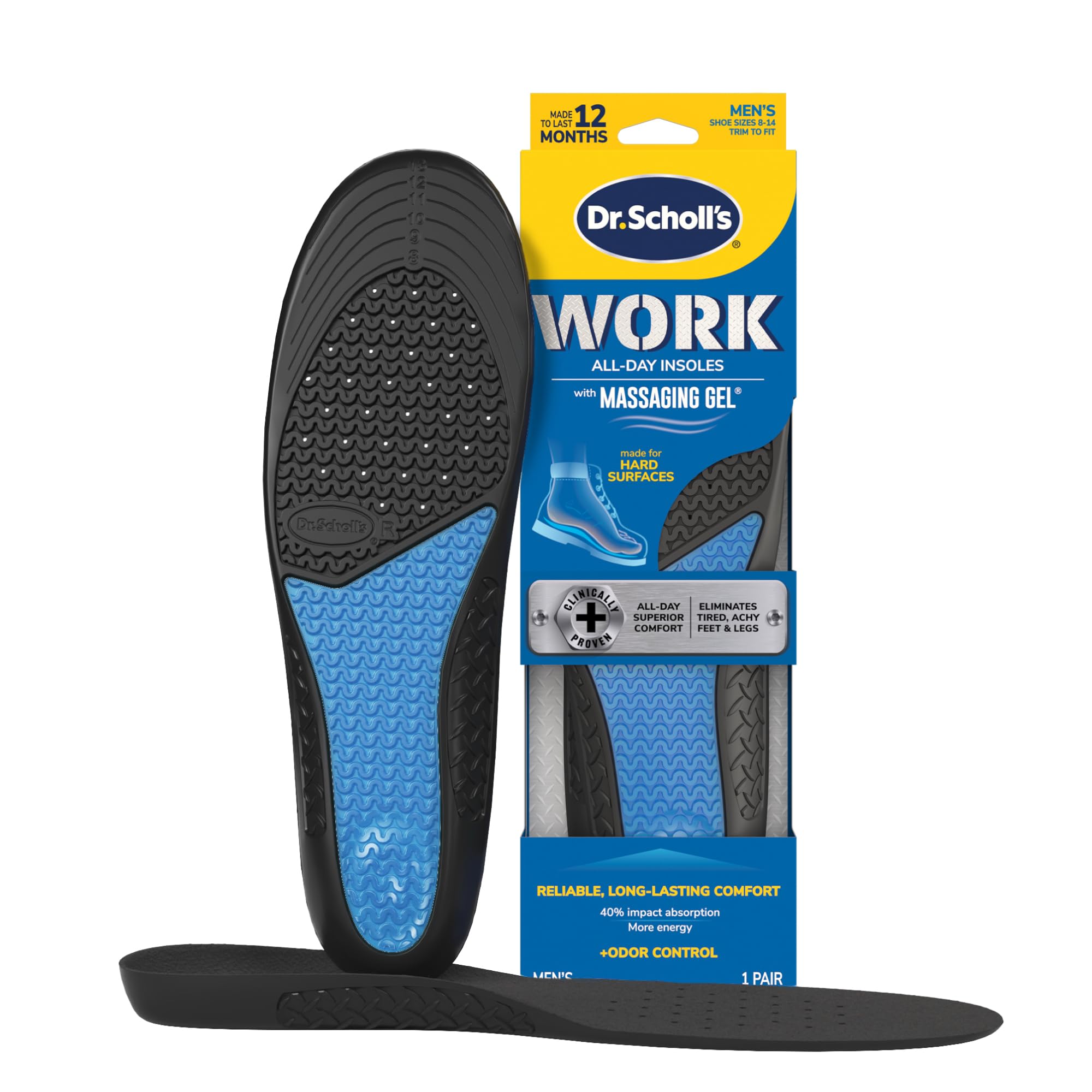
Dr. Scholl's Work All-Day Insoles

91 /100
Trail Score Outstanding

Key details

Fit
Trim to fit
Weight
4.8 oz
Cushioning
Massaging gel
Odor Control
Polygiene StayFresh
Check Price on Amazon

This is the cheapest pair in the guide, and it knows exactly what it is for: putting gel between your foot and a hard floor. There is no shell and no orthotic shape, just a soft springy layer with a massaging texture and a Polygiene treatment that keeps a boot from turning swampy by the afternoon.

For the right boot, that is plenty. We like these for the roomy pair whose factory footbed has gone hard and shiny, the boots you stand in more than you walk in. The cushioning is genuinely soft, soft enough that the first hour feels like an upgrade, and the trim-to-fit sheet means an odd size is not a problem.

The catch is lifespan. The gel packs down with daily wear, so treat a pair as a consumable: buy two, swap them out, and replace them when the softness goes rather than expecting one pair to see out the year.

Where they earn their keep is as a cheap reset for boots that are otherwise fine. The upper is good, the sole is good, the footbed is finished. Trim a pair into that boot and you get another stretch out of it without paying orthotic money.

Pros

  • Soft gel cushioning for hard floors
  • Trim-to-fit sizing
  • Odor control built into the top layer

Cons

  • Nearly flat, with no real arch support
Our verdict

We keep these for roomy boots with a dead footbed: soft gel cushioning for the least money in the guide.

Check Latest Price
6

Best Arch Support Value

WalkHero Heavy Duty Insoles

89 /100
Trail Score Excellent

Key details

Arch Support
Rigid nylon sheet
Insole Weight
4.94 oz
Weight Rating
220+ lbs
Cushion Layers
2 mm EVA + 3 mm OrthoLite
Check Price on Amazon

Under the foam in the WalkHero sits a rigid nylon arch sheet, and that is what separates it from the cushion-only insoles here. It is built for wearers over 220 pounds and shaped with a strong arch, so the support is structural: a shell that holds its shape rather than a bump molded into soft foam.

The layering is sensible for the money, with a full-length layer of high-density EVA, a second of OrthoLite, and a soft top layer against the foot, all at well under five ounces. It is meant for work shoes, sneakers, and leather boots, and if you order by the size chart it drops in without much fuss.

For the money, this is the most support in the guide. You get the rigid shell of the pricier orthotics without the premium, which makes it the pair to try if you want a firm arch and you are not sure you want to spend orthotic money finding out.

The build is the question mark. These are not the pair to expect a year out of if they are in your boots every shift: the layers can start separating under hard daily wear, and the glue lines are where that shows up first.

Pros

  • Rigid nylon arch sheet
  • Rated for wearers over 220 lbs
  • Most arch support for the money here

Cons

  • Thin padding under the ball of the foot
Our verdict

If you want a rigid, high arch without orthotic prices, this is the pair we point to for heavier wearers.

Check Latest Price
7

Ariat Square Toes

ARIAT ATS Wide Square Toe Insole

93 /100
Trail Score Outstanding

Key details

Footbed
Gel cushion
Toe Shape
Wide square toe
Compatibility
Ariat ATS boots
Check Price on Amazon

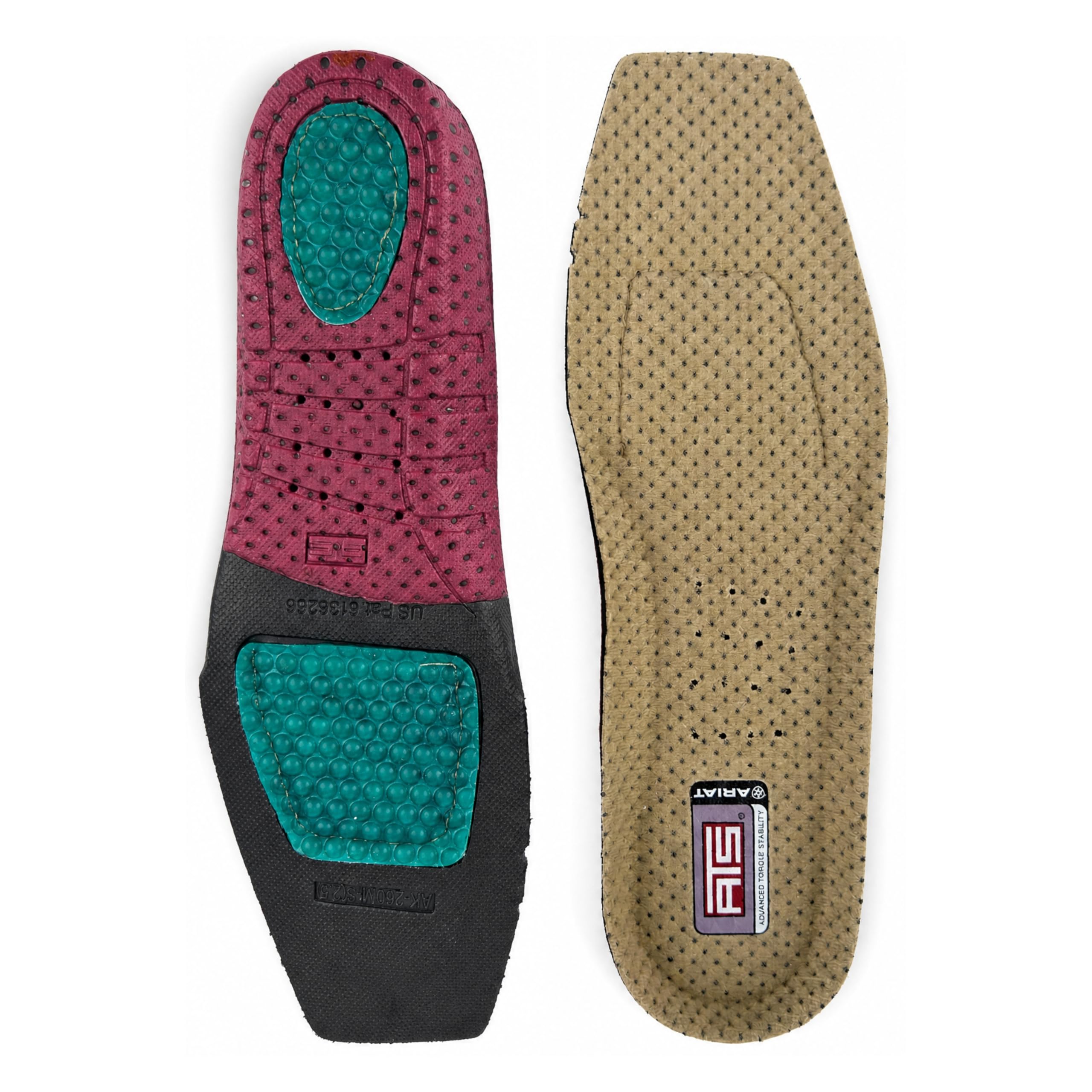
This is not a universal insole. It is cut for Ariat's wide square-toe boots, so it is either the exact thing you need or something to scroll past. If you have worn a pair long enough for the factory footbed to pack down, you know the shape. This is that shape, with the gel cushion layer underneath.

As a replacement part it does what a replacement part should. It drops in at your Ariat size without trimming, it does not add enough bulk to tighten the boot, and it makes a tired pair feel like the ones you bought. Quality and comfort are the most consistent of anything here, and it carries the highest buyer rating in the group.

It is still a wear part. The same cushion that makes an old boot feel new will pack down again with daily work, so plan on replacing it rather than expecting one pair to outlast the leather.

We rate it as the easiest fix in the guide when the boot is right: no trimming, no guessing, no break-in worth mentioning. If you do not wear square-toe Ariats, none of that transfers, because the shape is the entire product.

Pros

  • Factory shape for Ariat square-toe boots
  • Gel cushioning without added bulk
  • No trimming at your Ariat size

Cons

  • Minimal arch support for a work insole
Our verdict

The fix we reach for in Ariat square-toe boots: a factory-shaped footbed that restores the fit and cushion the boot came with.

Check Latest Price
8

Steel-Toe Comfort

Timberland PRO Anti-Fatigue Insole

89 /100
Trail Score Excellent

Key details

Type
Replacement insole
Technology
Anti-fatigue cushioning
Package Dimensions
12 x 8 x 4 in
Check Price on Amazon

Soft is the story with the Timberland PRO, and in the right boot that softness is worth having. There is no rigid shell and no high arch, just a deep, gel-like cushion that takes the hard edge off a steel-toe boot and gives a little of it back as bounce. Dropped into a roomy pair, it is a bigger improvement over a dead factory footbed than its plain look suggests.

Treat it as a replacement insole rather than an orthotic, and fit it that way: pull the old footbed, trace it onto this one, trim, and drop it in. In a boot that already has room, the result is a softer ride under a foot that is used to the boot's own shape.

The awkward part is the price. It sits with the orthotics here while doing the job of a cushion, which is a lot to pay for softness alone. If cushioning is all you want, the Dr. Scholl's pair does a similar job for far less; if you need the boot to hold your foot up, go to the CRUVHEAL instead.

Pros

  • Deep, gel-like cushioning
  • Trim-to-fit replacement footprint
  • Works in tall and steel-toe boots

Cons

  • Minimal arch support
  • Runs narrow for a wide boot
Our verdict

For a roomy work boot that feels hard underfoot, this is the softest replacement insole we tried.

Check Latest Price

How We Tested the Best Insoles for Work Boots

We started with roughly 40 insoles sold specifically for work boots, then cut the list by the things that matter on a job site: whether a maker offered multiple arch heights instead of one-size-fits-all, how much thickness the forefoot added, the size range, and whether trimmed insoles could still be returned. That left 16 pairs, ranging from flat trim-to-fit foam to firm molded arch supports.

Six testers did the wearing — two warehouse workers, a carpenter, an electrician, a nurse, and one editor who spends weekends on ladders and gravel. Each rotated through several pairs over four months of full shifts, always into a boot that was already broken in so nothing got blamed on break-in. Testers logged the end of every shift: heel ache, arch fatigue, and whether they noticed the insole at all by hour ten.

Fit came before comfort. We traced each boot's factory insole, trimmed where needed, and noted whether edges curled or the insert slid forward during a week of wear. We watched for heel lift on ladders and stairs, and checked that toes still had room in boots with composite or steel caps. Every pair was calipered on day one and again at eight weeks, then pulled out, wiped, and inspected for compressed heel pads, crumbling foam, separating layers, and smell. Finally, we divided the price by how many months of shifts the insole actually held up, because a cheap pair that flattens in a month is the expensive choice.

How to Choose Insoles for Work Boots

Cushioning and Arch Support Are Two Different Purchases

Almost every insole here leans one way. A cushioning insole puts gel or foam between your foot and the floor and absorbs impact; an orthotic-style insole puts a firm shell under the arch and holds the foot's shape. The first is what you want if your feet ache across the ball or the whole sole after a shift on concrete. The second is what you want if the ache sits under the midfoot or your arch collapses when you stand.

Buying a soft gel pair to fix arch pain rarely works, and buying a rigid shell when you only wanted softness feels like standing on a stone. The KEEN K20 is the cushion end of this group; the CRUVHEAL and the PowerStep Pinnacle Work are the support end.

Thickness Decides Which Boot It Fits

An insole takes up volume, and a work boot has less of it than a sneaker, especially in the toe box where a safety cap will not give. Thick, plush insoles belong in boots with a removable factory footbed and room across the instep. Pull the original footbed out first, because stacking a new insole on top of the old one is the fastest way to turn a comfortable boot into a tight one.

The check is simple: with the new insole in, your toes should still clear the inside of the cap. If they don't, the boot is now too small, whatever the insole costs. Trim-to-fit pairs need the old footbed traced and the cut made from the toe, a little at a time, so you can stop before you go too far.

Judge Them at Week Two, Not Day One

Every insole in this guide feels good for the first hour, so the first hour tells you nothing. The question is what is left after a month of shifts. Gel and soft foam pack down fastest, which is why the cheapest pairs are also the ones you replace most often; rigid shells hold their shape but can wear where the layers meet.

If you wear the same boots every day, buy two pairs and alternate. An insole that airs out between shifts lasts longer than one that never does, and the swap costs less than a new pair of boots. Plan on soft insoles as a consumable and firm ones as a longer-term part.

Heavier Wearers and Wider Feet

The 200- and 220-pound ratings on some of these are not marketing. A heavier wearer compresses foam faster, so the shell matters more than the cushion, and a rigid arch with a dense base will outlast a plush gel pair however good that gel feels on day one.

Width is a separate problem. No insole widens a boot, so if the boot pinches across the ball, the answer is a wider boot rather than a different insert, and a thinner insole will at least stop the pinch getting worse. Match the arch to your foot as well: the most common mismatch is a tall, rigid arch in a flat foot.

Frequently Asked Questions

Final Verdict

Most people should start with the CRUVHEAL. It is the only pair here that gives you a firm, high arch and real cushioning at once, and it is rated for the weight of a grown adult in work boots rather than a weekend hiker.

Go to the PowerStep Pinnacle Work if you want a rigid orthotic feel and you know a tall arch suits your feet, or to the KEEN K20 if your boots are roomy, your arches are low, and cushioning is the whole point. If you wear Ariat square-toes, the Ariat replacement is the one that fits like the footbed the boot came with.