Best Heated Back Wraps of 2026

A heated back wrap is just a heating pad with straps, and that difference turns out to be everything. The heat lands where the ache actually is instead of sliding down behind the couch cushions the second you lean back. My lower back files a complaint after every long desk day, and I've lost more evenings than I'd like to wraps that quit after 20 minutes or left a hot spot the size of a coffee cup. Over the past six months, my team and I wore 12 of them through workdays, dog walks, and the slow hour before bed.

What a good one buys you is mobility: corded models run hot and steady but pin you to a single outlet, while cordless ones let you fold laundry while your back loosens up. The picks below hinge on heat that reaches deep and holds, fabric soft enough to sit against bare skin, and straps that adjust from a 110-pound frame to a 250-pound one. Weight matters more than most shoppers expect — a heavy wrap drags at the shoulders and creeps downward. A few of these are handsome enough that you won't wince if the doorbell rings mid-session.

1

Best Overall

Lenmen Graphene Heated Wrap

89 /100
Trail Score Excellent

Key details

Design
Weighted cape with neck snap
Coverage
Neck to upper back
Heat Settings
6 (108°F to 144°F)
Auto-off Timers
4 settings
Check Price on Amazon

Most heated pads want you lying down and holding still. The Lenmen is cut like a cape — a soft shell that drops over the shoulders and fastens with a snap at the throat — so it stays where you put it while you type, read, or eat. Heat you can wear is heat you actually use, and that's why this is the wrap we recommend first.

The heat keeps up with the shape. Six settings run from 108°F to 144°F, and the coil is woven across and down the panel rather than in one direction, so warmth spreads through the middle instead of landing in two hot stripes. Four auto-off timers mean you choose the session length rather than accepting a fixed one, which matters more than it sounds when you're settling in for an hour.

Two limits worth knowing. The cord means your session has a radius — we ended up draping it over a chair near the outlet and staying there. And this is a neck-to-upper-back wrap, not a full-back one; if the pain sits at your waistline, the Deepsoon covers that ground for a good deal less.

Pros

  • Drapes hands-free over the shoulders
  • Six heat levels, four timer choices
  • Heats evenly across the panel

Cons

  • Weight sits in the edges, not the middle
  • Neck snap takes a couple of tries
Our verdict

The wrap we recommend first: it heats fast, drapes over the shoulders without sliding, and gives you six levels and four timers at midrange money.
Check Latest Price
2

Best for Lower Back Pain

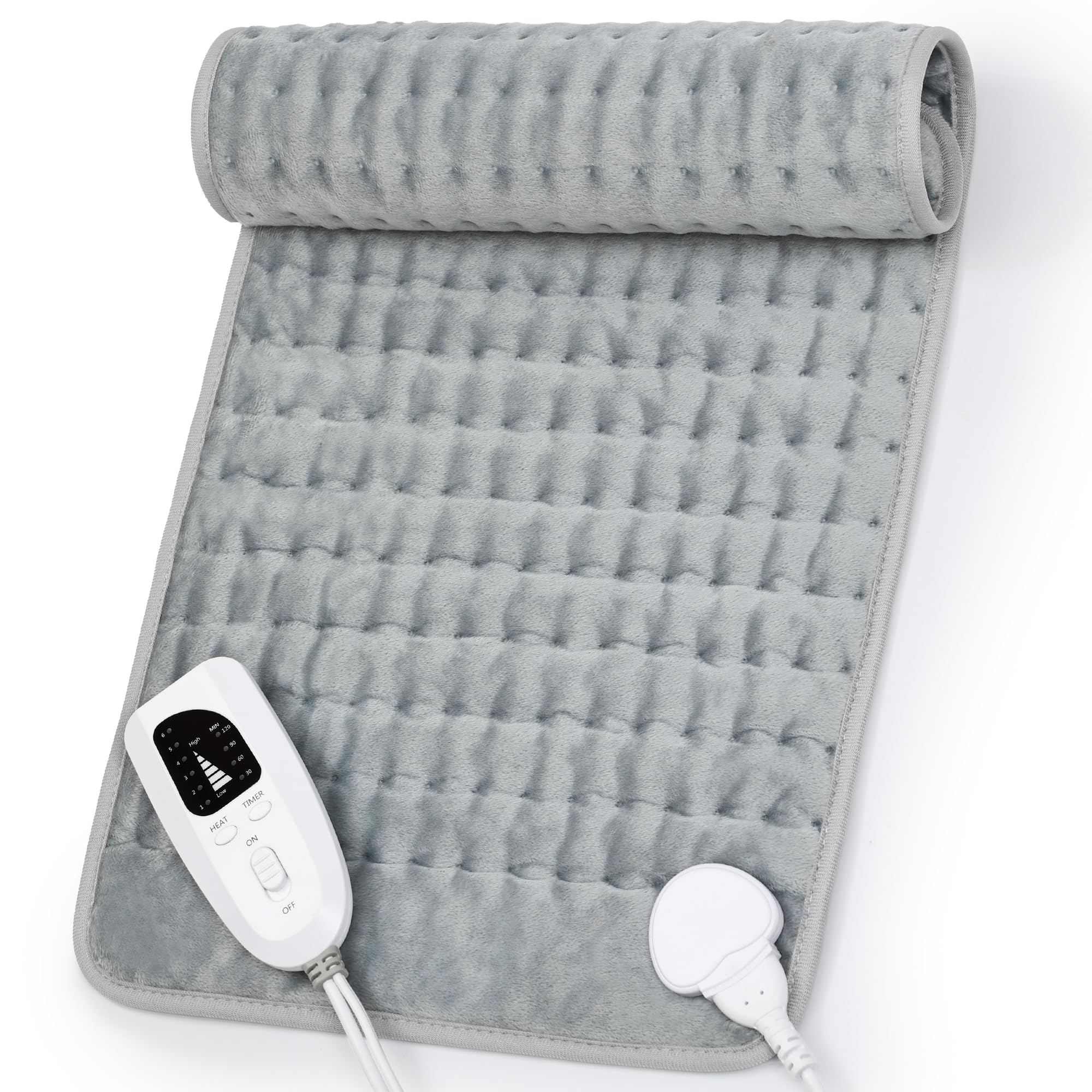
Deepsoon 24x12 Heating Pad

89 /100
Trail Score Excellent

Key details

Size
24 x 12 inches
Cord Length
75 inches
Heat Settings
6 levels
Auto-off Timer
30/60/90/120 minutes
Check Price on Amazon

The shape is the reason this one earns a spot. At 24 by 12 inches it folds around the lower back and holds the curl, or lies flat under you on the sofa — and the lower back is where most of the pain people are shopping for actually sits. The 75-inch cord is long enough that a chair near the wall works; you're not sitting on the floor beside the socket.

Six heat levels and four timers running to two hours are more control than we expected at the bottom of the price range, and the two-hour ceiling is the part we came back to: it covers a film or a long stretch at the desk without a restart. Of everything here, this is the pad that stayed plugged in, because there's nothing to figure out — plug it in, pick a level, sit down.

There's no strap, tie, or snap, so wrapped around your back it holds only as long as you're leaning against something. Tuck the ends under a waistband or the arm of a chair and it behaves; expect to fuss with it on a hard kitchen chair. The cover is machine washable once you unplug it, which matters for something that lives against your back every evening.

Pros

  • 24 x 12 inches wraps the lower back
  • Timers run up to two hours
  • 75-inch cord gives real slack
  • Machine washable cover

Cons

  • Top settings run milder than the dial implies
Our verdict

We keep this one plugged in by the couch: it wraps the lower back, runs to two hours, and costs less than anything else here.

Check Latest Price
3

Best Weighted Wrap

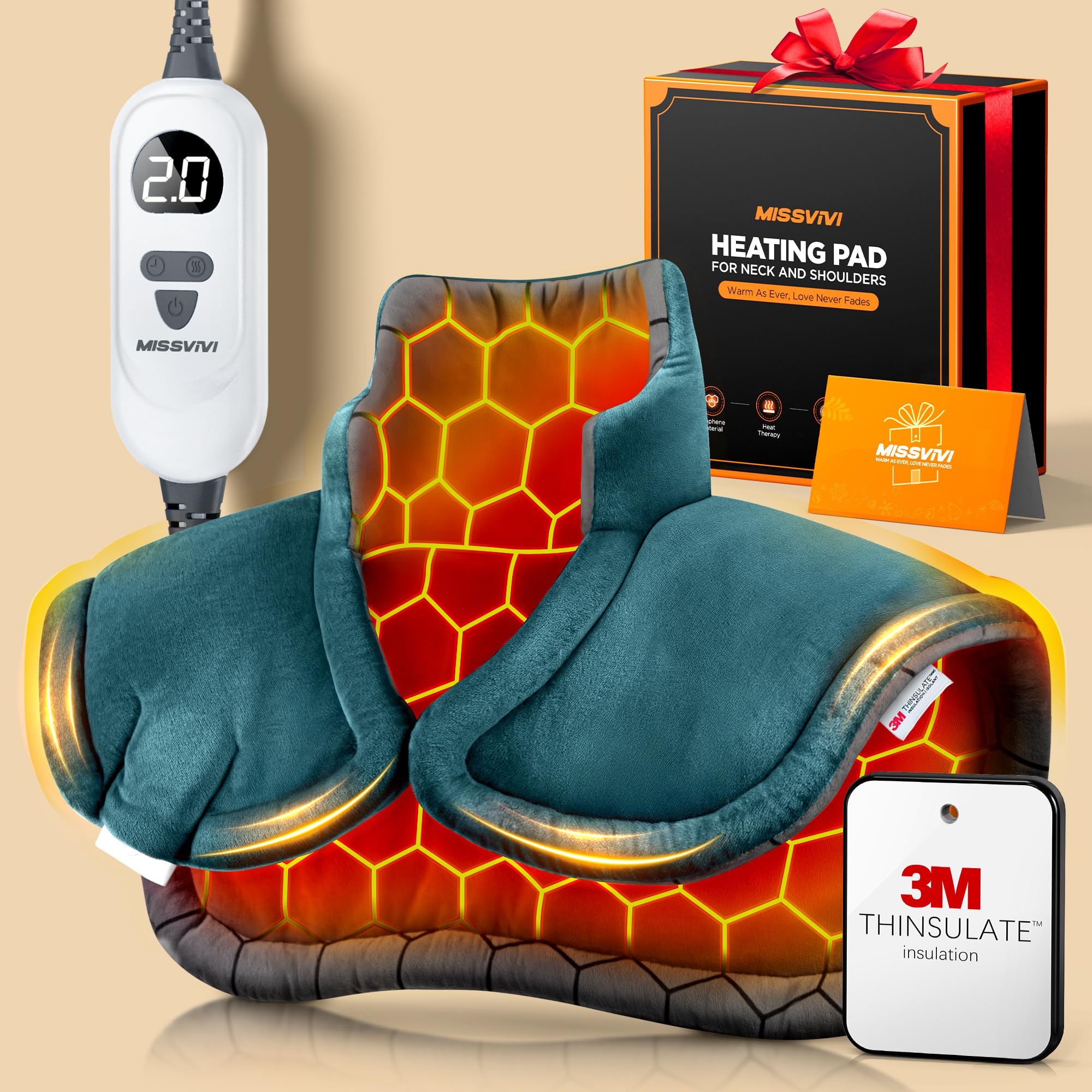
MISSVIVI Weighted Heated Wrap

91 /100
Trail Score Outstanding

Key details

Design
Weighted shawl, two snaps
Heat Settings
6 (108°F to 144°F)
Heating Layer
Graphene-infused fabric
Auto-off Timers
4 (0.5 to 2 hours)
Check Price on Amazon

On paper this is the Lenmen with more weight and a higher price. In use, the weight is the whole story: the shawl settles onto the shoulders and stays there when you lean forward for a keyboard or a cup, where a lighter cape shifts and needs a shrug to reset. If you've given up on a shoulder wrap because it kept sliding, start here.

The rest is competent rather than clever — six settings from 108°F to 144°F, four timers from half an hour to two hours, a plush cover that feels good against a bare neck, and two snaps to set the drape. We liked it most for long sessions; the weight makes an hour on the sofa feel like treatment rather than a task.

There's less long-term history behind this one than behind the cheaper capes, which is why it isn't our overall pick. What you get for the extra outlay is the version of this design that stays exactly where you put it.

Pros

  • Weight keeps the drape in place
  • Six heat settings and four timers
  • Plush cover feels good on bare skin

Cons

  • Costs the most of the wraps here
  • Same 144°F ceiling as cheaper capes
Our verdict

We reach for this one when we want a shoulder wrap that stays put — the weight does the job a strap would, and the heat is even.

Check Latest Price
4

Best Cordless

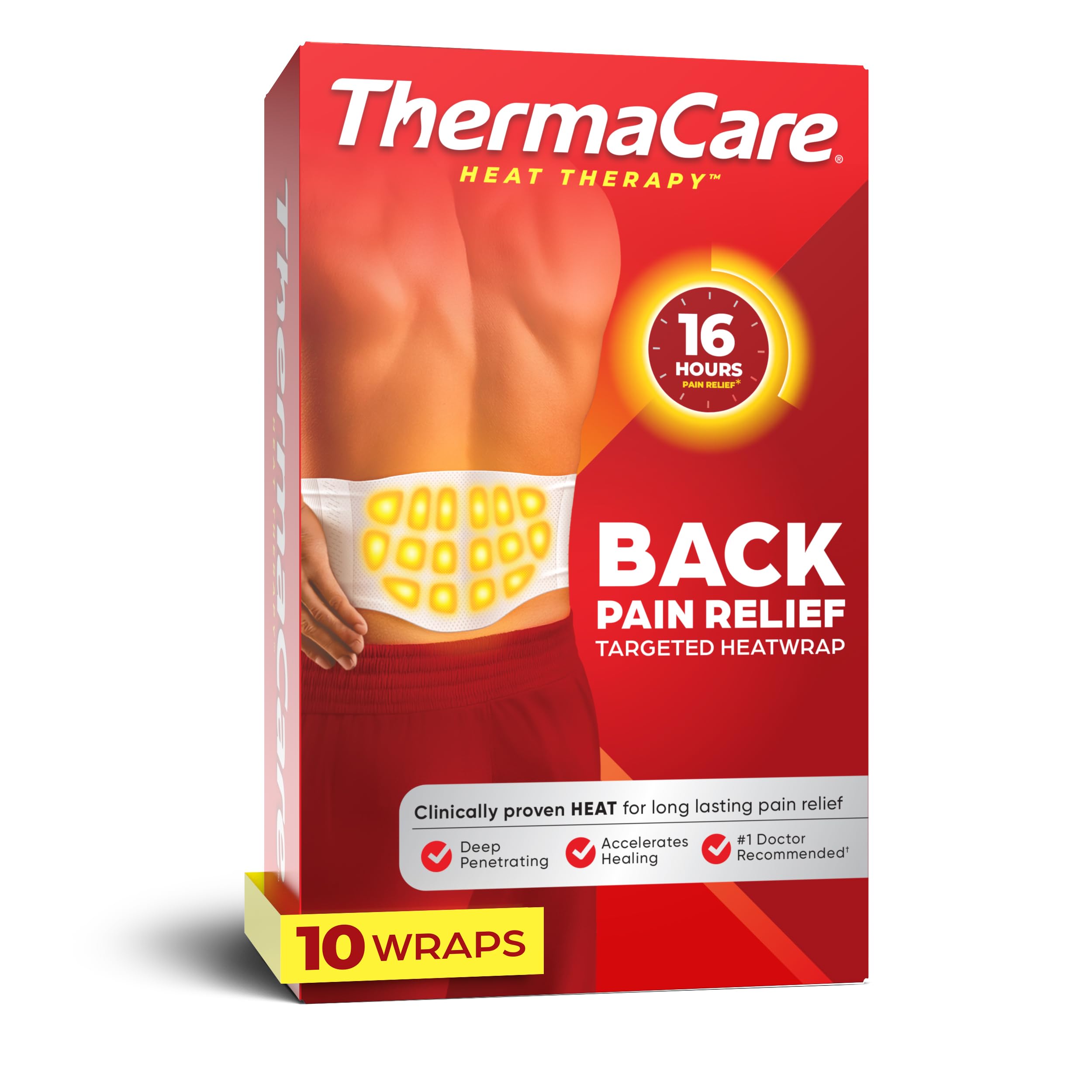
ThermaCare Back & Hip Heat Patches

91 /100
Trail Score Outstanding

Key details

Type
Air-activated, cordless
Count
10 patches
Fastening
Adjustable Velcro belt
Wear Time
Up to 8 hours
Check Price on Amazon

There's no outlet on a warehouse shift, a flight, or a long drive, and that's the entire case for these. They're air-activated patches with a contoured belt that fastens around the lower back and hips with Velcro and warms up on its own once you open the wrapper — no cord, no controller, nothing to plug in and nothing to remember to switch off.

We keep a pack in a bag for exactly those days. The heat is steady and gentle rather than fierce, it holds through a long stretch of wear, and because the belt is fabric rather than adhesive it can be repositioned without losing its grip — worth knowing if you're wearing it under a shirt at a desk and want to shift it after lunch.

Understand what you're buying: a disposable. The cost is per use, and a daily habit runs far past what any reusable pad here costs over a year. That's fine for occasional days out of the house and expensive as a routine.

Pros

  • No cord, no outlet, no controller
  • Up to 8 hours of heat per patch
  • Fabric belt can be repositioned

Cons

  • Belt runs small on larger frames
  • Slower to warm than an electric pad
Our verdict

We keep a pack in the bag for days without an outlet — steady, cordless heat through a workday, paid for by the use.

Check Latest Price
5

Soft, Simple Warmth

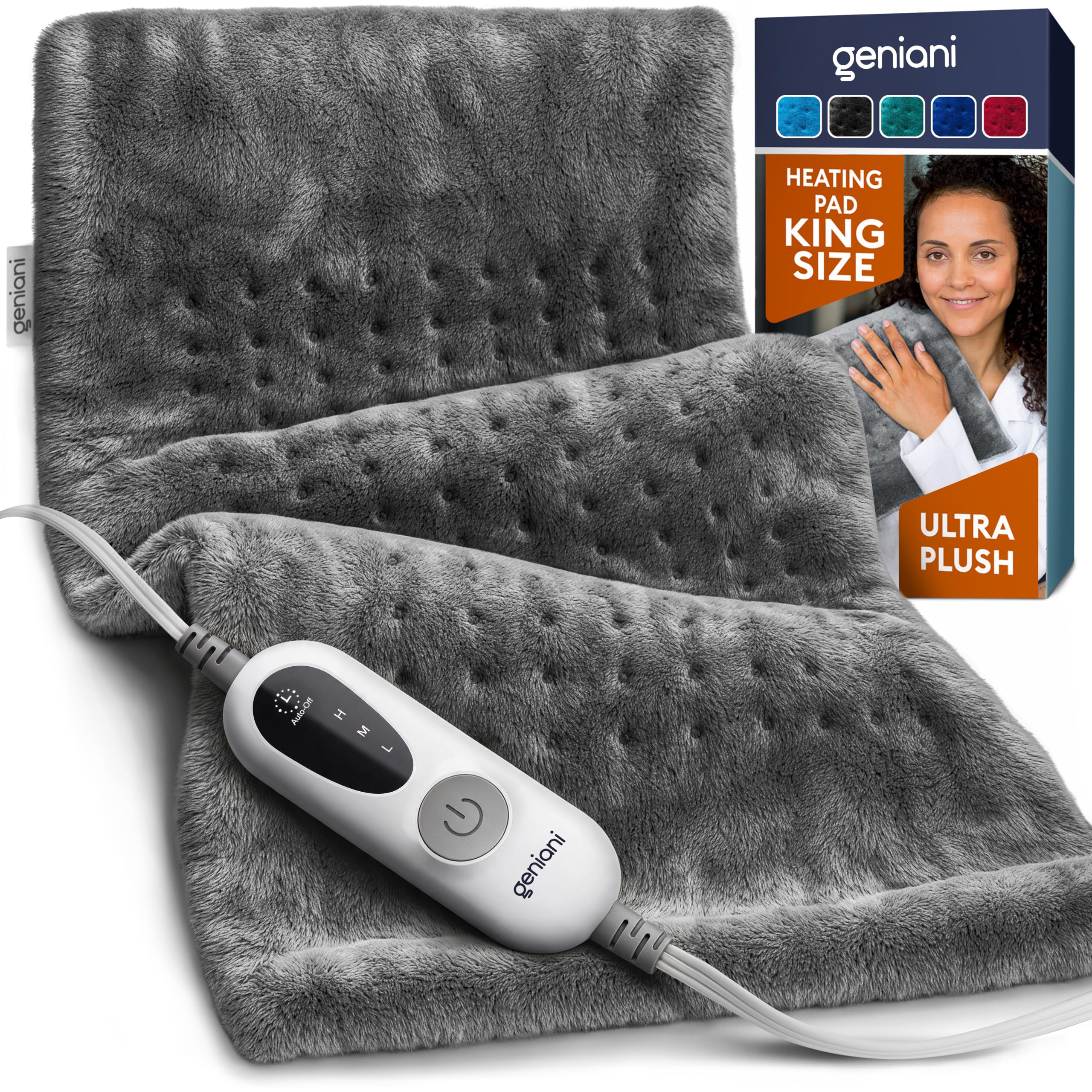
GENIANI XL Heating Pad

88 /100
Trail Score Excellent

Key details

Care
Machine washable
Size
12 x 24 inches
Heat Type
Dry or moist
Heat Settings
3 levels
Check Price on Amazon

The cover is what you notice first: microplush, 12 by 24 inches, and soft enough that we stopped bothering with a towel between it and a bare back. There's also a dry-or-moist heat setting, which is unusual at this level and gives you a heavier, damper sort of warmth when a dry pad feels like too much.

In daily use it's the easiest pad here to live with. It folds flat into a drawer, the cover goes in the washing machine, the auto shut-off means you can start a session and forget the clock, and at 1.3 pounds it's light enough to move from couch to bed without thinking about it.

Where it lands in this group is the comfortable generalist rather than the specialist: good on a shoulder, fine on a lower back, and the one we hand someone who wants warmth without a manual. Keep the receipt either way; the warranty is the part of a heating pad purchase that ends up mattering.

Pros

  • Softest cover in this group
  • Dry or moist heat option
  • Machine washable and folds flat

Cons

  • Only three heat levels
  • Top setting is milder than the other pads here
Our verdict

We like this as a soft, simple pad for general warmth, though three heat levels won't satisfy anyone who wants precise control.

Check Latest Price

How We Tested the Best Heated Back Wraps

We built the shortlist by pulling every wrap we could find from the familiar heat-therapy names and the smaller labels sold direct, then filtering on the specs that decide whether one is usable: number and range of heat settings, auto-shutoff, cord length or battery life, strap adjustability, and whether the cover can be washed. Anything without an auto-shutoff, or with a single fixed strap size, came off the list. That left 12 wraps across a range of budgets.

Then we lived in them for six months — eight-hour desk days, the couch, the driver's seat, evening dog walks, and one tester's slow recovery from a strained lumbar. We laid a digital thermometer against the inner lining and logged readings at 5, 15, and 30 minutes to see how quickly each reached its top heat and whether that heat spread evenly or concentrated in one strip. Each wrap ran unattended to its auto-shutoff so we could time how long useful heat lasted and whether it held steady or spiked. We tested the straps standing, leaning back in a chair, and lying down, and noted which ones needed readjusting every time we moved.

For comfort, each tester wore the wrap against bare skin for 30 minutes and reported scratchy seams, stiff edges, or fabric that trapped sweat. We weighed every model on a kitchen scale and walked to the kitchen in each one to see whether it stayed put. We also judged appearance honestly — a few look like a fleece vest, others like something from a physical therapist's closet. After six months we checked for frayed straps, sticky controller buttons, and any wrap that had lost its top-end heat, since the value question is really whether it still works in month seven.

How to Choose a Heated Back Wrap

Start with where the heat needs to land

Back pain isn't one location, and the shape of the wrap decides which part you can reach. A 24-by-12-inch pad like the Deepsoon folds around the lower back or lies flat under you; a cape like the Lenmen drops over the shoulders and covers neck to mid-back but leaves the waistline uncovered; a belt-style patch targets the lower back and hips only.

Put a hand where it hurts most before you shop. Below the ribs points to a pad or a belt; between the shoulder blades points to a cape.

How it stays on matters as much as how it looks

Fastening is the difference between a wrap you wear and a pad you hold. Capes use weighted edges and a snap at the throat, so they hang on the shoulders hands-free; the trade-off is that the weight sits in the edges rather than across the panel, which leaves the middle of the wrap light against your back.

Flat pads usually have no fastening at all, which is fine lying down and awkward at a desk — tuck the ends under a waistband or the arm of a chair. Velcro belts give the least on larger frames.

Heat levels, heat ceiling, and timers

More settings don't mean more heat. The number that matters is the top of the range: the pads here that publish one stop at 144°F, and a six-level pad that stops there feels gentler than a three-level pad that reaches higher. Look up the ceiling if you like serious heat.

Look at the timer range if you don't want to get up and restart — 30 to 120 minutes covers most sessions, and auto shut-off is a safety feature rather than a nuisance.

Corded, cordless, or disposable

An electric wrap ties you to an outlet, so cord length earns its place in the specs: 75 inches lets you sit in a chair rather than on the floor beside the socket. If your relief happens away from home — a desk you don't control, a flight, a long drive — a disposable patch is the only thing that works, and the only option you can wear under clothes.

Budget the difference honestly: patches are cheap per pack and costly per year, and a reusable pad is the reverse.

Care, and the longevity question

Unplug the controller, wash the cover, and dry it completely before it goes back on; the fabric will last years that way. The electronics decide how long you keep the pad, and pads that quietly stop heating are the most common way this category disappoints.

Buy where the warranty is easy to use, keep the receipt and the box for the first month, and treat a new pad's first few sessions as a check that it heats the way you expect.

Frequently Asked Questions

Final Verdict

The Lenmen is the wrap we recommend first because it turns heat into something you can wear: it settles over the shoulders, warms through the panel quickly, and gives you six levels and four timers without a premium price. If your pain sits at the waistline rather than between the shoulder blades, take the Deepsoon — it wraps the lower back, runs to two hours, and costs the least here. And if you need relief where there's no outlet at all, the ThermaCare patches are the only cordless answer in this group.