Best Gym Chalk of 2026

Gym chalk is the cheapest upgrade in lifting and the messiest. Blocks crumble into powder the moment you tear the wrapper, liquid versions leave a white film on every bar in the place, and loose chalk milled too fine ends up half on the floor. Get the right one, though, and the problem it solves is immediate: sweat. A humid garage, a packed gym in summer, a high-rep pull-up set — the bar goes slick and your grip quits long before your back does. Good chalk buys you a few more reps before that happens.

I've chalked up before heavy pulls for years, and one thing I've learned: how finely a chalk is milled matters more than how much you get. Coarse, dense blocks grab moisture and last; powdery bargain stuff coats your hands and sheds right off. We spent four months with 14 blocks, bags, and liquid chalk bottles, and the picks below are the ones that held their grip, stayed contained, and were still worth the money at the bottom of the block.

1

Best Overall

Friction Labs Premium Loose Chalk

95 /100
Trail Score Outstanding

Key details

Form
Loose chalk
Size
2.5 oz / 70.8 g
Purity
Silica- and pigment-free
Texture
Chunky
Check Price on Amazon

Per ounce, this is the most expensive chalk we recommend, and it tops this list anyway. Friction Labs refines the chalk down to magnesium carbonate and strips out the silica, pigment, and filler, and what that buys you is staying power: hands stay dry, and the coat holds through a full set better than the cheaper bags here. On a humid day, that is the difference between chalking up once and chalking up three times.

The cut is chunky, small pieces and powder rather than a uniform dust, and you feel the difference when you crush a piece between your palms before a heavy single. It is also the most divisive thing about the bag: the chunks run smaller and harder than some of us expected, and if you plan to refill a chalk ball, buy the finer grind instead.

Set it against the other picks and the trade is clear. The Primo bucket gives you a pound of softer, oil-blended powder with a scent; the 321 STRONG bag costs a fraction as much and needs more of it per set. This is the one to buy when grip, not budget, is the limit.

The other thing we noticed is skin. Long sessions on chalk with drying agents can leave hands tight and papery afterwards; this one does not, which is the quiet benefit of the refining and the reason we stopped rationing it.

Pros

  • Coat holds through a full set
  • Pure magnesium carbonate, no fillers
  • Chunky cut crushes for a heavier coat
  • Kind to skin over long sessions

Cons

  • Costs the most per ounce of any pick here
Our verdict

This is the chalk we hand people whose grip limits their lifts or their climbing: hands stay dry and chalked longer, at a higher price per ounce.

Check Latest Price
2

Best Liquid Chalk

SPORTMEDIQ Pro Grade Liquid Chalk

94 /100
Trail Score Outstanding

Key details

Form
Liquid chalk
Size
8.5 oz
Scent
Light, fresh fragrance
Check Price on Amazon

Plenty of commercial gyms will not let you near a bar with a bag of powder, and this bottle is built for that situation. It is liquid chalk in an 8.5-ounce squeeze bottle, roughly four times the size of the pocket bottles here, so it lives in a locker rather than a jacket pocket.

The grip is real. It goes on as a wet gel, dries to a tacky film fast, and heavy pulls stop sliding; we used it for deadlifts and rows and did not need straps. We were also pleasantly surprised by how far a bottle goes, because a couple of drops per hand is enough for a full set.

The film it leaves on a bar is a white haze rather than a dust cloud, so wipe the knurling down after a session if you share the rack. And the bottle goes stiff once it is half empty, so store it cap-down and the chalk stays near the nozzle.

Pros

  • No dust, so it clears most gym chalk rules
  • Large bottle lasts a long time
  • Dries to a tacky film quickly
  • Enough grip for heavy deadlifts

Cons

  • Needs a top-up partway through a long session
Our verdict

The liquid chalk we reach for in a chalk-restricted gym: it dries to a tacky film and holds heavy pulls with no powder in sight.

Check Latest Price
3

Best for Your Gym Bag

EVMT Brands Liquid Chalk

93 /100
Trail Score Outstanding

Key details

Form
Liquid chalk
Size
2 oz / 50 ml
Package Dimensions
4.45 x 1.73 x 1.18 inches
Check Price on Amazon

A two-ounce bottle is the whole idea here. It is about the size of a hand sanitizer, it drops into a side pocket, and it lets you chalk up for pull-ups without carrying anything that can spill powder through a gym bag.

Application is straightforward: a few drops, rubbed over palms and fingers, then a beat to dry. It goes on thick, and once dry it does not transfer to clothes or leave white prints on a bench. It also washes off with soap and water at the end of a session.

The trade for the size is obvious: this is a bottle you finish, not one you keep for a year. That is fine at this end of the price range, and it is why we do not mind keeping one in each bag.

What we keep coming back to is the format. It travels, it grips well enough for heavy pulling, and it costs little enough to keep a spare. The cap is the weak link, so keep the bottle upright in a pocket rather than rolling loose at the bottom of a bag.

Pros

  • Small enough to carry everywhere
  • No transfer to clothes or benches
  • Dries in seconds
  • Washes off with soap and water

Cons

  • Wears off before the end of a long session
Our verdict

The liquid chalk that actually lives in your gym bag: small, quick to dry, and grippy enough for heavy pulling.

Check Latest Price
4

Best Block Value

Rage Fitness Gym Chalk Blocks

94 /100
Trail Score Outstanding

Key details

Form
Block chalk
Pack
Eight 2 oz blocks (1 lb total)
Purity
100% magnesium carbonate
Check Price on Amazon

Eight two-ounce blocks in one box, a pound of chalk, and enough that you stop rationing it. For a home gym that is the format that makes sense: break off a chunk, crush it, and the rest stays solid until you need it.

Blocks are compressed hard on purpose so they survive shipping, and ours took real effort to break, which is what you want when the alternative is a box of powder. Crush a corner between your palms and you get a coarse grind; work it longer and it goes fine. That control is the reason to buy blocks over loose chalk.

For a garage setup that goes through chalk steadily, the arithmetic is hard to argue with: a pound in one box, nothing to spill, and pieces small enough to drop in a gym bag. It is the box we keep in the garage, and the one to start with if you have been making a small bag last.

Pros

  • A pound of chalk in one box
  • Break off only what you need
  • Best value in block form here
  • Works for lifting and climbing

Cons

  • Grip sits lighter on the skin than premium loose chalk
Our verdict

A pound of breakable blocks at a price that undercuts the premium bags: the sensible first purchase for a home gym.

Check Latest Price
5

Best Chalk Ball

Z Athletic Chalk Ball

93 /100
Trail Score Outstanding

Key details

Form
Chalk ball
Size
2 oz
Covering
100% cotton
Check Price on Amazon

A chalk ball is a sock full of powder, and the sock does the dosing: squeeze, powder comes through the cotton, and your hands get coated without a cloud or a white floor. That is the whole mechanism, and for gymnastics, rings, or a kettlebell in a spare room it is the tidiest way to chalk up.

Two ounces of chalk in a cotton ball, and it works: one or two squeezes coat both hands, a bar stops feeling slick, and it washes off with water afterwards. It is also the cheapest way into chalk if you are not sure you need it.

Keep it in a lidded tub between sessions, too. The cotton seam is the part that fails, and a ball that splits in a gym bag is just a bag of loose powder.

Pros

  • Squeeze-through sock controls the dose
  • Almost no airborne dust
  • Cheap entry into chalk
  • Washes off with water

Cons

  • Thin coverage needs a second squeeze mid-set
Our verdict

The tidiest way to chalk up for gymnastics or a home workout: cheap, nearly dust-free, and self-dosing.

Check Latest Price
6

Best Budget Loose Chalk

321 STRONG Gym Chalk

93 /100
Trail Score Outstanding

Key details

Form
Loose chalk
Size
3.53 oz
Purity
Non-toxic, pigment-free
Check Price on Amazon

This is fine, almost floury chalk rather than the chunky cut you get from the premium bags. Rub a little into your palms and you are coated in a couple of seconds, which is exactly what you want from a hundred-gram bag that lives in your gym kit.

The grind has a cost, though: fine powder finds every gap, so a bag that is not properly sealed leaves a dusting over everything in your kit. Decant it into a tub with a lid and that stops being a problem.

What it is, unambiguously, is the least expensive chalk here, and it is the one to buy if you are refilling a ball, topping up a bucket, or simply do not want to think hard about chalk. The zip-top bag is thin and does not survive many openings, so plan on a container from the start.

Pros

  • Lowest price of any pick here
  • Fine grind coats hands fast
  • Works as a refill for balls and buckets
  • Non-toxic and pigment-free

Cons

  • Fine grind coats thin and needs reapplying
Our verdict

The bag to buy when chalk is a refill rather than a purchase: cheap, fine, and quick to coat a pair of hands.

Check Latest Price
7

Dry, Cracked Hands

Primo Chalk Bucket

93 /100
Trail Score Outstanding

Key details

Form
Loose chalk
Size
1 lb (16 oz)
Additives
Blended with natural oils
Container
Resealable bucket
Check Price on Amazon

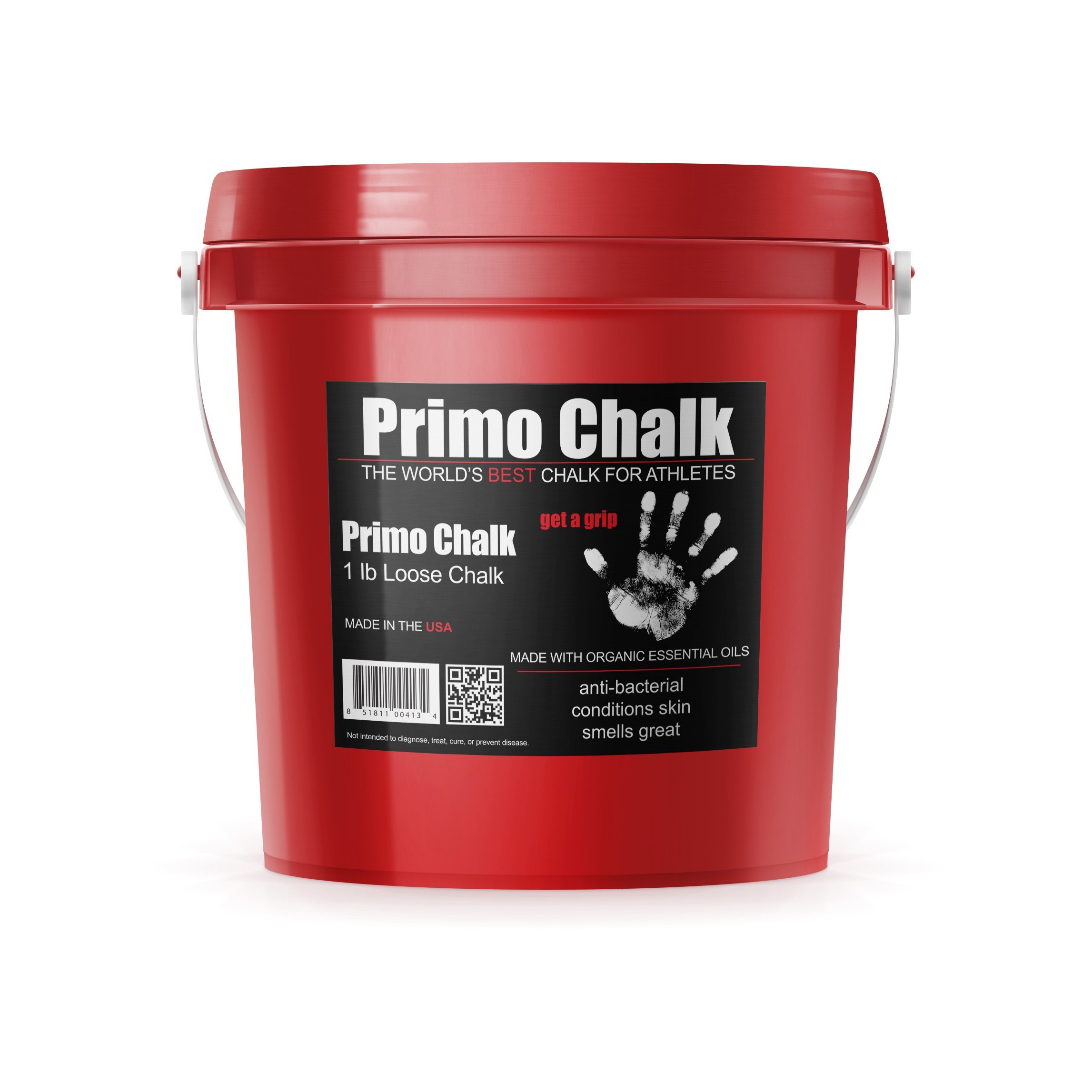
Open the bucket and the smell arrives first: lemon, clean, distinct enough that you notice it the moment the lid comes off. That is the giveaway that this is not plain chalk. Primo blends magnesium carbonate with natural oils, and the point of them is your skin rather than your nose.

The powder is very fine and very soft, closer to a liquid than a dust when you dip a hand in, and it goes on in a thin, even coat that dries your palms without leaving them papery. After a few sessions our hands felt less tight than they do after the plain blocks, which is the oils doing their job.

The bucket is the other half of the appeal. A pound of chalk in a resealable tub means you dip rather than pinch, and there is no bag to untie with chalky fingers mid-set. It sits on a shelf, seals, and does not dust the garage every time you open it.

What you are paying for is comfort and format more than raw grip: this is not more friction than the Friction Labs bag, and the scent is a genuine preference call, so if you want plain, unscented chalk for climbing, that is the bag to buy. If your hands crack in winter, or you want something to dip into at home, this is the one we keep on the shelf.

Pros

  • Oils leave hands conditioned, not stripped
  • Very fine, soft powder coats evenly
  • Resealable bucket is easy to dip and store
  • Pleasant lemon scent

Cons

  • The most expensive chalk on this list
Our verdict

The pick for dry, cracked hands: an oil-blended powder that conditions as it dries, sold in a resealable bucket.

Check Latest Price
8

Multiple Bags

SPRI Chalk Block 4-Pack

94 /100
Trail Score Outstanding

Key details

Form
Block chalk
Pack
Four 2 oz blocks (8 oz total)
Purity
Pigment-free magnesium carbonate
Check Price on Amazon

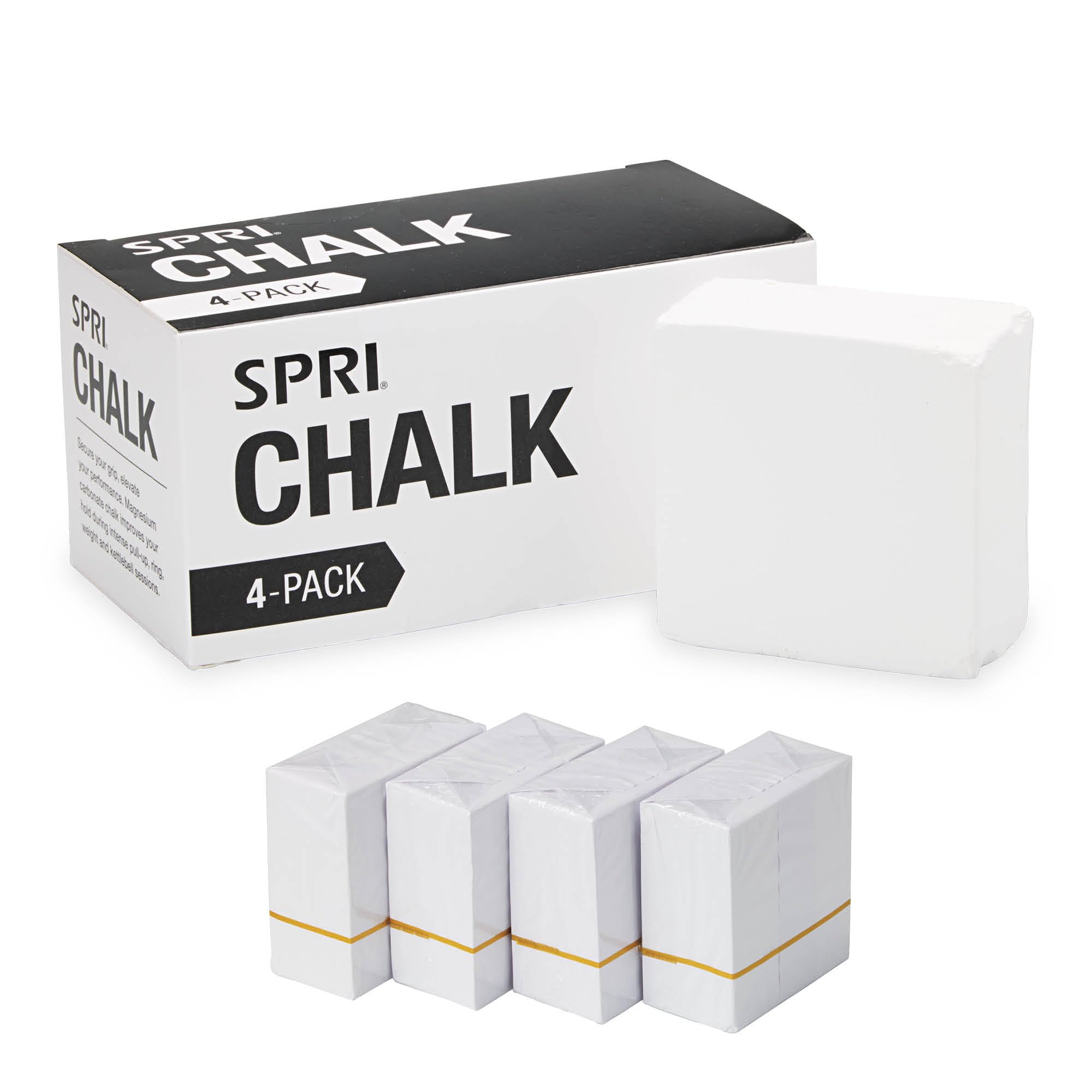
Four separately wrapped two-ounce blocks, and that packaging detail is the reason to choose this over a single big block: one lives in the garage, one in the gym bag, one in the car.

The chalk itself is plain pigment-free magnesium carbonate, and it behaves like it: hands dry, a bar with enough bite for pull-ups and deadlifts, nothing clever. Blocks this size break down easily, and a chunk crushed between your palms gives a workable grind in a few seconds.

It is not the chalk you buy for a project grade or a competition; it is the one you buy four of, so there is always a block within reach, in a glovebox or a desk drawer or a gym bag. If you have ever arrived at the gym with your only block sitting on the kitchen counter, this is the fix.

Pros

  • Four separately wrapped blocks
  • Dry, workable grip for lifting and climbing
  • Pigment-free magnesium carbonate
  • Cheap way to keep chalk in several places

Cons

  • Soft blocks shed dust once they are opened
Our verdict

Four wrapped blocks that put chalk in every bag you own: plain, serviceable, and cheap enough to keep spares.

Check Latest Price

How We Tested Gym Chalk

We started with the chalk sold in gym pro shops and the listings that keep topping search results, then added the brands our own lifters rebuy without thinking about it. We filtered by form (block, loose, liquid), cost per ounce, and ingredients — pure magnesium carbonate versus blends cut with drying agents — and narrowed the field to 14 options.

Testing happened where chalk actually gets used: heavy deadlift and pull-up sessions in a humid garage gym, a commercial gym with a strict no-mess policy, and a stretch of hot weather when hands sweat before the first set. Each option got at least six sessions. We chalked up before pulls and noted whether grip held through the fourth set or started slipping, and whether we had to reapply mid-session.

To judge durability, we weighed every block before and after testing and watched whether it crumbled in the bag or kept its shape. Containment got its own test: each bag went into a gym bag, got shaken around, and we checked how much powder had escaped. Liquid chalk was timed from application to dry palms, then inspected for the residue it left on bars and floors. We also noted how easily each washed off, since chalk that dries your hands hard is only useful if it comes off before you drive home. Value came down to cost per ounce weighed against how many sessions a block survived.

How to Choose Gym Chalk

Pick the form before the brand

Loose chalk gives you the heaviest coat with the least effort and the lowest cost per ounce, but it is the dustiest and the form gyms ban first. Blocks are compressed, so you break off what you need and the rest stays solid, which makes them better for a home gym and a gym bag. A chalk ball is loose chalk in a cotton sock: the tidiest application and the thinnest coat. Liquid chalk dries to a film and throws no dust at all, which is why it passes where powder does not.

Find out your gym's chalk policy before you buy anything. If you climb, a ball or loose chalk in a bag. If you lift at home, blocks or a bucket. If you train in a commercial gym with a no-powder rule, buy liquid and don't overthink it.

Grip comes down to moisture, grind, and reapplication

Every chalk in this guide is magnesium carbonate; the differences are grind, purity, and what else is in the bag. Fine powder coats fast and thin, so you reapply sooner. A chunkier cut crushes into a heavier coat that lasts longer. Fillers and artificial drying agents do not add friction, and they can leave hands tight and papery after a long session, which is part of what the refined bags charge for.

We care less about purity claims than about whether one application survives a full set of heavy pulls. Judge any chalk by how many times you rechalk in a workout: if you are back in the bag between every set, the grind or the coat weight is wrong for you, whatever the label says.

Dust is what gets chalk banned

Airborne dust is the reason chalk gets restricted: it settles on benches, floors, and other people's clothing. Blocks and balls cut it down because you are not scooping powder, and loose chalk in an open bucket throws the most. Liquid chalk avoids dust entirely but leaves a white film on bars and hands rather than a dusting, which is a different mess rather than no mess at all.

If you share equipment or train somewhere with a policy, ask before you buy a bucket. The answer decides the form more often than any performance difference does.

Buy for cost per use, not shelf price

Chalk is sold by weight, and the formats do not use it at the same rate. A pound of blocks goes further than a pound of loose powder because you break off what you need instead of dipping. Small liquid bottles cost more per session than a big one, though they are the only version you will actually carry.

Match the size to where the chalk lives: a big bottle for a locker, a two-ounce bottle for a bag, a box or a bucket for a garage. The cheapest bag in this guide is a genuinely good one, but only if loose powder suits where you train.

Frequently Asked Questions

Final Verdict

Most lifters should buy the Friction Labs loose chalk. Hands stay dry, the coat holds longer than anything else we recommend here, and for a bag this small, how often you stop to rechalk is the difference you feel in your last set.

If your gym bans powder, take the SPORTMEDIQ liquid and accept the top-up. If you are setting up a home gym on a budget, the Rage block box gives you a pound of chalk that stays solid until you break a piece off.