Best Ginger Supplements of 2026

Ginger's active compounds — gingerols and shogaols — are what actually settle a queasy stomach, and how much of them survives into a capsule depends on how the root was grown, dried, and milled. That's the unglamorous truth behind a shelf of bottles all printing the same number on the front. A label can say ginger root and still hide fillers, a weak cultivar, or a dose so low you'd need three capsules to notice anything at all.

My own habit started with a tin of chews in a desk drawer; now it's a capsule with breakfast. Over four months, my team and I worked through 14 ginger supplements — capsules, chews, powders, gummies — and the gaps between them were wide. Some went down easy and settled a heavy meal; others repeated on me for an hour or lit up the reflux I was trying to head off. A few announced themselves through the sealed bottle. The ones that made the list got there on potency per dose, a label you can trust, and a form you'll actually keep taking.

1

Best Overall

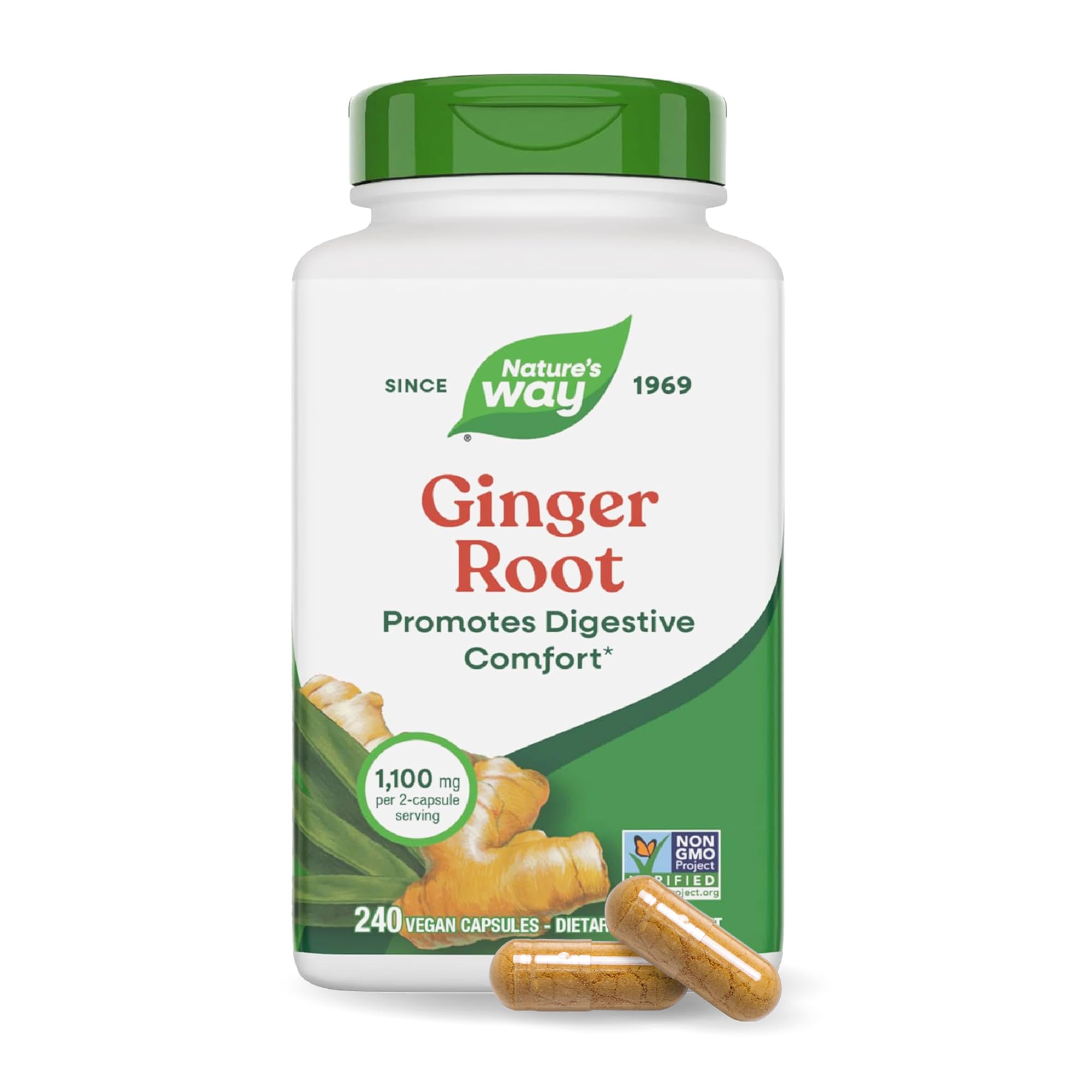
Nature's Way Ginger Root

93 /100
Trail Score Outstanding

Key details

Formula
Vegan, Non-GMO Project Verified
Capsule Count
240 vegan capsules
Ginger Per Serving
1,100 mg (2 capsules)
Check Price on Amazon

The 1,100 mg on the front of the bottle is a two-capsule serving, not one, and that single detail decides whether this suits you. One capsule is a moderate 550 mg, so you can take one with breakfast and a second later, or stay at a single capsule while you find out how ginger sits with you. We liked having that control — none of the extract picks here give you the same room to ease in. The capsule itself is plain ginger root powder, vegan and Non-GMO Project Verified, with 240 to the bottle.

What it's for is unglamorous and useful: stomach comfort after a heavy meal, the queasy hour on a winding road, the off day that never quite becomes anything. The capsules go down easily and leave no strong aftertaste, which counts for more than it sounds when you're taking one in a parking lot before a drive. The caveat is heartburn. Ginger at this dose can bring it on, especially on an empty stomach, so take it with food and start with one capsule rather than the full two.

Against the rest of the group it's the pick that asks the least of you: no extract ratio to decode, no organic premium to pay for. Pure Mountain Botanicals is the better call if a single-ingredient organic label is the reason you're shopping, and Nutricost is the one to take if you want a small capsule once a day. This is the bottle we reach for first.

Pros

  • Splittable 550 mg capsules let you control the dose
  • 240 vegan capsules, Non-GMO Project Verified
  • Easy to swallow with no strong aftertaste

Cons

  • Two-capsule serving means the 240 count is 120 servings
Our verdict

We recommend this one for everyday stomach comfort: plain vegan ginger root in a big bottle, with a two-capsule serving you can split when you want a gentler dose.

Check Latest Price
2

Best Value

Nutricost Ginger Root Extract

93 /100
Trail Score Outstanding

Key details

Dietary
Gluten free, Non-GMO
Manufacturing
NSF certified, GMP compliant facility
Extract Strength
550 mg of 4:1 extract per serving
Servings Per Bottle
240
Check Price on Amazon

A 4:1 extract is the reason one small capsule does the work of several. The 550 mg inside each one is concentrated ginger, roughly the equivalent of 2,200 mg of root, and because a single capsule counts as a full serving, the bottle holds 240 of them — about eight months of daily use. We did that arithmetic twice before believing it.

The manufacturing reads the same way: an NSF certified, GMP compliant, FDA registered facility, gluten free and non-GMO, and capsules small enough that you don't brace before swallowing one. No aftertaste, no ginger repeating on you an hour later. For something you take every morning without thinking about it, that covers most of what matters.

The trade-off is the format itself. A 4:1 extract gives you the concentrated gingerols without the whole root's bulk and fiber, so if it's the traditional whole-root dose you're after, Nature's Way or Pure Mountain Botanicals fits better. If one small capsule a day is the entire appeal, this is where we land.

Pros

  • 240 single-capsule servings in one bottle
  • 550 mg of 4:1 extract per capsule
  • Made in an NSF certified, GMP compliant facility
  • Small capsule with no noticeable aftertaste

Cons

  • A 4:1 extract rather than whole root powder
Our verdict

One small capsule is a full serving of concentrated ginger and the bottle holds 240 of them — the daily value that impressed us most in this group.

Check Latest Price
3

Best Single-Ingredient

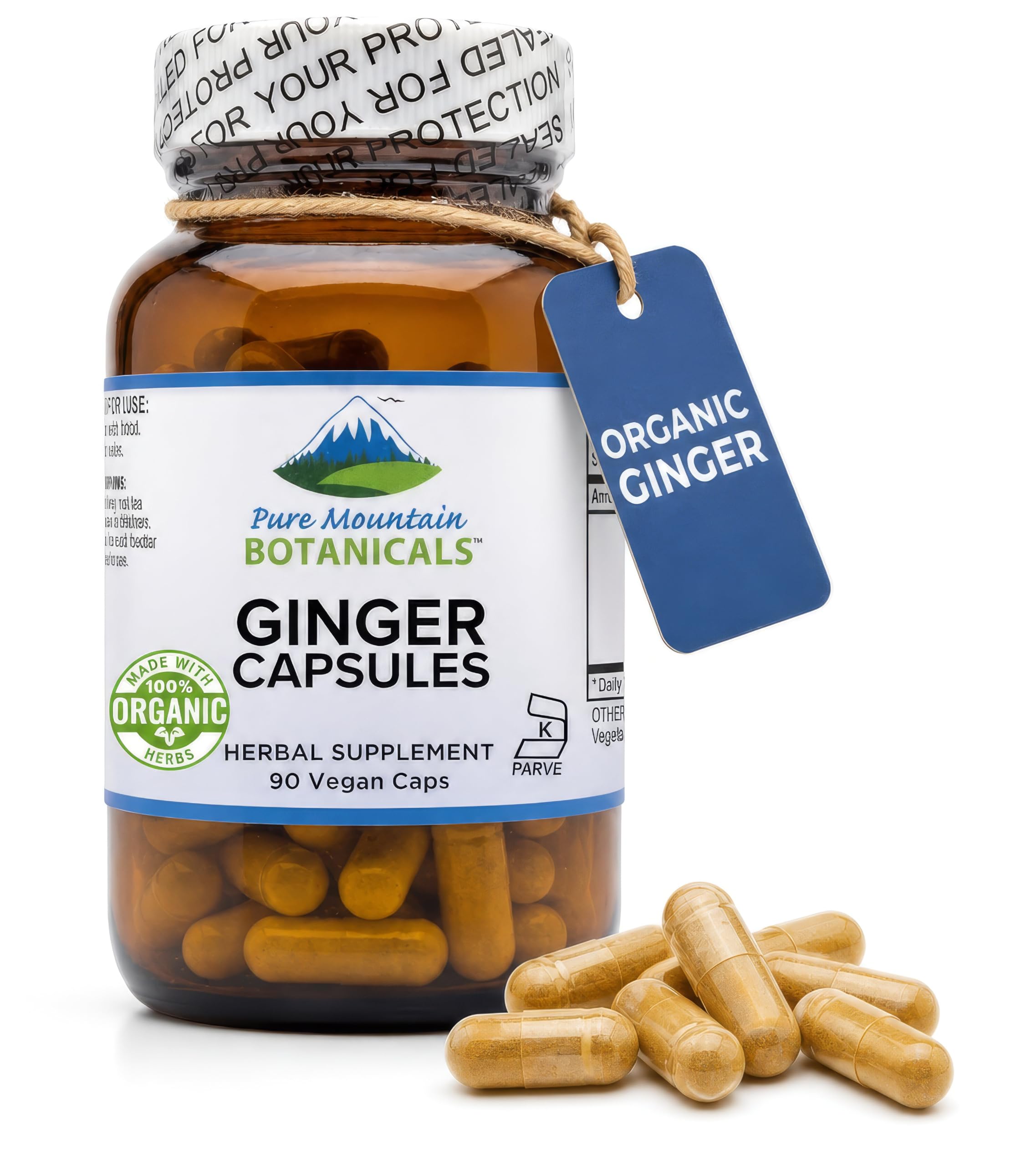
Pure Mountain Botanicals Ginger

92 /100
Trail Score Outstanding

Key details

Testing
Third-party tested, NSF GMP facility
Ingredients
Certified organic ginger root only
Capsule Count
90 vegetable capsules
Ginger Per Serving
1,000 mg (2 capsules)
Check Price on Amazon

One ingredient is the whole pitch: certified organic ginger root powder, 1,000 mg across two capsules, with no magnesium stearate, no sodium benzoate, no fillers or binders at all. Open the bottle and the smell is unmistakably ginger — sharp and hot, the real root rather than a neutral powder. For something you swallow daily, that kind of transparency is worth something.

The testing is the part you can't smell. Every batch is third-party checked, and it's made in an NSF GMP certified, FDA registered facility — for a root grown in soil, that's a meaningful check rather than a line on the label, because botanicals take up what's in the ground they grow in. Independent heavy-metal testing on an organic product is the detail we look for before anything else.

The premium buys certification and testing, not a bigger dose, and if a lot of inexpensive ginger is all you want, Nature's Way or Nutricost gets you there. What we noticed in use: no burn, no aftertaste, and a capsule that goes down with a single sip of water. Choose it when the ingredient list itself is the reason you're buying a supplement at all.

Pros

  • Certified organic ginger root is the only ingredient
  • 1,000 mg per two-capsule serving of whole root
  • Third-party tested in an NSF GMP facility

Cons

  • 90 capsules is only 45 servings, the shortest supply here
Our verdict

If you want a certified organic capsule with one ingredient and nothing else, this is the one we point to.

Check Latest Price
4

Best Budget

Horbäach Ginger Root Extract

93 /100
Trail Score Outstanding

Key details

Testing
Laboratory tested
Free From
Gluten, wheat, yeast, milk, lactose, soy, artificial color and flavoring
Capsule Type
Quick release
Capsule Count
150
Check Price on Amazon

This is the cheapest bottle in the group, by a margin you'll notice at checkout, and it doesn't feel like a compromise in the hand: the capsules are small, they go down with a sip of water, and there's none of the ginger aftertaste that makes people abandon a supplement halfway through a bottle.

The label is explicit about what's absent — no gluten, wheat, yeast, milk, lactose, soy, artificial color or flavoring — which is more useful than it sounds if you're already stacking other pills and would rather not add another allergen to the pile. Laboratory tested, quick release, 150 capsules to the bottle.

Against Nutricost it's the cheaper way into a ginger extract, though the bottle is smaller and won't last as long. Where it earns its place is simplicity: one small capsule, nothing to taste, and a bottle that slips into a bag or a desk drawer — which matters more than it sounds when you take something reactively rather than on a schedule.

Pros

  • The lowest-priced bottle of the five here
  • Small capsules that swallow easily, no aftertaste
  • Long free-from list covers common allergens

Cons

  • No milligram figure on the label to compare doses
Our verdict

The cheapest, smallest capsule here, and the one we hand a first-time ginger buyer who doesn't want to commit to a giant bottle.

Check Latest Price
5

Certified Organic

Herbal Roots Organic Ginger

92 /100
Trail Score Outstanding

Key details

Testing
Third-party tested for purity, identity, heavy metals, microbes
Capsule Count
60 vegan capsules
Certification
USDA Certified Organic
Check Price on Amazon

USDA Certified Organic is a stricter standard than the word organic on its own, and this is the only pick here carrying it. Every batch is third-party tested for purity, identity, heavy metals, and microbes — the sort of testing that costs real money and shows up in what you pay. We treat the certificate as the substance and the wellness language as the wrapper, which is the right order for a botanical.

Sixty vegan capsules is the smallest bottle in the group, and that has an advantage: it's a low-commitment way to find out whether ginger agrees with you before you commit to a 240-count tub. The label sticks to the traditional uses — digestion, occasional nausea, everyday joint comfort — and in use the capsules are easy to swallow with nothing much of an aftertaste.

What the premium really buys is confidence in what's inside the capsule, not a stronger effect. If a certificate is what makes you comfortable taking a botanical every day, that's a defensible reason to pay more. If you're chasing a bigger dose or a longer supply, the cheaper bottles here cover that ground, and this one's case rests entirely on the label.

Pros

  • USDA Certified Organic, the only one here
  • Every batch tested for heavy metals and microbes
  • Small, easy-to-swallow vegan capsules

Cons

  • Highest cost per capsule in this group
Our verdict

The only USDA Certified Organic pick here, batch-tested for heavy metals — we think the certification is worth the premium if it's what earns your trust.

Check Latest Price

How We Tested Ginger Supplements

We started by pulling together every ginger supplement that published an actual gingerol count or extract ratio on the label, then narrowed by price per dose and third-party testing. That eliminated a lot of popular bottles — the ones fronting a big number while burying several roots in a proprietary blend — and left 14 capsules, chews, powders, and gummies to use for four months.

Testing happened where ginger actually gets taken. I swallowed each one at breakfast on an empty stomach, again after heavy dinners, and packed a few for a long winding drive and a rough ferry crossing. I logged how quickly queasiness faded — usually somewhere between 30 and 60 minutes — and how long it held, plus the things that ruin a supplement: a sulfurous aftertaste, ginger repeating on me for an hour, heartburn that showed up when I pushed toward a higher dose. Fresh bottles got the nose test first; the smell through a sealed cap said more about ginger quality than the copy did.

Ease of use came down to counting. Some products needed three or four capsules to reach a meaningful dose, which is fine at home and miserable in a car. We weighed pill size, whether chews stuck to our teeth, and whether powders mixed without grit. For value, we calculated cost per serving rather than per bottle, and we opened capsules to look at the powder itself — color, aroma, and how much of the capsule was filler. The ones we kept list a real dose, carry honest side-effect warnings, and stayed comfortable to take twice a day.

How to Choose a Ginger Supplement

Read the dose per capsule, not the headline

Servings are not standardized across these bottles. Nature's Way prints 1,100 mg for a two-capsule serving; Nutricost's 550 mg is a single capsule. Set them side by side without checking serving size and you'll draw exactly the wrong conclusion about which is stronger.

Our habit is to find the milligram figure, find the serving size, then divide. Then divide the bottle's price by the number of servings, because that is the only price comparison that survives contact with daily use. A big bottle of a small serving can cost more per day than a small bottle of a large one.

Whole root powder or a concentrated extract

Root powder is dried ginger, ground and dosed by weight, which is what most traditional doses refer to. A 4:1 extract has the bulk reduced, so a smaller capsule carries more: Nutricost's 550 mg works out to roughly 2,200 mg of root.

Neither is better in the abstract. Powder keeps the whole root; extract means one small capsule instead of two or three. If a specific gram dose already works for you, buy powder and match it. If the appeal is swallowing less, buy the extract.

Look past the ginger on the label

A single-ingredient capsule tells you exactly what you're getting, and Pure Mountain Botanicals is the plainest label in this group. Others list excipients and free-from claims that read well but don't change the dose.

The check worth making is testing. Roots take up what's in the soil they grow in, so independent heavy-metal testing is a real safeguard rather than decoration; Herbal Roots tests every batch, and Nutricost names an NSF certified facility. When a label names a certifier and a standard, that's substance.

Taking it without the burn

Capsule size matters more than it should, because a supplement you avoid taking does nothing. The smaller capsules here go down with a sip of water and leave no aftertaste, which is the difference between a daily habit and a bottle that stalls in a drawer.

Heartburn is the other thing to plan for. Ginger at these doses can bring it on, especially on an empty stomach, so take it with food and start with one capsule rather than the full serving. Splitting the dose across the day is easy with a two-capsule product like Nature's Way.

Frequently Asked Questions

Final Verdict

We recommend Nature's Way Ginger Root for most people. It's plain ginger root, vegan and Non-GMO Project Verified, in a bottle big enough to stop thinking about, and the two-capsule serving lets you take a gentle 550 mg or the full 1,100 mg depending on the day.

Buy Nutricost instead if you want one small capsule a day and a supply that runs to about eight months. Buy Pure Mountain Botanicals if a certified organic, single-ingredient label is the reason you're shopping in the first place.