Best Spirulina Supplements of 2026

Spirulina is one of those supplements that sounds great on paper—until you open the jar and get a whiff of pond water. I’ve blended it into smoothies, stirred it into yogurt, and swallowed capsules at my desk, and the difference between a good one and a bad one shows up fast. The right spirulina should make it easy to get plant-based protein, iron, and antioxidants without turning your morning routine into a test of willpower.

Over the past three months, my team and I have worked through 14 products—powders, capsules, and tablets—paying attention to taste, smell, mixing ease, digestive upset, and whether our energy held steady. We compared labels, third-party testing claims, and cost per serving, because a supplement you won’t finish is no bargain. The picks below are the ones we kept reaching for—and the ones I’d hand to a friend without a caveat.

1

Best Overall

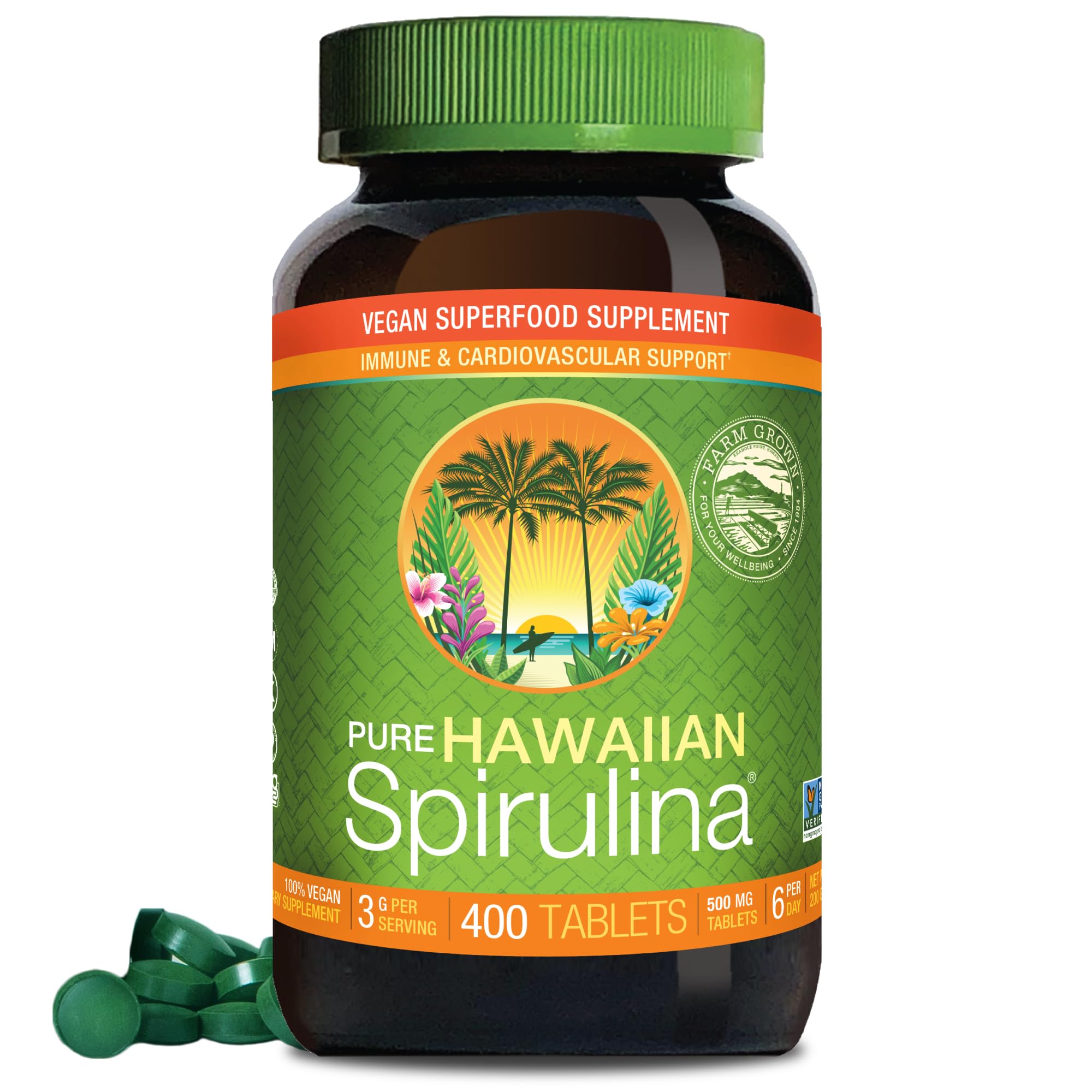
Nutrex Hawaiian Spirulina Tablets

93 /100
Trail Score Outstanding

Key details

Form
Tablet
Count
400 tablets
Grown In
Kona, Hawaii
Strength
500 mg per tablet
Check Price on Amazon

Most spirulina labels promise purity without giving you anything to check. Nutrex tells you where the water came from: lava-filtered aquifer water on a Kona, Hawaii farm that has been growing algae for more than 40 years. In a category where the algae absorbs whatever sits in its pond, that is the most useful sentence on any label here.

What settled it for us is the tablet. At 500 mg it is small — small enough to swallow with a mouthful of water and no ceremony — and it does not leave the fishy aftertaste that makes powdered spirulina hard to keep up with. If you have ever abandoned a supplement because taking it felt like a chore, the format matters more than the milligram count.

The nutrition is standard whole-algae territory: 60% plant-based protein, vitamins A, K1, K2, and B12, iron, phycocyanin, chlorophyll. We will not pretend a few tablets a day did something measurable; what we can say is that 400 tablets is a long supply and taking them never became a chore. Nutrex also argues, pointedly, that organic certification says less about heavy metals than shoppers assume — a claim worth weighing against certification-first shopping.

Two things to know. Spirulina does not sit well with every stomach, and cramps and headaches do come up, so start with one tablet and build up over a week. And per gram, a bulk powder is the cheaper way to buy algae. You are paying here for a tablet you will actually take, and after a few months that is the only specification that matters.

Pros

  • Small 500 mg tablets swallow easily
  • Grown in Kona on lava-filtered aquifer water
  • 400-count bottle lasts months
  • No fishy aftertaste at this size

Cons

  • Costs more per gram than bulk powders
Our verdict

We recommend it as the default because a small, low-taste 500 mg tablet is the format most people will keep taking, and the Kona farm behind it answers the sourcing question with something checkable.

Check Latest Price
2

Best Value

Micro Ingredients Spirulina Tablets

93 /100
Trail Score Outstanding

Key details

Form
Tablet
Count
720 tablets
Serving Size
3,000 mg
Certification
USDA Organic
Check Price on Amazon

Seven hundred and twenty tablets sounds like a typo until you do the arithmetic: at the label's 3,000 mg serving this is a four-month supply, and we think that is the most persuasive thing about it. For a supplement you take every day, one order that covers months is worth more than any single line on the front of the bottle.

The tablets are small and easy to get down — noticeably easier than a 1,000 mg pill — and they are USDA organic, third-party tested, and free of the fillers and additives that pad out cheap spirulina. What you will notice is the smell. These ship in a resealable pouch rather than a bottle, and the first week after opening is algae-forward enough that we decanted ours into an empty supplement bottle. The smell does not follow the tablet into your mouth, but it does live in the cupboard.

The trade is the serving size: 3,000 mg is several tablets at once, so this suits someone who does not mind counting out a small handful with breakfast. Do that and the value is hard to argue with — four months of organic tablets for less than the one-month capsule bottle here. If swallowing several pills is the thing that makes you quit, pay more for a stronger tablet instead.

Pros

  • Four-month supply in a single order
  • Small tablets are easy to swallow
  • USDA organic and third-party tested
  • No fillers, additives, or preservatives

Cons

  • 3,000 mg serving means several tablets at once
Our verdict

Our value pick: months of organic tablets from one order, small enough to swallow easily, provided you can live with a pouch and an algae-forward smell.

Check Latest Price
3

Best for Verified Sourcing

Triquetra Organic Spirulina Tablets

92 /100
Trail Score Outstanding

Key details

Form
Tablet
Count
360 tablets
Certifications
Three organic certifications
Spirulina Source
Parry Organic Spirulina
Check Price on Amazon

Plenty of spirulina brands grow their own algae or will not say who does. Triquetra names its supplier: Parry Organic Spirulina, a grower that has been farming the stuff for more than 40 years. For a supplement where the growing water does most of the risk assessment, that is a meaningful disclosure.

The contaminant statement is the reason this one is in the guide at all. The label says the spirulina is free of BMAA, microcystins, pheophorbides, yeast, mold, E. coli, irradiation, and solvents, and that it carries three separate organic certifications plus a raw certification. We care less about the raw-and-enzymes story than about the list: a brand that names what it screened for is easier to trust than one that simply prints the word pure.

That list is what earns it a place over cheaper tablets. The pills themselves are dense and slightly chalky if you let one sit on your tongue, and they go down fine with a full glass of water. There is no aftertaste to speak of, which is the main thing a tablet has to get right.

Two honest limits. You get 360 tablets where the value pick gives you 720, so you pay more per tablet for the sourcing. And spirulina can upset a sensitive stomach in any form; if you are new to algae, take one with breakfast rather than four on an empty stomach.

Pros

  • Names its grower: Parry Organic Spirulina
  • Specific list of screened contaminants
  • Three separate organic certifications
  • No lingering aftertaste

Cons

  • Costlier per tablet than our value pick
Our verdict

If contaminant testing is the reason you are shopping, these are the tablets to buy: Triquetra names its grower and lists what it screened out.

Check Latest Price
4

Best for Fewer Tablets

NOW Organic Spirulina 1000 mg

93 /100
Trail Score Outstanding

Key details

Form
Tablet
Count
300 tablets
Dietary
Non-GMO, vegan, kosher
Strength
1,000 mg per tablet
Check Price on Amazon

Double strength is a slightly misleading phrase. The algae is the same; it is compressed into a 1,000 mg tablet instead of a 500 mg one, so you take half as many pills for the same amount of spirulina. If you have ever abandoned a supplement because taking it felt like a chore, that halving is the feature worth paying for.

NOW is a big, plain brand and this is a big, plain bottle: 300 tablets, organic, non-GMO, vegetarian and kosher, with nothing added. We took ours with a full glass of water and had no trouble, but these are noticeably larger than the 500 mg tablets in this guide, and that is the whole trade — fewer pills, each one harder to swallow.

If you have a narrow swallow, this is not the bottle to prove a point with; the 500 mg tablets are the safer bet. For everyone else it is the simplest way here to cut a six-tablet serving down to three. Spirulina can still upset an empty stomach, so take the first one with food and see how the week goes.

Pros

  • 1,000 mg tablets halve the pill count
  • Organic, non-GMO, vegetarian, and kosher
  • Simple formula with nothing added

Cons

  • Large tablet is hard for some to swallow
Our verdict

For anyone who counts pills rather than milligrams, the 1,000 mg tablet halves the daily tally; just be sure you can comfortably swallow the bigger pill.

Check Latest Price
5

Best Powder for Smoothies

Zazzee Organic Spirulina Powder

91 /100
Trail Score Outstanding

Key details

Form
Powder
Size
2.2 Pounds (1 KG)
Servings
303
Certification
USDA Organic
Check Price on Amazon

Powder is the cheapest way to buy spirulina and the messiest way to take it, and the container decides which of those wins. Zazzee packs 2.2 pounds into a rigid tub with a wide mouth and a lid that seals, so a teaspoon goes in and out without dusting the counter. It is a small thing that we noticed every single morning.

Inside is a fine, dark green powder — USDA organic, non-irradiated — dosed at a level teaspoon and good for about 303 of them. It disappears into a banana smoothie with no grit and turns the whole glass a green that alarms children. In plain water it tastes like a pond and no sweetener rescues it: treat this as an ingredient, not a drink.

Where it wins is the rhythm. A teaspoon in the blender is a thirty-second habit, and 2.2 pounds lasts long enough that reordering stops being a thought. It does cling to the sides of a shaker bottle and needs a proper rinse. We keep the tub in the cupboard and reach for it when the blender is already out, which is the only test a powder really has to pass.

Pros

  • Wide-mouth tub scoops cleanly
  • 303 teaspoons per container
  • USDA organic and non-irradiated
  • Blends smoothly into smoothies

Cons

  • Tastes like pond water on its own
  • Powder clings to shaker bottles
Our verdict

The powder we reach for when breakfast is already in the blender: a tub you can scoop from cleanly, fine enough to disappear into fruit, and months of it.

Check Latest Price
6

Best Capsule

Vimergy Spirulina Capsules

94 /100
Trail Score Outstanding

Key details

Form
Capsule
Supply
1 month
Free From
Fillers, binders, added sugar
Check Price on Amazon

If the smell of spirulina is what has kept you away, capsules solve it completely: nothing to taste, nothing green on the counter, nothing to blend. Vimergy's are the cleanest version of that idea here — no fillers, binders, anti-caking agents, sugar, colors, or flavors, just algae.

The pitch is protein. The company claims five times the protein of eggs gram for gram and points out that spirulina has no cell wall to break down, so what is inside is available quickly. We are skeptical of gram-for-gram comparisons that ignore serving size — nobody eats a cup of this — but as a daily green supplement it is genuinely easy to live with.

We opened a capsule into a smoothie more than once when we wanted the green without the swallow, and took the rest whole; both work, and the contents disperse faster than a spoonful of powder does. The caveat is the supply: one bottle is about a month and, per serving, this is the priciest thing in the guide. It is the pick for someone who wants a capsule and will pay for the convenience, not for someone chasing the lowest cost per gram.

Pros

  • Capsules carry no taste or smell
  • No fillers, binders, or added sugar
  • Capsule contents disperse in a smoothie

Cons

  • Priciest per serving in this guide
Our verdict

Capsules for people who want no taste and no fuss, at a per-serving premium we think is worth it only if you would otherwise skip the habit.

Check Latest Price
7

Pill Refusers

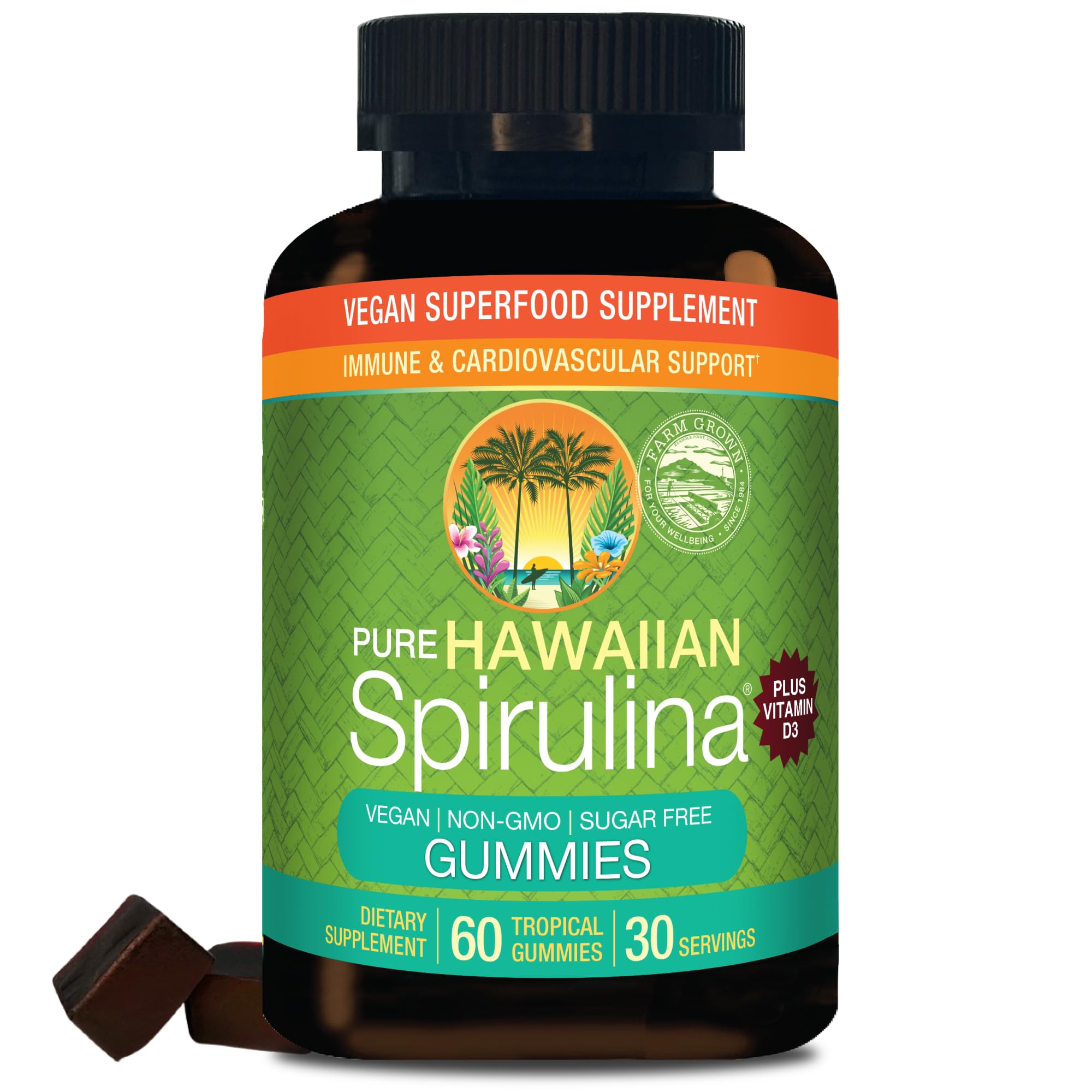
Nutrex Hawaiian Spirulina Gummies

93 /100
Trail Score Outstanding

Key details

Form
Gummy
Count
60 gummies
Sugar
Sugar-free
Added Nutrient
Natural vitamin D3
Check Price on Amazon

A gummy is not a lesser tablet so much as a different purchase: it is for the person who will not swallow pills, or who wants a supplement that needs no water and no blender.

These come from the same Kona farm and the same lava-filtered water as our top pick, and the formula is sugar-free, vegan, and non-GMO, with natural vitamin D3 added — an unusual extra in a category that is usually just algae and a capsule shell.

What you give up is certainty about the dose. A gummy has to fit its algae alongside everything that makes it chewy, so before switching, find the milligram figure on the label and hold it up against a 500 mg tablet. A 60-count bottle also empties quickly if you need more than one a day.

For a household where pills go uneaten, this is the version that actually gets taken: a jar by the kettle, no water, no green mess, no negotiation. That is the advantage, and it is what a supplement has to be — easy enough to still be part of the routine in March.

Pros

  • Sugar-free, vegan, and non-GMO
  • Chewable, so no water needed
  • Added natural vitamin D3
  • Same Kona farm as our top pick

Cons

  • Only 60 gummies per bottle
Our verdict

The one to hand to a pill-refuser: sugar-free, vegan, and grown on the same Kona farm as our top pick, with the caveat that you need to check the dose per gummy.

Check Latest Price
8

Bulk Smoothie Powder

Nutricost Organic Spirulina Powder

91 /100
Trail Score Outstanding

Key details

Form
Powder
Size
2 lb
Testing
Third-party tested
Certification
USDA Organic
Check Price on Amazon

Two pounds of algae arrives in a bag about the size of a small pillow, with a scoop inside, and that is the honest summary: this is a bulk purchase for someone who has already decided spirulina is part of the routine.

It is USDA organic, third-party tested, non-GMO and gluten-free, made in a GMP-compliant facility, and it works out cheapest per gram of the bulk powders here. The powder is fine and very green, blends into a shake with a good shake, and leaves a ring of green on the glass.

The smell is the dividing line. It is strong, algae-forward, and it lingers on the scoop; if you are blending it with fruit every morning that is a non-issue, and if you were planning to stir it into water and drink it, do not.

What we keep coming back to is the commitment. Two pounds is a long relationship with a flavor you may not love by month three, and there is no small size to test the water with. If you already blend most mornings, it is the cheapest way to keep the habit going; if you are spirulina-curious, start with tablets and work up to a bag.

Pros

  • Cheapest per gram of the powders here
  • USDA organic and third-party tested
  • Scoop included in the bag
  • Blends well in shakes

Cons

  • Strong algae smell on the scoop
  • Two-pound bag is a long commitment
Our verdict

Bulk powder for the already-converted: organic, third-party tested, and the cheapest per gram of the powders here, as long as the smell does not put you off.

Check Latest Price

How We Tested Spirulina Powders, Capsules, and Tablets

We built the shortlist by scanning powders, capsules, and tablets from brands with clear sourcing information, then filtered out anything with vague serving sizes, undisclosed blends, or no third-party testing language. Cost per serving was part of that first cut, but so was label quality—if a product listed protein, iron, and B-vitamin amounts clearly, it stayed in the running. We ended up with 14 products and used them for three months.

Testing happened where spirulina actually gets used: in morning smoothies before work, stirred into plain water and yogurt at my desk, swallowed as tablets with breakfast, and blended into post-workout shakes on weekends. We opened every container and smelled the dry powder first, then mixed and tasted each one plain and in food, noting whether it disappeared or left a grassy, fishy, or chalky finish.

We kept a shared log for digestive discomfort, bloating, aftertaste, and any change in afternoon energy, without giving a scoop credit for every good day. We also counted how many stirs or shakes it took to dissolve, how easy the capsules were to swallow, and how much powder clung to the scoop. At the end, we compared cost per serving against how likely we were to finish the container and whether we actually wanted to keep taking it.

How to Choose a Spirulina Supplement

Start With the Form You'll Actually Keep Taking

Tablets and capsules ask nothing of you but a glass of water, powder asks for a blender and a tolerance for pond flavor, and gummies ask for a little more money and a little less certainty about the dose. If you have never taken spirulina, start with tablets; if you already blend a smoothie most mornings, powder gives you the most algae for the least money.

Count the pills in a serving before you commit. At 500 mg a tablet, a 3,000 mg serving is six pills; at 1,000 mg it is three. That single difference decides more daily habits than any claim on the front of the bottle.

Read the Sourcing Line Before the Nutrition Panel

Spirulina grows in water and takes up what is in it, which is why the source matters more here than in most supplements. A named farm or supplier, a stated third-party test, and an organic certification are the three things to look for, and the first two tell you more than the third: organic standards govern how the algae is grown, not every contaminant it can carry. One of our picks makes exactly that argument, bluntly.

If a label carries a lead warning, believe it rather than the marketing above it, and buy something else. In this category, a disclosed contaminant is a reason to walk, not a footnote.

Expect the Seaweed and Plan Around It

Spirulina tastes like the water it came from, and powder is the most exposed way to take it. The smell is strongest in the first week after opening and fades as the container empties; a rigid tub beats a pouch, and a dry scoop beats a wet one.

If you go the powder route, blend it with banana, mango, or citrus instead of stirring it into water. The fruit does more for the flavor than any sweetener, and a smoothie hides both the taste and the color.

Compare Cost Per Serving, Not Per Bottle

A 2.2-pound tub and a 720-count bottle both look expensive beside a 60-count gummy, and both usually work out cheaper per serving. Divide the weight or the count by the serving on the label before you decide, and be honest about whether a shorter, pricier supply you will finish beats a bulk buy that goes stale in the cupboard.

The cheapest spirulina is the one you do not throw away. That is an argument for matching the package to your actual habit, not for chasing the lowest sticker.

Give Your Stomach a Gentle Start

Spirulina does not agree with everyone. Stomach ache, nausea, and headache come up in every form, and they are more likely when you open at a full serving. Take half the label serving with food for the first week and build from there.

If you are pregnant, nursing, immunocompromised, or on medication, talk to your clinician before adding any algae supplement to your routine. That conversation is worth more than any label comparison.

Frequently Asked Questions

Final Verdict

Our default is the Nutrex Hawaii tablets. A 500 mg tablet is small enough to swallow without ceremony, the taste does not linger, and the farm will tell you exactly which water the algae grew in — easy daily use and checkable sourcing in the same bottle, which is what most shoppers are actually after.

If you blend a smoothie most mornings, the Zazzee tub is the better buy and gets along with fruit. If counting pills is what makes you quit, NOW's 1,000 mg tablets halve the tally, provided you can swallow the bigger pill.