Best Fiber Supplements for Women Over 50 of 2026

Fiber is the one supplement nobody brags about taking. You know you need it — the target for women over 50 is roughly 21 grams a day, and most of us land nearer 15 — but everything falls apart at delivery: gritty powders that clump at the bottom of the glass, gummies that taste like candy and carry almost no fiber, and the real worry that a scoop will leave you bloated by lunch. What you want instead is something you'll take every day without dread, that dissolves without turning to sludge, that's pleasant enough to chew, and that carries a dose worth counting.

I've spent six months with 12 of these — powders, capsules, gummies, and chews — starting most mornings at my kitchen counter, and the pattern is clear: the fiber source matters more than the number on the label. Psyllium does one job, inulin and the gums do another, and the supplement that's brilliant for regularity is sometimes the one that leaves you gassy. What follows is everything that held up.

1

Best Overall

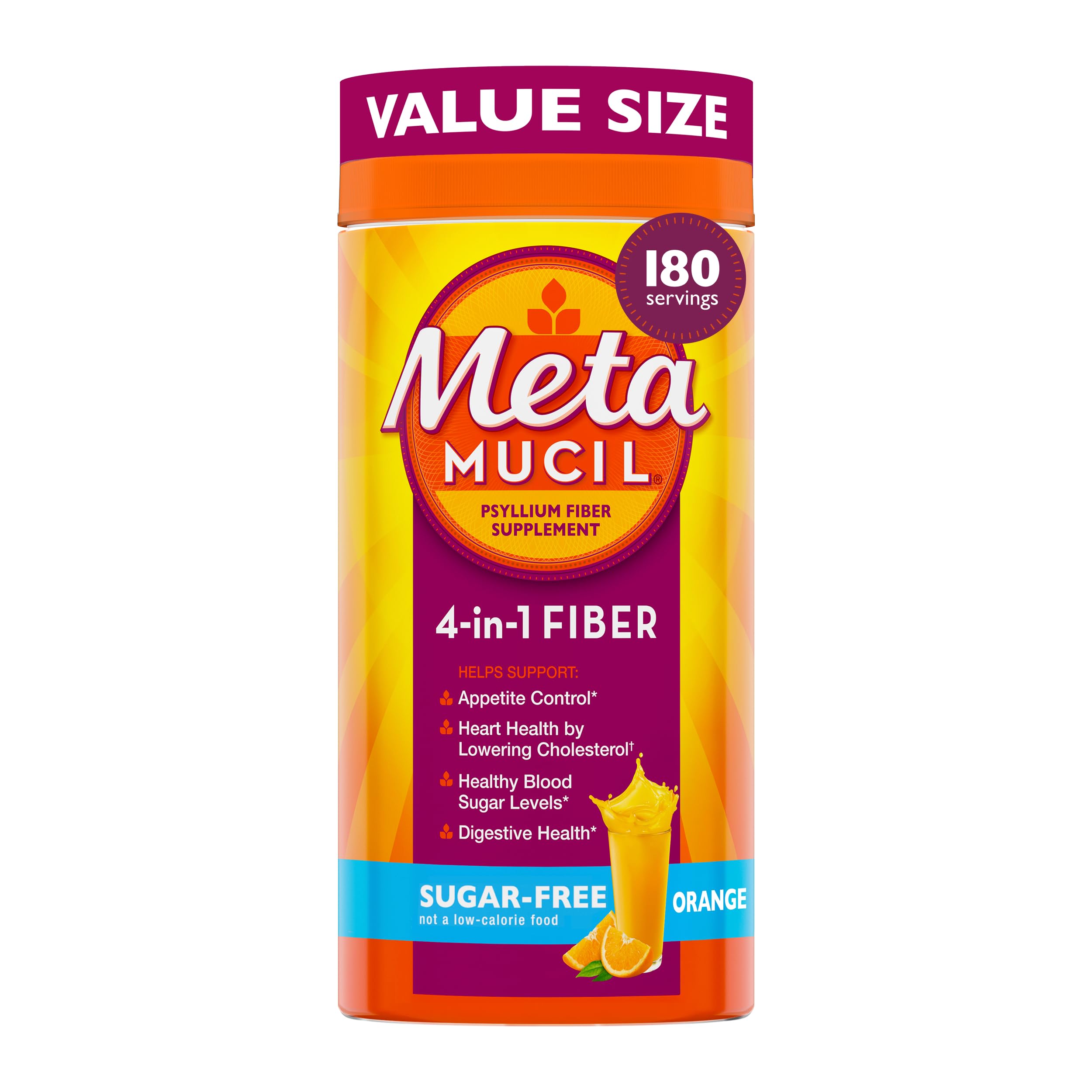
Metamucil 4-in-1 Psyllium Powder

95 /100
Trail Score Outstanding

Key details

Form
Sugar-free orange powder
Supply
180 teaspoons
Fiber Source
Psyllium husk
Check Price on Amazon

Psyllium doesn't wait for you. Spoon this into a glass of water and there are a few seconds of easy stirring before it thickens toward a gel, and if you walk away it becomes something closer to a soft set custard than a drink. Stir hard, drink it straight down, chase it with more water, and you have had the most established fiber dose in this guide in under a minute.

We made the orange powder our top pick because it does the most work per serving and lets you decide how much that is. The tub holds 180 teaspoons, so you can start with a partial spoon, live with it for a week, and build up only if you need to. That flexibility matters: the most common reason people abandon fiber is starting at a full dose and spending the next day bloated. The flavor carries the habit too, tasting like a mild orange drink rather than the chalky husk it actually is.

Metamucil prints four benefits on the label. Regularity is the one you will feel. The cholesterol, blood sugar, and appetite claims ride on soluble fiber over months, and appetite control is the softest of the four in our experience, so treat them as reasons the habit is worthwhile rather than something to measure week to week.

The change we made after a few weeks: we stopped mixing it into juice and switched to plain water. The orange flavor carries on its own, and juice turned a sugar-free product into a sugary drink for no benefit at all.

Pros

  • Established psyllium dose that bulks and softens
  • 180 teaspoons lets you start with a partial scoop
  • Pleasant orange flavor you will finish daily
  • Labeled for cholesterol and blood sugar support

Cons

  • Artificially sweetened, with maltodextrin in the blend
Our verdict

We recommend it as the everyday default: a proven psyllium dose you can start small and build up, in an orange flavor that makes the daily glass easy to finish.

Check Latest Price
2

Best for Travel

Benefiber On the Go Stick Packs

95 /100
Trail Score Outstanding

Key details

Form
Unflavored stick packs
Count
28 packs
Dissolves
Clear and grit-free
Fiber Source
Wheat dextrin
Check Price on Amazon

A stick pack that lives in a jacket pocket is the whole argument. Benefiber's wheat dextrin dissolves clear in coffee, water, or a cup of yogurt with no taste and no grit, no measuring spoon, no shaker, nothing to rinse. That is why this is the box that goes in the suitcase and the desk drawer instead of a tub.

It is a different fiber from psyllium, and that part is worth understanding before you buy. Wheat dextrin is prebiotic: it feeds the bacteria already in your gut instead of adding bulk, so it is better at holding a routine together than at rescuing a bad week. If your goal is staying regular while you travel or eat breakfast away from home, that difference is worth the trade.

What the packets buy is a pre-measured dose that survives a carry-on, and for the person who keeps meaning to start, the version that actually gets used is the one that wins. Twenty-eight of them fit in a laptop bag. A tub does not.

One check before you commit: the fiber comes from wheat, so read the allergen line if you avoid wheat or gluten. And because wheat dextrin ferments, some people notice gas in the first few days. Half a pack is an easy way to find out where you stand.

Pros

  • Dissolves clear with no taste or grit
  • Pre-measured packs for a bag or hotel room
  • Mixes into coffee, water, or yogurt
  • Prebiotic wheat dextrin feeds gut bacteria

Cons

  • Costs more per serving than loose powder
Our verdict

The fiber we pack for trips: a pre-measured stick that disappears into coffee or water with no taste, no grit, and nothing to measure in a hotel room.

Check Latest Price
3

Best Capsule Value

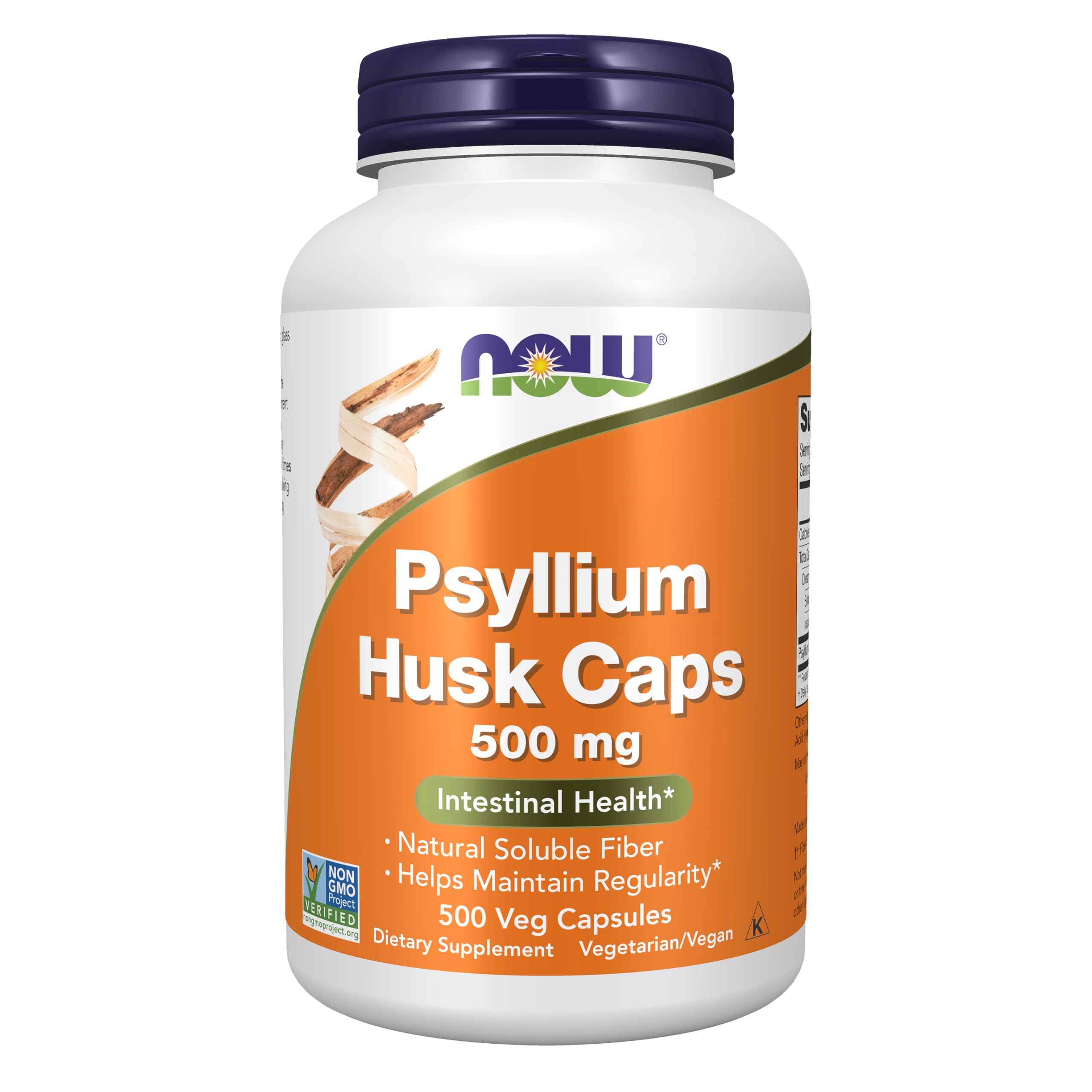
NOW Psyllium Husk Capsules

93 /100
Trail Score Outstanding

Key details

Form
500 mg capsules
Count
500 capsules
Swelling
Up to 50 times its volume
Fiber Source
Psyllium husk
Check Price on Amazon

Five hundred capsules sounds like a year's supply until you read the dose. Each capsule is 500 mg, so a real serving is several at once, two to seven depending on how much fiber you are after, and the bottle empties a good deal faster than the count on the front suggests.

What you get in return is fiber with no taste, no grit, and no glass of gel to get down, which is why this is the bottle we keep in a bag rather than a cupboard. Capsules are the easiest of these to take at a restaurant table or on a morning when the routine has already gone sideways, and the psyllium inside is the same husk powder you would otherwise stir into water.

The capsules are non-GMO, kosher, and vegan, and there is nothing to flavor or sweeten. If you are trying to keep additives out of a daily routine that already includes several pills, that short ingredient list is the quiet advantage here.

If you already take a handful of tablets each morning, this adds to the pile, and that is a fair objection from anyone with a pill organizer. If you don't mind it, the 500-count bottle keeps the cost per capsule low enough that taking a proper dose stops feeling extravagant.

Pros

  • No taste, no mixing, no gel to drink
  • 500 capsules at a low cost per capsule
  • Non-GMO, kosher, and vegan
  • Easy to take away from home

Cons

  • Needs a full glass of water with every dose
Our verdict

For anyone who will not mix a drink, these are the capsules to buy: psyllium with no taste and no prep, in a bottle big enough to make the habit affordable.

Check Latest Price
4

Best Gummy

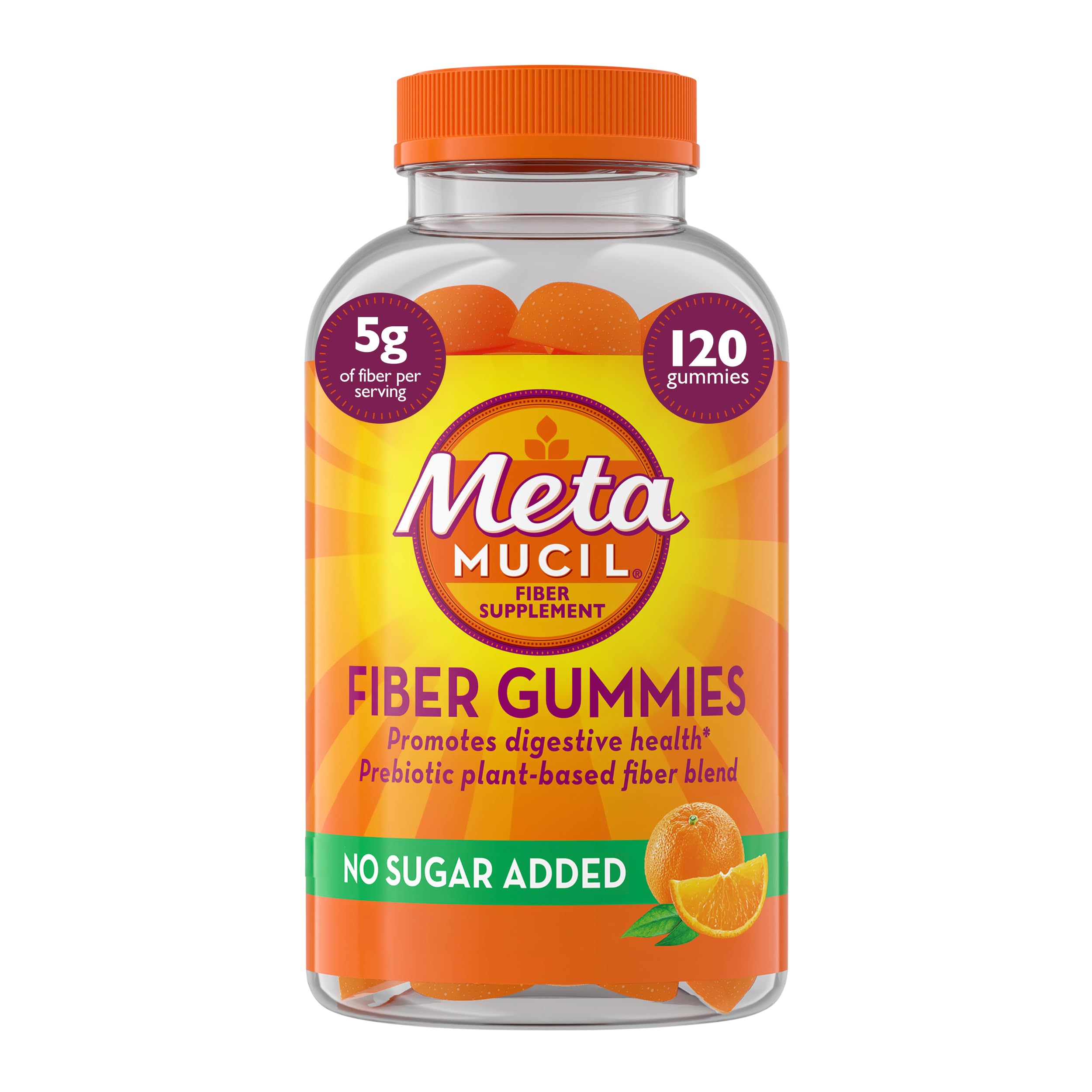
Metamucil Fiber Gummies

93 /100
Trail Score Outstanding

Key details

Count
120 gummies
Sugar
No sugar added
Fiber Source
Inulin and soluble corn fiber
Fiber Per Serving
0.18 oz
Check Price on Amazon

If you will not drink your fiber, this is where to land. The gummies are soft, orange, and closer to a fruit snack than a supplement, and a serving carries 5 g of plant-based fiber from a blend of inulin and soluble corn fiber. That puts them at the higher end of the gummy dose range rather than the middle of it.

The dose is what separates them from the cheaper bottles. Five grams against the four you get from the budget gummies here is a real difference when the point is closing a daily gap, and the flavor is bright enough to look forward to without tasting like dessert at breakfast.

What prebiotic fiber does not do is bulk. Inulin feeds gut bacteria rather than holding water in the stool, so if constipation is the problem, a psyllium powder or capsule does more per dose. These are for topping up a diet that is short on plants, and for that job they are the easiest thing in this guide to keep doing.

One housekeeping note: in warm weather they fuse into a single block in the jar. Keep the bottle somewhere cool and dry, and give it a knock on the counter before you open it.

Pros

  • 5 g of plant-based fiber per serving
  • Soft chew with a genuinely good orange flavor
  • No sugar added and no water needed
  • Easy to keep up on a busy morning

Cons

  • Inulin blend can cause gas and bloating
Our verdict

If you will not drink your fiber, buy these: a soft, genuinely good orange gummy carrying 5 g of plant-based fiber per serving with no sugar added.

Check Latest Price
5

Best Bulk Powder

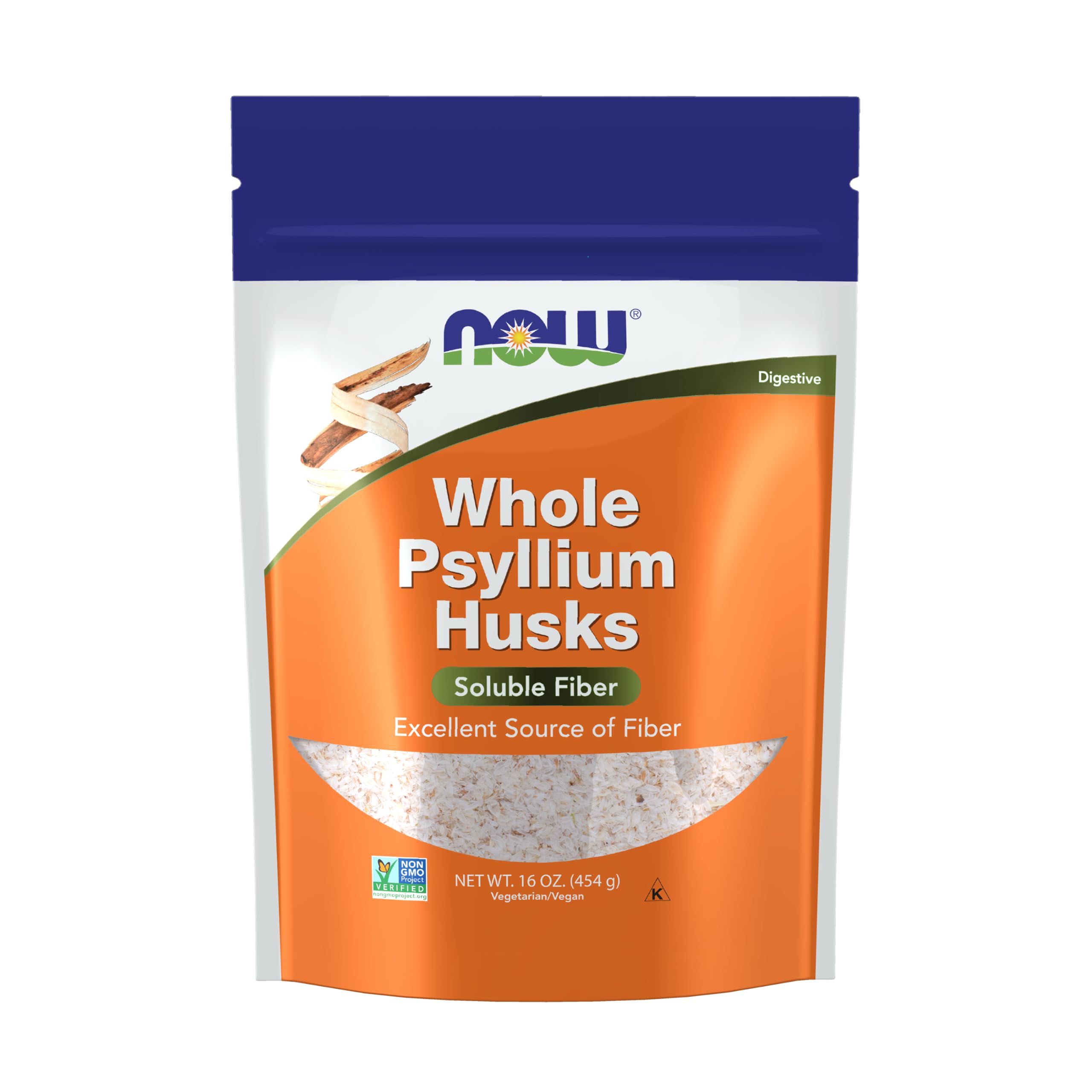
NOW Whole Psyllium Husks

93 /100
Trail Score Outstanding

Key details

Form
Unflavored powder
Size
16 oz
Fiber Source
Psyllium husk
Soluble Fiber
6 g per serving
Check Price on Amazon

Six grams of soluble fiber from one tablespoon, at the lowest cost per serving in this guide. That is the arithmetic that keeps a bulk bag in the cupboard. NOW's whole husks are the plainest thing here: no flavor, no sweetener, no color, nothing to mask what psyllium actually is.

A shorter ingredient list matters more as the daily routine gets more crowded, not less. There is nothing to work around if you are managing blood sugar or a sensitive stomach, and the only thing in the bag is the husk. It is also the version you can cook with: a spoonful thickens a smoothie, bulks oatmeal, and disappears into soup without changing the taste.

Handling is where it asks for patience. It grabs water fast, so measure it into 12 ounces of liquid, whisk hard, and drink it before it sets; in food, add extra liquid to compensate. Keep the bag sealed and dry between uses, because the powder pulls moisture from the air and hardens into lumps that never break up again.

We refill this one without thinking about it. The cost is low enough to use daily and there is nothing in it to object to. Buy a wire-ball shaker if you plan to drink it, because a spoon in a glass leaves a gelatinous lump at the bottom, and that lump is usually why people decide they hate psyllium.

Pros

  • 6 g of soluble fiber per tablespoon
  • Lowest cost per serving of any fiber here
  • Nothing added, no sweetener, flavor, or color
  • Thickens smoothies, oatmeal, and soups

Cons

  • Gritty texture and an earthy taste
  • Gels within seconds of mixing
Our verdict

Buy the bag if you want plain psyllium and the lowest cost per serving here, and you are willing to whisk hard and drink fast.

Check Latest Price
6

Best Budget

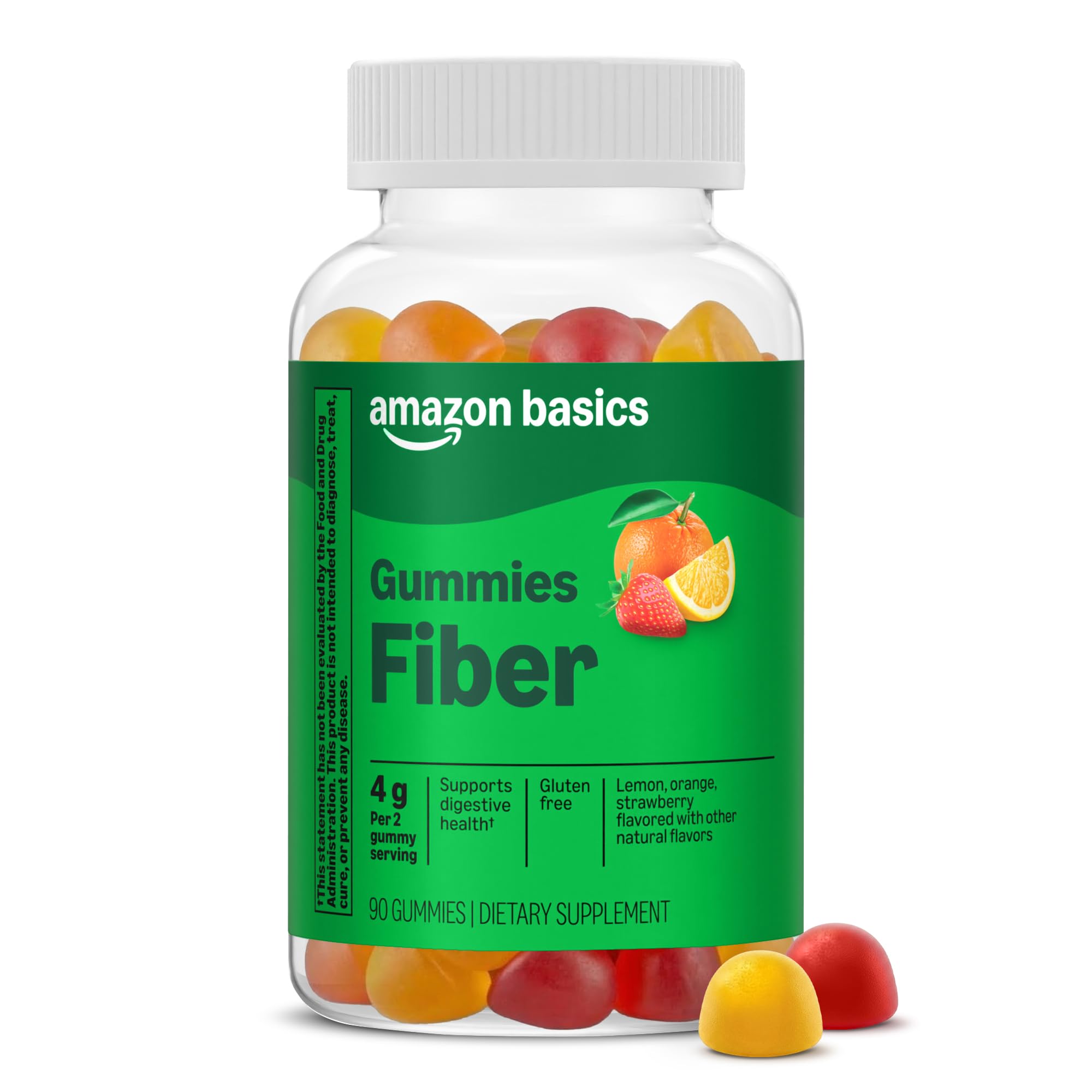
Amazon Basics Fiber Gummies

91 /100
Trail Score Outstanding

Key details

Count
90 gummies
Dietary
Vegetarian, gluten-free
Fiber Source
Chicory root inulin
Fiber Per Serving
0.14 oz
Check Price on Amazon

Soft is the word for these, and it is the reason to pick them. Where plenty of fiber gummies chew like a pencil eraser, the Amazon Basics version gives easily and tastes like a fruit snack, in orange, lemon, and strawberry, with colors from turmeric, black carrot juice, and annatto rather than synthetic dyes.

The numbers are modest: 4 g of chicory root fiber per two gummies, 90 in the bottle, and the lowest price of any gummy here. That is a gram less per serving than the Metamucil and Vitafusion gummies, so this is a top-up rather than a treatment, which is exactly what most people need when they are adding fiber to a diet that is already reasonable.

The fiber is inulin, the same prebiotic type the more expensive bottles use, and the gummies are vegetarian and gluten-free. What you give up for the lower price is a gram per serving, not the fiber itself.

Pros

  • Softest chew of the gummies here
  • 4 g of chicory root fiber per serving
  • Natural flavors and plant-based colors
  • Vegetarian and gluten-free

Cons

  • Gummies stick to the bottle in humid weather
Our verdict

The budget gummy we point people to: soft enough for sensitive teeth, naturally flavored, and the cheapest way to try a daily fiber gummy.

Check Latest Price
7

Fixed Small Dose

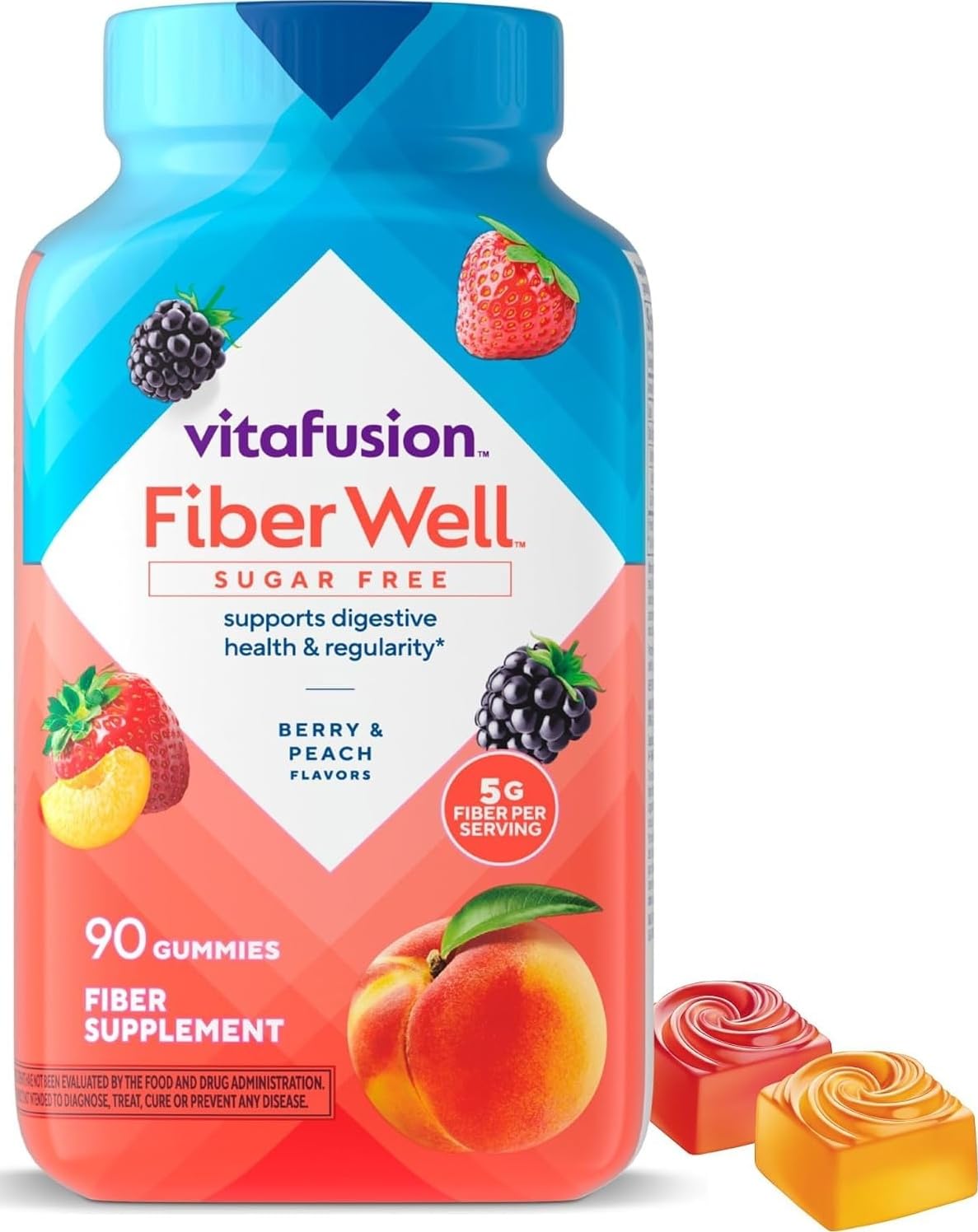
Vitafusion FiberWell Gummies

91 /100
Trail Score Outstanding

Key details

Count
90 gummies
Supply
45 days
Fiber Source
Prebiotic fiber
Fiber Per Serving
0.18 oz
Check Price on Amazon

Berry and peach is a welcome change from the orange that dominates this category, and the flavor is a real reason these get finished rather than abandoned at the back of a drawer. Two gummies carry 5 g of prebiotic fiber with no sugar, and a 90-count bottle covers 45 days at that rate, so the supply is easy to plan around.

The label is short in the right places: no gluten, no high-fructose corn syrup, no dairy, and no synthetic FD&C dyes. Two a day is also a genuinely low bar. There is no water to drink, nothing to measure, and no drink to finish before it thickens.

What settles it is the chew, and not in their favor. These are firm, closer to a wine gum than a jelly bean, and if you have bridgework, a partial, or teeth that have started to complain, that firmness is the whole decision. Buy one of the softer gummies on this list instead and skip the experiment.

Pros

  • Berry and peach instead of the usual orange
  • 5 g of fiber from two gummies a day
  • Sugar-free with no synthetic dyes
  • 90-count bottle is a 45-day supply

Cons

  • Stomach upset for some at the full dose
Our verdict

A solid choice if you want a fixed two-gummy dose in a flavor other than orange, provided a firm chew suits your teeth.

Check Latest Price
8

Prebiotic Top-Up

Benefiber Prebiotic Fiber Gummies

93 /100
Trail Score Outstanding

Key details

Form
Citrus berry gummies
Count
126 gummies
Fiber Source
Inulin
Check Price on Amazon

Most gummies here promise the same thing: fiber you will actually take. Benefiber's version leans on inulin and frames it as prebiotic, feeding the bacteria already in your gut rather than adding bulk to stool, which is a different job from what the psyllium powders at the top of this list do.

They are soft, genuinely soft, with a citrus berry flavor that is bright rather than syrupy, and the 126-count bottle is the largest gummy supply here. That last part matters more than it sounds, because gummies go fast and a bigger bottle means fewer reorders for something you take every day.

The caveat is the one that follows inulin everywhere: it ferments, and fermenting fiber is gassy fiber for some people. Start with a single gummy for a few days rather than the full serving, and give your gut a week before you decide it is not for you.

Where we land: this is the gummy for someone who wants the prebiotic angle and cares how it tastes. It is the bottle we reach for when it will sit on a desk in plain sight, because a gummy you look forward to is a gummy you finish.

Pros

  • Soft, easy chew with a citrus berry flavor
  • 126-count bottle is the largest gummy supply
  • Inulin feeds the bacteria in your gut
  • Easy to keep in a desk drawer

Cons

  • Most expensive of the gummy picks
Our verdict

The gummy for someone chasing prebiotic fiber rather than bulk: soft, bright citrus berry, and the biggest bottle of the gummy picks.

Check Latest Price

How We Tested the Best Fiber Supplements for Women Over 50

I started with about 40 options and read the labels the way a pharmacist would: how many grams of fiber per serving and from what source, whether a third-party seal backed up the quality claims, how much added sugar a gummy was carrying, and what a month of daily use actually cost. That narrowed it to 12 — powders, capsules, gummies, and chews — which I used for six months, beginning at the dose printed on the package and working up the way most people do.

Every powder went into 8 ounces of water in a clear glass, stirred for as long as the directions said and then left alone for two minutes. I checked for clumps sitting at the bottom, noted whether the liquid stayed thin, turned silky, or set up like pudding, and wrote down how it felt going down. Gummies and chews got chewed through one at a time: whether they stuck to my teeth, how long the flavor lingered, and whether reaching for a second one was tolerable. Taste got a plain-water pass first, then a second round stirred into coffee.

Digestibility was the part I couldn't rush. For the first two weeks with each product I logged gas, cramping, and bloating, plus how the rest of the day went — a fiber that works beautifully at week four but is unbearable at day three is not one anyone sticks with. Effectiveness I judged from week three onward, which is about how long a soluble fiber takes to settle into a rhythm. Value came last, and I divided the price by the total grams of fiber in the container rather than per serving, because scoop sizes vary more than labels suggest.

How to Choose a Fiber Supplement After 50

Choose the fiber type before the format

Three fibers do almost all the work here. Psyllium, in the Metamucil and NOW products, is a bulking fiber: it absorbs water and adds soft volume to stool, which makes it the stronger choice when constipation is the problem. Wheat dextrin, in the Benefiber sticks, dissolves clear and ferments gently, so it suits maintenance. Inulin, the base of most gummies on this list, feeds gut bacteria and is the easiest to take and the most likely to cause gas.

Match the fiber to the job first, then pick the form you will actually use. Someone whose week goes sideways while traveling is better served by a stick pack than by the most effective powder left at home.

Count grams per serving, not capsules in the bottle

A 500-count bottle is not 500 doses. NOW's capsules are 500 mg each, so a real serving is several of them at once; a tablespoon of whole husks delivers 6 g of soluble fiber; the gummies run 4 to 5 g per serving. Compare the grams first, then the number of units you swallow or chew to get them.

That second number is what decides whether a bottle lasts two months or three weeks, and it is the figure a big count on the front of the label is designed to distract you from.

Texture is the reason people quit

Powders gel, plain husks are gritty, and gummies range from soft to genuinely tough. None of that appears in a fiber count, and all of it decides whether you finish the container. If you hated the sliminess of psyllium, capsules or wheat dextrin solve it; if chewing is the issue, a soft gummy beats a firm one.

Store gummies cool and dry. In humid weather they fuse into a single block, and a bottle you have to dig into with a knife is a bottle that stops getting used.

Sugar-free doesn't mean nothing added

Flavored, sugar-free powders get their sweetness from an artificial sweetener, and the mix can include maltodextrin, an additive with a high glycemic index. That is worth reading if you are watching blood sugar, since a few grams of fiber do not cancel it out. Gummies labeled no sugar added are not the same as unsweetened, either.

The shortest ingredient lists in this guide are the unflavored ones: whole psyllium husks and the wheat dextrin sticks. If you take a supplement alongside a low-sugar diet, start there and add flavor yourself.

Start low, drink more, and give it two weeks

Whichever you choose, the first week is a negotiation. Begin at half the label's serving, keep it at the same point in the day, and increase only once your gut has settled. Psyllium needs a full glass of liquid, and it works better when you drink more through the day than when you drink the minimum.

Gas from a fermentable fiber usually eases within a week or two. If it does not, switch fiber types rather than giving up on fiber altogether.

Frequently Asked Questions

Final Verdict

Start with Metamucil's orange psyllium powder. It is the most established fiber here, it is dosed by the teaspoon so you can build up slowly, and one tub covers months of daily use. That combination is hard to beat for the everyday job.

Change the pick when the format changes the habit: the Benefiber sticks if you travel or eat breakfast out of a bag, the NOW capsules if you will not mix a drink, and a soft gummy if you will not drink it at all. Just do not expect a 4-gram gummy to fix a bad week.