Best Eye Massagers for Eye Strain of 2026

It usually hits around hour nine of a screen day: a dull ache behind the eyes, tightness at the temples, and the urge to press your palms into your face. An eye massager does that for you — heat plus air compression, vibration, or a rolling massage — for fifteen minutes while you lie there doing nothing. That's the appeal. What separates the keepers from the drawer-fillers is subtler: how hard they squeeze, how loud they whine, and whether the shape lands on your cheekbones or your eyeballs.

I've chased that end-of-day relief for years, and my team and I have spent the past eight months living with 12 of these devices — on the couch, on trains, and on the mornings after too much screen time. Heat and a genuinely quiet motor beat exotic massage modes every time. The ones worth buying got the basics right, and they're below.

1

Best Overall

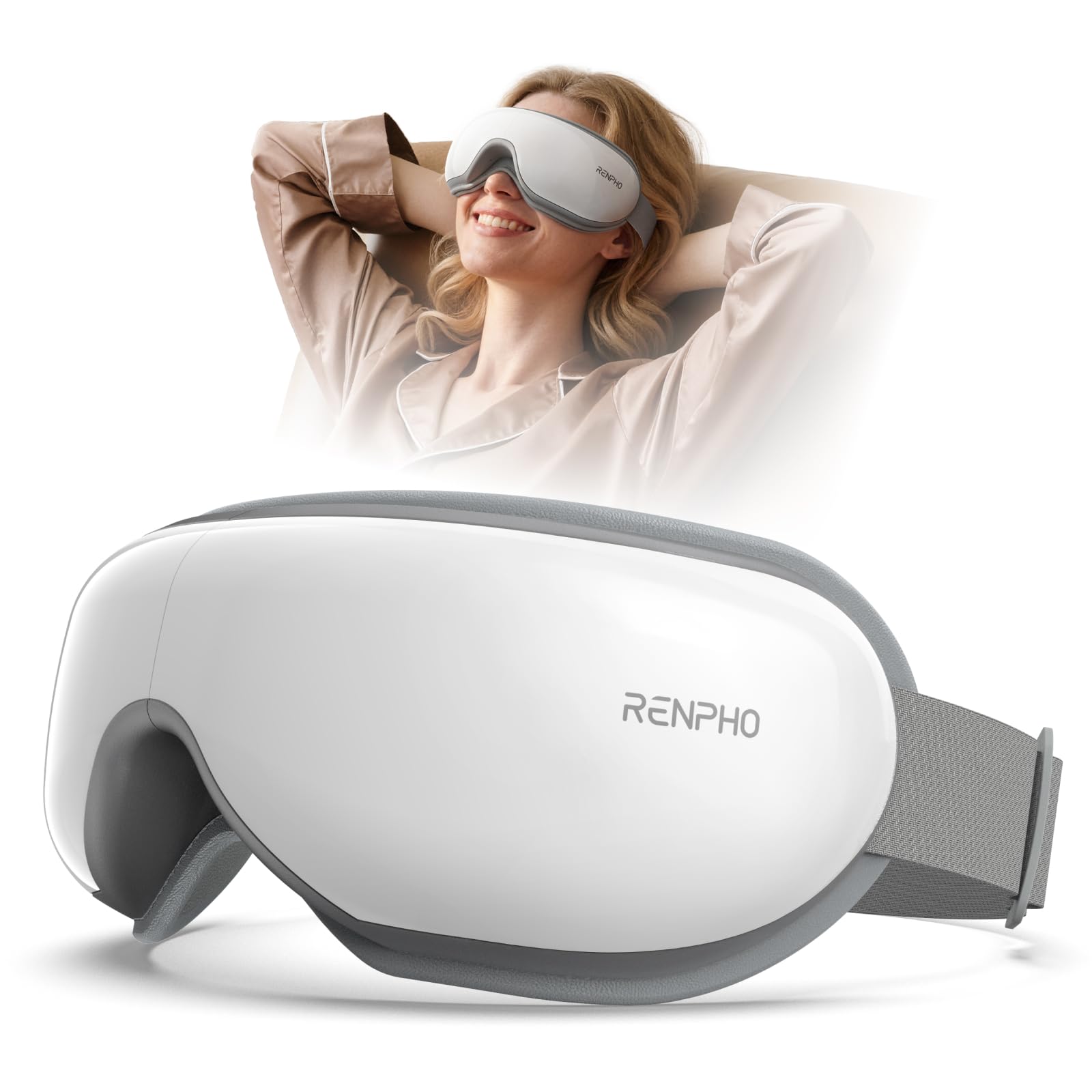
RENPHO Eyeris 1

89 /100
Trail Score Excellent

Key details

Weight
1.46 lb
Massage
Compression plus vibration
Pressure
Multiple levels, plus low-compression mode
Heat Range
104-113F
Check Price on Amazon

The question that decides whether an eye massager becomes a habit or a drawer ornament isn't how many modes it lists. It's whether the pressure around your eyes feels like relief or like a thumb pressing on the eyeball. The Eyeris 1 is where we point anyone worried about that, because it is the pick here with a dedicated low-compression mode sitting underneath its normal intensity settings.

Heat runs from 104F to 113F and combines with rhythmic compression and vibration rather than making you choose between them, so a session works the muscles around the eyes and the warmth at the same time. We found the mode list genuinely useful rather than decorative: heat alone on a headache day, compression and vibration together after a long afternoon of screens. It is also FSA and HSA eligible, which matters if you have a benefits card going unused.

Two things we didn't love. The motor is audible in a quiet room, and noise is the most consistent gripe about this whole category, so the Eyeris 1 is no exception. The massage footprint also stops short of the temples, which means that if your strain settles at your hairline rather than under your brow, the coverage will feel narrower than you want.

At 1.46 pounds it is the heaviest of the mid-priced devices here, so treat it as something you wear tipped back in a chair rather than while moving around the house. The Eyeris 3 comes in under a pound and barely an inch and a half thick if that matters more to you than spending less.

Pros

  • Low-compression mode for sensitive eyes
  • Heat, compression, and vibration together
  • Multiple modes and intensity levels
  • FSA and HSA eligible

Cons

  • Motor noise is audible in a quiet room
  • Heaviest mid-priced pick at 1.46 lb
Our verdict

The one we hand to first-timers: heat from 104F to 113F, compression you can dial down to almost nothing, and enough modes to suit a bad screen day.

Check Latest Price
2

Best With Cooling

RENPHO Eyeris 3

88 /100
Trail Score Excellent

Key details

Heat
3 levels (104-113F / 40-45C)
Weight
12.5 oz
Cooling
Removable gel mask
Pressure
3 levels, 3 compression modes
Check Price on Amazon

Cooling is what separates the Eyeris 3 from its cheaper sibling, and it is a physical thing rather than a setting: a gel mask you attach to the inside when you want cold instead of warm.

Heat is the more developed half. Three levels run from 104F to 113F, and the device adds three compression modes, three pressure levels, and vibration aimed at both the eyes and the temples, with a memory function that returns to your last setting. Voice control lets you change modes by speaking, which is more useful than it sounds with your hands under a blanket. The shell is 1.34 inches thick and 12.48 ounces, making it the flattest and lightest of the RENPHO devices here.

That adjustability is why we rank it so highly. The third pressure level goes lower than most of this set for anyone whose eyes feel bruised after a screen day, and the cooling pack earns its place on puffy mornings. Two things hold it below the Eyeris 1: it costs more for a similar amount of device, and the pressure steps feel stronger than their labels suggest. If your vision is blurry for a few minutes after a session, drop to the lowest level and shorten it.

The shell is the other practical limit. It is slim on a shelf but rigid, so it does not settle against a pillow the way a fabric sleep mask does. Used sitting up at a desk, it is the one we reach for.

Pros

  • Attachable gel cooling mask
  • Three heat and three pressure levels
  • Voice control and memory function
  • Slim 1.34-inch shell

Cons

  • Compression pump is audible
  • Costs more than the Eyeris 1
Our verdict

Buy it for cooling plus the widest pressure range here: a gel pack you attach, three heat levels, and a flat 1.34-inch shell that packs easily.

Check Latest Price
3

Best for Adjusting in the Dark

Bob and Brad Eye Massager

88 /100
Trail Score Excellent

Key details

Heat
2 levels
Modes
5 presets
Weight
12.4 oz
Compression
3 levels
Check Price on Amazon

Every device here asks you to press a button while it is strapped over your eyes, and most answer with a beep you have to interpret. This one says the setting out loud instead, so you can cycle through five modes, three compression levels, and two heat levels without lifting the mask or guessing. It sounds like a small thing until you are fumbling in the dark; we found it the most thoughtful control scheme in the group.

The rest of the package is solid rather than spectacular: a double-layer pad shaped to sit around the orbital area instead of on the eyelids, a motor the company rates at 45dB after a noise redesign, and a 12.35-ounce build that is among the lighter shells here. Temple work is where it thins out. The massage concentrates on the brow, so if your strain sits at the sides of your head, you will want more pressure there than this delivers.

Pros

  • Announces every setting out loud
  • Three compression and two heat levels
  • Five preset modes
  • Light 12.35-ounce build

Cons

  • Massage concentrates on the brow, not temples
  • Motor still audible in a silent room
Our verdict

It announces every setting out loud, so you can change modes without lifting the mask, and three pressure levels let you dial the squeeze down.

Check Latest Price
4

Best Battery Life

Lifepro Oculax

86 /100
Trail Score Excellent

Key details

Noise
Rated under 55 dB
Weight
10.6 oz
Battery Life
3 hours
Charging Time
2 hours
Check Price on Amazon

Air, not rollers. The Oculax inflates and releases cushions around your eyes and temples rather than running rotating heads across your eyelids, and that single design choice is why it is the pick here for anyone who flinches at the idea of something kneading their eyes.

The spec sheet is unusually complete for this category, and the battery is what stands out: three hours of listed runtime and about two hours to charge over USB-C, the longest runtime we can point to in this set. The four modes are more opinionated than most. Only Energize runs compression, heat, vibration, and music together, while Relax and Relieve give you heat without vibration and Sleep skips heat entirely. We like that split for daytime use and find it limiting at night, when warmth is the part that helps you drop off.

The head strap uses an adjustment buckle rather than hook-and-loop, which makes it easier to fine-tune around the temples, and at 0.3 kg the whole thing sits lightly. A carrying bag is included, and the manufacturer backs it with lifetime support rather than a fixed window. It is the least dramatic device here, and for something you wear with your eyes shut, that is not a criticism.

Pros

  • Three-hour listed battery life
  • USB-C charging in about two hours
  • Air compression instead of rollers
  • Four modes with a heat-free sleep setting

Cons

  • Pump hum carries in a quiet room
  • Cushion edge can press on the nose bridge
Our verdict

Three hours of listed runtime, USB-C charging, and air cushions that work around your eyes instead of pressing on them: the pick for long, frequent sessions.

Check Latest Price
5

Best Premium Pick

Therabody SmartGoggles

79 /100
Trail Score Very Good

Key details

Sensor
Heart-rate paced SmartRelax
Weight
1.83 lb
Cushioning
Blackout, contoured
Treatments
3 presets
Check Price on Amazon

The SmartGoggles is the only device here that adapts to your body: a biometric sensor reads your heart rate during the SmartRelax treatment and paces the session to bring it down. Three presets cover relaxation, headache relief, and sleep prep, and you can adjust temperature and intensity on top of that.

The other thing you are paying for is the blackout. The shell is contoured so the cushion sits around your eyes rather than on them, which means no airbag pressing your eyelids, and the interior blocks enough light to work as a sleep mask. Therabody frames the whole treatment as 15 minutes or less, which suits a wind-down routine more than a work break.

Fit is the gamble, and it is why this is not a universal recommendation. The risk is size: a loose fit at the temples for smaller heads, and bruising in some cases. If you have a small head or want pressure directly over the eyes, this is the wrong device and no amount of strap adjustment fixes it.

What it does well, it does better than anything else here. The combination of blackout, warmth, and a treatment that responds to your heart rate is genuinely different from a set of airbags on a timer, and we think that makes it the better tool for falling asleep. Whether that is worth paying for depends on which of those two jobs you actually want it for.

Pros

  • Blackout shell with no eyelid pressure
  • Heart-rate-paced SmartRelax treatment
  • Three presets plus adjustable heat

Cons

  • Runs large, with bruising in some cases
  • Massage stays at brow and temples
Our verdict

A blackout sleep mask that warms and pulses your temples and adapts to your heart rate. Buy it for wind-down, not for deep eye massage.

Check Latest Price
6

Best Budget

Morelax Eye Massager

83 /100
Trail Score Excellent

Key details

Modes
4
Weight
1.12 lb
Runtime
2-5 hours
Charging
USB-C, 2-3 hours
Check Price on Amazon

Four modes, a folding frame, and USB-C charging is the whole pitch, and for a first eye massager that is the right list. It folds 180 degrees, so it goes in a drawer or a carry-on instead of living permanently on the nightstand, and the headband adjusts far enough that it does not feel like a compromise. We came away thinking of it as the sensible first buy here: air pressure, vibration, white noise or Bluetooth audio, and heat, with nothing you need to study first.

The fit is where it earns or loses your patience. The covering is protein leather, and the listing itself flags checking for a sensitivity before you wear it, which is worth heeding and rarer than it should be. Charging takes two to three hours for two to five hours of use depending on how much heat and pressure you run, and the four modes are distinct enough to be worth switching between rather than decoration.

Pros

  • Four modes mixing pressure, vibration, and heat
  • Folds 180 degrees for storage
  • USB-C charging, two to five hours of use

Cons

  • Air pump noise is noticeable
Our verdict

The easy introduction: four modes, a 180-degree fold, and USB-C charging, with an adjustable band and nothing fussy to learn first.

Check Latest Price
7

Hands-Off Control

VANI Eyeliber 2 Plus

84 /100
Trail Score Excellent

Key details

Modes
5
Weight
10.2 oz
Airbags
6
Control
Included remote
Check Price on Amazon

A remote sounds like a gimmick until you have tried to find the mode button on a massager strapped over your eyes. The Eyeliber 2 Plus ships with one, so you can move between its five settings, soft through relax, without touching the device at all. The buttons on the front are not much use while you are wearing it, which makes the remote the real control surface.

Six airbags do the massaging, positioned to work the brow, the temples, and the points around the inner eye, and the padding spreads the pressure so it reads as broad rather than pinchy. Heat and Bluetooth audio round it out, and at 10.23 ounces it is among the lightest devices here, which matters if you tend to keep one on for a while.

We rank it here rather than higher for two things you notice in use rather than on the spec sheet: the pump hisses as it inflates, and there is no way to switch the heat off while keeping the massage running. The first you tune out. The second you cannot, so plan on shorter sessions if you run warm. As a lighter, remote-controlled alternative to the airbag devices above, it holds its own.

Pros

  • Remote control for changing settings
  • Six airbags across brow and temples
  • Light at 10.23 oz

Cons

  • Pump hiss during inflation
  • Heat cannot be switched off separately
Our verdict

The remote makes the difference here: five settings you can change without lifting a hand, over six airbags that cover the brow and temples.

Check Latest Price
8

Fast Warm-Up

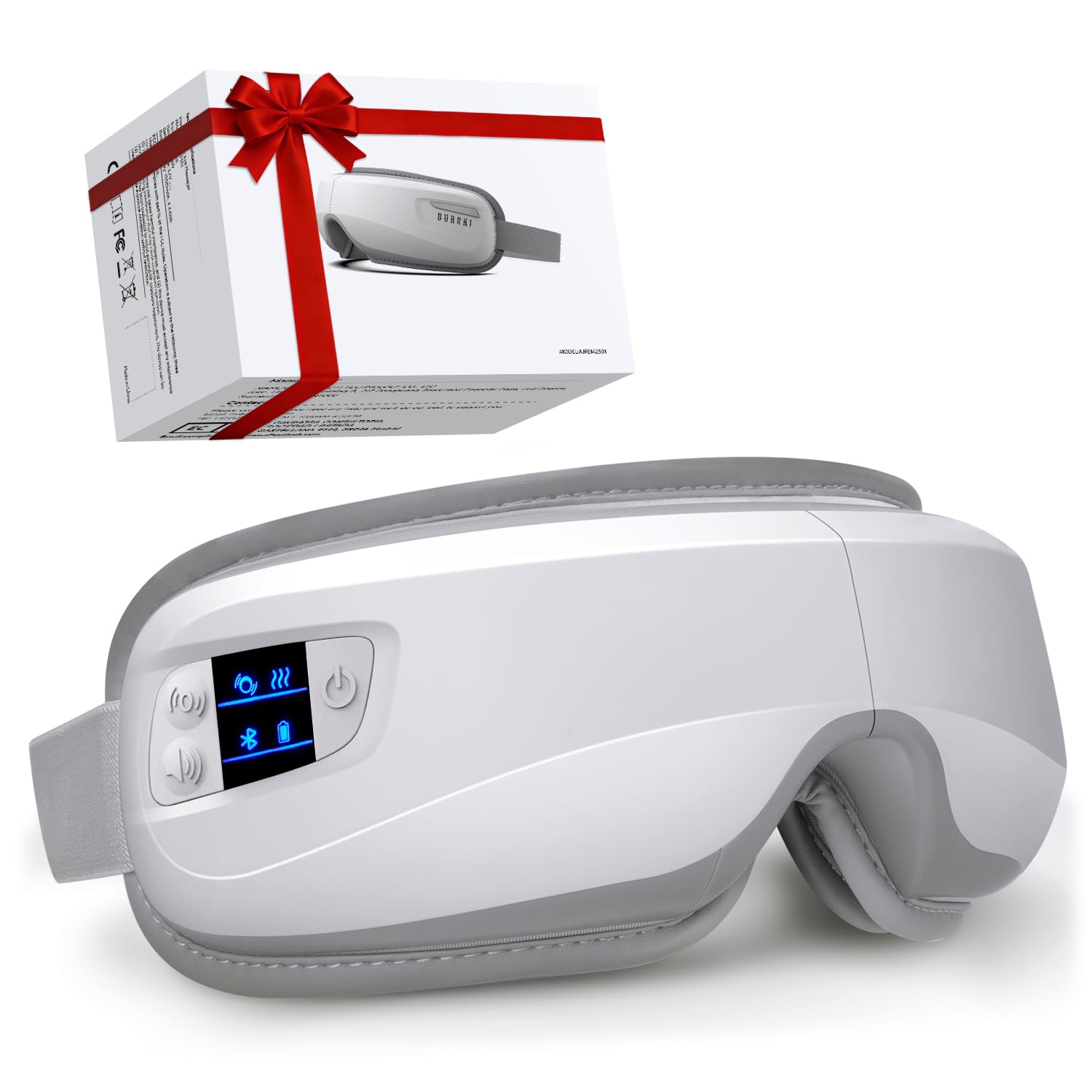
Burrki Eye Massager

85 /100
Trail Score Excellent

Key details

Modes
5
Weight
14.4 oz
Heat-up
About 5 seconds
Heat Range
104-113F
Check Price on Amazon

Five seconds is the warm-up Burrki claims, and it is the fastest figure in this guide. Heat runs to 113F, the same ceiling as the RENPHO devices, so what you are buying here is speed rather than a higher temperature.

Five modes combine heat, air compression, and vibration, with Bluetooth for your own music and four built-in white-noise tracks if you do not want to think about a playlist. The frame folds, the headband adjusts, and at 14.39 ounces it sits in the same range as the Bob and Brad device.

The catch is control. Sound and heat are tied together in the modes, so you cannot run music with the heat off, and a single button cycles everything rather than letting you jump to the setting you want. It is also a newer product than the RENPHO and Bob and Brad devices, which matters if a long track record is part of what you are buying.

Warm-up speed is the reason we pick it over the Morelax: the heat is there by the time you have settled the strap, and the extra modes give you more to experiment with. It is a good second device or a gift for someone who will not read a manual. Just expect to cycle rather than choose.

Pros

  • Heat in about five seconds
  • Five modes with Bluetooth and white noise
  • Folds flat for travel

Cons

  • Music cannot run with the heat off
  • Single button cycles every mode
Our verdict

Buy it for the warm-up: heat in about five seconds, five modes, and a folding frame in a device that is newer to this category than our top picks.

Check Latest Price

How We Tested 12 Eye Massagers Over Eight Months

We started with a shortlist of roughly 30 models pulled from retailer listings and brand sites, then cut anything with fixed heat, a strap that couldn't be adjusted, or features that didn't seem worth the money they added. That left 12 devices, which we rotated through for eight months. Each one lived where an eye massager actually lives: on a nightstand, in a work bag, and on the arm of the couch.

Sessions ran the 15 minutes most of these default to, and we logged what happened afterward — whether a tension headache eased, whether we wanted it again the next night, whether we nodded off wearing it. We timed how fast the warmth arrived and checked that both eyes got the same amount. The massage itself mattered more than we expected: air chambers that pushed on the brow bone felt completely different from ones pressing on the eyelids, and we noted which modes we actually chose a second time.

Noise and fit got their own scrutiny. We wore each massager on a quiet couch with a podcast playing low and noted whether the motor drowned out dialogue or carried across the room. Straps went on different head sizes, with hair up and down, and we checked whether the thing stayed put when you turned onto your side. Over the eight months we kept a running log of battery life, fraying straps, and motors that grew louder with use — reliability is the quiet reason people stop reaching for these — and we asked, honestly, whether the extras on the pricier units were ones we touched after week one.

How to Choose an Eye Massager for Eye Strain

Start With Pressure, Not the Mode Count

Compression is where eye massagers divide. Airbag designs inflate cushions that press around the orbital bone and the temples; roller designs run small heads over the lids. The first feels like a blood-pressure cuff on your face, the second like a tiny massage chair, and plenty of people like one and cannot stand the other.

Buy for at least two pressure levels. The RENPHO Eyeris 1 goes further with a dedicated low-compression mode, and that is the setting a nervous first-timer actually leaves it on. A single-pressure device is a gamble on your own face.

Heat, Cooling, and What Your Eyes Need

Nearly everything here lands between 104F and 113F, so peak temperature tells you less than the number of levels and how quickly it gets there. Two or three settings let you run warm on a cold evening and mild on a headache day.

Cooling is a different feature entirely, and this is where listings get slippery: it is a physical piece, usually a gel mask you attach and re-chill, as on the Eyeris 3, not a cold setting you dial in. If morning puffiness is your problem, the gel earns its freezer space. If your eyes simply ache after screens, heat does more for you.

Noise Is the Complaint You Will Hear Most

Every device in this guide makes sound right next to your ears: a motor whine from the massage mechanism, a hiss from the air pump, or both. Ratings in the 45 to 55 dB range read quietly on paper and still register in a silent bedroom, because the source is pressed against your skull.

If you plan to wear one beside a sleeping partner, weigh this above the mode count and plan on playing the built-in music or your own through Bluetooth to cover it. If you need true silence, none of these will give it to you.

Fit, Weight, and Using It Lying Down

The devices here run from about 10 ounces to 1.83 pounds, and the difference shows the moment you recline. Thick shells and rigid frames push against a pillow; flatter designs like the 1.34-inch Eyeris 3 are easier to lie back in.

Headbands adjust, but a small head can leave the temples loose, which weakens the massage exactly where some people want it most. If you plan to wear one in bed, choose for weight and profile first, then features. If you want blackout and temple work together, accept the bulk that comes with them.

Controls and Charging You Can Work Blind

Once the mask is on, you are pressing buttons you cannot see. Three approaches work: spoken prompts that name the setting, as on the Bob and Brad; a physical remote, as on the VANI; or voice control, as on the Eyeris 3. Everything else means lifting an edge of the mask or cycling until something feels right.

Charging matters nearly as much. USB-C is the standard worth insisting on, and listed runtime across these picks runs from about two hours to five depending on how much heat you use.

Frequently Asked Questions

Final Verdict

If we were buying one eye massager for screen strain, it would be the RENPHO Eyeris 1. The heat band is right, the compression is adjustable all the way down to a mode that will not overwhelm a first-timer, and the mode list covers a headache day as well as a tired one.

Step up to the Eyeris 3 if your eyes run hot or puffy, since the cooling piece and the third pressure level are worth the extra. And if your real goal is falling asleep with something warm over your eyes, the Therabody SmartGoggles is the only one here built for that, provided it fits.