Best Eye Drops for Computer Eye Strain of 2026

By 4 p.m. on most workdays my eyes have filed a complaint: dry, gritty, and sore behind the brow bone after eight hours of screens and indifferent office lighting. Computer strain is its own flavor of tired, and a random bottle from the drugstore aisle doesn't always cut it — the wrong drop stings on contact, smears your vision for a minute, or wears off before your next meeting. What you want is something that goes in cool, keeps your eyes slick through a long afternoon, and lets you keep reading the spreadsheet.

The cheaper bottle also isn't the better deal if you're reaching for it every 20 minutes. Over the past three months, my team and I have lived with 14 bottles — preservative-free vials, thick gels, classic squeeze bottles — and the gap between a good drop and a mediocre one shows up fast. Formulation matters more than I expected for timing, too: a gel before bed is lovely, a gel at 10 a.m. is a blurry mistake. The ones below earned a permanent spot beside my keyboard.

1

Best Overall

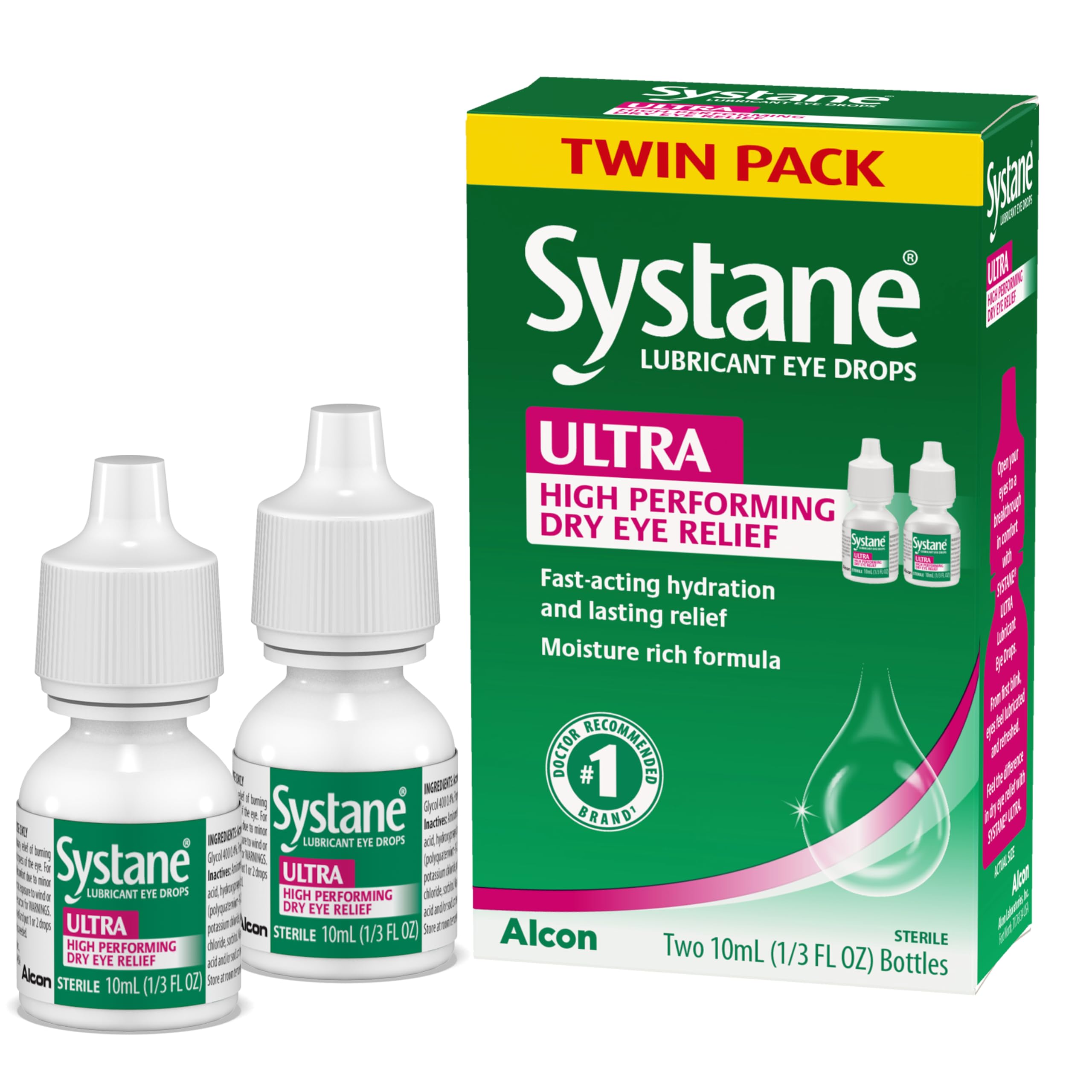
Systane Ultra Twin Pack

96 /100
Trail Score Outstanding

Key details

Format
Multidose bottle
Supply
Two 0.33 fl oz bottles
Labeled Relief
Extended protection
Check Price on Amazon

The problem with most lubricating drops isn't how they feel going in. It's the hour afterward, when the burn creeps back and you're uncapping the bottle again in the middle of a sentence. Systane Ultra is pitched at exactly that gap: the label promises extended protection rather than a quick splash, and it ships as a twin pack, so one bottle lives on the desk and one in the bag.

Of everything we tested, this is the pair that stayed closest to the keyboard, and staying power is the whole reason. A dose in the morning held through a long stretch of screen work before we noticed dryness creeping back, which is more than the thinner drops here manage. For computer strain that counts for more than any ingredient list: the less often your eyes interrupt you, the better the day goes.

Nothing about the drop calls attention to itself. It goes in cool, doesn't sting, and clears without the greasy blink thicker formulas leave behind, so you can use it mid-task without losing your place. The 0.33 fl oz bottles are small enough to stand in a pen cup and solid enough to survive a tote bag.

Two things worth knowing before you order. Systane also sells a preservative-free version of this drop in vials, and if you're the type to dose every hour, that's the better habit. And the twin pack is the most expensive route to a bottle of drops here, which is money well spent only if it means dosing twice a day instead of six times.

Pros

  • Relief holds through a long screen session
  • Goes in without sting or greasy blur
  • Twin pack covers desk and bag

Cons

  • Most expensive bottle route in this group
  • No single-use vials in the pack
Our verdict

We recommend it to anyone whose eyes quit on them by mid-afternoon: it's the longest-lasting bottle we tested, and the twin pack keeps one within reach all day.
Check Latest Price
2

Best Budget

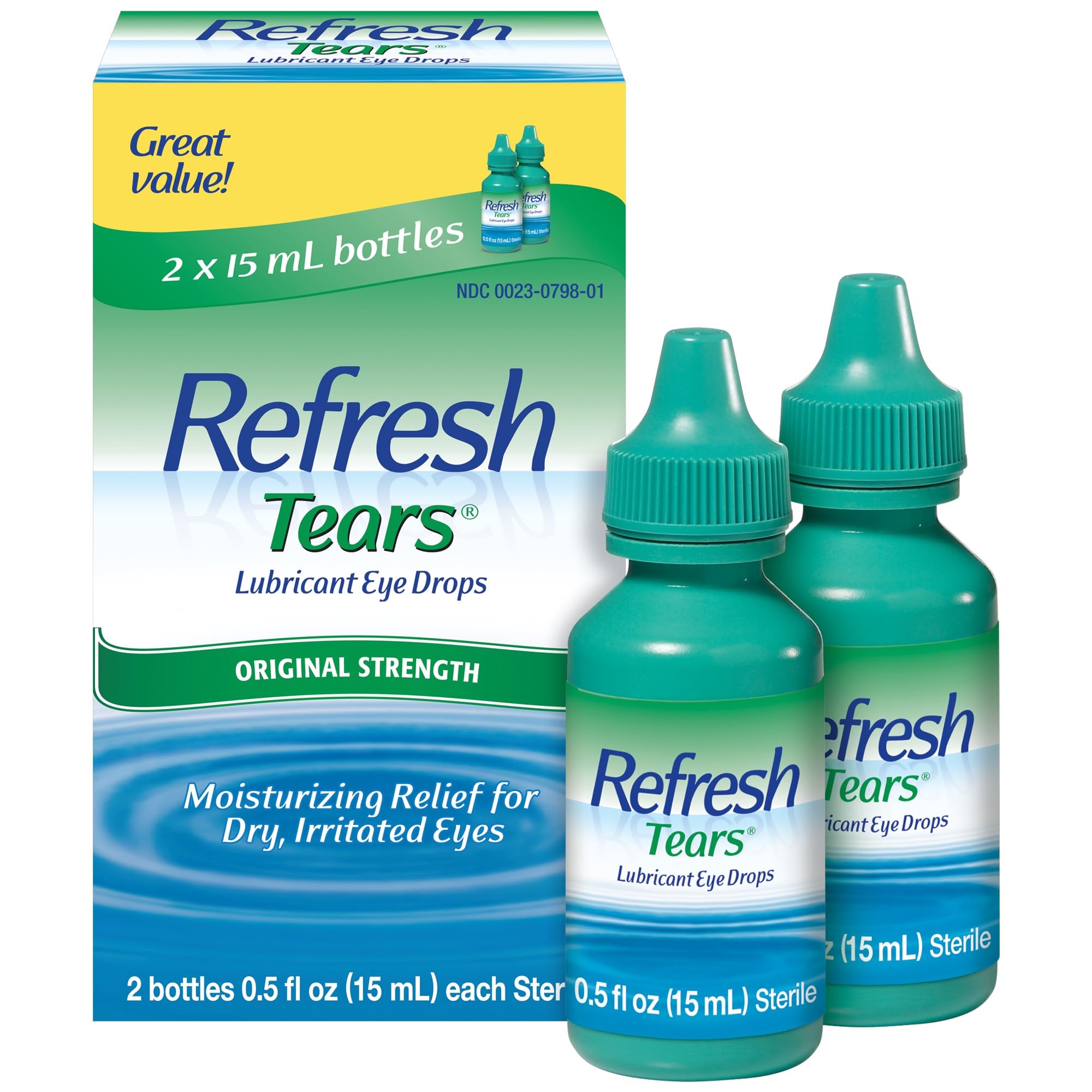
Refresh Tears Lubricant Eye Drops

96 /100
Trail Score Outstanding

Key details

Format
Multidose bottle
Supply
Two 0.5 fl oz bottles
Strength
Original strength
Check Price on Amazon

Refresh Tears is the least expensive bottle in this group, and for the ordinary version of screen strain — a scratchy late afternoon, tired eyes by the third meeting — it's the easiest recommendation on the page. The label aims squarely at mild, occasional dryness, which is what most desk work actually produces.

It goes in with no sting and no film, and the label's "safe to use as often as needed" is the line we lean on: a drop whenever your eyes ask for one, with none of the rationing instinct a premium bottle brings out. Two 0.5 fl oz bottles is a generous supply, and keeping one at home and one at work costs you very little.

What you give up is staying power. Where our top pick holds through a long morning, this one thins out sooner and you'll be reaching for it again before lunch. We minded that less than expected, because re-dosing here is cheap and the drop is mild enough to use repeatedly — if your dryness is occasional rather than constant, the arithmetic comes out in Refresh's favor.

Pros

  • Cheapest bottle in this group
  • No sting and no filmy after-feel
  • Label allows use as often as needed
  • Two full-size bottles in the pack

Cons

  • Contains a preservative
Our verdict

Buy this if your screen dryness is a scratchy late afternoon rather than a constant problem: it's the cheapest bottle here and mild enough to use whenever your eyes ask.

Check Latest Price
3

Best for Sensitive Eyes

Refresh Plus Preservative-Free

96 /100
Trail Score Outstanding

Key details

Format
Single-use vials
Supply
70 single-use containers
Vial Volume
0.4 mL
Preservatives
None
Check Price on Amazon

A single-use vial is a small piece of plastic you twist open, balance on a mousepad, and throw away, and if you're used to a bottle, the first week with these feels like a chore. Then your eyes stop burning at four in the afternoon and the chore stops registering.

These are the drops we point people toward when a preserved bottle leaves their eyes stinging, or when they're dosing often enough that the additive becomes the problem rather than the dryness. The formula is the same mild lubricant Refresh puts in its bottles, minus the preservative, and one 0.4 mL vial usually covers both eyes with a little to spare.

Seventy vials sounds like a lot until you count workdays: one vial per session is roughly three months of desk supply, and the box is small enough to keep in a drawer. We like the vials loose in a bag pocket, where a sealed container can't leak or pick up lint the way an open bottle can. The one adjustment is the squeeze — the plastic takes a firm pinch, and a stray drop lands on your cheek now and then, a fair trade for a dose that hasn't been open to the air since the factory.

Pros

  • No preservative to sting sensitive eyes
  • One vial usually covers both eyes
  • Seventy vials is months of desk supply
  • Sealed and pocketable, so nothing leaks

Cons

  • Costs more per dose than a bottle
Our verdict

The right pick for eyes that sting with bottled drops or for anyone dosing many times a day, since each vial is preservative-free and sealed until you open it.

Check Latest Price
4

Best for Evaporative Dryness

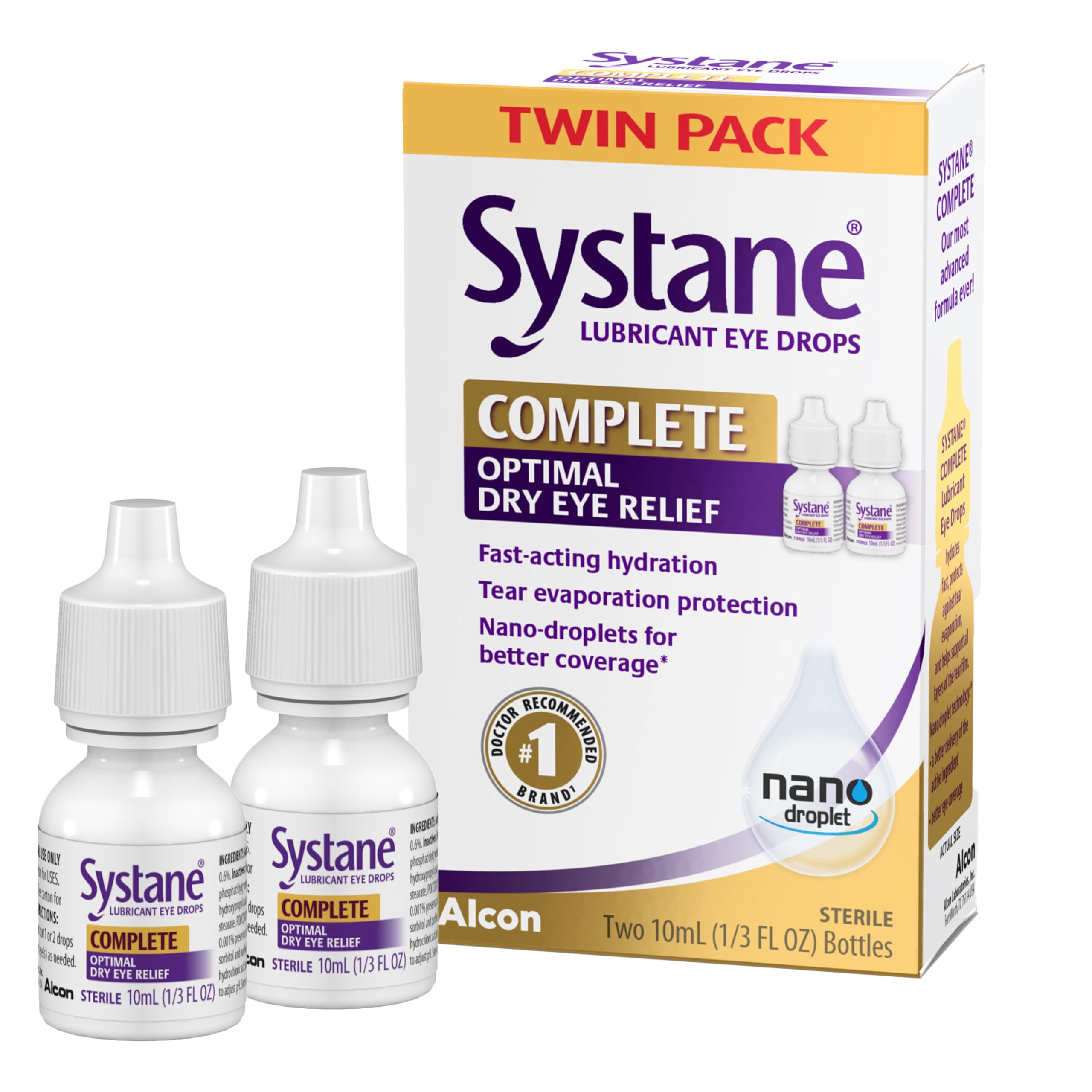
Systane Complete Twin Pack

95 /100
Trail Score Outstanding

Key details

Supply
Two 0.34 fl oz bottles
Formula
Lipid nano-droplets, HP-Guar, mineral oil
Labeled Relief
8 hours
Contact Lens Use
Soft lens friendly, not a rewetting drop
Check Price on Amazon

Same brand as our top pick, different job. Systane Complete targets the whole tear film rather than just the watery layer — lipid nano-droplets, HP-Guar, and mineral oil, in the label's terms — and it's the one to try if your eyes dry out in heated or air-conditioned rooms and feel better once you're outside.

The label claims eight hours, and while we didn't time it, the drop does seem to sit on the eye longer than a plain lubricant. For eyes that water in response to dryness — the classic screen-day pattern of gritty morning, watery afternoon — that added oil layer is doing work a basic drop can't.

The caveat is comfort on the way in. This is the formula in our group most likely to sting, and if your eyes are already irritated, a drop that burns for ten seconds is a hard sell no matter how well it works afterward. Start with the Ultra if burning is a concern and keep Complete for eyes that tolerate a thicker drop. It's labeled soft contact lens friendly, but explicitly not as a rewetting drop, so it doesn't replace your lens drops.

Pros

  • Lipid formula aimed at evaporative dryness
  • Sits on the eye longer than a plain drop
  • Soft contact lens friendly

Cons

  • Blurs the view for a few seconds after instilling
Our verdict

Worth trying if your eyes dry out in heated or air-conditioned rooms and water in protest, though it's the pick here most likely to sting on the way in.

Check Latest Price
5

Best Value Preservative-Free

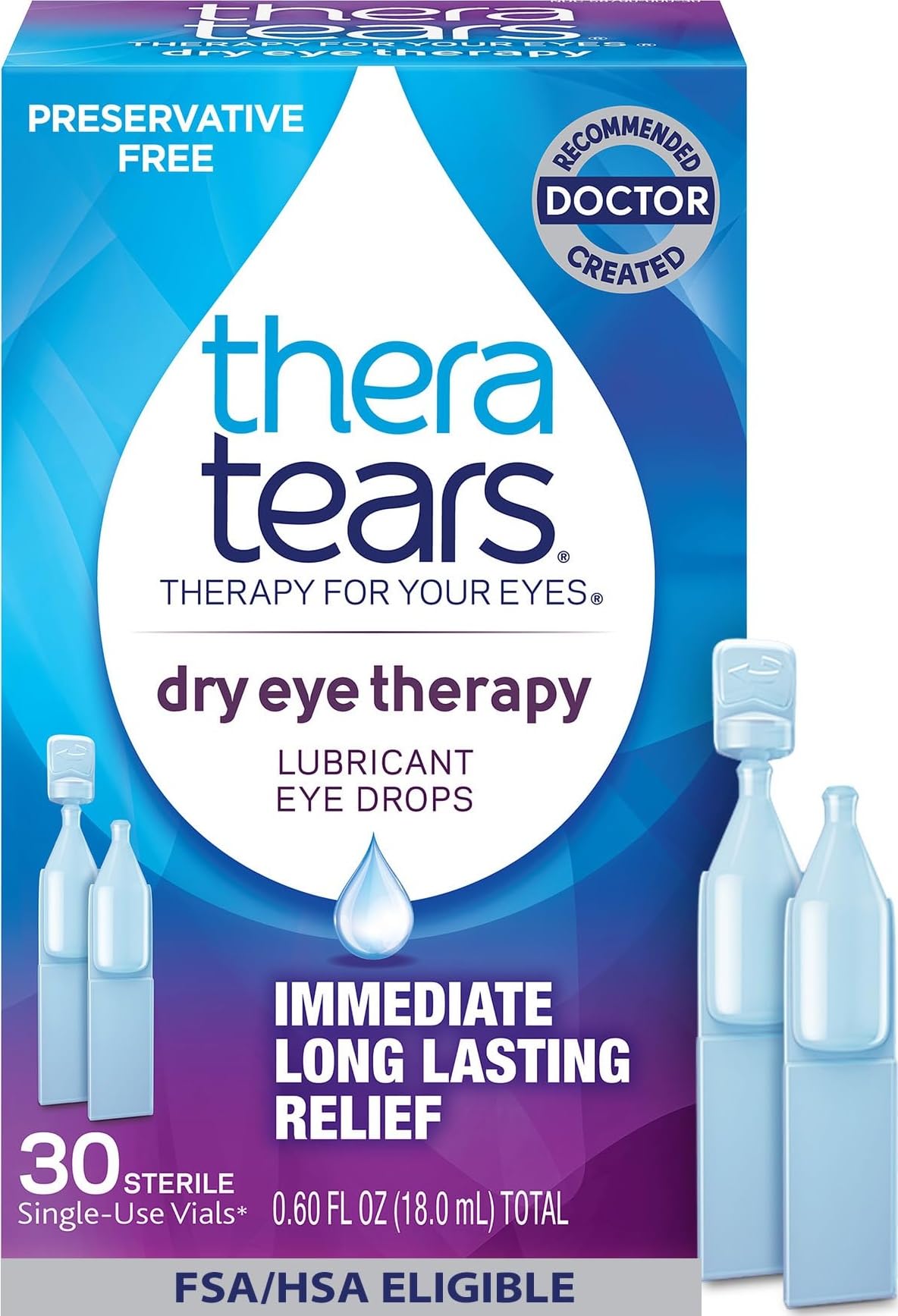
TheraTears Preservative-Free Vials

95 /100
Trail Score Outstanding

Key details

Supply
30 single-use vials
Formula
OxyLytes (5 electrolytes)
Preservatives
None
Check Price on Amazon

Thirty vials is the smallest preservative-free box in this group, and for a lot of people it's the right size: a handful in the bag, the rest in a desk drawer, none of them sitting in a cupboard you never open.

The drop itself is why we keep a box around. TheraTears builds its formula on OxyLytes, five electrolytes found in natural tears, and this is the preservative-free vial we reach for when eyes are irritated rather than merely dry — it lands soft, with nothing sharp on the way in, and it's thin enough that you're back to reading the screen a second later.

Comfort is the wild card. Some eyes sting with it and some don't, and there's no way to know which yours are until you try — another argument for starting with the small box rather than the seventy-count one. If it does sting, the Refresh vials are the gentler of the two, and plenty of people land there after a week.

Pros

  • Preservative-free in a sealed single dose
  • Electrolyte formula that lands soft
  • Small box suits a bag or a trial

Cons

  • Leftover drops go to waste after each use
  • Stings for some eyes
Our verdict

A good pick if you want a small, inexpensive box of preservative-free doses and eyes that land softly, with the caveat that some eyes sting with it.

Check Latest Price
6

Evening and Overnight

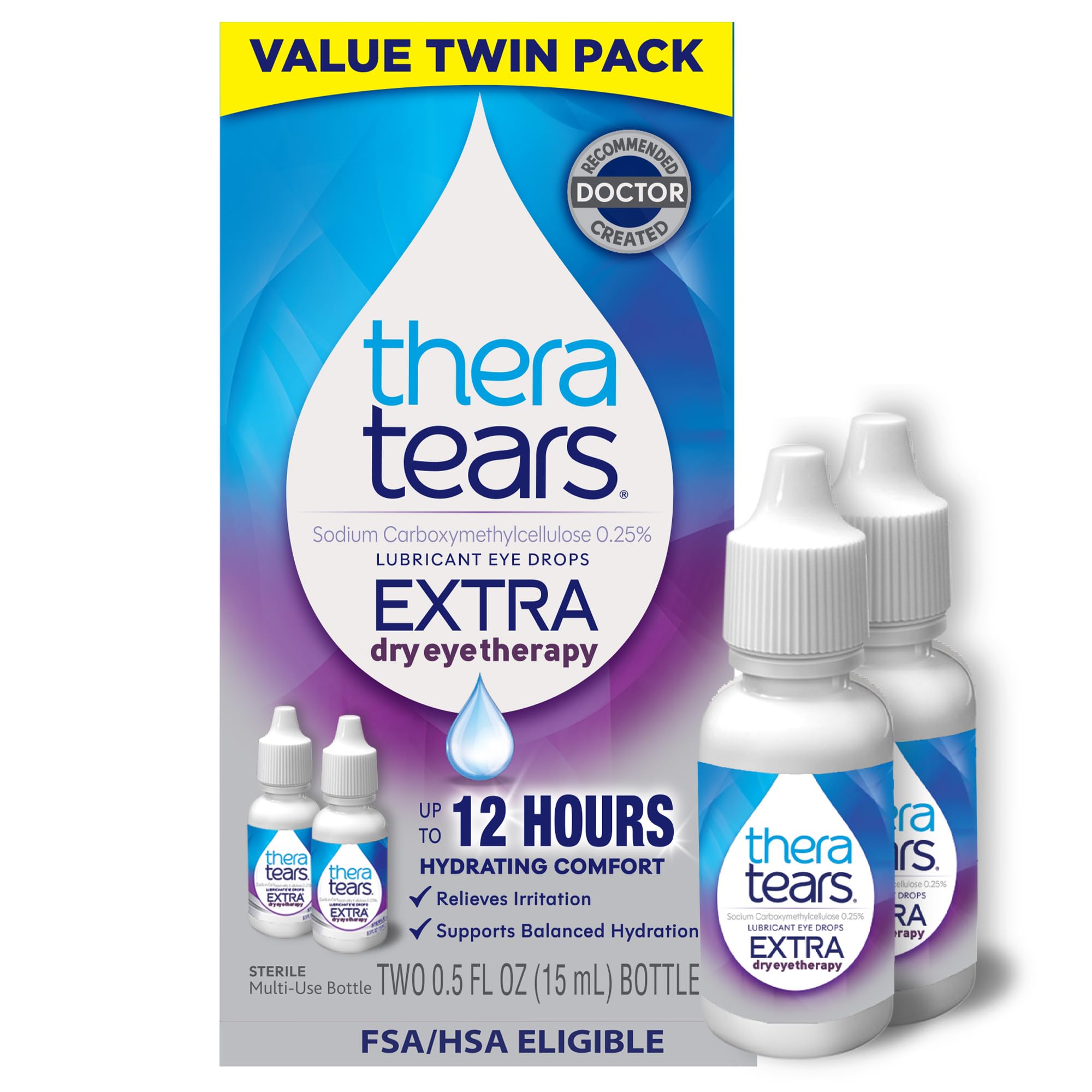
TheraTears Extra Dry Eye Drops

95 /100
Trail Score Outstanding

Key details

Format
Multidose bottle
Supply
Two 0.5 fl oz bottles
Formula
OxyLytes (5 electrolytes)
Strength
Extra
Check Price on Amazon

Extra strength in an eye drop means more viscosity, and that changes when you can use it. TheraTears Extra is noticeably thicker than the standard formula, so it's a bottle for the end of the day rather than the middle of a spreadsheet.

It's built on the same OxyLytes electrolyte base as the rest of the TheraTears line with the lubricant turned up, and the two-bottle pack means one can live by the bed and one in a travel bag. That thickness is the point: it stays where you put it instead of thinning out in twenty minutes.

Where it earns its place is the last dose of the day. Use it once the laptop is closed and the heavier film sits through the night, so you're less likely to wake with that sand-in-the-eye feeling that has you hunting for a bottle at three in the morning — we keep ours on the nightstand for exactly that. If your dryness is mild and daytime-only, the standard drops are the better buy; this one is for eyes still gritty long after the screen goes off.

Pros

  • Thicker film for stubborn dryness
  • Best used as the last dose of the day
  • Two 0.5 fl oz bottles

Cons

  • Blurs vision briefly, so not for mid-task use
Our verdict

A bedtime drop rather than a desk one: the extra thickness coats longer for eyes still gritty at midnight, and takes a moment to clear.

Check Latest Price

How We Chose and Tested the Best Eye Drops for Computer Eye Strain

The shortlist started as a spreadsheet of more than 40 formulas — preserved and preservative-free, thick gels and thin saline-style drops — sorted by active ingredient, viscosity, and how many drops you realistically get per bottle. We read customer reviews for complaints that repeated, like stinging on contact, a bottle that dribbles down your cheek, or relief that fades in ten minutes, and cut anything that kept surfacing. Fourteen bottles made the final list, and we spent three months using them.

Every tester kept a bottle within arm's reach of the keyboard and a second one in a bag, reaching for them the way people actually do: mid-afternoon during a six-hour editing push, after a weekend of reading on a tablet in low light, and in aggressively air-conditioned offices. A couple of us wear contacts and one tester has genuinely dry eyes, so we got notes from both sides of that line.

Each time we instilled a drop, we noted whether it stung, whether our vision blurred and for how long, then set a timer to see how long the comfort actually held, checking in at 30 minutes, an hour, and two hours. We counted drops per bottle to work out real cost per dose, opened each one one-handed to see whether the cap fought back, and logged any redness, irritation, or next-morning grittiness. The drops that scored best did three things at once: soothed on contact, stayed comfortable past the hour mark, and never left us blinking through a film before a meeting.

How to Choose Eye Drops for Screen Strain

Match the formula to the kind of dryness

Tears have three layers, and a plain lubricant mostly tops up the watery one. If your eyes are scratchy and tired by mid-afternoon and nothing worse, an everyday drop like Refresh Tears covers it. If they dry out in heated or air-conditioned rooms, water in protest, and feel better once you're outside in humid air, the oil layer is the one letting you down, and a lipid formula such as Systane Complete is built for that.

The thick end of the shelf is for eyes still uncomfortable after everything else, usually at night. Buying the thickest drop available and using it at your desk gets you blur and no extra benefit.

Let your dosing schedule pick the preservative

Preservatives keep a bottle safe to reopen for weeks, and at two or three doses a day they aren't worth worrying about. That math changes when you're dosing every hour through a ten-hour screen day, which is exactly where heavy computer use pushes people.

That's the point where sealed, preservative-free vials earn their higher cost per dose. Reach for drops a few times a week and a bottle is simpler and cheaper; keep one within arm's reach from morning to evening and the vials are the more sensible buy.

Choose the container for where you'll use it

A multidose bottle is the cheapest way to buy lubricant and the one you can leave on a desk without thinking about it. Vials are pre-measured, sealed until the moment you open one, and small enough to live in a jacket pocket, but they cost more per dose and leave a little liquid behind each time.

The combination most people land on is a bottle at the desk and a handful of vials in the bag. Two large bottles of a drop you end up disliking is the more common mistake.

Check what the label is selling

Anything promising to get the red out is a different product. Those drops narrow the blood vessels on the eye's surface, add no moisture, and are the wrong tool for dryness that comes from staring at a monitor. Look instead for the word lubricant and a symptom list naming dryness, burning, or grittiness.

The other word to read carefully is strength. Extra usually means thicker rather than more effective, and thicker drops take a few seconds to clear, which is fine before bed and useless at two in the afternoon on a deadline.

Frequently Asked Questions

Final Verdict

For most people who spend the day at a screen, the Systane Ultra twin pack is the purchase that solves the problem with the least fuss: two bottles, one at the desk and one in the bag, and relief that holds long enough that you stop thinking about your eyes.

If your dryness is mild and occasional, Refresh Tears does nearly the same job for less. And if you're dosing several times a day, or a preserved bottle leaves your eyes stinging, skip both and start with the preservative-free vials — that choice matters more than any formula claim on the box.