Best Eye Drops for Meibomian Gland Dysfunction of 2026

Meibomian gland dysfunction is an oil problem, not just a water problem. The glands along your lids aren’t releasing enough oil to seal the tear film, so tears evaporate too fast and your eyes feel gritty, burning, or tired by mid-afternoon. A drop that only adds water can feel good for a blink and then leave you right back where you started. The right drop for MGD should support that oil layer, stay comfortable, and not blur your screen or sting your lids.

I’ve been through more than a dozen formulas for dry, gritty eyes, and over the past 10 weeks my team and I tested 14 for MGD. We used them through long screen days, after warm compresses, on windy walks, and at bedtime. What separated the best ones wasn’t just instant soothing—it was how long relief lasted, whether they stung or left a film on my lids, whether I could get a dose in without fumbling the cap, and whether the cost per dose made sense. The picks below earned spots in my desk drawer and nightstand.

1

Best Overall

Retaine MGD Ophthalmic Emulsion

93 /100
Trail Score Outstanding

Key details

Format
30 single-use vials
Vial Volume
0.01 fl oz each
Lipid Component
Cationic oil emulsion
Preservative-free
Yes
Check Price on Amazon

The oil in your tears is what stops them evaporating, and with MGD that oil is exactly what is in short supply. Retaine MGD is built around that gap. It is a preservative-free emulsion, oil droplets suspended in a watery base, and the droplets carry a positive charge that makes them cling to the negatively charged surface of the eye. It is hypotonic as well, so it dilutes the saltiness of the tear film instead of adding to it. That combination is the most direct answer to a lipid-layer problem in this guide, and it is why we put it first.

The liquid looks like skim milk, which throws people the first time; that is the emulsion, and it clears once you blink. What we kept noticing was the span between doses. A single vial held through a long morning of screen work, where a plain lubricant gives up much sooner. One practical annoyance: the twist-off tabs come away cleanly but leave a sharp rim, so open a vial over the sink rather than over your eye.

The trade-off is arithmetic. Thirty vials, one session each, means a twice-daily habit empties the box in a couple of weeks, and per dose this is the priciest drop we are recommending. Two sessions a day makes that easy to justify. Six makes it hurt, and the Refresh box below goes further for similar money.

Pros

  • Preservative-free oil emulsion aimed at the lipid layer
  • Charged droplets cling to the eye surface
  • Relief holds for hours rather than minutes
  • Hypotonic base adds moisture without extra salt

Cons

  • Highest cost per dose among the vial picks
  • Single-use vials only, with no bottle option
Our verdict

We recommend it as the default for MGD because the preservative-free emulsion is built around the failing lipid layer, and one vial carries you for hours.

Check Latest Price
2

Best Value in Single-Use Vials

Refresh Optive Mega-3

95 /100
Trail Score Outstanding

Key details

Format
60 single-use vials
Flaxseed Oil
Included (inactive)
Stated Relief
10+ hours, results vary
Preservative-free
Yes
Check Price on Amazon

Sixty vials in the box is the detail that reorganizes this one. Refresh Optive Mega-3 is a preservative-free single-use drop built on glycerin in a salt-free HydroCell base, with flaxseed oil, an inactive ingredient carrying omega-3s, in the mix. The label claims a single drop holds for ten hours or more, then adds that results may vary, which is the honest version of that claim.

Here is where it earns its place. Per vial it is the least expensive of the two preservative-free options in this guide, and it is the one we suggest to anyone dosing four or more times a day. The drop goes on light rather than syrupy, with no residue at the lash line. One vial covered a working morning for us; the second dose felt more like habit than need.

The flaxseed is the part to test carefully. It is an inactive ingredient, but it is the reason this formula does not suit every eye, and a sting on instilling is the reaction to watch for. You will know within a vial or two, which is an argument for starting with one box rather than committing to a year of anything.

Pros

  • Lowest cost per vial of the preservative-free picks
  • Preservative-free with flaxseed oil and glycerin
  • Sixty vials keep a heavy dosing habit supplied
  • Goes on light, without a syrupy film

Cons

  • Flaxseed formula stings for some eyes
Our verdict

For anyone dosing four or more times a day, this is the box we suggest: preservative-free, oil-carrying, and the cheapest per vial in this guide.

Check Latest Price
3

Best Multi-Dose Bottle

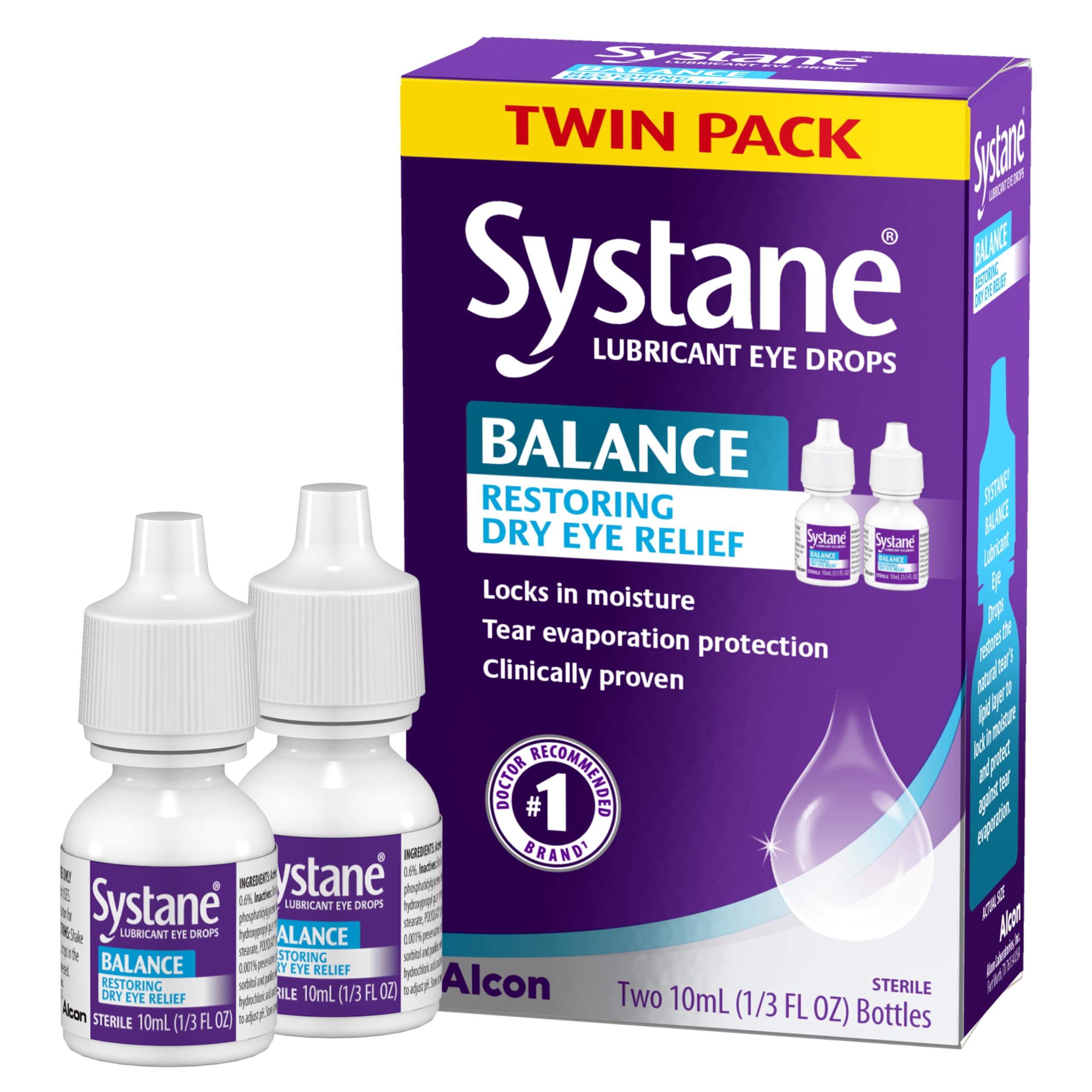
Systane Balance

94 /100
Trail Score Outstanding

Key details

Format
Twin pack, 0.33 oz bottles
Formula
Lipid-layer restorative
Severity
Moderate to severe
Stated Use
MGD, evaporative dry eye
Check Price on Amazon

Not everyone wants to twist open a vial before every dose, and this is the pick we hand those people. Systane Balance is the bottle-format version of the lipid idea. Its stated job is supporting the tear film's oil layer, and the box names MGD and evaporative dry eye outright, positioned for moderate to severe dryness. That lines up with where a lot of MGD actually sits, and it is why this one survived our shortlist ahead of the other bottle formulas.

Two bottles arrive in the pack, which is more useful than it sounds: one on the bathroom shelf, one in a handbag, and no tab to fumble at a restaurant table. It goes in comfortably and, in our experience, holds through a good stretch of desk work. It can look faintly milky once it is in the eye, which is normal for anything carrying a lipid.

Where it stops being the right answer is heavy dosing. This is a two-to-four-session-a-day drop; if you are instilling something every couple of hours, one of the preservative-free formulas above is the better habit, even at the higher cost.

Pros

  • Stated for MGD and evaporative dry eye
  • Twin pack keeps one at home, one in a bag
  • Faster at the bedside than a sealed vial

Cons

  • Stings on instilling for some eyes
Our verdict

This is our pick for anyone who will not fiddle with a vial: real lipid-layer support, MGD named on the box, and a bottle that lives in a bag.

Check Latest Price
4

Best Budget Lipid Drop

Soothe XP

92 /100
Trail Score Outstanding

Key details

Format
Two 0.5 fl oz bottles
Formula
Lipid layer restore
Stated Use
MGD, evaporative dry eye
Check Price on Amazon

An ounce of drops for less than any other pair in this guide makes Soothe XP the volume play: two half-ounce bottles, more liquid than any other single box on this list puts in front of you.

The argument it makes is the one this search is about. MGD breaks down the lipid layer, so the drop is designed to put oil back, and the packaging says as much. It is the least expensive way here to find out whether a lipid drop changes anything for your eyes, which counts for something when you are still experimenting rather than committing.

Our reservation is timing. The drop is milky going in and the world goes soft for a minute or two afterward. At bedtime that is nothing; in the middle of a spreadsheet it is irritating. So we keep it on the nightstand and use a clearer drop during the day. If your dryness is worst on waking, that trade costs you nothing at all.

Pros

  • Most liquid per box of any pick here
  • Lipid-restoring formula positioned for MGD
  • Lowest cost per ounce in this guide

Cons

  • Multi-dose bottles, so it is not preservative-free
Our verdict

We point budget-minded buyers here: it is the cheapest way to find out whether a lipid drop helps, as long as you use it at bedtime.

Check Latest Price
5

Preservative-Free Bottle

Systane Complete Preservative Free

93 /100
Trail Score Outstanding

Key details

Format
0.34 fl oz bottle
Stated Relief
Up to 8 hours
Active Ingredient
Propylene glycol 0.6%
Preservative-free
Yes
Check Price on Amazon

The bottle is the first thing you will have an opinion about. Systane Complete PF comes in a wide, flat-topped container with almost no nozzle, so the drop leaves wherever it likes. We have had it land on a cheekbone as often as in an eye, and it takes a few tries to find the angle.

Which is a pity, because the formula is well aimed at this particular problem. Propylene glycol at 0.6 percent, preservative-free, up to eight hours of relief by the label, and nano-droplet technology that the maker says spreads the drop across the eye faster than its own Balance formula. It is the only bottle here that skips preservatives, and for some eyes that alone is the reason to buy.

If your hands are steady, hold the bottle vertically, brace its base against your cheekbone and tip your head back rather than your hand. If they are not, whether from tremor, arthritis, or dosing in a hurry before a meeting, start with the vials instead. This is a two-handed drop, and no formula is good enough to make up for missing the eye.

Pros

  • Preservative-free in a multi-dose bottle
  • Stated eight hours of relief per drop
  • Spreads across the eye surface quickly

Cons

  • Wide flat dispenser is hard to aim
Our verdict

It is the only preservative-free bottle in this guide, and the formula is well aimed at evaporative dryness, but the flat dispenser asks for steady hands.

Check Latest Price
6

Desk-Drawer Top-Ups

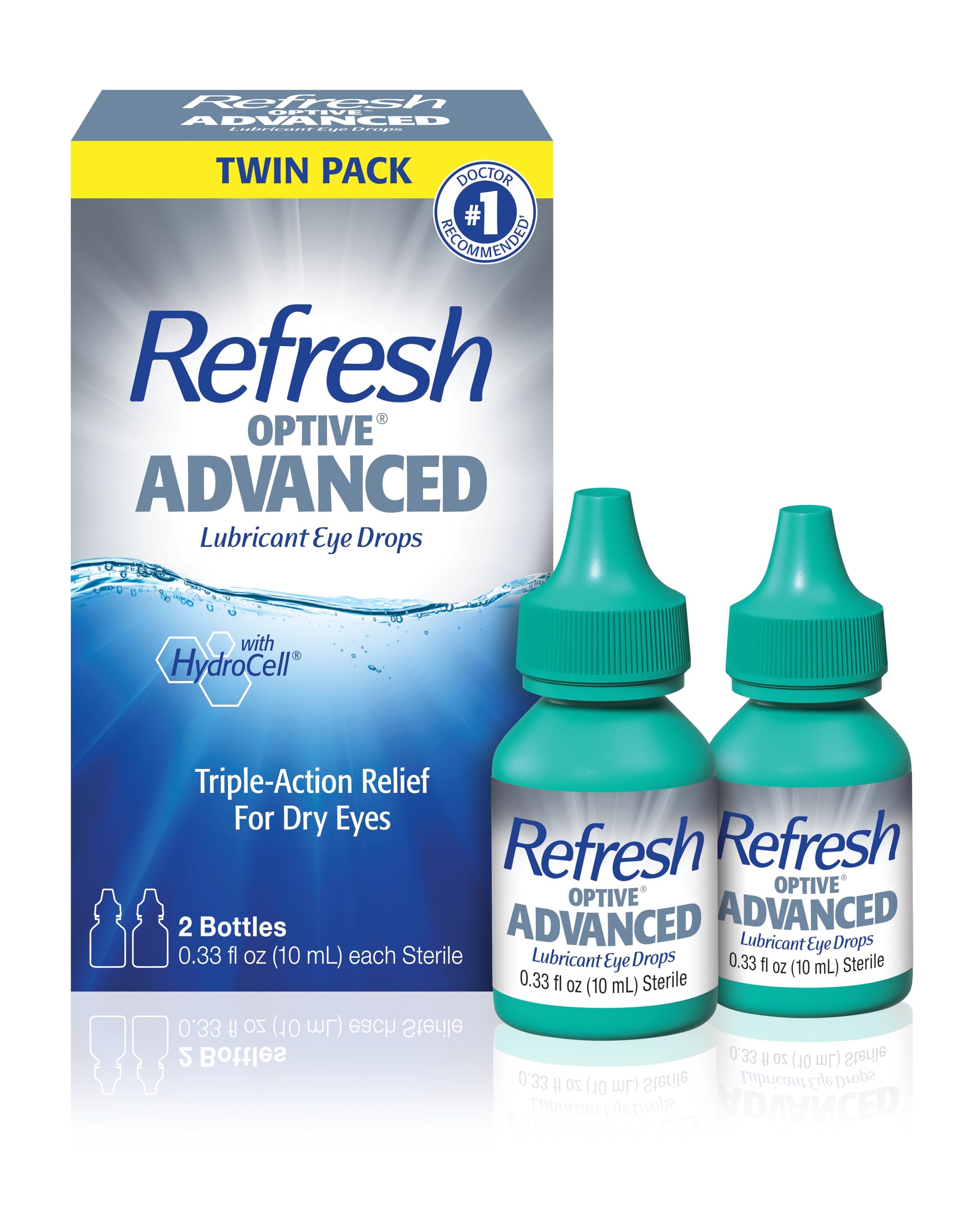
Refresh Optive Advanced

95 /100
Trail Score Outstanding

Key details

Format
Two 0.33 fl oz bottles
Formula
HydroCell, salt-free
Preservative
Purite
Check Price on Amazon

There is a bottle of this in the desk drawer, and that is the entire case for it. Refresh Optive Advanced is a triple-action lubricant sold as a two-bottle pack, and it is the pick that lives somewhere, a drawer or a handbag, until your eyes remind you it is there.

The preservative here is Purite, which breaks down into natural tear components once it is in the eye, and it is the gentlest of the preserved options in this guide. The HydroCell base is salt-free and glycerin-led, so it goes in cool and leaves no film behind. We did not get the sting that sends people hunting for a preservative-free formula, which is more than we can say for some drops we have tried.

What it does not do is the MGD job. It slows evaporation far less than the lipid picks, and it is here for the bottle and the mild preservative rather than the oil layer. Keep it for occasional dryness and the hours between proper doses. If your eyes feel dry again ten minutes after every blink, start with Retaine or Balance instead.

Pros

  • Twin pack lets you stash one at work
  • Gentle Purite preservative breaks down in the eye

Cons

  • No lipid component for the evaporative side
Our verdict

We keep it as the daytime bottle for mild dryness: cool, comfortable and easy to leave somewhere, though it is not the drop for the oil layer.

Check Latest Price

How We Tested Eye Drops for Meibomian Gland Dysfunction

We started with a shortlist of 30 drops marketed for MGD and evaporative dry eye, then narrowed it to 14 based on formula type (lipid-based, preservative-free, gel versus liquid), delivery format, and whether the label gave clear dosing instructions. For 10 weeks, I rotated the drops through my own routine and had two teammates do the same, so each formula got used on long screen days, after warm compresses, on windy outdoor walks, and at bedtime. We kept a simple daily diary: grittiness, burning, foreign-body sensation, and how soon each drop brought relief.

Right after each dose, we noted whether the drop soothed immediately or stung, whether it felt watery or cushioning, and how long it took for any blur to clear enough to read. We also checked the skin around the lids and upper cheeks for tackiness or irritation after the drop had run, since thick lipid drops can leave a residue. During the day, we timed how long comfort lasted before grittiness returned, and at night we noted whether the drop was easy to place without fumbling the cap or squeezing too much.

Effectiveness was judged on whether the dry, burning, tired-eye feeling actually eased during the day, not just for the first minute. We counted doses per bottle or vial and compared cost per use, because a drop that needs four doses a day adds up. Ease of use covered one-handed opening, travel, and whether a multi-use bottle stayed easy to squeeze near the end. The formulas that made the final list were the ones that delivered steady relief without stinging, film on the lids, or a long blur.

How to Choose Eye Drops for Meibomian Gland Dysfunction

Start With the Oil Layer

The meibomian glands line your lids and secrete the oil that floats on top of the tear film. When they are blocked, tears evaporate almost as fast as you make them, and a water-based lubricant has nothing holding it in place. Look for the words lipid, oil, emulsion, or evaporative on the label; a drop that talks only about moisture is a top-up, not an answer.

Systane Balance and Soothe XP name the lipid job outright, and Retaine MGD's emulsion is the most literal version of it. Refresh Optive Advanced is not a lipid drop, and we say so in its review.

Let Your Dosing Frequency Choose the Preservative

Any multi-dose bottle needs a preservative to stay sterile between uses; a sealed vial does not. Twice a day, that difference is close to academic. Four, six, eight times a day, a preservative is meeting an already irritated surface every time you dose, and a preservative-free formula is worth the extra money.

The trap is packaging. Preservative-free drops now come in bottles too, and Systane Complete PF is one of them, so read the front of the box instead of assuming that a bottle means preservatives.

Buy the Format You Will Actually Use

Vials are the bag-and-travel answer: sealed, measured, nothing to spill. Bottles are faster at the bedside and cheaper per dose. The trap here is the sticker price, because a 60-count box can cost more at checkout and less per dose than a 30-count box. That is exactly how our two vial picks rank differently depending on which number you read.

Stockpiling a big box only makes sense if you will get through it before the expiry date. If you dose twice a day and travel little, the smaller box is the saner purchase.

Know What a Drop Can and Cannot Do

A lubricant stands in for the oil your glands are not delivering. It does not clear a blocked gland, which is why relief fades and you are back at the vial tomorrow. If the goal is to change the glands themselves, that is heat, lid massage, and a plan from your eye doctor; this list is about staying comfortable in between.

If your eyes become painful, light-sensitive, or noticeably worse, stop shopping and get seen.

Frequently Asked Questions

Final Verdict

Buy the Retaine MGD vials. If your tears are evaporating too fast, it is the pick whose formula was designed around that failure: preservative-free, oil-based, and clingy enough that one vial covers a long stretch of the day. It costs more per dose than anything else here, and at two sessions a day that is a fair trade.

Two alternatives worth knowing. If opening a vial every time is a chore, Systane Balance puts the lipid job in a bottle. If you dose four or more times a day and want the lowest cost per dose, the Refresh Mega-3 box is the one to keep on subscription. And if neither gets you comfortable, that is an appointment, not another box.