Best Ergonomic Office Chairs of 2026

There's an odd bit of math in buying an office chair: the ones that do your back the most good often feel slightly wrong for the first week. A firm seat, a lumbar pad that pokes, armrests that want your elbows somewhere new — that's not a defect, it's your body unlearning a slump. Get past those few days and the chair quietly fixes what sent you looking: the 3 p.m. ache, the standing desk you bought and abandoned. We've spent the better part of nine months in 12 ergonomic chairs, and the pattern held.

Lumbar support, the spec everyone fixates on, is the easy part — nearly every chair here has a version. What separates a keeper is duller: a seat pan short enough to leave the back of your knees free, a cushion that stays firm at hour six, arms that adjust until you stop noticing them, a frame that doesn't wobble by month eight. Assembly ranged from twenty minutes to a lost afternoon. The picks below are sorted by who they actually fit.

1

Best Overall

ELABEST X100

91 /100
Trail Score Outstanding

Key details

Armrests
5D flip-up
Footrest
18 in. extendable
Lumbar Support
3D adjustable
Weight Capacity
300 lb
Check Price on Amazon

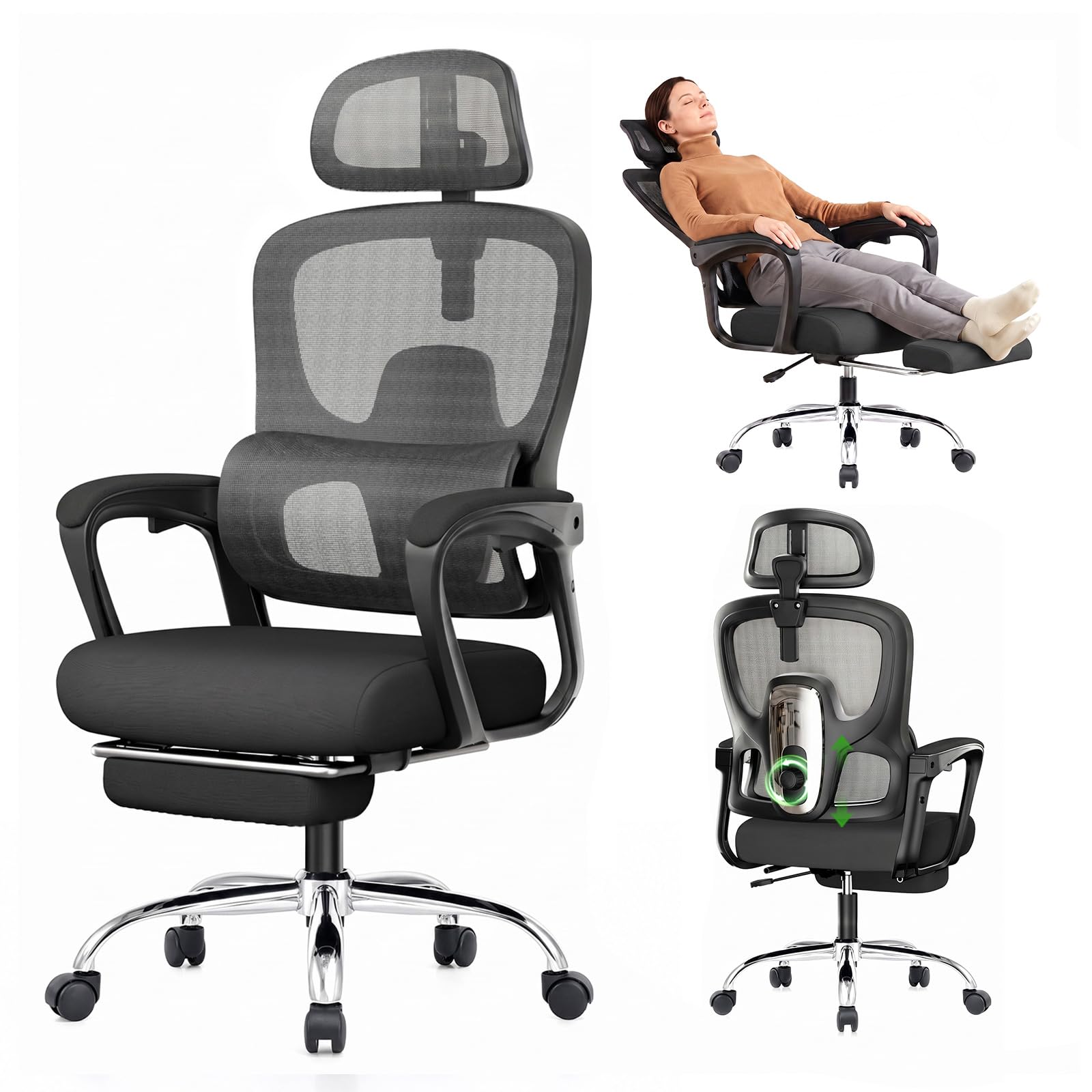
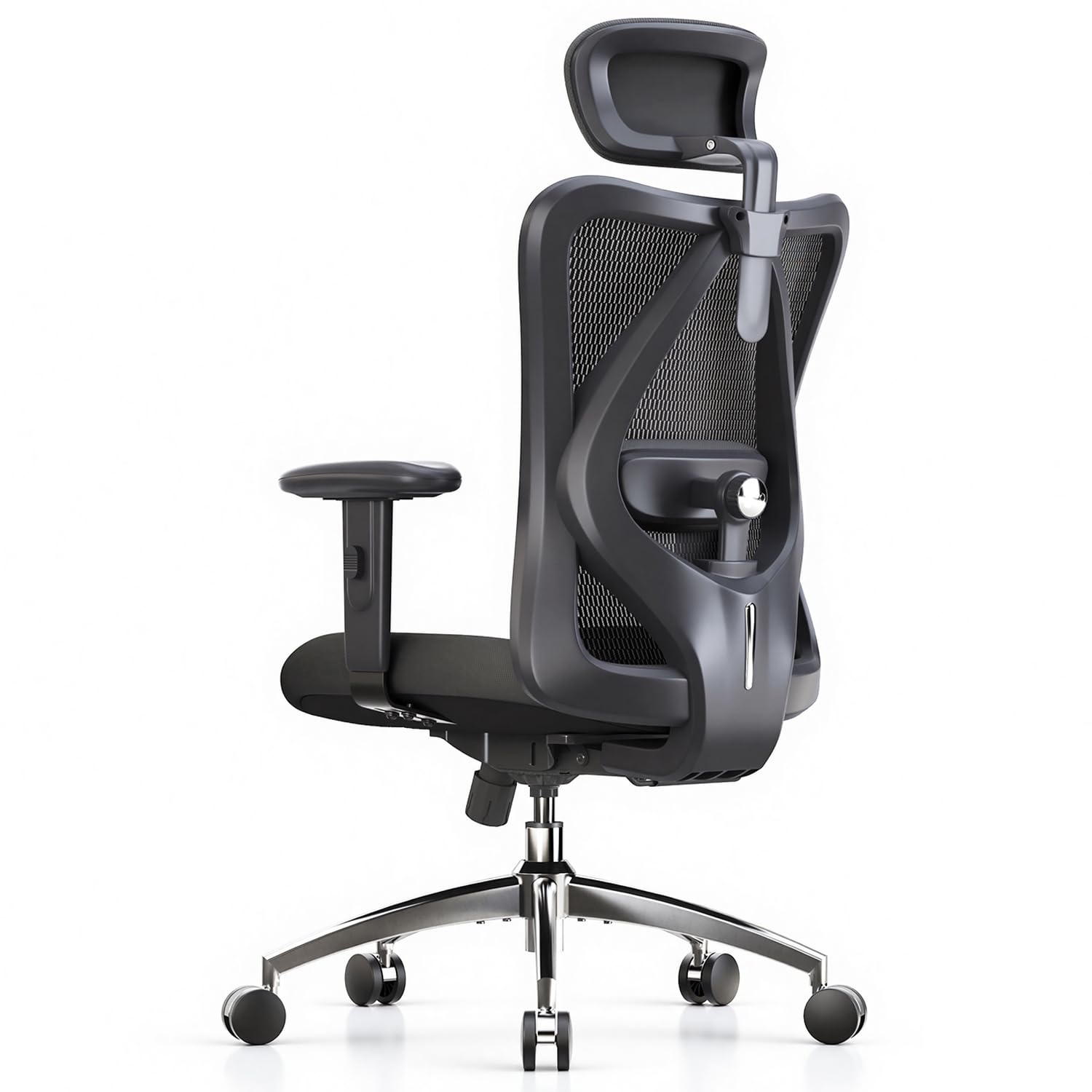
Most office chairs give you a lumbar pad that moves up and down and call it ergonomic. The X100 is the one here that also lets you set lumbar depth, and that difference is why it tops our list. The 3D lumbar panel has spring-loaded depth travel, height adjustment, and rotation, so you can push it into the curve of your lower back instead of chasing a fixed bump. For long workdays, that is the adjustment we reach for first.

The armrests are just as serious. They flip up, but they also adjust in height, width, and forward position, which makes it easier to get your elbows under your shoulders whether you are typing or leaning back. The 3D headrest is wide enough to support your neck without shoving your chin forward. We also like the 18-inch retractable footrest: it turns the chair into a place to take a real break, not just a place to perch.

The mesh back and seat are a plus for warm rooms, and the 300-pound capacity puts it in line with the sturdier chairs here. At 43 pounds, it is not the chair you tuck under a desk one-handed, but the tool-free assembly is straightforward. The three-position recline is useful, though the chair is happiest when you are sitting fairly upright and working.

The main caveat is fit. The seat depth is 18 inches, which can feel short if you are tall, and the 20.2-inch back width leaves less room for broad shoulders. If you are tall or broad-shouldered, compare the seat depth with a chair you already like before ordering. The X100 is the most expensive pick here, but it is also the one with the fewest compromises in adjustability.

Pros

  • 3D lumbar adjusts in depth, height, and angle
  • 5D flip-up arms support several sitting positions
  • Retractable footrest and three-position recline
  • Breathable mesh with a 300-pound rating

Cons

  • Seat depth may feel short for tall users
  • Headrest can drift when lounging
Our verdict

The best overall ergonomic chair here for buyers who want a full adjustment set, provided the 18-inch seat depth fits your frame.
Check Latest Price
2

Best Value

SIHOO M18

88 /100
Trail Score Excellent

Key details

Armrests
2D
Headrest
Adjustable
Lumbar Support
Adjustable
Weight Capacity
330 lb
Check Price on Amazon

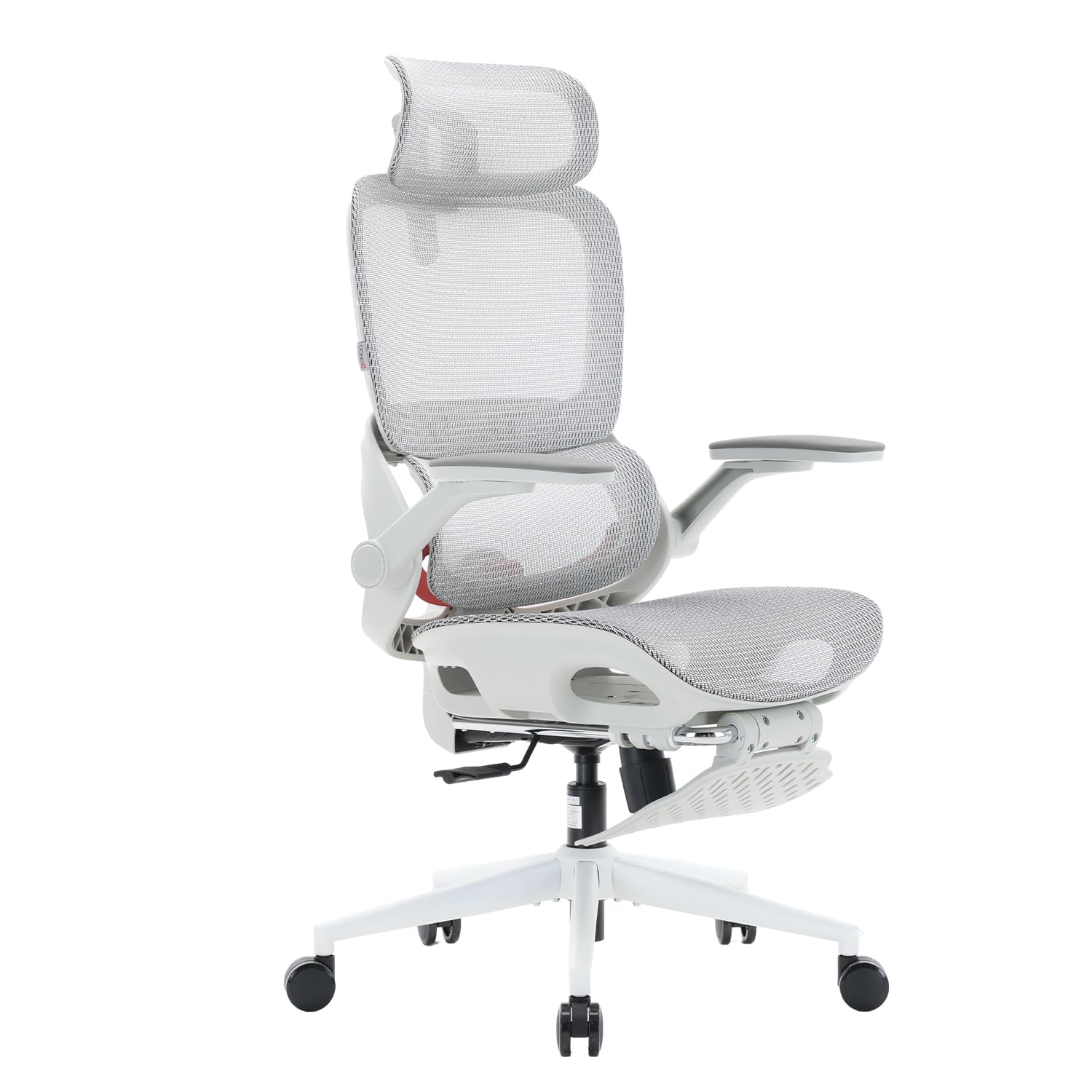
The M18 covers the ergonomic basics that matter most: the lumbar pad adjusts, the headrest moves, and the seat height spans a useful range for a home desk. The 2D armrests are the compromise—they move up and down, but not in and out—so this is not the chair for someone who needs to fine-tune elbow width. The 330-pound weight rating is higher than the 300-pound chairs here, though the Humergo goes further.

We like the M18 best as a first ergonomic chair: it gives you the two adjustments people notice first, lumbar height and headrest angle, without asking you to learn a dozen levers. The mesh back stays cool, and the seat is firm rather than pillowy. If you want a soft landing, the XISHE is the better pick.

The seat cushion runs firm, and it can feel hard after a few hours; a topper helps, though it changes the fit. The armrests are the part to watch over time. Assembly is simple, and the chair is light enough to move around the room.

The M18 is not the plushest chair here, and it does not have the 4D arms or footrest of the B100 PRO. What it does have is a clear ergonomic layout at a price that leaves room for a desk mat or a monitor arm. If you are tall or long-torsoed, check the 18-inch seat depth before you commit.

Pros

  • Adjustable lumbar and headrest at a midrange price
  • 330-pound weight rating
  • Breathable mesh back

Cons

  • Seat cushion feels firm after long sits
  • Armrests adjust only up and down
Our verdict

A strong value pick for a first ergonomic chair, with adjustable lumbar and headrest and a 330-pound rating.

Check Latest Price
3

Best Padded Seat

XISHE 929

90 /100
Trail Score Outstanding

Key details

Armrests
Flip-up
Seat And Back
PU leather seat, mesh back
Lumbar Support
Adjustable height
Weight Capacity
300 lb
Check Price on Amazon

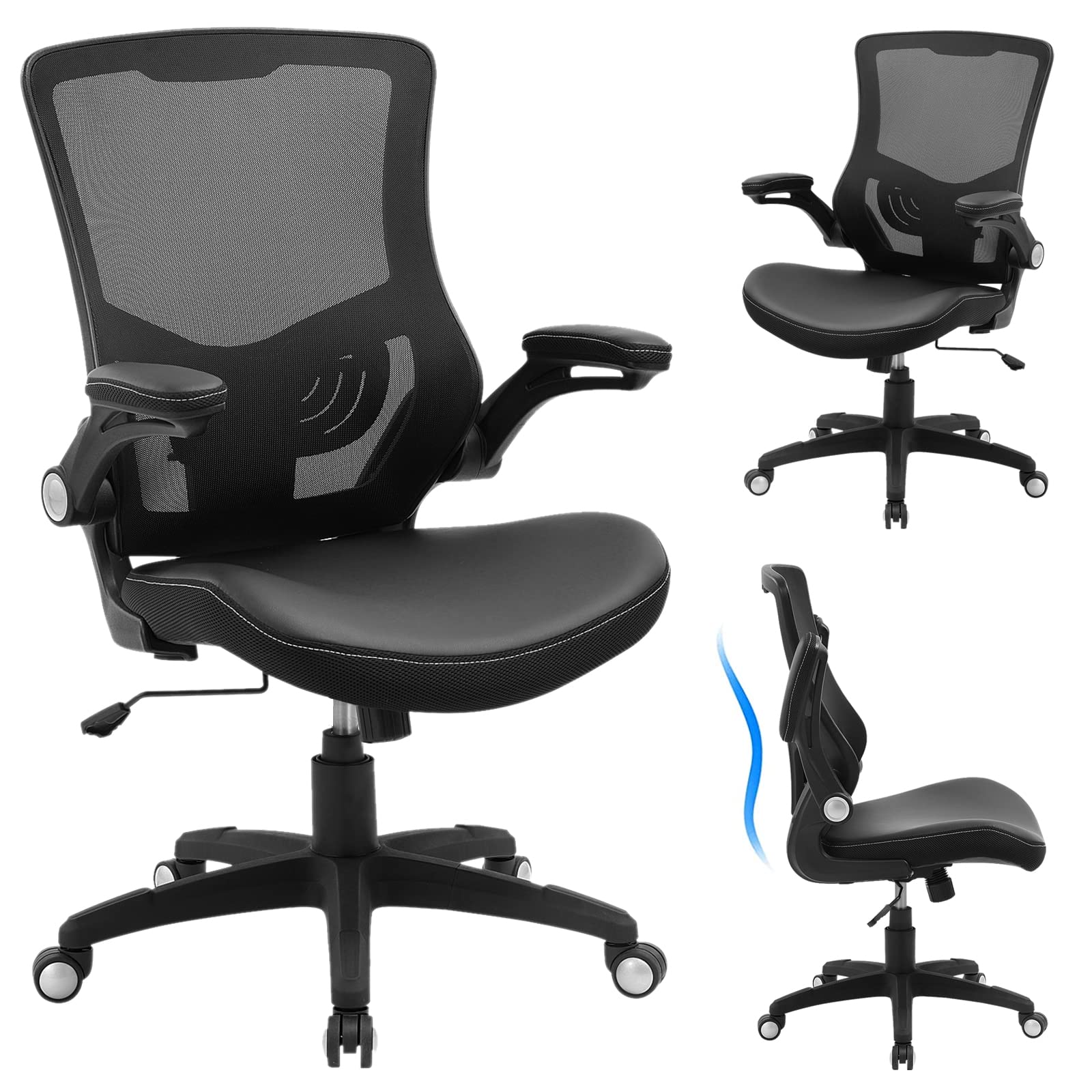
If you have tried an all-mesh seat and felt every hour of it, the XISHE takes a different approach. The seat is a thick sponge cushion wrapped in PU leather, while the back stays mesh. That combination gives you a softer landing than the mesh-seat chairs here without turning the whole chair into a sweat trap.

The lumbar support adjusts up and down, which is more than some chairs at this price offer, and the armrests flip up so the chair can slide under a desk. The 300-pound rating is standard for this group, and the 29.1-pound weight makes it easier to move than the 43-pound ELABEST. The PU leather is easy to wipe down, which matters if you eat lunch at your desk.

We like the XISHE best for someone who wants a padded, slightly more executive look without giving up an adjustable lumbar pad. It is also the pick for a shared desk, because the wipe-clean seat handles coffee drips and crumbs better than mesh. The trade-off is breathability: the mesh back helps, but the leather seat will run warmer than an all-mesh chair in a stuffy room.

The armrests flip up but do not adjust in height or width, so this is not the chair for fine-tuning elbow support. The back is also mid-height, not a full headrest chair. If you want a place to lean your head back between tasks, the SIHOO M18 or ELABEST is the better fit.

Pros

  • Thick PU leather seat is softer than mesh
  • Adjustable lumbar support
  • Flip-up arms and wipe-clean seat

Cons

  • Armrests do not adjust in height or width
  • Leather seat runs warmer than mesh
Our verdict

The best padded-seat ergonomic chair here for people who want a softer, wipe-clean seat and adjustable lumbar support.

Check Latest Price
4

Best Recline and Footrest

Humergo Ergonomic Chair

90 /100
Trail Score Outstanding

Key details

Recline
90–145°
Armrests
Recline-linked
Lumbar Support
2-way adjustable
Weight Capacity
365 lb
Check Price on Amazon

The Humergo's 365-pound weight rating is the highest here, and its linked armrests are the detail that makes the chair interesting. As you recline, the arms move with the backrest instead of staying fixed, so your elbows keep support instead of sliding off the front. For a chair at the value end of the midrange, that is a genuinely useful piece of design.

The recline runs from 90 to 145 degrees, the widest range here, and it locks at any angle rather than only at a few stops. The footrest extends for breaks, and the lumbar pad adjusts both up and down and front to back. The headrest is multi-angle, which helps if you like to lean back between calls.

We were also struck by the 30-pound weight: it is lighter than the ELABEST and the SIHOO B100 PRO, so it is easier to roll between rooms or lift into place. The mesh back should stay cooler than the leather-seat XISHE, and the 365-pound rating gives heavier users more headroom than the 300-pound chairs.

The seat depth is the number to confirm before ordering: with a recline this deep, a short seat pan puts pressure behind your knees. The linked arms are also a matter of taste. They follow the recline, which is great for lounging but less useful if you want the arms fixed while you type.

Pros

  • 365-pound weight rating, highest here
  • 90–145° recline locks at any angle
  • Linked arms move with the backrest
  • Footrest and two-way lumbar adjustment

Cons

  • Seat cushion could use more padding
Our verdict

A strong choice for heavier users who want a deep recline and a footrest, with linked arms that keep your elbows supported.

Check Latest Price
5

4D Arms, Footrest

SIHOO B100 PRO

88 /100
Trail Score Excellent

Key details

Armrests
4D flip-up
Footrest
Retractable
Lumbar Support
Adaptive dynamic
Weight Capacity
300 lb
Check Price on Amazon

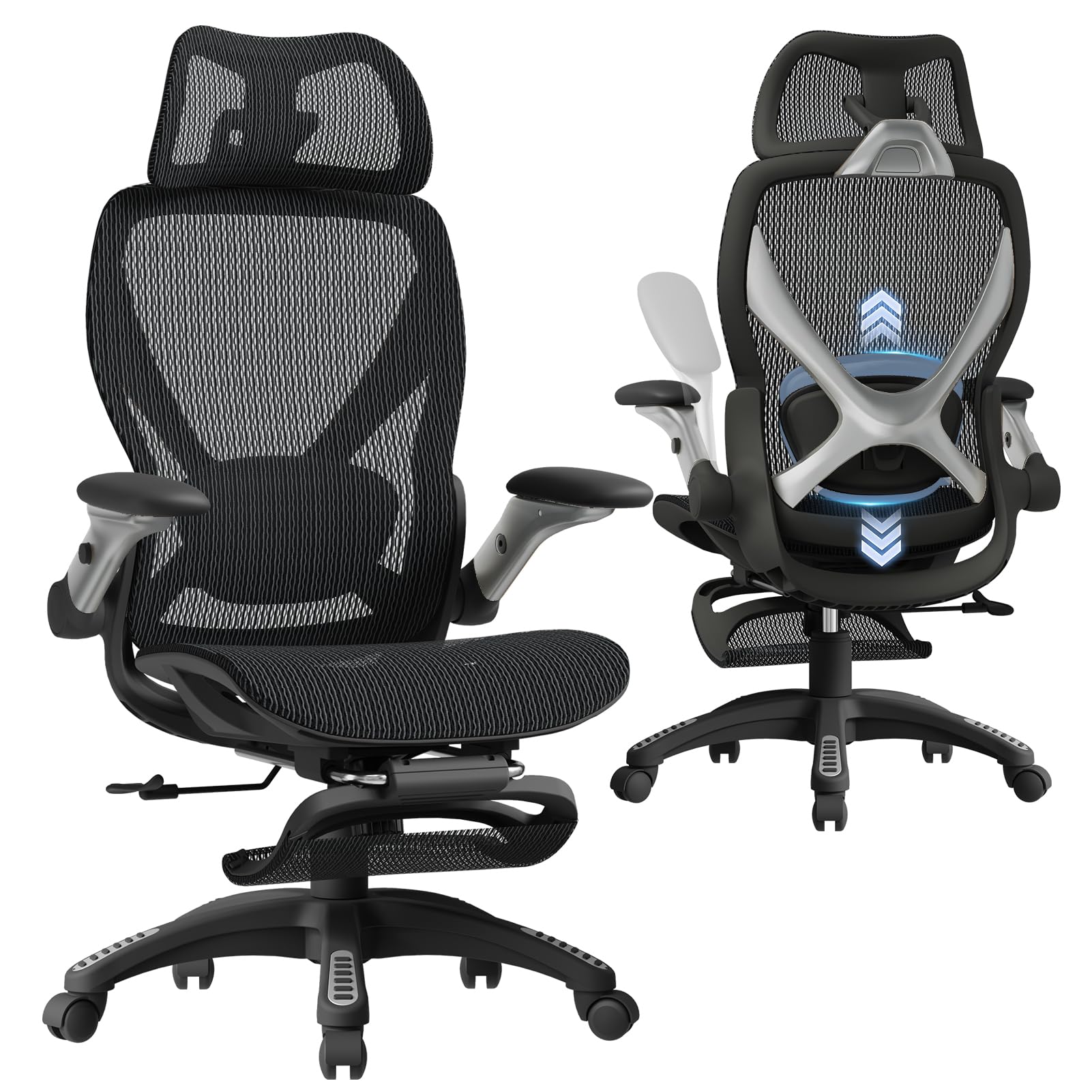
The B100 PRO is the step-up SIHOO: it keeps the brand's adjustable lumbar idea but adds 4D armrests and a retractable footrest. Compared with the M18, it is the chair for someone who wants more ways to fine-tune elbow and neck support, not just a taller back.

The 4D arms adjust in height, width, forward position, and angle, and they flip up to clear the desk. The lumbar support is adaptive, with a dual-spring design that is meant to track your lower back as you move. The footrest pulls out for a lunch-break recline, and the back locks at 110, 125, or 135 degrees. The 300-pound rating is lower than the M18's 330, so heavier users should take note.

We like the B100 PRO as the more adjustable alternative to the M18, especially for someone who shares a desk or changes posture often. The 4D arms are the feature we appreciate most, because elbow support is the adjustment most chairs skimp on. It is also a better recliner than the M18, thanks to the footrest and the wider headrest.

The trade-offs are price and seat firmness. It costs more than the M18, and the seat is still on the firm side rather than plush. The 17.1-inch seat depth is also on the short side, so taller users should check it against a chair they already like. If you want the deepest recline and the highest weight rating, the Humergo is the better choice; if you want the most arm adjustment, this is the one.

Pros

  • 4D flip-up arms adjust in four directions
  • Adaptive lumbar support with depth travel
  • Retractable footrest and three recline angles

Cons

  • Lower 300-pound rating than the M18
  • Seat depth runs short for taller users
Our verdict

The SIHOO to choose if you want 4D arms and a footrest without moving to the top price, provided the shorter seat depth fits you.

Check Latest Price
6

Light Home Use

BestOffice Mid-Back

88 /100
Trail Score Excellent

Key details

Back
Mid-back mesh
Armrests
Fixed
Seat Height
17.1–20.3 in.
Weight Capacity
250 lb
Check Price on Amazon

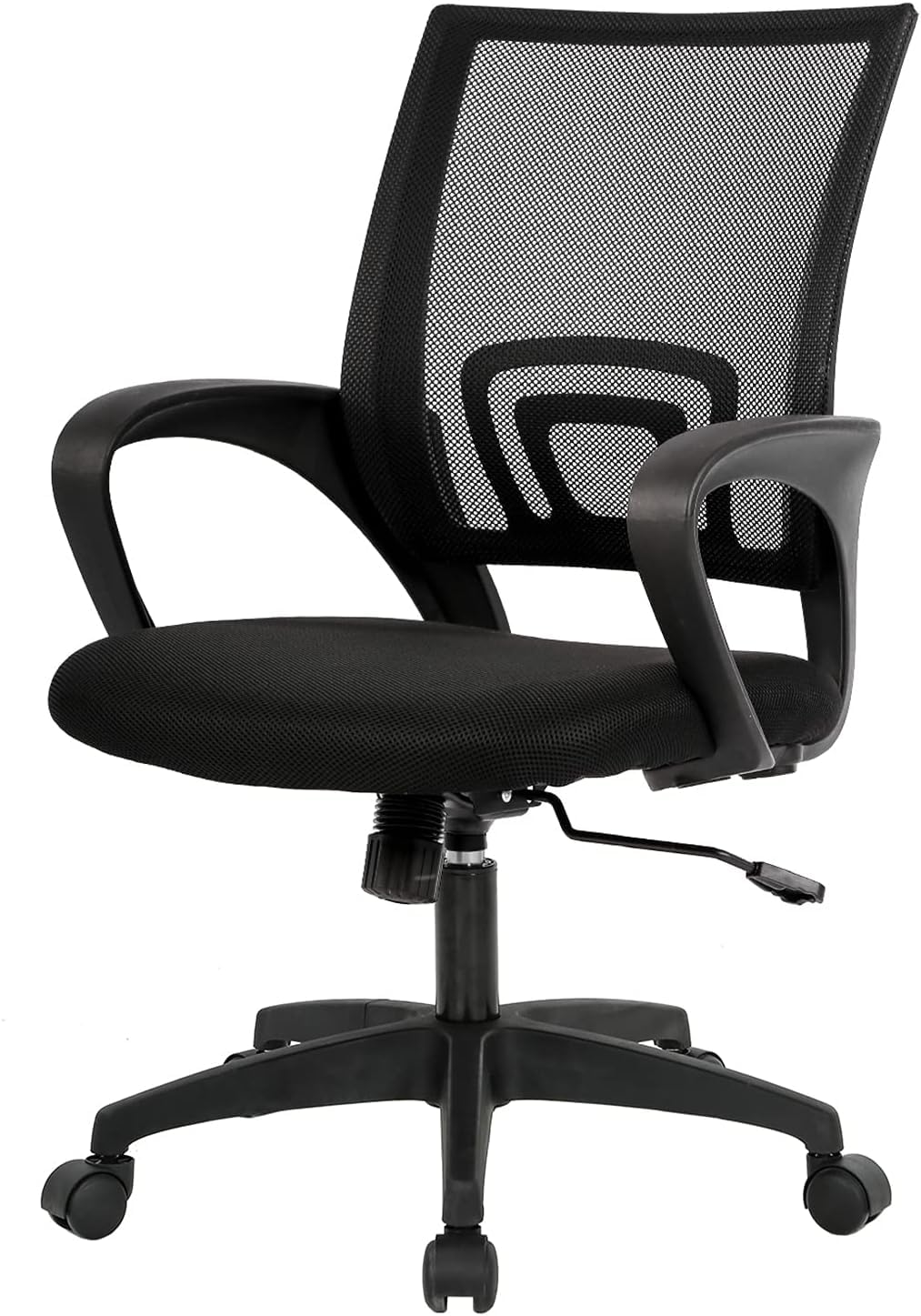
The BestOffice is the cheapest chair here, and it looks the part of a basic task chair: a mesh back, a foam seat, fixed arms, and a mid-height back. The seat height adjusts from 17.1 to 20.3 inches, which covers a range of desks and users, and the 250-pound rating is the lowest in this group. It swivels, rolls, and puts you at a desk without much fuss.

We see the BestOffice as a light-duty chair, not an all-day ergonomic solution. The fixed arms and fixed lumbar shape cannot be tuned to your shoulders or lower back, and the 18-inch seat and 16.5-inch back width are on the narrow side. For a teenager's desk, a guest room, or a short work session, it is an easy budget call. For eight-hour days, spend more on a chair with adjustable lumbar and arms.

The mesh back keeps air moving, and the chair is light enough to move around at 19 pounds. Assembly is simple, and the controls are basic enough that you can hand it to someone who does not want a lesson in ergonomics. The seat is not plush, but it is not the place to look for a luxurious cushion at this price.

The real limit is size. The 250-pound capacity and narrow seat mean larger users should look elsewhere, and the fixed arms may crowd a narrow desk. The 17.1-inch minimum seat height is the number to check if your desk is on the low side.

Pros

  • Very low price for a mesh task chair
  • Seat height adjusts from 17.1 to 20.3 inches
  • Breathable mesh back

Cons

  • 250-pound weight limit is the lowest here
  • Fixed arms and fixed lumbar
Our verdict

A smart budget chair for a short desk session or a spare room, as long as you stay within its 250-pound limit and don't need adjustable arms.

Check Latest Price

How We Tested 12 Ergonomic Office Chairs

We started with the spec sheets — seat height range, seat depth, weight capacity, and how long the warranty covered the mechanism — and cut anything that couldn't fit both a 5-foot-0 tester and a 6-foot-1 one, along with chairs whose only nod to back support was a pillow. That left 12, which we assembled ourselves and sat in for nine months.

Assembly was timed with a stopwatch, working alone with only the tools in the box; we counted the steps, noted whether bolt holes lined up without a fight, and how long the chair took to stop feeling loose. Then we ran each one through its full adjustment range with a tape measure — seat height, seat depth, how many directions the arms moved and whether they held — and put a short tester and a tall one in the same chair on the same day to see where the seat edge hit behind the knee and whether the side bolsters pressed into their hips.

Daily life was the real test: eight-hour workdays plus the slouchy evening hour. At hour two, four, and six we wrote down what had started to bother us — a cushion that had bottomed out, a lumbar pad that had crept below the belt line, arms that had drifted — and repeated it on at least three days per chair. At month three and again at month nine we checked for wobble in the cylinder, mesh sag under a straight edge, fraying at the seat edge, and how the casters rolled from carpet to hardwood. Value came last: price against how many adjustments we actually used and how long the maker stood behind the frame.

How to Choose an Ergonomic Office Chair

Start With Lumbar Support

Lumbar support matters most when it lands in the right place, which is why height and depth adjustment are worth more than a prominent pad. A fixed bump can work if it matches your lower back, but many people need to move the support up, down, or slightly forward. The ELABEST X100 is the most adjustable here, with 3D lumbar that moves in depth, height, and angle. The SIHOO M18 gives you adjustable lumbar at a lower price, while the XISHE adjusts up and down.

If you are choosing between two chairs, sit in the one with the more adjustable lumbar first. A pad that presses too high or too low is worse than a flatter backrest, because it encourages you to slouch around it.

Match Seat Height and Depth

Set the seat height so your feet rest flat and your knees sit close to a right angle. Then check depth: with your back against the backrest, you want about two fingers of space behind your knee. A seat that is too deep pushes you forward; one that is too short concentrates pressure under your thighs. The BestOffice has the lowest seat-height range here, from 17.1 to 20.3 inches, while the ELABEST and SIHOO B100 PRO use shorter 18-inch and 17.1-inch seat depths that tall users should check.

Seat height and depth are the two numbers a desk chair cannot fudge. If you are between sizes, choose the chair that lets you put both feet down before one that gives you extra back height.

Prioritize Arm and Recline Adjustments

Armrests should let your elbows rest near desk height with your shoulders relaxed. Height adjustment is the minimum; width and forward-back movement help more. Flip-up arms are useful in a small room because the chair can tuck under the desk. The ELABEST and SIHOO B100 PRO offer the most arm travel here, while the XISHE flips up but does not adjust in height or width.

A reclining back with a lock is worth having for breaks, but it should not be the first feature you shop for. The Humergo goes furthest with a 90-to-145-degree range and a footrest. Treat the footrest as a comfort extra, not a substitute for lumbar support.

Check Weight Rating, Cushion, and Upkeep

Weight ratings here range from 250 to 365 pounds, so check the limit before you buy. A mesh seat breathes better for long days, while a PU leather seat like the XISHE wipes clean and feels softer at first. Neither is universally better; the choice comes down to whether you run warm or eat at your desk.

Cushion firmness is personal, but a seat that feels hard after two hours is not going to soften into the right shape. Look for a chair with a return policy you can live with, and check the armrests and gas lift after the first few weeks. Those are the parts that decide whether a chair stays comfortable after the honeymoon.

Frequently Asked Questions

Final Verdict

The ELABEST X100 is the chair we recommend first because it solves the adjustment most chairs ignore: lumbar depth. Its 3D lumbar, 5D arms, and footrest make it the most complete all-day chair here, provided the 18-inch seat depth fits you.

If you want a lower-cost ergonomic chair, the SIHOO M18 is the value pick. If you want a padded seat or a deeper recline, the XISHE and Humergo are the alternatives.