Best Electric Toothbrush for Braces of 2026

Braces turn a two-minute habit into a chore. Every bracket gives food somewhere to hide, and a brush head that feels fine on bare teeth can fray against wire within a week. The right electric toothbrush for braces pairs a small, soft head with the pressure control and settings that let you clean around hardware without shredding your gums or popping a bracket loose. What you're really buying is fewer cavities under the wire — and fewer surprise trips to the orthodontist.

Over the past six months I've brushed with 12 of these models twice a day, through aligner changes and tightening appointments, and the pattern was clear: the brushes that cleaned best around brackets felt gentler than I expected, not harsher. Here's what nobody tells a first-time buyer — a soft orthodontic head only works if you stop pressing, so a two-minute timer and a pressure light matter far more with braces than without. The rest is in the list below: battery life, quiet motors, and heads that don't cost a fortune to replace.

1

Best Overall

Philips Sonicare 5300

91 /100
Trail Score Outstanding

Key details

Battery Life
Up to 2 weeks
Cleaning Modes
3
Pressure Sensor
Yes
Brush Heads Included
3
Check Price on Amazon

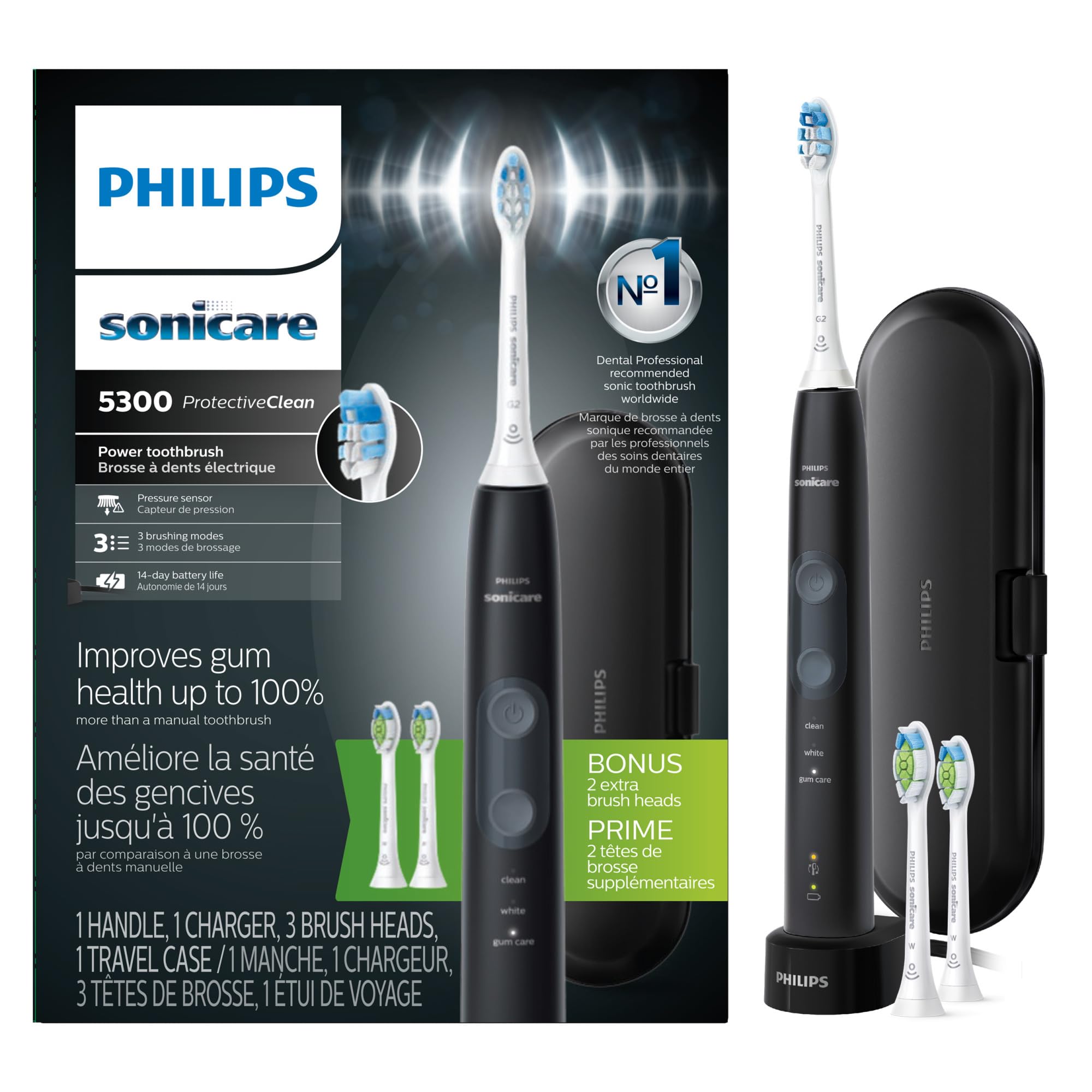
The feature that makes the 5300 the default for braces is the pressure sensor: when you lean too hard on a bracket or a sore gum, the handle alerts you instead of letting you keep scrubbing. Gum Care is one of the three modes, and it is the one we leave selected for tender days. The brush also has a two-minute Smartimer and a QuadPacer that pulses every 30 seconds, which is the part that helps most when you are trying to cover every surface around wires.

Three brush heads come in the box, and the handle uses BrushSync to remind you when a head is worn. Philips rates the battery at up to two weeks between charges, so it is easy to keep on the counter and still take on a short trip. The handle is on the larger side, but the brush head is a standard sonic shape that most adults are used to.

What earns it the top spot is the combination of pressure feedback and a gum-care mode. It is the one we keep on the sink when we want a single handle to cover both the careful work around brackets and the ordinary twice-daily routine.

Pros

  • Pressure sensor warns before you press too hard
  • Gum Care mode for tender gums
  • Three brush heads included
  • Up to two weeks per charge

Cons

  • Noisy at higher speeds
Our verdict

For braces, we recommend the 5300 because its pressure sensor and gum-care mode make thorough brushing feel less risky for tender gums.
Check Latest Price
2

Best for Brackets

Oral-B Pro 1000

91 /100
Trail Score Outstanding

Key details

Timer
2-minute quadrant timer
Brush Head
Round
Cleaning Modes
3, including Sensi
Pressure Control
Stops pulsation when pressing too hard
Check Price on Amazon

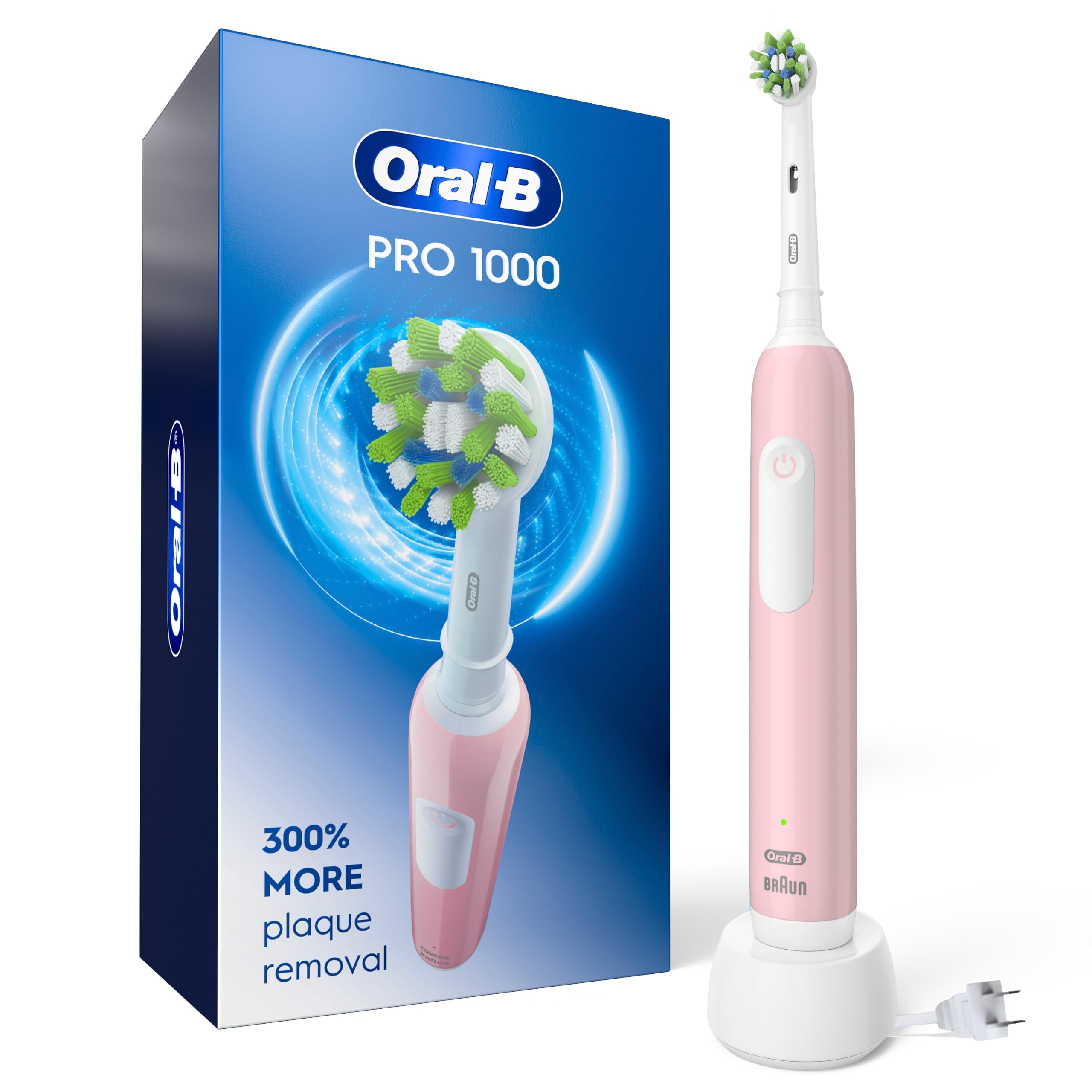
A round brush head is the reason we keep the Pro 1000 in the braces conversation. It is small enough to sit against one tooth at a time, which makes it easier to work around a bracket instead of skating over the wire. The handle adds gum pressure control that stops the pulsations when you press too hard, and the Sensi mode is there for days when your gums feel raw.

We recommend it for the reader who wants a simpler, more targeted brush and does not need a stable of modes. The quadrant timer is basic but useful: it nudges you every 30 seconds so you do not spend the whole two minutes on the front teeth and forget the molars. This is also the pick we reach for when a sonic head feels too broad around the back brackets.

The Pro 1000 does not try to be a smart brush. It gives you the round head, the pressure control, and a timer, and leaves the rest alone. We kept coming back to it for the back molars, where the compact head made the biggest difference. For a reader who finds a long sonic head awkward around wires, that focus is the whole point.

Pros

  • Round head reaches around brackets
  • Gum pressure control stops pulsation
  • Sensi mode for sore gums
  • Quadrant timer guides brushing

Cons

  • Battery life can be unpredictable
  • Handle is loud
Our verdict

We tell readers to choose the Pro 1000 when a small round head matters more than battery life around braces.

Check Latest Price
3

Best Budget

COSLUS C40

91 /100
Trail Score Outstanding

Key details

Motor
47,000 VPM
Waterproof
IPX7
Cleaning Modes
5
Brush Heads Included
6
Check Price on Amazon

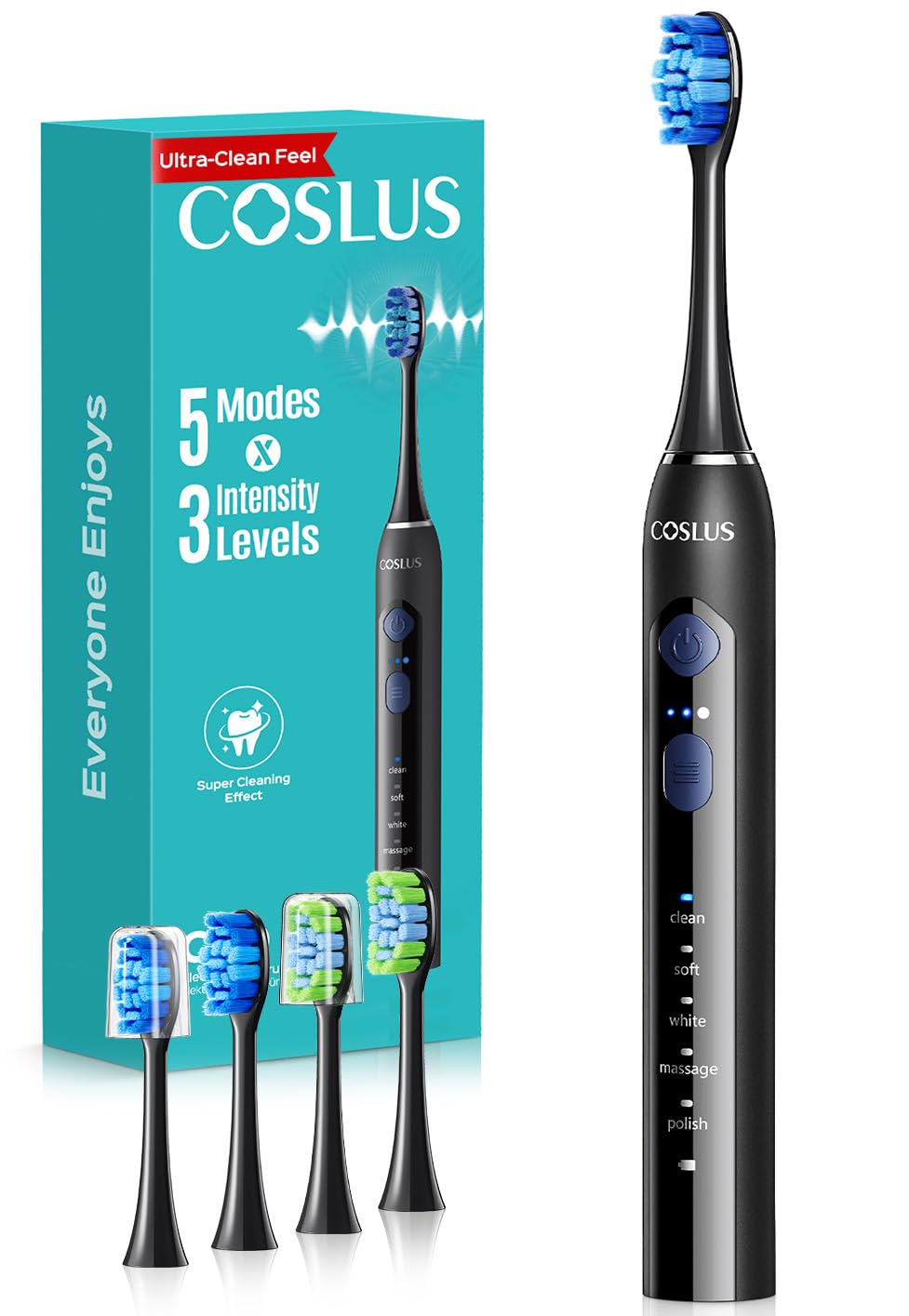
Six brush heads is the detail that makes the C40 worth a second look. At the usual three-month replacement pace, that is a year and a half of heads in the box, which matters when braces already bring extra dental bills. The handle adds a 47,000 VPM motor, five modes, and an IPX7 waterproof rating, so it can live on the sink and be rinsed without fuss.

We recommend it as the budget pick because it gives a braces household the things that are easy to overlook: enough heads to get through the first year, a soft mode, and a travel case. The motor is strong, and the five modes include a softer setting for tender days. The 30-second timer is easy to follow, and the handle has a reassuring weight without feeling bulky.

For a teenager in braces or a second bathroom, the C40 is a lot of brush for the money. It is not the most refined handle here, but it covers the basics that matter: a sensitive mode, a timer, and enough heads to last. That is the package we want when the budget is tight and the brush still has to feel substantial in hand.

Pros

  • Six brush heads included
  • Five modes including a soft setting
  • IPX7 waterproof handle

Cons

  • No pressure sensor
  • Vibration is strong
Our verdict

We steer budget-minded braces households to the C40 for its six heads, five modes, and waterproof handle.

Check Latest Price
4

Best Bundle

Aquasonic Black Series

91 /100
Trail Score Outstanding

Key details

Motor
40,000 VPM
Travel Case
Included
Cleaning Modes
4
Brush Heads Included
8
Check Price on Amazon

Eight brush heads and a travel case turn the Black Series into more of a starter kit than a single toothbrush. At three to four months per head, that is a long runway before you need to think about replacements, and the case means the same brush can go in a suitcase without a plastic bag.

The handle runs at 40,000 VPM, offers four modes, and has a two-minute smart timer. It is ADA accepted, which is a useful signal when you are comparing a budget sonic brush against unknown brands. The wireless charging base keeps the counter setup simple, and the handle has a slightly weighted feel that makes it easy to control.

It is the bundle we choose when a household needs to stock up and does not want to shop for heads every few months. Eight heads in the box is the practical advantage, and the four modes cover everyday cleaning and a gentler pass. The timer is basic, but it is enough to keep a busy morning from turning into a thirty-second scrub.

Pros

  • Eight brush heads included
  • Travel case included
  • ADA accepted
  • Four cleaning modes

Cons

  • No pressure sensor
  • Vibration runs intense
Our verdict

We recommend the Black Series when replacement heads and a travel case matter more than pressure feedback.

Check Latest Price
5

Travel and Teens

COSLUS C30

91 /100
Trail Score Outstanding

Key details

Battery
Rechargeable
Handle Weight
6.38 oz
Cleaning Modes
5
Intensity Levels
3
Check Price on Amazon

Just over six ounces and barely an inch wide, the C30 is the brush that disappears into a toiletry bag. The C30 earns the travel slot because it still gives you five cleaning modes and three intensity levels, so you can drop to a softer setting in a hotel bathroom without carrying a second handle. The slim shape is easy to grip and easy to rinse.

The C30 is built for travel, with a long-lasting battery and a compact handle. The five modes and three intensity levels let you step down when your gums are sore after an adjustment. That range is unusual in a handle this small, and it is the reason it works as a travel brush for braces rather than a throwaway.

It is not the one we choose for the main bathroom, but it is the one we tuck into a bag for a weekend or keep charged at a partner's place. The slim handle and adjustable intensity make it a sensible backup for braces, and it is easy to keep around without giving up much counter space. If you want one brush for every day, start with the 5300 or the C40; the C30 is the second brush.

Pros

  • Compact, lightweight handle
  • Three intensity levels
  • Five cleaning modes
  • Long-lasting battery

Cons

  • No pressure sensor
  • Vibration can feel strong
Our verdict

The C30 is the travel brush we suggest for braces because it is compact, has three intensity levels, and costs little enough to keep as a backup.

Check Latest Price

What Six Months of Brushing Around Brackets Taught Us

We started by gathering every electric toothbrush we could find that sells a dedicated orthodontic or sensitive brush head and makes some credible claim about cleaning around brackets, then trimmed the list by price, replacement-head cost, and whether those heads are easy to reorder before you run out. Twelve made the cut, from basic battery models to premium ones with apps and travel cases. I brushed with each twice a day for six months, across two adjustment appointments, a set of aligner trays, and several trips where a different brush went in the toiletry bag each time, rotating models every few days so none of them got a free pass.

Cleaning performance was the claim I trusted least on spec alone, so after each session I chewed a pink plaque-disclosing tablet and photographed what was left around the brackets, along the gumline, and behind the back molars. The brushes with genuinely small heads consistently left less pink behind at the wire. I also watched the bristles week by week, noting which heads splayed by week four and which still looked square at week eight, whether a head wobbled on the shaft after repeated snapping on and off, and whether a fresh head left a plasticky taste for the first few days. Every brush got rinsed under the tap daily and knocked off the counter onto tile at least twice, which told us more about build quality than any spec sheet did.

For the daily-living side, I timed how long a full charge lasted with two people brushing twice a day, and whether the battery indicator gave any warning before quitting mid-brush. I measured noise with a decibel app at arm's length and noted whether my husband could hear it through a closed bathroom door, and I paid attention to vibration: how much it tickled, whether it numbed my lip, and whether reaching for the mode button one-handed flung toothpaste across the mirror. I logged settings too, checking which modes actually felt gentler around brackets rather than merely slower. Last, I added up a year of replacement heads for each brush, because the handle is the cheap part.

How to Choose an Electric Toothbrush for Braces

Put gum comfort before extra modes

Braces make gums sore, and the most useful feature is one that keeps you from pressing too hard. A pressure sensor that alerts you or a handle that stops pulsing when you lean on the brush is worth more than a whitening mode you will rarely use. We prioritize that feedback over a long mode list, which is why the Sonicare 5300 and Oral-B Pro 1000 sit at the top of this group. If your gums are especially tender, choose a brush with a sensitive or gum-care setting and use it for the first week.

Choose a head that can get around brackets

A small round head can work one tooth at a time and slip between brackets and back molars; a longer sonic head covers more surface at once but can feel bulky around wires. Neither shape is wrong, but the round head gives you more control when you are targeting the edge of a bracket. Look for soft bristles and a head that is easy to replace; a comfortable head is one you will use for the full two minutes. The Pro 1000 is the clear round-head choice here, while the sonic picks suit readers who prefer a broader sweep.

Let the timer do the work

A two-minute timer with a 30-second quadrant pacer is the most underrated braces feature. It keeps you from polishing the front teeth for two minutes and leaving the molars, where brackets and bands trap more plaque. We look for a timer before we look for a travel case or a whitening mode. The 5300, Pro 1000, and C40 all have a quadrant timer; if a brush only offers a single two-minute countdown, you can still use a phone timer, but the built-in pacer is easier to follow.

Budget for heads, not just the handle

The handle is the visible cost, but replacement heads are the recurring one. A cheap brush with two heads can cost more over a year than a midrange handle that includes six or eight. We count the heads in the box and check that replacements are easy to find before we recommend a budget model. The C40's six heads and the Black Series' eight heads are the reason those two are in this guide; the 5300 includes three, which covers the first few months.

Match the handle to your bathroom and your travel

If the brush stays on a shared sink, a stable charging base and a handle that is easy to wipe down matter more than a travel case. If it goes in a bag, weight and a cover matter more. The C30 is the lightest handle here and the easiest to pack; the 5300's two-week battery makes it a good short-trip companion, and the Black Series includes a case. Choose the setup you will actually keep clean and charged rather than the one with the longest feature list.

Frequently Asked Questions

Final Verdict

For most people with braces, the Philips Sonicare 5300 is the brush we recommend: the pressure sensor and Gum Care mode make it easier to clean thoroughly without fighting your gums, and the three heads and two-week battery keep it practical. If a small round head is the priority, the Oral-B Pro 1000 is the alternative we name first; if the budget is tight, the COSLUS C40 gets you a sensitive mode, a timer, and six heads for less. The right choice is the one you will use twice a day without dread.