Best Electric Toothbrush for Sensitive Teeth of 2026

Cold water shouldn't feel like a punishment. If you've started letting your coffee go lukewarm, or bracing yourself before the dentist's air syringe, you already know the problem: the brush you're using may be more than your gums can take. A toothbrush built for sensitive teeth doesn't clean less — it cleans differently, with softer bristles, gentler vibration, and a pressure sensor that speaks up before you press too hard.

I've been on both sides of this: years of scrubbing hard, then a hygienist telling me to ease off. Over the past six months, our team has brushed with 12 electric toothbrushes sold for sensitive teeth, and the gap between the good ones and the rest came down to a few things. The surprise for first-time buyers is that more power rarely means cleaner teeth — the brushes that won us over stayed steady and quiet and let the bristles do the work. Check what replacement heads cost before you check the brush price. The ones worth your counter are below.

1

Best Overall

Oral-B Pro 1000

91 /100
Trail Score Outstanding

Key details

Timer
30-second quadrant pacing
Brush Head
Round, oscillating-rotating
Cleaning Modes
3, including Sensi
Pressure Feedback
Stops pulsations when pressing too hard
Check Price on Amazon

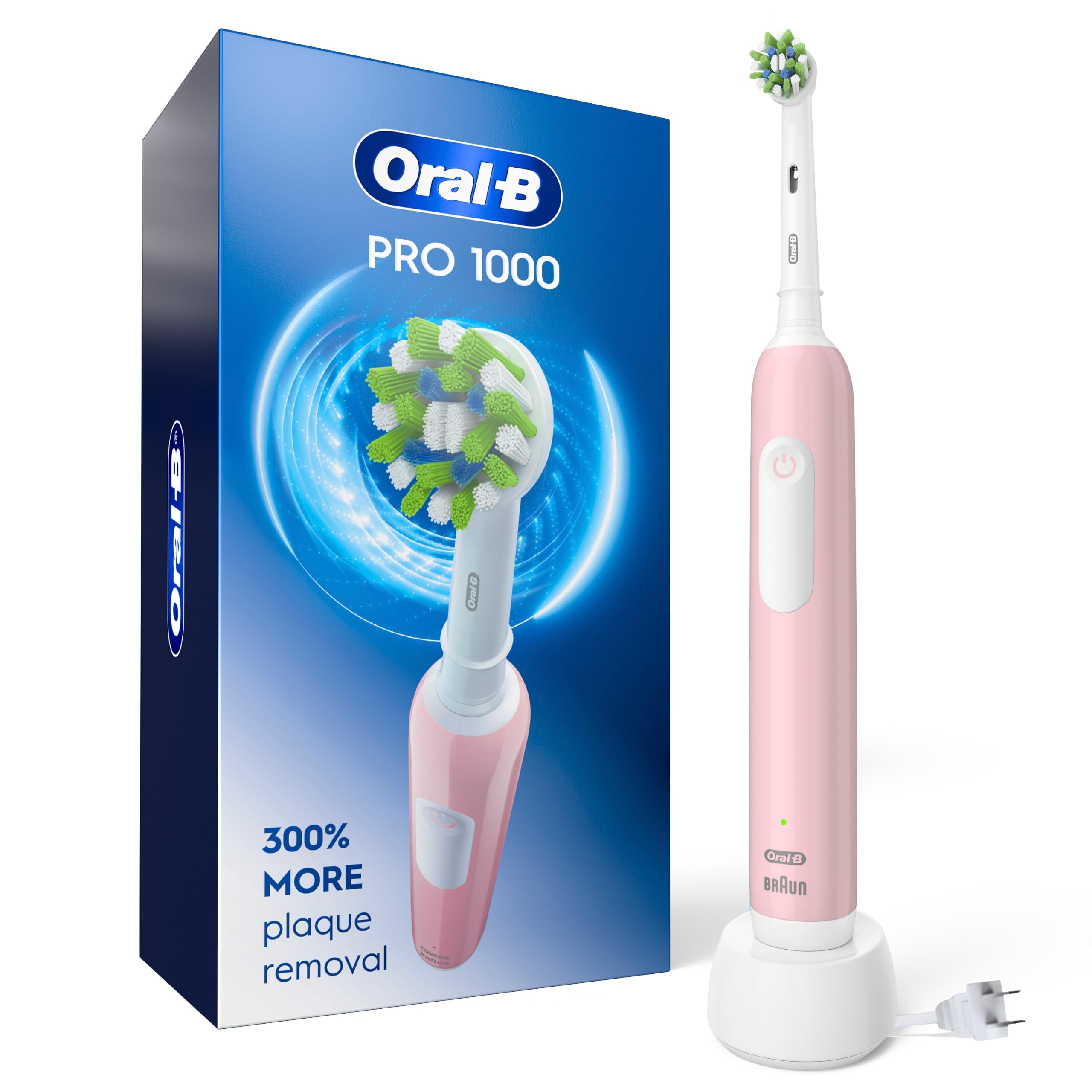
Press the Oral-B Pro 1000 against a tooth harder than you should and the brush head stops pulsing until you ease off. There's no light to notice and no beep to decode with a mouth full of foam — the correction arrives in your hand. Put that together with the Sensi mode, one of three settings on the handle, and a tender mouth gets both things it needs: less scrub and a gentler action, without giving up a powered brush.

This is the handle we recommend to anyone whose gums protest at the sink. The round head works one tooth at a time, so it's easy to slow down at the back corners without leaning on the whole arch, and the quadrant timer paces you through 30 seconds per zone, which stops you overworking a single sore spot. Oral-B's claim of up to 100% more plaque removed along the gumline is a manufacturer's figure against a manual brush, but the cleaning itself is the part of this handle that holds up in daily use.

Two things you live with. The handle is loud — a buzzy whine that carries through a closed bathroom door — and switching it off means clicking through all three modes, which is clumsier than it sounds with wet hands. Neither changes our recommendation, because a loud brush you use twice a day still beats a quiet one you avoid.

Where it gives up ground is adjustability. Sensi is a fixed setting, so a mouth that needs the power stepped down day by day should look at the Sonicare ProtectiveClean 6500 and its three intensity levels. For most people, though, a real sensitive mode plus pressure control that acts on its own is enough — and that's this handle.

Pros

  • Pressure control stops the brush, not just warns
  • Sensi mode built for gum protection
  • Quadrant timer paces each 30 seconds
  • Midrange money for a full-size rechargeable

Cons

  • Loud whine that carries through a door
  • Takes three clicks to switch off
Our verdict

We recommend the Pro 1000 to anyone whose gums protest at the sink: the Sensi mode softens the action and the handle simply stops when you press too hard.
Check Latest Price
2

Best for Gum Care

Sonicare 5300

91 /100
Trail Score Outstanding

Key details

Battery
Up to 2 weeks per charge
Cleaning Modes
Clean, White, Gum Care
Heads Included
3
Pressure Feedback
Sensor alerts you to protect gums
Check Price on Amazon

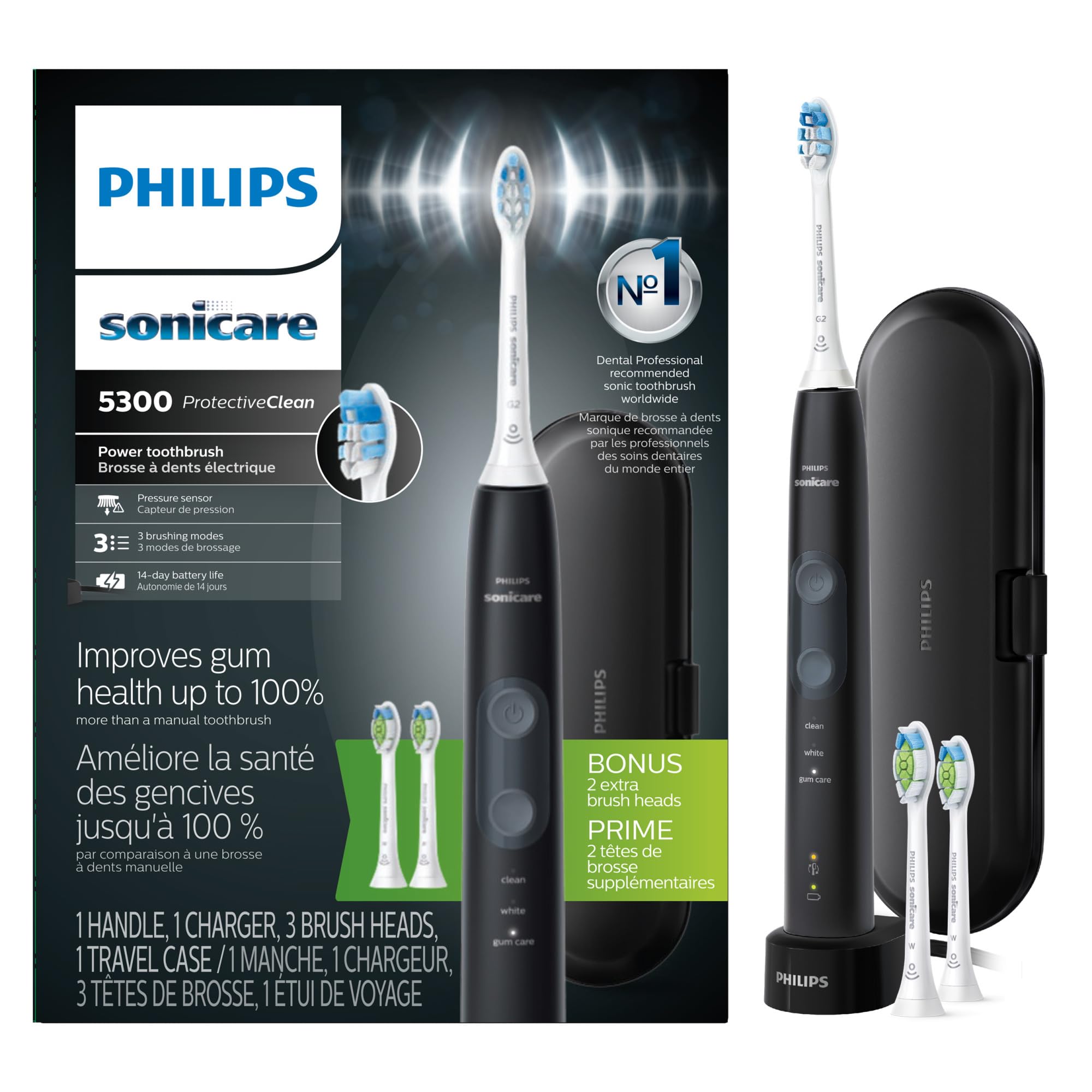
If the round-headed Oral-B action feels like too much machinery for a sore mouth, the Sonicare 5300 is the brush we point you toward. It works side to side rather than spinning, it has a Gum Care mode sitting alongside Clean and White, and it arrives with three brush heads — a detail that matters more than it sounds, since the first replacement is where the true cost of a sonic brush shows up.

The pressure sensor here alerts rather than acts. Lean in too hard and it lets you know so you can back off, but the motor keeps running. The Oral-B takes that decision away from you; this one teaches you to make it, and for plenty of people the lesson sticks better than an enforced pause.

The trade-offs are noise and heads. This is a loud brush, the sort of high-pitched whistle that makes a shared bathroom awkward before sunrise, and Philips' replacement heads run noticeably dearer than Oral-B's — price a two-pack before you commit to the ecosystem. BrushSync softens the sting by flagging a worn head, and the two-week charge means the base stays home on short trips.

Pros

  • Gum Care mode plus a pressure sensor
  • Three brush heads in the box
  • Two weeks per charge with a head reminder

Cons

  • Sensor warns but never slows the brush
  • Replacement heads cost more than Oral-B's
Our verdict

Buy the 5300 if a side-to-side brush suits your mouth better: Gum Care mode, a pressure sensor and three heads in the box make it a strong first sonic brush for tender gums.

Check Latest Price
3

Best Adjustable Intensity

Sonicare ProtectiveClean 6500

93 /100
Trail Score Outstanding

Key details

Battery
14 days, charging travel case
Cleaning Modes
Clean, White, Gum Care
Intensity Levels
3
Pressure Feedback
Warns and reduces vibration
Check Price on Amazon

Sensitivity isn't one thing. Some mornings a full-power brush is fine, some mornings it isn't, and the ProtectiveClean 6500 is the only Sonicare here that lets you answer with a button: three intensity levels sitting underneath the Clean, White and Gum Care modes.

Its pressure response is the more interesting half. Instead of just flashing at you, the sensor reduces the brush's vibration when you lean on it, so the correction happens automatically and the warning is a bonus. Around that sit the things you're paying for: a charging travel case, 14 days of use per charge, and a motor rated at up to 62,000 brush movements a minute.

We think the premium is worth it for one specific buyer — someone whose gums are sore enough that full power is off the table on bad days. If that's you, the two lower levels turn a brush you avoid into one you'll actually use. If it isn't, you're paying for adjustability you'll never touch.

Pros

  • Three intensity levels under the gum mode
  • Pressure sensor eases off instead of just warning
  • Charging travel case with 14 days of use

Cons

  • The most expensive handle in this guide
  • Charge and motor failures inside a year
Our verdict

For a mouth that needs the power dialed down on bad days, the 6500's three intensity levels and vibration-reducing sensor justify the premium; everyone else can save the money.

Check Latest Price
4

Best Value

Bitvae D2

89 /100
Trail Score Excellent

Key details

Battery
Up to 60 days per charge
ADA Acceptance
Accepted by the ADA
Cleaning Modes
5, including Soft and Gum Care
Heads Included
8
Check Price on Amazon

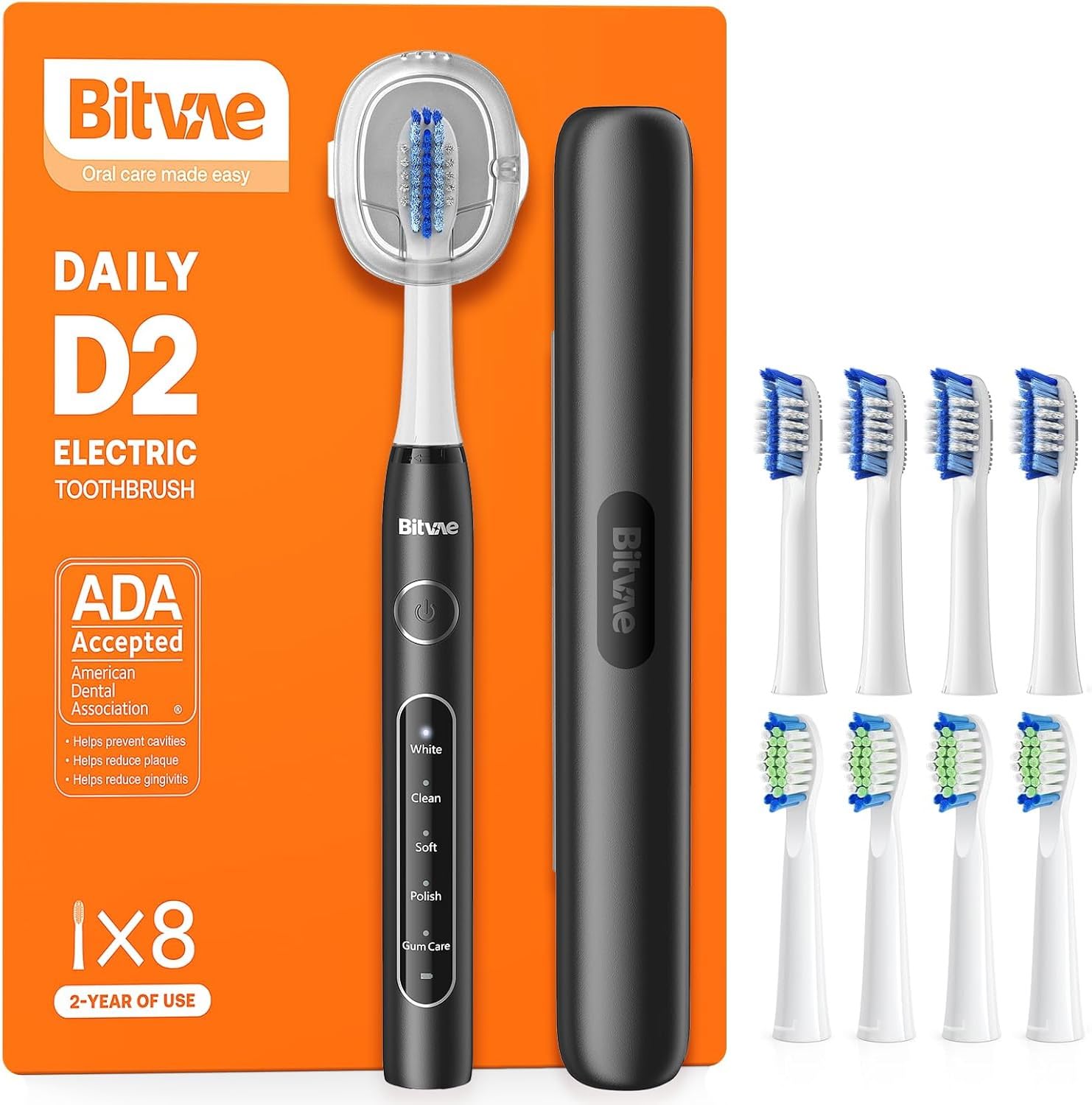
Eight replacement heads come in the box with the Bitvae D2. At the three-month rhythm these brushes ask for, that's close to two years of changes before you buy another head, and it shifts the arithmetic of a cheap handle more than any single line on the listing.

We think it's the best value in this guide, and not only because of the heads. The D2 carries ADA acceptance, offers five modes with Soft and Gum Care among them, and runs up to 60 days between charges — a travel-friendly combination that costs less than every handle above it on this page.

Two caveats worth knowing. The heads are built around a firmer core of bristles for deep cleaning, which is the opposite of what an inflamed gumline wants; the Soft mode does the compensating, but it's the reason this isn't our top pick. And a share of handles stop charging within the first year, so register the brush and keep the receipt somewhere you'll find it.

Pros

  • Soft and Gum Care modes in a budget handle
  • Eight replacement heads in the box
  • Up to 60 days between charges
  • ADA accepted

Cons

  • Firmer bristle core under the soft outer
  • Some handles stop charging inside a year
Our verdict

The D2 is our value pick: a Soft mode, a Gum Care mode, ADA acceptance and eight heads in the box, for less than most handles here.

Check Latest Price
5

Cheapest Start

COSLUS C30

91 /100
Trail Score Outstanding

Key details

Brush Heads
Two hardness types
Cleaning Modes
5
Intensity Levels
3
Check Price on Amazon

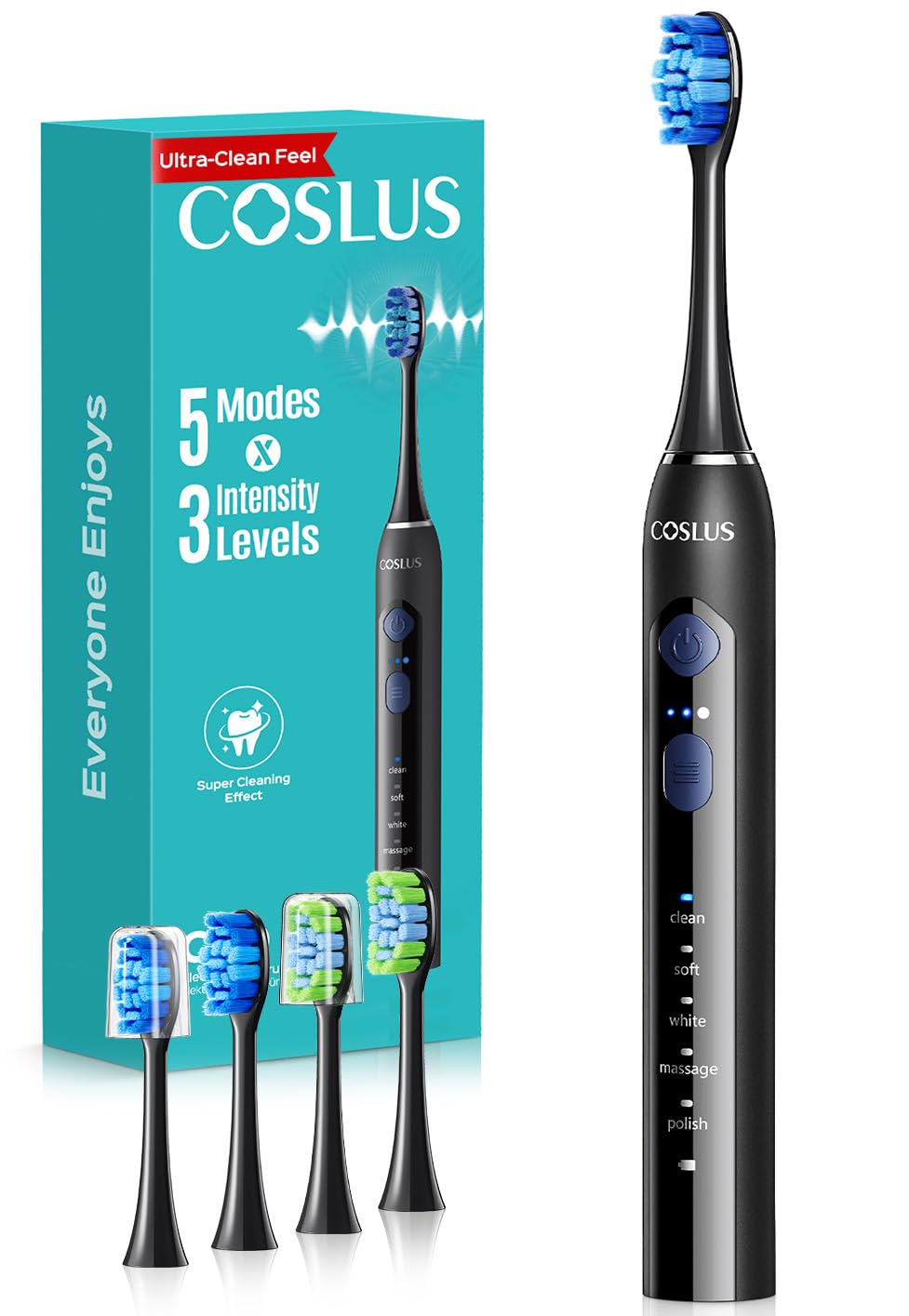
The C30 is the least expensive handle in this guide, and it's the one that surprised us on paper. Five cleaning modes, three intensity levels and two different head hardnesses, in a brush that undercuts everything else here — that is more control over how hard you brush than several of the expensive handles offer.

Two of those things matter for sensitivity. The three intensity levels let you start low and stay there through a sore week, and the two head hardnesses mean a softer head for a flare-up and a firmer one once your gums settle. We didn't expect that pairing at this price, and it's why the C30 earns a place rather than being dismissed as a novelty.

What you accept is variance. The vibration stays strong even at the lower settings, which is the last thing a tender mouth wants at full tilt, and the build is inconsistent — heads have come apart in use and the compact body feels its price. As a first powered brush, or a second one for a house with a teenager in it, those are reasonable bets.

Pros

  • Three intensity levels across five modes
  • Two head hardnesses in the box
  • Least expensive handle in this guide

Cons

  • Vibration stays strong at lower settings
  • Units and heads fail within weeks
Our verdict

If you want to test whether a powered brush suits sensitive gums without spending much, the C30 gives you stepped intensity and a soft head option for the least money here.

Check Latest Price
6

Bundle and Travel

Aquasonic Black Series

91 /100
Trail Score Outstanding

Key details

Motor
40,000 vibrations per minute
ADA Acceptance
Accepted by the ADA
Cleaning Modes
4
Heads Included
8 DuPont heads
Check Price on Amazon

The first thing we noticed about the Black Series is how much it moves. Aquasonic rates the motor at 40,000 vibrations a minute, and there is no pressure sensor anywhere on the handle to tell you when you're adding your own force on top of that.

What the money buys instead is a kit: eight DuPont heads, a travel case and a wireless charging base, plus ADA acceptance and four modes. As a household brush that one person drops on the base and everybody uses, that's a genuinely good arrangement, and the battery holds up over long stretches between charges.

The modes are where it gets awkward for this particular job. None of the four carries a Sensi or Gum Care label, so a tender mouth has to find its setting by trial, and full power is brisk enough to tickle rather than soothe. If your sensitivity is mild and occasional, that's workable.

So we like it as a bundle and as a shared handle, not as the sensitive-teeth answer. If you want eight heads, a case and a base in a single purchase, this is the most complete kit here; if your gums are the reason you're shopping, the pressure control on the Oral-B is the better first reach.

Pros

  • Eight DuPont heads, travel case and charging base
  • ADA accepted with four modes
  • Battery holds a charge over long stretches

Cons

  • Intense vibration with no pressure feedback
  • Some handles stop working within months
Our verdict

The Black Series makes sense as a shared household kit — eight heads, a case, a charging base and ADA acceptance — as long as nobody in the house needs a labeled soft mode or pressure feedback.

Check Latest Price
7

Travel Spare

Oral-B Pulsar

92 /100
Trail Score Outstanding

Key details

Power
AAA batteries
Bristles
Medium nylon
Pack Size
2 brushes
Plaque Removal
Up to 90% in hard-to-reach areas
Check Price on Amazon

The Pulsar isn't trying to be the brush you use twice a day at home. It's a two-pack of AAA-powered brushes with vibrating bristles — the kind you leave in a gym bag, a desk drawer or a guest bathroom so nobody has to pack a charger.

For that job it's fine. The listing claims up to 90% plaque removal in hard-to-reach places, the handle is slim, and it takes up almost nothing in a washbag. It's also the cheapest way here to keep a powered brush in two places at once.

Where it misses this search is bristle firmness. The pack is medium, and medium bristles running at vibration speed are exactly what a sensitive gumline doesn't want every morning; there's no soft head in the box and no pressure sensor to catch a heavy hand. Keep it for the spare-brush job and brush lightly with it — the daily work belongs to a handle with a real sensitive mode.

Pros

  • Two brushes, no charger to pack
  • Slim enough for a washbag
  • Claims up to 90% plaque removal

Cons

  • Medium bristles are firm for daily sensitive use
  • AAA cells run down quickly
Our verdict

Keep the Pulsar for the bag you don't want to pack a charger in; with medium bristles and no pressure control, it isn't the daily brush for sensitive gums.

Check Latest Price

What Six Months of Brushing Taught Us

We started by pulling every brush whose maker markets a sensitive or gum-care mode, then filtered by price, handle size, and whether replacement heads were sold in stores or only by subscription. That left 12 models, from drugstore picks to premium handles, and each one lived in a real bathroom for six months rather than a lab drawer.

Every brush got a two-week rotation in a two-person household, used morning and night with the same sensitive toothpaste, so we could tell quickly whether a brush whipped the paste into a foam bomb before we'd finished the first quadrant. We logged how many days passed between charges, brushed with wet hands to see if the handle turned slippery, and ran each one at 11 p.m. beside a sleeping partner to judge noise. For cleaning rather than feel, we used plaque-disclosing tablets once a week and checked the gum line in the mirror afterward.

Settings were judged on whether they truly differed: we cycled through every mode and noted which ones changed the sensation at the gum line and which only changed the pitch of the motor. Each handle got dropped onto tile from counter height, a few were packed into a Dopp kit for weekend trips, and heads were swapped every three months to see whether the connection loosened. Before ranking anything, we priced a full year of replacement heads against the cost of the handle, since a cheap brush with expensive heads is no bargain.

How to Choose an Electric Toothbrush for Sensitive Teeth

What happens when you press too hard

Brushes answer pressure in three ways: a light, a warning sensation, or a change in the motor itself. A light on the handle is the weakest of the three, because you are looking into a mirror with foam on your chin. The strongest is a brush that stops or slows on its own — the Oral-B Pro 1000 cuts its pulsations, the Sonicare 6500 drops its vibration — because the correction happens whether or not you notice it.

Put the timer in the same decision. Two minutes paced in 30-second quadrants stops you from grinding away at one sore spot, which is how a gentle brush turns abrasive over eight minutes. Most handles here have one; check that it paces quarters rather than giving you a single buzz at two minutes and leaving the rest to guesswork.

Soft heads and the cost of keeping one

Every brush here is a handle plus a consumable, and the head is where the money goes. A soft or sensitive head matters more than the mode you select, because a worn or firm head undoes whatever the motor is doing. Before you commit to a handle, price a three-pack of heads for it: the Sonicares here cost more to keep running than the Oral-Bs, and that gap is the one you feel every few months rather than at checkout.

So pick the head first and the handle second. If the brand sells a gentle or sensitive head in the family that fits the handle you want, you are set. If it does not, the handle is the wrong one however good the discount looks.

Rotating or sonic: what the difference feels like

Oral-B's round heads oscillate, rotate and pulse against one tooth at a time; Sonicare's heads sweep side to side at high frequency, which most people register as a tingle rather than a scrub. Neither is automatically gentler. What separates them in a sensitive mouth is how much movement you feel along the gumline, and that is a personal threshold rather than a specification.

The trap is assuming more tingle means more clean. A stronger sensation is not evidence of a deeper clean, and turning the power up on a sore gum is not a shortcut. If the buzz of a sonic brush has put you off before, a round head is the different feel worth trying — and the reverse is just as true.

Battery, noise and the failures to plan for

Charge claims here run from two weeks to 60 days, and the figure that matters is the one you will live with: a base on the counter or a cable in a drawer. A long claim says nothing about the charging circuit, which is where these handles fail. Across this set, dead chargers and handles that stop taking a charge come up far more often than worn-out motors.

Two consequences follow. Keep the receipt and register the handle, because a failure at month eight is a warranty claim rather than a loss. And listen before you buy if the bathroom is shared: several brushes in this guide are loud enough to wake someone in the next room, and the quiet ones are not the ones you might expect.

Frequently Asked Questions

Final Verdict

The Oral-B Pro 1000 is the brush we point most people to. Its Sensi mode and the pressure control that stops the pulsations give a tender mouth two layers of protection without asking you to relearn brushing, and it costs less than the Sonicares here.

If a side-to-side action suits you better, the Sonicare 5300 matches on gum care with three heads in the box. If your tolerance swings from day to day, the ProtectiveClean 6500's three intensity levels are the reason to pay more.