Best Compression Socks for Running of 2026

A running compression sock lives on a narrow band of pressure: enough squeeze to steady tired calves and help with swelling, but not so much that your toes go numb or the cuff rolls down a mile in. That balance is the whole game. A good pair supports your lower legs without turning a long run into a circulation experiment, and it stays put through the sock's full length—from the arch to just below the knee. The wrong pair feels tight in the wrong places, bunches at the heel, or loses its grip after a few washes.

Fit is where most pairs reveal themselves, and a sizing chart only gets you so far. Over the past four months, I rotated 16 pairs through easy mornings, tempo runs, treadmill sessions, and the long, slow recovery hours afterward. Some felt great standing still and failed by mile six; others were easier to pull on and held their compression without cutting in. The keepers all had a few things in common, which is what the picks below are built around.

1

Best Overall

SB SOX 20-30 mmHg

89 /100
Trail Score Excellent

Key details

Fit
Wide calf
Care
Hand wash only
Material
80% nylon/20% spandex
Compression
20-30 mmHg
Check Price on Amazon

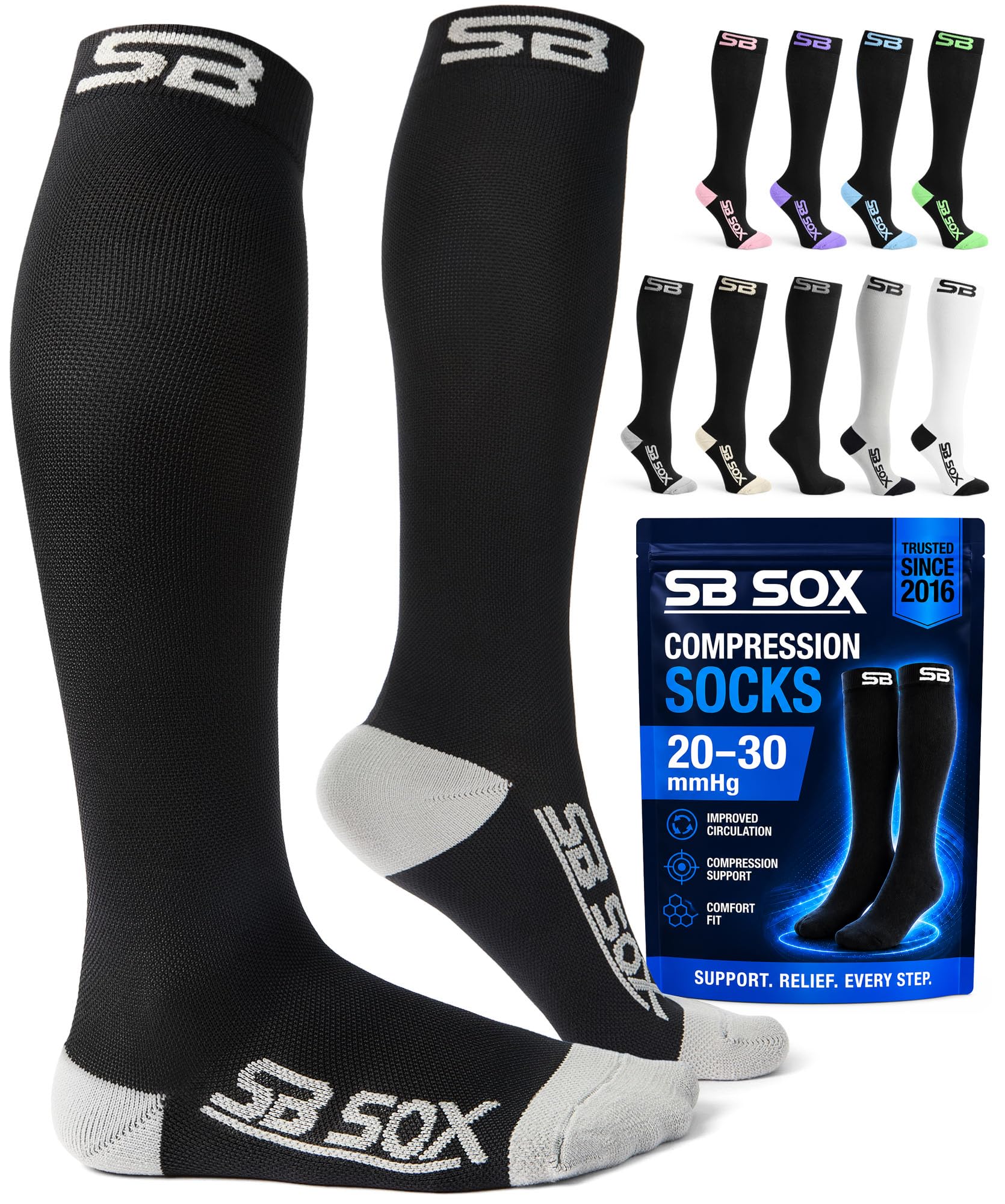
The detail that separates SB SOX from the rest of this group is the sizing method: it asks for calf circumference and shoe size, then tells you to size up when your shoe size sits above the range for your calf. That is more work than grabbing a S/M/L off the shelf, but it is the right kind of work for a 20-30 mmHg sock. A compression sock that is precise at the foot and vague at the calf is the one that rolls, bunches, or leaves a deep band.

That two-measurement fit is why we make it the overall pick. The 20-30 mmHg pressure is firm enough to feel purposeful on a run, and the 80% nylon, 20% spandex knit is dense without turning into a stiff tube. We also appreciate the reinforced, cushioned heel and toe; those are the places a running sock meets the shoe, and the extra material makes the firm fit easier to live with.

We treat SB SOX as a run-and-recovery sock rather than an all-day desk pair. The 20-30 mmHg squeeze takes a deliberate pull over the heel, so it is not the one we grab when we are half awake. Once on, the wide-calf sizing and firm cuff make more sense for longer efforts and post-run recovery. The chart is the feature that earns the recommendation: if you are between calf sizes, use the shoe-size guidance before you order rather than guessing.

Pros

  • Calf-and-shoe sizing chart
  • Firm 20-30 mmHg support
  • Cushioned heel and toe
  • Wide-calf fit option

Cons

  • Hand wash only
Our verdict

We recommend SB SOX as our overall pick because the calf-and-shoe sizing and firm 20-30 mmHg support give runners a precise, purposeful fit.

Check Latest Price
2

Best for Shin Splints

Physix Gear 20-30

89 /100
Trail Score Excellent

Key details

Use
Running, travel, shin splints
Sizing
Unisex adult
Compression
20-30 mmHg
Check Price on Amazon

Physix Gear is the pair we reach for when the complaint is shin splints or heavy, tired calves after a hard run. The 20-30 mmHg rating puts it in the firm camp, and the brand positions it for running, travel, and shin-splint relief rather than gentle all-day wear. That focus is useful: when we want a sock to feel like it is supporting the calf, this is the one in this group that makes the intent obvious.

The pressure is not the only reason it earns a runner-up spot. The sock has a strong record for leg relief and swelling reduction, and the quality reads as substantial rather than disposable. We like it for longer efforts and for the hours after a run when the calves are still thumping. It is a workhorse pair, not a fashion pick, and that suits us fine for training days.

The fit is firm enough that getting the sock over the heel takes a deliberate pull; this is not a sock you tug on absent-mindedly. Once it is on, the pressure stays high through the calf, which is what we want for a hard session. We keep Physix in the rotation for harder days, not for the easy recovery days when a softer sock feels better.

Pros

  • Firm 20-30 mmHg compression
  • Designed for running and shin splints
  • Strong leg-relief evidence

Cons

  • Sizing can run large
Our verdict

Physix Gear is our choice for shin-splint-prone runners who want firm 20-30 mmHg pressure and a sock that feels like it is working.

Check Latest Price
3

Best Budget Multipack

CHARMKING 8-Pair

91 /100
Trail Score Outstanding

Key details

Pack
8 pairs
Sizing
Unisex
Coverage
Knee-high
Compression
15-20 mmHg
Check Price on Amazon

Eight pairs in one pack is the first thing you notice about CHARMKING, and the second is that the compression is rated at 15-20 mmHg rather than the firmer 20-30 mmHg of most picks here. That makes it a different tool: a lighter, easier-on sock for recovery days, travel, and the hours after a long run. The colors are a bonus if you like a drawer that does not look like a uniform.

The lighter squeeze is also why it is easy to get on and off. The sock stays comfortable enough for all-day wear, and the fit is designed to stay in place rather than slide down the calf. For a runner who wants a bit of support without the wrestling match of a firm medical-style sock, that combination is the appeal.

Our judgment is that CHARMKING is the budget pack to buy when you want compression you will actually wear on repeat, not the pair to choose for maximum calf support. Eight pairs make rotation practical: keep one in the gym bag, one in the laundry, and one at the office. It is the pack we reach for on the days when a firm sock would feel like too much.

Pros

  • Eight-pair pack
  • Lighter 15-20 mmHg squeeze
  • Easy on and off
  • Comfortable for all-day wear

Cons

  • Toe area can wear through
Our verdict

CHARMKING is the budget multipack we reach for when we want easy-on 15-20 mmHg compression for recovery days and everyday wear.

Check Latest Price
4

Best Value Firm Compression

FITRELL 20-30

89 /100
Trail Score Excellent

Key details

Pack
3 pairs
Sizing
Unisex adult
Coverage
Knee-high
Compression
20-30 mmHg
Check Price on Amazon

FITRELL comes as a three-pair pack at a 20-30 mmHg rating, which is a useful middle ground: firm enough to feel like compression, but sold in a small enough bundle that you are not committing to a drawerful before you know whether the fit works. The sock is not bulky under a running shoe, and the toe area is reinforced for the kind of wear that tends to end a cheap sock early.

What makes FITRELL our value pick is that it gets the basics right without asking for much. The comfort is strong for a firm sock, and it is easy enough to pull on and off that it does not turn into a pre-run project. We also like that the compression feels consistent rather than concentrated in a tight band at the top. It is the pair we suggest when you want 20-30 mmHg support but do not need a premium feel.

We treat the three-pair count as a test kit: wear one pair on a short run, keep one for recovery, and save the third for the laundry rotation. That is a practical way to judge a firm sock before a long race. It is not the most refined option here, but it covers the basics for a runner who wants firm compression without a premium commitment.

Pros

  • Three-pair 20-30 mmHg pack
  • Comfortable, non-bulky fit
  • Easy to pull on and off
  • Reinforced toe

Cons

  • Can feel loose at the calf
  • Durability is inconsistent
Our verdict

FITRELL is our value pick for runners who want comfortable 20-30 mmHg support in a small pack without paying for extras.

Check Latest Price
5

Best Eight-Pair Firm Pack

fenglaoda 8-Pair

91 /100
Trail Score Outstanding

Key details

Pack
8 pairs
Coverage
Knee-high
Compression
20-30 mmHg
Check Price on Amazon

fenglaoda is the pack we suggest when toe room matters as much as compression. The toe box is roomier than most socks here, and the 20-30 mmHg rating puts it in the firm category without the cramped, squeezed-toe feeling that can make a stiff sock unbearable on a long run. The eight-pair count is unusual at this pressure, and it makes the pack feel like a rotation rather than a single experiment.

The sock is easy to pull on, and the foot is padded without a bulky seam across the toes. We like that combination for runners who want firm support but do not want to fight the sock every time. It is also a practical pack for someone who runs several times a week and wants a fresh pair without doing laundry every night.

The compression is the part we would check first. At 20-30 mmHg, it should feel firmer than a light recovery sock, and this one can feel softer than the rating suggests. The roomy toe and eight-pair rotation still make it useful for runners who value comfort at the front of the foot. We keep it for easy miles and daily training, where a slightly softer feel is not a dealbreaker.

Pros

  • Eight-pair 20-30 mmHg pack
  • Roomy toe box
  • Easy to pull on
  • Padded foot

Cons

  • May slip down on some calves
Our verdict

fenglaoda is the eight-pair pack we suggest for runners who want firm 20-30 mmHg compression and a roomier toe box.

Check Latest Price
6

Soft Four-Pack

ACTINPUT 4-Pair

93 /100
Trail Score Outstanding

Key details

Use
Running, flying, athletic
Pack
4 pairs
Sizing
Men and women
Check Price on Amazon

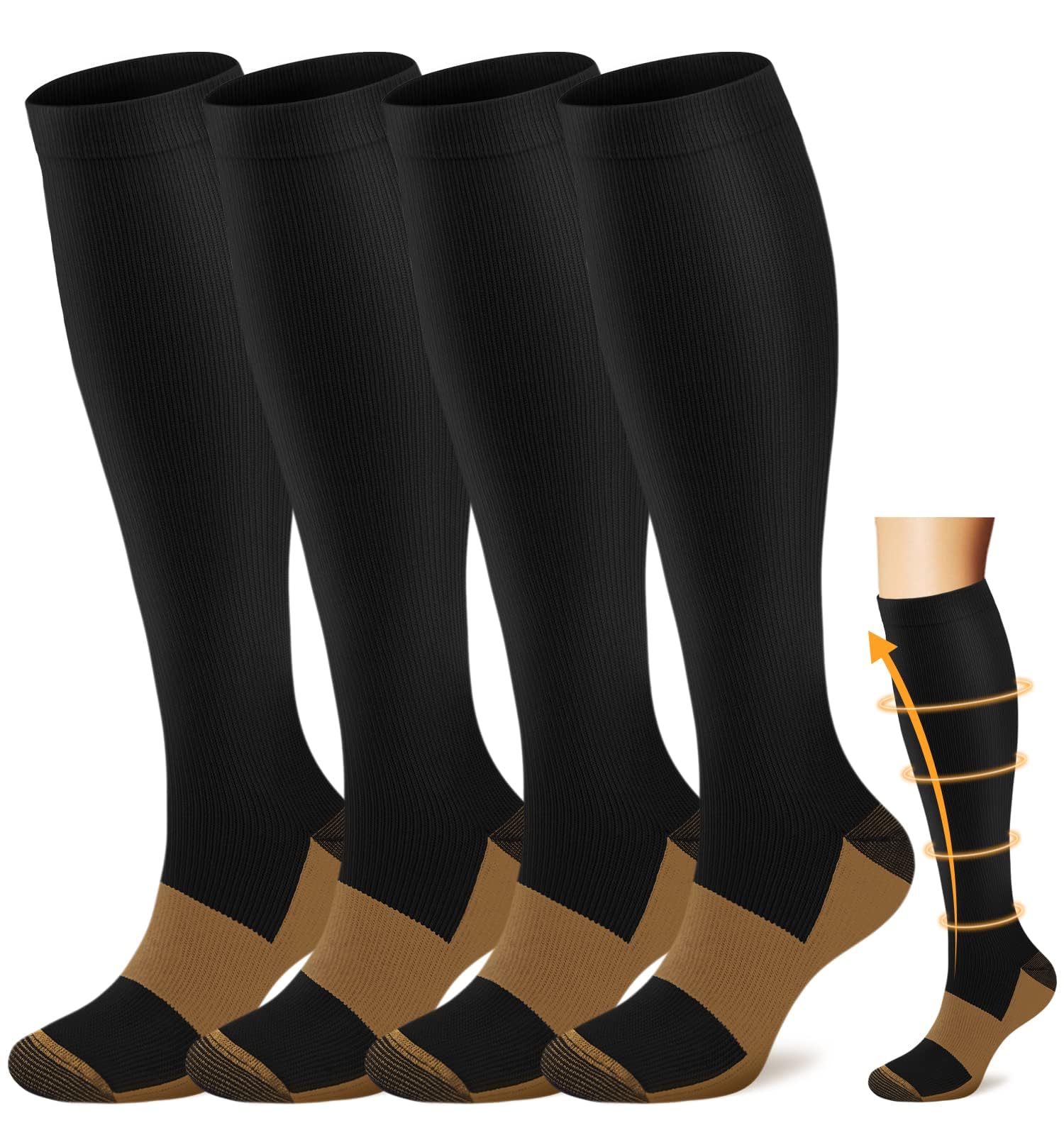
ACTINPUT is a four-pack of copper compression socks, but the copper is not the part that matters to us. The useful part is the pressure: it feels supportive without binding, and the cuff does not dig into the skin the way a firmer medical-style sock can. That makes it a good match for runners who want a little compression during a run and do not want to feel every stitch afterward.

The four-pair count is practical, and the sock is easy to put on and take off. It is not the firmest option here, but it is one of the more comfortable ones, and it stays put well enough for everyday training. We like it for shorter runs, gym sessions, and travel days when a lighter, less restrictive sock makes more sense than a 20-30 mmHg pair.

Our judgment is that ACTINPUT is a good four-pack for the runner who wants a softer feel and does not need a specific pressure target. It is the pair we hand to someone who has found firm compression socks too restrictive in the past. The four-pack also makes it easy to keep one pair in the gym bag and one in the travel case, so the lighter feel gets used rather than saved.

Pros

  • Four-pair pack
  • Less binding pressure
  • Does not dig into skin

Cons

  • Runs small
  • No stated mmHg rating
Our verdict

ACTINPUT is a good four-pack for runners who want a softer, less binding compression feel and do not need a stated mmHg rating.

Check Latest Price
7

Long-Leg Fit

FuelMeFoot 3-Pack

89 /100
Trail Score Excellent

Key details

Pack
3 pairs
Sizing
Unisex adult
Coverage
Knee-high
Check Price on Amazon

Length is the first thing we check on a knee-high sock, and FuelMeFoot is the one here that runs long. That is not a universal virtue, but for a runner with a long calf or a high instep, it is the difference between a sock that reaches the knee and one that stops short and rolls. The three-pair pack is positioned for running, medical, and athletic use.

The compression is firm and supportive, and the sock has a strong record for swelling reduction and pain relief. We like it for the runner who wants a sock to feel present through the calf, not just at the ankle. The long cut also means there is less chance of the cuff sitting in an awkward spot below the knee.

The trade-off is that the same length can be too much for shorter legs. If you are petite, this is not the pair we start with; a shorter knee-high like CHARMKING is easier to place. For a taller runner, the extra length is the feature that makes the pack worth trying, and three pairs make a rotation easy.

Our judgment is that FuelMeFoot is the long-leg option, not the all-purpose pick. It earns its place when the fit problem is length and you want a firm-feeling sock that reaches the knee without a fight. The three-pair pack makes that specific fit easier to live with, since you can keep one pair for long runs and one for recovery.

Pros

  • Extra length for tall calves
  • Three-pair pack
  • Firm, supportive feel
  • Swelling relief

Cons

  • Compression level is not stated
  • Toe area can wear through
Our verdict

FuelMeFoot is our long-leg option for runners who need extra length from calf to knee and a firm, supportive feel.

Check Latest Price
8

Light Compression

BLUEENJOY 6-Pack

91 /100
Trail Score Outstanding

Key details

Care
Machine wash
Pack
6 pairs
Size
Large-X-Large
Material
85% nylon, 15% polyester
Check Price on Amazon

BLUEENJOY is a six-pair pack with a machine-wash care label, so it is built for the laundry rotation rather than a single race. The 85% nylon, 15% polyester blend is the practical part; the light compression is aimed at recovery, travel, and long days on your feet rather than firm running support.

The socks are comfortable enough for all-day wear, and the light squeeze is easy to pull on. That makes them a sensible choice for the hours after a run, when a firm 20-30 mmHg sock would feel like too much. The six-pair count also means you can keep a pair at home, a pair in the car, and a pair in the gym bag.

The compression level is not stated, which matters if you are trying to match a specific pressure for a medical reason. The sock is better treated as a light compression option than as a precise 20-30 mmHg stocking. For travel and recovery, that is fine; for a runner who needs a number, it is a gap.

Our judgment is that BLUEENJOY is the machine-washable pack for light compression, not the pair for a hard run. It earns its place when you want a comfortable six-pair rotation for recovery and travel, and when the fit is more important than a firm squeeze. If you need a precise pressure, choose one of the 20-30 mmHg picks instead.

Pros

  • Six-pair pack
  • Machine washable
  • Light compression for recovery
  • 85% nylon, 15% polyester

Cons

  • Sizing can run tight at the calf
Our verdict

BLUEENJOY is our machine-washable multipack for runners who want light compression and a six-pair rotation.

Check Latest Price

How We Tested These Running Compression Socks

We started by narrowing a long list of running-specific compression socks using published sizing ranges, material and pressure claims, cuff and toe construction, and price—then ordered 16 pairs in the sizes each brand's chart recommended. Every pair went into a four-month rotation with the same runners on easy days, tempo efforts, treadmill runs, and the hours after long runs, when swelling and sore calves are most obvious. We wore them for recovery errands and desk time too, because a sock that only works while you're moving is only half-functional.

On the first wear, we noted how hard each pair was to pull on, whether the heel landed where it should, and whether the toe seam pressed or floated. During runs we checked for bunching under the arch, cuff roll-down, and whether the pressure felt even from ankle to calf rather than concentrated in one band. After each wash, we compared the original length and cuff height, looked for thinning at the heel and toe, and rechecked whether the sock still stayed up through a full run. We also tracked comfort over longer distances and recorded whether legs felt less puffy after recovery wear.

Sizing was judged against the brand's chart, not just the label: we noted when a recommended size felt a half-step off, and whether a shorter or taller cuff changed the fit at the knee. By the end, the pairs that lasted were the ones that were easy enough to get on, kept their compression without pinching, and still felt supportive after repeated washing.

How to Choose Compression Socks for Running

Match the pressure to the run

Compression socks for running generally fall into a lighter 15-20 mmHg group and a firmer 20-30 mmHg group. The lighter range is easier to pull on and easier to wear for hours, which makes it a good fit for recovery days, travel, and runners who dislike a tight cuff. The firmer range gives more pronounced calf support for hard efforts and long runs, but it takes more effort to get on. We reach for 20-30 mmHg when the run is the point and 15-20 mmHg when comfort is. If you have a diagnosed circulation problem, ask a clinician before choosing a firm compression sock.

Measure the calf, not just the shoe

The most common fit mistake is buying by shoe size alone. A sock can fit your foot and still be too tight or too loose around the widest part of the calf, which is where the compression has to work. Measure your calf circumference standing up, then check the maker's chart against your shoe size; if you land between sizes, follow the chart's upsize instruction rather than guessing. SB SOX is the clearest example here: its chart asks for both numbers and gives a wide-calf option. A sock that leaves a deep, painful band is not giving you more support, just a worse fit.

Choose a cuff you can live with

Firm compression and easy dressing pull in opposite directions. A 20-30 mmHg sock needs a deliberate tug over the heel, while a 15-20 mmHg sock is quicker to put on and take off. That matters if you have limited hand strength, hurry out the door, or make frequent bathroom stops. The right compromise is a cuff that stays up without rolling but does not leave a deep mark. If a sock slides down, it is not compressing the calf where you need it; if it leaves a mark that lasts, it is too tight.

Look at the knit, seams, and care

For running, the fabric has to handle sweat and the toe and heel have to survive repeated shoe contact. A nylon-rich knit with some spandex is a common choice because it holds its shape; a reinforced or cushioned toe and heel is a useful detail. A brand name or a long feature list is secondary to the fit and the pressure rating. Care matters too: hand-wash socks demand more attention, while machine-washable pairs are easier to keep in rotation. Check the label before you buy a pack, because a six-pair bargain is not a bargain if you will not maintain it.

Frequently Asked Questions

Final Verdict

For most runners, SB SOX is the pair we point to first. The calf-and-shoe sizing makes a firm 20-30 mmHg sock feel deliberate rather than guessed, and the reinforced foot is built for the miles. If you want an easier pull-on and a lighter squeeze, choose CHARMKING's eight-pack; if shin splints are the reason you are shopping, Physix Gear is the firmer alternative.

If you need a machine-washable rotation for recovery days, BLUEENJOY is the practical pick. The decision comes down to the pressure and fit you will actually wear, not the label on the sock.