Best Blue Light Glasses of 2026

The first pair of blue light glasses I ever wore came off a drugstore rack at 11 p.m., mid-spreadsheet, when my eyes had gone gritty and my head was starting to throb. What that cheap pair taught me is that these lenses do two jobs: they soften the harsh, cool-toned glare a screen throws at you after dark, and they give your eyes a break from the dry, strained feeling that comes from staring at a fixed distance for hours. The right pair does both without making you look like you borrowed someone's safety goggles.

I've worn dozens since, but this round was structured: 14 pairs over four months, through full workdays and late-night reading. The lesson that surprised me most is that a visible amber tint tells you almost nothing about how much blue light a lens actually filters. Fit and looks matter nearly as much, because a pair you don't want to be seen in ends up in a drawer. The ones below earned a permanent spot beside my keyboard.

1

Best Overall

ANRRI Blue Light Glasses

91 /100
Trail Score Outstanding

Key details

Weight
0.63 oz
Lens Tint
Clear
Frame Width
143 mm
Frame Material
Areolite
Check Price on Amazon

The lenses are the reason this pair sits at the top. Most blue light glasses here push the world toward amber or yellow; ANRRI's stay close to clear, with a slight warm cast at most and nothing that changes how a spreadsheet or a photo looks. If your day moves between email, documents, and video calls, that neutrality is worth more than a stronger filter — it's the first thing we check on any pair we're asked to recommend. At 18 grams the frame disappears: light on the nose, light at the temples, easy to forget by mid-morning.

The shape is a classic square, 143 mm across, which is a medium fit and lands where most adult frames do. Check that number before you order: measure a pair you already wear comfortably across the front, hinge to hinge, and stay within a couple of millimeters. The flexible Areolite material gives at the temples, which buys some forgiveness, but it isn't a wide frame and it won't seat over a prescription pair.

Durability is where the design thins out. The frame flexes comfortably, but the arms are the part that can give way, and a light plastic hinge is the wrong place to expect years of hard use. ANRRI's lifetime warranty is the sensible hedge — it turns a broken arm into a replacement rather than a loss, and it's why we're comfortable putting these first even though the weakest point is the part you handle every day.

Pros

  • Clear lenses with almost no color shift
  • 18-gram frame stays unnoticed for hours
  • Lifetime warranty on the frame
  • Classic square shape reads as ordinary eyewear

Cons

  • Medium 143 mm width only
Our verdict

We recommend these as the default pair for desk work: clear lenses, an 18-gram frame, and a lifetime warranty behind the parts that wear.

Check Latest Price
2

Best Multi-Pack Value

Gaoye 3-Pack Blue Light Glasses

89 /100
Trail Score Excellent

Key details

Lens Tint
Amber
Lens Width
52 mm
Frame Width
140 mm
Pairs Included
3
Check Price on Amazon

A 52 mm lens in a 140 mm frame makes this the most compact set here, and it's the first thing to know about it. On a narrow face the fit lands well — no pressure at the temples, no sliding — and the smaller proportions are why these turn up on teenagers as often as adults. On a broad face, expect the arms to splay and the lenses to sit a little close.

Three pairs is the whole point, and it's why we keep recommending this pack over a single nicer frame. One pair lives in the laptop bag, one stays by the monitor, and the third is wherever you left it; that's a more useful arrangement than owning one pair you have to remember to carry. The amber lenses filter more aggressively than the clear options, which is a visible difference — and a real trade-off, because a white page picks up a warm cast next to a white wall.

Two details we didn't expect to like as much as we do. The lenses are designed to come out, so an optician can fit prescription lenses into a frame you already own rather than selling you a second pair of glasses. UV400 coverage is stated for the lenses too, which matters when a pair migrates to the car or the garden. Neither turns these into a premium frame; both make the pack easier to justify.

Pros

  • Three pairs for desk, bag, and travel
  • Compact 140 mm frame suits narrower faces
  • Amber lenses with UV400 coverage
  • Lenses can be swapped for prescription ones

Cons

  • Soft pouches instead of hard cases
Our verdict

Three pairs, a compact fit, and amber lenses: this is the pack we hand to anyone who wants a pair at every desk without thinking about it.

Check Latest Price
3

Best for the Whole Household

MIGSIR 6-Pack Blue Light Glasses

93 /100
Trail Score Outstanding

Key details

Colors
Six assorted
Frame Material
Flexible plastic
Pairs Included
6
Check Price on Amazon

Six pairs in six colors answers one specific household problem: everybody is on a screen, nobody owns their own glasses, and the good pair keeps walking off. Assign a color per person and the argument ends. We like that far better than one premium pair shared three ways, because glasses that live on the right desk actually get worn — and these are inexpensive enough, and flexible enough, that nobody has to be precious with them.

The frames are light, the plastic flexes rather than cracks, and the width covers more faces than the price suggests — including over a slim pair of reading glasses, which is where most over-glasses attempts fall apart. The colors do more practical work than you'd expect: a pink pair parked by the kitchen laptop and a black pair at the office are easier to keep track of than two identical frames.

The lenses collect fingerprints and want a wipe before every session, which is the small tax on a coated lens in a flexible frame. Beyond that, the pack does what it promises. Our advice is to leave a pair wherever you actually sit rather than carrying one between rooms — the entire point is not having to remember anything.

Pros

  • Six color-coded pairs for a shared household
  • Flexible frames tolerate bags and couches
  • Wide enough to wear over slim reading glasses

Cons

  • No hard cases in the pack
Our verdict

The six-pack is our answer to a shared household — six colors, flexible frames, and enough pairs that nobody borrows yours.

Check Latest Price
4

Best for Gaming

Gamma Ray Amber Gaming Glasses

91 /100
Trail Score Outstanding

Key details

UV
UV protection
Coating
Anti-glare
Lens Tint
Amber
Check Price on Amazon

The amber lens is the entire personality of this pair. Put them on and the room warms up — whites go cream, blues go muddy — which is exactly right for a late session in a dark room. It's also the clearest demonstration in this group of what a tinted lens actually does: you can watch the screen change color instead of taking a filter claim on faith.

The frame is wide, and that's the second reason it earns a spot: it's the most realistic pair here for wearing over a slim set of prescription glasses, because the earpieces sit outside your temples instead of pressing on them. Build quality is basic plastic doing a basic job. Nothing about the frame feels premium, and nothing about it feels fragile either.

Where these win is the use case. They're the pair to keep next to the console, ready when you sit down, with a wide frame that goes over the glasses you already wear. Buy them for the tint and the width. The plastic is honest rather than lovely, and the anti-glare coating is doing quieter work than the amber color is.

Pros

  • Amber lens visibly cuts screen glare
  • Wide frame sits over slim prescription glasses
  • Basic build keeps the price low

Cons

  • Amber cast rules out color-accurate work
Our verdict

We keep this pair at the gaming desk, where the amber lens and wide frame do their best work and the color shift doesn't matter.

Check Latest Price
5

Best Round Frame

Gaoye Round Metal Blue Light Glasses

89 /100
Trail Score Excellent

Key details

Hinge
Spring hinge
Lens Tint
Amber
UV Rating
UV400
Frame Material
Metal
Check Price on Amazon

A round metal frame does most of the work here: these read as a pair of glasses you chose rather than a pair you were issued. The rims are thin, the shape is retro without tipping into costume, and the spring hinges open about 15 degrees past flat, which keeps the temples off a wider head.

Metal usually announces itself on the bridge of the nose by the end of the day. This one doesn't, and that's the surprise — it's the pair we reach for when we want to look like we aren't wearing screen glasses at all. The amber tint is close to clear in normal light, so you can wear them into a meeting without comment, though white walls go slightly warm under office lighting.

The fit runs generous. On a narrow face the frames sit loose at the temples, and no amount of hinge travel fixes that, so measure against a pair you already own before you commit — this is the one pick here where going a size down would help. Everything else about the frame holds up, including the finish on the rims.

Pros

  • Round metal frame looks like everyday eyewear
  • Spring hinges ease pressure on wider heads
  • Amber tint stays close to clear indoors

Cons

  • Temples bend more than they should
Our verdict

Our pick when you want blue light glasses that pass as real eyewear — the round metal frame and spring hinges look better than they cost.

Check Latest Price
6

Best Complete Kit

FONHCOO Round Blue Light Glasses

91 /100
Trail Score Outstanding

Key details

Lens
Polycarbonate
Hinge
Spring hinges
Included
Case, pouch, cloth, screwdriver
Frame Material
TR90
Check Price on Amazon

Open the box and there's more than glasses inside: a hard case, a soft pouch, a microfiber cloth, and a screwdriver sized for the hinge screws. It sounds like filler until a hinge works loose, and then it's the difference between a two-minute fix and a pair that ends up in a drawer.

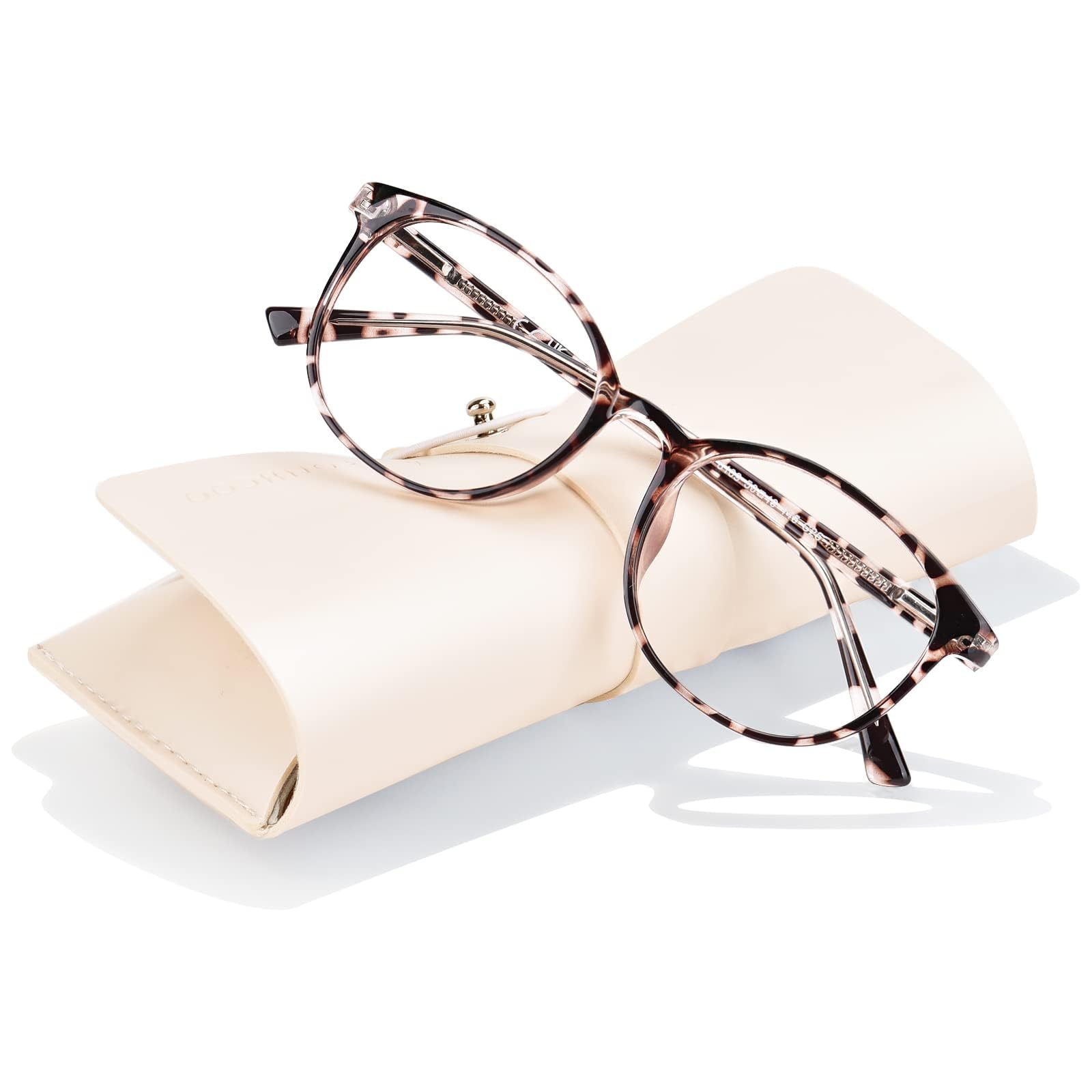
The frame is TR90, a flexible plastic that bends rather than cracks, shaped into a round tortoise design with spring hinges that take pressure off the temples. The lenses are polycarbonate with an anti-scratch layer. None of that is exotic — it's simply the right set of materials for something you'll fold and unfold every day.

Sizing is the thing to get right. The round shape and TR90 width suit smaller and average faces; on a broad one, the spring hinges take some pressure off but the frame still sits narrow. In that sense it's the mirror image of the wide gaming pairs here, which is useful if you've been swimming in everything else.

What tips it for us is the finish. The case closes properly, the cloth is big enough to be useful, and the tortoise frame looks more like eyewear than the colored plastic packs do. It's the pair to buy for someone else, and the pair to keep if you want one set that arrives complete and stays that way.

Pros

  • Complete kit with hard case and screwdriver
  • Spring hinges ease temple pressure
  • TR90 frame bends without cracking

Cons

  • Sized for smaller and average faces
Our verdict

Buy this one for the finish: a hard case, a cloth, a screwdriver, and a tortoise frame that feels more considered than most plastic pairs here.

Check Latest Price
7

Budget First Pair

livho Blue Light Glasses

88 /100
Trail Score Excellent

Key details

UV
UV protection
Weight
0.8 oz
Frame Material
Nylon
Check Price on Amazon

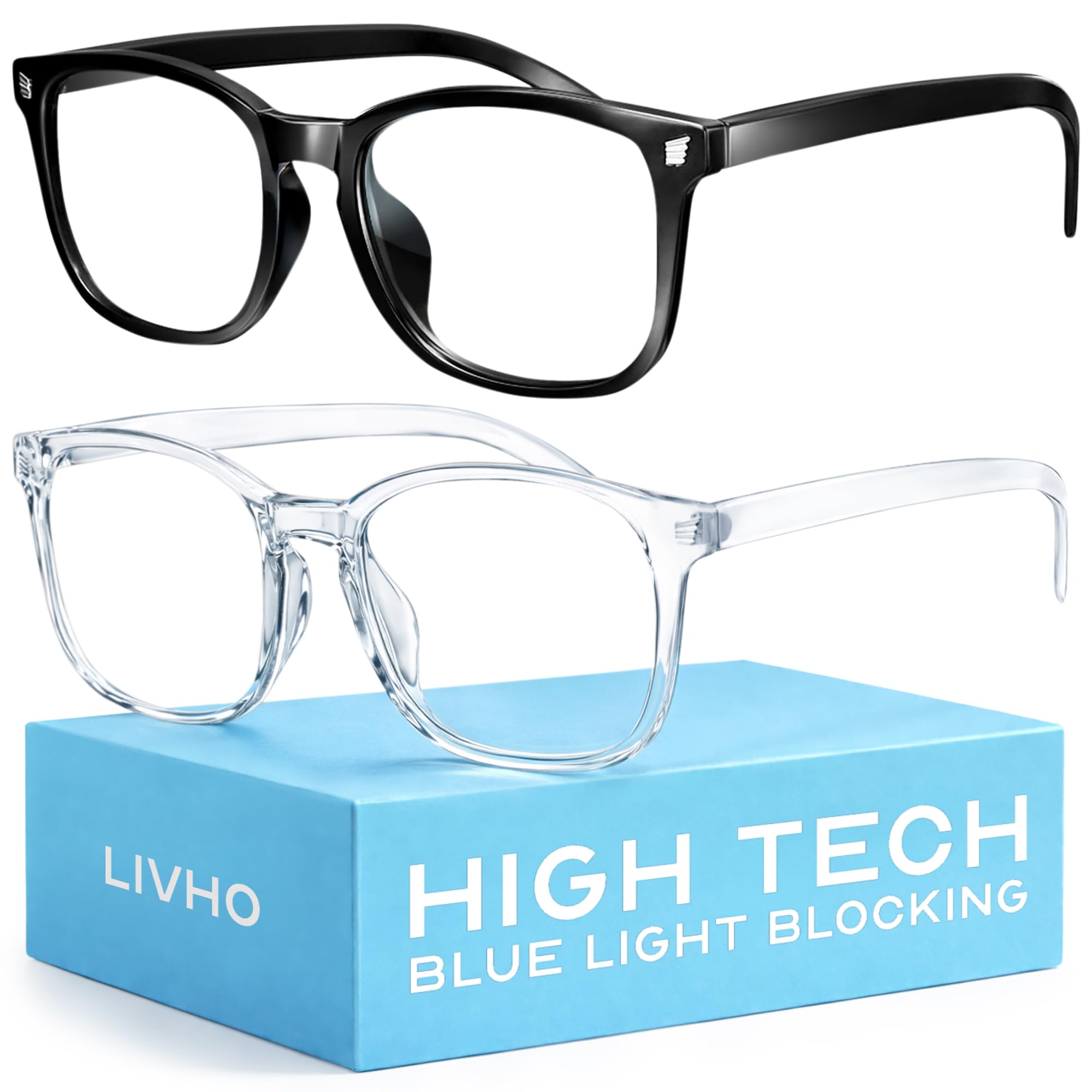
These run wide, and that single fact decides most of it. On a broader head there's no pinching at the temples and no sliding down the nose; on a narrow face the frame sits loose, the lenses ride low, and adjusting the arms doesn't fix it. Two people can put on the same pair and disagree completely about whether they fit.

The nylon frame is light enough to forget and flexible enough to survive a bag, and the shape is an ordinary soft rectangle that doesn't announce itself at a desk. Where this pair earned its following is long wear: the arms stay off the pressure point behind the ears, which is exactly where heavier frames start to ache by mid-afternoon.

What we can't settle for you is the filter. Clear lenses at this price depend on a coating you can't judge by looking, so run the UV-light test in our buying guide the day they arrive — shine it through the lens at white paper and watch for the spot to darken. If it does, you have a light, comfortable pair for very little. If it doesn't, the width is still right for a broad face.

Pros

  • Light nylon frame for long days
  • Wide fit for broader faces
  • Comfortable around the ears

Cons

  • Filter strength is inconsistent
Our verdict

Worth trying if you have a broad face and want to find out cheaply whether blue light glasses help you at all.

Check Latest Price

How We Tested the Best Blue Light Glasses

We started with every pair we could find that published real blue-light specs rather than vague claims, then narrowed by lens material, frame weight, price, and whether the company would take them back if the fit was wrong. That left 14 pairs, which we wore for four months.

To see what each lens was actually filtering, we shined a blue-light pen through it onto a detection card and compared how much of the spot disappeared. Then came the part that matters more: full workdays in front of two monitors, plus a deliberate 90-minute evening session with a phone held too close to the face. We noted when eyes turned dry, when a headache crept in around 9 p.m., and whether the lenses added a noticeable yellow cast to white pages and video calls.

For fit and appearance, we measured temple length and lens width, wore each pair on camera, and asked coworkers to say plainly whether they read as glasses or as a costume. We checked for slipping during downward glances, pinching behind the ears after two hours, and whether the frames sat comfortably over contact lenses.

Durability, cleaning, and smudges got their own beating: every pair rode loose in a tote bag with keys and a water bottle, got wiped with the cloth it shipped with, and was cleaned weekly with lens spray. We counted how many passes it took to clear a fingerprint, watched for coating wear at the nose pads, and tightened hinge screws as needed. At the end of four months, we asked ourselves one blunt question about each pair: would we pay the asking price again?

How to Choose Blue Light Glasses

Start with the tint, not the filter claim

Every pair on this page promises to filter blue light; what separates them is how much color shift you're willing to live with. Clear lenses keep whites white, which is what you want if you edit photos, match colors, or sit on video calls. Amber and yellow lenses warm everything up, which is a fair trade for a dark room and a poor one for a design review.

The practical test takes ten seconds. Hold a sheet of white paper next to your screen after you put the glasses on: if the paper looks cream, the tint is doing something. If a UV test light comes in the box, shine it through the lens at a white surface and watch for the spot to darken — and never point it at your eyes or anyone else's.

Fit comes down to frame width

You're buying eyewear online, so the number that matters most is the frame width in millimeters. Our picks run from 135 mm to 143 mm, which covers most adult faces. Measure a pair you already wear comfortably across the front, hinge to hinge, and stay within a couple of millimeters of that figure.

A frame that's too narrow presses at the temples and leaves marks by lunchtime; too wide, and the lenses slide down your nose all day. If you plan to wear them over prescription glasses, you need a genuinely wide frame — the gaming-style pairs here are the realistic option — not a medium one that happens to flex.

Weight and long wear

An 18-gram pair and a metal frame with wide temples feel completely different by four in the afternoon. Lightness matters most if you'll wear them for a full workday, which is why flexible plastic frames dominate this category: they spread pressure and forgive a knock.

Metal looks better and can last longer if the hinges are sound, but it puts more weight on the bridge of your nose. If you only put glasses on for an hour of gaming after dinner, weight barely matters and you can buy for looks instead.

How many pairs you actually need

Multi-packs aren't a gimmick here. Glasses only help if they're within reach when your eyes start to ache, and the pair that lives in the laptop bag is the one that gets worn. Three pairs cover desk, bag, and bedside; six covers a family, or one person who sets things down.

A single pair makes more sense when you want a better frame — a metal round, a proper hard case, a warranty — and you're willing to carry it between rooms. We steer most people toward the pack first and the nicer frame second.

Hinges, arms, and what the warranty covers

On inexpensive frames the failure point is almost always the arms and hinges, not the lenses. Spring hinges buy tolerance on a wider head, and a flexible frame survives being folded into a bag. A lens coating you can't verify is a smaller risk than an arm that snaps in month four.

That's why a lifetime warranty is worth more here than a fancier coating — it turns a broken pair into a replacement instead of a loss. Check what's covered before ordering. Most policies cover the frame, and almost none cover scratches.

Frequently Asked Questions

Final Verdict

The ANRRI pair is the one we point most people toward: clear lenses that don't repaint your screen, an 18-gram frame that stays comfortable through a workday, and a lifetime warranty behind the parts most likely to wear out.

If your screen time is mostly gaming after dark, the amber Gamma Ray pair does more of what you want. A household with four people on four devices is better served by the six-pack than by one very good pair.