Best Blenders of 2026

A blender should make a morning smoothie feel like a shortcut, not a chore you have to clean up afterward. The frustrating part is that two machines with similar wattage can behave nothing alike: one turns frozen fruit and ice into a silky pour, while another leaves chunks and sends the whole counter rattling. What you're really shopping for is a blender that matches how you actually use it — powerful enough for the tough stuff, simple enough to clean without disassembly, and pleasant enough that you reach for it on a normal Tuesday. A good one fixes the daily friction between wanting to eat well and not wanting to spend ten minutes scrubbing a jar.

Over the past six months, my team and I have put 12 blenders through smoothies, soups, nut butters, and ice-crushing sessions, paying close attention to how they perform under load and how loud they get while doing it. We also factored in value, durability, and whether each machine seems reliable enough to earn permanent counter space. One thing I've learned: wattage tells only part of the story — jar shape, blade design, and how easy the whole thing is to clean often matter more. The picks below are the ones we kept plugging in.

1

Best Overall

Ninja Professional Plus BN701

95 /100
Trail Score Outstanding

Key details

Motor
1400 watts
Controls
3 Auto-iQ presets; 4 speeds
Warranty
1 year limited
Pitcher Capacity
72 oz. (64 oz. max liquid)
Check Price on Amazon

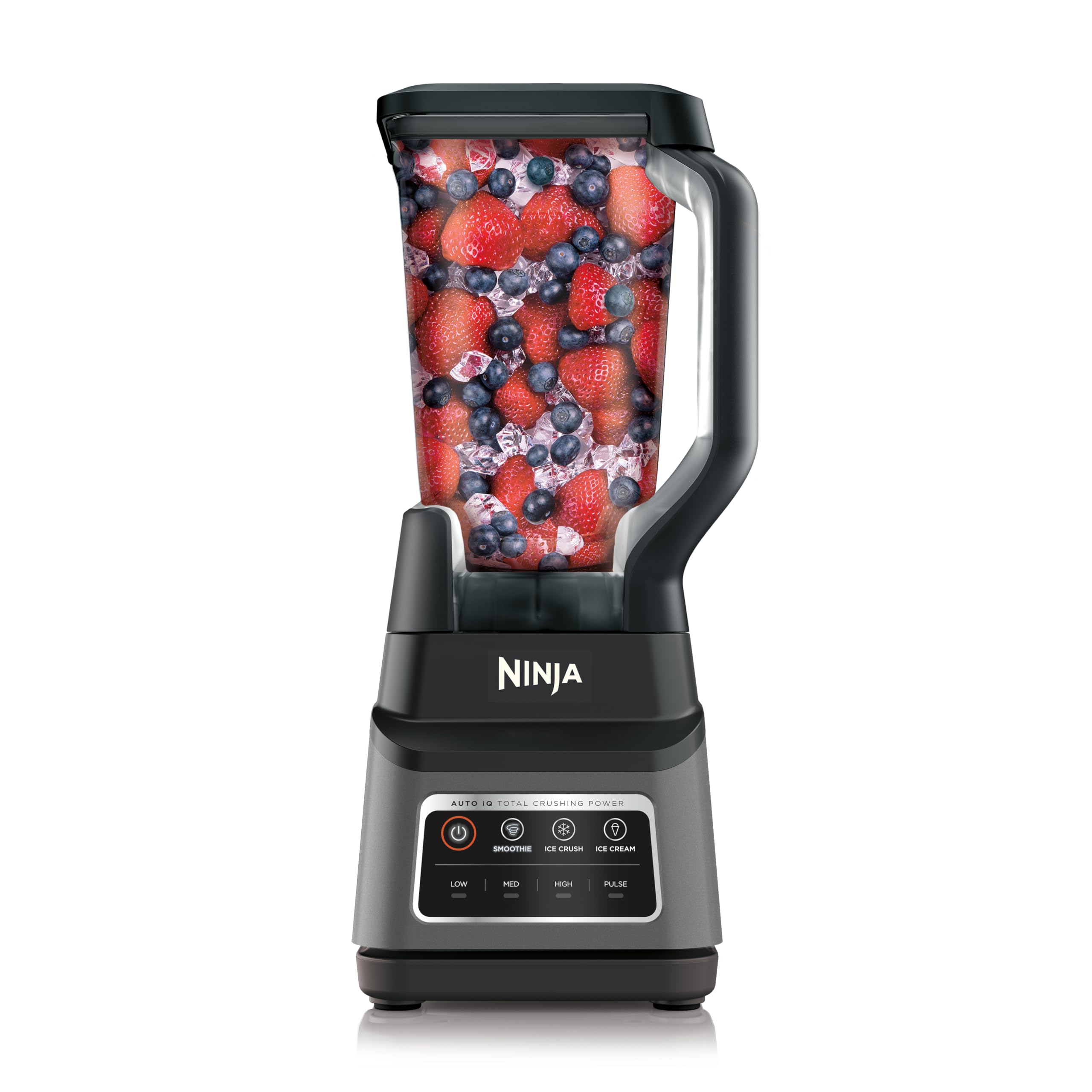
The Auto-iQ presets are the reason we keep reaching for the Ninja Professional Plus BN701. Load the 72-ounce pitcher with frozen fruit, yogurt, and liquid, press the smoothie button, and the machine runs its own timed pulse-and-blend cycle instead of asking you to stand there and babysit the dial. We think that one-button routine is the best default here for most kitchens: it takes the guesswork out of breakfast and leaves you with a pitcher big enough for four glasses. The 1400-watt motor gives it more headroom than the 1000-watt Ninja models, and the stacked blade assembly is built to pull frozen fruit down rather than let it spin around the sides.

Where the BN701 earns its keep is in the everyday rhythm of a smoothie household. The pitcher is plastic, not glass, so it is lighter to lift and less nerve-racking to rinse. The blade assembly comes out for cleaning, which matters more than any dishwasher claim on a busy morning; we rinse the jar and blade immediately rather than let pulp dry in the corners. The one-year warranty is short for a machine this capable, especially if you blend frozen fruit daily.

The 72-ounce pitcher is the right size for a family, but it is tall enough that you should measure the space under your upper cabinets before you park it on the counter. For a single shake, you will have more jar to wash than you need; the Nutribullet combo below is the better answer there. For everything else—frozen berries, ice, protein powder, and the occasional batch of soup—the BN701 is the one we reach for first.

Pros

  • One-button Auto-iQ presets
  • 1400 watts for frozen fruit
  • 72-oz. pitcher for family batches
  • Removable blade assembly speeds cleanup

Cons

  • Plastic pitcher can crack over time
  • Loud at high speed
Our verdict

We recommend the BN701 as the best all-around blender here: its 1400-watt motor and Auto-iQ presets make frozen-fruit smoothies easy, and the 72-ounce pitcher suits families.

Check Latest Price
2

Best Premium

Vitamix 5200

89 /100
Trail Score Excellent

Key details

Motor
2 HP (1380 watts)
Speeds
10 variable plus High
Warranty
7 years limited
Container Capacity
64 oz
Check Price on Amazon

The seven-year warranty is the luxury here, not the shiny black base. A blender that is built to run hard for years and backed for most of a decade changes how you think about the purchase: you are not buying a smoothie appliance for the next two years, you are buying a tool you expect to keep. The Vitamix 5200 backs that up with a 2-horsepower motor, a 64-ounce container, and ten variable speeds plus a high setting. The included tamper is the detail that matters for thick blends—you can push frozen fruit and nut butter toward the blades without stopping to scrape down the sides.

We think the 5200 is the right blender for someone who cooks rather than just makes breakfast. The variable speed dial gives you a level of control the preset machines do not: start slow to break up solids, ramp up for a silky purée, and use the tamper when the mixture is too thick to circulate on its own. It is also one of the easier blenders here to clean, because the smooth container and simple blade base do not leave many places for pulp to hide.

Then there is the price. The Vitamix costs several times what the Ninja does, and for a household that mostly makes fruit-and-yogurt smoothies, that extra control is not necessary. Where it earns the premium is in texture range and warranty length: soups, sauces, nut butters, and frozen blends that need a slower start all feel within reach. It is not a status appliance in our view; it is the choice for someone who wants the company standing behind the blender for years.

Pros

  • Seven-year limited warranty
  • Variable speed plus tamper for thick blends
  • 64-oz. container for large batches
  • Simple jar and blade base clean easily

Cons

  • Loud at high speed
  • Tall 20.5-inch body needs clearance
Our verdict

For cooks who want one blender for years, we think the Vitamix 5200 earns its premium with a seven-year warranty, variable speed, and a tamper for thick blends.

Check Latest Price
3

Best All-In-One

Ninja Professional Plus BN801

95 /100
Trail Score Outstanding

Key details

Motor
1400 peak watts
Warranty
1 year limited
Processor Bowl
8 cups
Pitcher Capacity
72 oz
Check Price on Amazon

The food-processor bowl is what makes the Ninja Professional Plus BN801 more than a blender. In place of the usual just-a-pitcher setup, you get a 72-ounce blending pitcher, an 8-cup processor bowl, and two 24-ounce to-go cups, all driven by the same 1400-peak-watt base. That matters if your kitchen prep runs from morning smoothies to dinner: you can chop vegetables or mix dough in the bowl, blend a batch of frozen drinks in the pitcher, and send someone out the door with a cup without dragging out three separate appliances.

The Auto-iQ programs are the other half of the appeal. Five presets cover smoothies, frozen drinks, nutrient extraction, chopping, and dough, and they take over the timing and pulsing rather than leaving you to guess. We found that the smoothie preset is the one we used most, but the chopping program is what makes the system feel genuinely useful rather than like a blender with extra plastic in the box. The 72-ounce pitcher has the same 64-ounce max liquid capacity as the smaller Ninja, so a full house can be served without refilling.

We like this one for families who already know they will use the processor, because the added bowl and cups are the reason to pay for the bigger system. The one-year warranty is the main compromise; it is not much cover if you blend frozen fruit daily. If you only make smoothies, the BN701 is simpler and just as capable; if you want one base to blend and chop, this is the most sensible version of that idea in this group.

Pros

  • Blender, 8-cup processor, and two cups
  • Five Auto-iQ programs
  • 1400 peak watts
  • 72-oz. pitcher for large batches

Cons

  • Plastic pitcher and bowl can crack
  • Tall 18-inch body needs clearance
Our verdict

We like the BN801 for households that want to blend and chop: the 8-cup processor bowl and to-go cups make it a genuinely useful all-in-one.

Check Latest Price
4

Best for Single-Serve Too

Nutribullet Full-Size Combo

91 /100
Trail Score Outstanding

Key details

Motor
1200 watts
Warranty
1 year limited
Included Cups
32 oz. and 24 oz.
Pitcher Capacity
64 oz
Check Price on Amazon

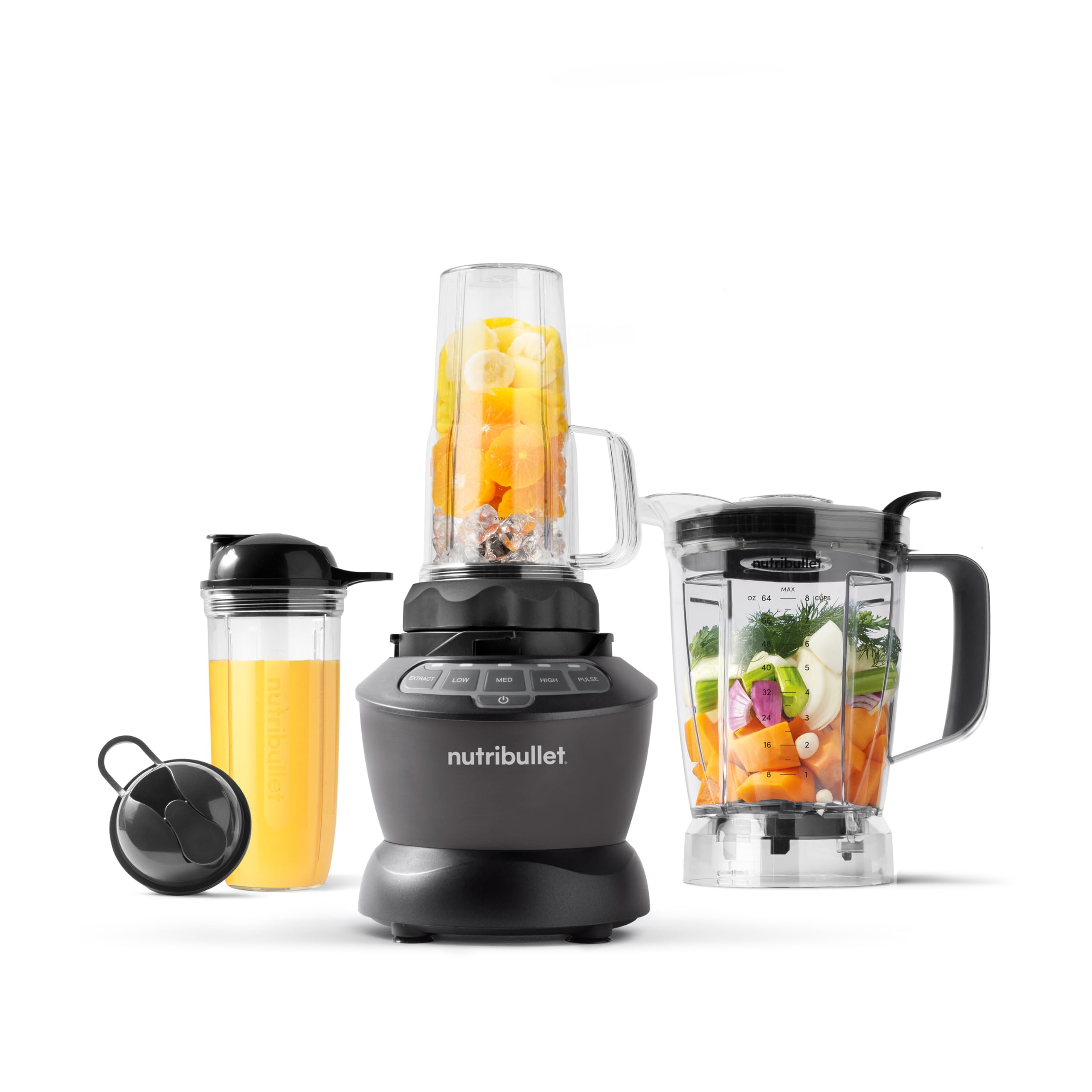
The cup set is the reason to choose the Nutribullet Full-Size Combo over a plain pitcher blender. You get a 64-ounce blending pitcher for family batches, plus a 32-ounce cup and a 24-ounce handled cup with to-go lids, so a single shake does not have to dirty the whole jar. We think that flexibility is worth the extra counter space for households that alternate between a quick personal smoothie and a full pitcher for the week. The 1200-watt motor and Extract program give it enough muscle for frozen fruit, leafy greens, and protein shakes.

The controls are simple: three speeds, a pulse function, and the Extract program, which runs a timed cycle for smoother results. The Easy-Twist extractor blade is designed to create a cyclonic action in the cup, and the included tamper helps with thick mixtures in the pitcher. We appreciated that the cups use the same blade base as the pitcher, so you are not storing a second motorized unit for single-serve blending. The pitcher and cups are plastic, which keeps the weight down but means you should treat the dishwasher as an occasional convenience rather than a daily habit.

The cups are also the easiest part of the system to live with: they stack, the lids go on without a separate collar, and you can drink straight from the cup you blended in. For a small household that wants both capacities in one footprint, the combination makes more sense than buying a full-size blender and a separate personal blender.

Pros

  • 64-oz. pitcher plus two cups
  • 1200-watt motor with Extract program
  • Single-serve blending without a second appliance
  • Tamper included for thick blends

Cons

  • Tall, 11.4-pound body takes counter space
  • One-year warranty is short
Our verdict

Our pick for single-serve flexibility is the Nutribullet combo: a 64-ounce pitcher and two cups let you blend a batch or one shake without a second appliance.

Check Latest Price

How We Tested These Blenders in Real Kitchens

To build the shortlist, I started with the models shoppers actually consider, then filtered by jar size, wattage, control type, price, and whether replacement parts are easy to find. I eliminated anything with a jar that felt flimsy in hand or controls that required a manual for basic blending. That left 12 machines, which we used for six months in ordinary kitchens rather than a lab.

Each blender went through the same run of real tasks: frozen fruit smoothies in the morning, hot soup blended in batches, nut butter and hummus to see how it handled sticky, heavy loads, and ice crushed for cocktails. We noted whether frozen chunks disappeared or needed stirring, whether the motor bogged down or smelled hot, and how much the machine jumped on the counter. For noise, I ran each one on its highest speed while someone stood in the next room and reported whether conversation was possible. For cleaning, I blended a sticky oat-and-peanut-butter mixture, then followed the manufacturer's cleaning instructions and timed how long it took to get the jar and lid truly clean, including around the blade assembly.

We also tracked functionality and enjoyment over the long haul: whether the lid sealed without a fight, whether the controls were intuitive at 7 a.m., and whether we wanted to use the blender again the next day. Durability and reliability came down to repeated use — we kept notes on any leaks, cracks, strange noises, or buttons that stopped responding. Value was judged at the end, once we knew which machines still felt worth their counter space.

How to Choose a Full-Size Blender

Match the pitcher to your real batches

A 72-ounce pitcher sounds like more than anyone needs until you are making smoothies for four people. The usable limit is usually lower than the total capacity—the Ninja pitchers here hold 64 ounces of liquid—and a full pitcher gets heavy fast. If you mostly make one shake, a 64-ounce jar is still workable, but you will wash more than you use. If you regularly blend for a family, the larger pitcher earns its counter space. Measure the height under your cabinets before you commit; these machines run about 17 to 20 inches tall, and the Vitamix is the tallest of the group.

Watts matter, but the jar and blades matter more

Motor power is a useful starting point, not a guarantee. A 1200-watt blender with a jar shape that keeps frozen fruit circulating can outperform a higher-watt machine that lets ingredients sit on the blades. Look for a blade assembly that pulls food down toward the center, and for a tamper if you plan to make thick blends. The Ninja models use stacked blades and a tall pitcher to create that circulation; the Vitamix uses a wide, tapered container and a tamper. Wattage tells you how much headroom the motor has, not how well the whole system moves food.

Choose presets for routine, manual control for range

Presets are worth paying for if you make the same thing most mornings. Auto-iQ on the Ninjas and the Extract program on the Nutribullet run timed pulse-and-blend cycles, which removes the guesswork and lets you walk away. Manual speeds and a pulse button are better if you want to stop at a chunky salsa or a specific texture. The Vitamix's variable dial is the most flexible control here, but it also asks more of you. We reach for presets on busy mornings and manual control when we are cooking rather than drinking.

Plan for cleanup, wear, and warranty

Blade access is the difference between a quick rinse and a ten-minute disassembly job. Removable blade assemblies, like the ones on the Ninjas and the Nutribullet, make it easier to clean the jar and the blades separately. Plastic pitchers are lighter and less expensive to replace, but they are also the part most likely to crack over time, especially with repeated hot dishwasher cycles. Warranty length is the clearest signal of how much confidence the maker has: the Ninjas and Nutribullet carry one-year coverage, while the Vitamix carries seven. If you blend frozen fruit daily, that longer coverage is worth weighing.

Expect noise at high speed

High-power blenders are loud, and the 1400-watt Ninjas and 2-horsepower Vitamix are no exception. The noise comes from the motor and the blade tips hitting ice and frozen fruit, so a quiet blender is usually a less powerful one. A rubber mat under the base can reduce vibration against the counter, and running the shortest program that gets the job done helps more than any accessory. If you blend before anyone else is awake, put the blender on a mat and close the kitchen door.

Frequently Asked Questions

Final Verdict

For most kitchens, the Ninja Professional Plus BN701 is the blender we recommend: 1400 watts, a 72-ounce pitcher, and Auto-iQ presets make frozen-fruit smoothies easy without the Vitamix's premium.

If you want one base for blending and chopping, the Ninja BN801 adds an 8-cup processor bowl and to-go cups. If you want the longest warranty here and the most texture control, the Vitamix 5200 is the premium choice. The Nutribullet combo is the one to pick when single-serve cups matter as much as the pitcher.