Best Protein Bars of 2026

A protein bar should be the most reliable thing in your bag — not the one you dread. Too many are candy bars in a health halo or compressed powder bricks that take five minutes to chew. The right one bridges the gap between real meals when you're at a desk, leaving the gym, or on a trail, with enough protein to hold you until dinner. Over the past three months, I've worked through 16 different bars, and the differences in taste, filling, and texture are wild.

The label is where most shoppers get stuck: 'high protein' can mean 10 grams or 30, sugar hides behind syrups and fruit concentrates, and a long ingredient list doesn't guarantee better nutrition. I check the protein-to-calorie ratio and flip the bar over to see what's holding it together. Some of my favorites are barely sweet; others lean on nuts and seeds for crunch. What matters is finding one you'll actually finish — and maybe stashing a second in your desk drawer.

1

Best Overall

Barebells Cookies & Cream

93 /100
Trail Score Outstanding

Key details

Added Sugars
None
Bars Per Box
12
Total Sugars
0.04 oz
Protein Per Bar
0.71 oz
Check Price on Amazon

Twenty grams of protein and one gram of sugar rarely reads like a treat, but this bar gets closer than anything else in the group. It is soft through the middle with little crispy bits running through the coating, so it eats like a chocolate bar rather than a slab of whey, and the cookies and cream flavor is genuinely sweet instead of merely sweetish.

We kept coming back to it for exactly that reason. Flavor is what makes a bar worth buying a second box of, and this is the best-tasting bar here — texture included, which is where most high-protein bars lose people. The macros are not a consolation prize either: 20 grams of protein for a gram of total sugar, with no added sugar in the recipe.

The one honest caveat is what it costs. This sits in the top price tier of the set, and a bar a day adds up faster than the box suggests. It is also not a meal — it is a snack that happens to hit a protein number, and it is soft enough to eat without a drink, which matters more than it sounds when you are eating at a desk or on a trail.

Pros

  • Best flavor and texture in this set
  • 20g protein with 1g total sugar
  • No added sugar in the recipe

Cons

  • Top price tier of this group
Our verdict

The best-tasting bar in this group and the one we point people to first: 20 grams of protein and a single gram of sugar, in a bar that eats like a chocolate treat.

Check Latest Price
2

Best Value

Pure Protein Variety Pack

91 /100
Trail Score Outstanding

Key details

Flavors
3
Bar Weight
1.76 oz
Bars Per Box
18
Protein Per Bar
20–21g
Check Price on Amazon

Eighteen bars, three flavors, and 20 or 21 grams of protein depending on which one you unwrap — the pitch is straightforward and it holds up. Chocolate Peanut Butter, Chocolate Deluxe, and Chewy Chocolate Chip are all sweet enough to satisfy a craving, and the sugar stays low enough that it does not undo the point of eating a protein bar.

Texture is the dividing line. These are dense bars, and while the chocolate chip goes down easily enough, the others take some work — the kind of bar that benefits from ten seconds in the microwave if you are eating it at home. That is a fair trade at this price, but it is the reason this one sits behind Barebells instead of ahead of it.

Where it wins is the math. Twenty grams of protein at a cost per gram that lands within a rounding error of the cheapest bar in this guide, in a box that covers three weeks of desk snacks — that is the value case, and it is a strong one. If you eat a bar most weekdays and do not want to think about it again for a month, this is the box to buy.

Pros

  • 20–21g protein at a budget price
  • Three flavors, 18 bars per box
  • Low sugar for the protein load

Cons

  • Bars can arrive near their best-by date
Our verdict

The value pick for anyone who eats a bar most weekdays: 18 bars, three flavors, 20 to 21 grams of protein each, and a cost per gram that undercuts the rest of the group.

Check Latest Price
3

Best Crispy Texture

Power Crunch Peanut Butter Fudge

93 /100
Trail Score Outstanding

Key details

Bars Per Box
12
Total Sugars
0.18 oz
Sugar Alcohols
0g
Protein Per Bar
0.46 oz
Check Price on Amazon

If you have given up on protein bars because the chewing was the problem, start here. Power Crunch builds its bars from cream-filled wafer layers, so what you get is a light, crispy crunch that tastes like a chocolate biscuit and finishes in a few bites instead of a mouthful of dense dough.

The numbers are more modest than the rest of the group: 13 grams of protein, 5 grams of sugar, and no sugar alcohols, in a 1.4-ounce bar that is closer to a cookie than a meal. We liked it most as a mid-afternoon snack with coffee, and these disappeared from our test box faster than any of the dense bars. If you need 20 grams a bar to hit a daily target, the Barebells or Pure Protein picks will do more for you.

Peanut butter fudge is rich without being cloying, and the wafer means it does not sit heavily — a useful property if you are eating before a workout rather than after one.

Pros

  • Crispy wafer texture, no chewing fatigue
  • 0g sugar alcohols, 5g sugars
  • Light 1.4oz bar for a quick snack

Cons

  • 13g protein is low for this group
Our verdict

The bar to buy if chewing is what you hate about protein bars: crispy wafer layers, 13 grams of protein, and no sugar alcohols.

Check Latest Price
4

Best Plant-Based

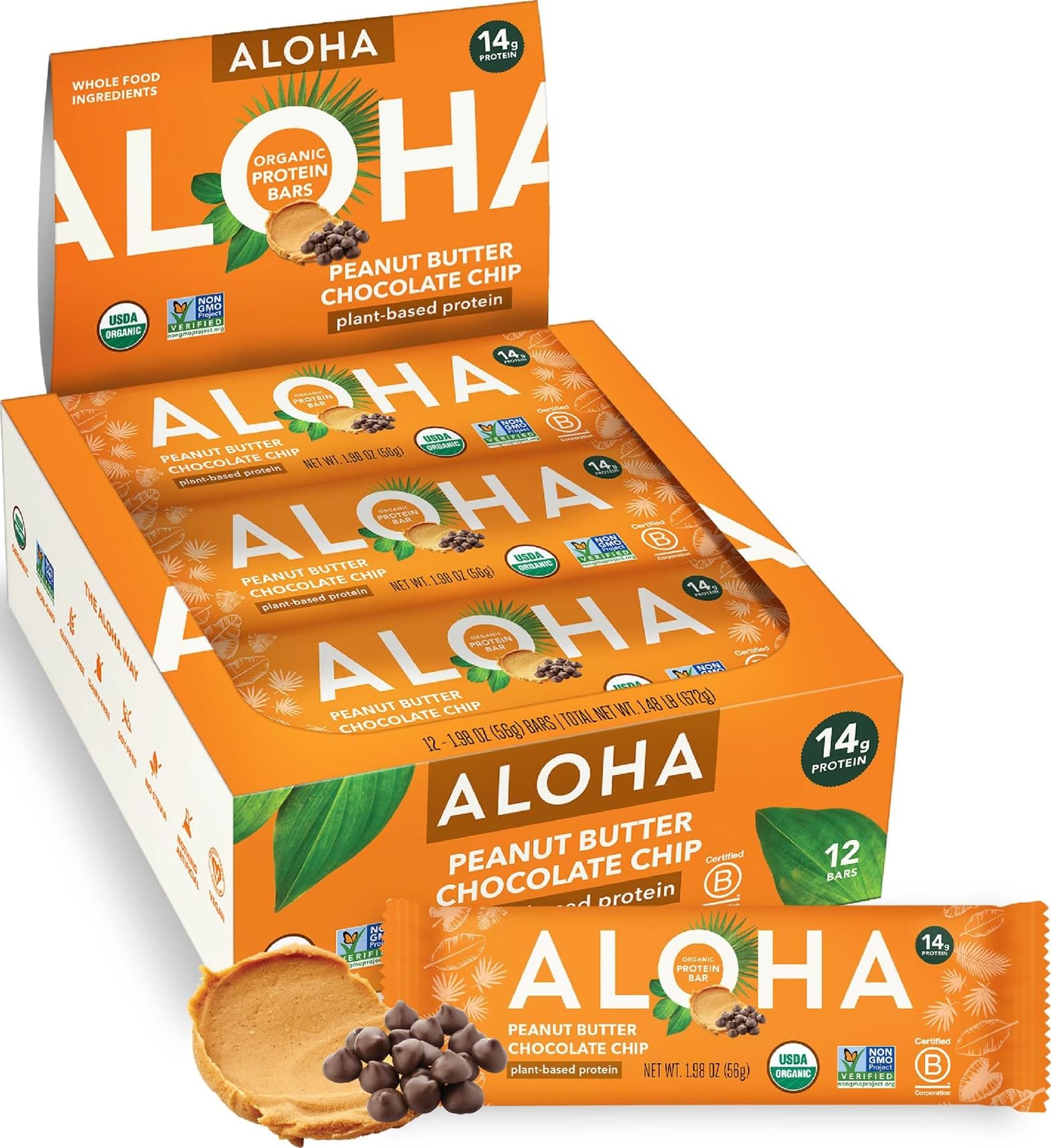
ALOHA Peanut Butter Chocolate Chip

91 /100
Trail Score Outstanding

Key details

Total Sugars
0.18 oz
Certification
USDA Organic
Dietary Fiber
0.35 oz
Protein Per Bar
0.49 oz
Check Price on Amazon

The ingredient panel is the reason to look at this one first. ALOHA builds its bar on organic brown rice and pumpkin seed protein, skips soy, dairy, and sugar alcohols entirely, and is sweetened without stevia — USDA Organic, non-GMO, and certified gluten free if any of that is on your list.

Fourteen grams of protein, 10 grams of fiber, and 5 grams of sugar is a sensible middle ground: enough protein to count, enough fiber that the bar actually holds you until the next meal, and little enough sugar to eat every day without thinking about it.

Texture is the caveat. The bar runs soft and chewy, and depending on the flavor and the box it can read a little dry and chalky — the peanut butter chocolate chip is the version that carries it best. It is also not the cheapest protein per gram in this guide, since the organic ingredients show up in the total.

We recommend it to anyone who reads the ingredient list before the macros. It is the bar we hand to people who insist they do not like protein bars, and it is usually the one that comes back as an empty wrapper.

Pros

  • USDA Organic, vegan, dairy- and soy-free
  • 10g fiber with only 5g sugar
  • No sugar alcohols or stevia

Cons

  • Can taste dry and chalky
Our verdict

For a plant-based bar you can eat daily, this is the one: organic, soy- and dairy-free, with 14g protein, 10g fiber, and just 5g of sugar.

Check Latest Price
5

Best Whole-Food Ingredients

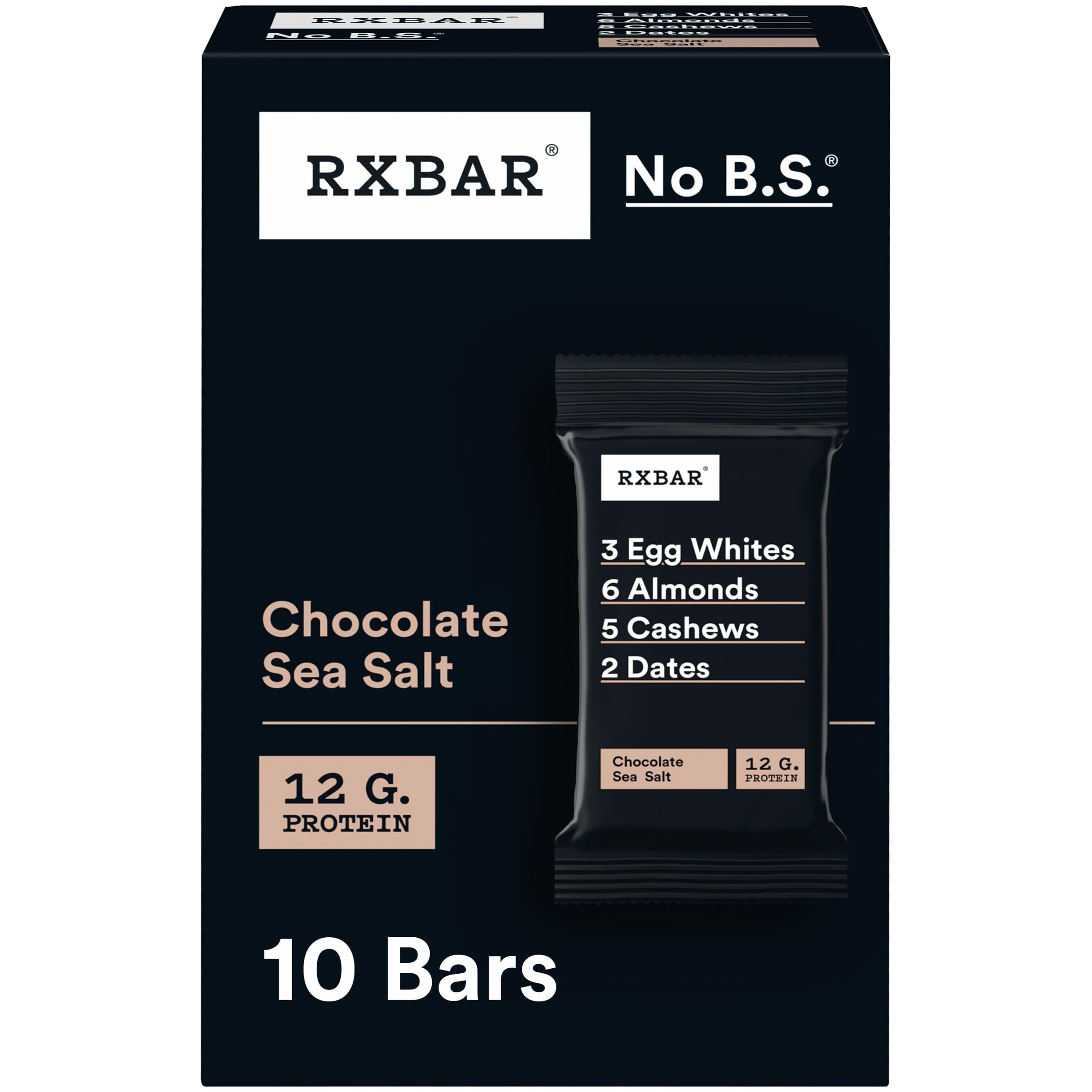
RXBAR Chocolate Sea Salt

89 /100
Trail Score Excellent

Key details

Gluten Free
Yes
Bars Per Box
10
Protein Per Bar
0.42 oz
Main Ingredients
Egg whites, almonds, cashews, dates
Check Price on Amazon

Start with the thing that decides it: this bar is sticky. Dates and egg whites make a dense, chewy slab that clings to your teeth, and if that texture grates on you, no ingredient list will rescue it. If it does not, you are getting one of the cleanest bars we compared.

The recipe is egg whites, almonds, cashews, and dates, with 12 grams of protein and nothing artificial — a label you can read in one pass, which is the whole appeal. Chocolate sea salt is the flavor to start with: cocoa and salt do most of the work, and it does not taste like a supplement dressed up as a dessert.

Twelve grams of protein is modest next to the 20-gram bars here, so treat this as a snack rather than a recovery tool. It is at its best in a bag or a glove compartment where a softer bar would smear, and it earns its place on the afternoon you would otherwise raid a vending machine.

Pros

  • Egg whites, nuts, and dates, nothing artificial
  • 12g protein from whole-food ingredients
  • Chocolate sea salt flavor carries it

Cons

  • Most expensive protein per gram here
Our verdict

A five-ingredient bar with 12 grams of protein for people who read labels closely — provided you can live with a genuinely sticky chew.

Check Latest Price
6

Best Meal Replacement

MET-Rx Big 100 Peanut Butter Pretzel

92 /100
Trail Score Outstanding

Key details

Bar Weight
3.52 oz
Bars Per Box
9
Protein Per Bar
1.06 oz
Vitamins And Minerals
18
Check Price on Amazon

Pick this one up and the first thing you notice is the weight. At 3.52 ounces it is roughly twice the size of a standard bar, with 30 grams of protein and 18 vitamins and minerals packed in — the one bar in this group that genuinely stands in for a meal.

Peanut butter pretzel is the flavor to get: salty pretzel pieces on top, a peanut butter body, and enough sweetness that it reads as a treat. The bars can arrive dense and hard, and the crunch depends on the pretzels staying crisp, which is not guaranteed by the time a box reaches you.

We keep it for the days when lunch does not happen. Thirty grams of protein in something you can eat one-handed is a real convenience, and one bar goes further than two small ones. It is the pick for hikes, double shifts, and travel days rather than the drawer you raid at three in the afternoon.

Pros

  • 30g protein in a single bar
  • 18 vitamins and minerals
  • Big enough to replace a meal

Cons

  • Premium price tier for the group
Our verdict

A 3.52-ounce bar with 30 grams of protein that genuinely replaces a meal — buy it for long days, not for the desk drawer.

Check Latest Price
7

Best for Lunchboxes

Nature Valley Protein Chewy Granola

93 /100
Trail Score Outstanding

Key details

Flavors
3
Bar Style
Chewy granola
Bars Per Box
15
Protein Per Bar
0.35 oz
Check Price on Amazon

Ten grams of protein is the floor of this guide, and this bar sits right on it. What you get for that is a chewy granola bar — three flavors across 15 bars, gluten free, no high-fructose corn syrup, no artificial colors — that crunches instead of gumming up, and that almost anyone will finish.

We like it for the jobs the big bars are wrong for: a lunchbox, a glove compartment, a bag of snacks for a team. It is the cheapest bar here, and unlike plenty of cheap protein products, it does not taste like the price. The trade is straightforward — this is a snack with a protein bump, not a bar that stands in for lunch, so plan on two if you are actually hungry.

Pros

  • Cheapest bar in this group
  • Crunchy texture rather than chewy
  • Three flavors across 15 bars

Cons

  • Only 10g of protein per bar
Our verdict

The bar to buy by the box for lunchboxes and glove compartments: crunchy granola, 10 grams of protein, and the lowest cost per bar here.

Check Latest Price
8

Post-Workout Recovery

Gatorade Whey Protein Recover

93 /100
Trail Score Outstanding

Key details

Calories
350
Bars Per Box
12
Carbohydrates
1.48 oz
Protein Per Bar
0.71 oz
Check Price on Amazon

This is a recovery bar, and the wrapper says so: 20 grams of whey and milk protein paired with 42 grams of carbs and 350 calories, built for the window after a hard session rather than the midafternoon slump.

Read those numbers together and the sweetness makes sense — you are refilling glycogen, not trimming a macro count — but it also means you are buying a small meal's worth of carbohydrate in bar form. Chocolate chip is the flavor we tried, and it lands on the sweet side even for a recovery product.

Texture is a genuine strength: crunchy, closer to a rice-crispy treat dipped in chocolate than to a whey bar, and easy to get down when you are tired and not especially hungry. That is exactly the scenario it was built for.

So buy it if you finish long rides, heavy lifts, or shifts on your feet and need calories back quickly. Skip it for everyday snacking — the bars here with 1 to 5 grams of sugar do that job with a fraction of the sweetness, and this one is the least suited of the group to a desk drawer.

Pros

  • 20g whey and milk protein
  • 42g carbs for post-workout refueling
  • Crunchy texture that goes down easily

Cons

  • Built for recovery, not everyday snacking
Our verdict

Built for the hour after a hard session — 20 grams of protein, 42 grams of carbs, 350 calories — and the wrong bar for a Tuesday desk snack.

Check Latest Price

How We Tested the Best Protein Bars

We started by scanning the shelves of national grocery chains, specialty nutrition shops, and direct-to-consumer sites, then narrowed a long list of nearly 60 bars down to 16 based on protein content, sugar levels, ingredient panels, and price per bar. We ruled out anything with less than 10 grams of protein or a novel-length ingredient list, and we made sure to include a mix of textures — crunchy, chewy, and soft-baked — so we weren't just comparing one style.

Over three months, those 16 bars traveled in gym bags, desk drawers, and hiking packs. I ate them at 3 p.m. when lunch felt like a distant memory, after lifting sessions, and on weekend drives when the next meal was hours away. For each bar, I noted how quickly the first bite made me want a second, whether the texture turned gluey or gritty as I chewed, and if the filling actually registered or just tasted like sweet paste.

We also tracked the practical stuff: how the bar held up at the bottom of a bag (smushed, sticky, or still intact), whether the wrapper listed a best-by date that gave us room to keep a few around, and what we paid per bar relative to protein delivered. Ingredients mattered beyond the headline number — we looked for recognizable sources like nuts, seeds, and whey or plant protein, and flagged bars that leaned on sugar alcohols for low sugar claims, noting whether they left us bloated or satisfied. A bar only made the final cut if it was filling enough to replace a snack and tasted good enough that we'd buy it again with our own money.

How to Choose a Protein Bar

Decide whether you are buying a snack or a meal

The fastest way to sort bars is to read weight and protein together. A 1.4- to 1.8-ounce bar carrying 10 to 20 grams of protein is a snack — something for a bag, a lunchbox, or a desk drawer. A bar over 3 ounces with 25 to 30 grams of protein is a meal replacement, and it is priced like one. Gatorade's 2.8-ounce recovery bar sits between the two on purpose, pairing 20 grams of protein with 42 grams of carbs for after a hard session.

Think about where the bar will live before you commit to a box. If it needs to travel in a pocket, the smaller bars here — Power Crunch at 1.4 ounces, Pure Protein at 1.76 — handle that far better than MET-Rx's 3.52-ounce slab, which wants a bag.

Read the sugar line, then find out what is sweetening it

Low sugar and easy to eat are not the same thing. A bar can hit 1 gram of sugar using sugar alcohols, which upset some stomachs, or with a sweetener that leaves a chemical finish. Power Crunch lists 0 grams of sugar alcohols against 5 grams of sugar; ALOHA is stevia-free and uses no sugar alcohols either; RXBAR gets its sweetness from dates. Barebells takes the low-sugar route with no added sugar and 1 gram total.

If low-carb bars have bothered your stomach before, start with a single box of a fruit-sweetened or sugar-alcohol-free bar rather than a case of one you have never tried.

Pick a texture you know you will finish

Texture is the reason half-finished boxes exist. The bars here fall into four families: crispy wafer (Power Crunch), soft and candy-like (Barebells), dense and chewy (Pure Protein, RXBAR), and crunchy granola (Nature Valley). None is better in the abstract, but the dense ones are where people give up and leave twelve wrappers in a drawer.

Buy the smallest box of an unfamiliar texture, not the largest. If a dense bar turns out to be too much work, ten seconds in the microwave softens it considerably — worth knowing before you write off a box you have already opened.

Compare protein per bar, not box price

A bigger box is not automatically better value, and neither is the cheapest bar per wrapper. Divide what you spend by the total grams of protein in the box and the picture changes: the budget granola bar at 10 grams and the 18-count Pure Protein at 20 to 21 grams land within a rounding error of each other per gram of protein. You are buying protein either way; the difference is how much arrives in one wrapper.

That matters most at the meal-replacement end. MET-Rx delivers 30 grams in a single bar, but you are also buying 3.52 ounces of bar — if 20 grams closes your gap, the extra protein is bulk you did not need.

Buy the pack size that matches your habit

Boxes here run from 9 bars to 24. A 9-count suits a meal-replacement bar you eat once or twice a week; an 18-count only makes sense for something you will eat most weekdays. Larger boxes lower the cost per bar, but only if you finish them before the dates get close.

For a first purchase, a variety pack earns its premium. Three flavors in one box tells you more about what you will actually reach for than a dozen of a flavor you might not like.

Frequently Asked Questions

Final Verdict

If one bar has to earn a permanent place in your bag, make it Barebells Cookies & Cream: 20 grams of protein, 1 gram of sugar, and the only texture in this group that genuinely passes for a candy bar.

If the price per bar is the part that gives you pause, Pure Protein is the alternative — 18 bars, three flavors, 20 to 21 grams each, at a cost per gram of protein that matches the cheapest bar here while delivering twice as much per wrapper. Buy the Barebells box for the days you want a treat and the Pure Protein box for the drawer.