Best Bedside Commodes of 2026

A commode enters your life on a specific day — mine was the afternoon a family member came home from hip surgery, and the only thing between her and the bathroom was twenty feet of hallway at two in the morning. That's the job, really: it removes the walk. No unsteady trip past a coffee table in the dark, no fumbling for a light switch. When it works, the commode fades into the corner of the room and nobody thinks about it again.

When it doesn't, you notice fast. A frame that shifts when someone pushes up from the seat, a pail that splashes or sticks, a seat height that turns a simple transfer into a squat — those are the reasons a commode gets abandoned in a closet, which is its own kind of risk. I've set up a few of these for relatives myself, and my team has now assembled, sat on, and lived with 14 more over four months. The lesson that keeps repeating is that comfort, fit, and stability beat every extra feature. The picks below are the ones that held up.

1

Best Overall

Drive Medical Folding Bedside Commode

93 /100
Trail Score Outstanding

Key details

Frame
Powder-coated steel, folds
Bucket
7.5 qt with lid
Weight Capacity
350 lb
Height Adjustment
Push-pin
Check Price on Amazon

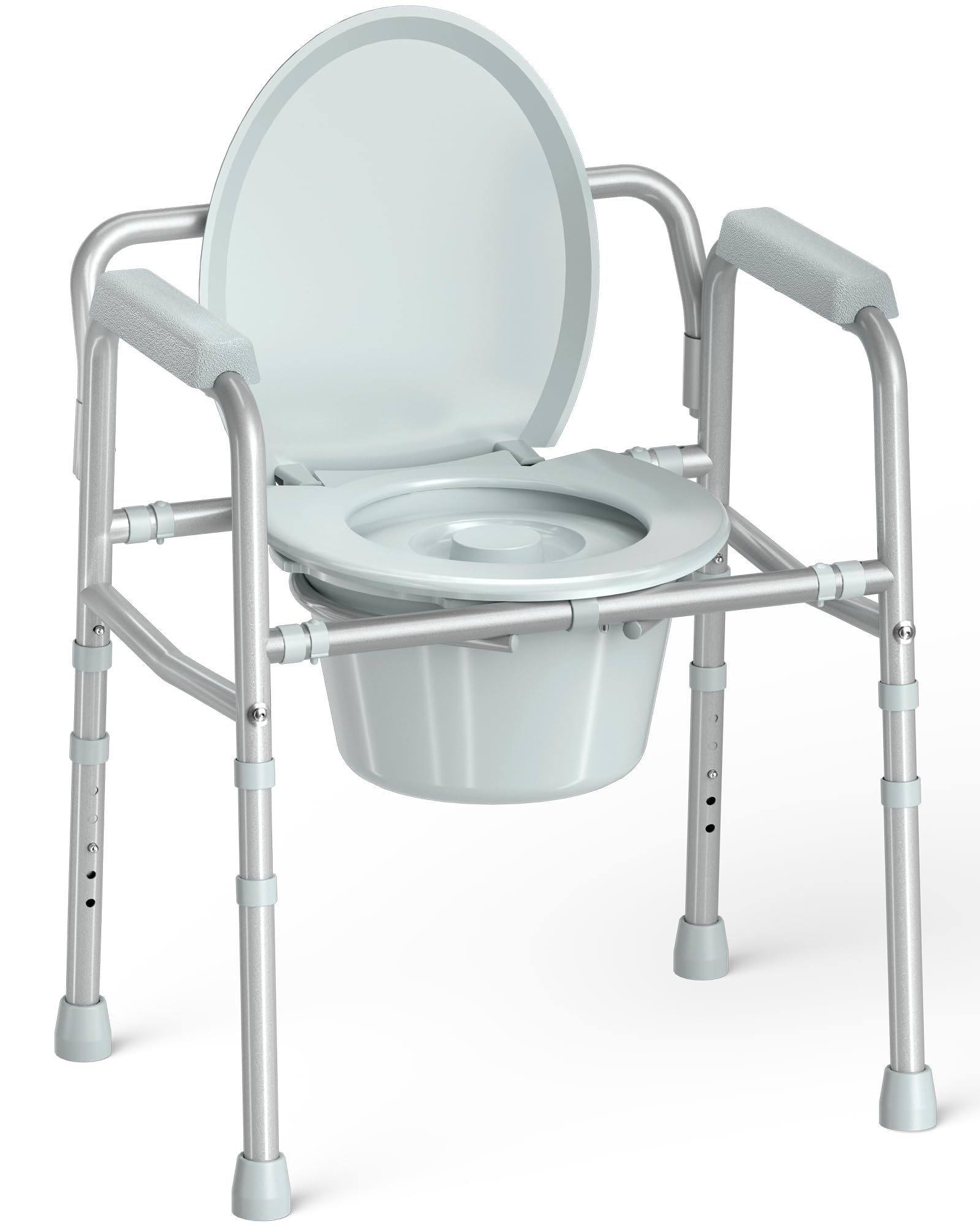
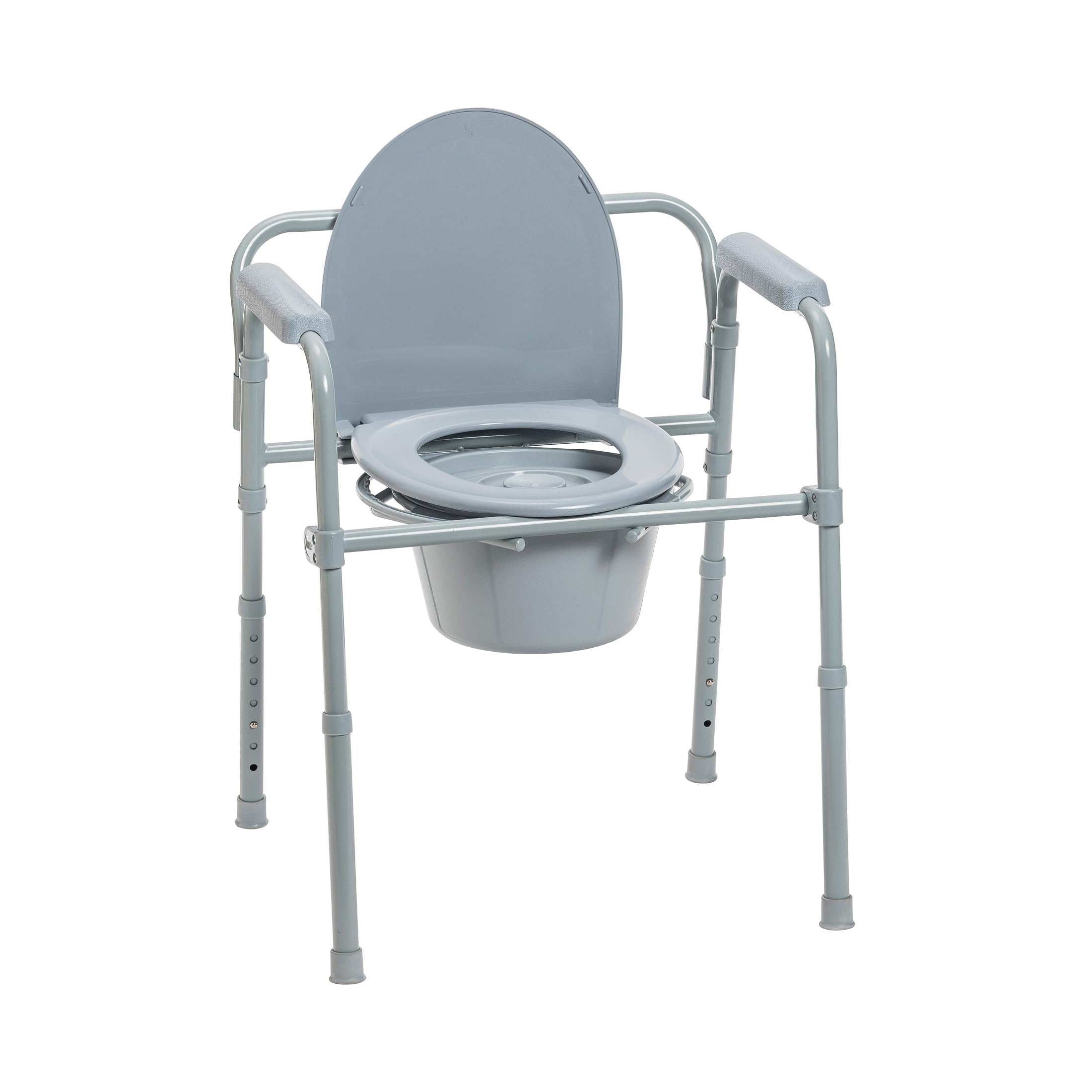
Three jobs, one folding steel frame, and the lowest price in this guide — that combination is why the Drive is the chair we tell most people to buy. It works as a commode beside the bed, as a raised seat over the toilet once the bucket comes out, and as an armed frame around the bowl. Fold the legs up and it disappears into a closet, which matters in a bedroom that has to go back to being a bedroom after six weeks.

Setup is where it wins people over. The seat and lid snap on, the legs adjust with push pins, and nothing needs a screwdriver. The 7.5-quart bucket has a lid, so the walk to the bathroom is a two-minute job rather than a production, and the powder-coated steel frame is rated to 350 pounds with armrests to push up on.

The arms are fixed, and that's the difference between a pivot and a slide. Someone who can stand and turn can push up on them; someone transferring from a wheelchair can't be slid sideways, and the drop-arm chairs further down this list are the ones for that. For a knee replacement, a night-time bathroom run, or a spare room, the Drive is the sensible buy.

Pros

  • Works bedside, over the toilet, and as a safety frame
  • Folds flat for storage between uses
  • Snaps together with push-pin height changes
  • 350-lb steel frame with armrests

Cons

  • Seat is small and thinly padded
Our verdict

For most people setting up a commode at home, this is the one: three uses, a folding steel frame, and the lowest price here.

Check Latest Price
2

Best for Heavier Users

DMI Drop Arm Commode

89 /100
Trail Score Excellent

Key details

Bucket
5 liter with lid
Seat Size
23.25 x 18.5 in
Seat Height
20-24 in
Weight Capacity
500 lb
Check Price on Amazon

The seat measures 23.25 inches wide and 18.5 inches deep, closer to a dining chair than to the small round seats most commodes use. Under it sits a frame rated to 500 pounds, the highest capacity in this guide. For a heavier adult, or someone whose hips have widened after months in bed, those two numbers are the whole argument.

The seat platform is 2.38 inches thick, and that thickness is what keeps the rim from digging in on a longer sit. We were impressed by the drop-arm release too: a button on each side swings the arm down so a caregiver can slide someone across from a bed or a wheelchair instead of lifting them. Both together are what a premium commode should buy you.

The money goes into the frame, the width, and the arm mechanism rather than into trim. If the person using it can stand and pivot without help, you're paying for capacity you may not need. If a caregiver is doing the moving, the drop arms earn their keep every time.

Pros

  • 500-lb capacity with a 23.25-inch-wide seat
  • Drop arms release for side transfers
  • Thick seat platform resists pinching

Cons

  • Lowest seat setting is 20 inches
  • Bucket slides out awkwardly
Our verdict

Buy this one when the standard 350-pound chairs are too narrow: a 500-pound frame and a 23-inch seat, with drop arms for side transfers.

Check Latest Price
3

Best Padded Drop-Arm

HOLYHEAL M73 Drop Arm Commode

88 /100
Trail Score Excellent

Key details

Padding
40 mm seat and backrest
Warranty
2 years
Seat Height
19-25 in
Weight Capacity
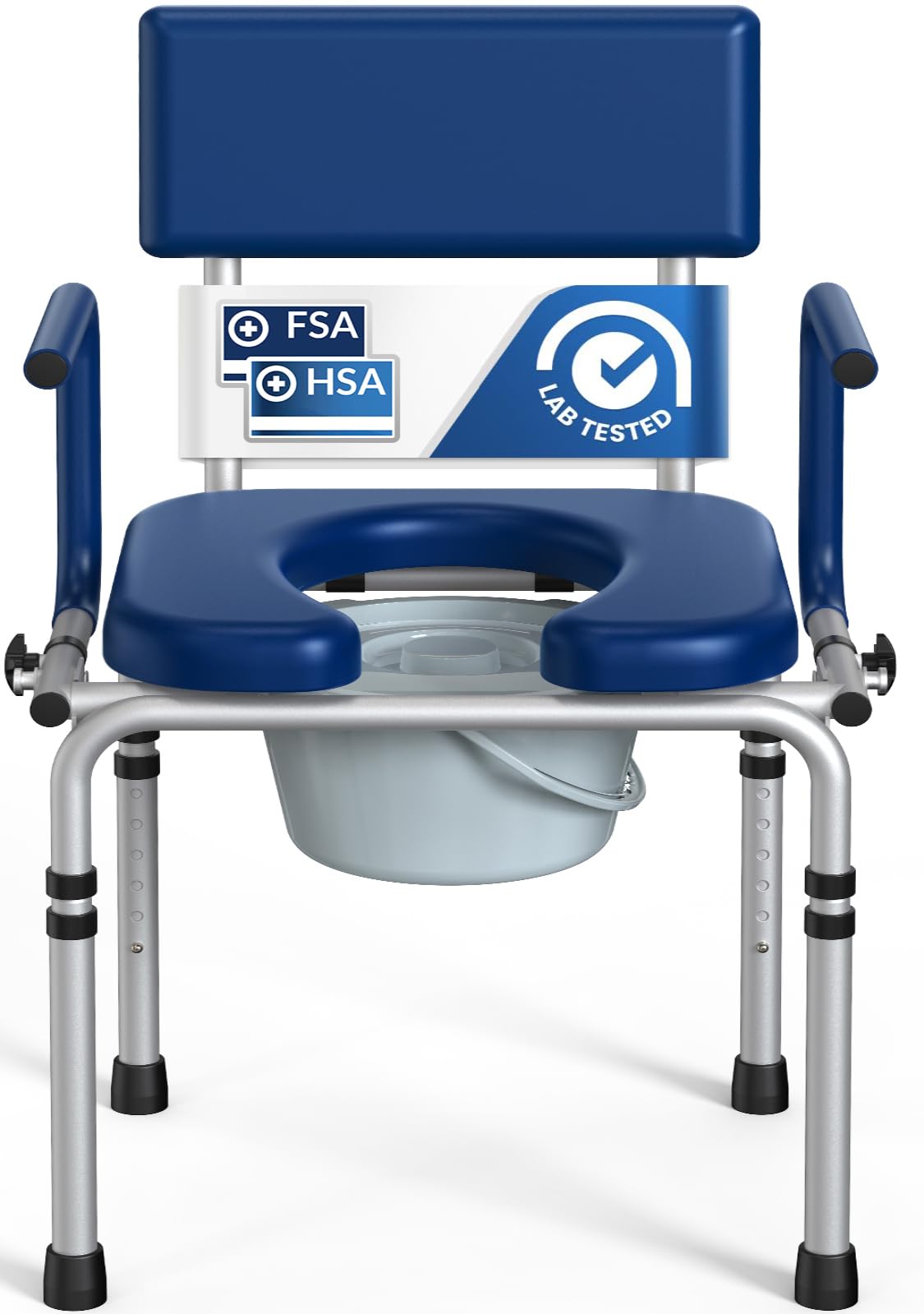
400 lb
Check Price on Amazon

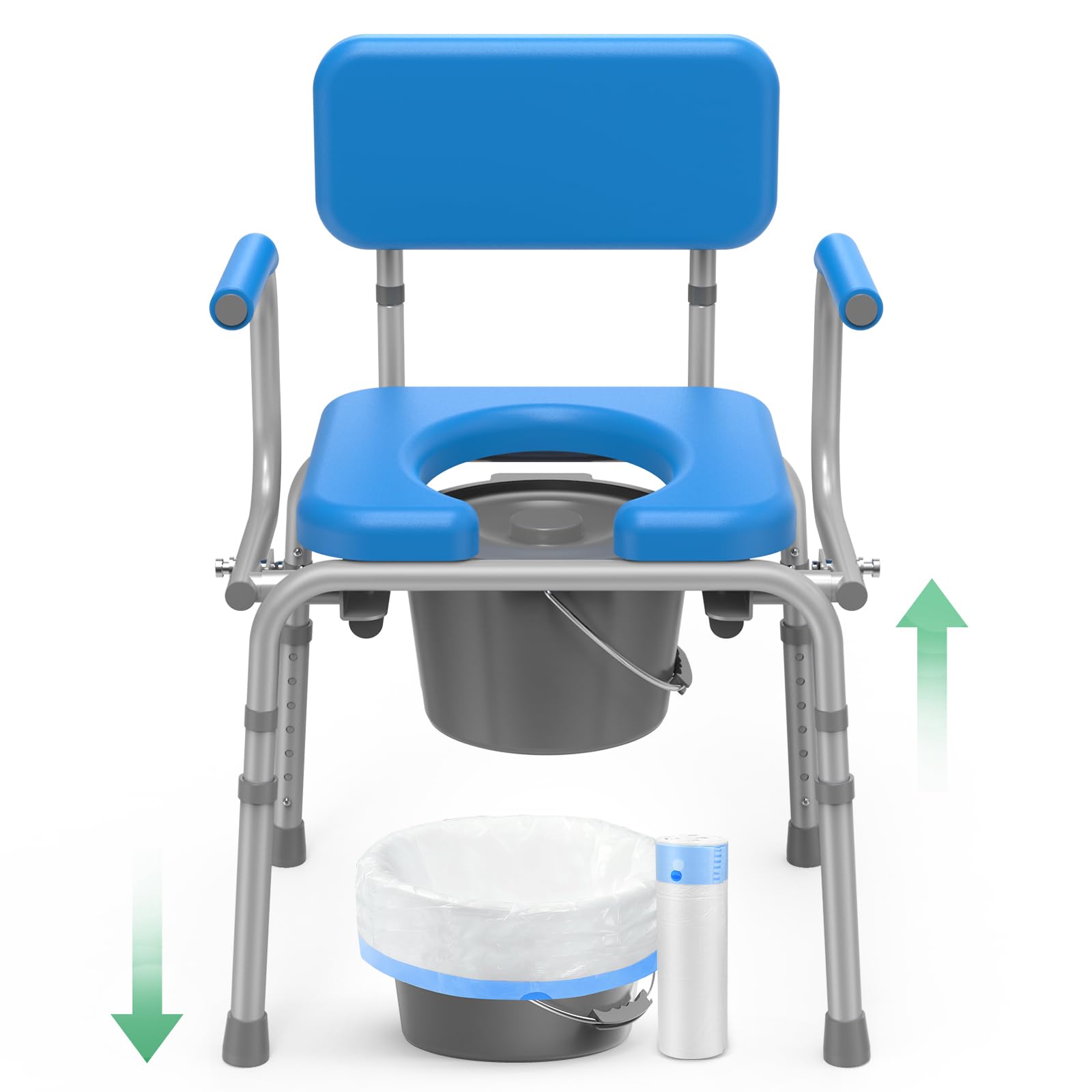
This is the most expensive chair here, and the padding is what you're paying for: a 40 mm cushion across the seat, a padded backrest behind it, and a water-resistant cover that wipes down. If someone will sit for twenty minutes at a stretch rather than two, that changes the calculation.

The arms work like the DMI's — press and hold the button and they drop for a side transfer — and the height runs from 19 to 25 inches across six settings, the highest top setting in this guide. That matters for a tall user or a high bed, where a chair that stops at 22 inches leaves someone sitting too low to stand easily.

What makes it our pick for long sitting is that it's the only chair here with padding and drop arms in the same frame. The DMI gives you the arms without the cushion, and the HOMLAND chairs give you the padding with fixed arms. If a wheelchair is involved and the person will be on the commode for a while, this is the one that covers both.

The two-year manufacturer warranty is unusual in this group and worth something if the chair will be in daily use for months. For a two-week recovery, the padding and the arm mechanism are more chair than you need.

Pros

  • 40 mm padded seat with a padded backrest
  • Arms drop on both sides for transfers
  • Seat height tops out at 25 inches
  • Two-year manufacturer warranty

Cons

  • 6.3-quart bucket is smaller than the 7.5-quart chairs
Our verdict

Padded seat and backrest plus drop arms for transfers — the combination we pick when someone will spend real time on the commode.

Check Latest Price
4

Best Frame Stability

HOMLAND 3-in-1 Commode

88 /100
Trail Score Excellent

Key details

Frame
Dual-crossbar steel
Bucket
7.5 qt with lid and handle
Height Settings
7
Weight Capacity
350 lb
Check Price on Amazon

Wobble is what makes a commode feel unsafe, and HOMLAND braces this one with two crossbars between the legs instead of the usual single bar. Two crossbars rather than one is a small amount of steel that changes how the whole chair behaves. The difference shows up when you push down on the arms to stand: the frame stays square instead of flexing under your hands.

Of the steel chairs in this guide, this is the frame we trust most for a firm push-up, and it isn't the most expensive of them. Seven height settings give you finer adjustment than the four- and five-setting chairs, and the 7.5-quart bucket has a lid and a handle, so it lifts out and carries without a second hand underneath.

It's a 3-in-1 like the rest — bedside, over the toilet, or a frame around the bowl — and at 13.9 pounds it moves between rooms without much effort. Assembly is straightforward, the height pins click into place at all four corners, and the arms give you something solid to grip on the way up.

Pros

  • Dual crossbars brace the frame
  • Seven height settings
  • 7.5-quart bucket with lid and handle

Cons

  • Seat runs narrow for broad users
Our verdict

If wobble is what worries you, start here: dual crossbars, seven height settings, and a bucket with a lid and handle.

Check Latest Price
5

Best for Shorter Users

Medline 3-in-1 Steel Commode

89 /100
Trail Score Excellent

Key details

Bucket
7.5 qt with splash guard
Seat Height
16.5-22.5 in
Weight Capacity
350 lb
Width Between Arms
19 in
Check Price on Amazon

Sixteen and a half inches is where this seat starts, the lowest in the guide, and that number decides a lot. A shorter user — or anyone getting up from a low mattress — needs a seat that lets their feet stay flat on the floor. Too high and they're pushing off their toes, which is the fall a commode is supposed to prevent.

The frame is compact at 21.25 inches across, which is what lets it sit in the narrow gap beside a bed or over a small toilet, and there's a toilet paper holder on the side — a small thing we're always glad to see on a chair that lives in a bedroom. Height moves on push buttons, the seat and bucket lift off for cleaning, and the whole chair weighs a little over 10 pounds.

The 7.5-quart bucket is the same size the bigger chairs use, so the compact frame doesn't cost you capacity, and a splash guard is included for over-the-toilet use. That balance — full-size bucket, small footprint, low seat — is what this chair gets right.

Pros

  • Seat drops to 16.5 inches
  • 21.25-inch frame fits tight spaces
  • Built-in toilet paper holder
  • 7.5-quart bucket with splash guard

Cons

  • Seat is one of the smallest here
Our verdict

For a shorter user in a tight bathroom, this is the chair we point to: a 16.5-inch low setting inside a 21-inch frame.

Check Latest Price
6

Best for Travel

Carex 3-in-1 Folding Commode

92 /100
Trail Score Outstanding

Key details

Weight
8.5 lb
In The Box
Bucket, lid, splash guard
Seat Height
17-23.5 in
Weight Capacity
300 lb
Check Price on Amazon

At 8.5 pounds, this is the lightest chair in the guide, and it's the one that folds down smallest. For a commode, that's a different product in practice: something you can put in a car, carry up a flight of stairs, or slide under a bed.

The rest of it is a conventional 3-in-1: it works beside the bed, as a raised seat over the toilet, and as a frame around the bowl. Height adjusts from 17 to 23.5 inches, and the bucket, lid, and splash guard all come in the box.

Folding is the part we keep coming back to. A commode that doesn't fold has to be given a permanent corner of a room; this one can go back in the closet after each use, which is the difference between a piece of equipment in the bedroom and a chair you get out when you need it.

For a fixed six-week recovery in one bedroom, the steel chairs here are the better company. For everything that moves — a camping trip, a rental, a road trip, a chair that lives in the closet — this is the one we reach for.

Pros

  • 8.5 pounds and folds flat
  • Seat height adjusts 17 to 23.5 inches
  • Bucket, lid, and splash guard included

Cons

  • 300-lb capacity is the lowest here
Our verdict

At 8.5 pounds, this is the commode that travels — camping, a rental, or a spare chair that lives in the closet.

Check Latest Price
7

Padded Portability

HOMLAND Padded Aluminum Commode

87 /100
Trail Score Excellent

Key details

Weight
11.9 lb
Padding
42 mm seat and backrest
Seat Height
18-23 in
Weight Capacity
350 lb
Check Price on Amazon

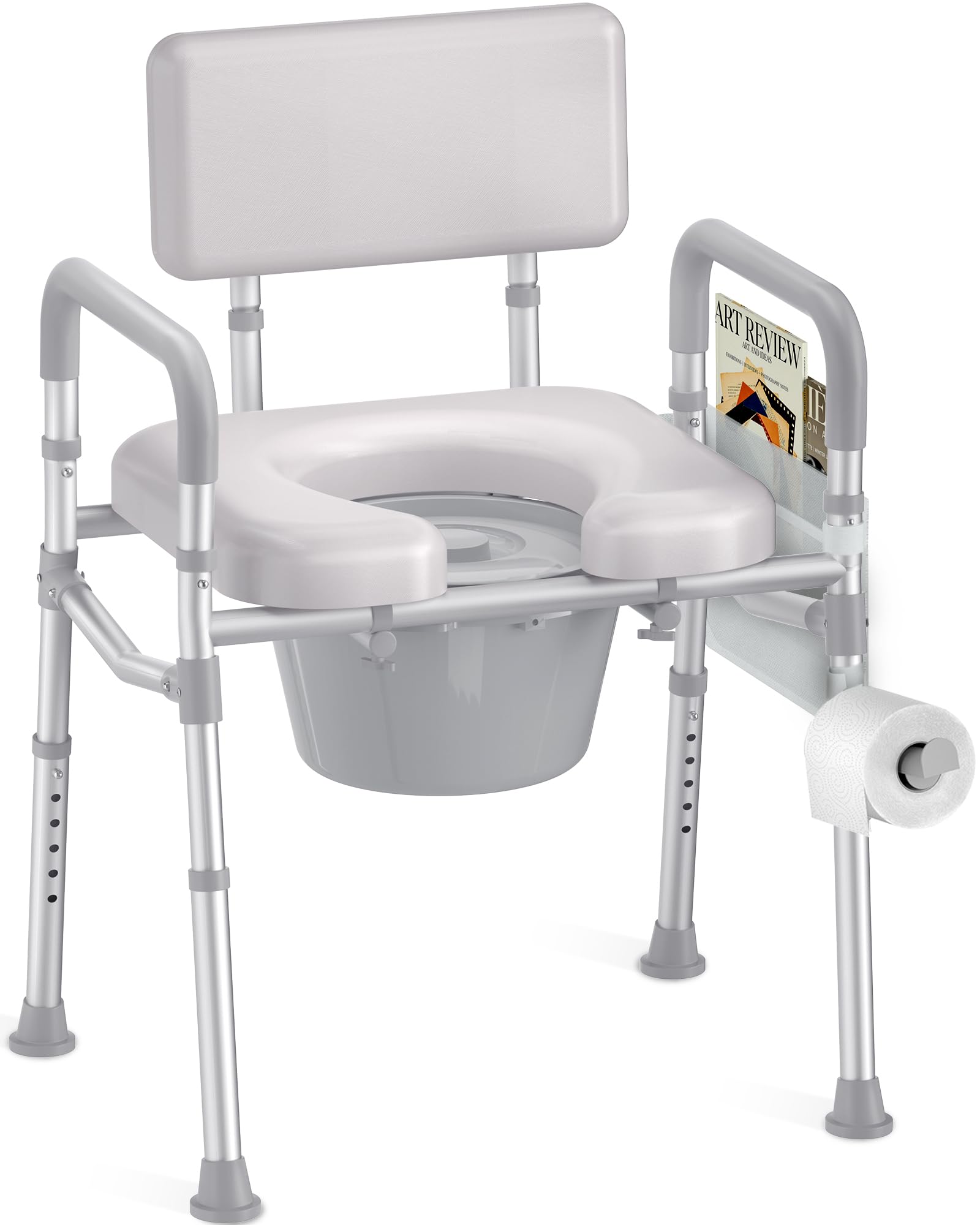
Aluminum is why this chair weighs 11.9 pounds while still carrying a 350-pound rating. If the commode has to move — bedroom to bathroom, upstairs at night, into the car for a weekend — that's the difference you feel every time you pick it up.

The seat is cushioned to 42 mm with a foam-padded backrest behind it, and the frame runs 24 inches across, so there's a real platform around the seat rather than a bare rim. That padding is the difference between sitting for ten minutes and avoiding the chair.

The bucket has a tight-seal lid and a splash guard, and there's an organizer pouch and a toilet paper holder on the frame — the small conveniences that make a chair parked in a bedroom less of a compromise. Height adjusts from 18 to 23 inches on push buttons.

We like it for a specific situation: someone who will sit for a while and still has to move the chair themselves. If it's going to stay beside one bed, the steel HOMLAND does the job for less; if it moves, the padding and the aluminum frame are worth paying for.

Pros

  • 42 mm padded seat and backrest
  • Aluminum frame at 11.9 pounds
  • 24-inch frame with organizer pouch

Cons

  • 6.8-quart bucket fills faster than 7.5-quart chairs
Our verdict

The only chair here that pairs real padding with an aluminum frame — for someone who sits a while and still has to move it.

Check Latest Price
8

Capacity with Comfort

Loyoda Drop Arm Commode

85 /100
Trail Score Excellent

Key details

Arms
Drop-down, both sides
Padding
40 mm seat and backrest
Liners Included
20
Weight Capacity
500 lb
Check Price on Amazon

Five hundred pounds of capacity with drop arms on both sides — that's the gap this one fills. The frame is iron, the seat and backrest are cushioned to 40 mm, and each arm releases with a press-and-hold button so a caregiver can move someone across from the side rather than lifting them. For a heavy user who also wants padding and a side transfer, there isn't much else like it here.

Twenty commode liners come in the box, a small extra we've come to appreciate, because the first week is when liners matter most. Height adjusts across seven settings, the water-resistant seat and backrest wipe down in a minute, and the arms latch back up with the same button that drops them.

Where it sits in this guide is between two chairs. The DMI gives you the capacity without the cushion; the HOLYHEAL gives you both for considerably more money. If the capacity and the padding both have to be there, this is the shortest route to them, and the liners are a decent welcome.

Pros

  • 500-lb iron frame
  • 40 mm padded seat and backrest
  • Drop arms on both sides
  • 20 commode liners included

Cons

  • Heavy at 22 pounds to move
Our verdict

A 500-pound iron frame with padded drop arms and a box of liners — the chair for a heavy user who wants comfort and side transfers.

Check Latest Price

How We Tested the Best Bedside Commodes

We started with the specifications that actually narrow the field: weight capacity, seat height range, width between the arms, and whether the pail pulls out from the front or the side. From there we ordered 14 models — fixed-height and adjustable, folding and knock-down, steel and molded plastic — and put each one in the same two spots: a carpeted bedroom and a narrow bathroom door.

Assembly came first. We built every commode alone, using only the tools in the box, and timed how long it took and noted exactly where the instructions lost us. Then we sat down and shifted weight side to side and front to back, listening for creaks and watching whether the legs walked across the carpet. We measured seat height against a standard mattress so we could say plainly whether getting on and off was a pivot or a squat, and we rolled each frame through a 24-inch doorway to check the fit.

After that, every unit went into a real routine: overnight beside a bed, used during the day by someone recovering from surgery, and cleaned the way a caregiver actually cleans one — a wipe-down and a bucket rinse at the sink. We pulled the pail out one-handed while seated to see whether it jammed, carried a full bucket across a room by its handle, and folded or knocked each one down to see if it fit in a car trunk. By the end of four months we were checking the joints again, because the ones that loosened were the ones that had felt fine on day one.

The commodes that earned a place here are the ones still being used — steady under a push-up, comfortable for a long sit, simple enough to set up without a second person.

How to Choose a Bedside Commode

Start With Seat Height

A commode only works if the user's feet rest flat on the floor. A seat set too high leaves them pushing off their toes to stand, which is the exact unsteady moment the chair exists to prevent. The chairs here run from a 16.5-inch low setting on the Medline to a 25-inch top on the HOLYHEAL, and the DMI doesn't go below 20 inches at all.

Measure from the floor to the crease behind the knee while the user sits in a chair, then pick a model whose range brackets that number with an inch or two to spare. It's the one measurement worth taking before you order.

Read Capacity and Seat Width Together

A weight rating means little if the seat is too small to sit on comfortably. The DMI pairs its 500-pound frame with a 23.25-inch seat; the Medline carries 350 pounds on 19 inches between the arms. A broad adult on a narrow seat ends up perched forward, which is both uncomfortable and less stable.

If the user is heavy or has limited hip mobility, put width first and capacity second, and expect to pay for both. If they're neither, a 350-pound chair with a standard seat is plenty, and the extra money buys padding and mechanisms rather than strength.

Fixed, Padded, or Drop-Down Arms

Arms are what a user pushes against to stand, so every chair here has them; the question is which kind. Fixed arms are simpler and cheaper, and they work for anyone who can stand and pivot on their own. Drop-down arms release at the button so a caregiver can slide someone sideways from a bed or wheelchair instead of lifting them.

If a wheelchair is in the picture, pay for the drop arms. The DMI, the HOLYHEAL, and the Loyoda are the three chairs here that have them, and padding on those arms matters as much as the mechanism when someone grips them to stand.

The Bucket, Lid, and Splash Guard

Most chairs here ship with a 7.5-quart bucket, which is the size to look for. The DMI's 5-liter pail and the 6.3- and 6.8-quart buckets on the padded chairs fill faster and get carried to the bathroom more often. A lid is not optional when the chair sits in a bedroom.

A splash guard is what keeps an over-the-toilet setup from spraying the floor, so check for one if the chair will do double duty. Buy liners whatever the bucket size — the Loyoda includes 20 to start you off.

Folding, Weight, and Where It Lives

Portable in a product title usually means the frame folds, not that the chair is light, and only a few of these manage both. The Carex folds and weighs 8.5 pounds; the aluminum HOMLAND is 11.9; the iron-framed Loyoda is 22.

If the chair will move between rooms, go upstairs, or travel, weight is the number to check first. If it will sit beside one bed for six weeks, folding is a convenience you'll use exactly once — and a heavier, wider frame is the better trade.

Frequently Asked Questions

Final Verdict

Most people should buy the Drive. It does the three jobs, folds flat when the room goes back to normal, and costs less than anything else in this guide — and for a knee replacement, a night-time bathroom run, or a spare room, that's the whole decision.

Where the Drive stops is width. If the person using it is broad or heavy, the DMI is the better buy: 500 pounds of capacity, a 23.25-inch seat, and drop arms that let a caregiver move someone in from the side. And if that person will also be sitting for long stretches, the padded HOLYHEAL covers both needs at a price to match.