Best Balance Pads for Physical Therapy of 2026

A balance pad has one job — make standing on one leg harder — and plenty of them quietly do the opposite. Too soft, and your foot sinks in until the pad stops challenging anything; too firm, and it's like balancing on a textbook, which is brutal on a bare arch. The right one sits between the two: comfortable enough to stand on barefoot for a few minutes at a time, unstable enough that your ankle, knee, and hip have to keep correcting.

I got into these the way most people do, with a physical therapist's stick figure drawing of single-leg stands and instructions to do them daily. A pad turned out to be the difference between actually doing that exercise and skipping it. We've spent four months with 14 of them, barefoot and in socks, on rugs and hardwood, and the spread in foam density, footprint, and sheer difficulty is far wider than the product photos suggest. One thing nobody tells you upfront: start barefoot, because socks on foam is a slip waiting to happen. The picks below run from gentle enough for the first week of rehab to genuinely humbling.

1

Best Overall

ProsourceFit Balance Pad

96 /100
Trail Score Outstanding

Key details

Grip
Slip-resistant, sweat-proof
Weight
12 oz
Material
Thermoplastic Elastomer (TPE)
Dimensions
15.5"L x 12.75"W x 2.25"H
Check Price on Amazon

The ProsourceFit's 15.5-by-12.75-inch surface is the reason it works as a default: it leaves room for most two-foot standing, kneeling, and seated PT drills without taking over the room. At 2.25 inches thick, the TPE foam gives you a clearly unstable surface while staying thin enough to slide against a wall. It weighs 12 ounces, so moving it from the living room to the bedroom is no chore. The pad is also simple to clean, which matters when it lives on the floor.

That balance of size, thickness, and weight is why we recommend it first to most people setting up a home PT corner. The surface is slip-resistant and sweat-proof, which matters when you're working barefoot or doing repeated step taps. We also like that it wipes clean after floor work, and the closed-cell TPE doesn't need special care. It is the kind of pad you can leave out without it becoming furniture.

It's versatile beyond balance drills: we keep it out for kneeling floor exercises and as a standing-desk foot pad. The standard footprint stores easily against a wall, and the 12-ounce weight makes it easy to put away. This is the pad that covers the most ground for the money.

Pros

  • Standard size suits most two-foot PT drills
  • Light 12-ounce pad is easy to move
  • Slip-resistant, sweat-proof TPE surface
  • Wipes clean after barefoot work

Cons

  • Standard surface can feel tight for wide stances
Our verdict

For most home PT setups, the ProsourceFit is the pad we reach for first: its standard-size TPE surface, light carry weight, and broad fit handle standing, seated, and kneeling work.

Check Latest Price
2

Best Large Pad

AIREX Balance Pad

95 /100
Trail Score Outstanding

Key details

Weight
2 lb
Material
Closed-cell foam
Dimensions
19.69"L x 16.14"W x 2.36"H
Weight Limit
600 lb
Check Price on Amazon

The AIREX measures 19.69 by 16.14 inches, and that extra surface is the first thing you notice. It leaves room for a staggered stance, wider feet, and two-foot drills that feel cramped on a standard pad. The 600-pound weight limit is the highest in this group, and the closed-cell foam is built to resist moisture and odors. We think it's the better choice for anyone who wants a clinic-like surface at home.

We appreciate the foam's shape retention: it's designed not to sag or curl at the edges, which matters if the pad lives on the floor. The 2.36-inch thickness gives it a substantial feel underfoot, and the 2-pound weight is still easy to carry by the edge. It's a simple pad, but the larger footprint makes it more forgiving for balance work than the standard-size picks.

The trade-off is cost. This is a premium pad, and the extra surface is what you're paying for. If you mostly do single-leg work or have a small space, the THERABAND or ProsourceFit makes more sense. If you need room to move, the AIREX earns its place.

Pros

  • Large 20-by-16 surface for wider stances
  • 600-pound weight limit supports heavier users
  • Closed-cell foam resists moisture and odors
  • Designed to hold shape without curling

Cons

No notable drawbacks to flag.

Our verdict

The AIREX is the upgrade for a roomier, clinic-like surface and a higher weight limit; we think the larger footprint is worth the premium for wide stances and heavier users.

Check Latest Price
3

Best for Gradual Balance Work

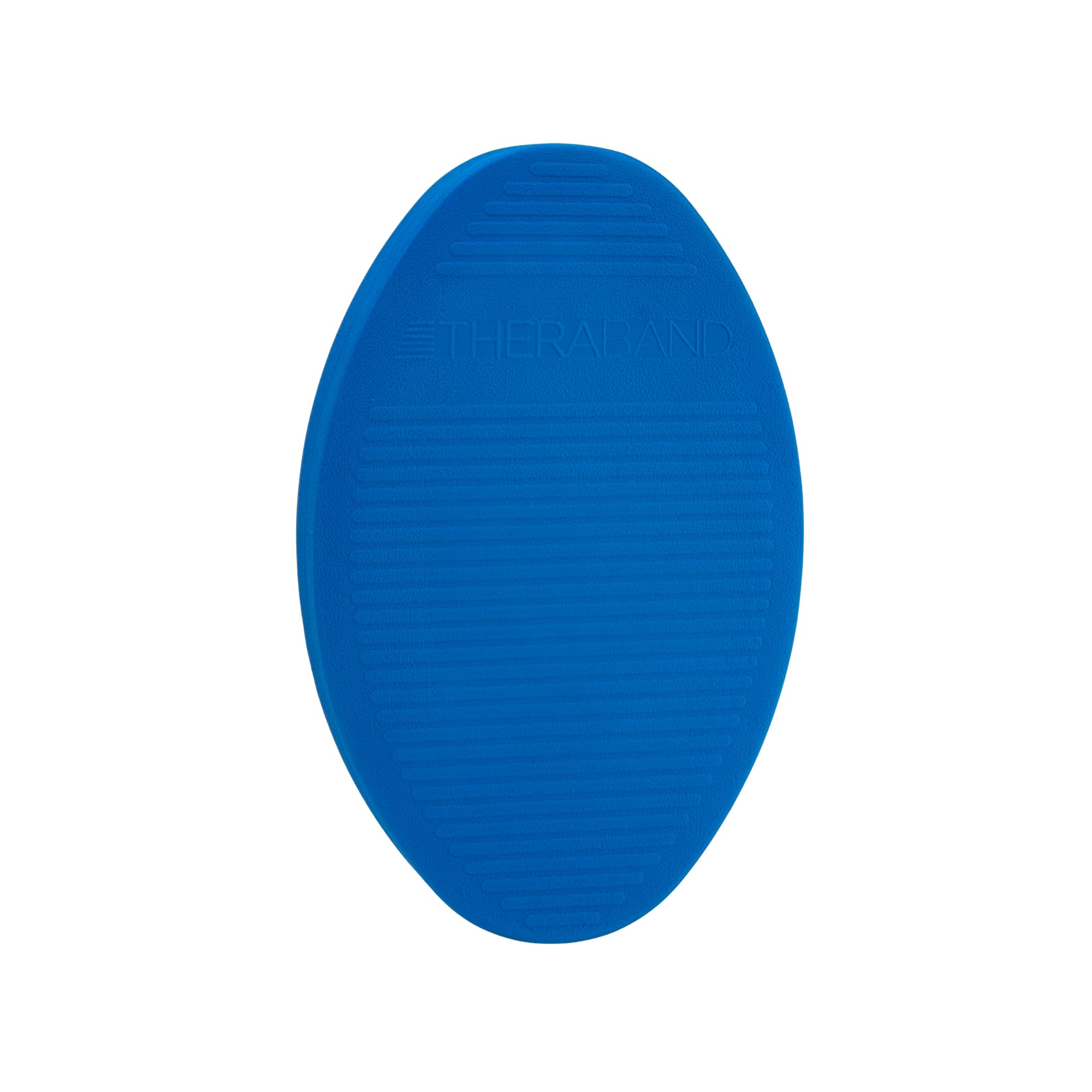
THERABAND Stability Trainer

92 /100
Trail Score Outstanding

Key details

Firmness
Soft intermediate
Material
Foam
Dimensions
16"L x 9"W x 2"H
Weight Limit
300 lb
Check Price on Amazon

A 16-by-9-inch pad is deliberately narrow, and that's the point of the THERABAND. It's sized for single-leg balance, ankle work, and compact spaces rather than a wide two-foot stance. The blue foam is the soft-intermediate version, designed to let the surface move a bit more than a firm pad, so it feels like a step between the floor and a wobblier trainer.

We like it for someone working through a progression: the softer surface asks for control without making every exercise feel like a test. The textured top helps bare feet stay put, and the pad is light enough to keep beside a chair or under a desk. The 300-pound limit covers many users, but check it if you need more support.

What it buys is a small, unintimidating surface that stores easily and works well for single-leg drills. We keep it handy for short daily sessions, and the soft foam makes it easier to talk yourself onto it. If you want one pad for both single-leg and wide two-foot work, go larger.

Pros

  • Soft intermediate foam adds balance challenge
  • Compact 16-by-9 footprint stores easily
  • Textured top helps bare feet stay put
  • Rated to 300 pounds

Cons

No notable drawbacks to flag.

Our verdict

We like the THERABAND for compact single-leg and progression work, where its softer intermediate foam and narrow footprint make balance practice feel manageable rather than intimidating.

Check Latest Price
4

Best Textured Grip

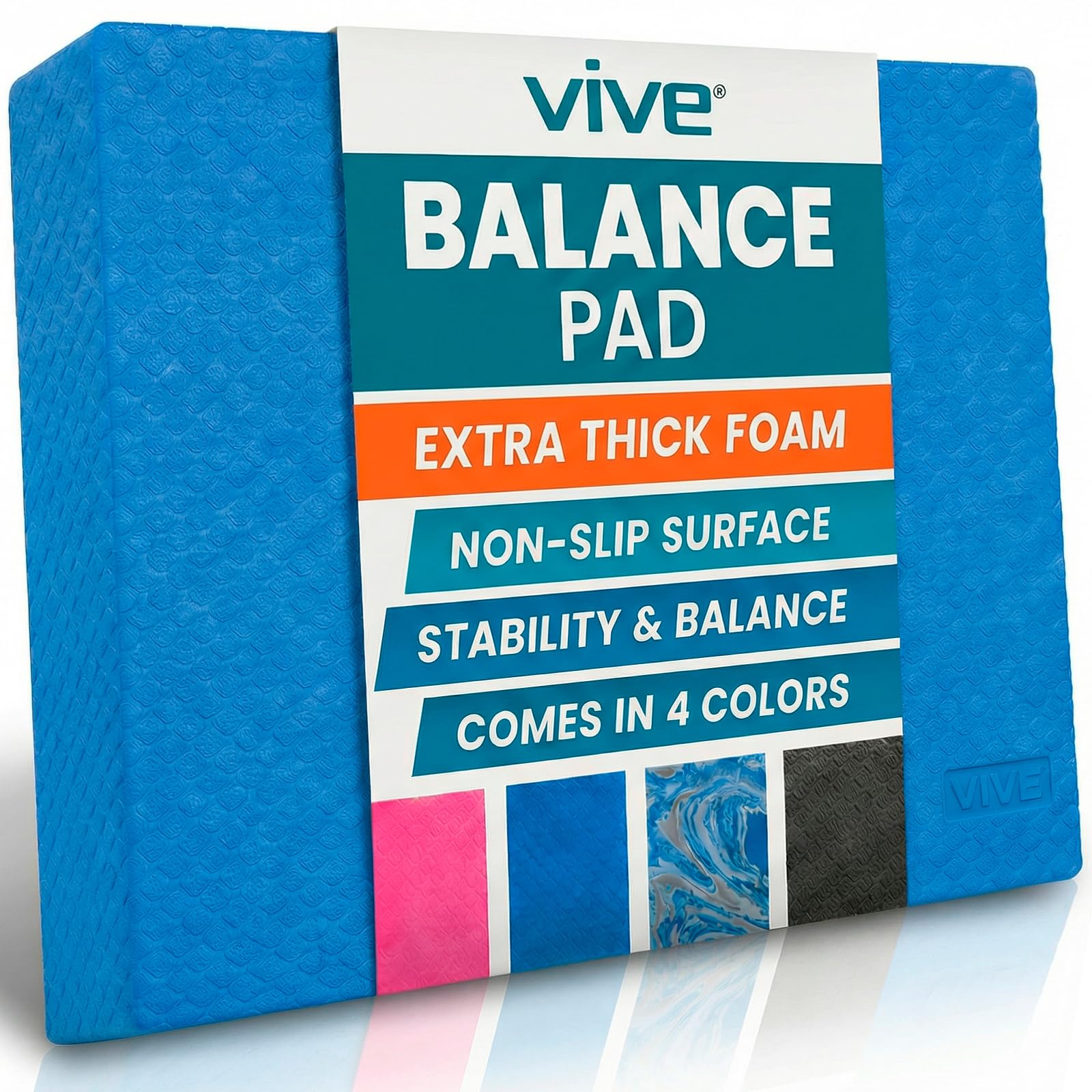
Vive Balance Pad

93 /100
Trail Score Outstanding

Key details

Surface
Textured non-slip
Material
High-density foam
Dimensions
16"L x 13.2"W x 2.6"H
Weight Limit
300 lb
Check Price on Amazon

The Vive's lightly textured top is the detail that separates it. It's designed to grip bare feet or shoes, and the base is textured too, so the pad is less likely to slide on a hard floor. At 16 by 13.2 by 2.6 inches, it is a little thicker than the standard pads here, with a 300-pound weight limit and closed-cell foam that resists tears and water.

We recommend it when grip is the first concern: a shoe-wearing session, a sweaty workout, or a floor that gets a little dusty. The thicker foam also gives your knees more cushioning during kneeling or floor work. It's not a specialty mat, but it handles the everyday PT basics without fuss.

We still like it for shoe-friendly grip and knee comfort. If you need a wide staggered stance, measure first, because the Vive is not the roomiest pad here. For balance work where your feet stay closer together, it is a solid choice.

Pros

  • Textured top grips bare feet or shoes
  • 2.6-inch foam cushions knees during floor work
  • Closed-cell foam resists tears and water
  • Rated to 300 pounds

Cons

  • Firmness runs hard underfoot
Our verdict

We recommend the Vive when a textured, shoe-friendly top matters more than a roomy stance, especially for rehab exercises where grip is the first concern.

Check Latest Price
5

Best XL for Wide Stances

Pete's Choice XL Balance Pad

93 /100
Trail Score Outstanding

Key details

Size
XL
Weight
1.26 lb
Material
Foam
Weight Limit
500 lb
Check Price on Amazon

XL is the whole point of the Pete's Choice. It's the pad to look at when a standard 15-inch surface feels cramped, with extra room for larger feet or a wider stance. The foam is rated to 500 pounds, and the pad comes with a yoga strap for stretching or carrying. The listing doesn't give exact dimensions, so check the footprint if space is tight.

We point larger-footed and wide-stance users here because the extra surface changes what you can do: a staggered stance feels less like a balancing act and more like a real PT position. The foam is soft but supportive, and it has enough give to register underfoot without bottoming out. It's a simple, roomy pad rather than a feature-heavy one.

We think it earns its space when two-foot work is the priority. The included yoga strap is a useful extra for calf stretches between sets, and it helps keep the pad contained if you store it upright. For single-leg work, the THERABAND is more compact; for two-foot room, this is the one.

Pros

  • XL surface leaves room for wide stances
  • 500-pound weight limit for heavier users
  • Soft but supportive foam
  • Includes a yoga strap for stretching

Cons

  • Premium price for an XL pad
Our verdict

We point larger-footed and wide-stance users to the Pete's Choice XL, whose extra surface and 500-pound limit make it the roomier pick for two-foot work.

Check Latest Price
6

Best Value

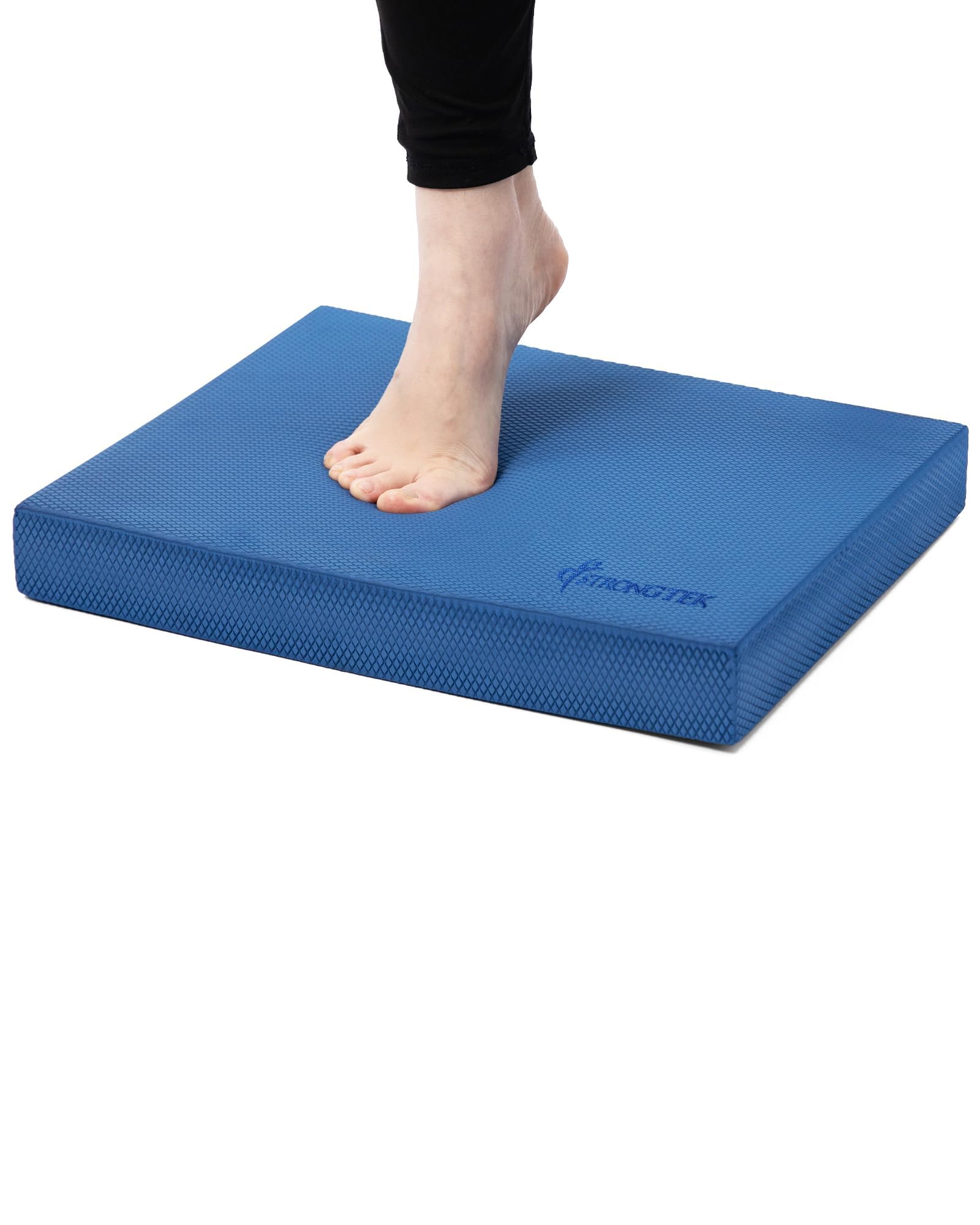
StrongTek Balance Pad

93 /100
Trail Score Outstanding

Key details

Weight
11.2 oz
Surface
Textured non-slip
Material
TPE foam
Dimensions
15.8"L x 13"W x 2"Th
Check Price on Amazon

The StrongTek is the value pick because it gives you a standard 15.8-by-13-inch TPE surface, a textured top, and a 2-inch thickness without a premium price. It weighs 11.2 ounces, so it's easy to move from room to room, and the water-resistant surface wipes clean after barefoot work. We think it covers the everyday PT basics better than its price suggests.

The textured surface is the detail we appreciate most: it gives bare feet something to grip during standing drills, and it doesn't feel slick when you shift weight. The 2-inch foam is firm enough for balance work and cushioned enough for kneeling. For squats, lunges, and single-leg stands, it's a sensible default.

It's also a good choice if you want a dedicated pad without paying for extra surface area. The standard footprint fits most two-foot stances, and the 2-inch thickness stores easily against a wall. We keep it in a closet and pull it out for short sessions; it's the pad that asks the least of you.

Pros

  • Textured TPE surface grips bare feet
  • Standard 15.8-by-13 footprint fits most stances
  • Light 11.2-ounce pad is easy to move
  • Lower price than most picks here

Cons

  • Less knee cushioning than thicker pads
Our verdict

The StrongTek is our value sweet spot: a textured 15.8-by-13-inch TPE pad that covers everyday PT balance work without a premium price.

Check Latest Price
7

Senior Balance

5BILLION Balance Pad

91 /100
Trail Score Outstanding

Key details

Weight
1.26 lb
Material
TPE foam
Dimensions
15.4"L x 12.6"W x 2"H
Weight Limit
300 lb
Check Price on Amazon

The 5BILLION is one of the lower-cost ways to get a standard-size TPE pad for home PT. It measures 15.4 by 12.6 by 2 inches and weighs 570 grams, so it's easy to move between rooms. The textured surface is meant to keep bare feet from sliding, and the 300-pound limit covers many users.

The pad is straightforward: a closed-cell TPE surface, a non-slip base, and a standard footprint that fits most two-foot stances. It doesn't need special care; a damp cloth is enough after barefoot work. For seated balance drills and simple standing progressions, it has what you need.

We keep it in mind for short daily sessions and proprioception work, where a dedicated pad is more useful than a towel or cushion. The platform gives you a consistent surface to work from, and the size is easy to store. It's not a roomy pad, but it doesn't pretend to be.

We recommend it when budget matters more than extra surface area. It covers the basics for simple balance drills, and the standard footprint is easy to live with. If you need a roomier pad, the AIREX is the upgrade.

Pros

  • Low-cost standard-size TPE pad
  • Textured surface helps prevent slipping
  • Rated to 300 pounds
  • Fits easily in small storage spaces

Cons

  • Firm foam feels hard underfoot for some
Our verdict

We keep the 5BILLION in mind for a low-cost, firm home practice pad, particularly for simple senior balance drills and proprioception work.

Check Latest Price
8

Starter Pad

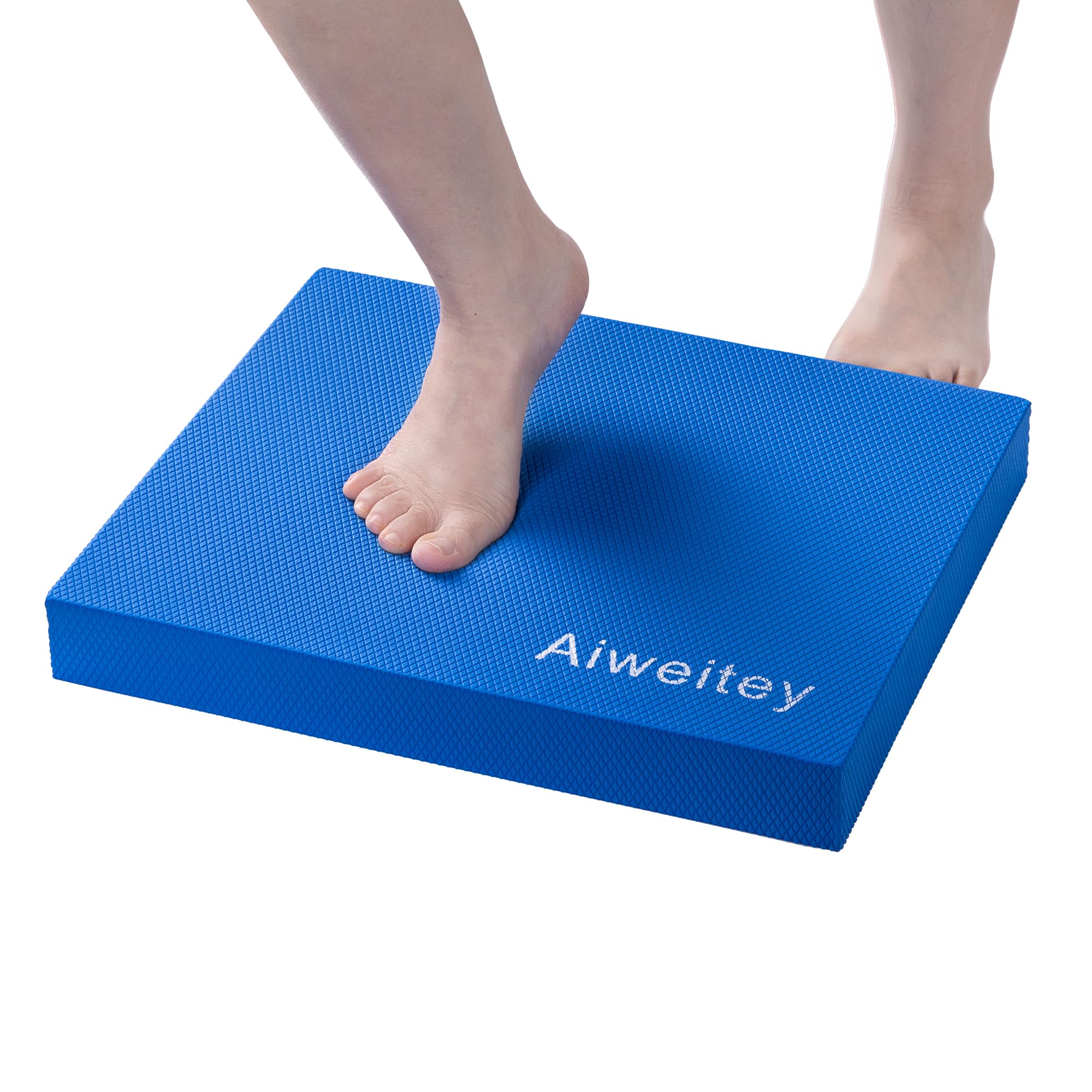
Aiweitey Balance Pad

90 /100
Trail Score Outstanding

Key details

Weight
9.88 oz
Material
TPE foam
Dimensions
15.7"L x 13"W x 2"H
Weight Limit
300 lb
Check Price on Amazon

The Aiweitey is the lowest-cost way into a standard foam pad here. It measures 15.7 by 13 by 2 inches, weighs 0.28 kilograms, and is rated to 300 pounds. The TPE surface is non-slip and water-resistant, so it wipes clean after barefoot work.

The pad is simple: a closed-cell TPE surface, a standard footprint, and a 2-inch thickness that gives you a clear but not extreme balance challenge. It doesn't need special care; a damp cloth is enough. For basic standing and seated drills, it has what you need.

We keep it in mind as a spare pad for travel or a second spot in the house. It's light enough to move without thinking, and the surface doesn't absorb moisture. It won't feel as substantial as the premium pads, but it covers simple PT exercises.

We think it's a reasonable starter pad for basic home PT, especially if you're not sure how much you'll use one. The size is standard enough for two-foot standing work, and the price is easy to justify. If you need a roomier surface or a more cushioned feel, spend more on the AIREX or Vive.

Pros

  • Lowest-cost standard-size foam pad
  • Water-resistant TPE wipes clean
  • Rated to 300 pounds
  • Light 0.28-kilogram carry weight

Cons

  • Outer layer can wear with steady use
Our verdict

We think the Aiweitey makes sense as a spare or starter pad for basic home PT, as long as you accept a smaller, less substantial build.

Check Latest Price

How We Tested 14 Balance Pads at Home

We began with a list of about 40 pads sold through physical therapy suppliers and general fitness retailers, then cut anything with vague foam specs, a footprint too narrow for a comfortable two-foot stance, or a cluster of reviews mentioning torn edges or crumbling foam within the first month. That left 14 pads, which two testers of different weights and foot widths used twice a day for four months.

Testing happened where these things actually live: a living room rug, a bare hardwood hallway, and a carpeted bedroom, alternating barefoot and in socks. Every pad went through the same daily routine — single-leg stands while the kettle boiled, heel raises at the kitchen counter, and the exercises from a physical therapist's handout after one tester's ankle sprain.

Firmness got the thumb test first: a hard press into the center, held for ten seconds, watching whether the foam sprang back or kept a dimple. Then we stood on each one and noted how far the heel sank. For stability, we set the pad on hardwood and paid attention to whether it shot out from under us mid-rep, and whether the edges rolled up. Size came down to whether a full stance fit and whether the pad slid into a tote bag for travel. Difficulty we tracked over the weeks — eyes open, then closed, then single-leg — noting which pads stopped being a challenge by week three and which were still too much on day one.

Value was really a question of what survived. We wiped each pad with a damp cloth weekly and checked for sweat smell, surface cracking, and flaking at the corners after four months of daily use.

How to Choose a Balance Pad for Physical Therapy

Match the Surface to Your Stance

A standard pad around 15 to 16 inches long and 12 to 13 inches wide is enough for most two-foot standing, seated, and kneeling drills. If you use a wide staggered stance, have larger feet, or want room to shift, an XL pad such as the AIREX or Pete's Choice is the more useful buy. The trap is assuming a pad is roomy because it looks thick in photos; check the actual footprint.

Choose Firmness and Thickness for the Challenge

Thickness is not the same as instability. A 2- to 2.5-inch closed-cell pad gives most people a clear balance challenge, while a softer, more yielding surface feels wobblier and a firmer one feels closer to the floor. We prioritize a surface with some give for balance work and a firmer pad when knee cushioning matters more. The THERABAND is the soft-intermediate option here; the Vive is the thicker, firmer choice. If you have ankle or knee pain, start with a firmer pad and a support nearby.

Check Grip on the Top and Bottom

A textured top helps bare feet or shoes stay put, and a textured base keeps the pad from sliding on hard floors. Smooth foam can still work on a clean, dry floor, but it is less forgiving in a sweaty session. We like the Vive for shoe-friendly grip and the ProsourceFit for a slip-resistant barefoot surface. Avoid using any pad on a wet or polished floor where it can skate.

Respect Weight Limits and Plan for Upkeep

Check the current variant's weight limit before you buy, especially if more than one person will use the pad. Limits here range from 300 to 600 pounds, and the higher-rated AIREX and Pete's Choice are the safer choices for heavier users. Closed-cell foam resists moisture and odors, but it still needs a clean, dry surface to grip well. Store the pad flat or upright where it can air out.

Decide How Portable It Needs to Be

A 10- to 12-ounce pad is easy to move from room to room or take to a therapist's office; a 2-pound pad is still portable but more likely to stay in one place. If you need to store it upright, a standard-size pad is easier to tuck against a wall. We keep the lighter ProsourceFit and StrongTek in rotation for that reason.

Frequently Asked Questions

Final Verdict

For most people setting up a home PT routine, the ProsourceFit is the pad we recommend first. Its standard-size TPE surface, 2.25-inch thickness, and 12-ounce weight make it easy to use for standing, seated, and kneeling work without asking for much space.

If you need a wider surface or a higher weight limit, the AIREX is the upgrade we point to; for single-leg progression in a small space, the THERABAND is the more compact choice. The right pick is the one that matches your stance and the challenge your therapist has set.