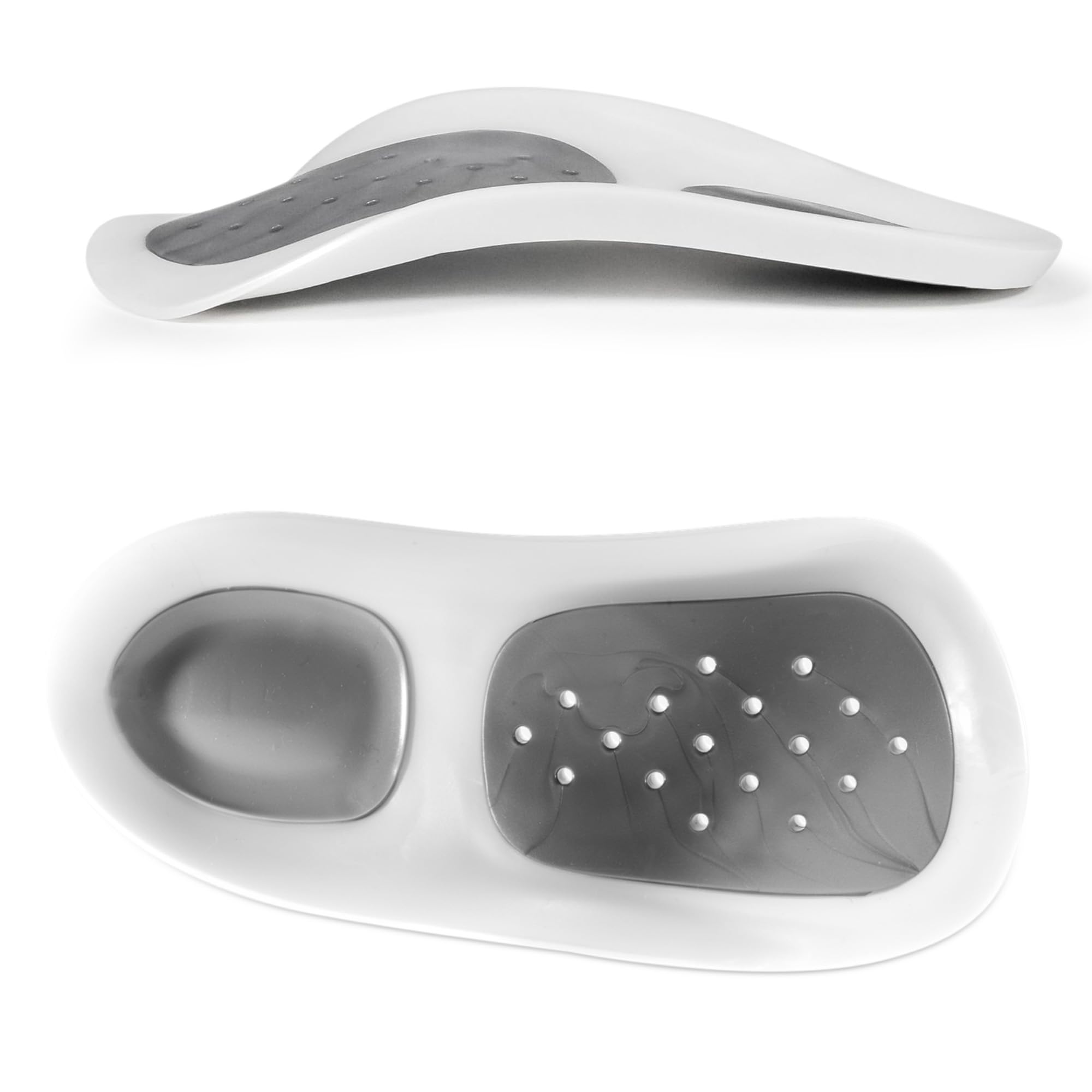
Best At-Home Custom Orthotics of 2026

At-home custom orthotics promise the support you used to need a podiatrist's office for, without the appointment or the plaster cast. The catch is that "custom" means something different on every kit: some use foam impression trays, some a digital scan, others a moldable insert you heat and shape yourself. Get the arch height or thickness wrong and you'll feel it in your heel by lunchtime; get it right and a long grocery run stops being a countdown to sitting down.

I was skeptical of molding my own medical device at the kitchen table, but ten kits and eight months later, the differences are not subtle. Some felt supportive from the first mile; others went flat or rubbed my arch raw. We looked at comfort, fit, durability, cushioning, thickness, and value, plus whether knee and heel pain actually eased on normal days. The picks below earned a permanent spot by the door; the rest went back in the box.

1

Best Overall

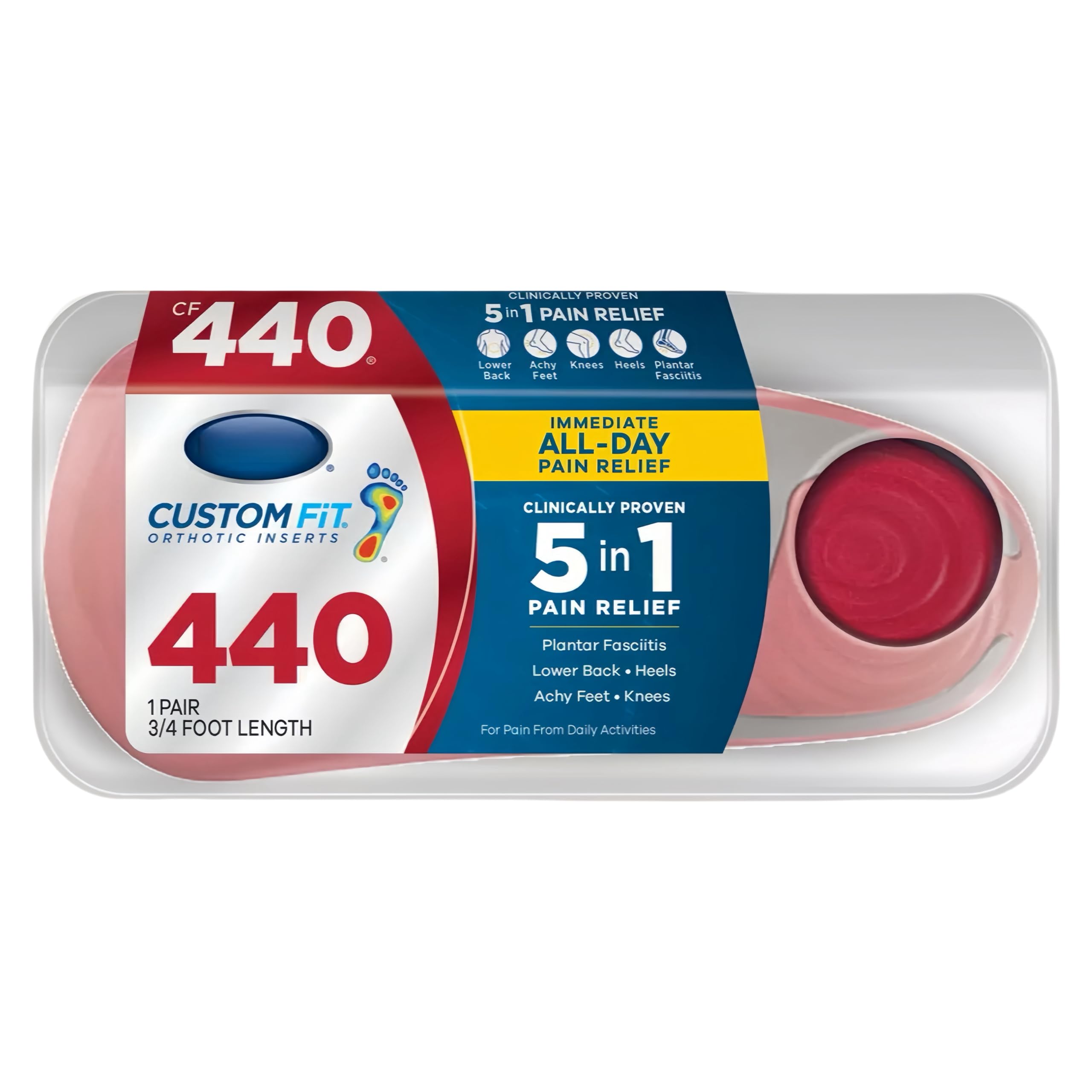
Dr. Scholl's Custom Fit CF440

93 /100
Trail Score Outstanding

Key details

Length
3/4 length
Trimming
Not required
Cushioning
Three layers
Arch Support
Adaptive 3D arch
Check Price on Amazon

A three-quarter footbed sounds like half a product. In practice the shorter cut is the reason this pair goes into shoes the others can't: it stops short of the toes, so it never crowds a pointed toe box, and it sits on top of a glued-in factory insole instead of replacing one. No trimming, no scissors, no tracing around an old insole on the kitchen counter.

That's what made it our default. Plenty of inserts promise arch support; the harder problem is getting one into the loafers, work shoes and low-profile sneakers people actually wear all day. What we noticed is how little disagreement there is about whether it works — the doubts land on shoe fit and how long the materials hold up, not on the support itself.

Three layers do the work underfoot: a shock-absorbing base, an adaptive 3D arch, and a soft top cloth that takes pressure off the ball of the foot. It reads as cushioned rather than corrective, so you get arch support without the hard posted feel of a rigid device — the reason it holds up for a long shift on your feet as well as a walk around the block.

Fit is the thing to check before you commit. In a slim dress shoe the extra volume shows up as a snug instep, so try them in the pair you plan to wear most. The shorter length helps, but it can't make a tight shoe roomier.

Pros

  • Slides in without trimming
  • Three-layer cushioning for all-day standing
  • Pain relief holds up better than any other pick here
  • Works over glued-in factory insoles

Cons

  • Fixed shape with no molding or arch-height adjustment
  • Foam compresses with heavy daily wear
Our verdict

We recommend it as the default because it gets real arch support into shoes other inserts can't enter, and its pain relief holds up as well as anything in this set.

Check Latest Price
2

Best Moldable

SOLE Active Medium

88 /100
Trail Score Excellent

Key details

Sizing
Multiple sizes
Molding
Custom moldable
Arch Profile
Medium
Item Dimensions
11.25 x 4.5 x 2 in
Check Price on Amazon

Moldable is the whole argument for this pair. You shape it yourself before the first wear, so the arch lands where your arch actually is rather than where a factory guessed — and we think that's worth paying for if you have a high, rigid arch that standard insoles skate under. The trade-off arrives on day one: this is a firm insole, and the first few days feel closer to standing on a shaped board than on a cushion.

Give it a week and the firmness reads as support rather than hardness. Where this pair separates from the cheaper picks is staying power: it's the moldable option that holds up best, and the structure keeps its shape instead of flattening into a soft pad under the heel. In running shoes and roomy sneakers it disappears underfoot; in a snug flat it will feel like too much insert, and no amount of break-in fixes a shoe with no room in it.

Sizing is the practical snag. These run small against your usual shoe size, so go up rather than wrestling a full-length footbed into a shoe that was snug to begin with. Check depth too: a moldable full-length insert needs a shoe with a removable factory insole, or at least enough room above the toes that your foot doesn't ride up against the laces.

Pros

  • Molds to your own arch before first wear
  • Holds its shape better than the softer picks here
  • Firm support for high, rigid arches

Cons

  • Runs small against standard shoe sizes
Our verdict

Buy this one if you want the insert shaped to your foot instead of the other way around, and you don't mind a firm ride through the first week.

Check Latest Price
3

Best for High Arches

FootChair Adjustable Arch

84 /100
Trail Score Excellent

Key details

Size
Women's 9-10.5 / Men's 7-8.5
Length
Full length
Shoe Type
Removable insoles
Arch Height
Adjustable with pads
Check Price on Amazon

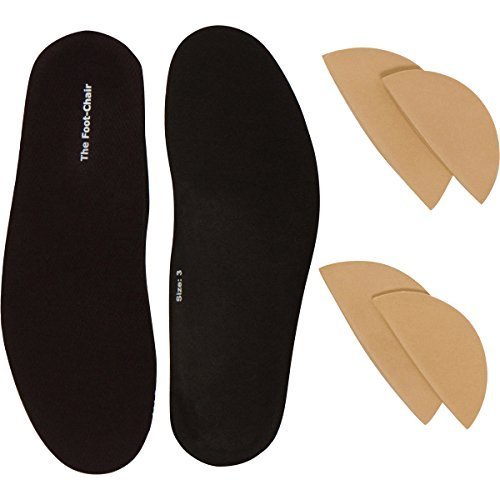
FootChair is unusually direct about its own demands: this is a higher-arched footbed than most off-the-shelf pairs, and it wants a shoe with a removable insole and a little spare room. That warning is the honest version of what you're buying — a footbed built with room to be raised, and the option to bring it back down if your foot disagrees.

The mechanism is simple and it works. A set of removable pads sits under the arch; leave them all in for the most lift, take them out one at a time until the pressure feels even from the heel across to the ball of your foot. That's the closest thing in this group to a fitting you conduct yourself at the kitchen table, and it's why we send high-arched readers here first. The footbed runs full length and contoured, so the ball of the foot gets pressure relief along with the arch.

What we like most is the direction of the adjustment. Almost every insert on a shelf offers more or less cushioning; this one lets you take arch height down when a footbed feels like it's shoving your foot outward. Give it two weeks before deciding a setting is wrong — the arch settles as the pads compress, and a height that feels aggressive on day one often reads as even support by the end of the first week.

Pros

  • Arch height adjusts with removable pads
  • Full-length contour from heel to ball
  • Built for arches that standard inserts underserve

Cons

  • Wears down faster under heavy daily use
Our verdict

If every insert you've tried feels like it's pushing your foot outward, these removable pads let you come down to a height your arch will actually accept.

Check Latest Price
4

Best for Testing Arch Heights

WalkFit Platinum

86 /100
Trail Score Excellent

Key details

Heel Cup
Gel-padded Bio-Lock
Material
Thermoplastic and rubber
Arch Inserts
Low, medium, high plus reflexology
Check Price on Amazon

Almost every insert comes in one arch height, and you find out whether it's yours somewhere around the second mile. WalkFit's answer is to put three in the box — low, medium and high arch supports — plus a fourth textured insert, so the height becomes something you choose instead of something you guess at checkout.

We like that for anyone who has never had their arch measured and doesn't want to pay for the wrong guess. Start at medium, wear it a few days, swap down if you feel pressure under the arch, up if your foot still rolls inward. The gel-padded heel cup is the other part we rate: on a hard floor it takes the sting out of the strike in a way a flat insert doesn't.

Comfort is where this pair splits hardest, and it's worth being blunt. The shell is unyielding, and some wearers never settle into it, low arches especially. Break-in helps — an hour or two a day at first, building up over a week or so. If the arch still feels like a lump after that, the height is wrong rather than the break-in.

What you're buying is optionality: three heights in one purchase and a heel cup that cushions tile and concrete. If you already know your arch height and it's settled, that flexibility is worth less to you than a single well-shaped insert — our top pick is the simpler purchase in that case.

Pros

  • Three arch heights in one purchase
  • Gel heel cup cushions hard floors
  • Change height without buying another pair

Cons

  • Runs wide in narrow shoes
  • Shell can crack under heavy use
Our verdict

Three arch heights in one box make this the pair to buy when you don't yet know your arch profile — just be ready for a firm, unyielding shell.

Check Latest Price
5

Snug Shoes

ProFoot Original Miracle

87 /100
Trail Score Excellent

Key details

Model
Original Miracle
Arch Shape
Molded to your foot
Customization
Mold-it-yourself
Check Price on Amazon

This is the least expensive pair on the page, and it's the one we point to when the real question is whether an orthotic helps your feet at all. The molding is do-it-yourself and the result is soft rather than structural — these read as a cushioned insole with an arch in it, which is exactly why they disappear into flat sneakers and canvas shoes where a rigid pair would be unbearable.

What they get right is volume. A thin, soft insert is the only kind that fits into a shoe that's already snug, and the cushioning takes a real edge off standing on concrete or tile. The arch is a soft shape rather than a posted one, so think of this as comfort support more than correction — it won't hold a collapsing arch the way a molded shell does.

Pros

  • Thin enough for snug shoes
  • Soft cushioning for hard floors
  • Least expensive way to try an orthotic

Cons

  • Loses its arch sooner than any other pick here
Our verdict

At the lowest price here, it's the low-risk way to find out whether an orthotic helps your feet before you commit to a molded pair.

Check Latest Price
6

Budget 3/4 Length

Custom Fit CF 440 3/4 Length

90 /100
Trail Score Outstanding

Key details

Length
3/4 length
Sizing
Unisex
Weight
7.83 oz
Item Dimensions
8.26 x 3.54 x 1 in
Check Price on Amazon

Same three-quarter-length shape as our top pick, a good deal less money, and a much shorter history — that's the trade in one line. If the trim-free cut is what you're after and the brand name isn't, this does the same job on paper: it stops short of the toes, slips in over a fixed insole, and claims the same broad coverage from heel to ball.

The build is close enough that the differences sit in the details rather than the concept. It's sold as unisex, which is friendlier if no sizing chart has ever fit you properly, and it carries the same 7.83-ounce weight as the better-known version — light enough that you stop noticing it once it's in the shoe.

What keeps it in the also-consider tier is mileage. This is a newer product with a much shorter record than the established picks, and long-term wear is the open question that a cheaper copy of a proven shape can't shortcut. That makes it the pair to try if you're testing whether a 3/4 insert suits your feet, rather than the pair to commit to for years of daily wear.

Pros

  • 3/4 length with no trimming
  • Less expensive than the equivalent brand-name insert
  • Light at 7.83 ounces

Cons

  • Long-term durability is unproven
Our verdict

The same trim-free shape as our top pick for less money — a sensible experiment if 3/4 inserts are new to you, with the caveat that its long-term record is short.

Check Latest Price

How We Chose and Tested At-Home Custom Orthotics

We built the shortlist by reading through kits sold without a prescription and filtering for clear molding instructions, at least two arch-height options, a spread of prices, and enough trim room to fit a range of shoe sizes. Ten kits made the cut. I molded each pair at my kitchen table, following the directions exactly, then trimmed only where the kit allowed and noted how much material I had to remove to get a clean fit inside a sneaker, a work shoe, and a hiking boot.

Over eight months, I wore each kit for at least three weeks, rotating them through the same routines: the morning dog walk, a workday that mixes sitting and standing, weekend errands, and one longer walk each week. Right after molding, I checked for heel slip, pressure under the arch, and whether my toes felt pinched by thickness. During wear, I noted hot spots at 30 minutes and again after two hours, and I kept a short log of heel and knee ache before and after errands so pain relief wasn't just a vague memory.

Durability got the least glamorous test: I pulled the inserts in and out of shoes daily, checked whether the foam compressed or the top cover frayed, and compared how the arch felt in month one versus month three. For value, I asked whether the insert still felt supportive after weeks of use, not just on the first afternoon. The kits that scored best were the ones that stayed comfortable, held their shape, and made ordinary walking feel less like a calculation.

How to Choose At-Home Custom Orthotics

Four Ways an Insert Becomes Yours

Moldable pairs are shaped by you before the first wear, which is the right answer when nothing standard has ever matched your arch — a high, rigid one most of all. Adjustable designs use removable pads under the arch and suit anyone who finds inserts consistently too high. Interchangeable designs put several arch heights in the box, the safest choice when you have no idea what height you need. A fitted three-quarter shape, like our top pick, is a known quantity you buy for its cut rather than its adjustability.

The trap is the phrase custom fit. On a box it can mean a fixed shape matched to your foot at purchase, not something you can change afterward. Ask what you'll actually be adjusting; if the answer is nothing, buy it for its shape and shoe fit rather than for customization.

Start With the Shoe, Not the Insole

A full-length insert replaces the factory footbed, so the shoe needs one that lifts out and enough depth above the toes that your foot doesn't ride up against the laces. A three-quarter insert skips all of that: it sits on top of a glued-in insole and stops short of the toe box, which is why it's often the only workable option in loafers, dress shoes and low-profile sneakers.

Whatever you choose, an insert adds volume. If a shoe is snug now it will be tighter with a footbed in it, and flexing the leather won't fix that. Trim only where the maker allows it, a little at a time, checking against the shoe's own outline rather than your foot — an insert cut to your foot can still be too wide for the shoe.

Arch Height, Not Just Arch Support

Too much arch is as uncomfortable as too little, and the symptoms differ. Pressure under the arch with your foot pushed toward the outside edge usually means the height is too high; a foot rolling inward with the heel sliding means it's too low. Adjustability is what makes this fixable at home — a pad you remove, or a lower insert already in the box.

We treat the first week as a test of height rather than of comfort. Firmness settles with wear; geometry doesn't. If the arch still feels like a lump after a week of daily use, change the setting or change the insert.

Budget for Replacement, Not Just Purchase

Every insert here is a consumable. Foam compresses, top cloths wear through, and soft designs flatten well before molded shells do, so the cheapest pair is rarely the cheapest year of wear. If you're on your feet all day, expect to replace a soft pair noticeably sooner than a firm one.

Buy for the shoes you wear most, not the shoes you wear occasionally. An insert living in the pair you put on five days a week is doing the work; one that migrates between six pairs tends to be in the wrong shoe when you need it.

When an At-Home Insert Isn't Enough

Over-the-counter inserts are a reasonable first step for common arch, heel and ball-of-foot discomfort. They are not a substitute for an examination if you have diabetes, neuropathy, poor circulation or reduced sensation in your feet, or if you have an open wound, a sudden change in one foot, or pain that keeps worsening.

Take out any insert that causes numbness, tingling or skin irritation rather than relief before you decide the insert is at fault. Sometimes the shoe is the problem, and a roomier pair solves it.

Frequently Asked Questions

Final Verdict

For most people the answer is the Dr. Scholl's Custom Fit CF440. Nothing else here gets support into as many different shoes without trimming, and its pain relief holds up as well as anything in this group — which is what you want from a first pair.

The decision changes if you want to do the shaping yourself: SOLE's moldable insole is the pick there, and the better long-term buy for a high, rigid arch. If standard inserts have always felt too high, FootChair's removable pads let you come down to your own level.