Best Ashwagandha Supplements of 2026

Ashwagandha has a reputation as the calm-down supplement, but the bottle is where that calm often stalls. I started paying attention to it during a stretch of 3 a.m. wake-ups and tense afternoons, when I wanted something that would take the edge off without turning me into a zombie by dinner. What I found is that the category is uneven: some capsules are easy to swallow and quietly useful, while others are oversized, gritty, or so mild you wonder if you missed the dose. The right one should fit into a normal day and help you feel steadier — not add another chore.

To sort that out, my team and I spent 12 weeks with 14 supplements, from capsules and gummies to loose powders. We paid attention to whether they actually softened stressful moments, whether sleep felt more settled, and whether mood stayed on an even keel. Just as important: taste, pill size, texture, and whether the label matched what was in the scoop. The picks below earned a place on the counter, not just in the cabinet.

1

Best Overall

NutriRise Organic Ashwagandha

91 /100
Trail Score Outstanding

Key details

Organic
Yes
Capsule Count
120
Added Ingredient
Black pepper
Ashwagandha Dose
1,300 mg per serving
Check Price on Amazon

The 1,300 mg serving is the number that defines this bottle, and it is the reason we put it at the top of this group. NutriRise uses organic ashwagandha root powder rather than a leaf blend, adds black pepper, and packs 120 capsules into the bottle. That combination reads like a daily stress-support supplement rather than a flavored add-on, which is exactly what most shoppers searching for ashwagandha are after.

We like the root-only approach. Some formulas stretch ashwagandha with leaf material; this one keeps the focus on the root and leans on black pepper to support absorption. The label does not give a standardized withanolide percentage, so it is not the pick for someone who wants to compare extracts by a precise marker. It is the pick for someone who wants a straightforward, organic root powder at a meaningful dose.

The capsule format is the other practical advantage. There is no gummy texture to get past, no large tablet to break in half, and no added flavor to tire of. We also appreciate that the bottle is big enough to settle into a routine instead of running out in a couple of weeks.

The trade-off is that this is not a one-capsule-and-done product for everyone. Check the serving size on the label and count how many capsules you actually take; if you want the smallest possible pill count, a concentrated extract may suit you better. We also do not treat the 1,300 mg figure as a trophy. More is not automatically better with ashwagandha, and the right dose is the one you tolerate consistently.

What keeps this at the top for us is the lack of drama. It does the unglamorous work well: a real root dose, a simple capsule, and a label we can read without a decoder. That is the version most people can stick with long enough to know whether ashwagandha is worth it for them.

Pros

  • 1,300 mg root dose per serving
  • Black pepper included for absorption
  • Organic root-only formula
  • Large 120-capsule bottle

Cons

  • No standardized withanolide amount
Our verdict

We recommend NutriRise as the default because it pairs a serious organic root dose with black pepper and a capsule that is easy to take daily.

Check Latest Price
2

Best High-Dose

NaturaLife Labs Ashwagandha

91 /100
Trail Score Outstanding

Key details

Organic
USDA
Withanolides
2.5%
Capsule Count
100 per bottle
Ashwagandha Dose
2,100 mg per serving
Check Price on Amazon

NaturaLife's pitch is easy to see from across the page: 2,100 mg per serving, a full-spectrum blend of root powder and standardized extract, and two bottles in the pack. The extract is standardized to 2.5% withanolides, and organic black pepper is included. If you are the shopper who reads the back label before the front, this is the one that rewards that habit.

We think it earns a runner-up spot for a specific buyer: someone who wants a higher-dose, full-spectrum option and does not mind committing to two bottles. The combination of powder and extract gives it more dimension than a plain root powder, and the withanolide figure makes it easier to compare with other standardized formulas. The organic certification and short excipient list are welcome too.

The serving size is the catch. At 2,100 mg per serving, this is not the bottle we point a first-time user toward, especially if they already know they are sensitive to stomach upset from supplements. It is better suited to someone who has taken ashwagandha before and wants to move up in dose or simplify a multi-product routine.

The two-bottle pack is also a commitment. It is a good value if you are already sure about the format, but it is a lot of capsules to work through if you are still testing whether ashwagandha agrees with you. We like it most as a restock bottle for a confirmed daily user, not as an experiment.

Pros

  • 2,100 mg full-spectrum serving
  • 2.5% withanolides standardized extract
  • Organic black pepper included
  • Two 100-count bottles

Cons

  • Two-bottle commitment
  • High dose may be too much for beginners
Our verdict

We like NaturaLife for the shopper who wants the highest-dose full-spectrum option here and does not mind committing to two bottles.

Check Latest Price
3

Best KSM-66 Capsule

Youtheory Ashwagandha

95 /100
Trail Score Outstanding

Key details

Supply
45 days
Extract
Organic KSM-66
Capsule Count
90
Ashwagandha Dose
1,000 mg per serving
Check Price on Amazon

Youtheory puts organic KSM-66 ashwagandha at the center of a 1,000 mg serving, with 90 vegetarian capsules in the bottle. KSM-66 is a branded root extract, and the 45-day supply makes this a middle-distance option rather than a year-long commitment. That shorter runway is part of the appeal.

The label also emphasizes third-party testing and GMP manufacturing, which matters in a category where labels can be vague. We appreciate that the formula keeps the focus on ashwagandha instead of turning the capsule into a kitchen-sink blend. The 1,000 mg serving is substantial without being the highest here, and the capsule format is easy to work into a morning routine.

We put this in the runner-up tier for shoppers who want a recognizable extract and a clean, simple capsule. It is not the cheapest way to buy ashwagandha, and the 45-day supply runs out faster than the 120-count bottles here. But the trade-off is a shorter trial period, which is useful if you are still deciding whether KSM-66 works for you.

The part we keep coming back to is the lack of fuss. No flavor, no giant tablet, no complicated blend. It is the kind of bottle that disappears into a routine, which is often the difference between finishing a supplement and finding it in a drawer six months later.

Pros

  • 1,000 mg organic KSM-66 blend
  • Third-party tested formula
  • 90 vegetarian capsules
  • No strong taste

Cons

  • 45-day supply runs out faster
Our verdict

We recommend Youtheory when you want a recognizable KSM-66 extract in a shorter bottle that is easier to try.

Check Latest Price
4

Best Long-Supply Organic

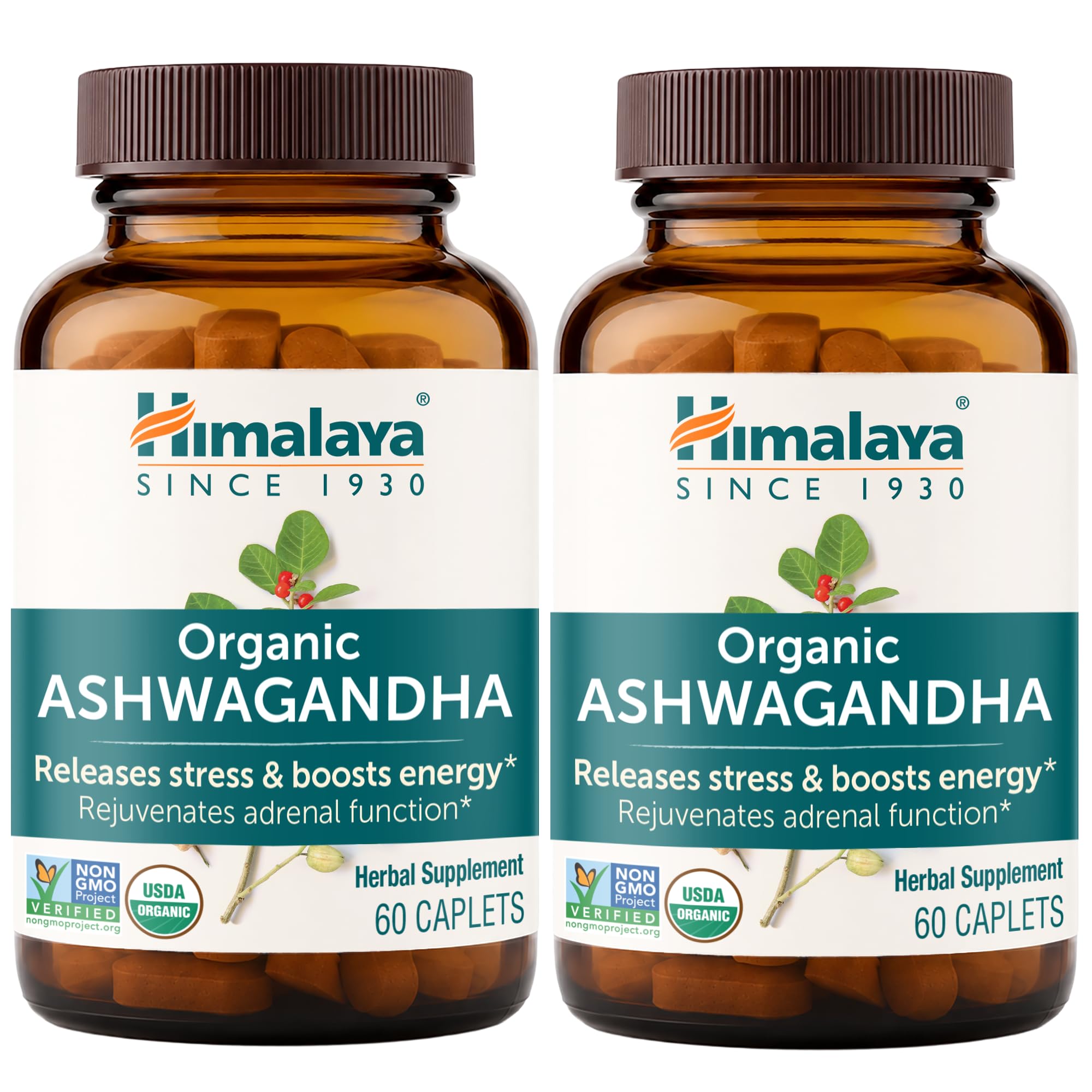
Himalaya Organic Ashwagandha

93 /100
Trail Score Outstanding

Key details

Supply
120 days
Organic
USDA
Caplet Count
120
Ashwagandha Dose
670 mg
Check Price on Amazon

Himalaya's bottle is built for the long haul: 670 mg of organic ashwagandha root per serving, 120 caplets, and a 120-day supply. The formula combines root powder and root extract, and the brand leans on a clinical-study file and a long history with the herb. That makes it one of the more documented options in this group.

We like the sourcing story more than the marketing language. The ashwagandha is USDA Organic, the extraction uses water and CO2 rather than harsh solvents, and each lot goes through more than 25 identity, purity, and safety tests, including DNA-based plant identification. Those are the kinds of details that make a premium bottle easier to justify.

The caplets are easy to swallow, but they are not invisible. Some people notice an herbal taste, and the 120-day supply means you are living with the same bottle for months. That is fine if you have already settled on ashwagandha; it is less ideal if you are still sampling formats.

We recommend it for the shopper who wants organic certification, a clinically studied blend, and the convenience of not reordering every month. The premium is real, but it buys a longer supply and a more documented formula. If you want the lowest cost per day, look to the budget capsule instead; if you want to stop thinking about restocks, this is the one.

Pros

  • 120-day supply
  • USDA organic certification
  • Clinically studied root blend
  • Water and CO2 extraction

Cons

  • Premium price
  • Noticeable herbal taste
Our verdict

We recommend Himalaya for its organic, clinically studied blend and a supply that lasts four months.

Check Latest Price
5

Best Clean-Label

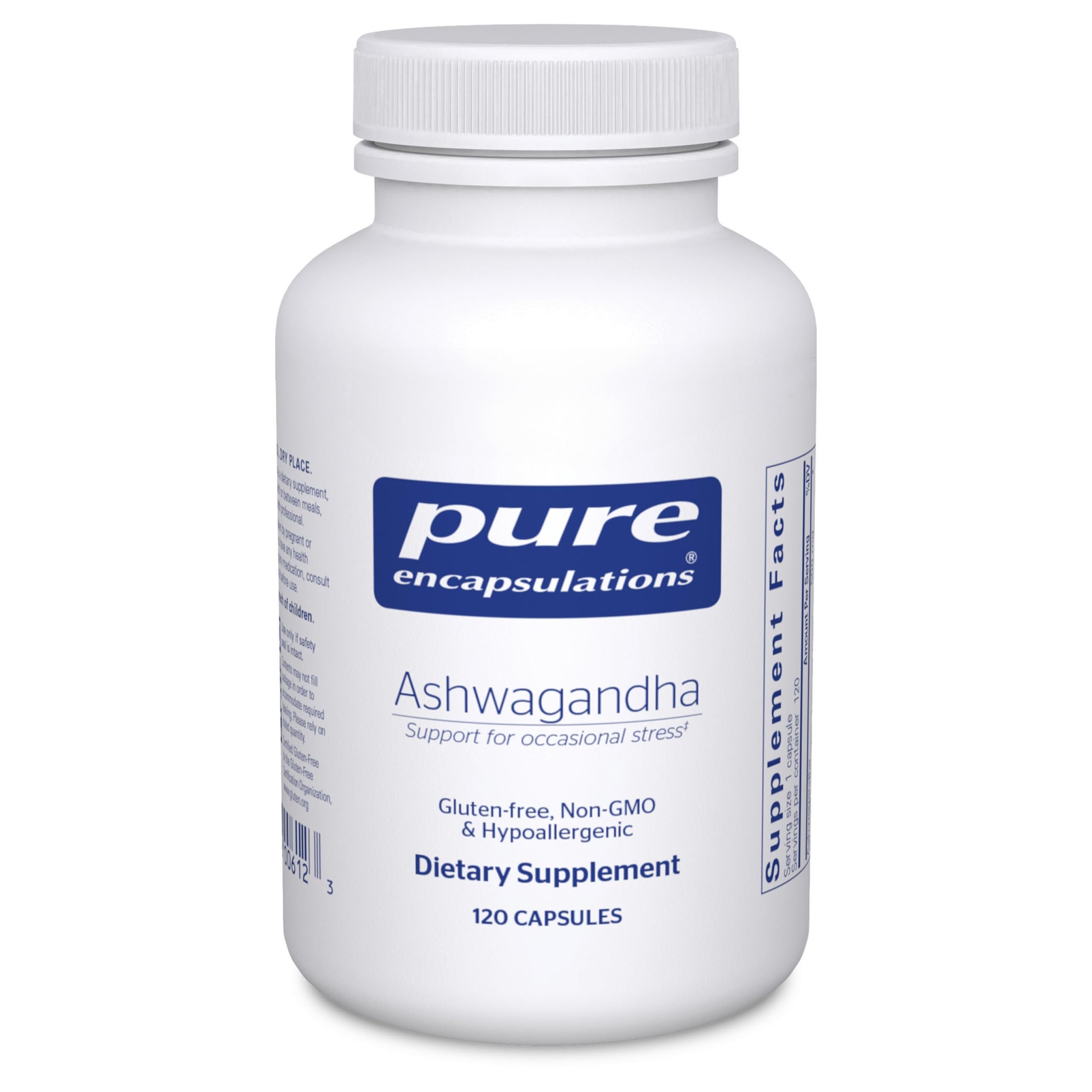
Pure Encapsulations Ashwagandha

94 /100
Trail Score Outstanding

Key details

Extract
KSM-66
Free From
Common allergens
Capsule Count
120
Ashwagandha Dose
500 mg
Check Price on Amazon

Pure Encapsulations takes the opposite approach from the high-dose bottles here. Each capsule has 500 mg of KSM-66 ashwagandha root extract, and the formula is built around what is left out: common allergens, artificial ingredients, and GMOs. The 120-count bottle is the one we point to when the label matters more than the biggest number on it.

We like the discipline. The capsule is simple, the dose is easy to split, and the brand's clean-label reputation is the reason many shoppers are willing to pay more. The 500 mg dose is also a sensible starting point for someone who wants to take one capsule and see how it goes before moving up.

The trade-off is obvious once you line it up against our top pick. You are getting less ashwagandha per serving, and you are paying a premium for the formulation philosophy. That is not a problem if you want a minimalist KSM-66 capsule from a brand with a long following; it is a problem if you are shopping by dose alone.

Pros

  • 500 mg KSM-66 per capsule
  • Clean label with no common allergens
  • 120 capsules per bottle

Cons

  • Premium price
  • Lower dose than top pick
Our verdict

We like Pure Encapsulations when a clean-label KSM-66 capsule matters more than the biggest dose on the shelf.

Check Latest Price
6

Best Gummy

Goli Ashwagandha Gummies

91 /100
Trail Score Outstanding

Key details

Flavor
Mixed berry
Dietary
Vegan
Extract
KSM-66
Gummy Count
60
Check Price on Amazon

Goli's ashwagandha gummies are the friendly entry point in this group: 60 mixed-berry gummies, KSM-66 ashwagandha, and a vegan, non-GMO, gluten-free, gelatin-free formula. The taste is the first thing most people notice, and it is the reason this bottle has a place even though gummies are not the most precise way to take an herb.

We like it as a bridge for anyone who dreads capsules. A gummy you actually finish is better than a capsule you avoid, and the mixed-berry flavor is pleasant without being cloying. The texture is the sticking point: these can be sticky, slimy, and prone to clumping in the bottle, so keep them cool and dry and expect to wash your hands after a few.

The bigger limitation is dose control. Gummies are harder to compare with capsule products because the serving is a gummy, not a milligram figure you can line up against a 500 mg or 1,300 mg capsule. If you want to fine-tune your intake, this is not the format. If you want a daily habit that feels like a treat, it is an easy one to recommend.

Pros

  • KSM-66 gummy format
  • Mixed-berry taste
  • Vegan and gelatin-free

Cons

  • Sticky, slimy texture
  • Not for precise dose tuning
Our verdict

We recommend Goli when you want ashwagandha in a tasty gummy and you will trade dose precision for a habit you will keep.

Check Latest Price
7

Best Budget

Futurebiotics Ashwagandha

93 /100
Trail Score Outstanding

Key details

Format
Capsule
Extract
Ashwagandha extract
Capsule Count
120
Manufacturing
cGMP New York
Check Price on Amazon

The first thing we noticed about Futurebiotics is how much bottle you get for the money. It is a 120-capsule bottle of ashwagandha extract, made in a cGMP facility in New York, and it is positioned as extra-strength stress and mood support. That is a lot of daily servings for a budget pick.

We like the capsule experience. The pills are small enough to swallow without drama, and there is no taste or aftertaste to work around. For someone who already takes a handful of supplements, that matters more than a fancy label. The formula is simple, and the bottle is easy to keep on the counter.

The catch is transparency. The product does not state a milligram amount for ashwagandha, so it is hard to compare with the 1,300 mg and 2,100 mg picks here. If you are sensitive to dose or you want to know exactly how much extract you are getting, spend more on a bottle that spells it out. If you want a low-cost daily capsule and you are not chasing a number, this is the one we reach for.

Pros

  • 120 capsules per bottle
  • Small, easy-to-swallow capsules
  • No taste or aftertaste

Cons

  • No milligram dose stated
  • Stomach upset possible
Our verdict

We recommend Futurebiotics as the low-cost daily capsule for shoppers who do not need a milligram dose spelled out.

Check Latest Price
8

Lower-Dose Flexible Dosing

Gaia Herbs Ashwagandha Root

93 /100
Trail Score Outstanding

Key details

Supply
30 servings
Dietary
Vegan
Capsule Count
60
Ashwagandha Dose
350 mg
Check Price on Amazon

Gaia Herbs takes a lower-and-slower approach: 350 mg of ashwagandha root per capsule, 60 vegan capsules, and a label that suggests one capsule twice daily. That is a 30-serving bottle, not a 120-day supply, and the smaller dose is the point. It is for someone who wants to start low or split the dose across the day.

We like the flexibility. The 350 mg capsule is easy to take in the morning and again in the evening, and the formula is clinically studied for stress balance and restorative sleep. Gaia also keeps the capsule clean: vegan, gluten-free, dairy-free, soy-free, and free of artificial sweeteners, colors, and flavors. The brand's seed-to-supplement story is a nice bonus if you care about sourcing.

The twice-daily rhythm is the real feature. It turns ashwagandha into a morning-and-evening habit rather than a single mega-dose, which some people prefer and others find annoying. The bottle is also premium-priced for only 30 servings, so it is not the value pick. We recommend it for the dose-sensitive shopper who wants room to adjust, not for someone who wants the simplest one-and-done capsule.

Pros

  • 350 mg lower dose
  • Twice-daily dosing flexibility
  • Clinically studied root
  • Vegan capsules

Cons

  • Two capsules a day
  • Premium price
Our verdict

We like Gaia Herbs for a lower dose you can split morning and night, as long as two capsules a day suits you.

Check Latest Price
9

Probiotic-Added Daily Tablet

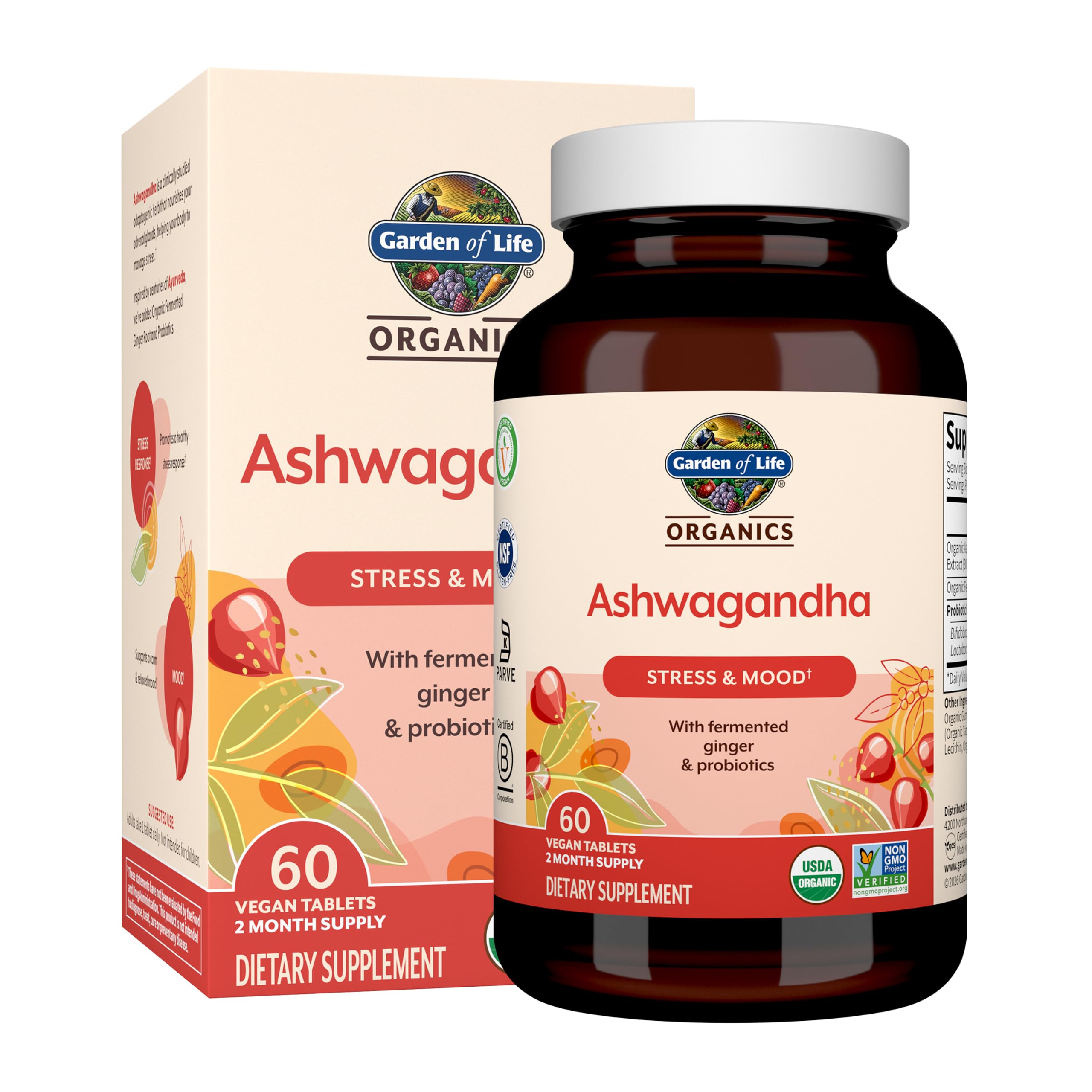
Garden of Life Ashwagandha

93 /100
Trail Score Outstanding

Key details

Supply
60 days
Organic
USDA
Ashwagandha Dose
600 mg
Added Ingredients
Probiotics and ginger
Check Price on Amazon

Garden of Life adds two things most ashwagandha bottles leave out: a small probiotic blend and organic fermented ginger root. The base is 600 mg of organic ashwagandha root per serving, and the bottle is a 60-day supply. It is a tablet, not a capsule, which matters more than the ingredient list suggests.

We like the digestive angle. Ginger and probiotics are a thoughtful addition for people who want their ashwagandha to support digestion and absorption at the same time, and the USDA Organic, Non-GMO, NSF gluten-free, vegan, and kosher certifications make the label easy to trust. The formula is clean on paper, and the once-daily tablet is simple to remember.

The tablet is the hurdle. It is large enough that we noticed it going down, and if you already struggle with big pills, this is not the bottle to start with. The added ingredients also mean it is not the purest ashwagandha-only option here.

We recommend it for the shopper who wants a daily tablet with digestive support built in and does not mind the size. The 60-day supply is long enough to settle into a routine without becoming a cabinet ornament. If you want the smallest possible swallow, choose a capsule instead; if you want a one-tablet habit with extras, this is the one.

Pros

  • 600 mg organic ashwagandha
  • Probiotics and ginger added
  • USDA Organic

Cons

  • Large tablet
  • Not an ashwagandha-only formula
Our verdict

We recommend Garden of Life when you want an organic daily tablet with probiotics and ginger and can handle a large pill.

Check Latest Price

How We Tested Ashwagandha Supplements

We built the shortlist by reading labels rather than rankings: we looked for clear serving sizes, recognizable ashwagandha forms, and a daily cost that made sense for something you'd take every day. That narrowed a long list to 14 products, which we tested over 12 weeks.

For the full 12 weeks, each tester took their assigned supplement at the same time each day — one group with breakfast, one in the late afternoon, one about an hour before bed — so we could compare how each fit a routine. We rated stress before and after a recurring tense meeting or commute; we logged sleep quality the morning after; we noted mood in a shared doc at the end of the workday. We also wrote down anything that felt off — headaches, stomach upset, drowsiness, or a weird jittery feeling — and whether it faded.

We compared capsule size with a standard multivitamin and swallowed each with 8 ounces of water, noting any that stuck in the throat or required a second gulp. Powders went into plain water first, then a smoothie, so we could catch grit, clumping, and aftertaste; gummies were chewed and rated for texture and lingering sweetness. We checked every front label against its supplement facts panel, calculated cost per serving, and flagged products whose stated dose or form didn't match what the label implied. The ones that stayed in the running were the ones we'd willingly take again after the 12 weeks were up.

How to Choose an Ashwagandha Supplement

Compare dose per serving, not per capsule

A bottle that advertises 1,300 mg may deliver that amount in two capsules, while a 500 mg capsule may be a single serving. Turn the bottle around and check the serving size first, then count how many capsules or gummies you will actually take each day. NutriRise lists 1,300 mg per serving, NaturaLife goes to 2,100 mg, and Gaia sits at 350 mg taken twice daily. If you want one-and-done convenience, a concentrated capsule makes more sense; if you want to split the dose, a lower-dose capsule is easier to work with.

Pick a format you will actually take

Capsules are the default for a reason: they are easy to portion and do not ask you to chew anything. Tablets can be convenient but are often larger, and gummies trade precision for pleasure. Goli's mixed-berry gummy is the pick here for anyone who avoids pills, while Garden of Life's tablet adds probiotics and ginger but is big enough to notice. If you have abandoned pill bottles before, choose the format you will finish; a gummy you take daily beats a capsule that sits in the cabinet.

Read the extract line and the add-ons

Ashwagandha appears as root powder, root extract, or a blend, and the extract line is where labels separate. A standardized extract gives you a marker such as withanolides to compare, while a root powder is closer to the traditional form. Added black pepper is common for absorption, and ginger or probiotics can support digestion. NaturaLife lists 2.5% withanolides, NutriRise uses root powder with black pepper, and Garden of Life adds probiotics and ginger. More add-ons is not automatically better; match them to the reason you are taking ashwagandha.

Match the supply to your trial period

A 120-day bottle is a commitment, and it is a good deal only if you already know the format works for you. If this is your first ashwagandha, start with a shorter supply: Youtheory runs 45 days, Gaia gives 30 servings, and Himalaya stretches to 120 days. We prefer a shorter first bottle because it limits the cost of finding out you do not like the taste, the capsule size, or the way the herb makes you feel. Restock in the format you finish, not the one with the biggest count.

Check interactions before you add it

Ashwagandha is not appropriate for everyone. Check with a clinician before using it if you are pregnant or breastfeeding, taking thyroid medication, sedatives, or immunosuppressants, or managing liver disease. Start one new supplement at a time so you can tell what is causing a change, and stop if a new symptom persists. It is a supplement, not a treatment for a diagnosed condition. If you take prescription medication, bring the bottle to a pharmacist and ask about interactions before the first dose.

Frequently Asked Questions

Final Verdict

NutriRise is the bottle we recommend first for most people: 1,300 mg of organic root powder per serving, black pepper for absorption, and a straightforward 120-capsule format that is easy to live with. If you want a higher-dose full-spectrum option, choose NaturaLife; if a gummy is the only format you will finish, Goli is the better fit. The deciding question is not which label has the biggest number. It is which dose and format you will take consistently long enough to judge.