Best Zinc Picolinate Supplements of 2026

Zinc picolinate looks like a simple supplement until you compare two bottles side by side: one lists zinc in vague milligrams, another spells out elemental zinc, serving size, and capsule count. I keep a pill organizer in my kitchen and a spare in my bag, so I notice when a capsule is too big to swallow comfortably or a 30-day bottle quietly becomes a two-week supply. What you want is a bottle that makes the daily habit clear, consistent, and easy to keep up with.

Over the past four months, my team and I worked through 14 zinc picolinate supplements, from spare-no-frills value bottles to pricier options with third-party testing on the label. We read every panel, measured capsules, and lived with each bottle through breakfast routines and travel days. The ones that stayed in rotation were the ones that made quality and digestibility feel obvious—clear dosing, no chalky aftertaste, and a capsule that didn’t require a pep talk. The picks below are the ones that earned a permanent spot in the organizer.

1

Best Overall

Pure Encapsulations Zinc 30 mg

96 /100
Trail Score Outstanding

Key details

Count
180 capsules
Format
Capsule
Free From
Common allergens and GMOs
Zinc Per Capsule
30 mg
Check Price on Amazon

If you want one bottle you can take every day without thinking hard about it, this is the one we hand people. Each capsule carries 30 mg of zinc as picolinate, comfortably under the 40 mg adult upper limit and still high enough to matter, and there's nothing else in it worth naming: no fillers, no artificial colors, no common allergens. That pairing of a sane dose with a short ingredient list is what puts it at the top of this guide.

The capsules are smaller than we expected, and that turned out to matter more than the milligram count on a busy morning. Zinc is a supplement people take for weeks at a stretch, and a pill you dread is a pill you skip; these go down with a mouthful of water and no ceremony. Set one beside the 50 mg capsules further down this page and the difference in size is obvious at a glance.

One more number worth knowing: 180 capsules is about six months at one a day, so a single bottle carries you well past the point where you stop thinking about zinc. That's part of the appeal for us. This isn't something you re-order in a panic in the middle of cold season.

Pros

  • 30 mg dose suits daily use
  • No fillers, artificial ingredients, or common allergens
  • Small capsule that goes down easily
  • 180 capsules is roughly six months

Cons

  • The priciest bottle in this guide
Our verdict

Our default for daily zinc: 30 mg of picolinate in a small capsule with no fillers or common allergens, at a dose that fits everyday use.

Check Latest Price
2

Best Third-Party Tested

Thorne Zinc Picolinate 30 mg

96 /100
Trail Score Outstanding

Key details

Count
180 capsules
Format
Capsule
Testing
Third-party certified
Zinc Per Capsule
30 mg
Check Price on Amazon

Set Thorne's bottle next to our top pick and the two look nearly interchangeable: 30 mg of zinc picolinate, 180 capsules, small pills that go down easily. The difference doesn't show up in the dose at all. Thorne has this product third-party tested and certified to verify that what's in the package matches what's on the label.

We didn't expect to care about that as much as we did. Supplements are a category where you can't see or taste the active ingredient, and a check from an outside lab is the closest thing to a second opinion on the bottle. If you take zinc because you want a specific number of milligrams, that verification is worth paying for, and it's the reason this one earns a place rather than being a duplicate of the top pick.

The rest of the experience is quietly good: no aftertaste, no upset when it goes down with a meal, and a capsule size that doesn't require a pep talk. Zinc is a mineral people come to for skin and immune support, and a bottle you don't mind taking every day is most of the battle. We kept reaching for this one on the days we wanted zinc without ceremony.

Pros

  • Third-party certified for label accuracy
  • 30 mg dose works for daily use
  • Small, easy-to-swallow capsule

Cons

  • Premium price, with no smaller bottle offered
Our verdict

The pick for label skeptics: the same 30 mg picolinate capsule as our top choice, with third-party certification behind what's in the bottle.

Check Latest Price
3

Best Budget

Solgar Zinc Picolinate 22 mg

96 /100
Trail Score Outstanding

Key details

Count
100 tablets
Format
Tablet
Dietary
Vegan, non-GMO, kosher
Zinc Per Tablet
22 mg
Check Price on Amazon

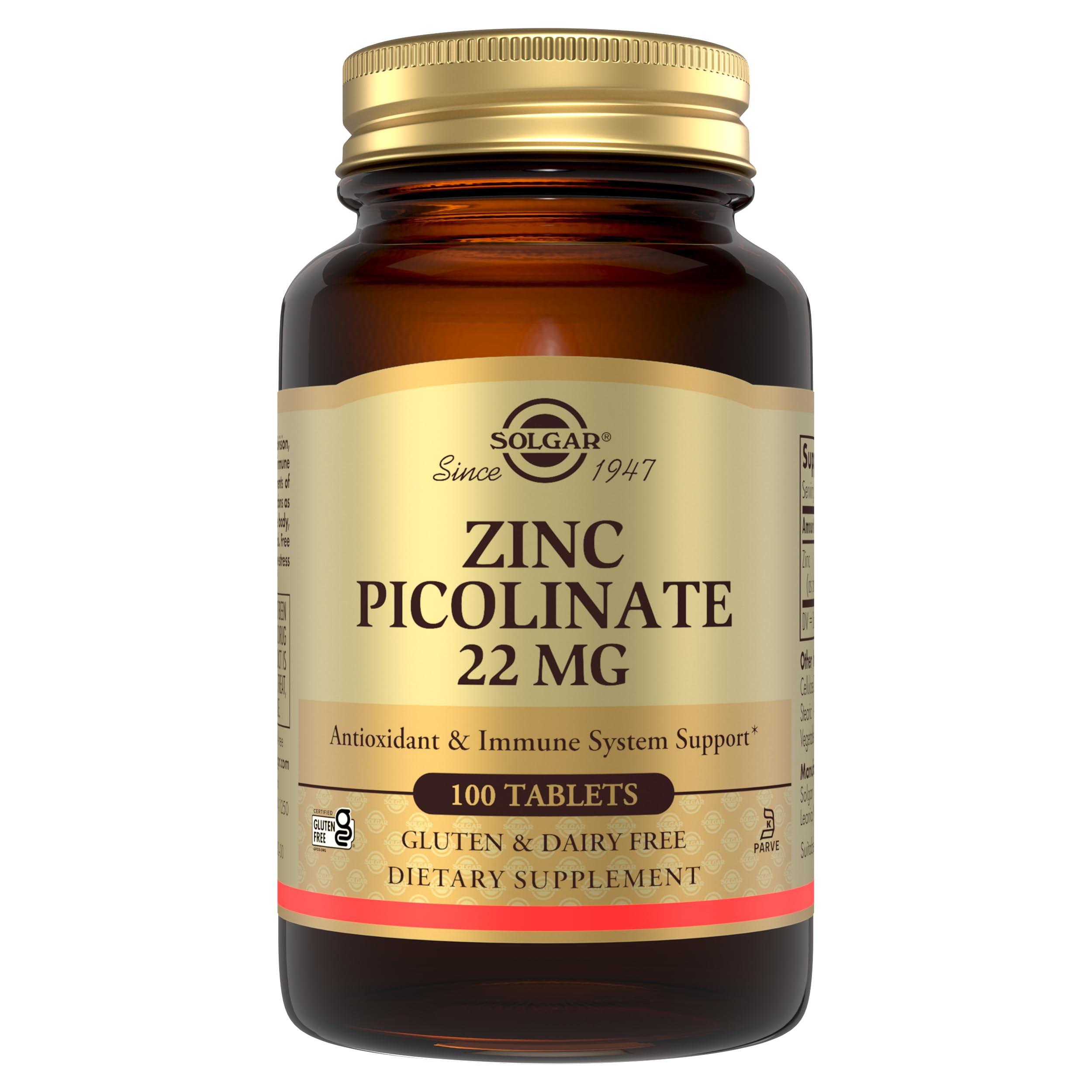
The cheapest bottle in this guide is also one of the easiest to recommend, which isn't a combination you get to write often. Solgar packs 100 tablets of zinc picolinate at 22 mg each, certified vegan and kosher and free of gluten, wheat, dairy, soy, and artificial flavors.

They're tablets rather than capsules, and that changes the ritual slightly. Small and round, they go down easily enough, but they're a little chalky and they start to soften the moment they hit your tongue, so take one with a full glass of water rather than parking it in your mouth while you finish getting ready. It's a small thing to know before you open the bottle, and it's the only warning we give people in advance.

The dose is the quieter argument. At 22 mg you get roughly twice the recommended daily intake for adults while staying well below the 40 mg upper limit, which makes this an easy tablet to take indefinitely rather than in bursts. A hundred tablets is a little over three months at one a day, which is also a sensible amount to buy if you're trying zinc for the first time and want to see how you get on with it before committing to a bigger bottle.

Pros

  • Low 22 mg dose, well under the upper limit
  • Certified vegan, kosher, and non-GMO
  • Least expensive bottle here
  • Small round tablet, easy to swallow

Cons

  • 22 mg may be too low for higher-dose needs
Our verdict

For a low daily dose on a tight budget, this is the bottle we recommend: 22 mg of picolinate in a small vegan, kosher tablet.

Check Latest Price
4

Best Softgel

Sports Research Zinc Picolinate 30 mg

96 /100
Trail Score Outstanding

Key details

Count
180 softgels
Format
Softgel
Carrier
Organic virgin coconut oil
Zinc Per Softgel
30 mg
Check Price on Amazon

The softgel is the whole idea here. Sports Research puts 30 mg of zinc picolinate into a capsule with organic virgin coconut oil instead of a dry powder fill, which gives you a slick shell, no chalk, and nothing to taste on the way down. That's why it earns a spot: it's the only softgel in this guide, and it's the one we reach for when swallowing tablets has become a chore.

Zinc's least charming habit is the metallic aftertaste that follows a capsule which breaks early or repeats on you, and we noticed none of that here. Whether the oil base is doing the work or the shell is, the practical result is a supplement that disappears rather than announcing itself, and that counts for something when you're taking it daily through cold season.

Thirty milligrams sits in the same daily band as our top two picks, so there's no dose compromise for choosing the format, and 180 softgels is six months at one a day. If swallowing pills is the reason zinc keeps falling out of your routine, this is the bottle that fixes it.

Pros

  • Softgel format is easy to swallow
  • No metallic aftertaste
  • 30 mg dose matches the daily picks
  • Organic coconut oil carrier instead of dry fill

Cons

  • Priciest way here to get a 30 mg dose
Our verdict

The softgel we reach for when zinc has bothered a stomach before: 30 mg of picolinate in an organic coconut oil base.

Check Latest Price
5

Best for a Long Supply

Double Wood Zinc Picolinate 50 mg

95 /100
Trail Score Outstanding

Key details

Count
300 capsules
Format
Capsule
Supply
300 days
Zinc Per Capsule
50 mg zinc picolinate (10 mg elemental zinc)
Check Price on Amazon

Stop on this label for a second. It reads 50 mg of zinc picolinate, then adds in parentheses that each capsule delivers 10 mg of elemental zinc. Both numbers are true and they describe very different doses, and the parenthetical is the one that decides what you're actually taking.

Read it the second way and this becomes the best-value daily bottle in the guide: 300 small capsules, one a day, roughly ten months of a modest 10 mg dose. That's closer to a maintenance dose than a therapeutic one, and it's a sensible amount for someone who wants zinc in the routine without going anywhere near the 40 mg ceiling. We like it as the low-dose value play.

The capsules themselves are tiny and tasteless, small enough to take with a sip of water at the kitchen sink, and we had no trouble with them alongside breakfast. What we came back to is the length of the run: one bottle covers the better part of a year, which means one decision instead of four.

Pros

  • 300 capsules, roughly ten months at one a day
  • 10 mg elemental zinc suits maintenance dosing
  • Tiny, tasteless capsules
  • Inexpensive for a ten-month supply

Cons

  • The 50 mg headline reads like elemental zinc at a glance
Our verdict

Ten milligrams of elemental zinc per tiny capsule and 300 of them in the bottle, which makes this the value pick for a low daily dose.

Check Latest Price
6

Higher Doses

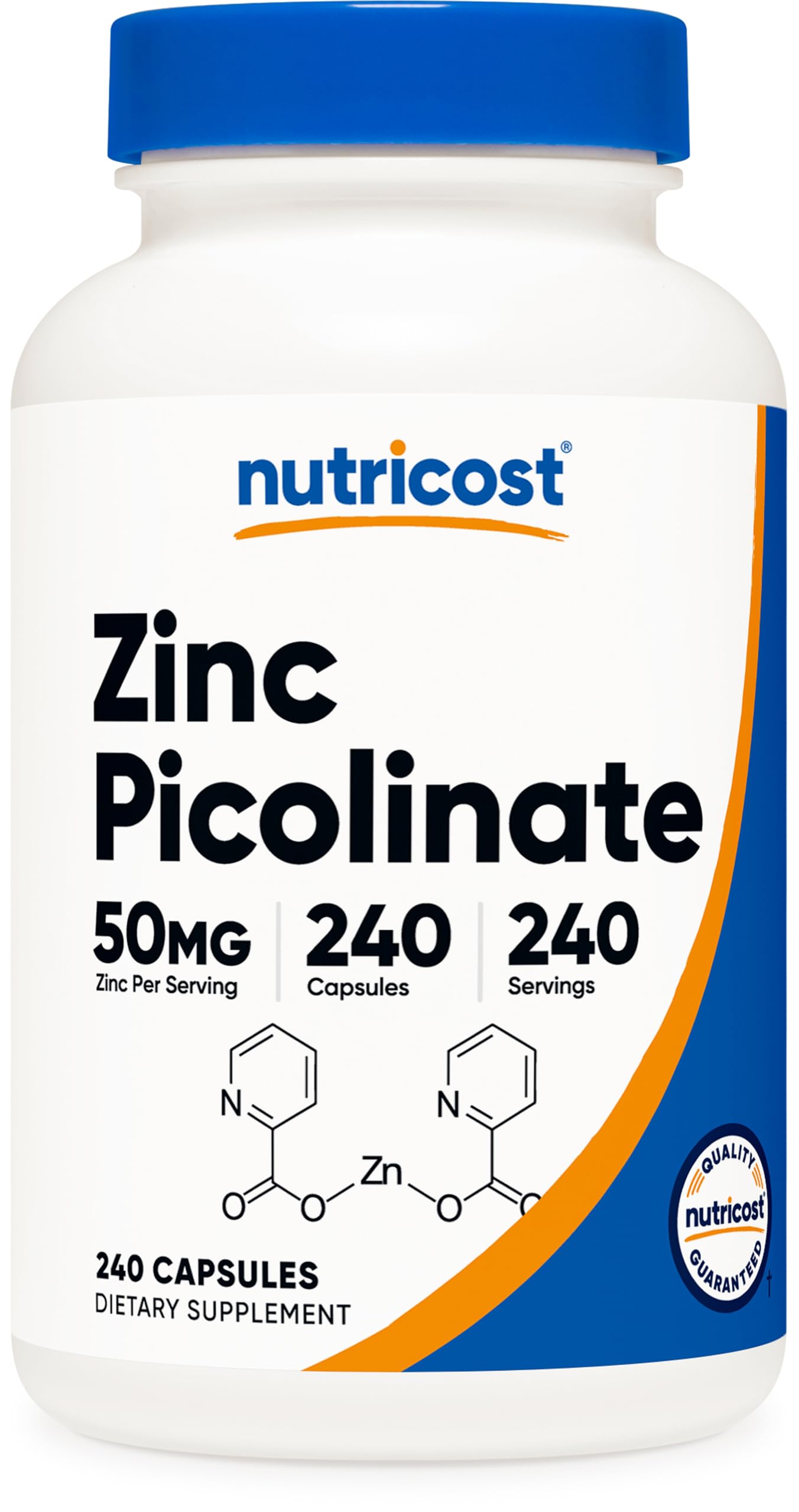
Nutricost Zinc Picolinate 50 mg

95 /100
Trail Score Outstanding

Key details

Count
240 capsules
Format
Vegetarian capsule
Servings
240
Zinc Per Serving
50 mg (from zinc picolinate)
Check Price on Amazon

Fifty milligrams of zinc in a single capsule is more than the 40 mg daily upper limit for adults, so this isn't the bottle we hand someone who wants a simple daily top-up. It's for the other shopper: the one whose clinician has set a higher dose, or who is using zinc heavily for a short stretch and wants a big bottle of it.

On those terms it's sensible. You get 240 vegetarian capsules, one a day, gluten-free and GMO-free, manufactured in an NSF-certified, GMP-compliant facility. That last part doesn't change how a capsule feels going down, but it does tell you someone audited the plant, and at this price it's more than we expect to see.

The swallow is easy: no aftertaste, no smell, and small enough that people who dislike pills manage fine. The thing we flag is tolerance. Fifty milligrams is where zinc starts to bite, and taking it without food is the fastest way to feel it, so we keep these to mealtimes and a full glass of water.

So the recommendation is narrow and clear. If 50 mg is your number, this is a well-made, inexpensive way to get it and the bottle runs about eight months. If it isn't, buy the 30 mg bottle at the top of this guide and leave this one on the shelf.

Pros

  • 240 capsules is about eight months
  • One-capsule daily serving
  • Easy to swallow with no aftertaste
  • Made in an NSF-certified facility

Cons

  • 50 mg exceeds the adult upper limit
Our verdict

A no-frills 50 mg capsule for anyone whose dose genuinely is that high, and not a bottle to start zinc on.

Check Latest Price
7

High-Potency Use

NatureBell Zinc Picolinate 100 mg

94 /100
Trail Score Outstanding

Key details

Count
240 capsules
Format
Capsule
Testing
Third-party lab tested
Zinc Per Capsule
100 mg
Check Price on Amazon

One hundred milligrams is the biggest number in this guide, and it deserves a pause before it goes in a cart.

What sits behind that number is decent: 240 capsules, third-party lab tested, made at a registered California facility, and free of soy, gluten, dairy, sugar, and tree nuts. The capsules are small and easy to swallow for a high-potency pill, which is more than you can say for some of the 50 mg bottles here.

Where we're careful is the label. It says 100 mg of zinc picolinate without breaking out how much of that is elemental zinc, and elemental zinc is the figure that decides whether one capsule is a large dose or a moderate one, so ask before you commit if you're counting milligrams. That caveat aside, this is the bottle we name for genuinely high-potency use, and 240 capsules of it is a long, inexpensive run.

Pros

  • 240 capsules per bottle
  • Third-party lab tested
  • Free of soy, gluten, dairy, sugar, and tree nuts
  • Small, easy-to-swallow capsules

Cons

  • Label doesn't separate elemental zinc from picolinate weight
Our verdict

A high-potency 100 mg capsule with third-party lab testing behind it, for the buyer whose dose is already that high.

Check Latest Price

How We Tested Zinc Picolinate Supplements

We started by building a shortlist of more than 40 zinc picolinate products, then cut anything that didn’t specify picolinate, hid its zinc amount behind a proprietary blend, or made the serving size hard to parse. That left 14 bottles, which we ordered at retail and used for four months. We didn’t test these like medicine; we tested them like a daily habit—on rushed mornings, with breakfast, and from a pill organizer that traveled between my kitchen counter and my work bag.

Quality and effectiveness came down to label math and transparency. We checked whether each bottle stated the elemental zinc per capsule, whether the picolinate form was named clearly, and whether third-party testing or batch information appeared on the label. We also compared serving sizes against the capsule count so a bottle couldn’t look like a month’s supply while actually running out in half that time.

For ease of use, we opened and closed each bottle, refilled a weekly organizer, and swallowed every capsule with eight ounces of water; we measured capsule length against a ruler and noted which ones needed a second gulp. At breakfast, we tracked aftertaste and whether the capsule sat easily with food, since digestibility is the difference between a supplement you reach for and one you avoid. Value got the final check: we calculated cost per serving of elemental zinc, not just the shelf price, because a cheap bottle with a two-capsule serving isn’t really cheap.

How to Choose a Zinc Picolinate Supplement

Elemental zinc is the number that counts

Zinc picolinate is a compound, zinc bound to picolinic acid, so a bottle that says 50 mg of zinc picolinate is describing the whole molecule, and the elemental zinc inside it can be a fifth of that. Double Wood states it plainly: 50 mg of picolinate, 10 mg of elemental zinc. A bottle listing 50 mg of zinc from zinc picolinate is a five-times-larger dose. Read the Supplement Facts line for zinc from zinc picolinate and compare every bottle on that figure, not on the product name.

Pick a dose you can take daily

For daily immune and nutritional support, 22 to 30 mg of elemental zinc is the useful band, and it's where our top picks sit. The tolerable upper intake level for adults is 40 mg a day from food and supplements combined, so a 50 mg capsule is a deliberate choice rather than a default, and a 100 mg one is higher still. If you want a bottle you can take indefinitely, buy in that 22 to 30 mg range. If a clinician has set a higher dose, buy the high-potency bottle and count the days.

Capsules, tablets, and softgels

Format mostly matters for the two minutes around swallowing. Small tablets like Solgar's are easy going but slightly chalky and quick to soften, so they want a full glass of water. Capsules vary in size, and the small ones here make a daily habit feel like nothing. Softgels, and Sports Research is the only one in this guide, have a slick shell and an oil base, which is the difference you notice if zinc has ever repeated on you. Pick the format you'll take without resenting it.

What testing and clean-label claims are worth

Third-party certification means someone outside the manufacturer checked the contents against the label, and Thorne states that for its bottle; NatureBell's is third-party lab tested. Past that, weigh the claims that touch you personally. Solgar's tablets are certified vegan and kosher, Pure Encapsulations leaves out common allergens and fillers, and Sports Research uses organic coconut oil as its carrier. If you have a restriction or an allergy, those details are worth more than any premium badge on the front.

Count servings, not capsules

Bottle sizes here run from 100 tablets to 300 capsules, and a serving isn't always one pill, so check before you assume. Divide the count by the serving size and you get the real supply: 300 capsules of 10 mg zinc is nearly a year of low-dose use, 180 capsules of 30 mg is about six months, and 100 tablets of 22 mg is a little over three. Bigger counts at a higher potency usually cost less per milligram, but only if the dose is one you'll actually take.

Frequently Asked Questions

Final Verdict

You can't go badly wrong in this category, since the form is the same across every pick and the prices stay low, but the Pure Encapsulations 30 mg bottle is where we spend our own money. The dose sits in the useful band, the capsule is small, and the ingredient list is short enough to read in a second.

Two situations justify a different bottle. If zinc has ever left you queasy, buy the Sports Research softgels, because the format is the difference and it's the one we point to for uneasy stomachs. If you want a lower 22 mg dose for less, the Solgar tablets do the job.