Best Zinc Supplements of 2026

Zinc looks like the simplest bottle on the supplement shelf, which is exactly why it's easy to buy badly. Two products can both promise 50 mg and behave nothing alike: one is a form your body absorbs without complaint, the other leaves you gripping the kitchen counter twenty minutes after you swallow it. The difference comes down to which form of zinc you're buying, how much elemental zinc is actually in each capsule, and whether there's any third-party testing behind the label. Get those right and it's one of the cheapest, most reliable ways to keep your immune system on steady footing through cold season.

The queasy, metallic aftertaste zinc is famous for is what I cared about most. My team and I spent five months with 14 formulas, taking them the way people really do — with breakfast, occasionally without — and noting which ones sat easily and which ones didn't. Some went down without a trace, others lingered like pennies for an hour, and a few smelled sharp and sour the moment you unscrewed the cap, which tells you plenty about how that bottle has been stored. The picks below are the ones that held up under all of it.

1

Best Overall

Pure Encapsulations Zinc 30 mg

96 /100
Trail Score Outstanding

Key details

Form
Zinc picolinate
Count
180 capsules
Free From
Common allergens, artificial additives, GMOs
Zinc Per Capsule
30 mg
Check Price on Amazon

The least complicated bottle here is our favorite. One capsule carries 30 mg of zinc picolinate, the count is 180, and the ingredient list runs out before it reaches fillers, added vitamins, or a proprietary blend. We spent an unreasonable amount of time reading back panels for this guide, and the short one is the reason this bottle ended up as our default.

Picolinate is the form we check for first. Zinc bound to picolinic acid is one of the better-absorbed forms, and it is what sits behind the 30 mg capsules in this group, Thorne's included. At 30 mg, one capsule is a substantial daily dose, more than most adults need from a supplement if they eat a mixed diet, so it is not a bottle to double up on casually. The capsules are small and go down easily.

What earns it the top spot is the combination rather than any single number: an absorbable form, a dose that fits a normal routine, and 180 capsules, which is about six months at one a day. Being free of common allergens and unnecessary extras matters more than it sounds when zinc is the third or fourth bottle on your shelf, because you don't have to audit three labels to know what you are taking.

The trade is price. This is the most expensive way to buy zinc in this group, roughly level with the Thorne bottle and several times the cost of the Nature Made tablets, and it gives you no vitamin C, no quercetin, no copper. If plain zinc taken daily is what you are after, that is the whole deal, and it is a good one.

Pros

  • Well-absorbed zinc picolinate
  • 180 capsules, about six months of doses
  • No fillers, common allergens, or GMOs

Cons

  • Highest price in this group
Our verdict

Our default pick: a well-absorbed 30 mg picolinate capsule, 180 to the bottle, with no extras to audit and nothing to complicate a daily habit.

Check Latest Price
2

Best Budget

Nature Made Zinc 30 mg

95 /100
Trail Score Outstanding

Key details

Count
100 tablets
Supply
100 days
Serving
1 tablet daily with water and a meal
Zinc Per Tablet
30 mg
Check Price on Amazon

One hundred tablets, one a day, 30 mg each: this is the bottle we point to when somebody wants zinc on the shelf and doesn't want to think about it again for three months. Nature Made keeps the panel plain, with no color added, no artificial flavors, and no preservatives, and the tablet is small enough that most people won't notice swallowing it. The label asks for water and a meal, which is standard advice for a reason.

What we appreciate most is that the low price doesn't buy you a strange formula. It is zinc at a sensible daily dose with a hundred-day supply in the bottle, and the tablet is small enough to disappear with a mouthful of water. The brand has been making this one for decades and hasn't dressed the panel up with extras nobody asked for. For a staple supplement, that is exactly the right amount of ambition.

Pros

  • Lowest cost per day here
  • A hundred tablets is a hundred-day supply
  • Small tablet that is easy to swallow

Cons

  • Zinc form is not stated on the label
  • Can cause nausea in sensitive stomachs
Our verdict

Buy it if you want a dependable 30 mg tablet, a hundred days in the bottle, and the lowest cost per day in this group.

Check Latest Price
3

Best Low-Dose Option

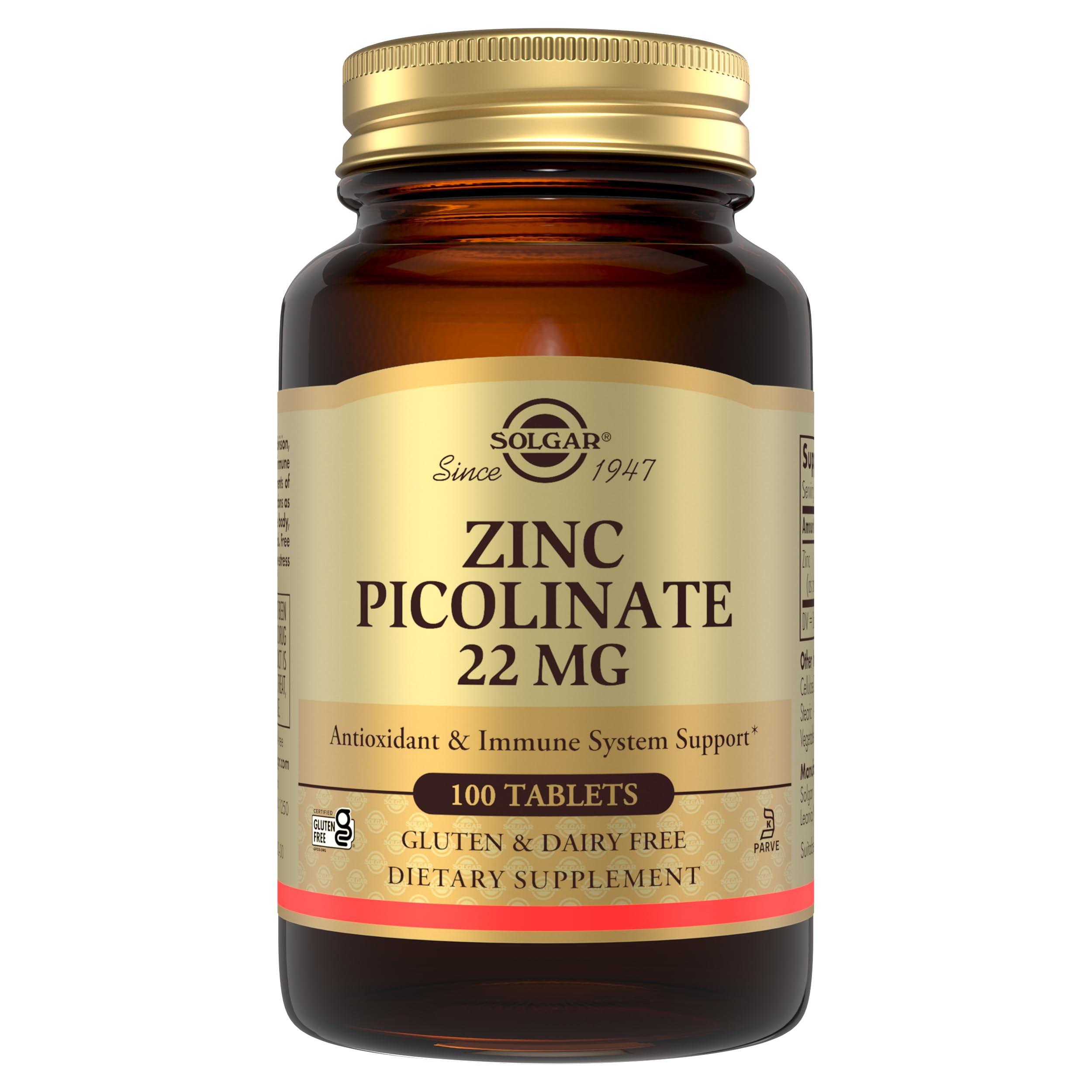
Solgar Zinc Picolinate 22 mg

96 /100
Trail Score Outstanding

Key details

Diet
Vegan, non-GMO, gluten free, kosher
Form
Zinc picolinate
Count
100 tablets
Zinc Per Tablet
22 mg
Check Price on Amazon

Small, round, and a little chalky, this tablet starts dissolving the moment it lands on your tongue, so swallow it with a full glass rather than letting it sit. That is the only fussy thing about it. At 22 mg of zinc picolinate it is the bottle we hand to anyone who wants a daily dose below 30 mg, and it is the one we are least concerned about somebody taking for years.

Twenty-two milligrams is twice the daily value for adults, which makes it a maintenance dose rather than a therapeutic one, and the picolinate form is the same one we favor in bottles costing several times as much. A hundred tablets is a little over three months at one a day, and the price is low enough that a spare bottle in a drawer isn't a decision. The catch is the number: if you have been told to take 30 or 50 mg, this tablet won't get you there without doubling up, and two chalky tablets is nobody's idea of a good morning.

Pros

  • Zinc picolinate at a low price
  • 22 mg suits everyday maintenance
  • Small tablet that is easy to swallow

Cons

  • Below the 30 mg dose some regimens specify
Our verdict

We reach for this when a lower daily dose makes more sense: 22 mg of picolinate in a small tablet that is easy to keep taking for years.

Check Latest Price
4

Best Whole-Food Option

Garden of Life Raw Zinc 30 mg

95 /100
Trail Score Outstanding

Key details

Count
60 vegan capsules
Serving Size
2 capsules
Zinc Per Serving
30 mg
Vitamin C Per Serving
60 mg
Check Price on Amazon

Two capsules per serving is the first thing to know. That serving carries 30 mg of zinc and 60 mg of vitamin C, plus a raw fruit and vegetable blend, trace minerals, and live probiotics and enzymes. It is a whole-food formula rather than an isolated mineral, and the bottle holds 60 capsules, which is thirty servings: a month, not the six months you get from the 180-count bottles.

The reason to choose it is the company the zinc keeps. Vitamin C alongside zinc is a familiar pairing, and the probiotics and enzymes are there for digestion. We can't tell you the blend does something measurable, and we won't pretend otherwise. What we can tell you is that the capsules are vegan, Non-GMO Project Verified, NSF gluten-free, and kosher, and the certifications are printed where you can check them yourself.

There is a practical advantage in the capsule itself: it can be opened and stirred into water or juice. For anyone who gags on pills, or who wants to split a serving, that is an option the tablets here simply don't offer. Take it with a meal all the same, because two capsules is two chances at an unsettled stomach.

Where it lands for us: this is the pick for the reader who wants zinc with vitamin C from a food-based label and doesn't mind two capsules a day. Cheaper per milligram and longer-lasting bottles exist in this group, and if those are your priorities, one of the single-capsule options serves you better. What this one offers is a formula you feel fine about taking every morning, which for a daily habit is not a small thing.

Pros

  • Zinc plus 60 mg vitamin C per serving
  • Food-based blend with probiotics and enzymes
  • Capsules can be opened and mixed into drinks
  • Vegan, Non-GMO, NSF gluten-free, kosher

Cons

  • Two capsules per serving
  • Bottle holds only 30 servings
Our verdict

Choose it if you want zinc with vitamin C and a food-based blend, and you don't mind taking two capsules to get a serving.

Check Latest Price
5

Best Third-Party Tested

Thorne Zinc Picolinate 30 mg

96 /100
Trail Score Outstanding

Key details

Form
Zinc picolinate
Count
180 capsules
Testing
Third-party tested and certified
Zinc Per Capsule
30 mg
Check Price on Amazon

Set this bottle next to our top pick and the specs look nearly identical: 30 mg of zinc picolinate per capsule, 180 capsules, one a day. What separates them is what sits behind the label. Thorne has this one third-party tested and certified, meaning the contents were verified against the panel, and the formula skips the fillers and additives the brand is known for. That certificate is the reason to pay premium money for a single-ingredient capsule, and it is why we keep this bottle beside the Pure Encapsulations one rather than below it.

Living with it is easy: small capsules, one a day, roughly six months to a bottle. The same caution applies as with any 30 mg product, since it is more than most adults need from a supplement alone and not a dose to stack on a multivitamin that already lists zinc. If third-party certification is the thing that settles your decision, this is the bottle. If it isn't, our top pick costs about the same and asks nothing more of you.

Pros

  • Third-party tested and certified
  • 30 mg of picolinate per capsule
  • 180 capsules, about six months

Cons

  • Premium price for one ingredient
Our verdict

The pick for label-verification people: 30 mg of picolinate, third-party certified, in the same six-month bottle as our top pick.

Check Latest Price
6

Best Liquid

MaryRuth's Ionic Zinc Liquid

95 /100
Trail Score Outstanding

Key details

Diet
Vegan, non-GMO, sugar free
Form
Ionic zinc sulfate
Volume
4 fl oz
Certification
USDA Organic
Check Price on Amazon

Zinc is one of the few supplements where a liquid genuinely earns its place, and this is the bottle we hand to someone who has given up on pills. A dropper into water or juice, unflavored by design, nothing to swallow. It is ionic zinc sulfate rather than a picolinate or a chelate, it is USDA Organic and vegan, and it has been third-party tested for contaminants, with the Clean Label Project purity award printed on the front.

The reason to choose it isn't potency, it is whether you will take it. A liquid you can stir into a glass of water is the difference between taking zinc and having a bottle in the cupboard, and the dropper makes it easy to adjust or split a dose in a way a 30 mg tablet does not. Flavor is where it splits: unflavored isn't the same as tasteless, and this bottle ranges from undetectable in juice to a metallic edge that lingers.

Four ounces goes quickly if more than one person is pouring from it, and per serving it costs more than any capsule here. That is the price of a form that actually gets taken.

Pros

  • Liquid dropper, no pill to swallow
  • USDA Organic and third-party tested
  • Easy to adjust or split a dose

Cons

  • Per-serving cost is higher than capsules
  • Flavor varies from undetectable to metallic
Our verdict

Our choice for anyone who won't swallow a pill: unflavored ionic zinc from a dropper that disappears into a glass of water.

Check Latest Price
7

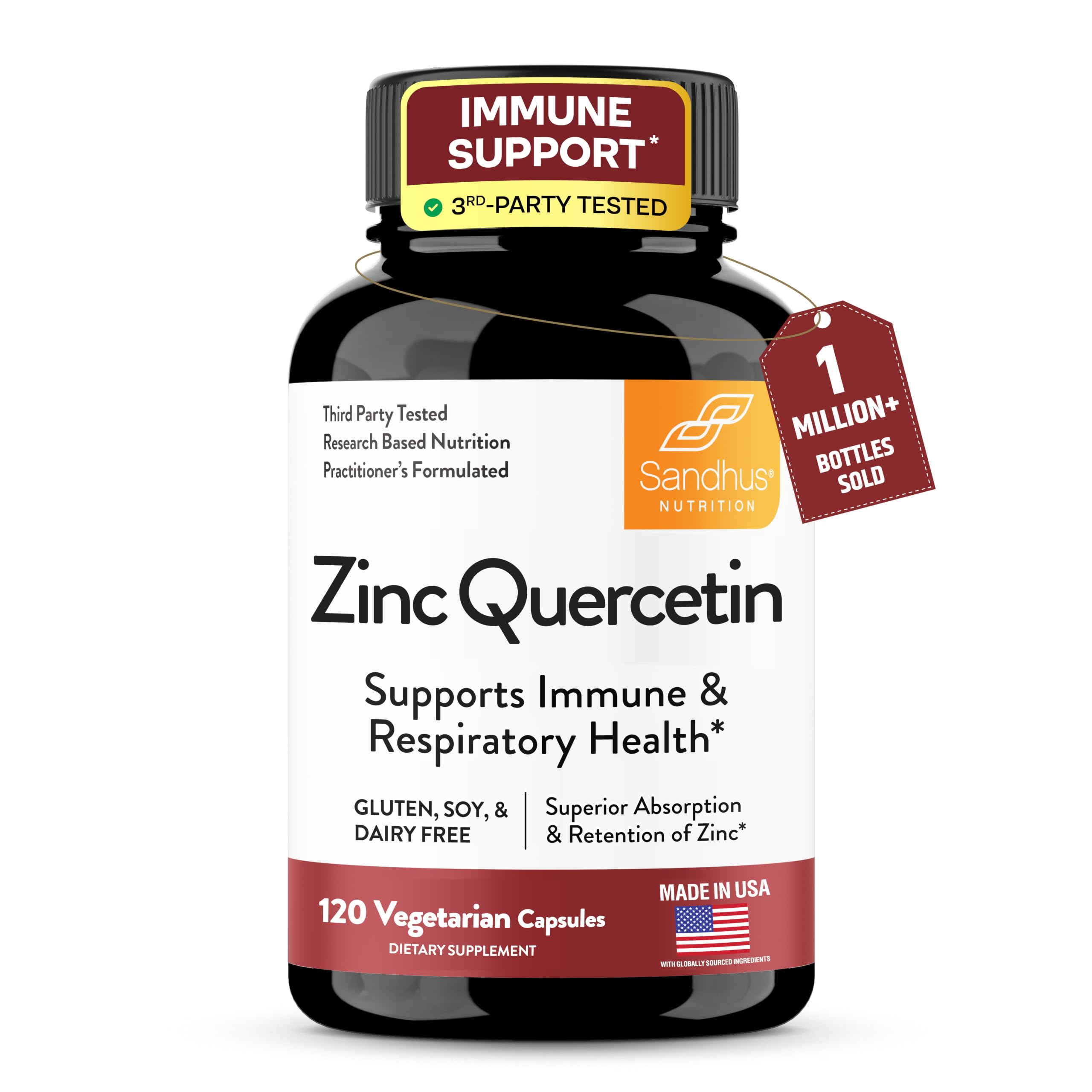
Zinc Plus Quercetin

Sandhu's Zinc with Quercetin

96 /100
Trail Score Outstanding

Key details

Form
Zinc with quercetin
Count
120 capsules
Testing
Third-party tested
Manufacturing
NSF-GMP certified facility, USA
Check Price on Amazon

Quercetin is the reason to look at this bottle. It is a flavonoid that turns up in immune-support formulas, and putting it in the same capsule as zinc means one swallow instead of two. The capsules are vegetarian and easy to take, the panel is short, and the bottle holds 120.

We like it for the stretch of the year when you are actively trying to stay well rather than for year-round maintenance. It is an immune-season bottle in spirit, even if nothing stops you taking it in July. There is no aftertaste to speak of, and a capsule goes down with a mouthful of water.

The caveat is the stomach. Zinc on an empty stomach is the usual reason any of these turn a morning sour, and this bottle is no exception, so take it with breakfast. If you already buy quercetin separately, this folds two bottles into one, and 120 capsules is a generous count for a combination product.

Pros

  • Pairs zinc with quercetin in one capsule
  • Easy-to-swallow vegetarian capsule
  • Third-party tested, NSF-GMP facility

Cons

  • Not a plain zinc; quercetin comes along
Our verdict

A good buy if you already wanted quercetin alongside your zinc and would rather swallow one capsule than two.

Check Latest Price
8

Clinician-Set Doses

Sandhu Zinc 50 mg Chelated

95 /100
Trail Score Outstanding

Key details

Form
Chelated monomethionine
Count
120 capsules
Supply
4 months
Zinc Per Capsule
50 mg
Check Price on Amazon

Fifty milligrams is the whole story. That is above the 40 mg daily upper limit for adults, which makes this a bottle for a specific instruction, such as a clinician telling you to take 50 mg or a short course, rather than a default daily supplement. We won't dress that up because the price per capsule is good.

What it does offer: chelated zinc monomethionine, where the mineral is bound to an amino acid, in a capsule with no unnecessary fillers or artificial additives and a GMP-certified facility behind it. One capsule a day, 120 to the bottle, four months at the label rate. The capsule is a medium size, not the tiny tablet of the budget picks and not a horse pill either.

Fifty milligrams is a lot to put on an empty stomach, so take this one with your biggest meal of the day. That is advice for any zinc and more important the higher the dose climbs. If you are after a bottle you can knock back on a rushed morning with nothing but coffee, this isn't it.

Our take: buy it when 50 mg is the number you have been given. If you are choosing your own dose, one of the 22 or 30 mg bottles gets you the same mineral without going over the limit, and the smaller number is the better supplement, not the compromised one.

Pros

  • Chelated zinc monomethionine capsule
  • 120 capsules, a four-month supply

Cons

  • Strong sulfurous smell in the bottle
Our verdict

Buy it only when 50 mg is the dose you have been told to take; for that job it is a clean chelated capsule at a good price.

Check Latest Price

How We Tested the Best Zinc Supplements

We started by pulling together around 60 zinc products sold at national retailers and online, then sorted them by form — picolinate, citrate, gluconate, oxide, bisglycinate — dose per serving, and whether the label stated the elemental zinc figure rather than just the compound weight. We set aside anything with no ounce of verification behind it, anything gummies-only where the sugar load outweighed the point, and anything so underdosed you'd need three pills to hit a normal daily amount. That left 14 formulas, which we bought ourselves at retail like anyone else.

Each one went into rotation for at least four weeks, always at the same meal so we could compare fairly. We also deliberately took a few on an empty stomach on rushed mornings, because that's when zinc's reputation for nausea shows up, and logged who felt queasy within half an hour, whether a burp tasted metallic, and whether anyone noticed any change in digestion over the following days. Bottles were opened and smelled the day they arrived and again near the end, since a sour, chalky odor is often the first sign a formula is going to be rough going down.

For taste, we held tablets in our mouths for a full 30 seconds before swallowing and rated lingering aftertaste rather than the initial impression. Ease of use came down to counting: capsules per dose, whether the pill was small enough to take without a full glass of water, and whether a serving fit into a once-a-day habit. Value we worked out honestly, dividing the cost of each bottle by the amount of elemental zinc per serving, because 50 mg of oxide and 30 mg of picolinate are not the same purchase at any price.

How to Choose a Zinc Supplement

Start With the Dose

Most daily zinc supplements land between 15 and 30 mg, and that is the range we choose from for everyday use. The adult upper limit is 40 mg a day from all sources, so a 50 mg capsule is a deliberate choice rather than an upgrade; it belongs with a clinician's instruction or a short course. Serving size is the other half of dose. Read whether the number on the front is per capsule or per serving, because a 30 mg bottle that asks for two capsules is a 15 mg dose if you take one.

Form Matters, Consistency Matters More

Zinc picolinate and chelated zinc, where the mineral is bound to an amino acid, are the forms we look for first. Gluconate, citrate, and oxide are cheaper and common in budget tablets. Absorption differs between them, but not enough to rescue a supplement you never take. Between an absorbable 30 mg capsule and a cheap 50 mg tablet you dread swallowing, take the one that gets finished.

Count Servings, Not Capsules

A 180-count bottle at one capsule a day is six months of zinc. A 60-capsule bottle that asks for two capsules a serving is one month. Compare bottles by servings, not by the number printed on the front, and the group sorts itself out: the budget tablets win on cost per day, the picolinate capsules justify their price with form and a longer supply, and the whole-food formula asks for two capsules and a bigger monthly spend.

Extras, Testing, and What You Are Paying For

You can buy zinc alone or with company. Vitamin C and quercetin are the two additions worth paying for if you were going to take them anyway, though a combined capsule saves a swallow and locks you into that dose. Third-party testing is the other thing to look for, because a certified bottle tells you the contents match the panel. Where a brand states that, we prefer it. Where it doesn't, you are trusting the name on the label.

Swallowability and Stomach Comfort

Zinc unsettles an empty stomach faster than most minerals. Take any of these with food, and if a full dose still bothers you, split it across two meals or move it to your largest one. Tablet size matters as much as dose for daily adherence: the Solgar and Nature Made tablets are small, the Sandhu capsule is medium, and a liquid sidesteps the question entirely. A supplement you avoid taking is worth nothing, whatever the panel says.

Frequently Asked Questions

Final Verdict

Most people should buy the Pure Encapsulations 30 mg picolinate. It pairs a well-absorbed form with a full daily dose, gives you six months in one bottle, and adds nothing you didn't ask for. If the price is the sticking point, the Nature Made tablets do the same daily job for far less; if 22 mg suits you better, the Solgar picolinate is the one we keep buying.

The 50 mg bottles are a separate decision. Buy one when a clinician has named that dose. If you are setting your own, stay at or under the upper limit and put the difference into a form you will take every day.