Best Wrist Weights of 2026

A wrist weight is as simple as fitness gear gets: a strap, a pouch of filling, a strip of Velcro. And yet the simple ones fail in predictable ways — the cuff rotates until the weight sits under your wrist instead of on top, the filling bunches at one end, and the closure gives out after a few months of daily use. A good pair fixes all of that quietly, adding resistance to a walk or a rehab exercise without needing a hand free for a dumbbell.

I came to wrist weights through a physical therapist, who handed me a pair for shoulder rehab and sent me home in them; I've worn some version on evening walks ever since. My team and I have now spent four months with 14 pairs, from thin neoprene cuffs to adjustable strap-and-pouch sets. The thing nobody tells a first-time buyer: the number on the package usually describes the pair, not the cuff, so a 3-pound set may be 1.5 pounds a wrist. The picks below are the ones that stayed where we put them and still felt balanced at the end.

1

Best Overall

BAGAIL Ankle & Wrist Weights

91 /100
Trail Score Outstanding

Key details

Care
Hand wash only
Fill
Iron sand
Shell
Three-layer Lycra-SBR
Weight Per Side
1 lb (2 lb pair)
Check Price on Amazon

One pound on each wrist is where most people should start, and this pair makes it easy to get there. The shell is a three-layer Lycra-SBR fabric that shrugs off sweat, and the iron sand inside is packed flat, so the weight sits against the wrist instead of sliding into a lump at the low point of the strap. That's the difference between forgetting you put them on and adjusting them every block.

It's the set we point to first, and the light load is a feature rather than a compromise. For walking, mat work, and the early weeks of a therapy program, a pound a side is enough resistance to feel and light enough that you'll keep wearing it. It's the opposite end of the range from Henkelion's five-pound adjustability, and the two make a sensible pair of choices: start here, move there when a pound stops registering.

The strap deserves credit on its own. It tightens down small enough for a genuinely slim wrist, which is the failure point of a lot of these pairs, and the closure is a wide hook-and-loop pad rather than a thin strip. It's also thin enough to vanish under a shirt cuff, so a lunchtime walk doesn't have to look like a gym session.

Pros

  • Flat, low-profile cuff hides under a sleeve
  • Iron sand stays evenly distributed
  • Closure tightens down to slim wrists
  • Least expensive pair in this roundup

Cons

  • Hand wash only, so a sweaty pair waits for laundry
Our verdict

For most people this is the one: a flat pound a side that stays where you strap it, at the lowest price in this roundup.

Check Latest Price
2

Best Bracelet-Style

nooncrazy Wrist & Ankle Weights

89 /100
Trail Score Excellent

Key details

Body
Steel core in soft silicone
Closure
Hook and loop
Weight Per Side
1 lb (2 lb pair)
Water Resistance
Waterproof
Check Price on Amazon

The box says set of two, and that means one for each wrist, not one for the wrists and one for the ankles. It's worth knowing before you order, and it's the only confusing part of an otherwise simple product: two silicone bracelets, each with a steel core and a strap that doubles back on itself.

We came away liking the form more than we expected to. Silicone doesn't bunch, doesn't soak up sweat the way fabric does, and wipes clean in a second, and because the pair is waterproof it can go to a pool session or a hot-yoga class without a second thought. For Pilates and barre, where a fabric cuff rolls at the edge of a movement, the flat band simply stays where it was put.

The limit is the load. One pound a side is what you get, with no packets to pull out and nothing to add later, so this is a tool for Pilates, dance, and walks rather than a way to load up over months. Each set arrives with a small pouch and a card of exercise suggestions — a small thing until the alternative is two loose weights rolling around a tote bag.

Pros

  • Wipes clean and resists sweat
  • Flat band stays put through floor work
  • Waterproof for pool and hot-yoga sessions
  • Storage pouch included

Cons

  • Fixed at 1 lb per side, with no removable load
Our verdict

Our pick for Pilates, barre, and dance: soft silicone over a steel core, one pound each, and a band that doesn't move mid-movement.

Check Latest Price
3

Best Adjustable

Henkelion Adjustable Wrist & Ankle Weights

93 /100
Trail Score Outstanding

Key details

Fill
Removable weighted packets
Closure
Hook and loop
Adjustable Range
1 to 5 lb per side
Check Price on Amazon

Five removable packets per side is the whole idea: pull them out and the pair drops to a pound, put them back and you're at five. Swapping one takes seconds, fast enough that you'll actually do it between sets instead of deciding it isn't worth the bother.

That range is why the pair earns a place here. Nothing else in this roundup adjusts at all, and for anyone working through a therapy program, where load climbs in small steps over weeks, it's the difference between one purchase and three. It's the most useful pair here for progressive loading, and the one that keeps reminding you it was designed around an ankle.

On a slim wrist the strap can creep during a long walk. Snug it, then check again after the first few minutes — most of the slipping happens before the closure has settled into place. On an ankle it behaves entirely differently and stays where you put it, which is worth knowing if you're buying one pair for both.

Pros

  • Drops to 1 lb per side, builds to 5
  • Packets swap in seconds
  • Soft shell that doesn't dig in

Cons

  • Round, bulky profile on a wrist
Our verdict

The pair to buy when a pound stops being enough: removable packets a side take it from one pound up to five.

Check Latest Price
4

Best for All-Day Comfort

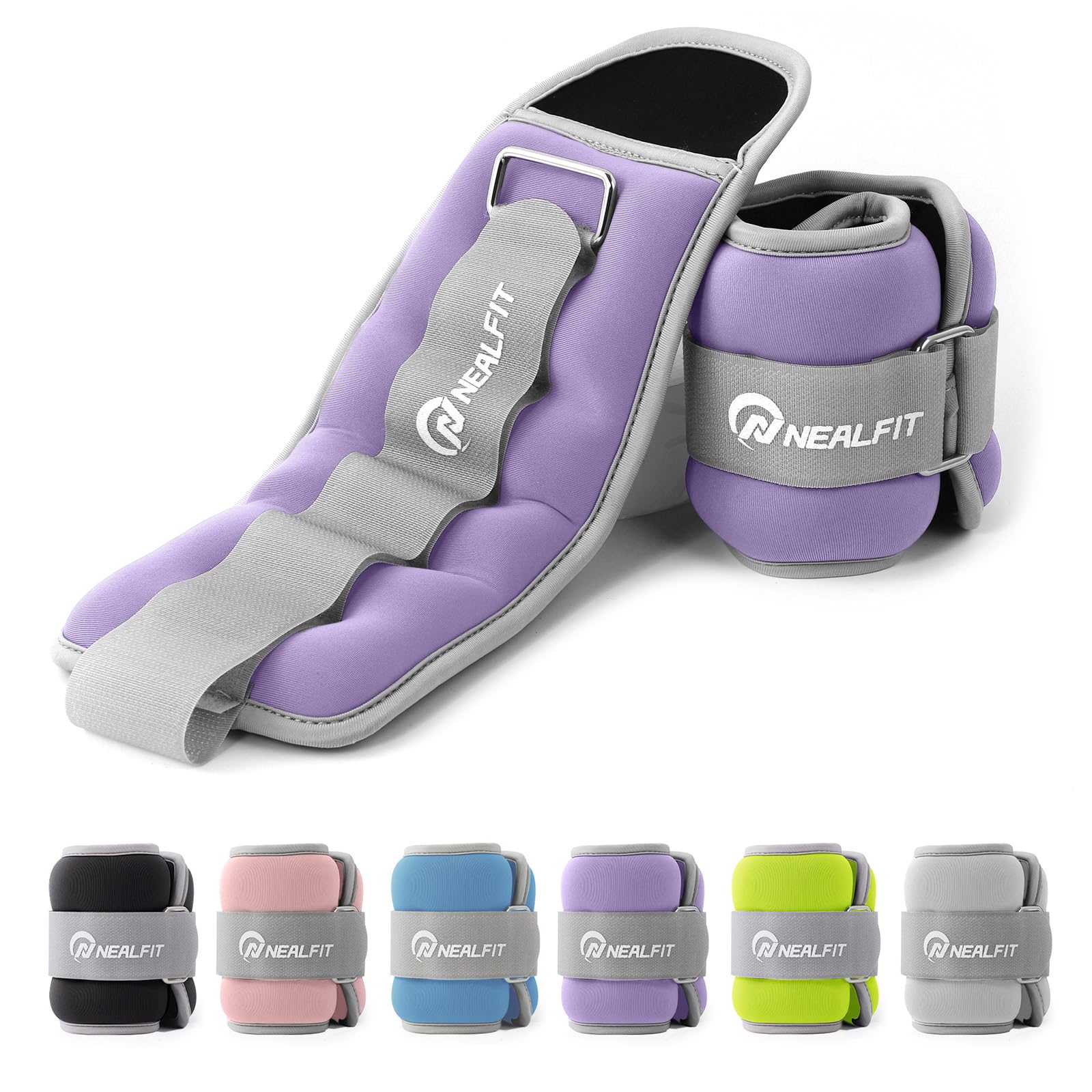
NEALFIT Wrist & Ankle Weights

91 /100
Trail Score Outstanding

Key details

Fill
Iron sand
Shell
Mercerized cotton
Closure
Hook and loop
Weight Per Side
3 lb (6 lb pair)
Check Price on Amazon

Mercerized cotton is the reason to pick this pair. It's soft against bare skin, it breathes, and the edge of the cuff is folded over rather than cut and bound — the detail that decides whether a weighted wrap disappears on your arm or rubs a red line into it after twenty minutes. We wore these through an afternoon of errands and forgot they were there, which is the highest compliment this category gets.

Fit is where it separates from the cheaper fabric wraps. The material has some stretch, so it closes snugly on a small wrist without the strap bottoming out, and it opens wide enough to go over a sleeve. Of everything here, this is the pair that most reliably stayed where we put it through a full session.

The straps do run long, and there's a tail to tuck once you've tightened it; fold it back under the crossover and it stays. Nothing about that gets in the way of what this pair does best, which is sit on a wrist for hours without asking for attention.

Pros

  • Soft cotton that doesn't chafe
  • Folded edge resists rubbing
  • Stretch fits slim wrists and sleeves
  • Stays in place through a session

Cons

  • 3 lb a side is heavy for wrist work
Our verdict

The comfort pick: soft cotton, a folded edge that doesn't dig in, and a stretchy wrap that holds through a long session.

Check Latest Price
5

Best Compact Heavier Pair

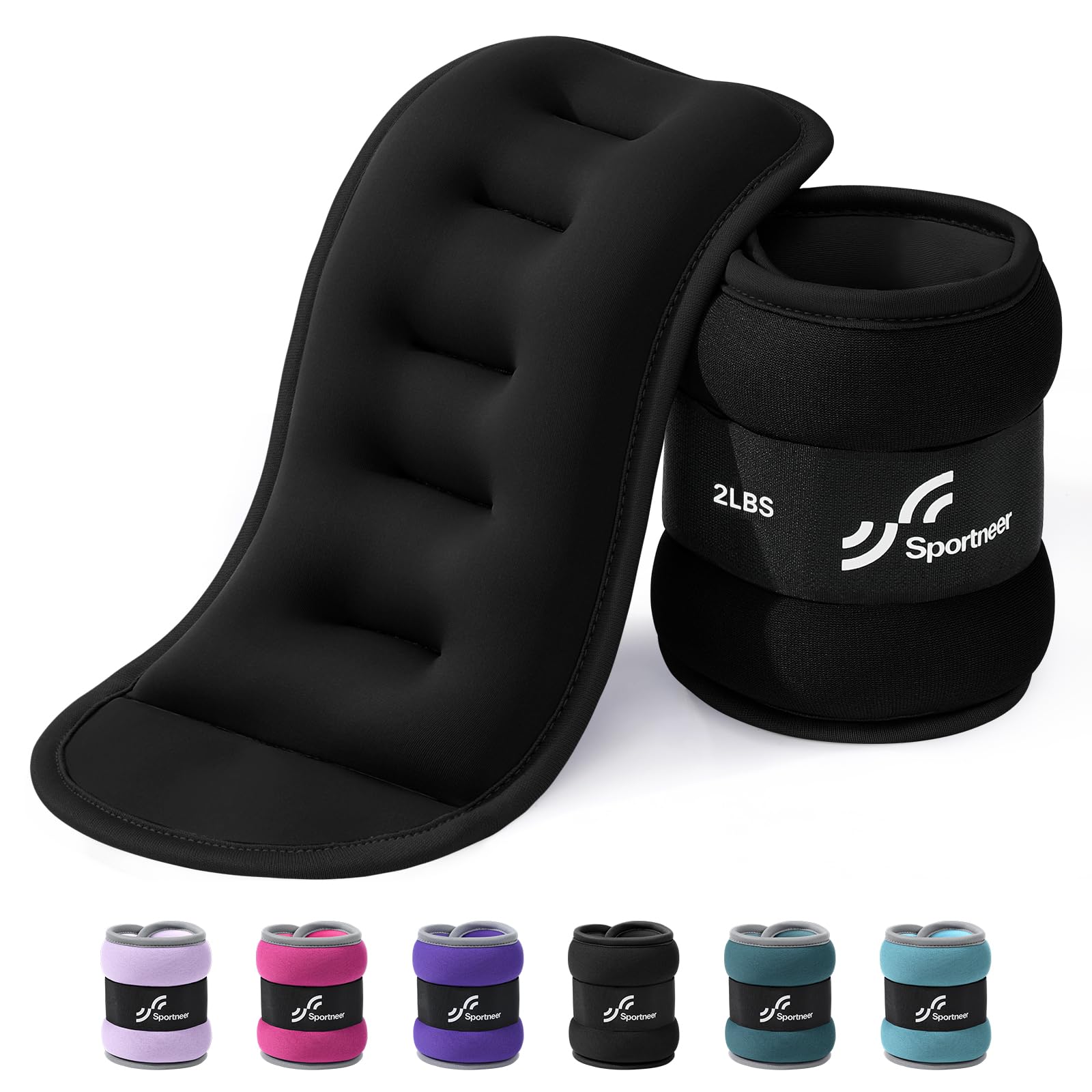
Sportneer Wrist & Ankle Weights

91 /100
Trail Score Outstanding

Key details

Fill
High-density iron sand
Inner
Lycra lining
Strap
Nylon hook and loop
Weight Per Side
2 lb (4 lb pair)
Check Price on Amazon

Higher-density iron sand is what lets this pair run roughly a fifth smaller than a standard weight at the same load, and it shows: at two pounds a side the cuff is noticeably more compact than the fabric wraps here.

Compact matters more on a wrist than anywhere else. A bulky two-pound cuff sits proud of the wrist bone and catches on cuffs and doorframes, while this one stays closer to the arm, which is why it's the pair we reach for when the load matters and the outfit doesn't.

Two pounds a side in a package this small is a slot nothing else here fills: heavier than the bracelets, flatter than the cotton wraps, and dense enough that the fill doesn't shift or swing mid-walk. For walking and light floor work, that's the combination worth paying for.

Pros

  • Compact cuff for its weight
  • Dense fill that doesn't shift
  • Sits close enough for a jacket sleeve

Cons

  • Seams are the weak point under hard use
  • Straps run short on thicker wrists
Our verdict

For two pounds a side without a brick on each wrist: denser fill in a smaller cuff that fits under a sleeve.

Check Latest Price
6

Best for Beginners and Kids

Virtee Wrist & Ankle Weights

92 /100
Trail Score Outstanding

Key details

Closure
Hook and loop
Material
Cotton
Weight Per Side
0.5 lb (1 lb pair)
Check Price on Amazon

Half a pound per side is the lightest pair in this roundup, and that's the whole reason to consider it. Most wrist weights start too heavy for a child, a teenager adding resistance to a gymnastics or cheer routine, or an adult in the first weeks of a therapy program.

The wrap is cotton with a moisture-wicking lining and a long strap, so it closes on smaller arms as well as larger ones. That length is the point: a pair that only tightens onto an adult forearm is no use to a nine-year-old, and a pair that only fits a child is no use to anyone else.

We came to think of it as a first-pair purchase rather than a keeper. It does the light job well, it's soft enough that a kid will leave it on, and at this price trying wrist weights costs very little.

Buy the half-pound version. The heavier sizes in the same line are up against wraps that carry three or four pounds in a flatter, more secure cuff, and at that load the difference is the whole purchase.

Pros

  • Half a pound a side, lightest in this set
  • Soft cotton wrap that fits small arms
  • Long strap adjusts across sizes
  • Low price makes it a low-stakes first pair

Cons

  • Closure can loosen during faster movement
Our verdict

The lightest pair here, and the right one for a child, a beginner, or the first weeks back after an injury.

Check Latest Price
7

Larger Wrists

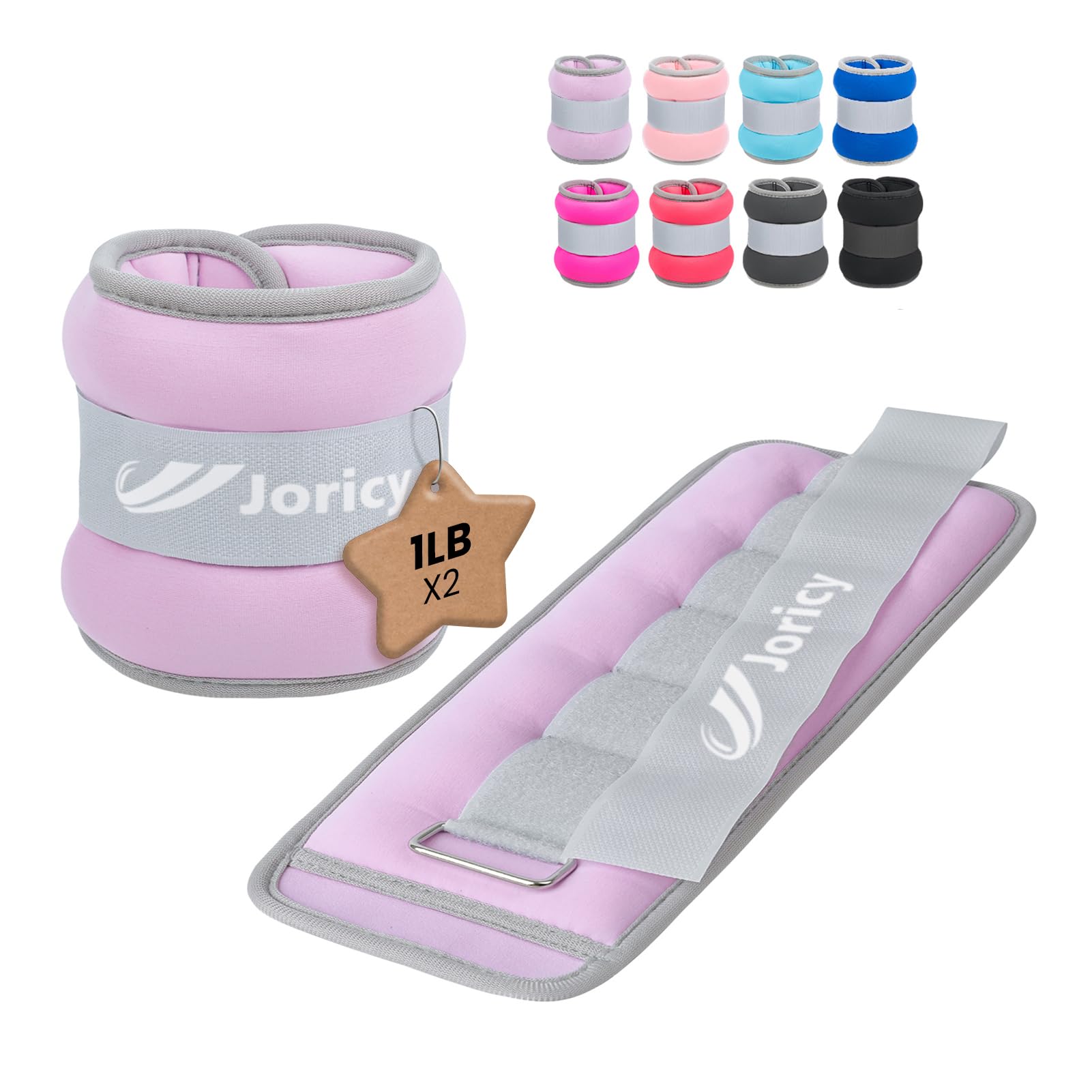
JORICY Wrist & Ankle Weights

91 /100
Trail Score Outstanding

Key details

Fill
Iron shot
Closure
Hook and loop
Available Pairs
1 to 20 lb
Weight Per Side
1 lb (2 lb pair)
Check Price on Amazon

Strap length is the quiet specification that decides whether a wrist weight works, and this pair has more of it than most. The closure runs long enough to sit over a sleeve, a bandage, or a wrist the smaller silicone bands won't close around.

The rest is conventional and well executed. Mercerized cotton outside, a moisture-absorbing lining, iron shot inside, and a wide hook-and-loop closure. Iron shot holds its shape better than fine sand over months of use, so the load stays where you put it instead of pooling at the low end of the cuff.

Where it earns its place is at the ends of the size range: bigger wrists and layered clothing, where a bracelet has nothing left to adjust. The line runs from a pound up to much heavier pairs; stick to the light end for wrists and let the heavier ones sit on an ankle.

Pros

  • Long strap fits bigger wrists and sleeves
  • Iron shot holds its shape
  • Moisture-absorbing lining

Cons

  • Closure can creep on bare, sweaty skin
Our verdict

For bigger wrists and layered wear: a long strap that still closes over a sleeve, in a light pound-a-side pair.

Check Latest Price
8

Budget Bracelet Wear

MXiiXM Wrist Weights

91 /100
Trail Score Outstanding

Key details

Body
Silicone
Closure
Hook and loop
Band Length
11.69 in
Weight Per Side
1 lb (2 lb pair)
Check Price on Amazon

Two bracelet-style pairs are in this roundup, and this is the cheaper of them. If you want to find out whether a silicone band suits your wrists before committing much, this is the low-stakes way to do it.

The band measures 11.69 inches and the closure runs along both faces, so it adjusts down for a small wrist and still closes over a larger one. Silicone flexes around the wrist bone rather than pressing on it, which is why these stay comfortable through a whole class.

It wipes clean, doesn't hold sweat the way fabric does, and handles water — useful if your version of wrist weights is a pool walk or a hot room. The material is also why there's no fabric tail to work loose as you move.

At a pound a side it's a light training tool rather than a loading one, and that's fine, because most wrist work is light. As an introduction to the bracelet style it does what the more expensive pair does at a lower price, which is the reason it's here.

Pros

  • Cheapest bracelet-style pair here
  • Silicone wipes clean and handles water
  • Adjusts down for small wrists
  • Flexes around the wrist bone

Cons

  • Hook-and-loop grip is the weak point
Our verdict

The low-risk way into bracelet-style weights: silicone, a pound each, and the lowest price of the two bands here.

Check Latest Price

Four Months, 14 Pairs, and One Kitchen Scale

We built the shortlist from spec sheets first: labeled weight, whether that number referred to one cuff or the pair, filling material, strap length range, and closure type. Anything sold in a single fixed size, or with a strap too short to overlap properly on a small wrist, came off the list before testing began. That narrowed roughly 35 candidates to 14 pairs, which we wore for four months.

Testing happened where wrist weights actually live. We wore them on two-mile dog walks, during shoulder rehab exercises on the living room floor, through full workdays at a desk, and to a beginner yoga class; three testers also strapped them around their ankles for leg lifts. Each pair went on and off at least 30 times so we could watch the hook-and-loop fuzz up and lose grip, and we noted whether the strap still had enough overlap to cinch down on a narrow wrist.

A kitchen scale settled the weight question — we compared each cuff's actual reading to its printed claim. For stability, we shook every pair by one strap to see whether the filling migrated, then wore them through a sweaty afternoon walk to check for rotation and slipping. We judged bulk by whether a jacket sleeve would go over them and whether they clunked against a desk. Durability came down to seams, strap stitching, and whether the filling stayed put after four months of near-daily use, since value here is mostly a question of how long a pair survives.

How to Choose Wrist Weights

Bracelet or Wrap-and-Strap?

Two designs cover almost everything sold as a wrist weight. A bracelet is a fixed band of silicone or fabric with a steel or sand core; a wrap-and-strap pair is a padded cuff filled with sand or shot that closes with hook-and-loop. Bracelets suit Pilates, barre, dance, and walking, where you want a pound that doesn't move. Wraps suit anything where you want more load, or a second life on the ankle.

The trap is assuming a wrap will feel like a bracelet. A padded cuff holding two pounds sits proud of the wrist bone and catches on sleeves, and that difference in bulk is what most people notice in the first five minutes rather than the weight itself.

How Much Weight, and Whether It Adjusts

Most wrist work happens between half a pound and three pounds a side. Past that, the weight starts changing how your arm swings rather than simply adding resistance, which is why heavy pairs belong on an ankle.

If you're loading progressively — a therapy program, a return from injury, a walk that gets longer each week — removable packets save you from buying three sets. If you already know your number, a fixed pair is lighter, flatter, and cheaper. Our adjustable pick runs from one to five pounds a side; the fixed pairs start at half a pound.

Strap Length and Closure

Nearly every complaint in this category is about a weight that slides. Two things cause it: a strap too short to close on a slim wrist, and a closure that has lost grip. Measure your wrist and add about an inch if you'll wear the pair over a sleeve, then look for a wide hook-and-loop pad rather than a narrow strip.

Bracelet designs sidestep the problem by having no tail, but they only fit within their own range, so check the stated band length against your wrist before ordering. A band that only just closes will rotate the first time you move.

Comfort, Bulk, and Care

Fabric cuffs breathe and sit flat; silicone wipes clean and doesn't hold sweat. Neither is better in the abstract — it depends on whether you'll be sweating into them for an hour or wiping them down between classes.

Check the edge finish, since a folded or bound edge is what stops a cuff rubbing a line into the wrist. Then check the care instructions before you buy: some of these are hand wash only, which changes how often a sweaty pair actually gets cleaned.

Fill and Stitching

Sand, iron shot, and steel cores all add weight, and they behave differently. Fine sand shifts and can escape through a seam; iron shot and steel hold their shape and are harder to damage. Denser fill also lets a maker put the same load in a smaller cuff.

Whichever you choose, the seams are the part that fails, and a leaking weight is a ruined weight. Look over the stitching before the first session and retire a pair that's shedding fill rather than patching it.

Frequently Asked Questions

Final Verdict

Start with a pound a side and the BAGAIL pair. It's flat, it stays where you strap it, and it costs less than anything else here, which makes it the low-risk way to find out whether wrist weights fit into your routine at all. When a pound stops registering, move to the Henkelion set and its removable packets: one purchase covering one to five pounds a side.

If your training is Pilates, barre, or pool work rather than walking, choose a bracelet instead — the nooncrazy pair wipes clean and doesn't shift through floor work, and that matters more in a studio than the ability to add load.