Best Weightlifting Shoes of 2026

The first time I squatted heavy in running shoes, I felt my heels sink and my knees drift inward — the cushioning that makes a mile comfortable makes a loaded set feel like standing on a mattress. A weightlifting shoe fixes that with a raised, incompressible heel and a platform that refuses to squish, plus a strap that pins your foot down so nothing slides. It's the difference between pushing through the floor and pushing through foam.

Which pair you buy comes down to details you can't see online: heel height, how the strap sits across your instep, whether the toe box has room for a wider foot. Over the past six months, I and three other lifters on my team have trained in 12 pairs, from budget models to stiff competition shoes, and the field sorted itself out fast. Shoes that felt wonderful standing still sometimes slid on a chalky platform, and a couple of cheap pairs gave out at the seams. Everything below earned its place under real loading.

1

Best Overall

Nike Metcon 8

90 /100
Trail Score Outstanding

Key details

Heel
Firm, flat platform
Sizing
Runs small for some
Toe Box
Wide enough for toe movement
Check Price on Amazon

The Metcon 8's firm, flat platform is the first thing we notice when we step in: the shoe does not squish under a loaded barbell, and that is exactly what we want for squats, deadlifts, and overhead presses. The heel feels locked down, the toe box leaves enough room for the toes to spread, and the lace locks keep the midfoot secure between sets. We like that combination more than any single feature, because it lets the same shoe handle a heavy set and a short conditioning block without feeling vague.

It is not a running shoe. The sole is stiff and purposeful, so short sprints and rowing are fine, but distance running or a long walk will feel like work. We keep the Metcon 8 for the rack and the gym floor, which is where its stability earns its keep. The fit is the other thing to watch: it runs small for some feet, so try your usual size and be ready to go up half a size if your toes touch the front.

What keeps it at the top of this group is the balance. It is firmer than the Free Metcon 5, roomier than some narrow lifters, and more versatile than a dedicated squat shoe. If your training is mostly barbell work with a little conditioning, this is the pair we reach for first.

Pros

  • Firm, stable platform for barbell work
  • Wide toe box for toe movement
  • Lace locks secure the midfoot

Cons

  • No raised heel for deep squats
Our verdict

For most lifters who want one shoe for squats, deadlifts, and mixed gym sessions, the Metcon 8 gives the firmest, most confidence-inspiring base here.

Check Latest Price
2

Best Dedicated Lifting Shoe

Nordic Lifting MEGIN

90 /100
Trail Score Outstanding

Key details

Fit
Runs small for some
Heel
Elevated
Sole
Non-slip
Check Price on Amazon

The MEGIN's raised heel puts the ankles in a better position at the bottom of a squat, and the solid base and non-slip outsole let the shoe disappear under the bar. The heel is substantial enough to notice under a squat but not so tall that walking between stations feels awkward.

We like the sturdy heel and the non-slip sole, which make it feel more substantial than the price suggests. The fit is the part to get right: it runs small for some feet and the toe box is narrow, so try half a size up if you are between sizes or have wide feet. The upper holds the midfoot securely once laced.

The heel is substantial, so this is a shoe for the rack, not the treadmill; that is the trade-off for the squat position it creates. We keep it in the gym bag for squat days and leave the running shoes by the door. It is not a shoe for long walks or a metcon with running, but that is not what it is for; the trade-off is worth it if squat depth is your priority.

Pros

  • Raised heel for squat depth
  • Solid, non-slip base
  • Sturdy heel construction

Cons

  • Sole can separate at the toe
Our verdict

For deep squats and front-loaded lifts, the MEGIN's raised heel and solid base make it the dedicated lifter we recommend first.

Check Latest Price
3

Best Budget Trainer

UA Charged Commit 4

92 /100
Trail Score Outstanding

Key details

Midsole
Rigid
Toe Box
Wide width available
Sidewalls
Strong and supportive
Check Price on Amazon

The Charged Commit 4 does the basic gym job without asking you to baby it. The wide toe box and strong sidewalls make it feel planted for squats and stable through circuit work, and the wide-width option is a real help for lifters who usually have to size up and hope. It looks good enough for everyday wear, too, though it is happiest in the gym.

Comfort is the wildcard. The shoe can feel great all day for some feet and cause pain for others, so wear them around the house first and give the upper a short break-in. The midsole is rigid, which suits lifting but not running; this is a gym shoe, not a treadmill shoe.

We reach for it when we want a stable base and do not want to worry about scuffing a premium shoe. For a first lifting shoe or a budget pair that can handle warm-ups, accessories, and short metcons, it is hard to beat. The heel support is a small bonus for standing work, and the price leaves room for a dedicated lifter later.

Pros

  • Wide toe box and wide widths
  • Strong sidewalls support gym work
  • Good value for a first lifter

Cons

  • No raised heel for squats
Our verdict

For a first lifting shoe or a budget gym pair, the Charged Commit 4 gives you a wide, stable base without the premium markup.

Check Latest Price
4

Best for Wide Feet

UA TriBase Reign 6

90 /100
Trail Score Outstanding

Key details

Fit
True to size
Toe Box
Wide
Stability
High for lifting
Check Price on Amazon

Wide feet are often told to size up and live with the squeeze; the TriBase Reign 6 is the pair here that gives the toes room without losing the locked-in feel. The base is stable under weight, and the shoe does not feel as bulky or stiff as some dedicated lifters when you move between stations. It is a genuine gym shoe, not a squat shoe with a walking problem.

We like the wide toe box most, and the fit runs true to size for many feet. It is comfortable enough for a full gym session, and the stability is there for squats, lunges, and leg work without turning every step into a chore. The toe box has enough room that the toes do not feel pinched at the bottom of a squat.

The trade-off is that you pay for the width and the finish; the budget trainers here will get most lifters through. We still reach for the TriBase when comfort and a roomy toe box matter as much as a firm platform.

Pros

  • Roomy toe box for wide feet
  • Stable base for weightlifting
  • Comfortable true-to-size fit

Cons

  • No raised heel for deep squats
Our verdict

For lifters with wide feet who want one stable gym shoe, the TriBase Reign 6 is the roomiest strong performer here.

Check Latest Price
5

Best for CrossFit and HIIT

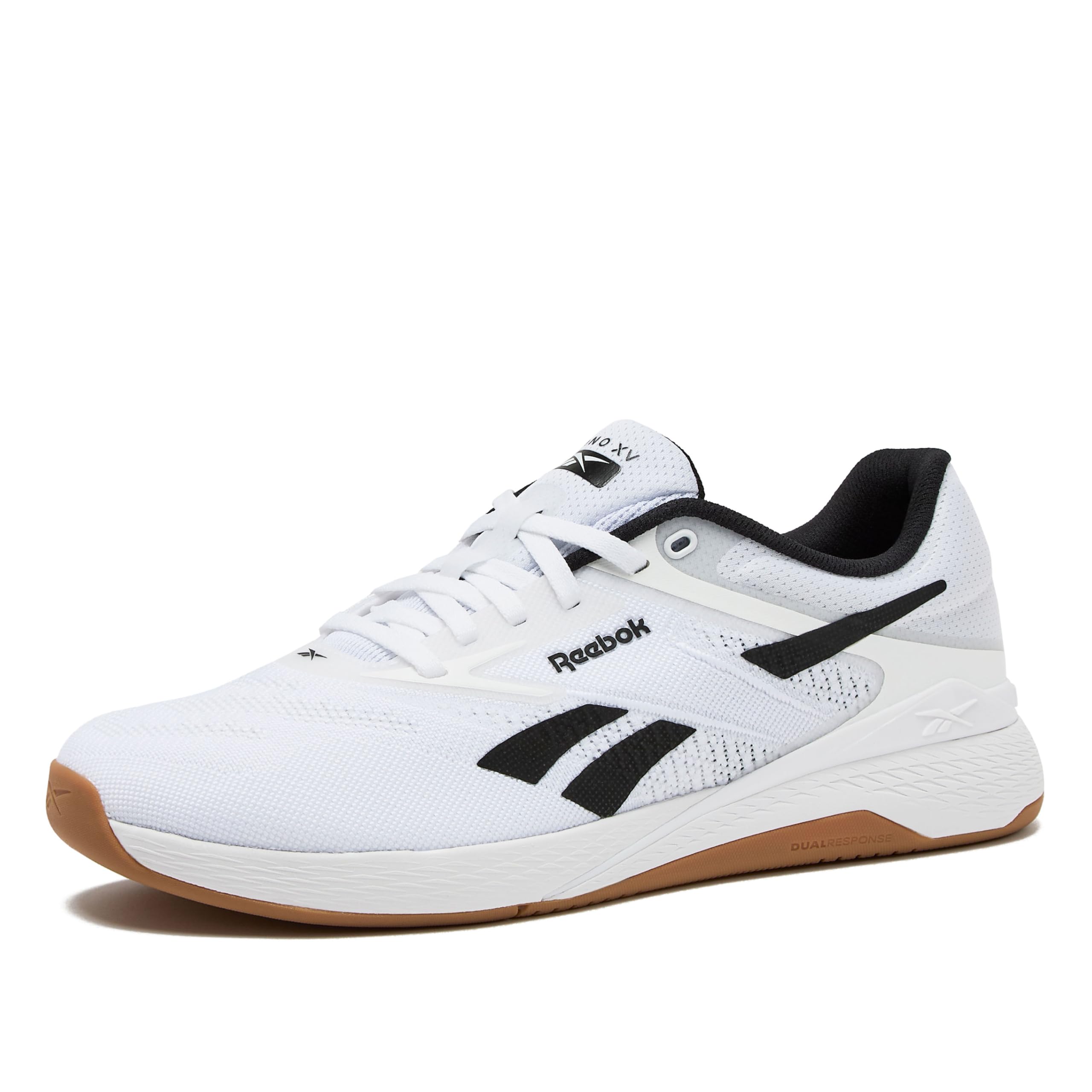
Reebok Nano X5

87 /100
Trail Score Excellent

Key details

Toe Box
Wide
Stability
Planted for HIIT
Run Support
Up to about a mile
Check Price on Amazon

The Nano X5 is the pick for the lifter who does not want to change shoes between a barbell set and a short conditioning block. It feels planted for lifts but still flexes enough for runs of a mile or less, and that balance is harder to find than it sounds. It looks sharp enough for everyday wear, though it is at its best in the gym.

The stable base works for HIIT, and the wide toe box helps on the pairs that fit, but the fit is not universal. Some feet find it narrow, and the sizing runs small for some, so start half a size up if you are between sizes. It is comfortable enough for a full session, though it is not as firm as the Metcon 8 under a heavy bar.

We like the balance for mixed training, even if it is not the most proven shoe in this group. It is the one we pack when a session might move from the rack to the rower without warning.

Pros

  • Stable for lifts and HIIT
  • Flexible enough for short runs
  • Comfortable for mixed sessions

Cons

  • Durability is a question mark
Our verdict

For CrossFit-style sessions that mix lifting with short runs, the Nano X5 is the most balanced shoe in this group.

Check Latest Price
6

Hybrid Training

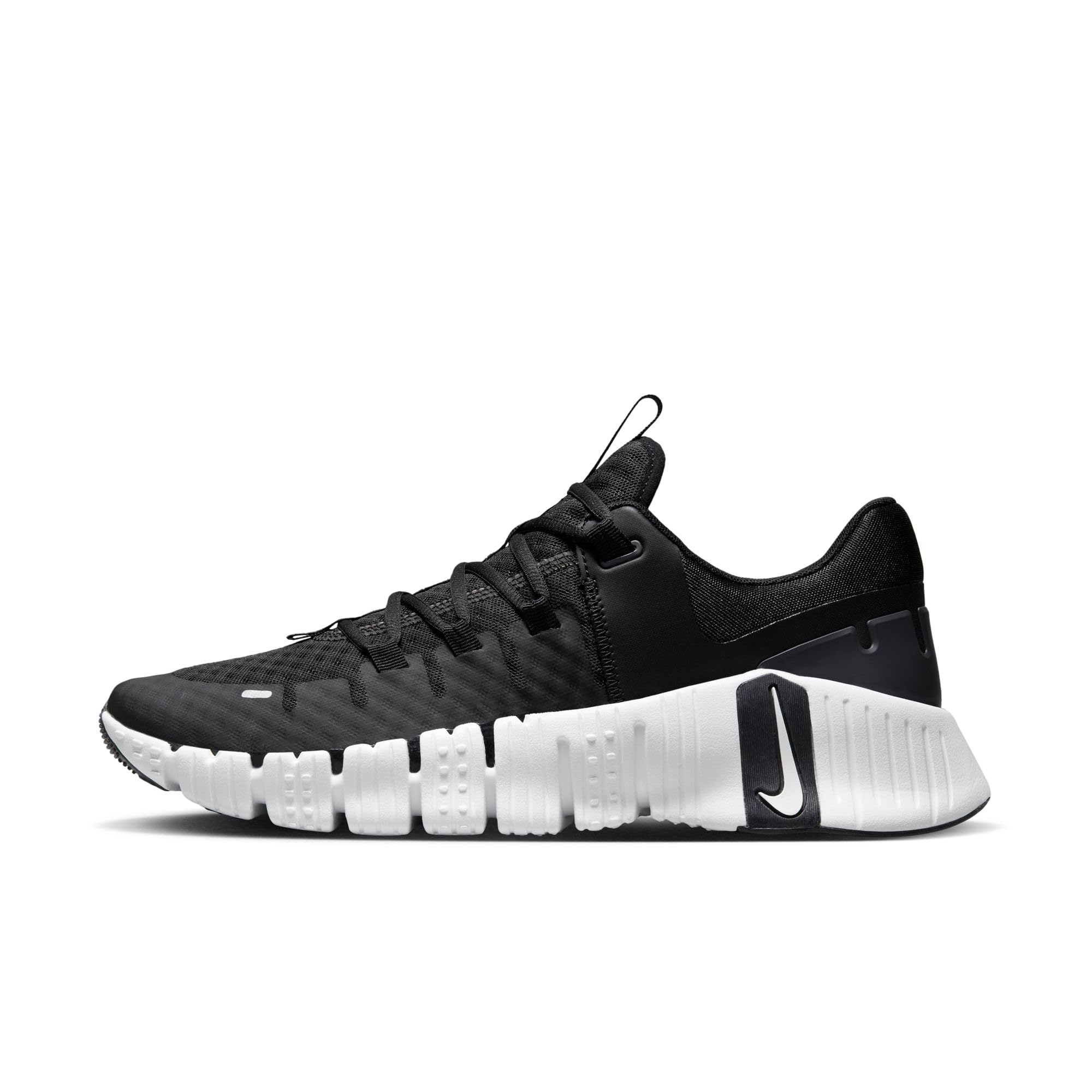
Nike Free Metcon 5

88 /100
Trail Score Excellent

Key details

Sizing
Runs small for some
Forefoot
Flexible
Stability
Stable for lifts
Check Price on Amazon

The Free Metcon 5 is the flexible one: it bends with the foot in a way the Metcon 8 does not, which makes it a better fit for mixed training and short runs. We found it stable enough for squats and kettlebell work, and the lighter, more mobile feel is welcome on days when the session keeps moving. It is the pair we grab for a class that mixes bodyweight work with dumbbells.

It gives up some barbell-specific rigidity. If your main goal is a planted base under a heavy squat, the Metcon 8 is the stronger choice. The Free Metcon 5 is for the lifter who wants one shoe for lifting, short runs, and gym classes, and it handles that mix without feeling like a compromise. The heel is stable enough for general strength work, though not for a max-effort squat.

We also like that it costs less than the Metcon 8 while keeping a stable heel for general strength work. It is not a dedicated lifter, but it is a useful hybrid for someone building a small gym bag. The upper is comfortable from the first session, with less break-in than a stiff lifter.

Pros

  • Flexible forefoot for hybrid training
  • Stable enough for squats and kettlebells
  • Versatile for lifting and short runs

Cons

  • Runs small for some feet
Our verdict

For a hybrid training week that includes lifting and short runs, the Free Metcon 5 is the more flexible, easier-going choice.

Check Latest Price
7

Budget Squat Shoe

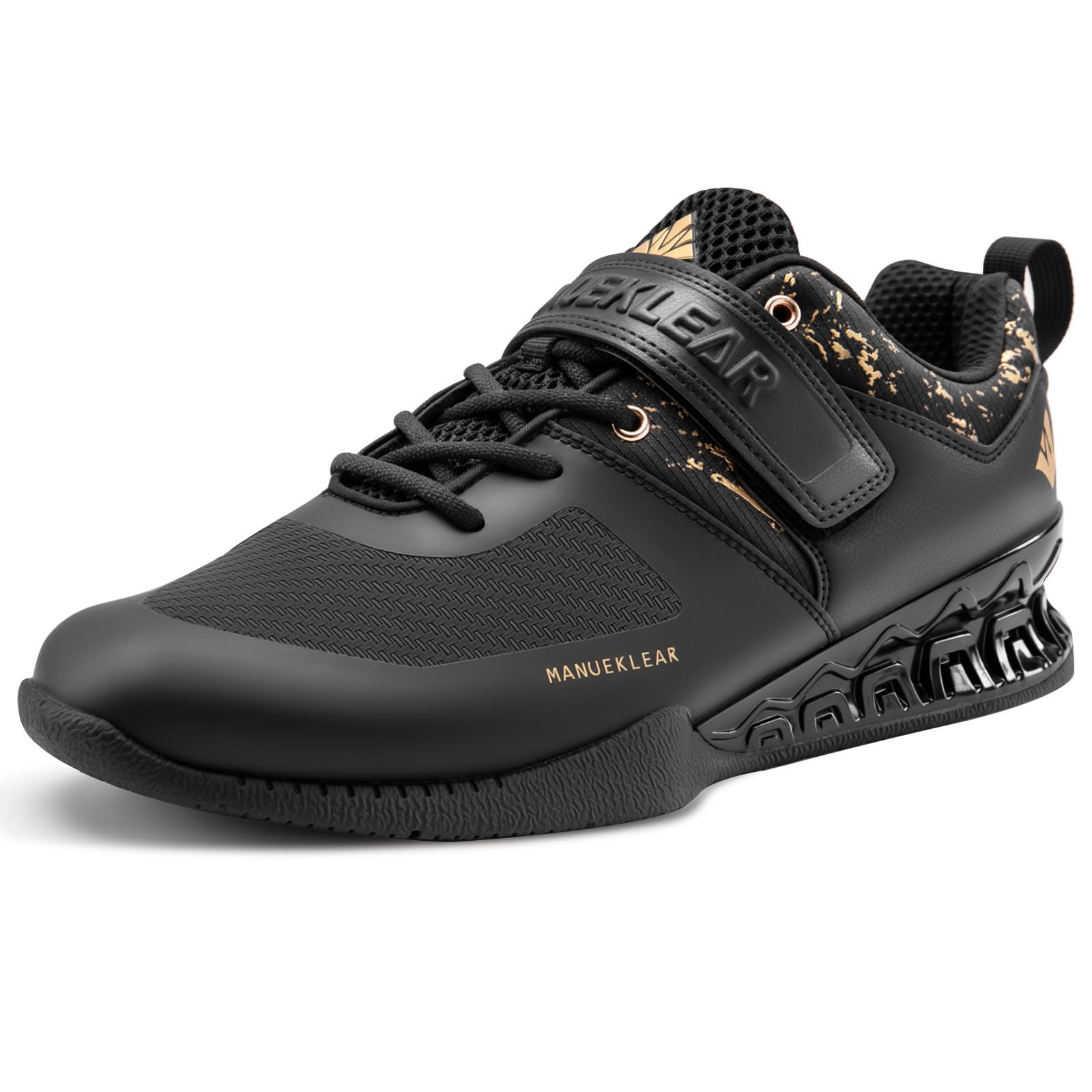
MANUEKLEAR Squat Shoes

86 /100
Trail Score Excellent

Key details

Heel
Raised
Sole
Hard, non-slip
Toe Box
Narrow
Check Price on Amazon

The MANUEKLEAR squat shoe delivers the raised heel and hard sole that make deep squats feel more manageable. The lift is there, the base is stable, and the shoe looks more expensive than it is.

The secure platform works for squats, hack squats, and lunges, and the padding inside is comfortable enough for a full session. The outsole grips well on gym floors but can feel slippery on smooth surfaces, so keep them on the rubber and platform.

Durability is the caveat: the sole can separate, so inspect the bond before you commit and keep them dry. That is the main thing to check if you train several days a week.

We think it is a strong entry point for a budget-minded lifter who wants a raised heel for squats. It gives you the platform and the lift without a premium price.

Pros

  • Raised heel for squat depth
  • Hard, non-slip sole
  • Good value for a dedicated squat shoe

Cons

  • Narrow toe box
Our verdict

For a budget-minded lifter who wants a raised heel for squats, the MANUEKLEAR is a strong entry point.

Check Latest Price

How We Tested the Best Weightlifting Shoes

We started with specs on more than 40 pairs and cut anything without a raised, non-compressible heel — a surprising number of shoes sold as lifting shoes are just flat sneakers with a firm sole. From there we narrowed to 12 models across price points, favoring shoes that came in wide sizes, used a metatarsal strap, and offered between half an inch and three-quarters of an inch of heel lift. Each pair then went through six months of training with me and three other lifters, three to four sessions a week, split between a chalky wooden platform in a garage gym and a rubber-floored commercial gym.

Fit and sizing got checked first: we compared each shoe against our actual street-shoe size, noted which ones ran long, narrow, or short, and logged hot spots and blisters across the first three sessions to see how much break-in each pair demanded. Comfort was judged at the end of 90-minute sessions, not out of the box, and with both thin and thick socks.

Stability and stiffness were tested under load — squats, split jerks, and pulls — watching for heel roll, unwanted forefoot flex, and whether the ramp helped or fought us on deadlifts. Traction we checked on a chalk-dusted platform, where smooth rubber shows itself immediately. Durability meant inspecting seams, straps, and sole bonds after 60-plus sessions. We judged value at the end rather than the start: a pricier shoe that survived a full training block beats a cheap one that peels apart. Appearance counted too, since some pairs read as equipment and others as sneakers, and that matters if you compete.

How to Choose Weightlifting Shoes

Start With the Lift

A raised heel is a tool for squats and front-loaded work: it puts the ankles in a better position at the bottom, which is why shoes like the Nordic MEGIN and MANUEKLEAR have one. A flat, firm shoe is better for deadlifts and pulling days, where you want the heel close to the floor. If you do both, a stable cross trainer like the Metcon 8 is the compromise: flat enough for pulls, firm enough for squats, but without the heel lift of a dedicated shoe.

Stability Matters More Than Cushioning

Press your thumb into the heel and midsole of a lifting shoe: if it compresses easily, it will feel vague under a loaded bar. We prioritise a firm platform over soft cushioning because the shoe's job is to transfer force, not absorb it. Cross trainers like the TriBase Reign 6 and Nano X5 balance a firm base with enough flexibility for short conditioning, while the Free Metcon 5 leans more flexible for hybrid sessions.

Fit the Toe Box, Not Just the Length

A lifting shoe should hold the midfoot snugly while leaving room for the toes to spread. Wide feet do better in the TriBase Reign 6 or the wide-width Charged Commit 4; narrow feet can look at the MEGIN or MANUEKLEAR. Try your usual size first, but go up half a size if your toes touch the front or the upper pinches across the instep. The heel should stay put when you squat.

Decide How Many Shoes You Need

A dedicated lifter is a tool for squats and Olympic lifts; a stable cross trainer is the one-shoe answer for a mixed gym week. If you squat heavy and pull heavy, the two-shoe approach is worth it: a raised-heel shoe for squats and a flat, firm shoe for deadlifts. If you do a bit of everything, start with a cross trainer and add a dedicated shoe only when a specific lift demands it.

Check the Sole and the Bond

Lifting shoes take a beating at the toe and heel, especially if you drag them on the platform. Look for a sole that is bonded cleanly around the edge, and inspect that seam before you commit. Keep them dry, air them out after sessions, and avoid smooth, wet surfaces where the outsole can slip. A shoe that fits well but separates at the toe is not a bargain.

Frequently Asked Questions

Final Verdict

The Nike Metcon 8 is the pair we recommend first for most lifters: it has a firm, flat platform, a wide enough toe box, and enough structure for squats, deadlifts, and mixed gym work. If you need a raised heel for deep squats, choose the Nordic MEGIN. If you want a roomier fit for wide feet, the TriBase Reign 6 is the better call. Start with the Metcon 8 unless one of those specific needs points you elsewhere.