Best Cross Training Shoes of 2026

A running shoe wants to cushion you; a lifting shoe wants to plant you. Cross trainers get asked to do both inside the same hour — jog a warm-up, drop into a squat, then pivot through a lateral drill without rolling an ankle. That compromise is where most shoes fall apart: too soft in the heel and your lifts feel wobbly, too stiff underfoot and box jumps sting. The right pair disappears into the middle, holding your heel steady when you're loaded and still letting the front of the foot bend when you push off.

I've worn through plenty that only got one of those right. Over the past six months my team and I have trained in 12 pairs, and the ones that stuck were the ones we stopped noticing mid-workout. One thing worth knowing before you shop: a cross trainer is the wrong place to chase maximum cushioning. Feel for a locked-in heel first — everything else follows from that. The picks below are the pairs we kept reaching for.

1

Best Overall

UA Charged Commit Trainer 4

92 /100
Trail Score Outstanding

Key details

Widths
Wide sizes available
Shoe Type
Training shoe
Department
Men's
Check Price on Amazon

A cross trainer lives or dies on its midsole, and the Charged Commit 4 is built around a firm one. That stiffness is the point: a flat, stable platform under a loaded bar, side walls that hold the foot in place during a lateral lunge, and extra structure at the heel. Of the picks in this guide, this is the one whose design and whose long-term use point at the same place — the gym. If your week is squats, split squats, sled work, and a circuit finisher, start here.

The toe box is roomier than the chunky profile suggests, and the shoe comes in wide sizes, which is worth knowing if you have spent years buying a half size up just to get width. Feet swell over a session, so that room up front is the difference between a shoe you forget about and one you are relacing between sets. Length runs true, and the heel holds without much fiddling.

Give it a couple of sessions to soften around the collar; the first wear is stiff at the ankle. After that, nothing about it feels disposable. The side walls are reinforced exactly where they take the most punishment, and the upper holds its shape instead of stretching out into a sock. That is a lot of shoe for the middle of the price range, and it is why we point most people here first.

Pros

  • Firm midsole keeps lifts steady
  • Reinforced side walls for lateral work
  • Roomier toe box, with wide sizes
  • Holds up to steady training

Cons

  • Not a shoe for distance running
Our verdict

Our default pick for lifting and circuits: a firm platform, reinforced side walls, and wide sizing make it the most gym-focused shoe in this guide.

Check Latest Price
2

Best for Wide Feet

New Balance 608 V5

93 /100
Trail Score Outstanding

Key details

Widths
Wide and extra-wide
Shoe Type
Cross trainer
Department
Men's
Check Price on Amazon

Width is the reason the 608 V5 stays in this guide. It comes in wide and extra-wide, and the toe box is shaped with room rather than the taper most trainers use, so you are not buying length you do not need just to get the width you do. For anyone whose feet have been politely described as difficult to fit, that alone is worth the look.

Underfoot it is supportive and steady rather than springy. The arch support is one of its real strengths, and it is the reason the shoe works as an all-day walking option as well as a gym one. In a session it is happiest in the unglamorous middle — standing presses, cable work, walking lunges — the parts where a stable base matters more than bounce. We reach for it on days when our feet are already tired.

Sizing is the thing to sort out before you order. Length runs inconsistent for some feet, and a share of buyers land half a size short, so check the fit with the socks you train in and go up rather than squeezing. Get that right and the value is hard to argue with: a supportive, roomy shoe that undercuts the plusher Puma.

Pros

  • Wide and extra-wide sizing
  • Supportive arch for all-day wear
  • Roomy, untapered toe box
  • Steady, stable underfoot

Cons

  • Outsole can separate over months
Our verdict

If standard widths leave your toes pinched, start here: extra-wide sizing, genuine arch support, and a steady ride for gym days and long walks.

Check Latest Price
3

Best for Women

PUMA Tazon 6

89 /100
Trail Score Excellent

Key details

Model
Tazon 6
Shoe Type
Cross trainer
Department
Women's
Check Price on Amazon

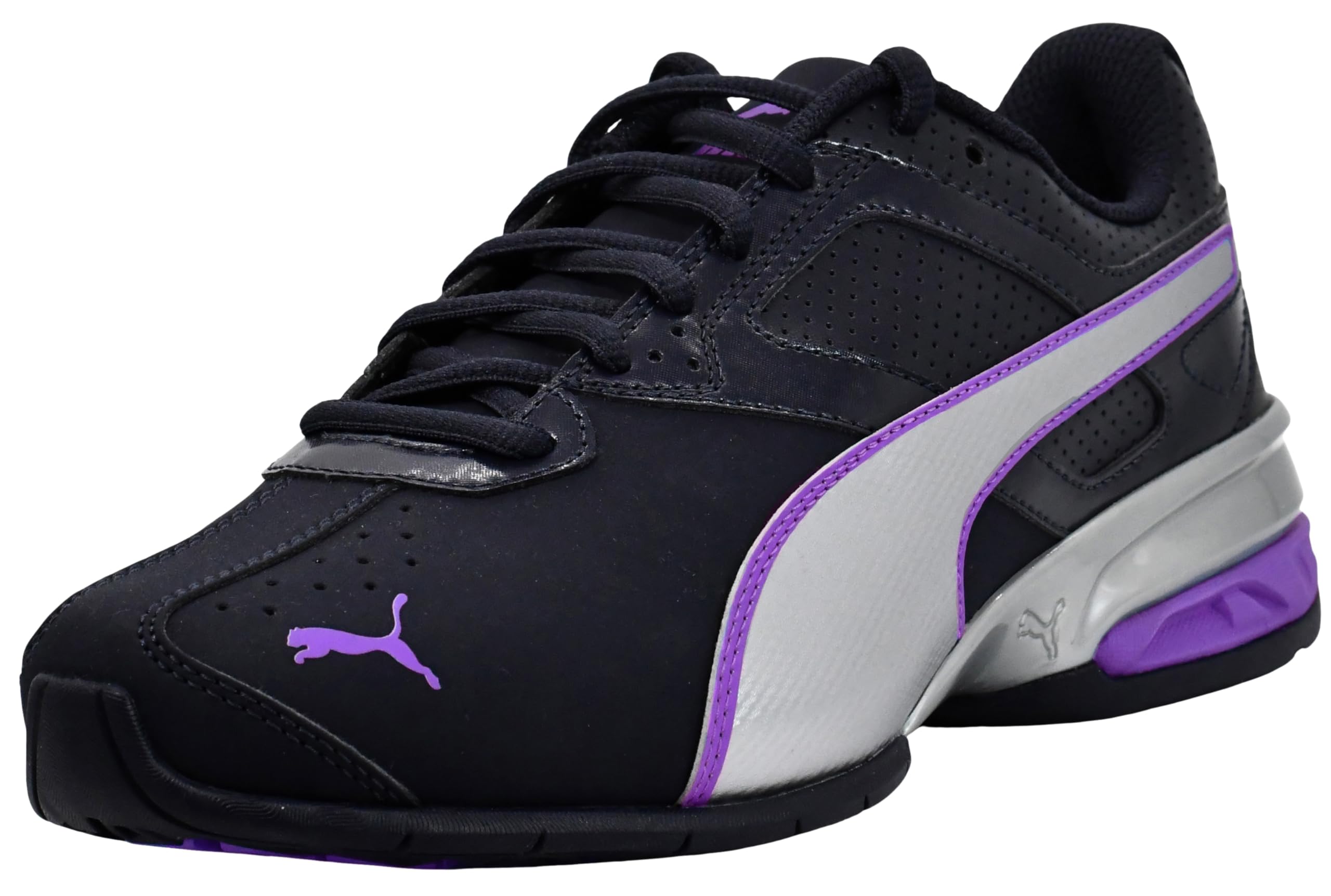
The Tazon 6 is the women's pick here, and the first thing to know is that it is cut narrow. The midfoot is snug and the length runs small for some feet, so if you are wide through the forefoot, skip straight to the New Balance rather than sizing up twice and collecting extra length you do not want. For narrow and average feet, that snugness is the feature, not the flaw.

For HIIT and lighter lifting it does the job quietly. The upper holds the foot in place through step work and bodyweight circuits, the arch support is more than the price suggests, and the shoe does not fight you when you change direction mid-round. It is also the least expensive pick in this guide, which matters if you are buying a gym shoe to be worn out rather than preserved.

The looks are the best of the group — this is the pair that goes from the rack to the rest of your day without announcing itself — and the value is why it stays on the list. It is a gym shoe, priced like one, and it does its job without asking for special treatment.

Pros

  • Secure, snug fit for class work
  • Better arch support than the price implies
  • Least expensive shoe in this guide
  • Looks good beyond the gym

Cons

  • Insole and outsole can wear through
  • Stiff, clunky feel for some feet
Our verdict

A snug, supportive women's trainer for HIIT and lighter lifting, and the least expensive pick here — just size for a narrow fit.

Check Latest Price
4

Best for Comfort

PUMA Alexion

91 /100
Trail Score Outstanding

Key details

Shoe Type
Cross trainer
Department
Men's
Dimensions And Weight
12.3 x 5 x 9.5 inches; 13 ounces
Check Price on Amazon

Thirteen ounces is what the listing says, and the Alexion wears like a substantial shoe: soft underfoot, steady, and unhurried. That is not a knock. The memory-foam insole is the part you notice, and it is why this is the pair we put on for a session that involves as much standing and waiting as actual work.

The shape is where it asks something back. It runs narrow through the middle and the toe box is tight, so a wide forefoot should go up half a size or start with the New Balance 608 instead. Get the fit right and the comfort is the point: feet that spend an hour on machines and two more hours on their feet afterward feel better in this shoe than in the firmer picks here. That is the trade we make, happily, on lighter days.

It is not a locked-in platform for heavy lifting. The cushioning is soft, the arch support is modest, and the insole is the first thing to wear through, so a lifter chasing a planted base should take the Charged Commit instead. For everything else — machines, classes, the walk home — the Alexion is the more forgiving place to put your feet.

Pros

  • Plush memory-foam insole
  • Comfortable for long days on feet
  • Substantial, steady feel
  • Looks good enough for everyday

Cons

  • Insole wears through with use
Our verdict

The plushest shoe in this guide, and our pick when a session is more standing than sprinting — size up if your toes need room.

Check Latest Price

How We Tested Cross Training Shoes Through Real Training Weeks

We pulled every cross trainer we could find in men's and women's sizing, then filtered out anything without rubber that wrapped up the sides of the outsole, a heel counter that held its shape under a thumb press, or a forefoot that would plausibly bend. Shoes that didn't come in more than one width got cut too. That left 12 pairs, which we rotated through six months of ordinary training — no lab, no treadmill-only miles.

Each pair went through a week of the same routine: a ten-minute warm-up jog, a lifting session, a circuit with lateral shuffles and box jumps, and then whatever the rest of the day held — grocery runs, dog walks, a Sunday of errands. We wore each shoe with thin socks and with thick socks on separate days, checked where the toes sat relative to the end of the shoe, and had testers with narrow and wide feet report pressure points across the top of the foot.

Stiffness is the thing people get wrong most often, so we tested it by hand first, bending each shoe at the ball of the foot, then in motion with walking lunges and calf raises. Rope climbs and sled pushes showed us where uppers scuffed and frayed, and we checked outsoles every few weeks to see which tread blocks went smooth first. Two testers with high arches and one with flat feet wore the stock insoles for a week, then their own orthotics, and told us exactly where the arch pressed or fell away.

We judged appearance by whether anyone kept wearing a pair outside the gym, and value by setting the wear we saw against what the shoe asked for at checkout. The pairs that made it six months without a blown seam or a collapsed heel are the ones on this list.

How to Choose Cross Training Shoes

Test the Sole Before Anything Else

Fold the shoe in half. If it gives easily, it is a running shoe whatever the label says, and it will squirm under a loaded bar. Cross trainers use a denser, flatter midsole so the platform stays put through squats and lateral work. Press your thumb into the heel, twist the shoe, and stand on it: a good trainer feels slightly unforgiving at first.

Buy for the bulk of your week, not the five-minute warm-up jog. If most of your sessions are on a treadmill, a running shoe will serve you better and no cross trainer will change that.

Fit: Width First, Then Length

Cross trainers should lock the midfoot and leave room at the toes, roughly a thumbnail's width beyond your longest toe. Width decides more purchases than length, which is why the New Balance 608 V5 stays in this guide with wide and extra-wide options. The Puma Tazon 6 runs narrow, so wide-footed women should choose a different shoe rather than sizing up.

Measure late in the day, when feet are at their largest, and try shoes on with the socks you train in. A heel that lifts is a lacing problem first and a size problem second.

Match the Platform to Your Training

A heavy lifting week wants the firmest platform you can tolerate, and the Under Armour pick here is the clearest example of that. Classes and bodyweight circuits are kinder with a little more cushion, which is where the Puma Alexion earns its place. Mixed weeks sit in between, and that is the balance our top pick strikes.

Expect the Insole to Fail First

On most trainers the upper outlives everything else. Insoles flatten and the glue at the outsole edge lifts long before the mesh tears. That is a reason to rotate two pairs if you train most days, and to retire a pair once the sole edge separates or the midsole feels compressed on one side.

Air shoes out after sessions and spot clean rather than machine washing, which loosens adhesive faster than anything you will do in the gym.

Frequently Asked Questions

Final Verdict

Start with the Under Armour Charged Commit Trainer 4. It pairs a firm midsole with reinforced side walls and comes in wide sizes, which covers lifting, lateral work, and circuits without a second thought.

If a standard width has never fit you, the New Balance 608 V5 is the better buy. If you want cushioning ahead of stability, the Puma Alexion is the softer place to land.