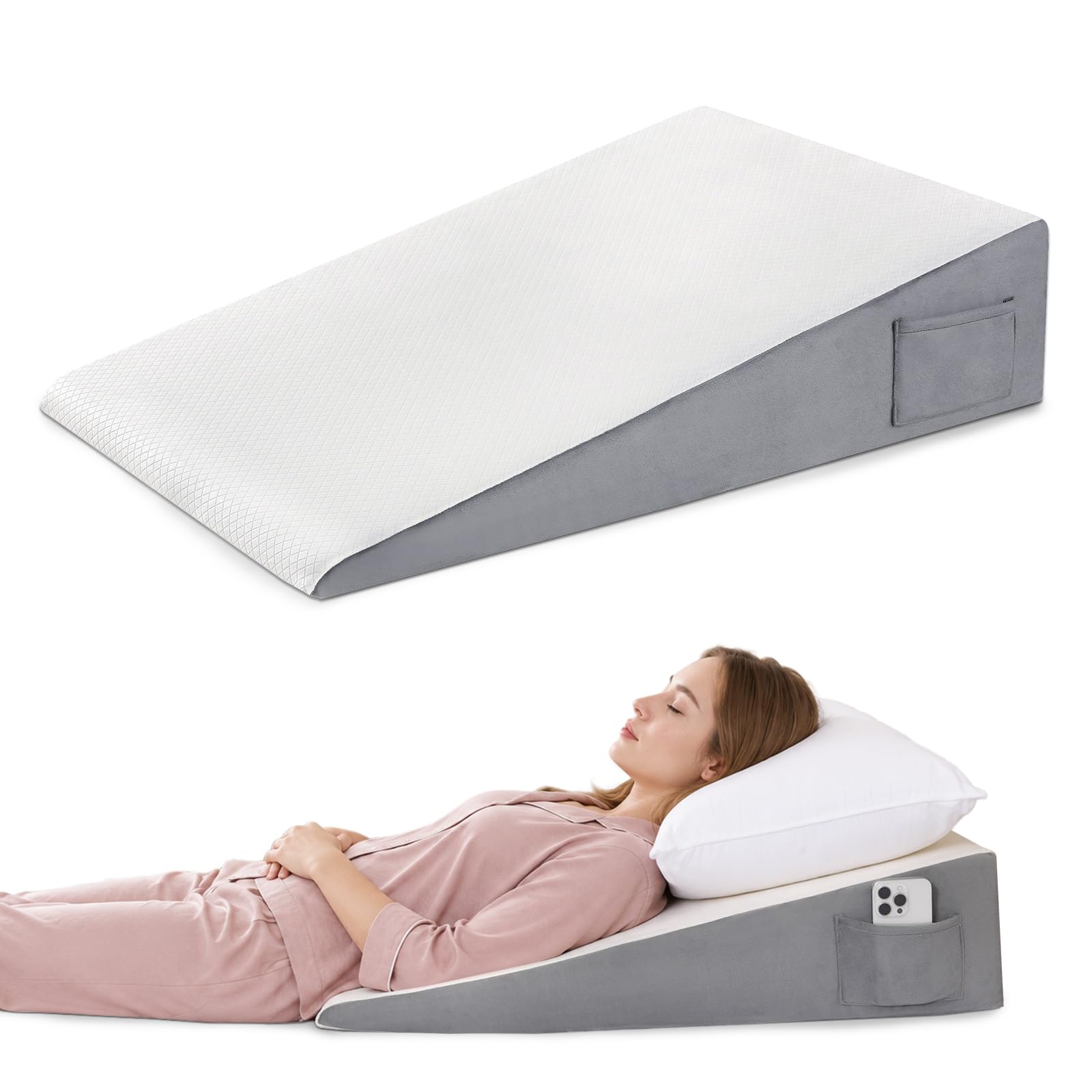
Best Wedge Pillow for Snoring of 2026

Snoring has a way of becoming everyone's problem: you drift off, and twenty minutes later your partner is wide awake and eyeing the couch. Elevating your head and upper torso a few inches can quiet some of that rasp, and a wedge pillow does it without the nightly pillow stack that flattens by 2 a.m. The right one holds its angle until morning and keeps your neck and lower back in a comfortable line; the wrong one just hands you a different reason to be awake.

I've spent the past three months sleeping on 12 different wedges — my bed, the guest room, and one memorable week on an air mattress — and the pattern held. Angle gets all the attention, but firmness and stability decide whether you're still on the thing at 3 a.m. A wedge that's too short for your torso slowly turns into a slide, and a cover that traps heat will wake you just as reliably as the snoring did. The picks below run from a slim prop for mild congestion to a full-length support that claims half a queen bed.

1

Best Overall

Kolbs Bed Wedge Pillow

89 /100
Trail Score Excellent

Key details

Cover
Removable jacquard, machine washable
Height
7.5 inches
Top Layer
1.5-inch memory foam
Dimensions
24 x 24 x 7.5 inches
Check Price on Amazon

A 7.5-inch wedge is the sensible starting point for most snorers, and the Kolbs is the version we recommend first. It lifts the head and upper torso enough to encourage back sleeping without putting you in a near-sitting position, which is why we kept returning to it when the taller wedges felt like too much. The top layer is 1.5 inches of memory foam over a high-density base, so it cushions the shoulders while still holding its shape.

The cover is a pleasant surprise. Jacquard fabric sounds like a small detail, but it makes the wedge feel more like bedding and less like a piece of medical equipment, and it zips off for washing. At 24 by 24 inches, the footprint is standard for this category: it takes up one side of a queen bed without swallowing the whole mattress.

What it does not do is give you a steep incline. If your snoring or reflux needs a more upright sleep position, a 10- or 12-inch wedge is the better tool. The Kolbs is for the sleeper who wants a gentle, repeatable lift and a wedge that disappears into the bed rather than dominating it.

We also appreciate that it comes in a 12-inch version if you already know you need more height, but the 7.5-inch model is the one that will suit the broadest range of sleepers. For a first wedge, that moderation is the point.

Pros

  • Moderate 7.5-inch lift suits most back sleepers
  • Memory-foam top softens a supportive base
  • Removable jacquard cover washes clean
  • Standard footprint fits a queen bed

Cons

  • Can feel firm to plush-pillow sleepers
Our verdict

For most snorers, this is the wedge we start with: a moderate 7.5-inch lift, supportive foam, and a cover that does not look clinical.

Check Latest Price
2

Best Adjustable

AllSett Health 7-in-1 Wedge

88 /100
Trail Score Excellent

Key details

Fill
Foam with memory-foam top
Positions
7 adjustable
Dimensions
22 x 12 inches
Maximum Tilt
60 degrees
Check Price on Amazon

The AllSett Health wedge is the one to look at if you do not yet know what angle your body wants. Its seven-position frame adjusts from a gentle recline to a 60-degree backrest, so you can use it nearly flat for reading, steeper for reflux, or somewhere in between for snoring. That flexibility is unusual among the fixed wedges here, and it makes the AllSett a useful first purchase for someone who is still experimenting.

We found the adjustability genuinely useful rather than a gimmick. Snoring and reflux do not always want the same incline, and a wedge that can change between them is easier to live with than a one-piece block that either works or does not. The foam top is firm and supportive, the plush cover is removable, and the 22-inch width keeps it from taking over the bed.

The catch is that the AllSett feels more like a firm backrest than a soft bed pillow. It is the pick for someone who wants to experiment with position, not for someone who wants to sink into memory foam. Set it up once and you can leave it in your preferred notch, which is the sort of convenience that makes a wedge feel less like a temporary fix.

Pros

  • Seven adjustable positions
  • Firm support for backrest use
  • Removable plush cover
  • Works for reflux, reading, and sleep

Cons

  • Narrower 22-inch width
Our verdict

We like the AllSett when you want to tune the angle rather than commit to one fixed wedge, especially for reflux and reading as well as snoring.

Check Latest Price
3

Best for Side Sleepers

Sleepnitez 8-Inch Wedge

87 /100
Trail Score Excellent

Key details

Cover
Tencel blend, removable
Height
8 inches
Top Layer
3.25-inch memory foam
Dimensions
27.2 x 25.2 x 8 inches
Check Price on Amazon

The Sleepnitez gets its advantage from the transition at the foot of the wedge. Instead of ending in a hard ridge, it tapers down to the mattress, so you can lie back without feeling a step under your lower back. That sounds minor until you have spent a night on a wedge with a blunt edge. We noticed the difference most when rolling from back to side, where a hard edge would otherwise catch the lower back.

The 8-inch height is a middle ground between the standard 7.5-inch wedges and the taller 10- and 12-inch models. The real differentiator is the 3.25-inch memory-foam top layer, which is thicker than most here and gives side sleepers more cushioning at the shoulder. The Tencel-blend cover is soft and removable, and the 27.2-by-25.2-inch footprint is generous without being oversized.

We think this is our side-sleeper pick because the foam lets the shoulder settle instead of pushing it up. The trade-off is a surface that can feel less stable when you shift position; a textured mattress pad under the wedge helps. The extra foam is what makes the incline feel less like a plank, and that is worth the premium for someone who spends the night on their side.

Pros

  • Thick 3.25-inch memory-foam top
  • Tapered transition at the mattress
  • Soft Tencel-blend cover
  • Generous 27.2-inch length

Cons

  • Can slide on smooth sheets
Our verdict

Our side-sleeper pick: the thick memory-foam top cushions the shoulder, and the tapered foot makes the incline easier to settle into.

Check Latest Price
4

Best 10-Inch

Bedluxe 10-Inch Wedge

88 /100
Trail Score Excellent

Key details

Cover
Removable, machine washable
Height
10 inches
Top Layer
Cooling gel-infused memory foam
Dimensions
24 x 24 x 10 inches
Check Price on Amazon

The Bedluxe is for the sleeper who has already tried a standard wedge and wants more lift. At 10 inches high, it puts the upper body at a noticeably steeper angle than the 7.5-inch picks, which can be the difference between a gentle recline and a position that actually keeps your airway open.

The top layer is cooling gel-infused memory foam over a high-density base, and the cover is breathable and removable. We liked the built-in handle and side pockets more than we expected: a wedge is awkward to move, and having somewhere to put glasses or a remote makes it easier to keep on the bed.

The 24-by-24-inch footprint is standard, but the height changes the feel. A 10-inch wedge is more of a commitment; you are sleeping more upright, and side sleepers may need a contour pillow to keep the neck neutral.

We recommend the Bedluxe for back sleepers who need a firmer, higher incline and do not mind sleeping more upright. It is not the wedge for someone who wants a gentle nudge or a lot of adjustability; the AllSett is the better fit for that. But if 7.5 inches left you flat, this is the step up to take.

Pros

  • 10-inch lift for a steeper incline
  • Cooling gel-infused memory foam
  • Removable washable cover
  • Built-in handle and pockets

Cons

  • Smooth cover offers little grip
Our verdict

When 7.5 inches is not enough, the Bedluxe is the step up we take: more lift, cooling foam, and a washable cover.

Check Latest Price
5

Best Budget

Cozymaker 7.5-Inch Wedge

89 /100
Trail Score Excellent

Key details

Cover
Bamboo-viscose blend, washable
Height
7.5 inches
Top Layer
1.2-inch memory foam
Dimensions
24 x 24 x 7.5 inches
Check Price on Amazon

The Cozymaker is the budget pick, and it gets the fundamentals right: a 7.5-inch incline, a 24-by-24-inch footprint, and a memory-foam top over a high-density core. We recommend it for the shopper who wants to try a wedge without spending much, especially if a standard 7.5-inch height is likely to be enough.

The memory-foam layer is 1.2 inches, so the Cozymaker feels more like a supportive foam block than a plush pillow. The cover is a soft bamboo-viscose blend with side pockets and non-slip dots on the back, and it zips off for washing. Those details matter on a budget wedge because they are the parts that make it feel less like a temporary medical purchase.

What you give up is cushioning. The thinner top layer does not contour as deeply as the Sleepnitez, and the wedge has a firmer, more basic feel. But it holds its shape, stays put better than the smooth covers here, and costs less than the midrange picks. For a first wedge or a guest-room backup, that is a sensible trade.

Pros

  • Budget-friendly price
  • Non-slip dots on the back
  • Removable bamboo-viscose cover
  • Supportive high-density core

Cons

  • Only one 7.5-inch height
Our verdict

Budget buyers get the fundamentals here, and we think that is enough: a 7.5-inch incline, non-slip dots, and a washable cover.

Check Latest Price
6

Headboard Gap

Vekkia 32-Inch Wedge

91 /100
Trail Score Outstanding

Key details

Cover
Removable, washable
Height
7.5 inches
Dimensions
32 x 22 x 7.5 inches
Side Pockets
Built-in
Check Price on Amazon

At 32 inches long, the Vekkia is not a standard bed wedge. It is designed to sit between the mattress and headboard, filling the gap where pillows disappear and giving you a longer, gradual surface to lean against. If your current setup is a pile of pillows sliding behind the bed, that is a genuinely useful fix.

We think of it as a specialist rather than a direct replacement for a lie-on wedge. The 7.5-inch height and dense foam can support your upper body, but the wedge works best with your own pillow on top; it is not shaped like the compact 24-inch wedges that you sleep on directly. The removable cover, side pockets, and soft velvet panel are thoughtful touches for a bed accessory that stays in place.

For snoring, it can help by keeping your pillows and head at a steady angle, but it is a different purchase from a standard wedge: you are buying a headboard insert that props your pillows, not a surface you lie on directly. That is the role it fills, and it fills it well.

Pros

  • Fills the headboard gap
  • Extra-long 32-inch support
  • Side pockets and washable cover
  • Keeps pillows from sliding

Cons

  • 32-inch length crowds a smaller bed
Our verdict

This is the one we keep for the headboard gap: its 32-inch length stops pillows sliding and holds a steady sleeping angle.

Check Latest Price
7

Back Sleeping

COLDHUNTER 7.5-Inch Wedge

87 /100
Trail Score Excellent

Key details

Height
7.5 inches
Top Layer
1.2-inch memory foam
Dimensions
24 x 24 x 7.5 inches
Side Panels
Mesh
Check Price on Amazon

The Coldhunter is a 7.5-inch wedge with a medium-firm feel, which makes it a good match for back sleepers who want support without a rock-hard surface. The 1.2-inch memory-foam top takes some pressure off the shoulders, while the high-resilience base keeps the incline from collapsing.

The details are practical: mesh side panels for airflow, non-slip panels on the back and bottom, and a removable cover. We noticed the mesh more on warm nights than we expected, and the non-slip base kept the wedge from sliding when we sat up to read. At 24 by 24 inches, it fits a queen bed without much fuss.

It does not stand out on height, and the foam runs firmer than the softest picks here. What it does well is the middle ground: a moderate incline, a breathable surface, and a stable base at a midrange price. If you want a straightforward back-sleeping wedge with a stable base, this is a solid alternative to the top pick.

Pros

  • Medium-firm memory-foam top
  • Breathable mesh side panels
  • Non-slip base
  • Removable cover

Cons

  • No adjustable angle
Our verdict

A stable, medium-firm 7.5-inch wedge is what we reach for on a back-sleeping night, and this one delivers without an adjustable frame.

Check Latest Price
8

Maximum Elevation

Sasttie 12-Inch Wedge

86 /100
Trail Score Excellent

Key details

Height
12 inches
Incline
30 degrees
Top Layer
40D memory foam
Dimensions
24 x 24 x 12 inches
Check Price on Amazon

Twelve inches is a lot of lift. The Sasttie is built for sleepers who need a steep, 30-degree incline and have already found that a 7.5- or 10-inch wedge does not do enough. It is the most specialized wedge in this group, and that is both its appeal and its limitation.

The core is 25D foam with a 40D slow-rebound memory-foam top, and the cover is a washable knit. The base has a non-slip fabric, which matters more at this height because a tall wedge is easier to push away when you shift. We found the surface supportive and the incline stable once it was settled on the mattress.

The 24-by-24-inch footprint is standard, but the height changes how you use it. At 12 inches, you are sleeping much more upright, and it takes a night or two to get used to the position, especially if you are used to a flat bed.

We recommend the Sasttie for back sleepers who need maximum elevation and for anyone using a wedge for post-surgery or reflux rather than mild snoring. For ordinary snoring, start lower. The 7.5-inch Kolbs is easier to live with, and the 10-inch Bedluxe is the middle step. The height is the whole point, and it delivers it without wobble.

Pros

  • 12-inch elevation for steep incline
  • 30-degree ergonomic design
  • Non-slip base
  • Washable knit cover

Cons

  • Too steep for side sleeping
Our verdict

We reserve the Sasttie for sleepers who already know they need a steep 12-inch incline; it is not the wedge for a first try.

Check Latest Price

How We Tested the Wedge Pillows

We started by pulling every wedge built for head-and-torso elevation rather than leg elevation, since those are different products and the wrong one won't do a thing for your breathing. We read spec sheets for foam density, height at the high edge, and overall length, dropped anything short enough to turn a sleeper into a slider or fitted with a cover that couldn't be removed, and landed on 12 wedges spanning foam, memory foam, and inflatable constructions across a range of prices.

Each of the 12 spent at least seven consecutive nights on a tester's bed — back sleepers, side sleepers, and one of us who flips between the two — plus a stretch in a guest room with a firmer mattress. Before lights out we measured the high edge, the length along the bed, and the width against a queen, because a wedge that leaves your partner no room isn't a fix. We pressed a palm into the foam to see how far it sank, then checked at the first 3 a.m. wakeup whether shoulders had collapsed the top edge and whether the wedge had crept toward the foot of the bed.

Snoring reports came from whoever was sharing the bed, a simple tally of rough nights versus quiet ones, while testers logged how long it took to fall asleep, how often they woke, and whether they climbed out with a stiff lower back. Comfort came down to whether we looked forward to getting into bed. Quality checks happened after each rotation: we unzipped and washed every removable cover, looked over seams and zippers, and noted whether the foam sprang back after a night's compression. Value got settled at the end, when we weighed what each wedge cost against how it held up and how often we reached for it again.

How to Choose a Wedge Pillow for Snoring

Start With Height, Not the Label

Height sets the angle you sleep at. A 7.5-inch wedge gives a gentle lift that most back sleepers can tolerate; 10 inches is a clear step up and suits people who need more elevation for reflux or a stronger positional effect; 12 inches is a specialist height for sleepers who already know they need to be more upright. For a first wedge, we start at 7.5 inches. The taller models are not automatically better, and a steep angle can make side sleeping uncomfortable.

Firmness Is a Fit Question

Firmness is where wedge pillows succeed or fail. A high-density foam base keeps the wedge from collapsing, while a memory-foam top layer softens the surface. A thin top layer feels supportive and crisp; a thick one, like the 3.25-inch layer on the Sleepnitez, cushions the shoulder more but can feel less stable when you move. Back sleepers usually do well with medium-firm foam; side sleepers should prioritize cushioning at the shoulder and a low transition at the foot of the wedge. Do not assume firmer means better support.

Check Stability and Bed Fit

Wedges slide for two reasons: a smooth cover and a steep angle. Look for a non-slip base or textured bottom if you know you move around, and put a fitted sheet over the wedge if the cover is slick. Width matters too. A standard 24-inch wedge leaves room for a partner on a queen bed; a 32-inch headboard wedge such as the Vekkia takes more space and is not the same purchase as a lie-on wedge. Measure your side of the bed before sizing up.

Prioritize the Cover and Setup

A removable, machine-washable cover is worth more than a luxurious fabric name. You will wash it, and a wedge that is hard to cover cleanly becomes a chore. Check how the foam arrives, too: vacuum-packed wedges can need a day or two to reach full loft, so do not judge the height on the first night. A washable cover, a non-slip base, and a foam that has fully expanded matter more than pockets or a handle, though those small details make a wedge easier to live with.

Frequently Asked Questions

Final Verdict

The Kolbs is the wedge we recommend first for snoring because its 7.5-inch rise is enough to elevate the upper body without forcing you into a near-sitting position, and the foam top keeps it livable. If you need to change angles or share the wedge between reflux, reading, and sleep, the AllSett's seven positions make more sense. Side sleepers who want a softer landing should look at the Sleepnitez.