Best Anti-Snoring Devices of 2026

Snoring doesn't stay one person's problem for long. It migrates — to the spare-room mattress, to a 3 a.m. voice memo, to a running joke that stops being funny around the fourth night. An anti-snoring device is a small intervention aimed at that whole chain: it holds the jaw forward, props the nasal passages open, or keeps the mouth closed, and the noise either softens or stops. For the person wearing it, the payoff is breathing through the night instead of fighting for air; for everyone else in the house, it's a closed bedroom door and an uninterrupted eight hours.

Here's the thing nobody tells you first: the device that works is the one you'll still be wearing at 2 a.m., and that comes down to comfort and fit more than any spec sheet. Over the past four months my team and I have slept with 14 of them — boil-and-bite guards, nasal dilators, chin straps, strips, the works. The moldable ones beat the rigid ones almost every time, the nasal options had to clear a very low bar for irritation, and a couple of the cheapest devices quietly outperformed options that cost four times as much. The picks below are the ones that earned a second night, and a third.

1

Best Overall

Somnofit-S Mouth Guard

81 /100
Trail Score Excellent

Key details

Fit
Custom mold with adjustable strap
Material
Swiss biomedical polymers
Dimensions
4.72 x 3.94 x 1.97 inches; 5.29 ounces
Device Type
Adjustable boil-and-bite mouthguard
Check Price on Amazon

A mouthguard has to do two jobs at once: hold the lower jaw slightly forward and stay comfortable enough that you don't take it out at 2 a.m. The Somnofit-S is the one we recommend first because it takes both parts seriously. It's FDA-cleared, made in Switzerland, and uses a boil-and-bite fit with an adjustable strap, so you can tune the position instead of accepting whatever the mold gives you.

What we appreciate most is the adjustment path. The strap comes in numbered settings, and the guide tells you to move up a number if snoring continues after a few nights. That turns the mouthpiece into something you can troubleshoot rather than a one-shot experiment. The guard is also compact, which matters if you've tried a bulky boil-and-bite and given up on it.

The trade-off is the adjustment period. This style of mouthpiece holds your jaw in a new position, and the first nights can feel foreign. Mold it carefully, use the lowest effective strap setting, and give yourself a few nights before deciding. If it still feels wrong, stop rather than pushing through.

It's not the right choice for every snorer. If your snoring comes from a blocked nose, a mouthpiece won't open it. But for the common mouth-and-jaw pattern, this is the most complete package here: a custom fit, a clear adjustment path, and a compact profile.

Pros

  • Adjustable strap lets you tune the fit
  • Boil-and-bite mold customizes the mouthpiece
  • Compact profile for a mouthguard
  • FDA-cleared and Swiss-made

Cons

  • Jaw or tooth soreness can occur
Our verdict

We recommend the Somnofit-S as the best overall anti-snoring device for mouth snorers who want an adjustable, custom-fit mouthguard and will work through a short comfort adjustment.
Check Latest Price
2

Best for Back Sleepers

Calma Clip v2

84 /100
Trail Score Excellent

Key details

Attachment
Clip with foam ball
Dimensions
3 x 3 x 3 inches; 2.3 ounces
Device Type
Positional sleep aid
Sleep Position
Back snorers
Check Price on Amazon

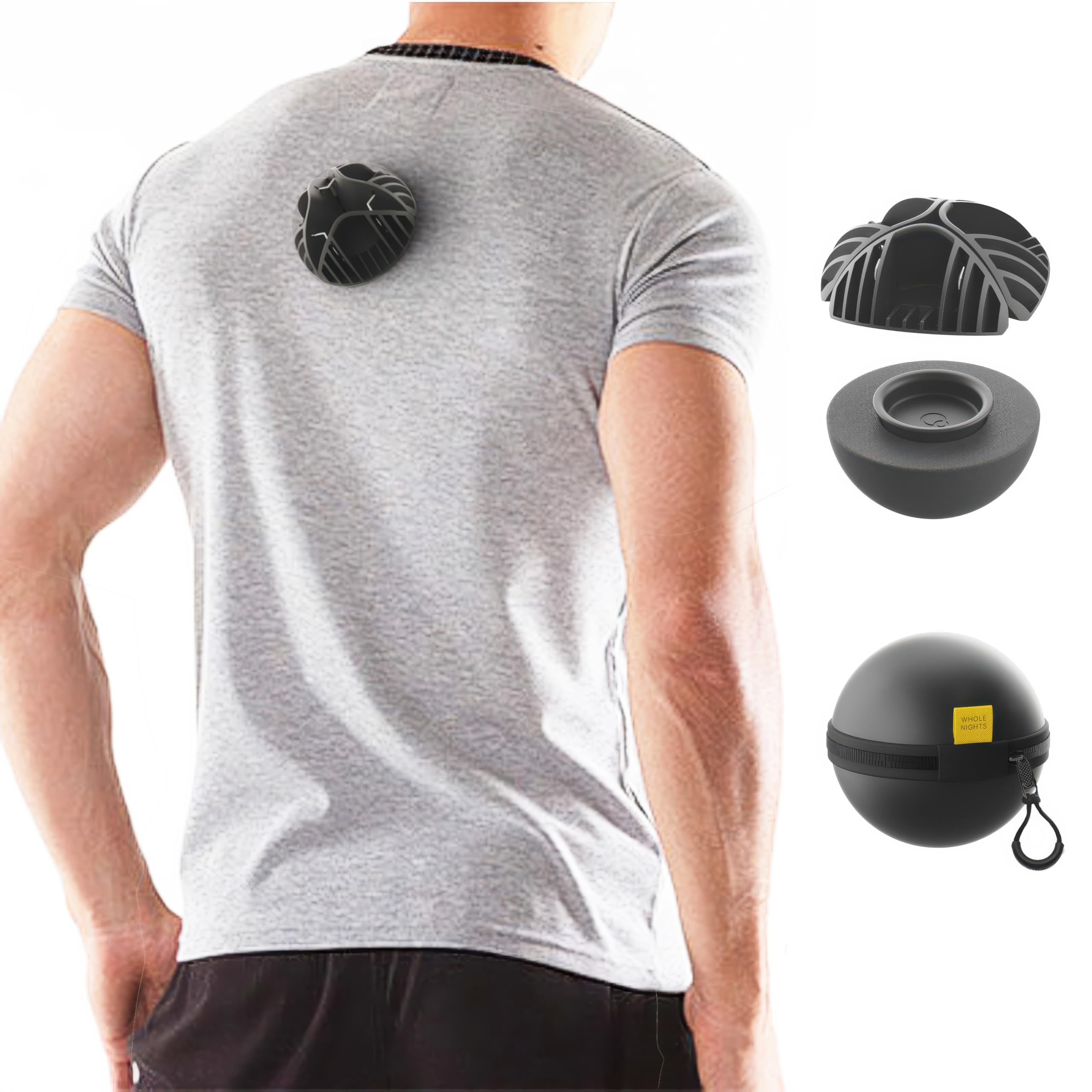
The Calma Clip is built around a simple observation: some people only snore when they roll onto their back. It's a foam ball on a plastic clip that attaches to the upper back of a shirt, and the point is not comfort — it's a gentle reminder that keeps you from rolling flat. The design is almost aggressively simple, which is why it works for that narrow pattern.

We like how little there is to it. There's no strap around your head, no mouthpiece, and nothing to mold. You clip it on the outside of a shirt with the foam against your back, and the design calls for a snug fit. It takes seconds, which matters for something you have to do every night. The clip also makes it easy to move from one sleep shirt to another.

The device is small and light, and it doesn't touch your nose or jaw, which is why we prefer it to a mouthguard for this narrow job. The routine is the only friction: clip it on before bed, and make sure the shirt has enough fabric to hold it. For a positional experiment, that's a small ask.

Pros

  • Keeps back snorers off their back
  • Clips onto a shirt in seconds
  • No mouthpiece or nasal insert

Cons

  • Only for back-position snoring
  • Needs a shirt with a firm clip point
Our verdict

We recommend the Calma Clip for back snorers who want a simple positional aid; it won't help every snorer, but it targets the roll-onto-your-back pattern directly.

Check Latest Price
3

Best Nasal Dilator

SleepRight Nasal Aid

80 /100
Trail Score Excellent

Key details

Adhesive
None
Pack Size
2 pack (4 count)
Device Type
Internal nasal dilator
Reusability
20 days or more
Check Price on Amazon

The SleepRight Breathe Aid takes a different route from a mouthguard: it sits inside the nostrils and gently flares them open. There's no adhesive, no strip across the bridge of your nose, and no strap around your head. The kit comes with two aids, four pieces total, and a reusable case.

We like it for nasal snoring because it's reusable and easy to live with. A single aid can last 20 days or more, and you clean it with mild soap and cool water. That makes it a better long-term option than disposable strips if your snoring responds to opening the nasal passages. The flexible flares are designed to fit a range of noses, and the no-adhesive design means no sticky residue to peel off in the morning.

The catch is that internal fit is personal. It either disappears into your routine or it doesn't. Start with short naps rather than a full night, and give yourself a week to decide. For the right nose, it's a low-fuss way to test whether nasal airflow is your snoring trigger.

Pros

  • Reusable for 20 days or more
  • No adhesive or sticky residue
  • Flexible flares open nasal passages
  • Comes with a storage case

Cons

  • Can irritate sensitive nostrils
  • May loosen before the 20-day mark
Our verdict

We recommend the SleepRight for nasal snorers who want a reusable, adhesive-free dilator and are willing to test whether an internal fit suits their nose.

Check Latest Price
4

Best Budget Chin Strap

HOGYCAS Chin Strap

82 /100
Trail Score Excellent

Key details

Fit
Adjustable with extension strap
Material
Perforated fabric
Device Type
Chin strap
Compatibility
Most CPAP masks and headgear
Check Price on Amazon

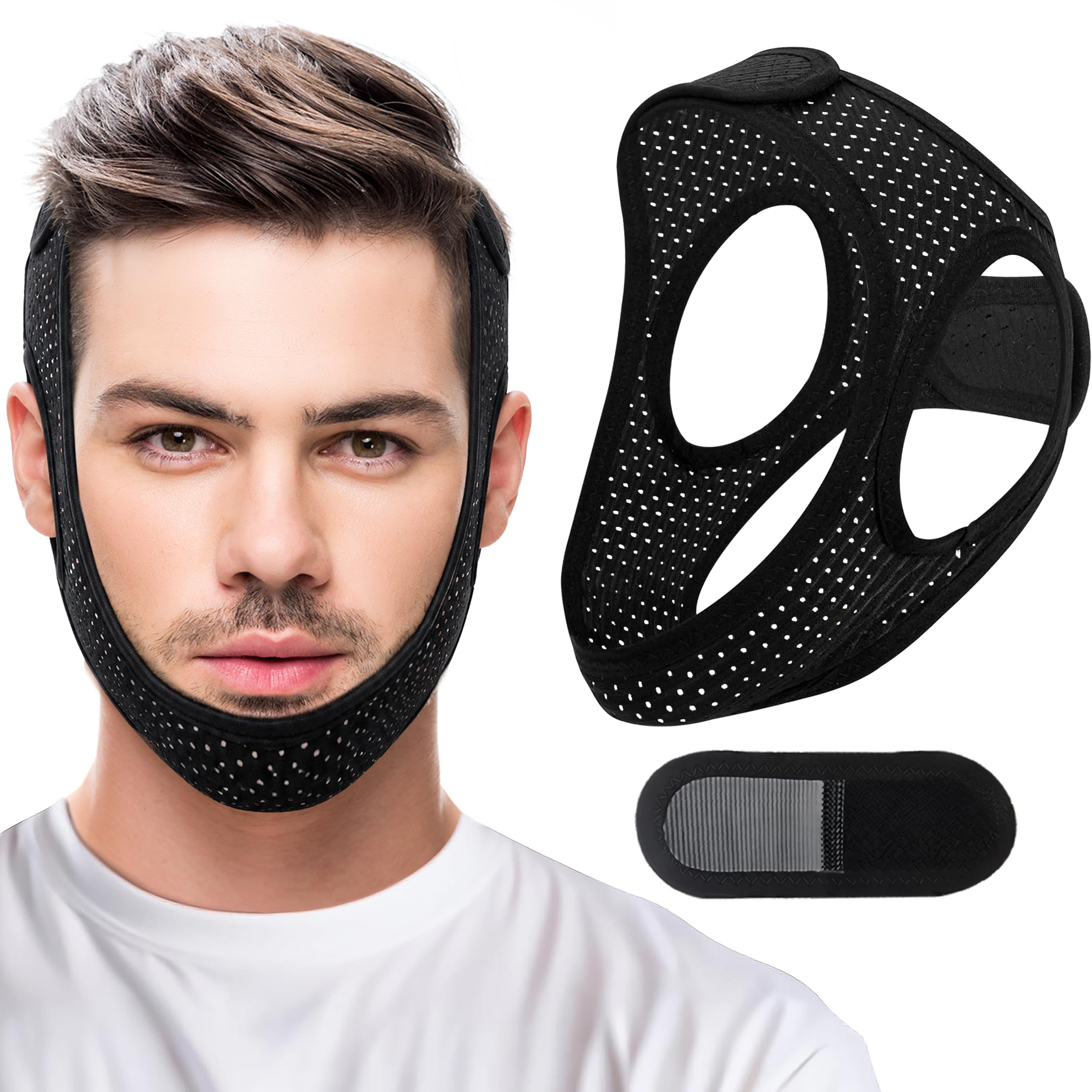
A chin strap is the least expensive way to test whether keeping your mouth closed changes your snoring. The HOGYCAS version is a soft perforated band with an extension strap, and it's the one we point to when someone wants a low-commitment first step.

The design is more thoughtful than the price suggests. The open-ear cut leaves room for a CPAP mask or headgear, and the fixing points at the top and back of the head are meant to keep the strap stable when you turn over. The fabric is breathable, and the whole thing is light enough that it doesn't feel like headgear. It's also hand-washable, which matters for something that sits against your jaw every night.

We recommend it for mouth breathers, especially CPAP users who wake with a dry mouth from mouth leak. It's the device we reach for when someone wants to test the mouth-closure theory before spending more on a mouthguard or a custom appliance.

Pros

  • Adjustable fit with extension strap
  • Open-ear design works with most CPAP masks
  • Breathable perforated fabric
  • Hand-washable and lightweight

Cons

  • Won't help snoring from nasal blockage
  • Doesn't advance the jaw like a mouthguard
Our verdict

We recommend the HOGYCAS chin strap as a low-cost first try for mouth breathers and CPAP users who need gentle under-chin support without a mouthpiece.

Check Latest Price
5

Travel-Friendly Strips

ZRTARY Nasal Strips

94 /100
Trail Score Outstanding

Key details

Use
Snoring, congestion, sports
Count
60 pieces
Adhesive
Medical-grade, hypoallergenic
Device Type
External nasal strip
Check Price on Amazon

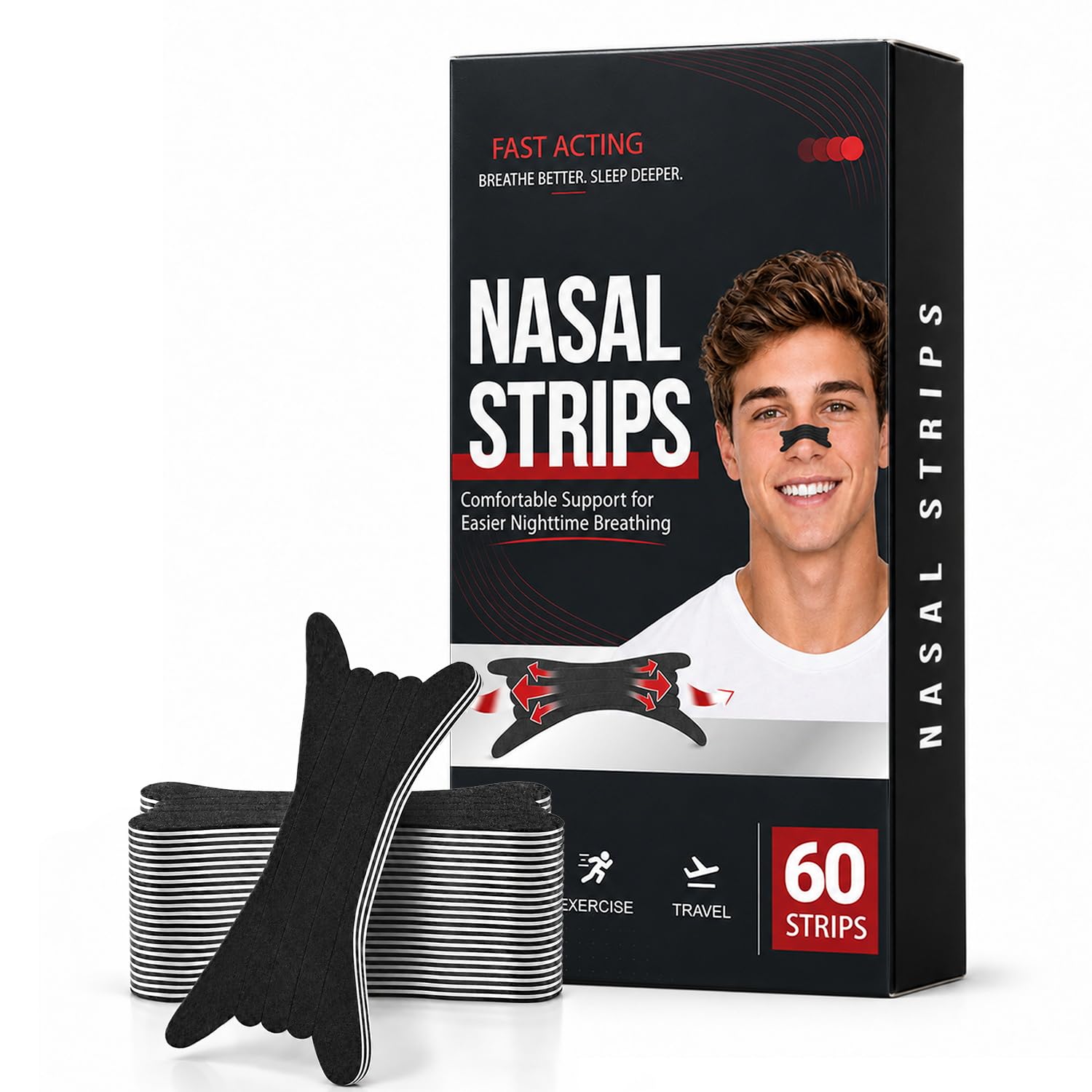
The ZRTARY box is the disposable option: 60 black nasal strips with an extra-strength adhesive. If you already know that external nasal dilation helps you, the appeal is having a fresh strip every night without cleaning a reusable aid or keeping track of a replacement schedule.

The strips are designed to pull the sides of the nose open, and the adhesive is described as medical-grade and hypoallergenic. That's the same basic mechanism as the drugstore strips, but this box is built for volume: keep a few in a travel bag, a few in a nightstand, and not worry about losing one.

The black finish is less obvious on the face than a pale strip, which is a small thing that matters if you share a room. There's no case or cleaning routine to manage, and no replacement schedule beyond reaching for another strip.

We reach for this one when we want a strip that can live in a travel bag and be replaced without a second thought. It's the simplest way to keep external dilation in the routine, and the box format means there's always another one ready.

Pros

  • 60 strips in one box
  • Extra-strength adhesive
  • Drug-free external dilation
  • Black finish is less conspicuous

Cons

  • Only addresses nasal snoring
  • Disposable, so you restock regularly
Our verdict

We recommend the ZRTARY strips as a disposable option for nasal snorers who want a fresh strip each night and don't want to clean a reusable dilator.

Check Latest Price
6

Low-Profile Nasal

Cleobio Nasal Dilators

94 /100
Trail Score Outstanding

Key details

Sizes
S/M/L
Material
Soft silicone
Device Type
Suction nasal dilator
Reusability
Reusable and washable
Check Price on Amazon

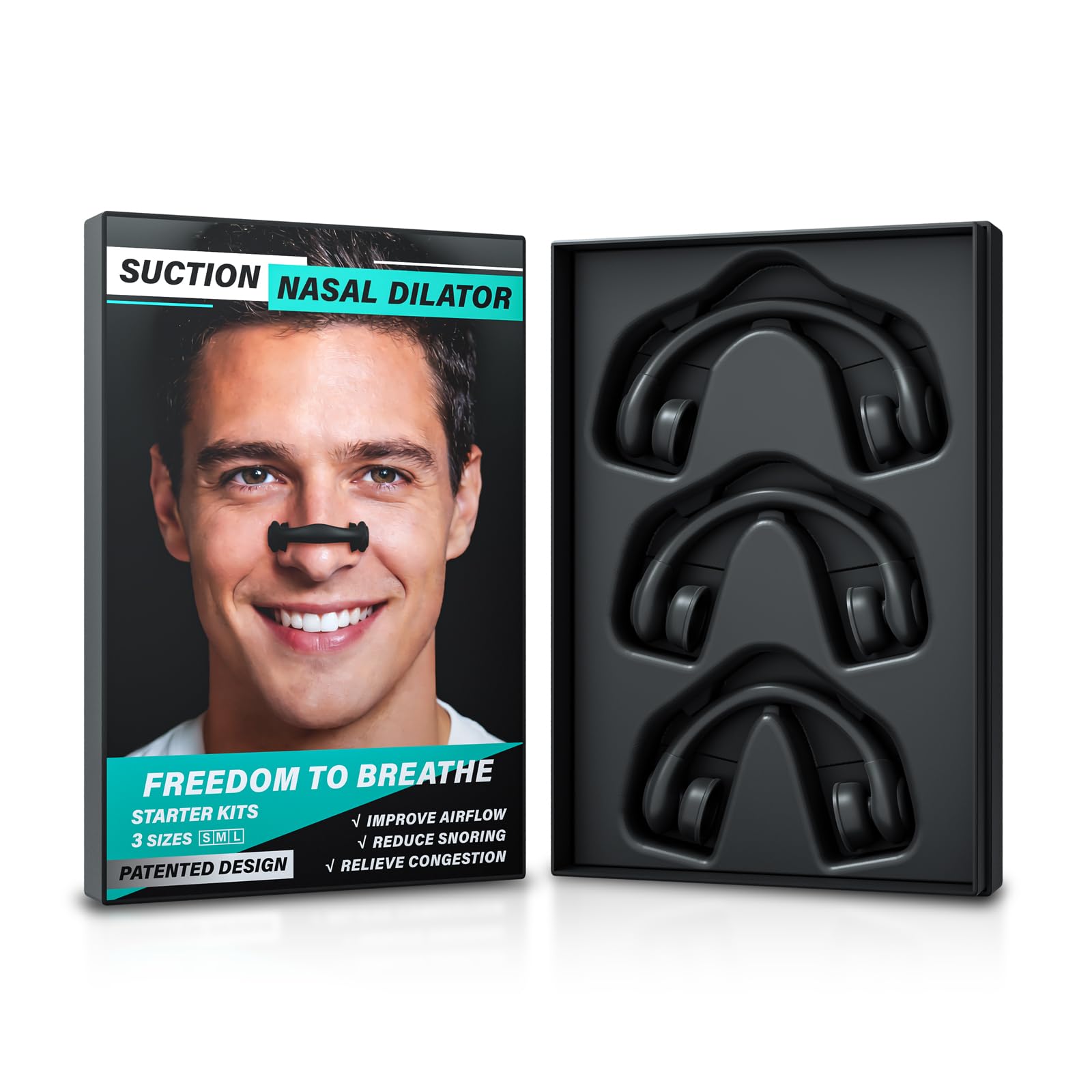
The Cleobio dilators are the most unusual design here: instead of a strip or an internal spring, they use soft silicone suction pads to hold the nostrils open. We like the idea for anyone who has tried adhesive strips and hated the peel, or tried internal dilators and found them too fiddly. The set comes in three sizes, and the instructions say to start with small.

The trade-off is that suction is a different sensation, and it takes a few nights to know whether it suits you. The dilators are reusable and easy to clean, and the low-profile shape is less conspicuous than a strip across the nose. If you're curious about nasal dilation but don't want adhesive or a piece sitting deep in the nostril, this is the one to try.

Pros

  • Three sizes for a closer fit
  • No adhesive
  • Reusable and washable
  • Low-profile design

Cons

  • Suction can leave temporary marks
  • Only addresses nasal airflow
Our verdict

We recommend the Cleobio suction dilators for nasal snorers who want an adhesive-free, reusable option and are willing to experiment with a different fit.

Check Latest Price

How We Tested the Anti-Snoring Devices

We started by rounding up every device we could find that listed its materials, published fitting instructions, and came with a return window long enough to try it for a week. From there we sorted by type — mandibular guards, nasal dilators and clips, chin straps, and mouth tape — and set a ceiling on how much we'd ask anyone to spend on something they might hate. Fourteen made the cut, and each one got a minimum of ten nights in a real bed, with a decibel recorder on the nightstand and a partner keeping a morning log of whether the snoring actually dropped, how loud it was, and whether it woke anyone up.

Every moldable guard got fitted in my own kitchen, following the package directions exactly: boiled, bitten, chilled, then checked for gaps against my teeth. I counted how many attempts it took to get a fit that felt secure and whether the material re-softened overnight. To measure staying power, I noted where the device was when I woke up — still seated, pushed into my cheek, or on the pillow — and logged it every morning. Jaw comfort got checked in the first hour after waking, when soreness and tightness show up, and I tracked whether it faded by breakfast or lingered into the afternoon.

The nasal options were judged partly on irritation, which meant checking for stinging, dryness, and soreness inside the nostrils after a full week rather than a single night. Sleep quality was the last piece: how rested I felt against a baseline night with nothing at all, and whether I woke with a dry mouth or a headache. We also weighed value the unglamorous way — cost per night of actual use, factoring in how often each device needed replacing and whether it survived being rinsed and dropped on a tile floor. A few are still in the rotation, and we'll update this list as they wear out.

How to Choose an Anti-Snoring Device

Match the device to the snoring pattern

Snoring happens when air moves through a narrowed airway. A nasal dilator or strip addresses the nose, a chin strap encourages mouth closure, a mouthguard moves the lower jaw forward, and a positional aid keeps you off your back. Those are different jobs, and no single device does all of them. If you wake with a dry mouth, mouth closure or jaw position may be the lever; if your nose feels blocked at night, start with nasal dilation; if your partner notices the noise starts when you roll onto your back, a positional aid is the simplest test.

Don't buy three devices at once. Pick the mechanism that matches the pattern you notice, use it for several nights, and change only one variable at a time. That makes it easier to tell whether the device is helping or whether you simply had a better week.

Fit and comfort decide whether you'll keep using it

An anti-snoring device only works if it stays on and you can tolerate it. Mouthguards need a careful boil-and-bite mold and, on adjustable models, a strap setting you can tune. Nasal dilators come in sizes for a reason: too small and they don't open the airway; too large and they irritate. Chin straps should be snug enough to keep the jaw closed without pinching. We treat the first week as a fit test, not a verdict. Stop if you get persistent jaw, tooth, or nasal pain; discomfort that lingers past the adjustment period is not a sign you need to tough it out.

Reusability, cleaning, and replacement cost

Disposable nasal strips are the simplest to live with: peel, wear, toss. Reusable nasal dilators need a rinse with mild soap and cool water and a replacement schedule; the SleepRight aids are rated for 20 days or more. Mouthguards need rinsing and a dry place to store, and chin straps should be hand-washed and air-dried. Those routines are small, but they decide whether a device is still hygienic and ready at bedtime. A cheaper device with a replacement schedule you won't follow is not the better value.

Know when a device is not enough

Devices are for ordinary snoring, not for every sleep problem. Loud snoring with pauses, gasping, or choking sounds, or falling asleep during the day despite enough time in bed, needs a medical evaluation rather than another gadget. The same goes for snoring that continues after you've matched the device to your pattern and given it a fair trial. An anti-snoring device can be a practical first step, but it is not a substitute for diagnosing sleep apnea.

Frequently Asked Questions

Final Verdict

The Somnofit-S is the device we recommend first for most mouth snorers: it combines an adjustable, custom-fit mouthguard with a compact shape and a clear adjustment path. It asks for a short comfort adjustment, but it gives you a way to tune the fit instead of guessing.

If you only snore when you roll onto your back, the Calma Clip is the better-targeted choice. If the noise starts in your nose, the SleepRight dilator is the simpler test. The right pick is the one that matches your pattern, not the one with the longest feature list.