Best Vibration Plates of 2026

A vibration plate works on one simple idea: the platform shakes, and your muscles spend the whole session making tiny corrections to keep you balanced. What separates one machine from the next is how it shakes — the pattern, the speed, the size of the movement — plus the things you only notice after delivery, like how loud it runs. Get that right and ten minutes a day becomes a habit that gets blood moving through tired legs, loosens stiff calves after a long sit, and gives sore knees a way to move without impact.

I came to these after a winter of desk-stiff hips, and over the past nine months my team has lived with eight machines, from compact models that slide under a desk to full-size platforms. The ones we still step on share a remote that actually works from across the room, settings you can change mid-session, and a build that doesn't rattle the floorboards. What surprised me most: the quieter, sturdier plates beat the ones with long program menus almost every time. The picks below are the ones that earned their floor space.

1

Best Overall

Lifepro Waver

93 /100
Trail Score Outstanding

Key details

Dimensions
27"D x 15"W x 6"H
Unit Weight
27 lb
Speed Settings
99
Weight Capacity
330 lb
Check Price on Amazon

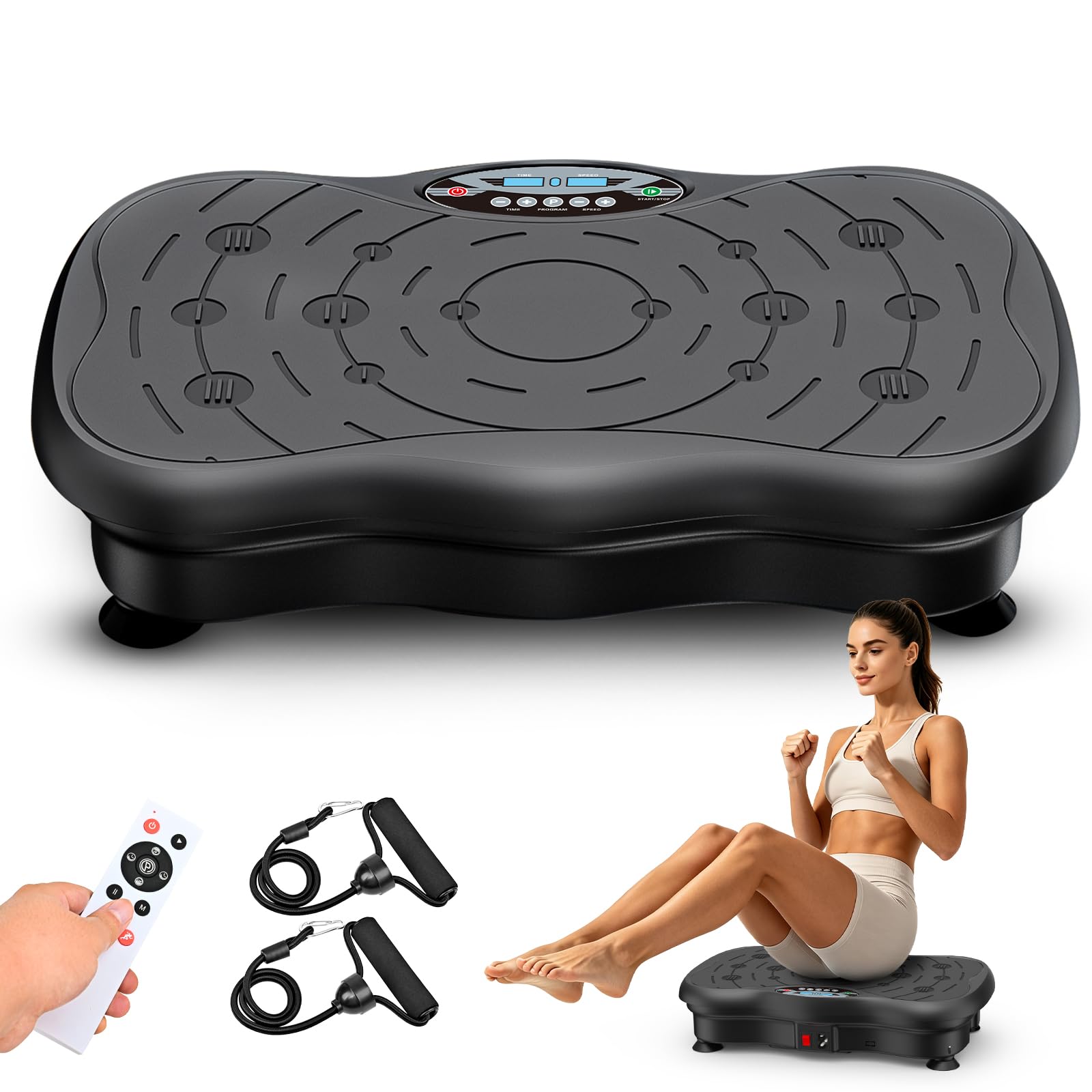
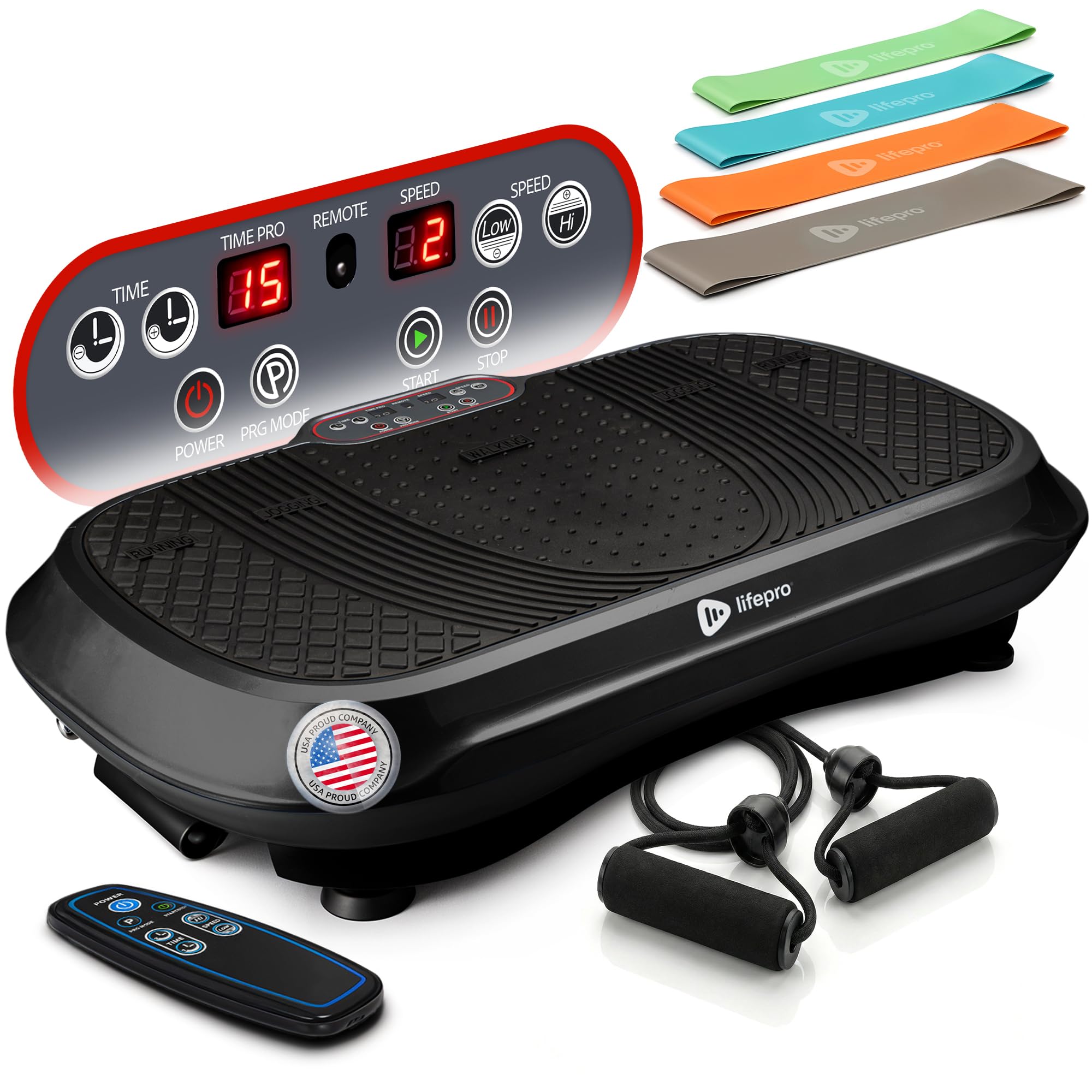
The Waver doesn't buzz straight up and down; it rocks, tilting like a slow see-saw under your feet. That single design choice is why we put it at the top of this list. Stand near the middle and the motion is mild enough to hold a conversation; slide your feet toward the edges and the same setting turns into real work, because the platform travels further the wider you stand. Beginners get a way in that doesn't feel like being shaken, and nobody outgrows it in two weeks.

The rest of the package is built for habit rather than novelty. Ninety-nine speeds and a run of preset programs mean you can find a setting and stop thinking about it, and the programs give you something to follow on days when choosing a speed sounds like effort. We also like the bundled mini bands, which turn ten passive minutes into something closer to a light strength session. At 27 pounds on a 27-by-15-inch deck, it stays exactly where you put it.

Capacity is the number to check. At 330 pounds the Waver sits mid-pack in this group: fine for one average-sized adult, marginal if two larger users plan to share, and short of the 440- and 450-pound ratings on the Merach, HVX, and SoftGym plates. Everyone else can stop worrying about it and get on with the sessions.

What comes through in long-term use is how well it suits the ten-minutes-in-front-of-the-television slot. The remote saves you bending down mid-session, the low settings are the ones you'll live on, and Lifepro backs the machine with lifetime support, which is more than the one-year warranties most of this group carries.

Pros

  • Rocking motion suits beginners and veterans alike
  • 99 speeds plus preset programs to progress through
  • Mini bands and resistance bands included
  • Lifetime support from the brand

Cons

  • 27-pound frame is a permanent fixture
Our verdict

Our pick for most homes: the see-saw motion is gentle enough to start on and still useful a year in, and the 99 speeds leave room to progress.

Check Latest Price
2

Best Premium

Lifepro Rumblex 4D

91 /100
Trail Score Outstanding

Key details

Deck Size
29.5 x 18 inches
Speed Settings
60
Frequency Range
4 to 40 Hz
Weight Capacity
500 lb
Check Price on Amazon

Three motors sit under the Rumblex's deck, and none of them does the same job: one oscillates, one pulses, one works sideways. Run them together and the platform moves in more than one plane at once, which is the difference between a plate that shakes your legs and one that makes your whole body steady itself.

We noticed the difference most in the sideways component. The muscles along the outside of the hips and ribs get involved in a way they don't on a single-motion plate, and ten minutes goes by faster for it. The wide deck helps: at 29.5 by 18 inches you can set your feet well apart, and 38.5 pounds of machine underneath means none of that motion walks it across the room.

You pay for the extra motors in money, floor space, and effort. This is the largest and heaviest plate in the group by a distance, so it needs a permanent spot with clearance on all sides, and the 60 speed settings are fewer than the budget plates advertise; the 4-to-40 Hz frequency range is what you're buying instead. Two handled bands, four mini bands, and an exercise mat come in the box, which tells you something about how much it moves.

Ten minutes is genuinely enough on this machine, and that's the argument for it: the work is dense enough that you aren't chasing longer sessions to feel something. If you want a plate to progress with rather than settle into, this is the one the rest of the group gets measured against.

Pros

  • Three motors deliver true multi-plane motion
  • 500-pound capacity on a 29.5-by-18-inch deck
  • Heavy frame stays planted during use
  • Bands, mini bands, and a mat included

Cons

  • 38.5 pounds and a big footprint need their own space
Our verdict

The pick for anyone who wants gym-grade hardware at home: three motors, a 500-pound deck, and a 4-to-40 Hz range you can grow into.

Check Latest Price
3

Best Value

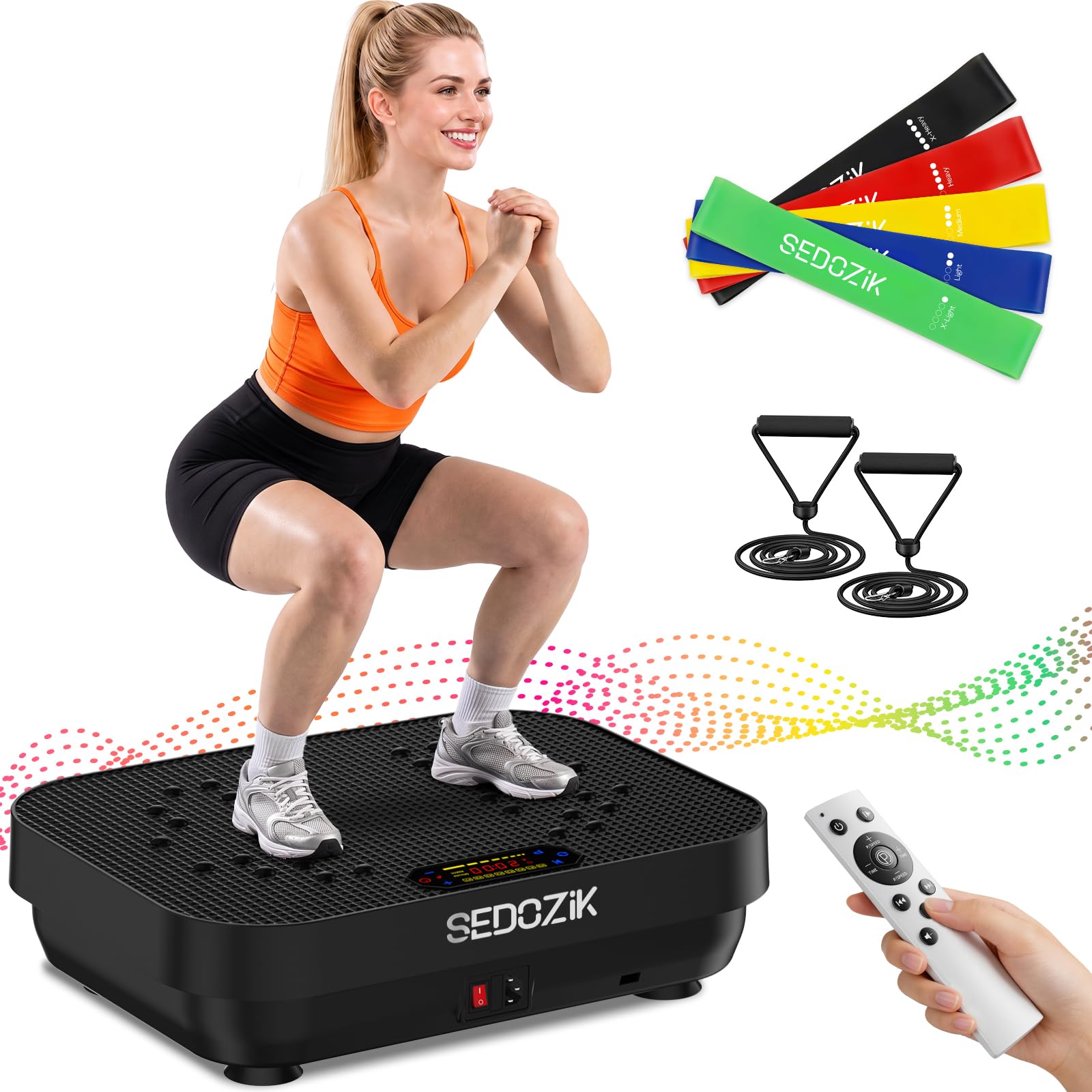
SEDOZIK Vibration Plate

89 /100
Trail Score Excellent

Key details

Dimensions
18.5"D x 13.5"W x 4.9"H
Unit Weight
14.4 lb
Speed Levels
120
Weight Capacity
450 lb
Check Price on Amazon

A 450-pound weight rating on a plate this affordable is the headline, and it's why we kept coming back to the SEDOZIK. Capacity is where budget plates usually cut corners, and in this group the cheap end runs from 280 pounds upward. At 450, this one lines up with machines further up the list.

It's light, too: 6.55 kg, so you can lift it with one hand and stand it against a wall, on an 18.5-by-13.5-inch deck that doesn't dominate a room. Bluetooth is on board, along with two handled resistance bands and five loop bands, which is a more complete kit than most budget plates ship with. The loop bands are the part we actually use.

The trade-offs come back to the footprint. A 13.5-inch-wide deck doesn't leave much room to widen your stance, so the work stays in a narrower band of muscle than it does on the Waver or the Rumblex, and the body is plastic throughout. The Bluetooth speaker is a convenience; nobody is buying this for the sound.

What we appreciated most is how little ceremony it takes: plug it in, step on, and the first speed is already strong enough that you feel it in your legs after fifteen minutes. That's a plate that gets used on a Tuesday night, and a used budget plate beats a better one sitting in a cupboard.

Pros

  • 450-pound capacity at the budget end of the group
  • 6.55 kg, easy to lift and store
  • Two handled bands plus five loop bands included

Cons

  • Narrow 13.5-inch deck limits your stance
  • Plastic body feels basic
Our verdict

The best value here: a 450-pound rating and 120 speeds for budget money, in a plate you can pick up with one hand.

Check Latest Price
4

Best for Small Spaces

CITXMOTI Vibration Plate

89 /100
Trail Score Excellent

Key details

Dimensions
16.2"D x 13"W x 4.2"H
Speed Levels
120
Preset Programs
5
Weight Capacity
400 lb
Check Price on Amazon

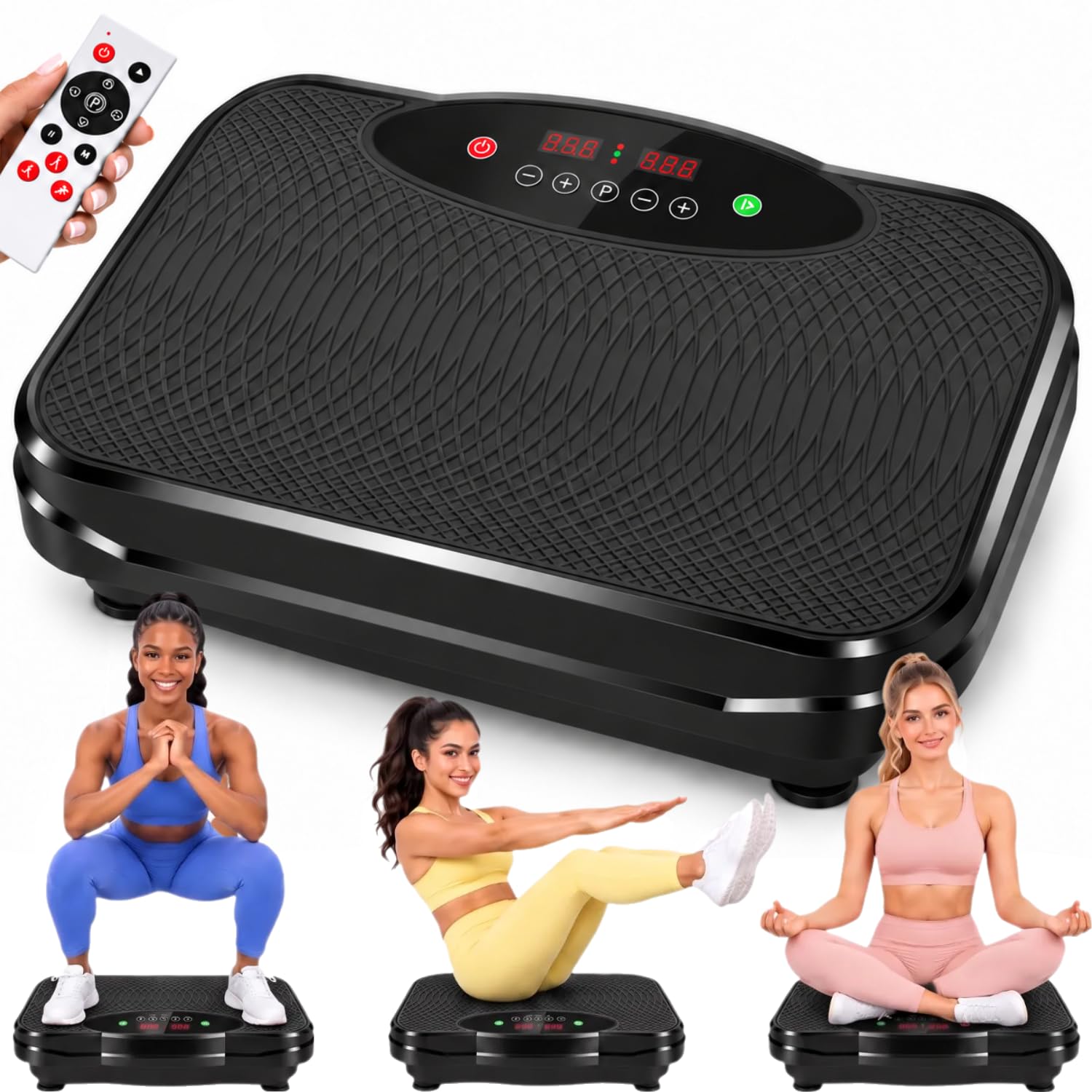
Sixteen inches deep, thirteen wide, eleven pounds. The CITXMOTI is the smallest plate here, and it's the one that slides under a sofa or stands beside a desk without anyone noticing it's there.

The number that surprised us is the weight rating: 400 pounds on a machine you can carry under one arm. Four suction cups hold the base down, and nothing about the small body has stripped the controls. You get 120 speeds, five preset programs, a remote, and an LED readout, which makes it a complete plate in miniature.

We found the size cuts both ways. It's the easiest machine here to own, and also the one where you stand with your feet close together. If you have wide feet, or you want a wide stance for balance, that's the compromise you're accepting. The remote is the weak link in the kit: some arrive that never pair, so keep the packaging until you've confirmed yours works.

Where it wins is frequency. Because it's always out and always two steps away, it gets used for five minutes at a time, and short sessions most days beat the twenty-minute session you keep postponing. The suction feet hold it on tile, and the presets mean you're not scrolling through speeds mid-session.

Pros

  • 16-by-13-inch footprint and 11 pounds
  • 400-pound capacity despite the compact size
  • 120 speeds, five presets, remote, and LED display
  • Suction feet keep it steady on hard floors

Cons

  • Narrow deck forces a close stance
Our verdict

Our pick for a small apartment: 16 inches deep and 11 pounds, it disappears between sessions, and the 400-pound rating is far more than its size suggests.

Check Latest Price
5

Best for Bigger Users

Merach CV40

90 /100
Trail Score Outstanding

Key details

Amplitude
13 mm
Dimensions
28.4"D x 15"W x 6.3"H
Speed Modes
10
Weight Capacity
440 lb
Check Price on Amazon

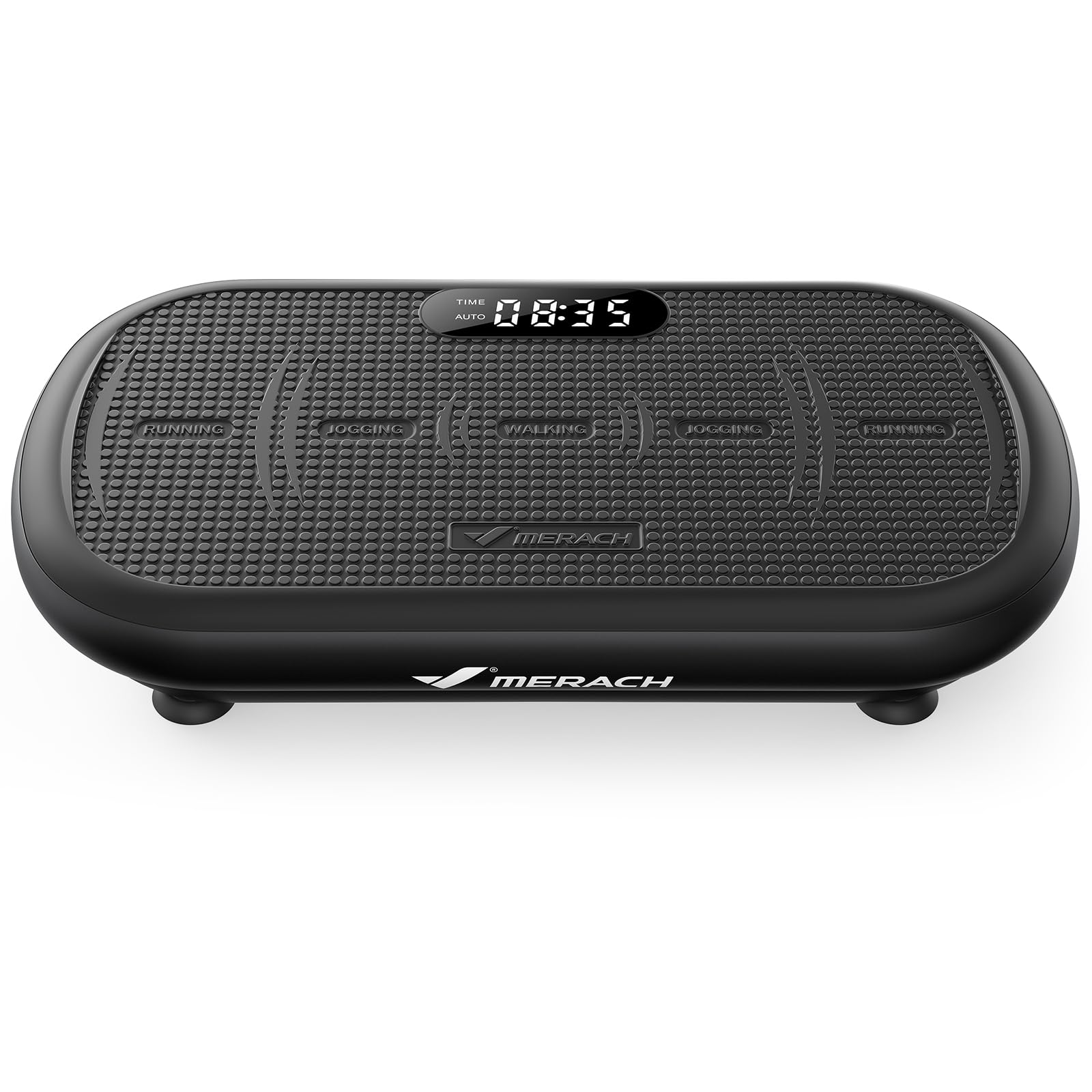
The CV40's deck is curved rather than flat, so you're standing on a shallow arc that tilts you through the motion instead of shaking you in place. Merach pairs that with a 13 mm amplitude, the largest figure in this group, and the combination is the closest thing here to the feel of a health-club plate.

We liked how much the curve makes you work. Holding your balance on an arc brings your ankles and core in, and it stops a session becoming ten minutes of standing still. The 440-pound rating and the non-slip base mean the machine takes that motion seriously, and the textured silicone pad grips bare feet well.

The small annoyances are loud ones. Every speed change is answered by a beep you can't turn down, and the built-in speakers are best described as adequate for background music. Pairing your phone works fine; nobody is buying this for the sound.

Sensors switch the plate on when you step aboard and pause it after 30 seconds of inactivity, which sounds like a gimmick and turned out to be the feature we used most, since nobody wants to bend down with wet hands mid-session. Size is the price of all that: 28.4 inches long needs a real footprint, and at 10.5 kg it isn't a plate you move for each session.

Pros

  • 13 mm amplitude on a curved deck
  • 440-pound capacity with a stable non-slip base
  • Auto start and 30-second auto pause
  • Textured silicone pad grips bare feet

Cons

  • Remote-only control, and the remote is unreliable
Our verdict

The pick for heavier users and anyone who wants a curved deck: 440 pounds of capacity, the deepest amplitude here, and a platform that keeps you moving.

Check Latest Price
6

Best with Bluetooth

HVX Vibration Plate

88 /100
Trail Score Excellent

Key details

Dimensions
14"D x 22.3"W x 4.95"H
Speed Levels
120
Preset Programs
5
Weight Capacity
450 lb
Check Price on Amazon

Bluetooth on a vibration plate sounds like a gimmick until you've spent twenty minutes at low speed with nothing to listen to. The HVX streams from your phone without fuss, and pairs that with a 200-watt motor and a 450-pound rating, numbers that usually belong to plates further up this list.

The control scheme asks for patience. Speed runs from 1 to 120, but only in manual mode; the five preset programs steer themselves and won't let you nudge intensity on the fly, which reads fine in a manual and irritates you in week two. We ended up parked in manual mode, which is where the adjustment lives.

Physically it's a sensible size, 22.3 inches wide and about 6 kg, with a textured non-slip deck and a base that holds on tile rather than creeping. The resistance bands anchor at the front, and it stands upright against a wall for storage.

What we kept noticing was the noise floor. The motor itself is fine, but the machine talks: a spoken prompt and a beep on every change, with no way to mute either, so anyone planning to use it at six in the morning in a shared house should know that going in. Set against that, the capacity you get for the money is among the best in this group, and the low speeds are smooth enough to ride through an episode of something.

Pros

  • Bluetooth streaming that pairs easily
  • 450-pound capacity at a modest price
  • 120 speeds with five preset programs
  • Non-slip base that stays put on tile

Cons

  • Presets block manual speed changes
Our verdict

A mid-priced plate that earns its place on capacity: 450 pounds, Bluetooth, and 120 speeds, with a learning curve on the presets.

Check Latest Price
7

First-Time Buyers

Mawuye Vibration Plate

89 /100
Trail Score Excellent

Key details

Unit Weight
15.4 lb
Speed Levels
99
Weight Capacity
280 lb
Check Price on Amazon

The 280-pound weight limit is the first thing to check on the Mawuye, because it's the lowest here by a wide margin and it settles the question before anything else does. A heavier user, or two adults planning to share, should stop reading at that number.

Under that ceiling, it does more than the money suggests. Ninety-nine speeds, manual and automatic modes, a remote, and an LED screen showing time and speed: the control set mirrors plates costing far more. At 7 kg it lifts easily, and four suction cups at the base keep it planted on hard flooring.

Two practical notes. The feet can leave scuff marks on pale floors, so put a thin mat underneath and the problem goes away. The remote is the other weak point: some arrive that never pair, so keep the packaging until you've confirmed yours works.

What we noticed over weeks rather than days is that the low end of the range is where this plate lives, gentle enough at the bottom for ten minutes while the kettle boils and strong enough a dozen steps up to feel in your legs. For a first plate, or a spare-room machine, that's plenty.

Pros

  • 99 speeds with manual and automatic modes
  • Compact 7 kg body with suction feet
  • Remote control and LED display

Cons

  • Motor noise carries into the next room
Our verdict

A good first plate: 99 speeds, a remote, and a genuinely compact body, with a weight ceiling that decides the question before anything else.

Check Latest Price
8

Foot Massage

SoftGym Vibration Plate

91 /100
Trail Score Outstanding

Key details

Unit Weight
16 lb
Speed Levels
120
Massage Stones
22
Weight Capacity
450 lb
Check Price on Amazon

Twenty-two raised magnetic stones sit in the SoftGym's footpad, and they change what standing on a plate feels like. Instead of a flat surface you get something closer to a massage roller under your arches, noticeable at low speeds and bracing at high ones. We were surprised how much difference it makes to a ten-minute session.

Everything else is competitive: 120 speeds, a 450-pound rating, a touch panel plus a remote, and a 7.28 kg body light enough to carry between rooms. Two resistance bands come in the box, and the suction cups hold the deck steady on hard floors.

Noise is the variable to plan around. Some units run clean; others pick up a rattle on one side that comes and goes depending on where you stand. It's worth a listen in the first week, while the return window is still open behind you.

If you're buying for circulation and daily movement rather than for a machine to grow old with, it's a fair bet, and the massage surface is a real difference rather than a badge. If longevity is the priority, look at the Lifepro plates instead; both come with lifetime support.

Pros

  • 22 magnetic massage stones in the footpad
  • 450-pound capacity
  • 120 speeds with touch panel and remote
  • 7.28 kg, easy to move between rooms

Cons

  • Some units stop working within a year
Our verdict

For anyone who wants a foot-massage surface underfoot: 22 magnetic stones, a 450-pound rating, and 120 speeds in a light body.

Check Latest Price

How Eight Vibration Plates Held Up Over Nine Months

We started by pulling together every plate with a real following and a spec sheet worth reading — amplitude, frequency range, weight limit, footprint — then cut anything that didn't state its motor specs or had a weight limit too low for a two-person household. That left eight machines spanning the category, which we bought and used the way anyone would: in living rooms and bedrooms, barefoot, most mornings before work and again after dinner.

Each plate got a ten-minute session in the morning and a longer one in the evening after a day at a desk, and we logged how our legs and lower backs felt an hour later. We worked the remote from the far side of the room and from the next room over, changed speed and pattern mid-session without stepping off or breaking stride, and timed how long it took to land on the setting we wanted.

For noise, we ran each plate at its top setting while a call was happening one floor up, and noted which ones carried through a closed door. Every couple of weeks we checked for wobble, listened for new rattles, and retightened any hardware that had worked loose. The plates that stayed quiet and steady past month four are the ones that survived to the final list.

Value came down to what we actually reached for: a deck with five well-spaced speeds beat one with thirty programs nobody opened. Toward the end we asked each tester, honestly, whether they'd buy their plate again — and the answers tracked with build quality far more closely than with feature count.

How to Choose a Vibration Plate

Deck size and the stance it gives you

If you check one number, check deck width. A 13-inch platform like the CITXMOTI or the SEDOZIK keeps your feet close together, which concentrates the work in a narrow band; the Waver's 15 inches or the Rumblex's 18 let you widen your stance and bring hips and core into it. Here's the trap: compact in a listing describes the unit, not the standing area. A plate can tuck under a sofa and still leave you shuffling.

Measure the width you want to stand at before you measure the space under the bed. If both fit, choose the wider deck.

What the lowest speed feels like

Ninety-nine or 120 speeds sounds generous, but in practice you'll spend most sessions near the bottom of the range. What matters is how gentle that first setting is and whether you can climb in small steps. A plate that starts brisk and jumps hard is one you avoid on a tired day, which is exactly the day it would have helped.

Motion matters as much as the count. Plate-style oscillation like the Waver rocks rather than buzzes, which most beginners settle into quickly; the multi-motor Rumblex asks for balance from the first minute. Give any new plate three minutes at the floor of the range before you add speed.

Capacity, stability, and the floor beneath it

Capacity is the figure that rules a plate out rather than in. In this group the budget end runs from 280 to 450 pounds, the Waver sits at 330, and the Rumblex at 500. If two adults share a machine, rate it for the heavier one and then some, because capacity here is about staying stable under motion, not just whether the deck holds.

Light plates stay put through suction cups, and those need a hard, level surface. On deep carpet the cups can't grip and the plate will creep; on wood or laminate, a thin mat protects the finish and keeps scuff marks off pale flooring.

Controls, noise, and shared space

Several plates here are driven by the remote alone, and remotes are the most common failure in this category. A machine with a panel as well as a handset still works when the handset doesn't, which is worth more than an extra speed level.

Ask the same question about sound. Some machines answer every speed change with a beep or a spoken prompt you can't mute, which matters in an apartment or a house with a sleeping child. Plan for a hard floor and a room with a door before you plan for 120 speeds.

What you get as the price rises

At the bottom of the range you get 99 to 120 speeds, 400 to 450 pounds of capacity, and a plastic body: genuinely enough for daily ten-minute sessions, with the compromises showing up in noise, remotes, and how long the motor lasts. Mid-range money buys a heavier frame, a wider deck, and better finish, and the Waver is the sweet spot in this group.

The top of the range buys motion you can't get elsewhere: three motors, a 4-to-40 Hz range, and a deck wide enough for a real stance.

Frequently Asked Questions

Final Verdict

The Lifepro Waver is the plate we point most people toward. It rocks rather than shakes, so the first session is comfortable and the hundredth still has somewhere to go, and 99 speeds with preset programs and bundled bands mean you won't run out of options in a month.

If you're a heavier user, or you want a platform wide enough for a real stance and don't mind giving up floor space, the Rumblex is the better machine. On a tight budget, the SEDOZIK covers the fundamentals for a fraction of either.