Best Vibrating Foam Rollers of 2026

Most vibrating foam rollers win shelf space on their spec sheet—5 speeds, 3,600 RPM—but the complaints that surface a year in rarely involve power. Charging ports fail, batteries stop holding juice, and the hard foam turns out to be harsher than first impressions.

Those results usually trace back to choices made before purchase: connector style, foam density, and roller length relative to the muscles you plan to hit. A compact 7-inch unit targets knots well but won't cover hamstrings efficiently, while a 17-inch barrel forces a trade-off on travel convenience.

This guide sorts through those trade-offs using reliability patterns and physical dimensions rather than headline vibration numbers. The right pick should still be running and still feel effective a year after you bring it home—and should match your tolerance for firm surfaces and your willingness to pay for app extras.

1

Best Overall

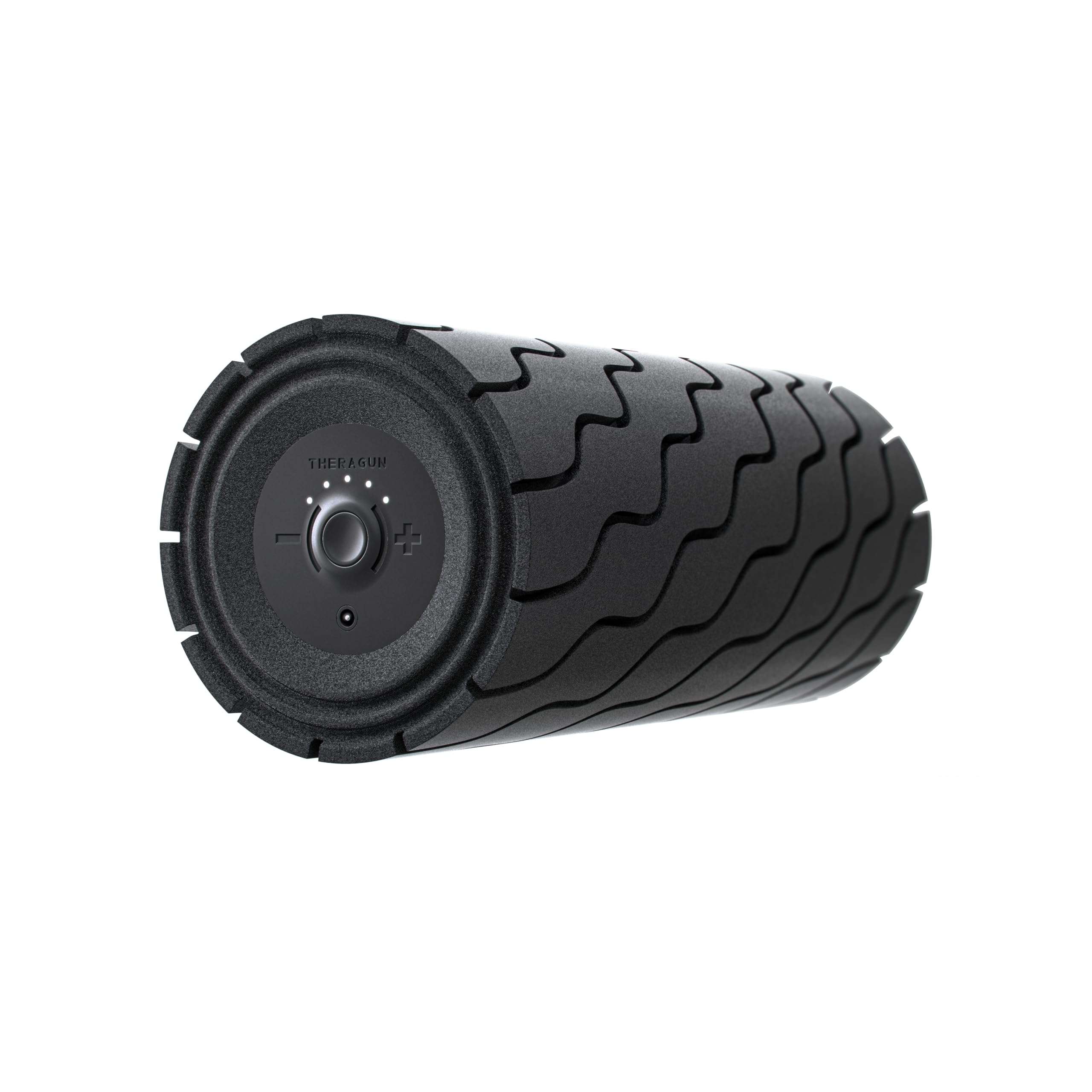
Therabody WaveRoller

88 /100
Trail Score Excellent

Key details

Speeds
5 via app
Portability
6.26 lb
Extra Features
Bluetooth app
Length & Surface
12in, wave grid
Check Price on Amazon

The full-length cylinder and densely waved surface make the WaveRoller the dependable choice for daily rolling of large muscle groups. A single sweep over a hamstring or the length of the lower back covers ground that compact models reach only in several passes, so quads, glutes, and lats receive broad-surface treatment rather than point pressure. The straight form concentrates on the muscles that carry a training load, leaving neck-and-spine precision work to the dual-arc model in this set.

The motor stays quiet and holds a steady cadence, without the pitch drift found on single-speed rollers. The 180-minute battery endures a week of roughly 20-minute daily sessions before recharging. Bluetooth links the roller to the Therabody app, where five speed levels and guided routines for calves, glutes, and back add structure; relief after a hard leg day arrives promptly.

This suits the athlete who trains several times a week and prefers one roller that starts cleanly each session, plus the tech-savvy user who wants app-guided programs. Honest boundaries: the premium-priced tag is the steepest in this set, and the refined motor reads gentle if your session calls for a deep, aggressive jolt. Budget-minded buyers and fans of intense pressure may find the cheaper or dual-arc options in this set a better match.

💡 Press the roller more firmly into dense tissue when you want deeper pressure, since the motor favors a refined cadence over an aggressive jolt.

Pros

  • Full-length cylinder sweeps an entire hamstring or the lower back in one pass.
  • One charge lasts about a week of typical 20-minute sessions.
  • Therabody app adds five speed levels and guided routines for calves, glutes, and back.

Cons

  • Fans of strong pressure can find the vibration tone reads gentle in deep-tissue work.
  • Premium pricing targets serious athletes; budget-focused buyers may look elsewhere.
Our verdict

For the athlete whose routine centers on legs and back and who can absorb the cost, the WaveRoller delivers the most structured full-length recovery in this set.

Check Latest Price
2

Best for Back & Neck

Therabody WaveDuo

88 /100
Trail Score Excellent

Key details

Speeds
5 via app
Portability
2.75 lb
Extra Features
Bluetooth app
Length & Surface
Contoured for spine
Check Price on Amazon

The WaveDuo replaces a uniform cylinder with a dual-arc body that cups the spine's curve, keeping vibration on the erector spinae where a flat barrel slides past. That shape is what no straight roller in this set replicates, and it concentrates each pass on the muscles flanking the vertebrae — the region desk posture loads first.

This is the roller for the worker whose recovery session starts with a stiff upper back after a long sit, and for travelers who want one contoured tool in a carry-on instead of a bulky barrel. To use it, run the curve along the spine with even pressure on the handles; the arc lifts tissue beside the bones rather than pressing straight down. Coverage ends at the spine — anyone training legs needs the full-length roller in this set.

💡 Start at the lower speeds pressed firmly along the spine; increasing contact pressure delivers more depth than pushing the motor harder.

Pros

  • Dual-arc contour holds vibration beside the vertebrae, delivering quick relief to upper-back and neck tightness.
  • Compact 2.75-lb body packs into a carry-on and still delivers full-speed vibration for hotel-room recovery sessions.
  • A 200-minute battery covers a week of short daily spinal passes between charges.

Cons

  • Users expecting an aggressive, percussive shake may find the vibration gentle at standard speeds.
  • Coverage is local to the spine
Our verdict

For desk-heavy self-care where the neck and spine dominate, the WaveDuo's curved contour outperforms a flat barrel — this is the targeted-recovery buy, not a full-body roller.

Check Latest Price
3

Best Value for Money

FITINDEX Vibrating Roller

87 /100
Trail Score Excellent

Key details

Speeds
5
Portability
3.1 lb
Extra Features
USB-C
Length & Surface
11.4in, density zones
Check Price on Amazon

The FITINDEX packs five vibration speeds, USB-C charging, and three density zones into an 11.4-inch frame, covering the feature set of premium rollers at roughly half the price. The 3.1-pound weight keeps it portable enough for gym-bag rotation, and the mix of high, medium, and low density areas lets you switch between a firm myofascial release and a gentler warm-up pass without swapping tools.

It suits athletes on a budget who want multiple vibration levels for full-body recovery and don't mind some risk of early failure. Battery charging holds have occurred after months of use, and the firm surface can feel intense on sensitive muscles, so beginners may prefer the softer, more forgiving top pick in this set.

💡 Start on the low-density zone and lowest speed to gauge your tolerance before pressing into the firmer sections.

Pros

  • Relieves back and shoulder tightness effectively, with a majority of positive feedback on pain relief.
  • Multiple vibration speeds and density zones adapt to different muscle groups and recovery stages.
  • Promotes post-workout relaxation and muscle recovery without the bulk of larger rollers.

Cons

  • Firm surface can be uncomfortable on sensitive or recovering muscles, especially for beginners.
  • Charging port reliability varies
Our verdict

Budget-conscious athletes who prioritize speed options and portability over long-term certainty will find this a compelling mid-range buy — as long as charging reliability is checked during the return window.

Check Latest Price
4

Best for Full-Body Coverage

Vulken 17" Roller

87 /100
Trail Score Excellent

Key details

Speeds
4 modes
Portability
2.1 lb, long
Extra Features
—
Length & Surface
17in, EPP foam
Check Price on Amazon

At 17 inches, the Vulken spans a full hamstring or back in a single pass — no lifting and repositioning the way shorter rollers force. The stiff EPP shell holds firm under body weight, and four intensities (three speeds plus an auto-pulse) work dense quads and glutes thoroughly, which is why tall trainers favor it over the compact sticks in this set.

This roller fits tall lifters with large lower-body muscles who genuinely want deep, unyielding pressure after heavy sessions. The firm foam is overly intense for beginners or anyone with sensitive tissue, and motor longevity varies by unit — early shutdowns after a few weeks have been noted — so a retailer's warranty is worth confirming up front. Those who prefer gentler contact or need something packable should look to the shorter options here.

Pros

  • A single pass down the 17-inch surface covers a complete hamstring or back in one sweep.
  • Four intensity levels, including an auto-pulse mode, effectively loosen tight large muscle groups.
  • Battery sustains multiple rolling sessions between charges for typical weekly use.

Cons

  • The unforgiving density can overwhelm beginners and users with sensitive tissue more than softer alternatives.
  • Motor and charging longevity varies between individual units, with early shutdowns noted in some cases.
Our verdict

Six-foot-plus athletes with thick lower-body muscles who want the widest coverage and firmest contact in this set will find their match here.

Check Latest Price
5

Best Portable & Targeted Relief

TriggerPoint Charge Vibe

85 /100
Trail Score Excellent

Key details

Speeds
3
Portability
2 lb, compact
Extra Features
—
Length & Surface
7in, ridged
Check Price on Amazon

At 7 inches and 2 pounds, the Charge Vibe is the only roller in this lineup that fits a carry-on bag. Opposing ridge curves hold steady over a knot while three vibration speeds work the tissue underneath — the right scale for a shoulder spot from a desk-heavy week or a calf that locked up on a long flight. The full-length roller in this set clears a whole hamstring in one sweep; this one forfeits that territory for a size that lives in an overhead bin.

Health professionals toting a rolling demo kit and travelers chasing a single recurring trouble spot are the natural audience. The battery covers roughly two hours of focused work per charge, enough for a session between connections. It is premium-priced for a roller this compact, and occasional charging-port trouble has been noted — so on the road, where no outlet is guaranteed, holding onto the warranty confirms the real cost of the convenience.

💡 Charge it fully the night before departure; two hours of battery covers airport-gate and hotel-room sessions done in focused 60-second passes.

Pros

  • Concentrated relief digs into stubborn trigger points without shifting off the spot.
  • Holds its position on the neck and shoulders and eases tension from desk posture.
  • At 2 pounds it stows inside carry-on luggage as the only travel-sized roller here.

Cons

  • The 7-inch surface turns full-leg or whole-back flushing into slow, repeated passes rather than a single sweep.
  • On rare occasions the charge port stops accepting power, and a drained unit away from a spare does nothing until it's home.
Our verdict

On itineraries folded around airports and hotel beds, this roller earns its space; when the session is a full-body flush, the longer roller in this set returns better value.

Check Latest Price
6

Best Budget with FSA Eligibility

HealthSmart Roller

82 /100
Trail Score Excellent

Key details

Speeds
4
Portability
3 lb
Extra Features
FSA eligible
Length & Surface
11.8in, textured
Check Price on Amazon

The only pick here that FSA and HSA accounts reimburse, so for pre-tax spenders the already-budget price works out cheaper still. Four vibration speeds and a textured, contoured surface loosen stiff back and leg muscles with an intensity that holds its own against pricier options. Its three-pound build and modest footprint make it the easiest of the bulkier full-length rollers to stow in a closet or bag.

This suits anyone paying with flexible spending funds, plus first-timers curious whether vibration rolling helps before investing in a premium model. The 11.8-inch surface covers a full back and upper legs in a relaxed session, though heavier users may find it too short for comfortable lower-back work, where a longer drum would span more territory per pass. Battery charge hold can vary between units, so it pairs best with casual, short rolling rather than long daily sessions — serious athletes needing full-hamstring single-pass coverage will want the longer rollers in this set.

💡 Charge fully with the included AC adapter before each session to get the most usable time.

Pros

  • Firm four-speed vibration takes the edge off everyday muscle stiffness.
  • Contoured texture delivers noticeable relief to lower-back tightness.
  • FSA and HSA eligibility trims the effective cost for pre-tax account holders.

Cons

  • Battery charge hold can diminish over time on some units, shortening sessions.
  • The 11.8-inch drum can feel short for focal lower-back pressure on heavier frames.
Our verdict

A budget-friendly entry point for pre-tax spenders and vibrating-roller novices; anyone needing long, broad lower-body coverage should look to a full-length model.

Check Latest Price

How to Choose Vibrating Foam Rollers

Vibration Speeds and Intensity

More speeds usually mean a wider range of vibration frequencies, but the intensity you feel depends on how hard the motor presses against the foam shell. A 3,600 RPM motor packed into a soft, forgiving roller will transmit far less force than a 2,400 RPM motor housed in dense EPP.

Speed count matters less than the match between motor torque and foam density. If you plan to target deep quads or tight glutes, choose a firm surface with at least three distinct intensities so you can ease into sore spots before applying full pressure.

Battery Life and Charging Reliability

Vibrating rollers fail most often at the charging port, not the motor. Micro-USB connectors loosen with repeated insertion, and the solder joints on inexpensive units can crack within months of daily charging.

Look for USB-C or a captive magnetic cable, and note that battery longevity is rarely stated honestly—a 4,000 mAh cell can still die early if the charging controller is weak. Treat advertised battery hours as a range, not a guarantee, and prefer a brand with an accessible warranty.

Roller Length and Surface Texture

Length is what determines how efficiently you can cover a large muscle group. A 17-inch roller lets you sweep from hip to knee across the hamstring in one pass, while a 7-inch model forces repeated positioning on the same muscle.

Texture acts as the second variable. Ridges and raised waves increase localized pressure, making them useful for trigger points but uncomfortable over bony areas. Density patterns that vary across a single roller help you switch between broad compression and pointed release without switching tools.

Portability

Weight and length are the two numbers that decide whether a roller actually travels with you. A 2-pound, 7-inch unit disappears into a weekend bag, but a 6-pound full-size roller is realistic only for home or gym use.

The trade-off is coverage speed. If you train away from home more than twice a week and rely on rolling for recovery, the compact form is worth the extra rolling time. Otherwise, the longer barrel will serve you better in the long run.

Extra Features and FSA Eligibility

Bluetooth app control changes how you track sessions, not how the roller feels against your muscles. It is a convenience for people who already log recovery or want guided programs, but it does not improve the core massage.

FSA and HSA eligibility, by contrast, can save you 20–30 percent through pre-tax dollars. If you have those accounts, a qualifying roller effectively drops a tier in price, which changes the value math considerably.

Frequently Asked Questions