Best Percussion Massagers of 2026

A percussion massager only earns its place in your routine if it still fires up six months after the purchase. Too many models, especially at the budget end, stop holding a charge or power down permanently within a handful of uses. The real measure of a massage gun isn't its advertised top speed; it's how the motor and battery hold up under weekly use.

Deep-tissue relief comes down to two numbers most shoppers never see compared side by side: amplitude (how far the head travels) and stall force (how much pressure the motor can absorb before it stops). A gun with a weak stall force stalls out the moment you lean into a tight quad. Get those figures right and the rest, speed levels and attachments, becomes a preference question.

1

Best Overall

Opove M3 Pro 2

95 /100
Trail Score Outstanding

Key details

Weight
2.4 lbs
Check Price on Amazon

At 70 lbs of stall force with a 12mm amplitude, the Opove M3 Pro 2 is the strongest massager in this lineup, holding constant pressure on quads, hamstrings, and glutes where rival guns slow and stall. Five speed settings climb to 2500 RPM for anything from a light warm-up to firm deep-tissue work, and the four-to-eight-hour battery spans close to a full week of sessions between charges. The interchangeable heads spread the stroke over large muscle groups or narrow it to small, precise spots, and the motor holds cadence under sustained load where cheaper guns run out of steam.

Best for athletes and chronic-tension sufferers who turn deep-tissue recovery into a weekly ritual and want a single full-size gun that still performs well into its second year, it demands an honest expectation on battery care: capacity can fade after roughly twelve months of heavy weekly use, so plan for a durable workhorse, not an indefinite buy. Occasional users or those wanting a light travel companion will be better served by the slimmer options in this set.

Pros

  • Deep percussion relieves tight quads and glutes without stalling or bouncing off knots.
  • Four-to-eight-hour battery covers a full week of regular sessions between charges.
  • Multiple interchangeable heads adapt comfortable pressure to small and large muscle areas.

Cons

  • Extended overhead work on the shoulders or upper back will fatigue the guiding arm during a full session.
  • The top-shelf price only pays back with regular daily or near-daily use, so casual buyers overpay for unused depth.
Our verdict

Full-size force that keeps driving deep week after week — this is for trainers who recover regularly and consider the gun part of their kit, not a novelty.
Check Latest Price
2

Best Value Full-Size

Mebak 3

95 /100
Trail Score Outstanding

Key details

Weight
1.68 lbs
Check Price on Amazon

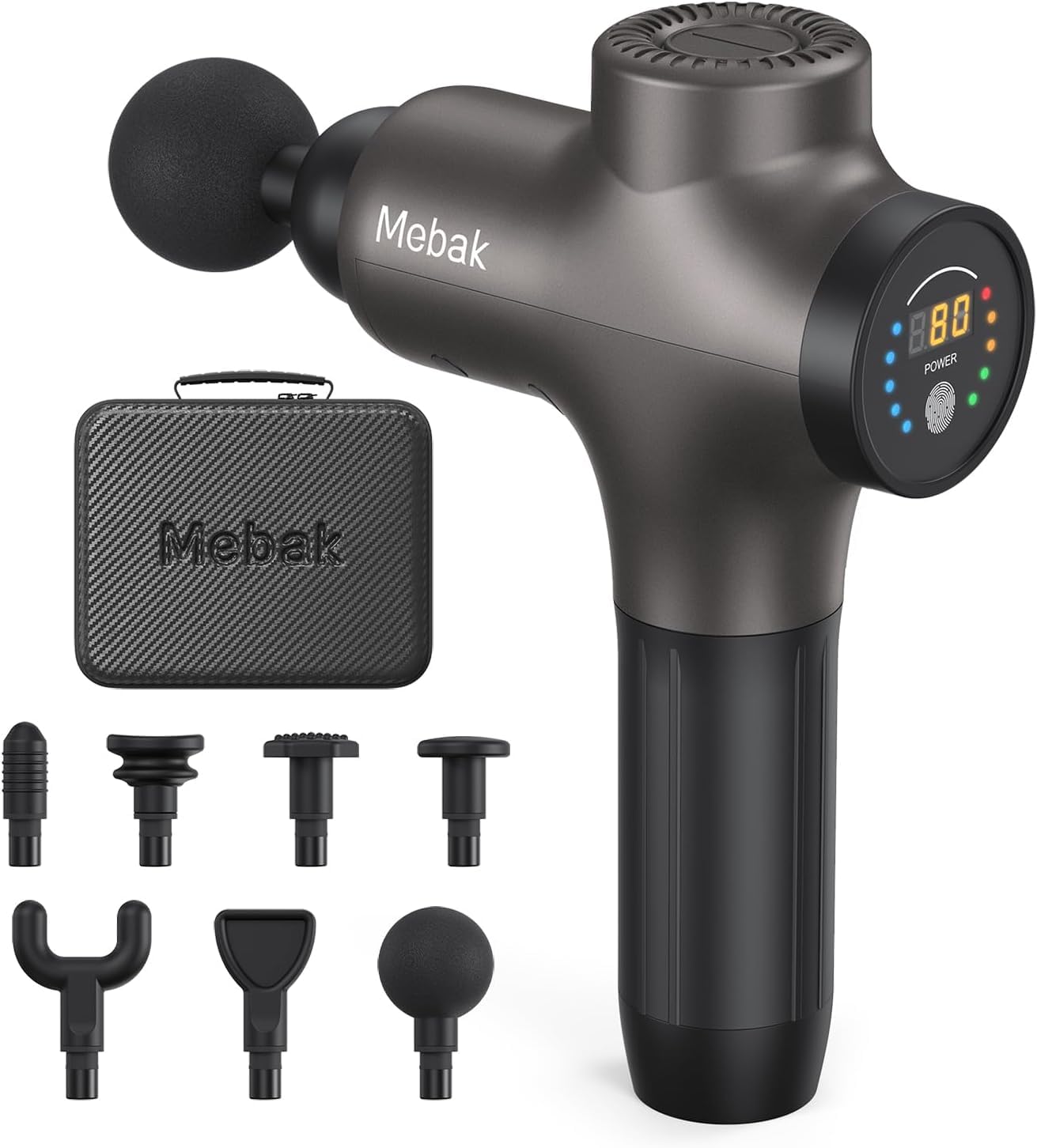
The Mebak 3 delivers 12mm of amplitude and a 53-lb stall force — most of the top pick's output — with seven heads in the box, all at a mid-range price. Five speeds up to 3000 RPM reach deep tissue in quads, back, and shoulders directly, and the head weighs under two pounds.

This fits athletes who want one full-size gun for home recovery without the premium sticker. Durability carries unit-to-unit variance — some samples develop charging faults within months — so the warranty window is the purchasing hinge. Expect several solid years of service, not a decade, and the lower price becomes the compensating factor.

Pros

  • Delivers deep-tissue relief on sore quads, back, and shoulders across all five speeds
  • Seven included heads cover both broad and pointed muscle work without extra purchases
  • A charge covers several home recovery sessions between top-ups

Cons

  • Individual units can stop accepting a charge within months
Our verdict

For athletes wanting near-full-size stroke depth without paying top dollar, this is the strongest value in the set — best when warranty terms match a few-years outlook.

Check Latest Price
3

Best Portable/Travel

Bob & Brad Q2 Mini

93 /100
Trail Score Outstanding

Key details

Weight
0.95 lbs
Check Price on Amazon

Pocket-sized at 0.95 pounds and whisper-quiet, the Q2 Mini still lifts everyday desk and travel tightness with relief owners credit as quick for its size. That reach falls short of a full-size gun's deep-tissue output, so heavy glute and hamstring work sits outside its job.

Travelers, commuters, and beginners who find full-size guns awkward on smaller wrists get the most value, with shoulder-and-neck sessions as the natural fit. Stall force stays modest on large legs and some units have been noted to stop accepting a charge, so treat it as a light everyday companion rather than a long-term heavy-use tool.

💡 For thighs and glutes, run slower passes with extra coverage — the lighter stall force responds to repetition better than to added pressure.

Pros

  • Quick relief for everyday desk and travel tightness in a carry-on-sized frame.
  • Sub-pound body that slips into bags and stays gentle on smaller wrists.
  • Ergonomic one-hand handling that suits beginners who find heavy guns awkward.

Cons

  • Stall force runs light for large leg groups; pressure eases before deep knots release.
  • Some units can stop accepting a charge after months of ownership.
Our verdict

Grab this one when easy carry and office-quiet matter more than deep glute pressure, and let desk-and-neck relief define its ceiling.

Check Latest Price
4

Budget Entry

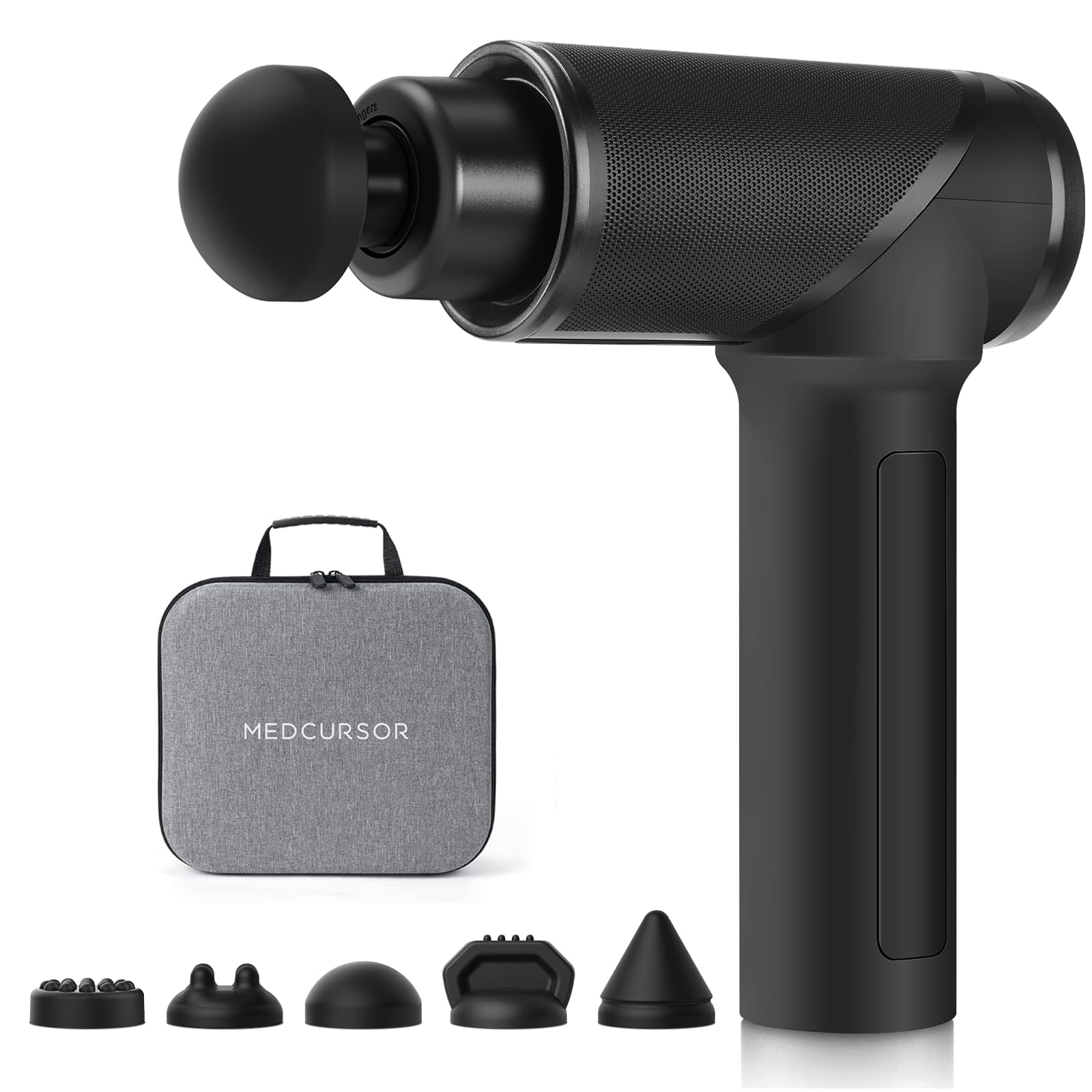
Medcursor Massage Gun

93 /100
Trail Score Outstanding

Key details

Weight
1.5 lbs
Check Price on Amazon

The Medcursor pairs a brushless motor with six heads and near-silent operation at a budget price, offering genuine relief for everyday soreness in a light 1.5-lb frame. Endurance under sustained heavy use is modest, so it suits occasional home recovery rather than professional-grade treatment.

Pros

  • Near-silent motor soothes everyday soreness without disturbing others in the room.
  • Six included heads and a 4.5-hour battery cover varied home recovery sessions.

Cons

  • Battery charging inconsistencies can appear in some units over time.
Our verdict

Best for first-time owners and low-risk gift giving when quiet, light home recovery matters more than peak power or multi-year endurance.

Check Latest Price

How to Choose Percussion Massagers

Amplitude

Amplitude is how far the massage head moves with each stroke, typically 10 to 12mm on a full-size gun. Around 10mm reaches superficial muscle, while 12mm pushes deeper into fascia and the belly of a tight muscle, which is what you feel when a knot sits in your glute or hamstring.

The catch is that amplitude is fixed once the unit is built, and marketing numbers rarely survive real contact. A gun that quotes 12mm but softens the stroke under pressure gives you less than the spec implies.

Stall Force

Stall force is the pressure a motor can absorb before the head stops moving. It separates a gun that keeps hammering into a sore quad from one that stutters and dies the moment you push against it.

Full-size units here range from roughly 45 to 70 lbs; minis fall well below that. Match stall force to how hard you press and the size of the muscle group rather than chasing the highest possible number.

Speed Levels

Most useful massagers offer three to five speeds spanning roughly 1800 to 3200 RPM, letting you scale from a warm-up glide to a firm strike. Beyond five levels you are adjusting differences most bodies cannot reliably feel.

Battery and Charging

Charging reliability, not headline battery hours, is the most common reason a massager ends up dead in a drawer. Many units stop accepting a charge within weeks or months, and a lithium cell that degrades under sustained pressure makes advertised runtimes optimistic.

Judge a device by whether owners report steady charging across months of use, and weigh the warranty against the risk window. Budget the cost of replacement into any purchase below the premium tier.

Weight and Portability

A sub-1lb mini disappears into a gym bag but trades away the stall force a full-size body delivers. Smaller motors typically cannot hold pressure on quads or hamstrings, so they suit travel, office, and post-desk relief rather than heavy post-workout recovery.

Frequently Asked Questions