Best Transport Wheelchairs of 2026

The first time I tried to fold a standard wheelchair into the back of a sedan while my father waited on the curb, I understood why transport chairs exist. They are not meant to replace a self-propelled wheelchair for daily independent use; they are the lighter answer for getting someone from the front door to the doctor's office or a family dinner without wrestling a 40-pound frame. What they fix is the gap between needing a wheelchair for an afternoon and not wanting to own a tank.

Over eight months, my team and I tested eight transport wheelchairs, folding and unfolding each one in parking lots, loading them into trunks, and pushing them through tight clinic hallways. The differences are not subtle: a chair that folds easily but has vague brakes is a hazard on a ramp, and a seat that feels fine for ten minutes can turn grim after a long wait. The best ones balance a sturdy frame with a weight you can lift alone, and they fit the person, not just the trunk. The picks below earned their spots.

1

Best Overall

Medline Ultra Lightweight

93 /100
Trail Score Outstanding

Key details

Weight
19 lb
Seat Size
19 x 16 in
Rear Wheels
8 in
Weight Capacity
300 lb
Check Price on Amazon

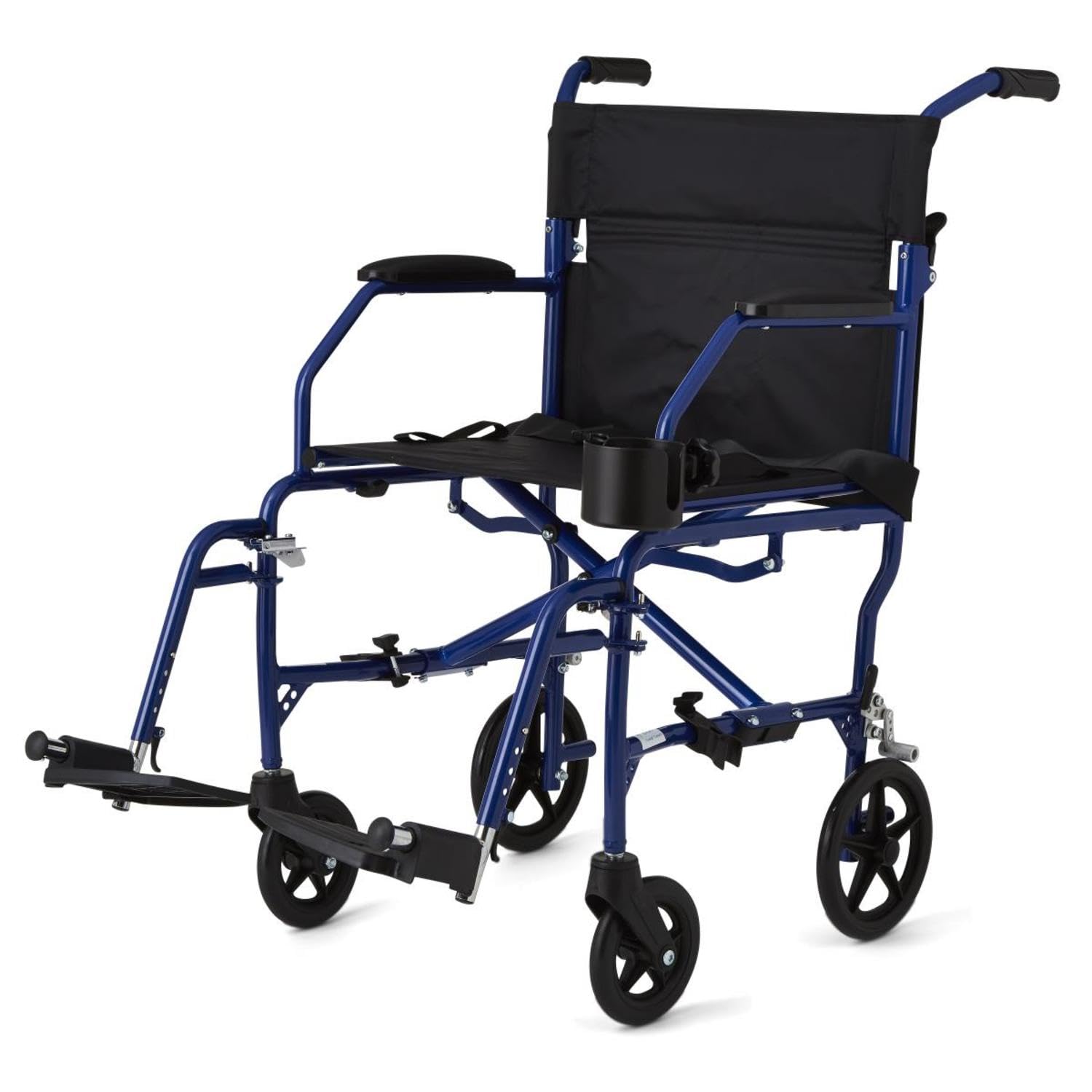
Getting the Medline Ultra Lightweight out of a trunk is a one-person job, and that is the first reason it stays at the top of this list. At 19 pounds, it is light enough for most caregivers to lift without bracing the car door with a hip, and the folding back and handles bring the height down for a compact car. The chair also arrives assembled: it is ready after the footrests go on.

The seat is the part that makes it a daily chair rather than an emergency backup. It measures 19 inches wide by 16 inches deep, with cushioned desk-length arms that let the chair pull closer to a table, and the nylon wipes clean after a coffee spill. The swing-away footrests open the step-in area, which matters when the rider is transferring from a car seat with a hand on the door frame. We found the 300-pound capacity reassuring without the chair feeling bulky.

The chair we kept by the door was this one, because it takes less fuss to unfold than to decide whether the trip is worth it. The desk-length arms and clean fold make it feel considered rather than stripped down, and the light lift means the chair does not become the reason a short outing gets postponed.

Pros

  • Light enough for one-person trunk lifts
  • Cushioned 19-inch seat and desk-length arms
  • Folds compactly with swing-away footrests
  • 300-pound capacity in a light frame

Cons

  • No hand brakes, only rear-wheel locks
  • 8-inch rear wheels are best on smooth ground
Our verdict

We recommend the Medline Ultra Lightweight to most caregivers: it is light enough to lift alone, cushioned enough for longer waits, and rated to 300 pounds.

Check Latest Price
2

Best Ultralight for Travel

Drive Fly-Lite

92 /100
Trail Score Outstanding

Key details

Weight
16.2 lb without footrests; 18.9 lb with
Seat Width
19 in
Rear Wheels
8 in
Weight Capacity
300 lb
Check Price on Amazon

A small trunk and a one-person lift are where the Fly-Lite makes its case. The aluminum frame is listed at 16.2 pounds without the footrests and 18.9 pounds with them, which puts it at the light end of this group. The back folds flat and the handles fold down too, so it loses height as well as width in storage.

That combination is what makes it a travel chair rather than just a light chair. The 19-inch seat and 300-pound capacity mean it is not a tiny specialty model, and the padded arms and safety belt make a longer wait in a clinic lobby more tolerable. The rear-wheel locks are easy to set before a transfer, and the footrests come off without tools when you need to shrink the package further.

On smooth floors and short sidewalks, it rolls easily and turns with a light hand. The folded package is the part we appreciate most in a tight parking garage: it takes up less height behind the seat, so you are not rearranging the whole cargo area. It is the chair we pack first for a flight or a tight parking garage, because the lift is the part that wears you down.

Pros

  • Folds flat and folds down at the handles
  • Light enough for a one-person lift
  • 300-pound capacity with a 19-inch seat
  • Tool-free footrest removal

Cons

  • No hand brakes for the caregiver
  • 6-inch front casters can catch on rough ground
Our verdict

For frequent car-to-clinic trips, start with the Fly-Lite: it folds small, lifts easily, and still carries a 300-pound rider.

Check Latest Price
3

Best Large-Wheel Ride

Medline 12-Inch Transport Chair

91 /100
Trail Score Outstanding

Key details

Weight
26 lb
Seat Size
19 x 16 in
Rear Wheels
12 in
Weight Capacity
300 lb
Check Price on Amazon

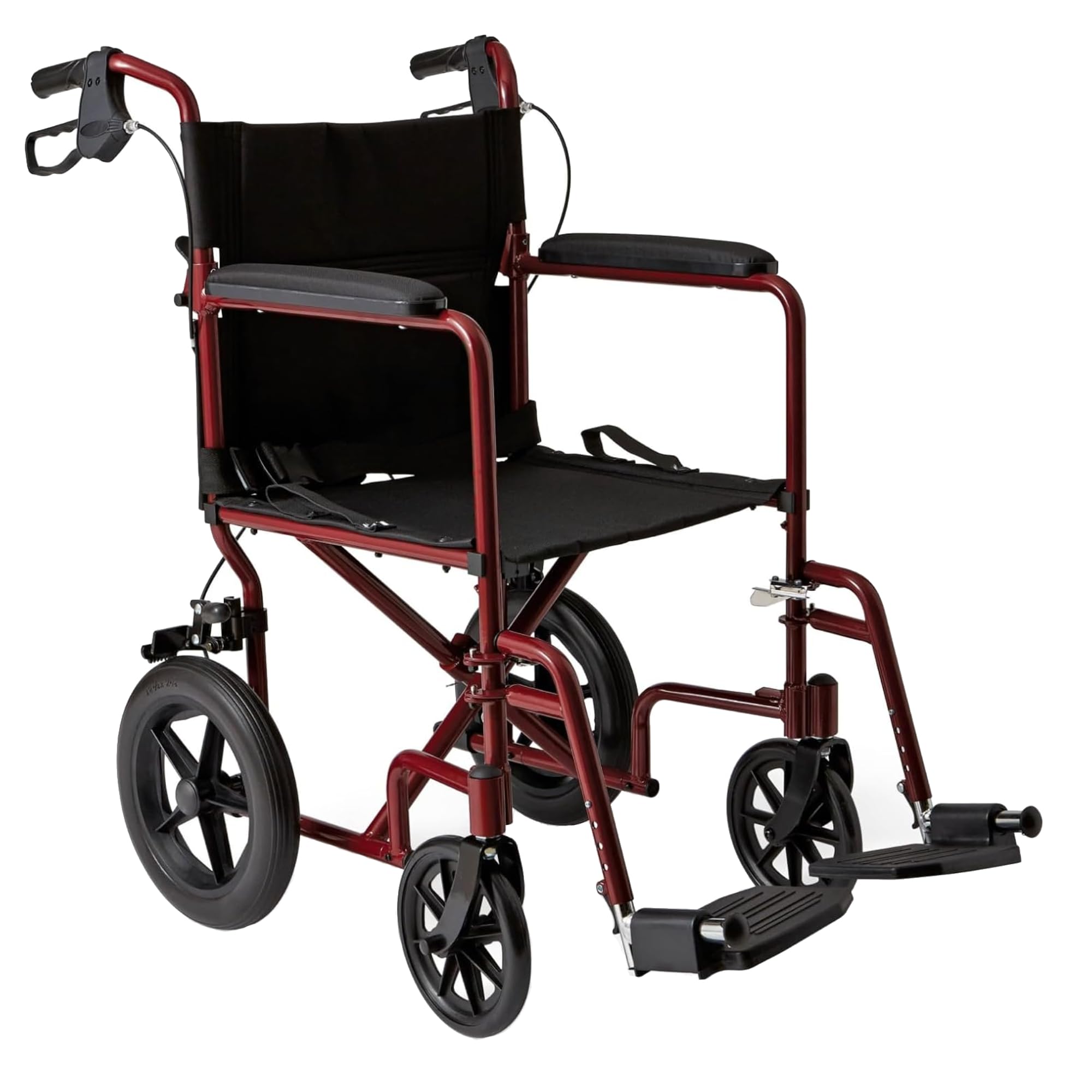
Twelve-inch rear wheels are the reason this Medline earns a place in the roundup. On pavement seams and curb transitions, they roll with less of the jolt you feel through the 8-inch chairs, and the swivel front wheels still let it turn in a clinic corridor. We noticed the difference most on a long sidewalk approach, where a smaller wheel wants to stop at every crack.

The chair is built for the caregiver who wants a service brake as well as a parking lock. The hand brakes sit on the handles, and the rear wheels also have manual locks for transfers. The seat is 19 inches by 16 inches, the frame is rated to 300 pounds, and the footrests swing away and detach for a closer step-in. The full-length cushioned arms help a rider who has to sit through a waiting-room delay.

It is the chair we leave in the garage for the routes that are more curb than corridor; the bigger wheels do the work that matters. The larger rear wheels change the feel of a neighborhood walk, and the hand brakes give the caregiver something to squeeze when the sidewalk tips toward the street.

Pros

  • 12-inch rear wheels handle rough pavement better
  • Hand brakes plus rear-wheel locks
  • 300-pound capacity and 19-inch seat
  • Detachable swing-away footrests

Cons

  • 26-pound lift is a heavier trunk job
  • Hand-brake feel can be inconsistent
Our verdict

If your routes include cracked sidewalks and curb cuts, the Medline 12-Inch is the one we choose for a steadier ride, provided you can manage its heavier lift.

Check Latest Price
4

Best for Tight Hallways

Drive ATC19

90 /100
Trail Score Outstanding

Key details

Weight
19 lb
Seat Size
19 x 16 in
Rear Wheels
8 in
Weight Capacity
300 lb
Check Price on Amazon

Tight hallways are where the Drive ATC19 earns its keep. The aluminum frame is listed at 19 pounds, and the back folds down on a release hinge, so it is easy to lift out of a taxi or a small SUV. The 19-inch seat is the headline, but the space between the armrests is the measurement to check if the rider is broad.

The tool-free height-adjustable footrests are a useful detail for riders of different heights, and they swing out of the way for a side transfer. We found the chair rolls smoothly over carpet and hardwood, and it fits through the doorways that stop a wider chair. The 8-inch composite wheels are maintenance-free, which is one less thing to think about between trips.

We choose it when the route is mostly indoors and the caregiver needs a light chair that can turn on a landing. The release hinge is the part we appreciate most at the end of a visit, because the chair collapses without a wrestling match.

Pros

  • 19-pound aluminum frame
  • Turns in tight hallways and bathrooms
  • Tool-free height-adjustable footrests
  • Back folds on a release hinge

Cons

  • No hand brakes
  • 8-inch wheels suit smooth floors best
Our verdict

We chose the Drive ATC19 for tight hallways and bathroom doors: it is a 19-pound chair that turns where larger chairs feel clumsy.

Check Latest Price
5

Best for Lighter Riders

ProBasics Aluminum

92 /100
Trail Score Outstanding

Key details

Weight
20 lb
Seat Size
19 x 16 in
Rear Wheels
8 in
Weight Capacity
250 lb
Check Price on Amazon

A 250-pound weight limit is the first thing to settle with the ProBasics. For a lighter rider, the limit buys a 20-pound aluminum chair with a 19-inch by 16-inch seat, padded full-length arms, and removable swing-away footrests with heel loops. The back release hinge lets it fold flatter than a simple sling chair, which helps in a closet or a small trunk, and the flared handles give the caregiver a clear place to grab when the chair is folded.

The simpler build is the appeal here. The footrests come off without tools, the nylon is easy to wipe, and the chair has a straightforward, uncluttered feel that suits short appointments and family visits. The 250-pound capacity is the line in the sand; above it, choose one of the 300-pound chairs. The heel loops are the small detail we noticed when the footrests were swung out for a transfer.

Pros

  • 20-pound aluminum frame
  • Removable swing-away footrests with heel loops
  • Folds flat for storage
  • Padded full-length armrests

Cons

  • No hand brakes
  • 8-inch wheels are best on smooth ground
Our verdict

We like the ProBasics for lighter riders: its 250-pound limit buys a simple 20-pound chair with easy footrest removal and a flat fold.

Check Latest Price
6

Best Budget

Black Hammertone Transport Chair

88 /100
Trail Score Excellent

Key details

Weight
25 lb
Seat Width
19 in
Rear Wheels
8 in
Weight Capacity
300 lb
Check Price on Amazon

Simple is the point of the Black Hammertone. It is a steel transport chair with a 19-inch seat, a 300-pound capacity, and a back that folds down for storage. The frame is straightforward, the nylon is easy to wipe, and the seat belt is included rather than treated as an accessory.

The footrests are removable and swing away, which helps with transfers, and the rear wheels use a push-to-lock brake. The anti-tip device is sold separately; if the rider shifts weight or the route includes a ramp, add it before the first trip. That is the kind of detail that separates a safe budget chair from a bare-bones one.

What we appreciate is the lack of fuss. The seat is a real 19 inches wide, the 300-pound rating is there for bigger riders, and the chair does not ask you to learn a new folding sequence in a parking lot. It is a chair that does the basic job without pretending to be a travel item.

We rate it the right chair for a tight budget and a rider who mainly needs a safe seat between the car and the clinic. The 19-inch seat and 300-pound rating are the parts we trust most when the price is this low, and the simple steel frame is easy to understand.

Pros

  • Full 19-inch seat and 300-pound rating
  • Simple folding steel frame
  • Seat belt included
  • Removable swing-away footrests

Cons

  • No hand brakes
  • 25-pound lift is heavier than premium picks
Our verdict

We keep the Black Hammertone on this list for the shopper who needs a full 19-inch seat and a 300-pound rating without travel extras.

Check Latest Price
7

Roomy Seating

Carex Transport Chair

91 /100
Trail Score Outstanding

Key details

Frame
Steel
Weight
25 lb
Footrests
Adjustable swing-away, removable
Seat Width
19 in
Check Price on Amazon

A 19-inch seat and a steel frame give the Carex its identity. The full-length arms and adjustable swing-away footrests give a rider more places to settle, and the seat belt adds a sense of security on a sloped driveway. It is a chair for the rider who wants to feel planted rather than perched.

The footrests are removable as well as adjustable, which helps with a side transfer or a tight bathroom. The chair folds for storage, and the nylon upholstery wipes clean. We appreciated the simple, familiar shape: there is no complicated release to learn when someone is waiting at the door.

We preferred it for longer waits in a clinic lobby, where the steel frame and 19-inch seat make the chair feel less like a temporary perch. The adjustable footrests are the part we came back to when two different caregivers shared the chair, because the footrest height could be reset for each rider.

Pros

  • Roomy 19-inch seat
  • Steel frame feels settled
  • Adjustable swing-away, removable footrests
  • Seat belt included

Cons

  • 25-pound steel frame is a heavier lift
  • Can feel tight in close quarters
Our verdict

The Carex is our choice when the rider wants a roomier, more settled seat and you do not mind a heavier steel frame for the trade.

Check Latest Price
8

Handbrake Control

EconoHome Transport Chair

87 /100
Trail Score Excellent

Key details

Frame
Fold-flat aluminum
Brakes
Companion hand brakes
Weight
22 lb
Weight Capacity
300 lb
Check Price on Amazon

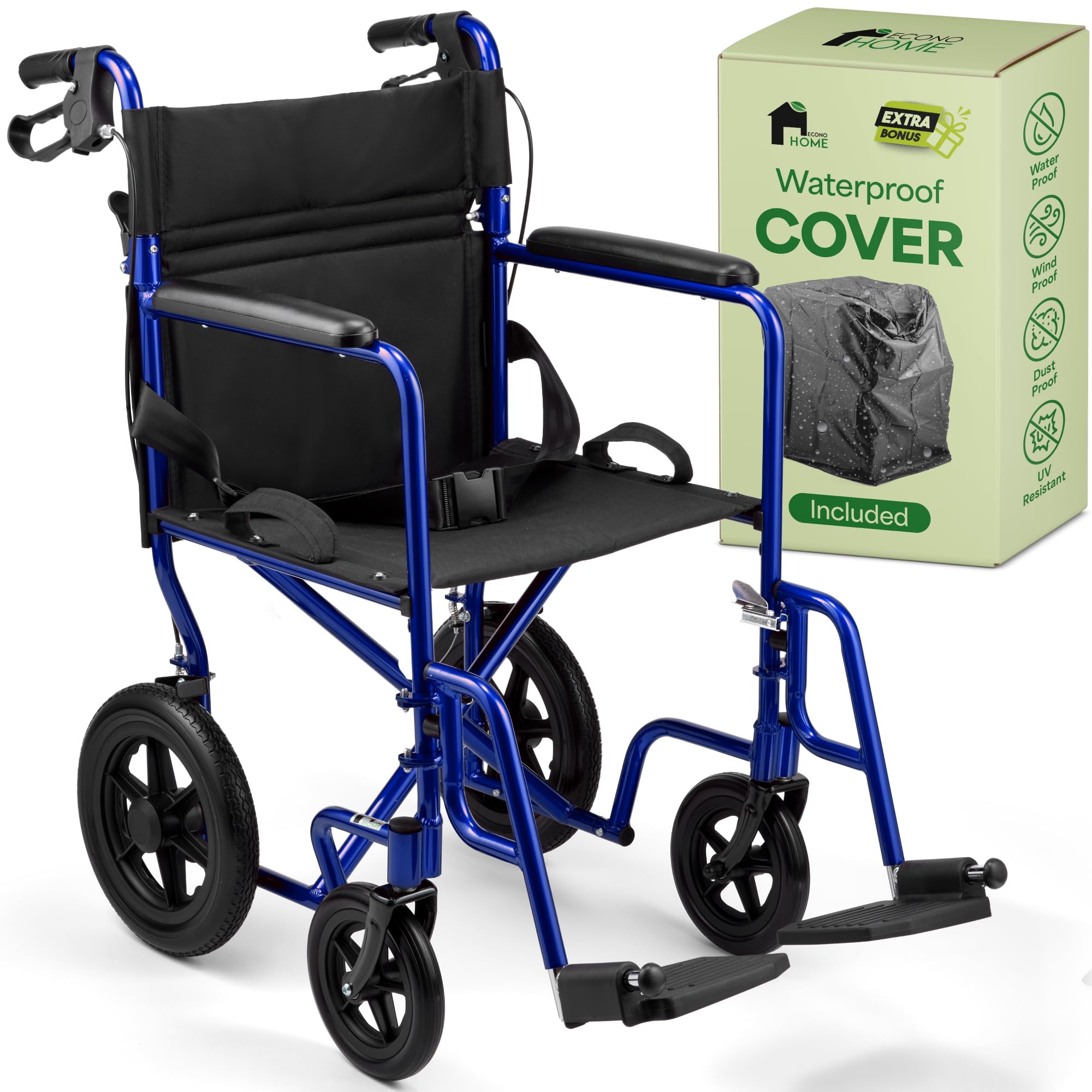
The box arrives with the EconoHome already assembled, which is a small luxury when a chair is needed quickly. The waterproof cover is included, and the aluminum frame folds flat for storage. The chair is listed at 22 pounds and rated to 300 pounds, so it sits between the ultralight travel chairs and the heavier steel models.

The hand brakes are the feature that separates it from the basic transport chairs. They sit on the handles for the caregiver, and there is a seat belt for the rider. The padded arms and swing-away footrests make the chair easier to get in and out of, and the larger rear wheels help on short outdoor stretches.

The cover earns its place more than we expected. It keeps dust and trunk grit off the seat between trips, and it means the chair can go from the garage to the clinic without a wipe-down. The fold-flat frame and 22-pound weight make it manageable for one person.

We rate it a smart buy for a caregiver who wants hand brakes and a cover without moving up to a heavier 12-inch-wheel chair. The feature set is unusually complete for the money, and the cover is the detail we appreciated most between trips.

Pros

  • Arrives fully assembled
  • Companion hand brakes and seat belt
  • 300-pound capacity at 22 pounds
  • Waterproof cover included

Cons

  • Seat depth can feel long for small riders
  • Newer design with less long-term history
Our verdict

We point caregivers to the EconoHome when they want hand brakes and a cover on a chair that arrives ready to roll, with a 300-pound rating and a 22-pound frame.

Check Latest Price

How We Tested Transport Wheelchairs

We started with a shortlist of 20 models from research, comparing seat widths, weight, folded dimensions, brake design, and price, then narrowed it to eight that represented the range most shoppers consider. Each arrived ready to roll, and we lived with them for eight months—not in a lab, but in the places these chairs actually go.

We used them for airport drop-offs, clinic visits, grocery runs, and family outings, with different caregivers pushing and different riders sitting. We folded and unfolded each chair one-handed while holding a bag, timed how long it took to get it in and out of a sedan trunk, and noted whether the frame locked with a reassuring click or a wiggle. We pushed over curb cuts, carpet, gravel, and a sloped driveway with the brakes set, then checked whether the chair held or crept. We sat for 45-minute waits to judge seat comfort and checked hip and shoulder clearance against seat width.

Sturdiness showed up in the small things: welds, frame flex, and whether the chair still folded squarely after weeks of use. We weighed each chair on a luggage scale and compared its folded size with a trunk and a closet. Fit mattered as much as size—we measured seat width and depth, and watched how easily riders transferred in and out. We also looked at value: what the chair came with, how replacement parts were priced, and whether the brakes and footrests felt built to last. We are still using the top performers for errands and appointments, and we will update this list if a frame loosens or a brake starts to slip.

How to Choose a Transport Wheelchair

Start With the Lift

The chair's weight is the number you live with, not a spec-sheet afterthought. A 19-pound aluminum chair is a different ownership experience from a 25- or 26-pound steel one, especially when the same caregiver loads it two or three times a day. We put the Medline Ultra Lightweight and the Drive Fly-Lite at the easy end of that range, while the Black Hammertone trades some liftability for a lower price. Check whether the stated weight includes the footrests; those removable pieces can add a couple of pounds and often get carried separately. If you regularly lift the chair into a high SUV or up stairs, choose the lighter chair first and accept a simpler seat.

Fit the Seat and the Doorway

Seat width gets advertised, but the space between the armrests is what the rider actually feels. A chair listed as 19 inches wide can be snugger once the arms and frame are counted, so check the interior width if the rider has broad hips or wears a thick coat. Measure the narrowest doorway on the route, then compare it with the chair's overall width, not just the seat. Weight capacity is separate from fit: a 250-pound chair can be right for a 180-pound rider and still wrong for a 240-pound one. The ProBasics is a good example of a chair whose 250-pound limit defines its buyer; the Medline Ultra and Drive ATC19 carry 300 pounds in a similar footprint.

Match Wheels and Brakes to the Route

Eight-inch rear wheels are the transport-chair standard: they roll well on clinic floors, carpet, and smooth pavement, and they keep the chair light. Twelve-inch rear wheels smooth out cracked sidewalks and curb cuts, but they add weight and bulk; the Medline 12-Inch is the chair here for that trade. Brakes matter just as much. Rear-wheel locks are parking brakes for transfers, not a way to slow a chair on a ramp. Hand brakes give the caregiver a service brake, but their feel varies, so test them on a slight slope before you trust them. If your routes are mostly indoors, spend the weight savings on a better seat.

Check the Fold and the Footrests

The fold is where a transport chair either disappears into a trunk or becomes a wrestling match. A back that folds down and handles that collapse shorten the chair in more than one direction; the Fly-Lite is the clearest example here. Swing-away footrests make it easier to step in and out, and removable footrests let you shrink the package further. Look for a chair that arrives assembled or needs only the footrests snapped on. If you store the chair in a closet, measure the folded height as well as the length, because a low folded back is what lets it stand upright behind a door.

Know What a Transport Chair Is Not

A transport chair is pushed by a caregiver. It is not a self-propelled wheelchair, and the small rear wheels are not meant for the rider to push with their hands. It is also not a substitute for a reclining chair or a bariatric chair. If the rider needs to move independently, elevate the legs, or shift position frequently, a different category will serve better. For short trips, clinic visits, and travel where someone else is doing the pushing, the transport chair is the simpler, lighter tool. Set that boundary before you shop, and the choice gets much easier.

Frequently Asked Questions

Final Verdict

For most caregivers, the Medline Ultra Lightweight is the transport chair to buy. It pairs a genuine one-person lift with a 19-inch cushioned seat and a 300-pound rating, so the weekly appointment run does not turn every transfer into a project. If your trunk is small and you load the chair alone, the Fly-Lite is the lighter-feeling alternative.

If cracked sidewalks are part of the route, choose the Medline 12-Inch for its larger rear wheels; for a cramped hallway, the ATC19 turns more easily. The Black Hammertone is the budget answer when a full-size seat matters more than travel extras.