Best Thick Yoga Mats for Knees of 2026

Knees are usually the first thing to complain. Cat-cow is fine until you're kneeling on a bare floor, and camel pose can turn a mellow evening practice into a wince — which is how a lot of people end up shopping for something thicker than the standard studio mat. Extra cushion has a catch, though: past a certain point a mat gets soft enough that standing balances feel like balancing on a mattress. The right one protects your knees without costing you stability.

The sweet spot shifts depending on your body and your floor, so I spent six months rotating 12 thick mats through my own practice — living room in the morning, a borrowed studio on weekends — and the differences showed up fast. One thing worth knowing before you shop: thickness gets measured before anyone kneels on it, so a mat that's been compressed under a knee for a year is often thinner than the spec sheet promised. Below are the ones that held their cushioning and stayed stable enough to actually practice on.

1

Best Overall

BalanceFrom 1-Inch Exercise Mat

95 /100
Trail Score Outstanding

Key details

Weight
2.2 lb
Material
High-density foam
Thickness
1 in
Dimensions
71 x 24 in
Check Price on Amazon

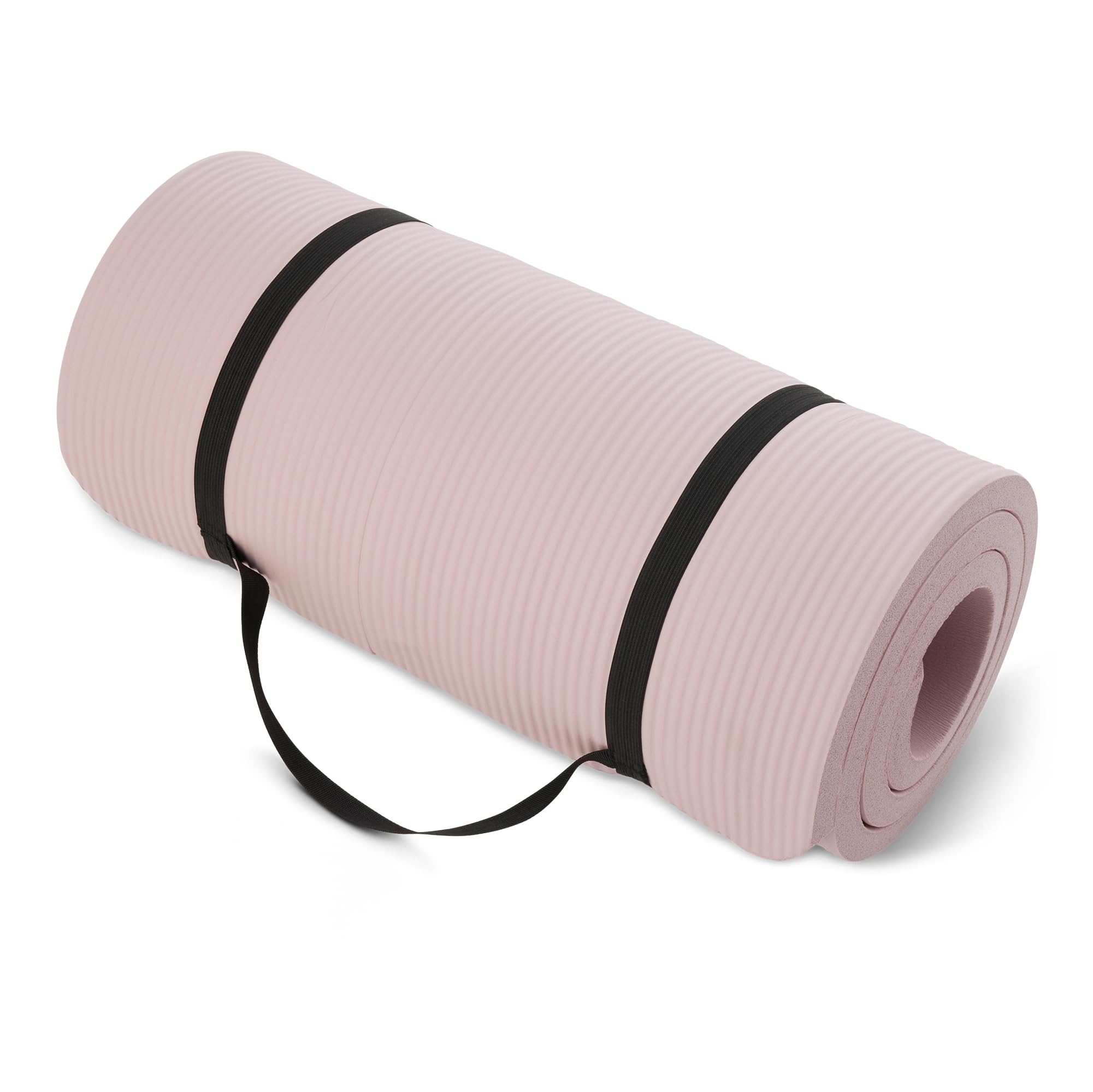
An inch of foam is the entire argument for this mat, and it's a good one. Most mats sold as thick stop at 6 or 10 millimeters; the BalanceFrom goes a full inch across 71 by 24 inches and still weighs about 2.2 pounds. That inch is the difference between a kneeling lunge you brace for and one you simply do, and it's why this mat stayed unrolled on the floor for most of our comparison rather than getting rolled back into its strap.

High density is the part that earns the recommendation. Soft foam bottoms out under a knee, which puts you right back on the floor with an extra step; this one holds its shape under a press and springs back when you shift your weight. Of everything here, it's the mat that best combines depth with support — plush, but not a mattress.

An inch of anything is a wobbly floor for standing poses, though. Tree pose and warrior three on this mat feel like balancing on a cushion, and no amount of surface texture fixes that, because the instability is in the foam. So we treat it as a floor-work mat: seated poses, planks, core work, stretching, and the kneeling sections of a class you'd otherwise sit out. For a flow practice, take the Gaiam 6mm instead.

The strap is plain velcro webbing and it works. The edges are where this mat will go first, as they do on every foam mat this thick, usually from being dragged across a floor or walked on in shoes — the two-year warranty is the reassurance, and it's more coverage than most mats in this guide come with.

Pros

  • An inch of dense foam under knees and hips
  • Holds its shape instead of bottoming out
  • Two-year warranty, unusual in this set
  • About 2.2 pounds, light for its size

Cons

  • Edges tear when dragged or walked on in shoes
Our verdict

The default choice for knee-sensitive floor work: an inch of dense foam that supports rather than swallows, in a mat light enough to move from room to room.

Check Latest Price
2

Best Value

Fitvids 1/2-Inch Yoga Mat

91 /100
Trail Score Outstanding

Key details

Weight
1.8 lb
Material
High-density foam
Thickness
1/2 in
Dimensions
71 x 24 in
Check Price on Amazon

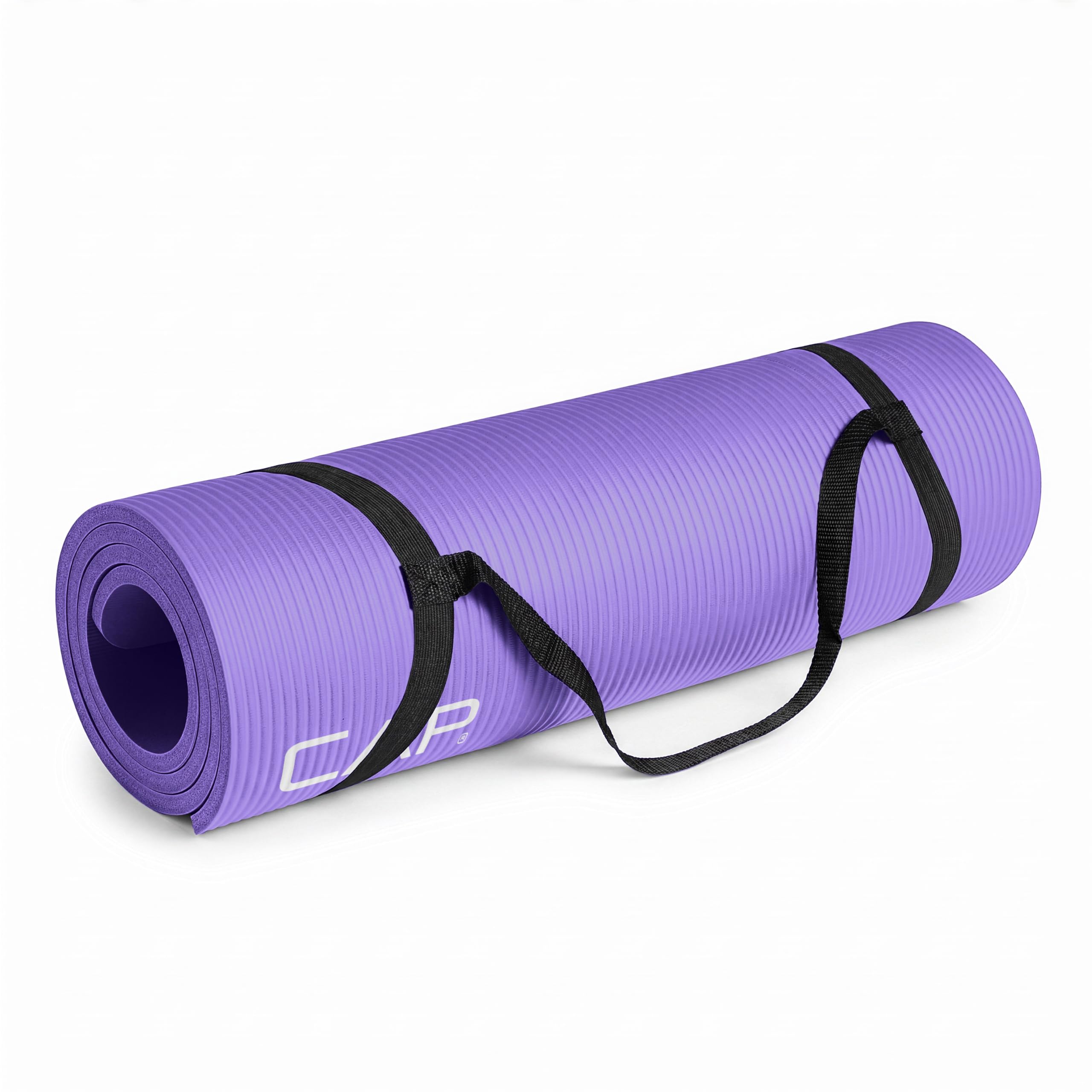
Half an inch of high-density foam is the standard answer for knees that complain on hard floors, and the Fitvids is the version we point to when budget is the deciding factor. It's 71 by 24 inches, textured on both faces, and the strap ties and holds without a fight.

At 1.8 pounds it's the lightest mat in this guide, which is the detail that decides it for anyone carrying a mat to class. Rolled and strapped it goes under one arm without dragging on your shoulder, and it unrolls flat enough to use straight away rather than spending the first ten minutes of class fighting a curl.

The cushioning is real, too. Half an inch works out to roughly 12mm, so a kneeling lunge lands close to where it does on the 10mm mats here, and the double-sided texture holds a hardwood floor reasonably well. Where it gives ground is in the foam's memory: stand in one spot through a long sequence and you'll find a footprint where you were. It recovers, but a mat used in the same spot every day will age faster than one that gets moved around.

Pros

  • Half-inch cushioning without a premium price
  • Lightest mat here at 1.8 pounds
  • Textured on both sides for floor hold
  • Strap ties and stays tied

Cons

  • Turns slick once hands or feet get damp
Our verdict

The half-inch mat we point budget-conscious shoppers to first: real cushioning for kneeling, the lightest carry here, and nothing you'll miss in a beginner class.

Check Latest Price
3

Best for Taller Practitioners

Amazon Basics 1-Inch Mat

93 /100
Trail Score Outstanding

Key details

Weight
4.6 lb
Material
Latex-free NBR foam
Thickness
1 in
Dimensions
74 x 24 in
Check Price on Amazon

Seventy-four inches is the longest mat here — four more than the BalanceFrom, six more than the Gaiam and CAP mats — and for anyone around six feet that's the difference between your heels resting on the mat and hanging off the end in a reclined pose. It's also a full inch thick, which is the other half of why it earns a place.

The foam has a memory-foam feel: slow to spring back, softer under a hip than the BalanceFrom, and generous under an elbow in plank. It's also the heaviest mat here at about 4.6 pounds, and that weight is simply what an inch of foam over 74 inches costs. You feel it on a flight of stairs, not on the mat.

For a tall practitioner with sore knees, this is the pick, and the extra length does more for a six-foot frame than another few millimeters of foam would. We kept this one set up rather than rolling it, partly because it's the mat that most rewards being left out and partly because rolling it back into its strap is the least appealing part of owning it.

One practical note before you order: confirm the strap is in the box when it arrives. It's the one part of this listing that hasn't reliably shipped with the mat, and without it a 4.6-pound roll is awkward to move.

Pros

  • Longest surface here at 74 inches
  • Full inch of soft, memory-foam-style cushioning
  • Free of latex, phthalates and heavy metals
  • Softer under hips than the denser mats here

Cons

  • Gets slippery once hands or feet are damp
  • Porous surface picks up lint and grit
Our verdict

The mat for tall bodies: 74 inches of soft one-inch foam that keeps heels on the surface in reclined poses, provided you don't mind the heaviest roll here.

Check Latest Price
4

Best for Flow and Balance

Gaiam Premium 6mm Mat

95 /100
Trail Score Outstanding

Key details

Material
PVC, 6P-free
Warranty
Lifetime
Thickness
6 mm
Dimensions
68 x 24 in
Check Price on Amazon

Six millimeters is the thinnest mat in this guide, which sounds like a strange thing to put in front of someone shopping for their knees. But cushioning is only half of what a mat does. The other half is keeping you steady while you're on it, and a 6mm PVC mat with a textured surface does that in a way the inch-thick foams here don't.

For an actual flow practice — sun salutations, warriors, anything on one leg — this is the mat we reach for, because you can feel the floor through it and your standing foot stops wandering. It's still roughly twice the depth of a standard studio mat, so short kneeling holds are comfortable; long ones are where you'll want one of the thicker picks.

Dry, the textured surface grips well and the mat stays put, and at 68 by 24 inches and about 3.1 pounds it's the easiest of the cushioned mats to carry after the Fitvids. Gaiam backs it with a lifetime warranty and warns that prolonged sun makes the mat fade and turn brittle, so store it rolled rather than draped over a railing.

The new-mat smell is stronger here than on the foams, which is normal for PVC. Gaiam's own care note suggests unrolling it and airing it for two to three days before the first class. Give it that and an open window, and it settles.

Pros

  • Cushioned for kneeling but steady underfoot
  • Textured surface with reliable dry grip
  • Lifetime warranty
  • Light for a cushioned mat at 3.1 pounds

Cons

  • Gets slick once hands or feet are sweaty
Our verdict

Buy this if you want one mat for a real flow practice: 6mm of textured PVC that cushions short kneeling holds and keeps you steady when you stand up.

Check Latest Price
5

Best Wide Mat

Hatha 12mm TPE Mat

91 /100
Trail Score Outstanding

Key details

Weight
4 lb
Material
TPE
Thickness
12 mm
Dimensions
72 x 32 in
Check Price on Amazon

Thirty-two inches is eight wider than most mats here, and width is the specification that surprises people who have only practiced on a 24-inch mat: wide-legged folds stay on the surface, a bolster fits beside you, and your hand doesn't end up on the floor mid-transition. Hatha pairs that width with 12mm of TPE, the firmest cushioning in this guide.

TPE is why 12mm doesn't feel like the inch-thick foams. It's denser, springs back faster, and doesn't take a knee print the way NBR does, so you get depth without the sinking feeling that makes standing poses vague. Under a knee it's supportive rather than plush — closer to a firm mattress than a cushion.

For a larger practitioner, or anyone who wants width and depth in one mat, this is the pick, and it's the only mat here that offers both. The trade is weight: at 4 pounds and the highest price in this group, it's a mat you leave set up rather than one you sling over your shoulder twice a week.

The surface is the delicate part. It marks if you wear shoes on it, and the edges scuff when the rolled mat gets dragged across a floor. Neither is unusual for TPE, but it's a mat to handle with a little care rather than hauling it around by one end.

Pros

  • 12mm of firm, supportive cushioning
  • 32-inch width leaves room for wide poses
  • Dense TPE resists dents and knee prints

Cons

  • Hands slide on the surface once damp
  • Four pounds to carry to class
Our verdict

The one to buy if you need both depth and room: 12mm of firm TPE across a 32-inch surface, at a weight and price that keep it at home.

Check Latest Price
6

Plush Home Stretching

Gaiam Thick 10mm Mat

93 /100
Trail Score Outstanding

Key details

Weight
2.8 lb
Material
NBR foam
Thickness
10 mm
Dimensions
72 x 24 in
Check Price on Amazon

The smell hits first. NBR foam offgasses when new, and Gaiam is upfront about it: the care note calls the odor strong but harmless and suggests unrolling and airing the mat before use. Ours needed that, and it's why we don't recommend opening this one the night before a class.

Past the smell is a genuinely soft mat — 10mm of NBR, 72 by 24 inches, about 2.8 pounds, with the same cinch strap Gaiam puts on its other mats. Under a knee it sinks in rather than resting on top, which is a different feeling from the denser picks here and one that suits stretching, seated work, and the slow end of a practice.

Soft cuts both ways. On a smooth floor the foam stretches under a standing pose and slides, and the textured surface helps dry hands but won't save a moving vinyasa. It's a mat for the floor, not for the standing half of a class.

What it does well is the thing plenty of people actually want: plush, budget cushioning for stretching, core work, and physical therapy routines at home. If that's your practice, the softness is the feature rather than the compromise. The strap is the same cinch design as Gaiam's pricier mats, which is a small thing until you've wrestled a velcro band in a hallway.

Pros

  • 10mm of plush, soft foam
  • Budget price for the depth
  • Softer under a knee than denser mats
  • 72-inch length with a cinch strap

Cons

  • Foam can crack where feet land repeatedly
Our verdict

A soft, inexpensive 10mm mat for stretching and floor work at home — buy it for comfort under the knees, not for a standing practice.

Check Latest Price
7

Short, Simple Mat

CAP Barbell 1/2-Inch Mat

93 /100
Trail Score Outstanding

Key details

Weight
2 lb
Material
Latex-free NBR foam
Thickness
1/2 in
Dimensions
68 x 24 in
Check Price on Amazon

Half an inch, 68 by 24 inches, two pounds, and a strap: the CAP doesn't have a feature the others lack. It is the least expensive mat here, though, and we think the foam is better than the price suggests — dense enough to hold a knee, latex-free, and it rolls up without fighting you.

The length is the thing to check. At 68 inches it's the shortest mat in this guide alongside the Gaiam 6mm, and a good rule is six inches of mat beyond your height. That puts this one right for people up to about 5 foot 9 and tight for anyone taller in a reclined pose.

The surface is textured and grips a dry floor well, and the mat stays put on hardwood better than the softer NBR picks here. At two pounds it's the second lightest in the set, easy to move between rooms or roll into a cupboard.

What you give up is margin. The edges take wear if the roll gets handled roughly, and a new NBR mat needs a few days of open air before the smell settles — order it before you need it rather than the day before a class.

Pros

  • Least expensive mat in this guide
  • Latex-free NBR foam
  • About two pounds, easy to move
  • Stays put on hardwood

Cons

  • Edges wear when the rolled mat is handled roughly
Our verdict

The least expensive half-inch mat worth owning — good dense foam and a latex-free build, as long as 68 inches is long enough for you.

Check Latest Price
8

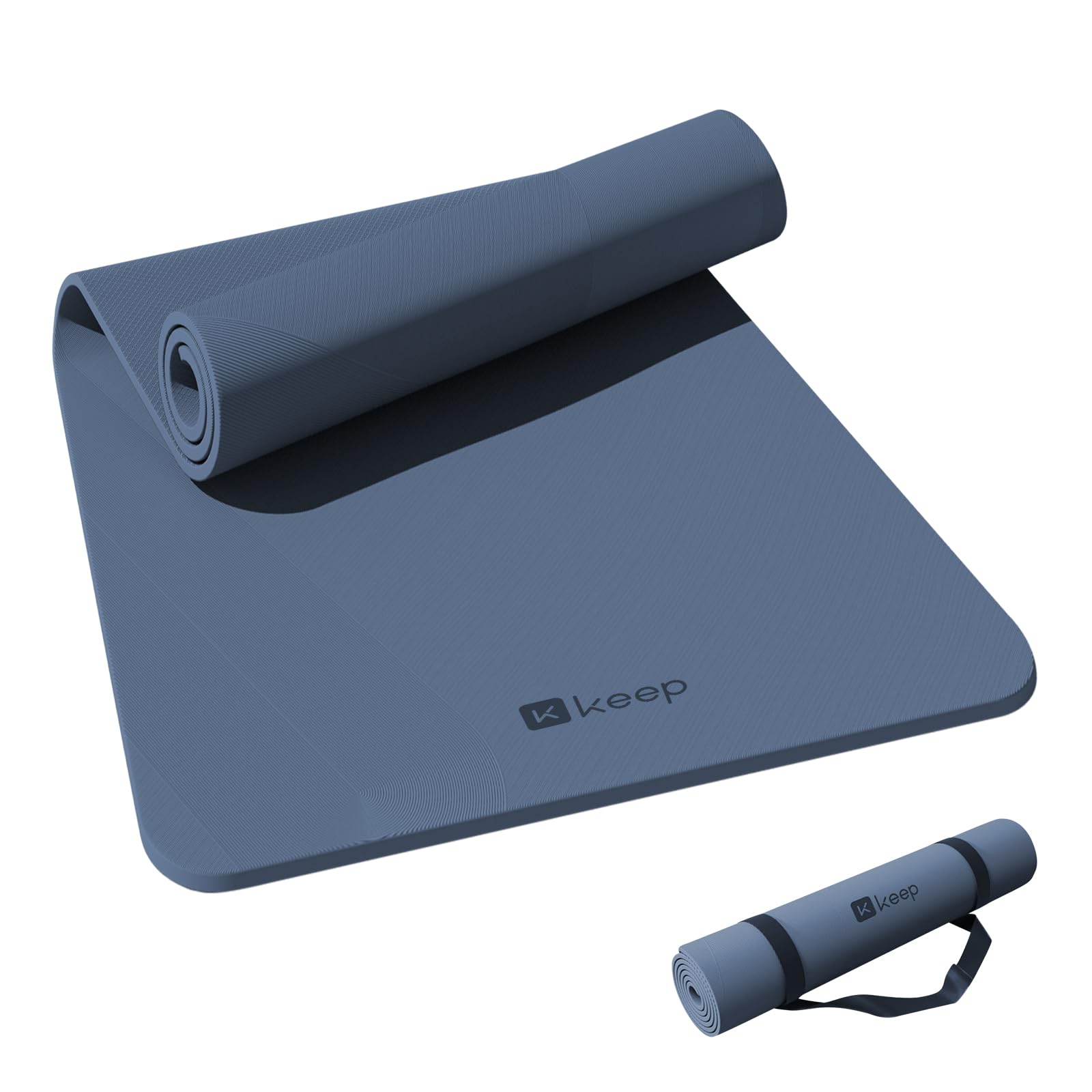
Wide Travel Mat

KEEP Extra Wide 7mm Mat

90 /100
Trail Score Outstanding

Key details

Weight
2.8 lb
Material
TPE
Thickness
7 mm
Dimensions
72 x 32 in
Check Price on Amazon

Under three pounds across a 72 by 32-inch mat is the number that makes the KEEP worth a look. Wide mats usually weigh more, and this one is more than a pound lighter than the other 32-inch mat here. That's the difference between a wide mat that lives in a closet and one that goes to class.

Seven millimeters of TPE sits in the middle of this group. It's enough for kneeling lunges and child's pose, it doesn't take a knee print the way the soft foams do, and it's firm underfoot — which makes standing poses feel less vague than they do on an inch of NBR. It isn't the mat for a knee that aches through the day; for that, go deeper.

The width earns its keep in wide-legged folds and in any pose where a hand goes out to the side. The surface is textured on both faces, and it rolls tightly enough for the included strap to hold it without a wrestling match.

We like it best as the wide mat that travels, the one you fold into a bag and carry without thinking about it. If it's staying in one room, the Hatha's 12mm does more for a sore knee; if it's going to class twice a week, the KEEP's weight is the better trade.

Pros

  • 32-inch width at under three pounds
  • 7mm of firm TPE cushioning
  • Carry strap included and easy to fit

Cons

  • Slides under hands in plank and downward dog
  • Surface marks and dents easily
Our verdict

The wide mat that actually travels: 32 inches of surface at under three pounds, with 7mm of firm TPE doing the cushioning.

Check Latest Price

How We Chose and Tested Thick Yoga Mats

We started by gathering every thick mat we could find from brands with a track record, then filtered by the specs that actually matter in a knee-friendly mat: a real cushion depth rather than a marketing number, a textured top surface, closed-cell material that wouldn't drink sweat, and a listed weight that suggested it could leave the house. That left 12 mats, which we used for six months — morning home practices, weekend studio classes, and a few very long savasanas.

Each mat got measured at its thickest point with calipers, then kneeled on in cat-cow, camel, and low lunge for a full ten minutes while we noted whether pressure moved off the kneecap or just spread across the whole knee. Standing balances were the stability test: a mat that squirmed under Warrior III got marked down no matter how plush it felt. For grip, we ran sun salutations with slightly damp hands and watched for palms creeping toward the front edge.

Portability had its own trial — we weighed each mat, rolled it, strapped it, and carried it to class on foot and on the bus, tracking whether the strap dug into a shoulder or the roll unspooled on the walk. Every mat got sniffed out of the box and again a week later. Durability was the long game: after six months we checked for permanent dents where knees and hands land, edges that had curled, and surfaces that had gone shiny and slick. Value came out of that math too — a mat that dents in a month isn't a bargain at any price.

How to Choose a Thick Yoga Mat for Knee Comfort

Match the Thickness to the Pose You Actually Do

Mats sold as thick land between roughly 6 and 12 millimeters, and the number matters less than where you spend your practice. If your sessions are mostly seated, kneeling, prone, or mat-based strength work, go deep — 10 mm or a full inch — because the foam only has to support you, not balance you. If sun salutations and standing poses are the core of your practice, 6 mm gives you enough for short kneeling holds while keeping you in contact with the floor.

Our rule is to pick the depth for the pose you do most and accept that the other half of your practice will feel like a compromise. That is why we keep a plush inch-thick mat and a firmer 6 mm mat in the same room rather than looking for one that does both.

Stability Is the Hidden Cost of Cushioning

Foam compresses unevenly under a standing foot. The softer and thicker the mat, the more your ankle has to correct for it, which is why an inch of plush NBR feels wonderful in pigeon pose and vague in tree pose. Density separates the two: a high-density foam or a TPE mat at 10 mm feels firmer underfoot than a soft NBR at the same thickness.

You can test for this in a shop or at home. Press a thumb hard into the surface and release. If the print stays and fills back slowly, the mat will behave the same way under a heel, and it belongs under your knees rather than under your standing poses.

Grip Changes When You Sweat

Dry grip is easy to deliver; wet grip is the specification almost nobody lists. Closed-cell NBR, the material behind most budget thick mats, is fine with dry hands and turns slick as soon as they aren't, and a textured surface helps less than you would hope once there is moisture on it. A towel at the top of the mat solves most of this for a fraction of the cost of another mat.

If your practice is dry and slow, an NBR mat will serve you well and cost less. If you run hot, choose a denser TPE or PVC mat and treat the towel as part of the kit.

Durability: Where Thick Foam Fails First

Thick foam fails at the edges and in the footprints. Edges go first, usually from being dragged across a floor or stepped on in shoes; the standing area goes next, cracking or thinning where the same foot lands every session. That is less a defect than the material behaving as soft foam does, and it is why a warranty is worth noticing — only a couple of mats in this guide carry one.

What you can control is handling. Roll loosely rather than wrenching it tight, store it out of the sun, and don't leave a soft mat set up on a rough floor for weeks at a time.

Length, Width, and What It Weighs Rolled Up

Length is the specification people under-buy. A mat should run roughly six inches longer than you are tall so your heels stay on it in a reclined pose, which puts anyone near six feet on a 72- or 74-inch mat and rules out the 68-inch ones. Width matters more than most shoppers expect: 24 inches is standard, 32 inches is a genuine upgrade for wide-legged poses, and it costs you weight.

On weight, the mats here run from under two pounds to nearly five. That difference is invisible on the floor and very visible on the walk to class, so decide early whether this mat travels.

Frequently Asked Questions

Final Verdict

The BalanceFrom All Purpose mat is what we hand to most people shopping for their knees: an inch of high-density foam that supports a kneeling pose instead of swallowing it, in a mat light enough to shift around the house without a second thought.

If your practice is standing-heavy, the Gaiam 6mm is the better buy — you give up depth and get steadiness in return. And if you are around six feet tall, the 74-inch Amazon Basics is the one that keeps your heels on the mat, as long as you don't mind carrying it.