Best Tea for Nausea of 2026

I keep ginger tea in the cabinet the way other people keep bandages: for the 2 a.m. wake-up, the queasy car ride, the day a stomach bug moves through the house. What I've learned the hard way is that a "nausea" tea can mean almost anything — some bags are mostly sugar and flavoring with a whisper of ginger, others so sharp you can barely finish the cup, which is the last thing a rolling stomach needs. What you want is something that settles you and tastes good enough to sip slowly instead of choking down.

The differences rarely show up on the front of the box. They hide in how much actual ginger root made it into the blend, whether the brew turns bitter if you leave the bag in too long, whether sweetener creeps in, and whether a cup feels soothing on the way down or just hot. My team and I spent three months working through 14 teas — bagged, loose-leaf, and powdered — and the ones that stuck got there on flavor and on how my stomach felt 20 minutes later, not on the label's promises. Below are the cups worth keeping within reach.

1

Best Overall

Prince of Peace Ginger Honey Crystals

95 /100
Trail Score Outstanding

Key details

Count
30 sachets
Format
Instant sachets
Sweetener
Honey crystals
Preparation
Hot or cold
Check Price on Amazon

Nausea does not wait for a kettle, and this is the pick that does not make it. The crystals dissolve in warm water in seconds — no bag, no timer, no five-minute steep — and the same spoonful works in cold water, which matters on days when a hot drink feels like too much. Of everything here, it is the one that earns a place in a desk drawer and a kitchen cupboard.

What puts it first is not the speed, though. Ginger is the herb people reach for when their stomach turns, and this is the most direct hit of it in the roundup: a spicy, warming cup with real bite at the back of the throat. Bagged tea is a gentler experience in every sense, and on days when we want comfort rather than something bracing, we make one of those instead.

The sweetness is the trade-off, and it is built in — honey crystals are the whole idea, and the cup lands sweet. We have taken to using about half a sachet per mug, which is still plenty hot and stretches the box; a full sachet makes a bigger, sweeter drink for a genuinely bad morning. Thirty sachets sees you through a rough stretch and then some.

Pros

  • Dissolves in seconds, hot or cold
  • Serious ginger heat, not a mild cup
  • No artificial additives

Cons

  • Costs more per sachet than the boxed teas here
Our verdict

Our first choice when you are already queasy: it dissolves in seconds, works hot or cold, and delivers a ginger hit strong enough to feel like it is doing something.

Check Latest Price
2

Best Unsweetened Ginger

Traditional Medicinals Organic Ginger

92 /100
Trail Score Outstanding

Key details

Count
16 tea bags
Format
Tea bags
Ingredients
Organic ginger
Certifications
Organic, Non-GMO, Kosher
Check Price on Amazon

The box names nausea right on the front — it talks about motion sickness — and that is a large part of why it is here at all. Inside is one ingredient: organic ginger, sealed in a bag, with no sweetener and nothing else to dilute the heat.

That is the appeal. When your stomach is unreliable, a cup you can adjust beats one that has been decided for you: five minutes of steeping gives a spicy, bracing drink, two minutes something much gentler, and the honey stays your call. It is also the pick for late at night, because nothing in it is going to keep you awake.

Cup-to-cup consistency is the weak spot. Some bags land with real bite; others taste thinner than we expected from the same box, which is what happens with a single-ingredient agricultural product and matters more when the ginger is the entire point. Steeping the full five minutes gets you closer to the spicy end, and a second bag rescues a weak cup.

Pros

  • One ingredient: organic ginger
  • Unsweetened, so you control the honey
  • Caffeine-free for late-night cups

Cons

  • Only 16 bags per box
Our verdict

Buy this one if you want ginger and nothing else: a single-ingredient, unsweetened, organic bag that lets you decide how strong and how sweet the cup gets.

Check Latest Price
3

Best Budget Peppermint

Twinings Pure Peppermint

95 /100
Trail Score Outstanding

Key details

Count
20 tea bags
Format
Tea bags
Caffeine
Caffeine-free
Ingredients
Pure peppermint
Check Price on Amazon

Every bag in the box is sealed on its own, which sounds like packaging trivia until you are the person who wants peppermint in a hotel room or at a desk with no kitchen nearby. We have carried a handful loose in a bag for weeks and never opened a stale one; the wrapper does its job.

The cup is pure peppermint and nothing else, and it comes out clean and light rather than medicinal or syrupy. That lightness is the reason to choose it: mint is what we want when the problem is a queasy, gassy stomach rather than full-on nausea, and when the heat of a strong ginger tea would make things worse.

Twenty bags is enough to find out whether peppermint is your herb, and not so many that you are stuck with a hundred if it is not — which is why it is the box we suggest to anyone who has not tried this before. It is also one of the mildest cups in the roundup, so nobody at the table will object to it.

Pros

  • Individually sealed bags travel well
  • Pure peppermint, nothing added
  • Clean, mild flavor that is easy to finish

Cons

  • One bag makes a thin tall iced tea
Our verdict

The peppermint we hand to almost anyone: clean, light, and easy to keep in a desk drawer for the days when ginger feels like too much.

Check Latest Price
4

Best Bulk Box

Twinings Lemon & Ginger

95 /100
Trail Score Outstanding

Key details

Count
100 tea bags
Format
Tea bags
Caffeine
Caffeine-free
Ingredients
Ginger, blackberry leaves, lemon peel and lemongrass
Check Price on Amazon

A hundred tea bags is a commitment, and this is the box that justifies it. If nausea is a recurring feature of your month rather than a one-off, the arithmetic is straightforward: nobody here costs less per cup, every bag is individually wrapped, and none will go stale before you reach the bottom.

Look at the ingredient line and you can see why it goes down so easily — ginger alongside blackberry leaves, lemon peel, and lemongrass. The lemon leads and the ginger finishes, so you get a bright citrus cup with warmth at the end rather than a spicy slap. It is the easiest one to hand to someone who insists they do not like ginger tea.

If you want ginger to be the headline, this is not your box; it whispers. That same restraint makes it the easiest pick to share, since a household where one person is queasy and everyone else just wants a cup after dinner can get through a hundred bags without anyone feeling like they are drinking medicine. It is good iced, too.

Pros

  • Lowest cost per cup of the picks here
  • Lemon-forward flavor that is easy to drink
  • Individually wrapped bags stay fresh

Cons

  • Ginger stays in the background
Our verdict

The one to buy by the hundred: a gentle, lemony ginger bag that is easy to drink every day and works out cheapest per cup of anything here.

Check Latest Price
5

Best Ginger and Mint Blend

Yogi Lemon Ginger

94 /100
Trail Score Outstanding

Key details

Count
16 tea bags
Format
Tea bags
Ingredients
Ginger, lemon peel, peppermint leaf
Certifications
USDA Organic, Non-GMO
Check Price on Amazon

Read past the lemon on the front of the box and you will find peppermint leaf in the blend, which is why this cup tastes rounder and softer than a straight lemon-ginger. It is a sensible pairing for a sour stomach — ginger for the nausea, mint for the queasy, gassy feeling that usually arrives with it.

It is the bag we reach for when we cannot decide which of the two we want. What we noticed most is how easy it is to finish: a cup goes down even on an evening when food does not sound like a good idea, and that is the whole test with a tea you are drinking for your stomach rather than your mood.

The bags are compostable and the blend is certified organic and non-GMO, details we do not take for granted in a boxed herbal tea. It also holds up iced better than most of the ginger teas here, since the lemon stays bright once the cup goes cold.

Pros

  • Ginger and peppermint in one bag
  • Certified organic with compostable bags
  • Mild enough to finish when queasy

Cons

  • Lemon leads and the ginger is mild
Our verdict

Our pick when you cannot decide between the two herbs: ginger and peppermint leaf in one organic bag, mild enough to sip when food sounds awful.

Check Latest Price
6

Best Gentle Mint

Traditional Medicinals Triple Mint

95 /100
Trail Score Outstanding

Key details

Count
16 tea bags
Format
Tea bags
Ingredients
Peppermint, spearmint, lemon balm
Certifications
USDA Organic, Kosher
Check Price on Amazon

Peppermint is the obvious herb for a jumpy stomach; this is the version for anyone who finds peppermint a bit much. Spearmint and lemon balm round it out, so the cup tastes minty and slightly sweet rather than bracing, and the blend carries a probiotic as well.

After dinner is where it earns its keep. A cup settles things without the sinus-clearing blast of a straight peppermint bag, and the lemon balm leaves a soft, herbal finish that is easy to keep sipping when nothing sounds appetizing.

Organic, kosher, and compostable, it is the box here we felt best about on principle as well as in the cup. It is also the one we hand to somebody who says peppermint tea tastes like toothpaste — lemon balm is the reason it does not.

Pros

  • Softer than straight peppermint
  • Certified organic, compostable bags
  • Pleasant evening cup

Cons

  • Blend includes an added probiotic
Our verdict

For anyone who finds plain peppermint too sharp: a softer three-mint blend with lemon balm that is just as kind to a jumpy stomach.

Check Latest Price
7

Best Strong Ginger

Gold Kili Ginger Drink

94 /100
Trail Score Outstanding

Key details

Count
40 sachets
Format
Instant sachets
Packaging
Two bags
Net Weight
12.6 oz
Check Price on Amazon

The first sip is a surprise. These crystals make a cup with real heat — bright, sharp, spicy enough to wake you up — which is either exactly what you want from a nausea tea or far too much before noon.

It is an instant drink, so there is no bag to fish out and no steeping to time. The powder dissolves in hot water in seconds, and we found it works in cold water too, stirred hard and given a minute — the cup we want in summer, when hot tea is the last thing on the list.

One sachet makes a mug on the strong side for us, so we usually split one between two cups, which stretches 40 sachets further than the count suggests. Two bags also means one can live at work and one at home.

The case for it is heat plus convenience: it is the fieriest cup in the roundup, and the supply outlasts most of the boxes on this list. Keep it for the days when a gentle tea is not going to cut it.

Pros

  • Strong, spicy ginger
  • Dissolves in hot or cold water
  • 40 sachets across two bags

Cons

  • Sweetened, so it is not a plain ginger tea
Our verdict

The hottest ginger here: 40 instant sachets with serious spice, quick to dissolve and strong enough that we often split one between two mugs.

Check Latest Price
8

Mild Decaf Cup

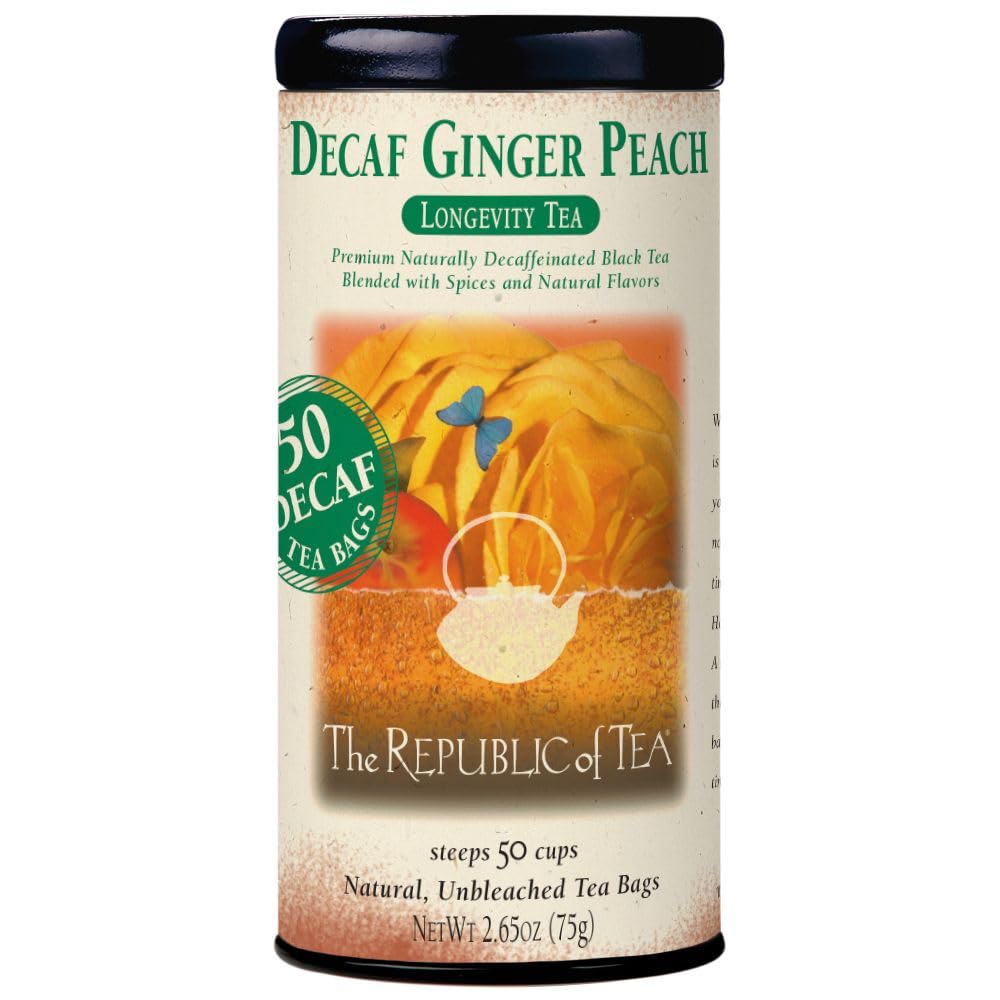
Republic of Tea Decaf Ginger Peach

95 /100
Trail Score Outstanding

Key details

Count
50 tea bags
Format
Tea bags
Caffeine
Decaf
Ingredients
Decaf black tea, natural flavors and ginger
Check Price on Amazon

Peach is what you taste first, and honestly it is what you taste most of. This is a flavored decaf black tea with ginger in the blend rather than a ginger tea with a hint of peach.

That is not a criticism if it is what you are after. After three days of herbal brews, a cup that tastes like an ordinary cup of tea is a genuine relief, and this is the only pick here that manages it — smooth, faintly fruity, with no medicinal edge at all.

Brewing is the one thing to get right: the package calls for six ounces of just-boiled water and three to five minutes, and going longer turns the black tea tannic and bitter. We keep it to four.

Buy it for the taste and the 50 bags, not as a ginger delivery system. The ginger is faint in some cups and missing in others, so if nausea is the actual problem, one of the pure ginger picks will do more for you. This is the tea that stays in the cupboard after the queasy week ends.

Pros

  • Decaf black tea for the evening
  • 50 bags per box
  • Mild and fruity, never medicinal

Cons

  • Ginger is faint; peach dominates
Our verdict

The least medicinal cup here: a smooth decaf black tea where peach leads and ginger follows, for the days when you want something normal.

Check Latest Price

How We Tested Teas for Nausea

We started with more than 40 boxes pulled from grocery shelves, tea shop bins, and the recommendations of friends who seem to catch every bug their kids bring home. To build the shortlist, we read ingredient panels and kept blends where ginger root, peppermint, or fennel appeared in the first few ingredients rather than after "natural flavors," skipped anything with caffeine, and compared cost per cup instead of cost per box. That left 14 teas, which we steeped and sipped over three months.

Each tea was brewed twice at its label's temperature and time, then a third time with the bag left in for 10 minutes, because when your stomach is turning you are not timing anything. We tasted every cup plain and again with a teaspoon of honey, noting whether the ginger hit sharp at the back of the throat or read like ginger ale candy, whether the cup felt soothing or harsh going down, and whether the long steep went bitter or merely stronger. Some blends needed two bags to register at all, and we counted that against them.

We read every label for added sugar — a few so-called nausea blends are sweetened, and one powdered mix carried more per serving than a can of soda — and noted which teas held up iced without losing their point. The real test was timing. We drank cups during a household stomach bug, before a winding car ride, after heavy dinners, and at 2 a.m., then wrote down whether the queasiness eased within half an hour and whether we reached for a second cup. The teas below are the ones we kept restocking.

How to Choose a Tea for Nausea

Ginger or Peppermint?

Ginger is the root most associated with nausea — the one people reach for on a boat, in early pregnancy, and after a stomach bug — and it does its work with a warming, spicy heat. Peppermint is the cooler option: better for a churning, gassy stomach than for outright nausea, and easier to get down when the very idea of ginger feels like too much. A blend gives you both: Yogi's lemon ginger carries peppermint leaf alongside the ginger, so one bag covers the two sensations most people alternate between.

Our advice is to keep one of each rather than agonizing over the choice. The ginger is for the days you feel properly ill; the mint is for the days you just feel off.

Bags, Sachets, and How Fast You Need a Cup

A tea bag costs less per cup and lets you control the sweetness, but it wants a kettle and five minutes of steeping. An instant sachet comes together as soon as the water runs warm and usually arrives already sweetened — that is the trade. The trap is buying an instant ginger drink for a stomach that rejects sweetness, or buying bags on a morning when standing at the counter for five minutes sounds unbearable. Households that deal with this often keep both.

Think about where you will be when it hits. Desk, car, and hotel room argue for individually wrapped bags or sachets; a kitchen with a favorite mug argues for whatever you like the taste of.

Sweetened or Plain

Honey crystals and instant powders are sweet by design: the sugar takes the edge off the burn of the ginger. That is pleasant, and it is also something you cannot take back out of the cup. If you are watching sugar, if sweetness makes you feel worse, or if you want to drink three cups a day without thinking about it, buy a plain bag and add honey by the spoonful — you will use less than a sachet carries.

How Many Bags, and How Strong

Count matters more than it looks. Sixteen to twenty bags is roughly a week at two or three cups a day, so a small box is a trial rather than a supply; a hundred-count box is for a household, a long stretch, or a cupboard you do not want to think about again this year. On strength, a second bag usually beats a longer steep: more leaf gives you more ginger, while more minutes mostly gives you bitterness.

Frequently Asked Questions

Final Verdict

If you are buying one box, make it the Prince of Peace ginger crystals: instant, properly spicy, and as good cold as it is hot. Add the Traditional Medicinals ginger bags if you would rather not have sugar in the cup, and Twinings peppermint if what you get is more a churning stomach than true nausea.

Those three cover almost every version of this you are likely to have — a fast cup for the bad mornings, a plain one for the long ones, and a mint for the evenings when ginger is too much.