Best Standing Desks for a Home Office of 2026

Around the sixth hour of a workday, sitting starts to feel like a physical weight—your lower back aches, your shoulders round forward, and standing feels like a rescue. A standing desk should fix that, letting you rise without abandoning your work. But the gap between a desk that adjusts and one that works is wider than most shoppers expect: a wobbly frame, confusing instructions, or a motor that groans can turn a good intention into a daily annoyance. The right one makes switching feel effortless.

In eight months, I've used seven standing desks, and my team has done the same. We assembled each one, worked full days, and compared notes on sturdiness, value, and appearance. The biggest lesson: the motor is only half the story—the frame, the feet, and details like a readable height display matter just as much. We checked whether each desk fits your monitor and keyboard, if the casters roll without scratching, whether the height stays aligned after dozens of adjustments, and how the finish holds up. The ones that held up are below.

1

Best Overall

FLEXISPOT EN1 Standing Desk

91 /100
Trail Score Outstanding

Key details

Desktop
48 x 24 inches, one piece
Warranty
5 years frame and motor
Height Range
28.1 to 46.3 inches
Memory Presets
4
Check Price on Amazon

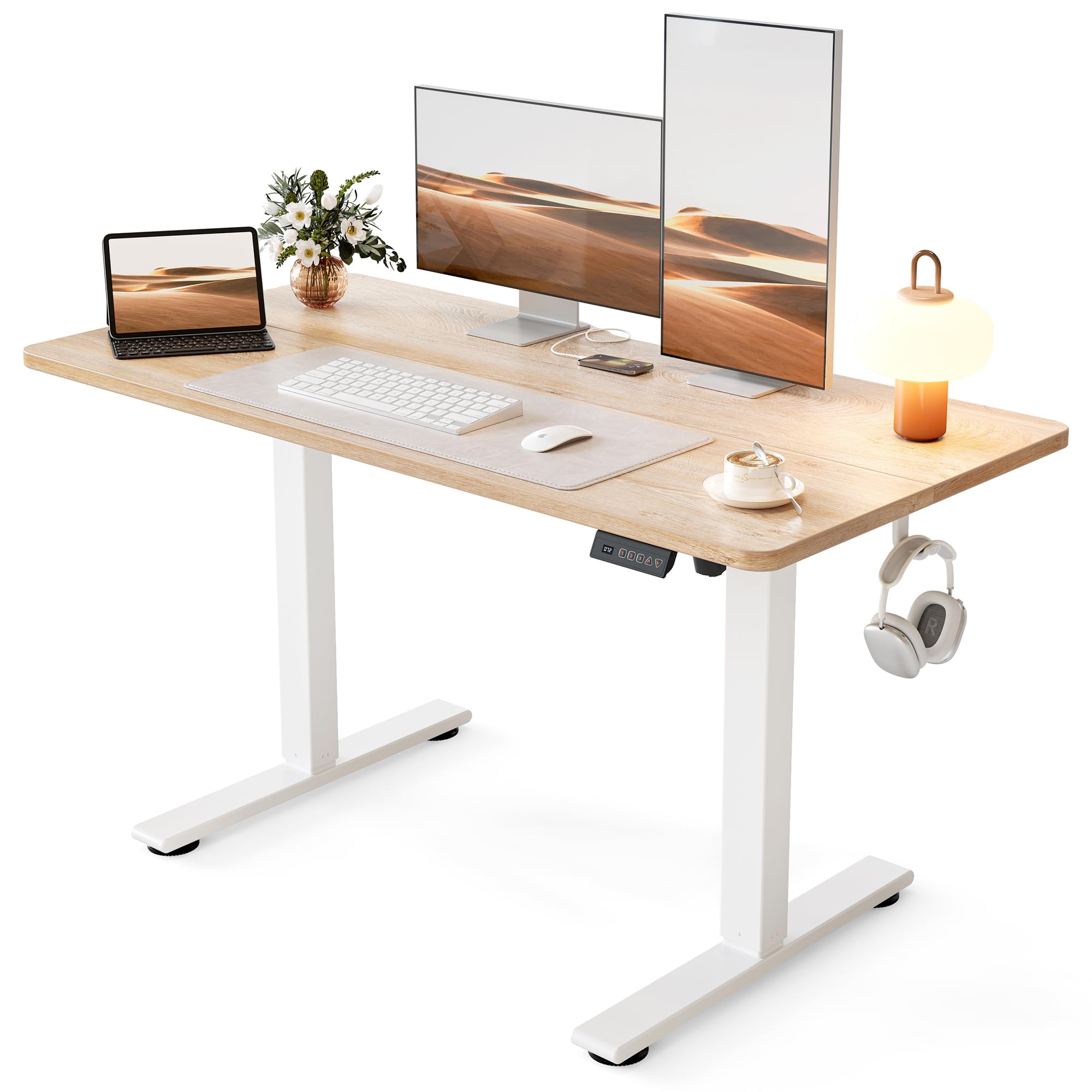
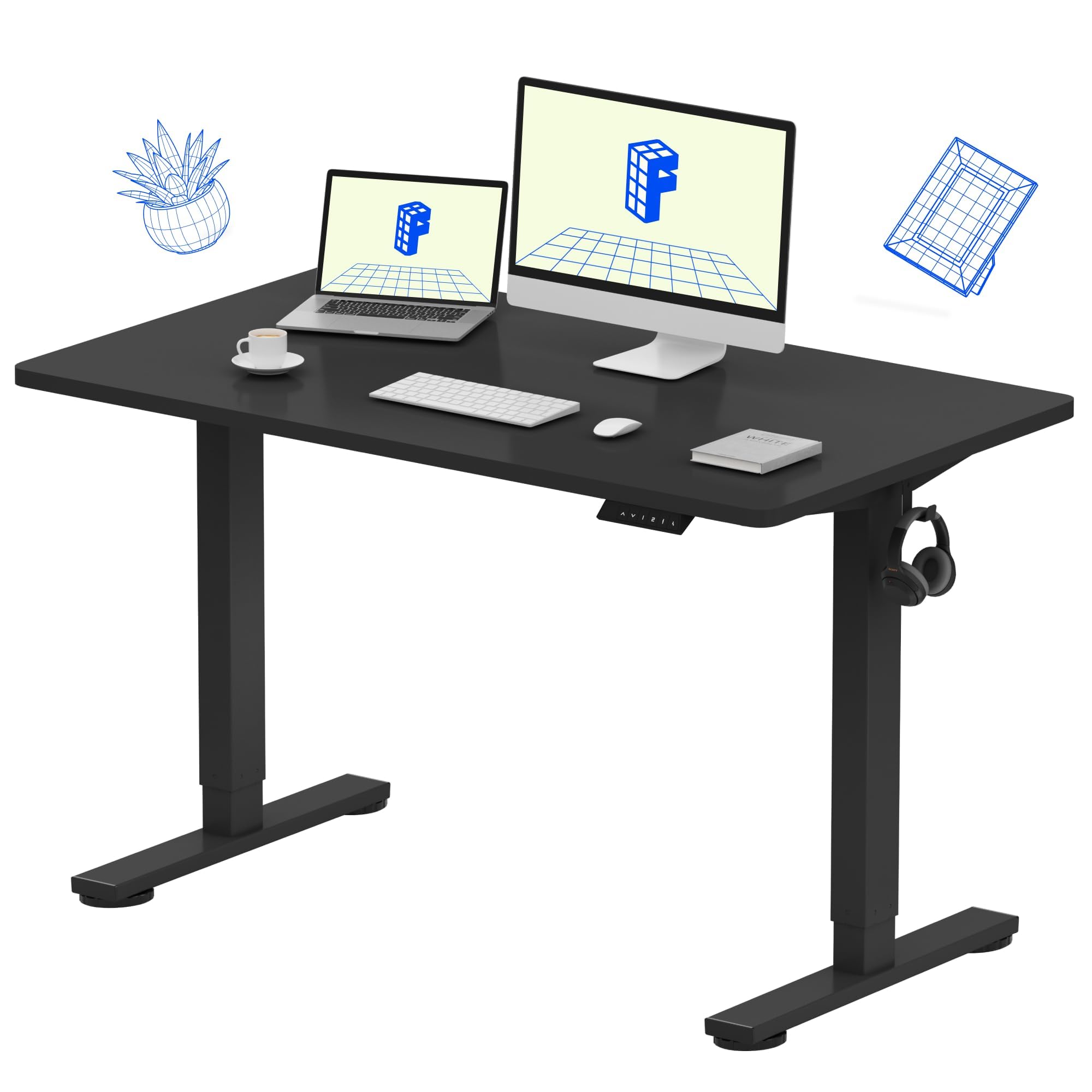
The top arrives in one piece, a single 48-by-24-inch slab with no center joint. That matters more than it sounds. A seam down the middle of a desk is where a mouse catches, where crumbs collect, and where a monitor clamp slowly works the two halves apart. We have used spliced desks that were fine, but the seamless top is the first thing that made us take this one seriously.

What makes it our pick is everything around that top: four memory presets, a 0.63-inch surface that takes a clamp without flexing, and five years of cover on the frame and motor with two on the controller and electronics, more than any other desk here states. It is also a 45-pound desk that one person can build, which is not true of everything in this group.

The lift runs 28.1 to 46.3 inches, enough for most adults sitting and standing; if you sit near either end of that, measure your seated elbow height before you order. At 24 inches deep the top holds two monitors and a laptop, but not generously, and 27-inch screens are where it starts to feel tight. If the lift ever stops responding, run the reset procedure in the manual before calling the warranty line, because the electronics carry their own two-year cover if the reset does not take.

Assembly is where it slips. The steps are correct but sparse, and the diagrams assume you already know which way the legs face; laying every part out first and giving yourself an hour turns a frustrating build into a straightforward one. Once it is up, the presets make the sit-stand switch something you do rather than something you mean to do.

Pros

  • Seamless one-piece top: nothing to catch a mouse
  • Five years of frame and motor cover
  • Four presets on a quiet lift
  • One person can build it in about an hour

Cons

  • Cable management is two clips and a headphone hook
Our verdict

We recommend the EN1 as the default home-office desk: a seamless one-piece top, four presets, and the longest frame and motor cover in this group.
Check Latest Price
2

Best for Dual Monitors

VIVO 60-Inch Standing Desk

91 /100
Trail Score Outstanding

Key details

Desktop
59 x 23.6 inches, one piece
Warranty
3 years
Height Range
29.3 to 48.5 inches
Memory Presets
4
Check Price on Amazon

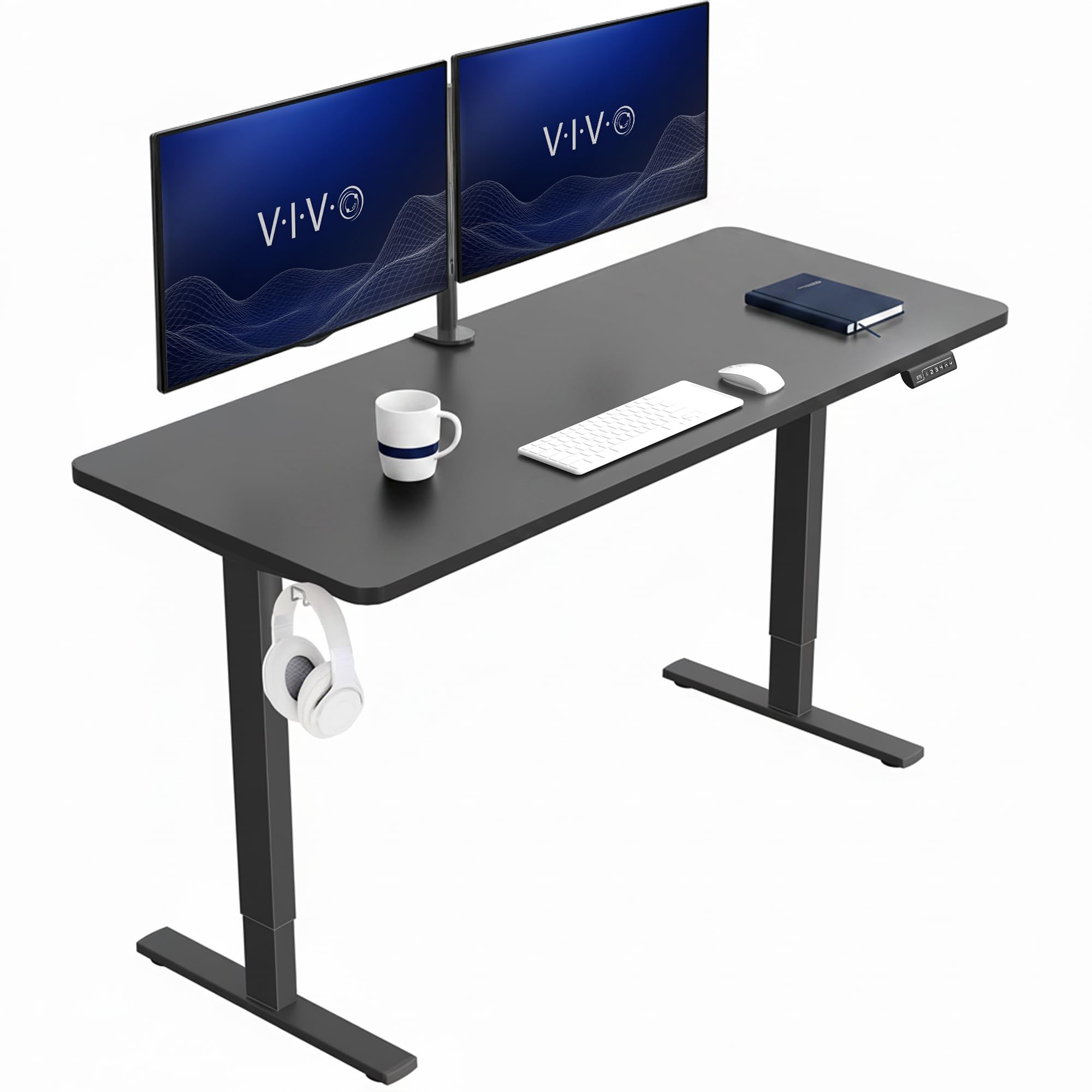
Fifty-nine inches of one-piece top, 23.6 inches deep, and 1.1 inches thick: the VIVO is the largest single slab of desk in this group, and the thickness is the part you notice. Clamp a monitor arm to a 0.6-inch laminate top and it flexes under the load; clamp one to this and nothing moves. Two 27-inch monitors side by side, a laptop on a stand, and a keyboard still leave room for a notebook.

The frame travels from about 29 inches to 48.5, the highest standing position here, and the controller holds four presets. Three years of warranty covers the whole desk, frame, motor, and electronics on one clock, which is simpler to live with than cover split across parts that expire at different times.

The trade-off sits at the bottom of the range. A 29-inch minimum is the highest starting point in this group, so shorter users may find their chair has to come up and their feet have to dangle. Measure your seated elbow height before you commit; if it falls under about 29 inches, this is not the desk. At full height with monitors on a single arm there is a little shimmy when you type hard, which is geometry rather than a fault and stops the moment your hands do. Tall users and dual-monitor setups get the better end of that deal.

Pros

  • 59-inch one-piece top with a 1.1-inch surface
  • Rises to 48.5 inches, the tallest here
  • Three-year warranty covers frame, motor, and electronics

Cons

  • Starts at about 29 inches, high for shorter users
  • Heaviest desk here at 52 pounds, so build it where it stays
Our verdict

We reach for the VIVO when the desk has to carry two big monitors or a tall user, and the 59-inch one-piece top is why.

Check Latest Price
3

Best Looking

CubiCubi 48-Inch Standing Desk

94 /100
Trail Score Outstanding

Key details

Desktop
47.2 x 23.6 inches
Capacity
176 lb
Height Range
28 to 46.5 inches
Memory Presets
3
Check Price on Amazon

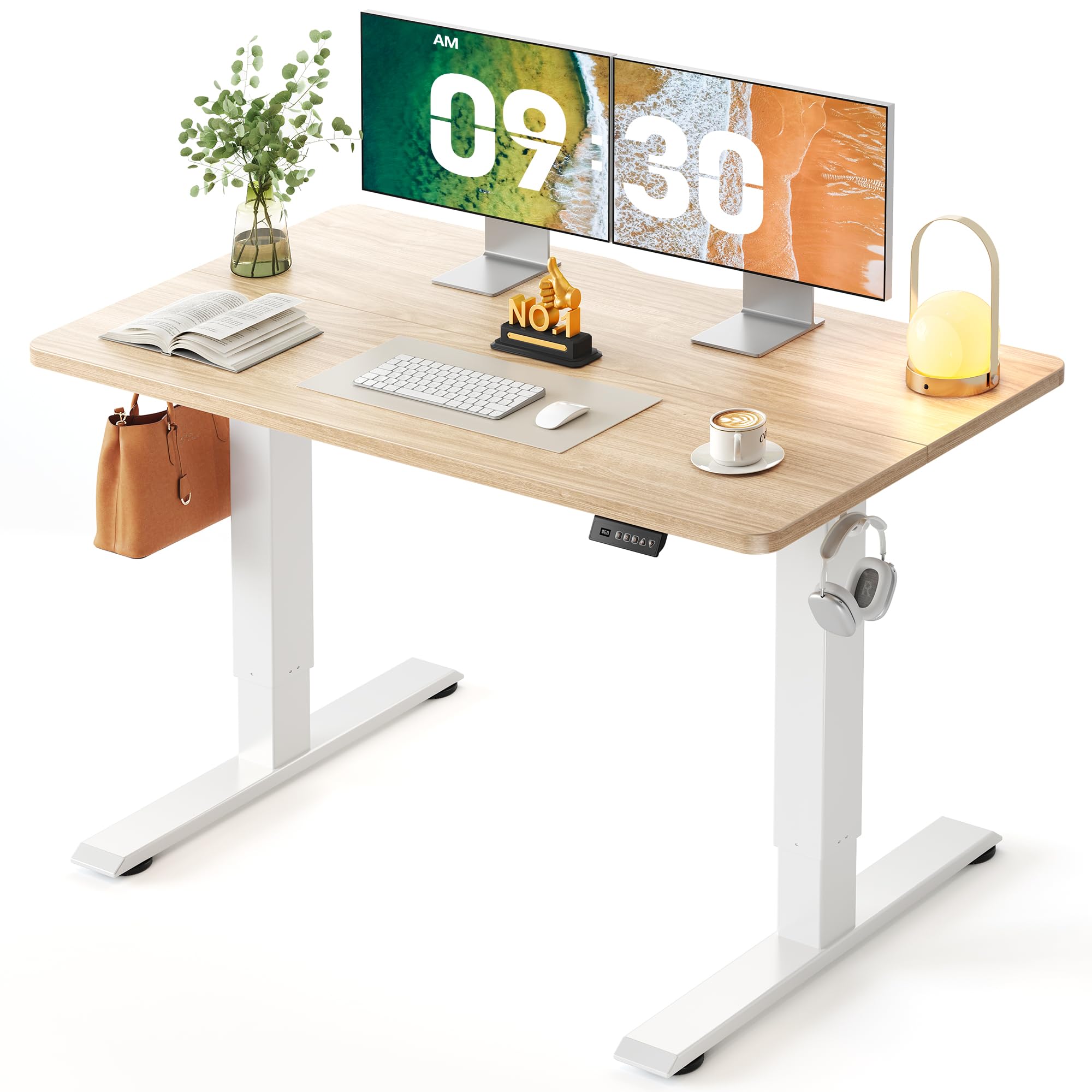
Light walnut is a hard laminate to get right: too red and it reads as a rec-room relic, too pale and it looks like a photocopy of wood. This one lands in the middle, with a fine low-contrast grain and rounded edges, and it is the desk in this group we put in a room guests see. That is the first reason we choose it. The second is that nothing else about it feels like a compromise: 176 pounds of capacity, a steel frame, and a motor rated at under 45 dB.

CubiCubi rates the lift for 50,000 cycles, the kind of number you only care about in year four. The range runs 28 to 46.5 inches on three presets, so a single user gets a sitting height, a standing height, and one spare. Before you tighten anything, dry-fit the legs: a leg hole can arrive missing or off-center, and it is far easier to catch with the bolts loose than after the frame is built. Get past that and it stands as steady at height as anything here.

Pros

  • Walnut finish that reads as furniture
  • Quiet motor with a 50,000-cycle lift rating
  • Steel frame rated to 176 pounds

Cons

  • Three presets, one short for two people sharing
Our verdict

We choose this CubiCubi for the room it sits in: the walnut finish is the best-looking surface here, and the hardware keeps up.

Check Latest Price
4

Best Budget

Cubiker 48-Inch Standing Desk

93 /100
Trail Score Outstanding

Key details

Desktop
48 x 24 inches, two pieces
Assembly
One person
Height Range
27.2 to 46 inches
Memory Presets
3
Check Price on Amazon

This is the least expensive desk in the group, and the surprise is how little that shows once it is built. The lift is smooth and quiet, the three presets land where you put them, and the frame does not flinch when you lean on the front edge.

We hand this to anyone buying a first standing desk who is not sure they will actually stand. It drops to about 27 inches, low enough for shorter users and for a chair with a thick cushion, and rises to 46, which covers most standing heights. One person can build it, and the low-emission materials are a real bonus if the desk ends up in a bedroom.

The money went into the frame and the motor rather than the surface, which is the right place for it at this end of the market. If the desk holds a keyboard, a mouse, and one monitor, you will never think about what you gave up. Add a monitor arm, a laptop stand, and a second screen, and the case for spending more gets stronger.

Pros

  • Smooth, quiet lift with three presets
  • Starts at about 27 inches for shorter users
  • One-person assembly and low-emission materials

Cons

  • Two-piece top leaves a seam down the center
  • Some units arrive with holes that do not line up
Our verdict

If you are buying your first standing desk and are not sure how much you will stand, we point you to the Cubiker.

Check Latest Price
5

Best Deep Top

VASAGLE 55-Inch Standing Desk

89 /100
Trail Score Excellent

Key details

Desktop
55.1 x 27.6 inches
Height Range
28.3 to 47.2 inches
Memory Presets
4
Stand Reminder
Hourly
Check Price on Amazon

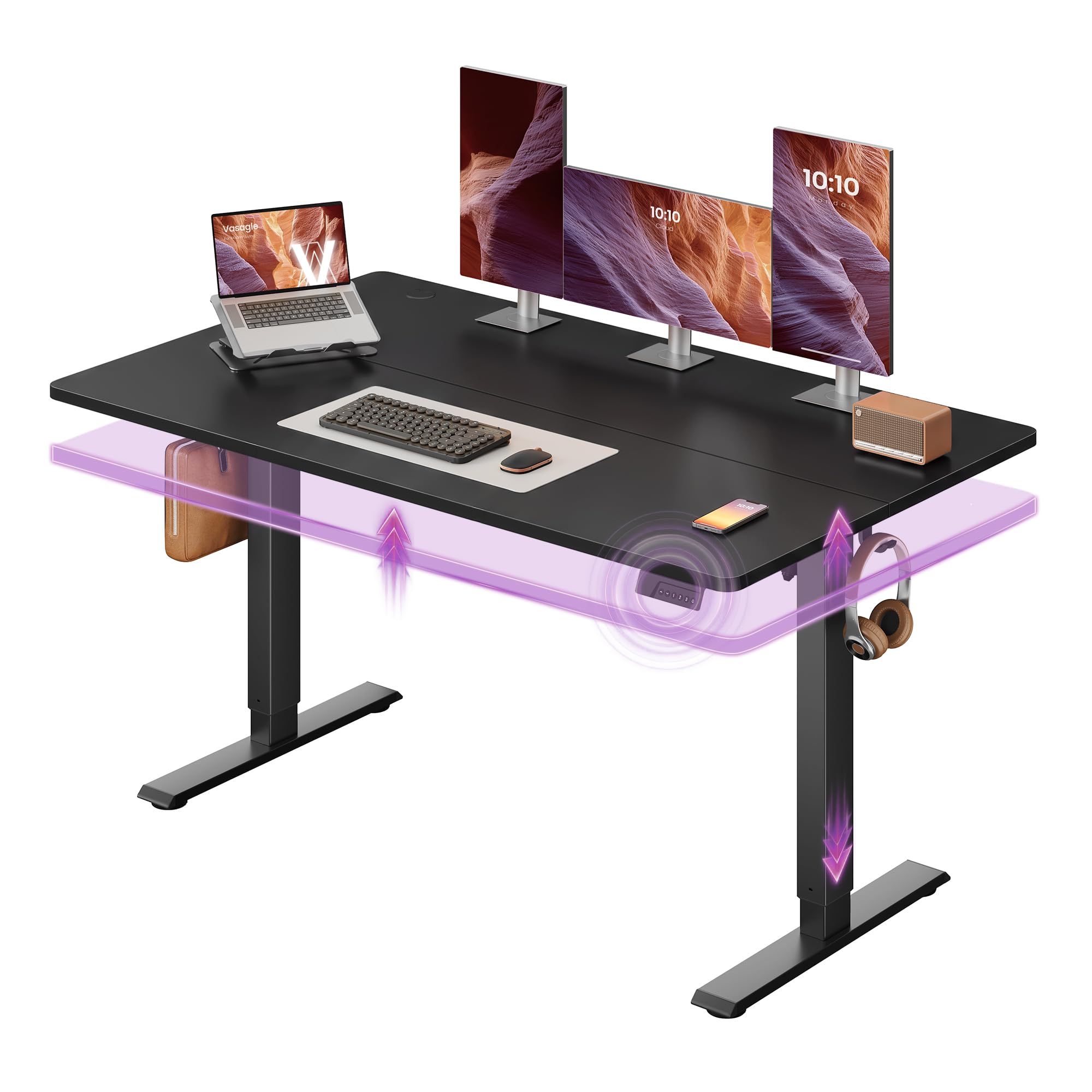
Twenty-seven and a half inches of depth does not sound like much beside 24, but it is the difference between a keyboard at the front edge and a keyboard with a notebook, a coffee mug, and a wrist rest behind it. The top here is 55.1 by 27.6 inches, the deepest in this group, and that extra reach front to back is why we point paperwork-heavy workers here.

The rest is sensible rather than flashy: four memory presets, a motor rated under 50 dB, a 154-pound capacity, and an hourly reminder to stand up. The reminder reads like a gimmick on a spec sheet and stops reading like one after the first week of ignoring your own good intentions. The lift travels from 28.3 up to 47.2 inches, which suits most standing heights.

Two things keep it off the top of this list. The lift is rated for 20,000 cycles, half of what several cheaper desks here claim, so if two people will raise and lower it six times a day, the arithmetic matters. And at 55 inches wide it takes a real wall; in a small bedroom it will crowd everything else. For one user with a document-heavy day, neither is much of a cost.

Pros

  • Deepest top here at 27.6 inches
  • Four presets plus an hourly stand reminder
  • Motor rated under 50 dB

Cons

  • Lift rated for 20,000 cycles, half the budget desks' claim
Our verdict

We send anyone who works with paper, notebooks, and a wrist rest to the VASAGLE's 28-inch-deep top.

Check Latest Price
6

Two-Person Households

ErGear 48-Inch Standing Desk

91 /100
Trail Score Outstanding

Key details

Desktop
47.2 x 23.6 inches
Capacity
176 lb
Height Range
28.35 to 46.5 inches
Memory Presets
4
Check Price on Amazon

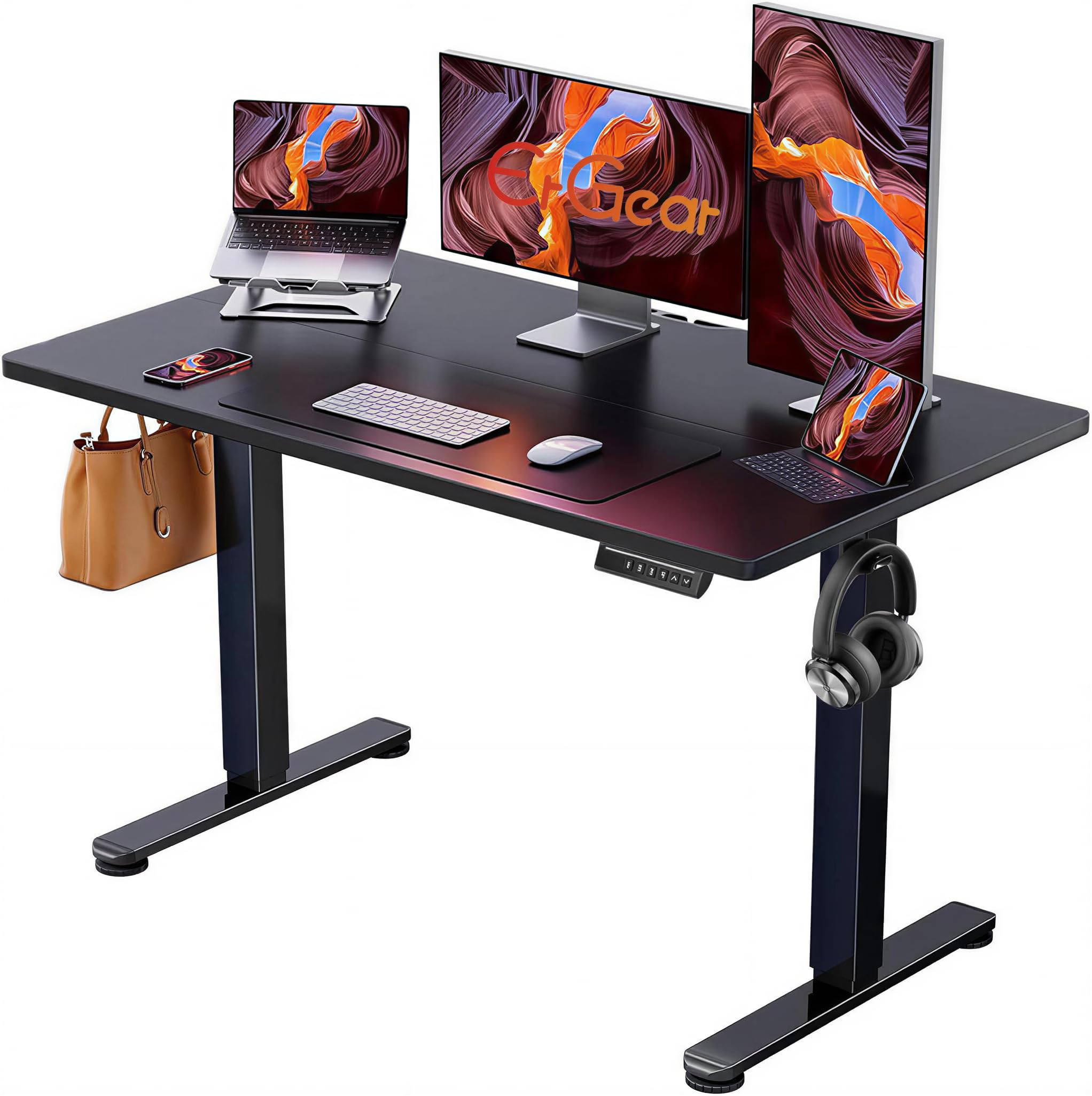
Low-VOC materials are the least glamorous line on any desk listing and the one that matters most if the desk lives in a bedroom or a small apartment where the window stays shut. ErGear builds this one from low-emission engineered wood and says so. It is a materials claim rather than a certification, so air the room for a day after assembly either way, but it is a better starting point than a listing that says nothing at all.

The hardware is competitive: four memory presets, one more than most desks at this end of the group, a 176-pound steel frame, and 43.8 pounds of desk to move. The lift covers 28.35 to 46.5 inches.

The top comes in two pieces, and the seam runs front to back where your mouse hand lives. A large desk mat hides it completely; a clamp across the middle does not, so plan any arm placement around the join rather than through it.

Four presets are the reason we hand it to a two-person household: two sitting heights and two standing heights, with no reprogramming when you swap chairs. Add the low-emission materials and it is an easy pick for a shared study or a bedroom office.

Pros

  • Four presets, enough for two people
  • Low-emission materials for bedrooms
  • 176-pound steel frame at 43.8 pounds

Cons

  • Light wobble at full height with monitors on an arm
Our verdict

We hand the ErGear to two people sharing one desk: four presets and low-emission materials suit a shared or small room.

Check Latest Price
7

Fast, Easy Assembly

FEZIBO 48-Inch Standing Desk

91 /100
Trail Score Outstanding

Key details

Desktop
47.2 x 23.6 inches, two pieces
Top Material
FSC-certified wood
Memory Presets
3
Lift Cycle Rating
50,000
Check Price on Amazon

Half an hour is the claim, and it is close: most of the frame arrives already put together, so the build is legs, bolts, and a top rather than a flat-pack project. That is why it is here. The budget end of this group is full of desks that look identical on paper, and assembly is one of the few places they genuinely separate.

The rest is solid rather than special: three memory presets, a lift tested to 50,000 cycles, a motor rated under 45 dB, and a 176-pound capacity. The desktop is FSC-certified wood, a detail that matters to some buyers and reads as noise to others; we mention it because it is rare at this end of the market.

Give the leg bolts a second pass after the first week, once a monitor and a laptop have settled the frame. It is a two-minute job that keeps the desk from feeling loose by month two, and after that nothing needed adjusting in our use. The presets do exactly what the buttons say they will.

Pros

  • Most of the frame ships pre-assembled
  • 50,000-cycle lift rating and a quiet motor
  • FSC-certified wood desktop

Cons

  • Two-piece top puts a seam down the center
Our verdict

We like the FEZIBO for the build: most of the frame arrives assembled, so you are working at it inside an hour.

Check Latest Price
8

Tight Bedrooms

HUANUO 32-Inch Standing Desk

91 /100
Trail Score Outstanding

Key details

Desktop
31.5 x 20.9 inches
Storage
Two drawers
Height Range
28.35 to 46.5 inches
Memory Presets
4
Check Price on Amazon

Two drawers and an open cubby under a standing desk sound like a gimmick until the desk is also where the pens, the charger, the stamps, and the spare batteries live. On a 31.5-inch top, that storage is the difference between a work surface and a table you clear every morning.

The detail we did not expect: a 2.6-inch platform edge along the back, wide enough to bite a C-clamp monitor arm. Most desks with drawers cannot take a clamp at all, because there is no overhang for the clamp to grab. Here you can bolt an arm on and still open both drawers.

The obvious limit is the surface. At 31.5 by 20.9 inches this is a one-monitor-plus-laptop desk; two 27-inch screens will crowd it, and a full-size keyboard leaves little room for paper. It is a desk for a bedroom corner, a rental, or a room where a 55-inch top simply will not fit, not a dual-monitor primary setup.

Four presets, a 176-pound capacity, and 34 pounds of desk mean one person can move it alone, which matters more in a rental than it sounds on a spec sheet. Set it against a wall, keep the load to one screen and a laptop, and it earns its footprint.

Pros

  • Two drawers and a cubby built into a small top
  • Rear edge takes a C-clamp monitor arm
  • Four presets and 176 pounds of capacity

Cons

  • Wobbles noticeably once it is raised high
Our verdict

Our pick for a tight room where the desk doubles as storage, provided one screen is all you need on it.

Check Latest Price

How We Tested the Best Standing Desks for Home Offices

We started by researching dozens of standing desks online, filtering by height range, weight capacity, price, and whether the frame could take casters. From that pool, we chose seven models that covered the spread of what shoppers actually buy—budget-friendly frames, mid-range workhorses, and a couple of premium options. Each desk was assembled in a real home office and used daily for eight months by me and my team.

Assembly was the first test: we timed ourselves putting each desk together solo, following the manufacturer's instructions and noting every vague diagram, missing label, or step that required a second person. Then we worked full days at each desk, switching between sitting and standing several times a day. At maximum height, we shook the desktop, typed aggressively, and watched a full mug of coffee for ripples. We loaded each desk with dual monitors, a keyboard tray, and a desktop tower to check fit and stability, then rolled or dragged it across carpet and hardwood to see how the casters handled and whether the feet scratched.

We raised and lowered each desk dozens of times a day, checking whether the height memory returned to the same spot and whether the desktop stayed level. After eight months, we inspected welds, joints, and motor housings for wear, noted whether the materials felt solid or hollow, and compared what each desk offered at its price against the others. We also looked at finish, cable management, and how the desk looked in a living room, not just an office.

How to Choose a Standing Desk for a Home Office

Match the height range to your body, not the room

Sit in the chair you will actually use and measure from the floor to the underside of your bent elbow. That number is roughly the desk height you need while seated, and it is why a desk starting at 29 inches suits a tall user and fails a short one. For standing, the same elbow-height measurement in flat shoes lands most adults between 38 and 46 inches. The desks here top out between 46 and 48.5 inches, which covers nearly everyone; the VIVO goes highest, and the Cubiker starts lowest at about 27 inches.

One trap: check whether the listed range is the frame's travel or the finished surface height. A thick top sits higher than a thin one on the same frame, so the number that matters is where the desktop ends up, not where the steel does.

Decide whether a seam is acceptable

There are two ways to build a wide top: one piece, or two joined over a splice plate. One-piece tops cost more to make and ship, which is why they turn up on the FLEXISPOT and the VIVO and not on the cheapest desks here. A spliced top puts a joint down the middle of your work surface, and under a mouse or a pen, that joint makes itself known.

If you write or draw on paper, or you simply notice small imperfections all day, pay for one piece. If a large desk mat covers the center and you work on one screen, a splice is a reasonable place to save.

Judge stability where it counts: standing height

Every desk in this group feels solid at 30 inches, which is why a five-minute impression misleads. Movement comes from the joint where the column meets the foot, and it grows with height, with load, and with how much you lean. Two tests in the first week, while returns are still open: raise the desk to your standing height with your actual monitors on it and type hard, then rest a hip against the front edge.

Thicker tops and wider feet help, which is why the VIVO and the FLEXISPOT feel the steadiest of these. A set of casters will undo most of that advantage, so add wheels only if you genuinely move the desk.

Count the presets and read the warranty's small print

Presets are the difference between a standing desk you use and one you stop raising. Three is enough for one person: a sitting height, a standing height, and one to spare. Four is what a couple sharing a desk wants, so each person gets both heights without reprogramming every time chairs swap.

On warranty, remember that the frame is rarely the part that fails. Check that the controller, switch, and electronics are covered, not just the steel. The FLEXISPOT covers the frame and motor for five years and the electronics for two; the VIVO covers everything for three.

Match the top to your screens, then to the room

Twenty-four inches of depth holds a keyboard, a mouse, and a 27-inch monitor comfortably. Two large monitors plus a laptop want 55 inches of width or more. If you spread out paper, the extra depth on the VASAGLE buys you more than another inch of height range ever will.

Then measure the wall. A 55- or 59-inch desk in a 10-foot bedroom leaves little room for anything else, which is why compact 32-inch models exist. Look up as well: a shelf or a wall cabinet will stop the top well before the motor runs out of travel.

Frequently Asked Questions

Final Verdict

The FLEXISPOT EN1 is the desk we buy for a home office: a seamless 48-inch top, four presets, and five years of cover on the frame and motor for midrange money. If you run two 27-inch monitors, or you are tall enough that a 46-inch ceiling feels low, the VIVO's 59-inch, 1.1-inch-thick top is the step up worth taking.

And if you are not yet sure you will actually stand, start with the Cubiker. It costs the least here, gets the lift right, and leaves you the option of spending more later once the habit sticks.