Best Running Shoes for Overpronation of 2026

Overpronation can turn a simple shoe search into a nagging worry: will this pair keep my stride steady, or will it roll inward and leave my knees aching by mile three? The right shoe doesn’t fix your gait so much as keep it from unraveling. It should support your arch without digging into it, cushion each landing without turning mushy, and hold your heel snug without pinching your toes. I’ve bought pairs that felt fine in the store and turned stiff by week three, so I’ve learned to distrust first impressions.

Over the past six months, my team and I logged real miles in 12 pairs: easy sidewalk loops, long weekend runs, treadmill intervals when the weather turned. We noted how each size ran, whether the arch hit in the right spot, and how cushioning held up after an hour—not just the first ten minutes. A few looked sharp enough for coffee afterward; others looked strictly functional. The standouts earned their place with consistent fit, durable outsoles, and a price that felt fair for the miles.

1

Best Overall

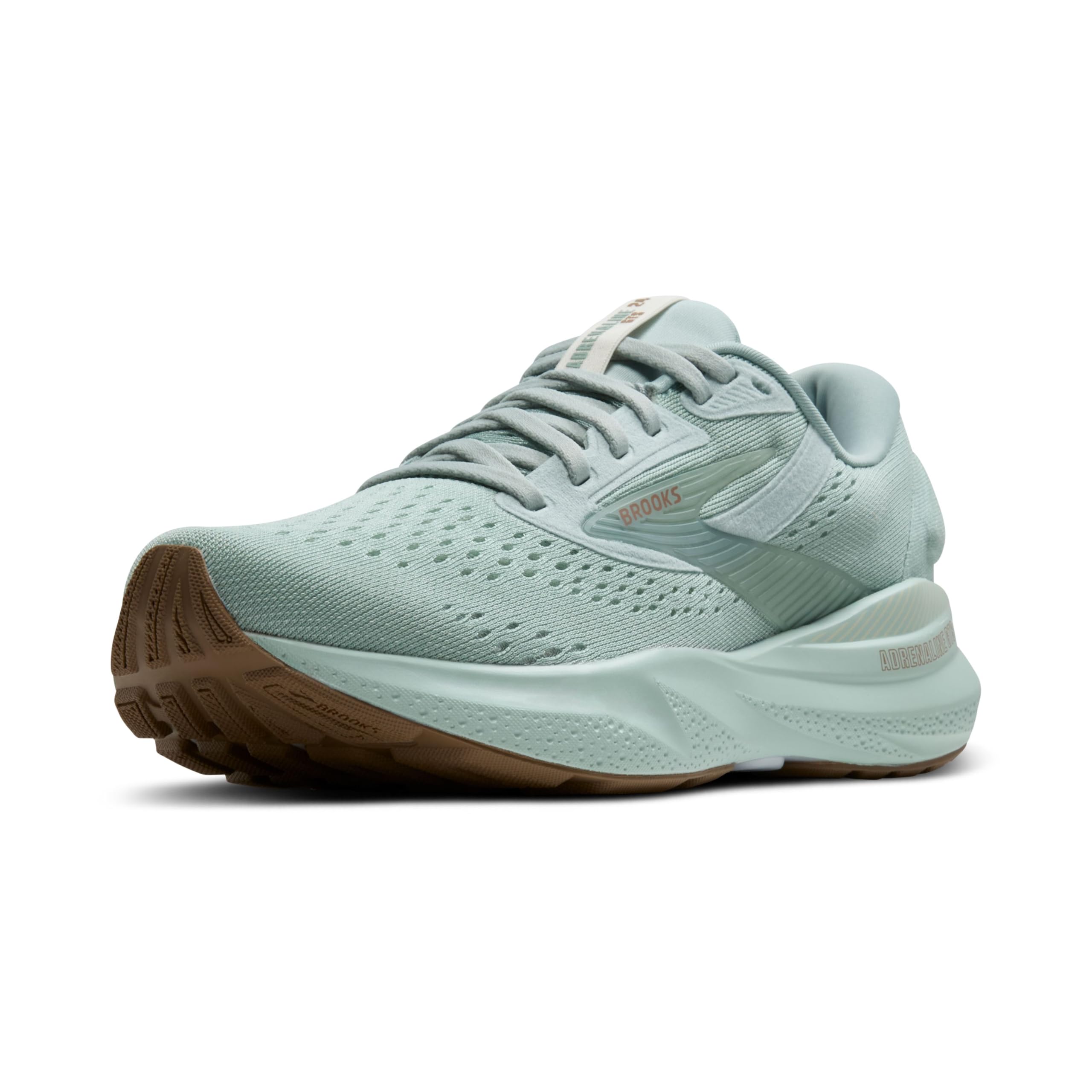
Brooks Adrenaline GTS 24

89 /100
Trail Score Excellent

Key details

Sizing
Women's
Model Number
120427-044
Listed Weight
1.5 lb
Check Price on Amazon

If you overpronate and want one pair to cover most of your running, start here. The Adrenaline GTS 24 is the steadiest shoe in this guide: the heel sits deep in a firm cradle, the midfoot holds without pressing up into the arch, and the platform stays planted when you turn over quickly. We kept reaching for it on ordinary training days, which is the test a daily stability trainer has to pass.

Brooks kept the cushioning on the firm side, and that's exactly why it feels secure. A tall, soft midsole under a support shoe can leave you feeling like the shoe is arguing with your foot; this one stays flat and predictable, so you feel the road rather than sinking into it. The same firmness makes it a work shoe as much as a running shoe — the quality that keeps a stride stable is also what makes a long standing shift tolerable.

Sizing is the one thing to sort before you commit. The Adrenaline runs short for many feet, and the fit issues center on length rather than width, so if you're between sizes, order up a half. Ordering both and returning one is worth the trouble, because once the length is right the toe box is genuinely roomy — more so than on the ASICS GT-2000 13 below.

Treat it as the workhorse of a two-pair rotation rather than the only shoe in a heavy mileage week, and it's the pair here we hand to anyone buying stability shoes for the first time.

Pros

  • Steadies the heel and midfoot through the stride
  • Firm cushioning keeps the platform predictable
  • Works as a standing shoe, not just a trainer
  • Roomy toe box once the length is right

Cons

  • Outsole wears thin for high-mileage runners
Our verdict

For most overpronators we recommend the Adrenaline GTS 24: the steadiest heel and midfoot support here, in a firm daily trainer that doubles as an all-day work shoe.

Check Latest Price
2

Best Cushioning

Brooks Glycerin GTS 22

90 /100
Trail Score Outstanding

Key details

Sizing
Women's
Model Number
120435 1B 090
Listed Weight
1.5 lb
Check Price on Amazon

Cushioning and stability usually pull in opposite directions, and the Glycerin GTS 22 is the most interesting attempt to settle that argument in this group. There's a lot of soft foam underfoot, yet the shoe doesn't feel vague or tippy the way a tall neutral shoe can. The collar is padded high around the Achilles, which you notice in the first mile and appreciate in the tenth.

We think it's the right buy for a specific runner: someone whose knees or hips complain on pavement, or whose day involves as much standing as running. On long, slow miles the extra foam is kind, and the support still holds the arch steady underneath it. What it isn't is a fast shoe — the softness that makes an easy hour pleasant also mutes the ground feel you want when you push the pace.

Sizing needs attention. It runs small, more so than the Adrenaline, so a half size up is the safer order if you're between sizes or have a wide forefoot. It costs the same as the Adrenaline, so the choice between the two comes down to ride rather than budget.

What surprised us is how far the styling carries it. The colorways read as ordinary sneakers rather than orthopedically correct footwear, and in a shoe you'll wear to the store after a run, that counts.

Pros

  • Cushioned enough for long pavement miles
  • Support holds the arch without feeling rigid
  • Padded collar is gentle on the Achilles

Cons

  • Stiff upper needs a break-in period
Our verdict

We think the Glycerin GTS 22 is the pick for runners whose joints want more softness than a standard stability trainer gives, as long as they'll break in a stiff upper first.

Check Latest Price
3

Best Value

ASICS GT-2000 13

89 /100
Trail Score Excellent

Key details

Sizing
Women's
Model Number
1012B666-001
Listed Weight
1.44 lb
Check Price on Amazon

The GT-2000 13 is the least expensive shoe here, and it's also the most old-school: firm through the midfoot, close to the ground, and much less padded around the ankle than either Brooks. If you've run in stability shoes for years and like knowing where the road is, that's a feature rather than a corner cut.

Support is why it earns a place. The heel is structured and deep, the arch is held rather than propped, and the steadiness shows up most when you're tired and your form starts to drift late in a run. It's also the narrowest of the three — narrow feet and narrow heels get along with it famously, and a wide forefoot should look at the Brooks pair instead.

We rank it as the value pick rather than the default, and the reason is the ride: low, firm and direct. That character suits shorter distances, treadmill sessions and a second pair in rotation, and it's the shoe we reach for when we want to feel the ground under us. At 1.44 pounds listed it's technically the lightest of the three, though the gap to the Brooks shoes is small enough that you won't notice it on your foot.

The quiet win is build quality. The upper holds its shape, the overlays are cleanly finished, and it looks and feels like more shoe than the price suggests.

Pros

  • Firm, planted ride with real road feel
  • Structured heel holds a drifting stride
  • Least expensive of the three picks

Cons

  • Thin tongue padding under the laces
  • Less cushioning for long pavement runs
Our verdict

We rate the GT-2000 13 the value pick: a firm, planted stability shoe for narrow-footed runners who want road feel and don't need plush foam under them.

Check Latest Price

How We Tested the Best Running Shoes for Overpronation

We began by building a shortlist of stability shoes and guidance-focused neutral shoes, filtering by arch support, available widths, price, and whether the midsole was designed to resist collapsing inward. From that pool, we brought in 12 pairs and wore them for six months—not just around the block, but through the runs where overpronation shows itself. Each pair went on easy sidewalk loops, longer weekend efforts, treadmill intervals, and a wet-brick stretch that exposed traction and upper quality fast.

Before the first run, I checked where the arch support landed under my foot and whether it felt supportive or intrusive, then adjusted the laces and walked around to note heel slip and toe box room. During runs, we paid attention to whether the shoe let the foot roll inward unchecked on tired legs, and whether the cushioning stayed springy through the final mile. After each run, we squeezed the midsoles and pressed a thumb into the forefoot to feel for compression, then checked the upper for hot spots and seams that rubbed.

At the end of testing, we flipped every pair over to inspect wear at the heel and inner forefoot—the spots overpronators tend to chew through first—and compared how the sizing ran against what we normally wear. We also looked at each shoe on the shelf and after a muddy run, because appearance and build quality matter if you’re spending real money. Finally, we weighed what each pair delivered against its price, which is where some otherwise comfortable shoes fell short.

How to Choose Running Shoes for Overpronation

What Stability Support Actually Does

A support shoe doesn't stop your foot from moving. It limits how far the ankle rolls inward before push-off, using a wider, firmer base and a heel that cradles the foot instead of a wedge jammed under the arch. That distinction matters if you tried an old-style motion-control shoe and hated the lump under your midfoot; current designs are more likely to guide than prop.

Judge a support shoe by how it feels at the end of a run, not in the first ten steps. If your arch aches or your ankle feels pushed outward, the support is fighting your stride and a different model is the answer.

How Much Cushioning You Want Under It

Cushioning and support aren't opposites, but they do compete. Foam soft enough to feel plush can make a stable platform feel vague; foam firm enough to feel planted can be punishing on concrete. Where you run decides as much as how far: pavement and long easy miles reward the softer shoe, while treadmill sessions and shorter, quicker runs suit a firmer one.

That's the real spread among our picks, from plush at one end to firm at the other with the Adrenaline in the middle. If aching joints are why you're shopping, go soft. If you want one pair for everything, stay in the middle.

Getting the Size Right the First Time

Two of the three shoes here run small and the third runs narrow, so ordering your usual size and hoping is how a good shoe turns into a return. Length is the usual problem rather than width, and a shoe that feels merely snug at the arch in the store feels tight at mile five, when your foot spreads and your heel slides back.

Measure your feet late in the day, order a half size up if you're between sizes, and check whether the model comes in wide before settling for a length that's only just long enough. Keep the box until you've run in them.

When to Replace Them

Stability shoes wear out from the inside. The foam under the arch compresses long before the upper looks tired, and the first sign is usually a run that feels flat or a knee that complains on routes that used to be fine. Wear at the forefoot outsole is the visible cue, and a chewed inner edge tells you the platform is going.

Most runners get somewhere between 300 and 500 miles from a pair. Track it, and rotate two pairs if you run often — foam recovers between outings, and a rotation stretches both.

Frequently Asked Questions

Final Verdict

We recommend the Brooks Adrenaline GTS 24 for most overpronators. It has the steadiest support of the three and the most forgiving fit once you get the length right, and it's firm enough to work as a standing shoe as well as a trainer — the one most people should buy first.

If your joints want more softness underfoot, the Glycerin GTS 22 delivers it without giving up stability. And if you want a firm, road-feel shoe and don't mind a narrow fit, the GT-2000 13 does the same support job for less money.