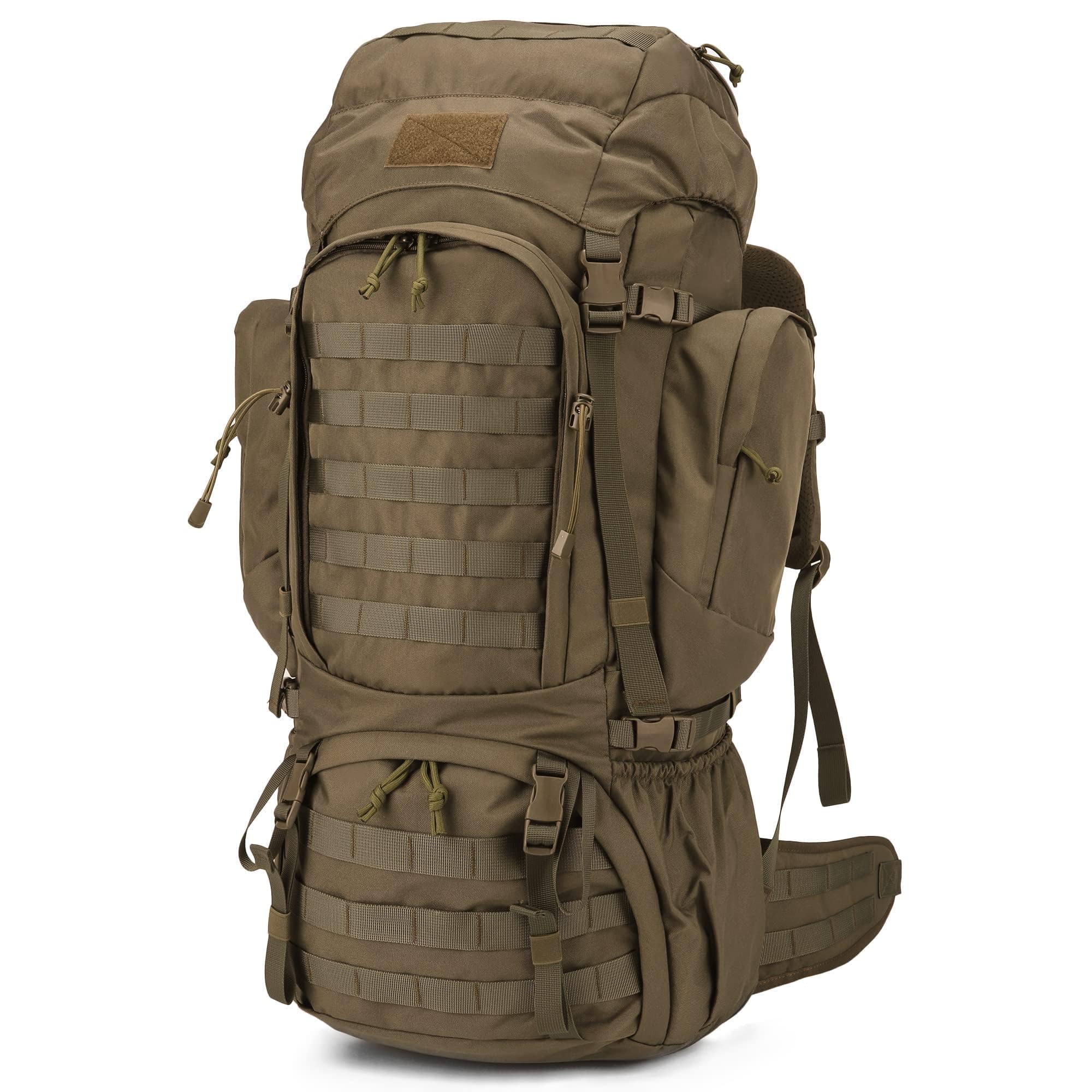
Best Rucking Backpacks of 2026

The first time I dropped a 30-pound plate into an ordinary daypack and walked three miles, the bag told me by mile two: straps creeping loose, a bottom seam starting to pull. Rucking is a simple idea — load up and walk — but gear that wasn't built for it makes you feel every pound. A proper rucking backpack fixes the carry itself: a hip belt that takes the weight off your shoulders, a sleeve that holds the plate flat against your back, and zippers that don't split when you stuff the bag past full.

My team and I have spent the past six months rucking with 12 backpacks — after-work loops, hill repeats, a few long trail days. Capacity turned out to be the most oversold spec of the bunch: a pack can claim 25 liters and still barely swallow a plate, a layer, and a bladder once the plate sleeve eats the main compartment. The ones worth the money shared three things — zippers that held under a full load, straps that stayed exactly where we set them, and shells that shrugged off scraped fences and wet pavement. They're the ones below.

1

Best Overall

QT&QY 45L Tactical Backpack

95 /100
Trail Score Outstanding

Key details

Weight
3 lb
Capacity
45 liters
Material
900D polyester
Waist Belt
Adjustable
Check Price on Amazon

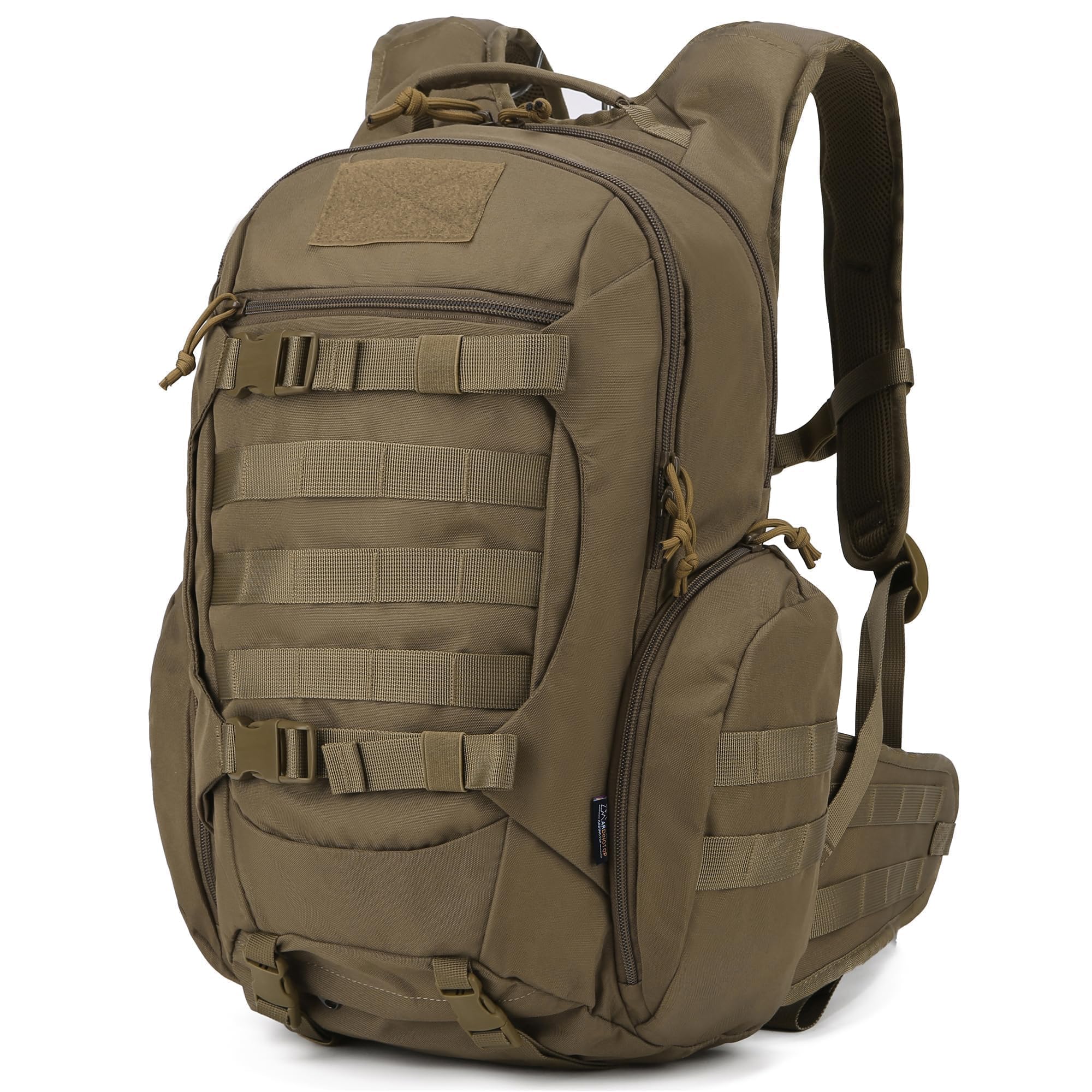
The waist strap is the detail that makes the QT&QY our default rucking pack. With 45 liters of space, a 900D polyester shell, and a harness that includes an adjustable waist belt, it gives a weighted walk the two things that matter most: enough room for a plate, water, and a layer, and a way to pull the load in close. It is not the most refined pack here, but it is the most sensible starting point for most people.

We also appreciate the five compartments and the padded mesh back panel. The separate pockets make it easy to keep a wrapped plate away from keys, a phone, or a rain shell, and the MOLLE webbing lets you add a pouch without digging into the main bag. At 3 pounds empty, it is light enough to carry without feeling flimsy.

The QT&QY is the pack we reach for when the plan is a straightforward ruck, not a gear-heavy expedition. It has the volume and support for a plate and a daily kit, and the price leaves room for a decent weight source. If you need a frame or a more refined harness, the Mardingtop 60L is the step up.

Pros

  • Adjustable waist strap steadies the load
  • 900D polyester shell with double stitching
  • Five compartments keep gear organized
  • Padded mesh back and shoulder straps

Cons

  • Zipper durability is the weak point
Our verdict

For most ruckers, this is the best default: a supportive 45L pack with a waist strap, tough shell, and enough room for a plate and a day's gear.

Check Latest Price
2

Best Value 45L

LHI 45L Tactical Backpack

93 /100
Trail Score Outstanding

Key details

Weight
2.87 lb
Capacity
45 liters
Material
900D Oxford nylon
Hydration
Compatible
Check Price on Amazon

The LHI is the value pick if you want a full 45-liter ruck without paying for a load-bearing frame you do not need. The 900D Oxford shell and double-stitched stress points give it a sturdier feel than its light 1.3-kilogram empty weight suggests, and the seven pockets make short work of organizing a day's gear. We like it best for moderate loads and everyday carry, where its padded shoulder straps are enough.

The hydration sleeve and side bottle holders are the practical touches we kept using. A 45L body also means you can carry a jacket, lunch, and a change of clothes without compressing the life out of everything. The pack stays light and roomy rather than overbuilt.

That makes the LHI a good match for a light ruck or a commuter that occasionally carries weight, not the pack we choose for a long, heavy march. If you want a more complete rucking harness, the QT&QY is the better choice.

Pros

  • Light 1.3 kg empty weight
  • 900D Oxford nylon shell
  • Seven pockets plus bottle holders
  • Hydration-compatible sleeve

Cons

  • Shoulder-only harness limits heavy loads
Our verdict

Buy this if you want a roomy, light 45L pack for moderate loads and everyday carry, and you do not need a hip belt for a heavy plate.

Check Latest Price
3

Best Small Ruck

Mardingtop 28L Tactical Backpack

92 /100
Trail Score Outstanding

Key details

Capacity
28 liters
Material
600D polyester
Hydration
Fits 2-liter bladder
Waist Belt
Stitched-in
Check Price on Amazon

A 28-liter pack with a real waist belt is a useful thing. The Mardingtop has a stitched-in waist belt that can slide behind the back padding when you do not want it, plus a 2-liter hydration sleeve and a 600D polyester shell. We like it for a short, weight-focused ruck because the pack sits close and does not give a modest load much room to swing.

The YKK buckles and zippers are a genuine plus at this size, and the MOLLE webbing gives you a place to attach a small pouch without turning the pack into a Christmas tree. The 2.1-pound empty weight also means you are not adding much of a penalty before the weight goes in. It is a compact hauler, not a weekender.

The 28-liter body is best for a plate, water, and a layer; it fills quickly if you start adding bulk. For a short ruck, though, the waist belt and close fit are worth more than extra volume, and the hydration sleeve means you can leave the bottle behind.

Pros

  • Stitched-in waist belt supports moderate loads
  • YKK zippers and buckles
  • Fits a 2-liter hydration bladder
  • Compact 2.1-pound body

Cons

  • Not water resistant
Our verdict

This is the small-ruck pick when you want a real waist belt, YKK hardware, and hydration support without carrying a big pack.

Check Latest Price
4

Best Premium Compact

5.11 Rush 12 2.0

93 /100
Trail Score Outstanding

Key details

Weight
3 lb
Capacity
24 liters
Material
1050D nylon
Laptop Fit
15 inches
Check Price on Amazon

The 5.11 Rush 12 2.0 is the pack we pick when durability matters more than volume. Its 1050D nylon shell, reinforced shoulder straps, and clean stitching make it feel like it will outlast the trip, and the 24-liter body is sized for a laptop, a light layer, and a modest weight. It is the premium compact option here, not a heavy-load hauler.

We appreciate the organization: a 15-inch laptop sleeve, a fleece-lined pocket for glasses or a phone, and MOLLE webbing that takes 5.11's Tier System pouches. The contoured yoke harness is comfortable for daily carry, and the pack stays close when you are walking rather than sliding around. For a light ruck or a workday that ends with a weighted walk, that compactness is the appeal.

The catch is load transfer. There is no waist belt here, so a heavier plate sits on your shoulders; the Rush 12 is at its best when the weight stays moderate. If your ruck is mostly a plate and a water bottle, the small size is a virtue. If you are loading up for a long march, choose one of the packs with a hip belt.

Pros

  • 1050D nylon shell
  • Reinforced shoulder straps and stitching
  • Fits a 15-inch laptop
  • Tier-compatible MOLLE organization

Cons

  • 24L capacity limits bulky layers
Our verdict

Choose this premium compact pack if your ruck is light and daily carry matters as much as load support; its 1050D build is the draw.

Check Latest Price
5

Best for Heavy Loads

Mardingtop 60L Internal Frame

91 /100
Trail Score Outstanding

Key details

Frame
Internal frame
Weight
4.49 lb
Capacity
60 liters
Rain Cover
Included
Check Price on Amazon

The Mardingtop 60L is the pack we choose when the load gets genuinely heavy and the walk gets long. The internal frame is the reason: it gives the bag a structure that a flat tactical sack cannot match, so a plate and a full day's gear do not collapse into a shapeless lump on your back. At 60 liters, it is also the biggest pack here.

We like the rain cover and the sturdy seams, and the main compartment has enough room for a bulky load without a fight. The straps and seams feel like they are built for a full pack, and the frame keeps the bag from curling around your spine when you tighten the harness. This is a pack for long days, not a quick trip to the store.

The trade-offs are real: the 60-liter body invites overpacking, and this is a specialist for heavier, longer rucks rather than a daily 45-liter bag. We see it as the heavy-load alternative to the QT&QY, not a replacement for it. If your walk is short and your load is a single plate, the smaller pack is easier to live with.

Pros

  • Internal frame carries heavier loads
  • 60L main compartment
  • Rain cover included

Cons

  • 4.49 pounds empty
  • Zippers are a weak point
Our verdict

This is the heavy-load alternative: an internal-frame 60L pack that carries a full kit with structure, at the cost of extra bulk and weight.

Check Latest Price
6

Best for Maximum Capacity

CVLIFE 60L Tactical Backpack

92 /100
Trail Score Outstanding

Key details

Weight
3.9 lb
Capacity
50–60 liters
Waist Belt
Cinching waist strap
Detachable Pouches
Front pack and two side packs
Check Price on Amazon

The CVLIFE's party trick is the detachable front fanny pack and two side pouches. That modularity is more useful than it sounds: you can strip the pack down for a tighter ruck, then add the pockets back when you need to carry more. The 50-60L main body, seven zippered compartments, and cinching waist strap make it the maximum-capacity option here.

We like the waist strap for pulling a loaded pack in, and the rain-diverting flaps are a sensible touch for wet weather. The main compartment is genuinely roomy, and the separate pockets keep a plate, tools, and a layer from turning into one big pile. It is a travel-and-gear pack that can ruck, rather than a stripped-down rucking pack.

The main zipper can pull apart under a full load, so this is a pack to check and adjust rather than load and forget. If you need maximum volume and like the detachable pouches, it earns its place; if you want a simpler, more solid 45L, the QT&QY is the safer default.

Pros

  • Detachable front and side pouches
  • 50-60L capacity adapts to trips
  • Cinching waist strap
  • Seven zippered compartments

Cons

  • Strap tension can loosen under load
Our verdict

Buy this when maximum capacity and detachable pouches matter more than a simple, solid harness; it is a modular gear hauler that can ruck.

Check Latest Price
7

Large Mixed Use

Falko 50L Tactical Backpack

94 /100
Trail Score Outstanding

Key details

Weight
3.7 lb
Capacity
50 liters
Dimensions
11 x 14 x 21 inches
Check Price on Amazon

The Falko 50L is a big, deep gear hauler. The main compartment swallows a jacket, tools, and a day's food without a fight, and the pocket layout keeps smaller items from disappearing. We like it for travel and gear-heavy days, where its 50-liter capacity and 3.7-pound empty weight make more sense than they do on a strict weighted walk.

The depth is the detail that changes the rucking equation. A plate sits farther from your back in this pack than in a slimmer 45L, so the load can feel like it is pulling you backward rather than settling into your stride. That is not a dealbreaker for a light plate or a mixed load, but it is the reason we do not rank it as the first choice for plate-focused rucking.

Build quality is the stronger part of the story: the pack handles tight packing and feels sturdy for the size. The pocket layout is generous enough for a weekend's gear, and the pack does not feel like it is straining when you close a full main compartment.

We rank the Falko as a gear-first pack that can carry a light ruck, not as the purest weighted-walk choice. If your ruck is really a hike with a load, it works; if the weight is the point, choose a shallower pack.

Pros

  • 50L capacity swallows gear
  • Pocket layout keeps gear organized
  • Sturdy under tight packing

Cons

  • Zippers are a weak point
Our verdict

This is a gear-first 50L pack for travel and mixed loads; its deep body makes it a less natural choice for plate-focused rucking.

Check Latest Price
8

Expandable Travel

Miramrax Expandable Tactical Backpack

91 /100
Trail Score Outstanding

Key details

Weight
16 oz
Capacity
39–64 liters
Material
600D nylon
Hydration
Compatible
Check Price on Amazon

The Miramrax is the expandable option: 39 liters for a light day, up to 64 liters when you need to carry more. We like that flexibility for travel and mixed loads, and the 600D nylon shell and 16-ounce empty weight make it easy to pack. It is a clever bag, but the expansion is more about cargo than about carrying a heavy plate well.

The hydration compatibility and multiple compartments are useful, and the pack carries a weekend's clothes without feeling like a duffel. The 16-ounce weight is impressive for the volume, though it also tells you this is not a heavily structured load carrier. For a light ruck or a carry-on that turns into a daypack, that is a fair trade.

The zippers can stick when the bag is packed full, so load it deliberately and keep the expansion from becoming an excuse to overstuff. A pack that changes size this much also needs a little more attention to how the load is centered; keep the weight against the back panel rather than at the far end of the expansion.

We treat the Miramrax as a flexible travel pack that can handle a light ruck, not as the pack we trust with a heavy plate every week. If you want expandable capacity and low weight, it makes sense; if you want one pack for serious rucking, choose a fixed-volume pack.

Pros

  • Expands from 39L to 64L
  • 600D nylon shell
  • Light 16-ounce empty weight
  • Hydration-compatible

Cons

  • Durability is inconsistent
Our verdict

This expandable pack is a smart travel and light-ruck choice, but it is not the one to trust with a heavy plate every week.

Check Latest Price

How We Tested the Best Rucking Backpacks

We started by gathering every pack actually designed to carry weight — no repurposed hiking daypacks without a load-bearing hip belt — then filtered by plate compatibility, claimed capacity, and what came standard versus what you have to buy separately. Anything under 20 liters or missing a genuine hip belt got cut. That left 12 packs, which we bought ourselves and used for six months.

Each one was loaded with a 20- or 30-pound plate plus an identical kit: a laptop, a 2-liter bladder, a pair of shoes, and a rain shell. We walked a three-mile neighborhood loop every week, ran hill repeats until the harness had something to complain about, took them out on a wet trail day, and commuted with them on the train. After every session we emptied them, ran a hand along the seams and bartacks, and noted where fabric had scuffed or padding had flattened.

Zippers got the closest look. We opened and closed the main compartment dozens of times a week, overstuffed each bag past its claimed capacity to see whether the zipper split or the slider skipped a tooth, and tugged at the corners while the pack was fully loaded. For strap stability, we taped a mark on the webbing on day one and counted how often we had to re-tighten mid-walk. Capacity was measured by packing the same kit and seeing what was left over, and value came down to how much of the carry system was included out of the box. The packs below are the ones that kept their shape — and their hardware.

How to Choose a Rucking Backpack

Match Capacity to the Load, Not the Trip

Capacity tells you how much bulk a pack can swallow, not how much weight it can carry comfortably. A 24-liter pack like the 5.11 Rush 12 2.0 can hold a plate, water, and a light layer, while a 45-liter pack like the QT&QY leaves room for a jacket and a change of clothes. The bigger pack is not automatically better for rucking: extra volume invites extra gear, and a loosely filled bag is harder to keep stable. We prefer a pack sized to the load you actually carry, with a close-fitting body to stop the weight from shifting.

Prioritize a Real Hip Belt and a Stable Harness

For a weighted walk, the hip belt is the difference between carrying the load and dragging it. A waist strap pulls the pack into your lumbar spine and takes some of the weight off your shoulders; a sternum strap keeps the shoulder straps from spreading. Padded shoulder straps and a ventilated back panel matter, but they cannot replace load transfer. We look for a named waist belt first, then check that the strap anchors are stitched into load-bearing seams rather than a thin panel. If you plan to carry a heavy plate, a pack without a hip belt should be a light-load choice, not your main ruck.

Check Fabric, Stitching, and Zippers Before You Load Up

Fabric denier is a useful shorthand, but it is not the whole story. A 900D polyester or 1050D nylon shell resists abrasion, and double stitching at stress points matters more than a single heavy panel. Zippers are the recurring weak point in this category: the main compartment zip takes the most strain when a pack is full, so check that it runs smoothly and that the pulls are attached securely. We also look at strap anchors and bottom panels, where a loaded pack meets the ground. A pack that feels stiff and well stitched empty is more likely to stay that way under a plate.

Weight and Depth Change How the Pack Carries

Empty weight is easy to overlook because it is only part of the load, but it adds up on a long walk. A 4.49-pound framed pack can be worth it for a heavy load, while a 2.1-pound pack is easier on a short ruck. Depth matters just as much: a deep main compartment can let a plate sit farther from your back, which makes the load feel heavier and less stable. We prefer a pack that holds weight close and high rather than one that swallows it into a deep pocket. If you are choosing between two similar capacities, pick the one with the better harness and a shallower loaded profile.

Frequently Asked Questions

Final Verdict

For most ruckers, the QT&QY 45L is the pack we recommend. It has the waist strap, 900D shell, and five-compartment layout that make a weighted walk feel controlled, and it leaves enough room for a layer and water without turning into a 60-liter overpacker. It is the best balance of support, capacity, and simplicity in this group.

If you need a frame for heavier loads, the Mardingtop 60L is the alternative; if you want a compact premium pack for light rucks, the 5.11 Rush 12 2.0 is the better fit. The right choice comes down to whether your priority is load transfer, durability, or volume.