Best Red Light Therapy Panels of 2026

Red light therapy panels aren't mysterious: they bathe your skin in red and near-infrared light, and the cells that absorb it respond. What's harder to pin down is why two panels that look identical feel so different after a month of nightly use. Mostly it's wavelength accuracy, how evenly the diodes spread light across a knee or shoulder, and whether the panel holds still while you sit in front of it. The right one fixes all three and quietly becomes part of your evening.

My team and I spent seven months with eight panels, from compact desktop units to full-body stands, and the same pattern held. The ones we reached for set up quickly on day one and adjusted without a manual — the remote included, since fumbling for a button in a dim room gets old fast. Convenience decides everything here: if positioning a panel is a chore, you skip sessions, and skipping is the only sure way to get nothing out of it. The picks ahead are the ones that never went back in the box.

1

Best Overall

BestQool BQ60

91 /100
Trail Score Outstanding

Key details

Power
105W
Irradiance
95.6 mW/cm² at 3 in
Panel Size
8.4 x 2.1 x 13.1 in
Wavelengths
660nm red and 850nm near-infrared
Check Price on Amazon

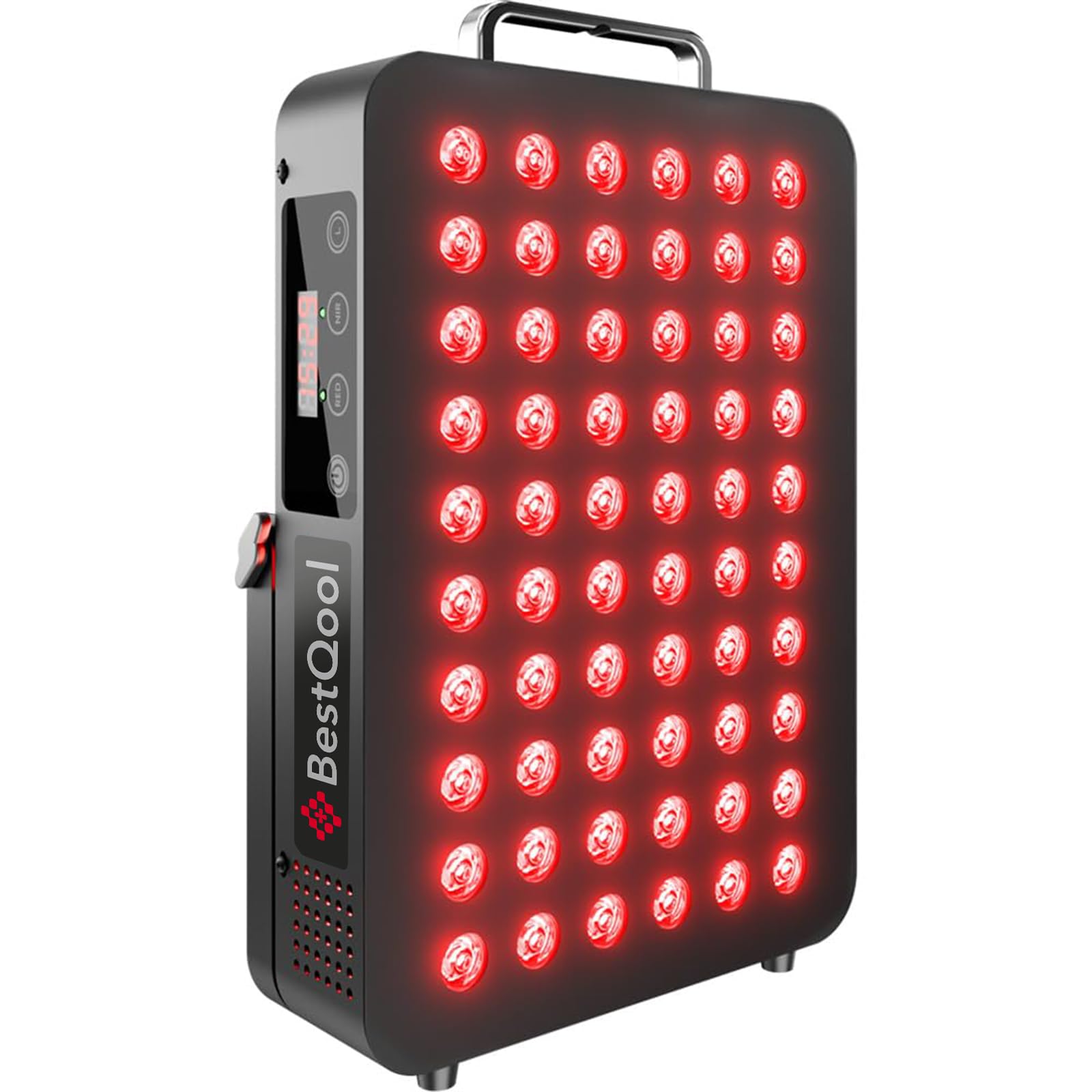
The BQ60 is shaped for a desk, dresser, or nightstand rather than a dedicated treatment room. Its face measures 8.4 by 13.1 inches, and the body is only 2.1 inches deep, so it does not crowd a surface the way a tripod-mounted panel does. The U-shaped stand tilts the light toward a face, shoulder, or knee, and the whole thing weighs 4.8 pounds.

We recommend it as the default because the important numbers line up for short daily sessions: 105W, dual-chip LEDs at 660nm and 850nm, and 95.6 mW/cm² at three inches. The three modes let you run red, near-infrared, or both, and the controls are on the unit instead of on a remote you have to keep track of. In use, the tilting stand is the detail we appreciate most: it points the panel where you need it without asking you to hold anything.

It is not the highest-output panel here. The Lifepro BioHeal lists 203 mW/cm² at the same three-inch distance and uses 120 dual-chip LEDs, so it has more raw power. The BQ60 answers a different question: which panel will you actually leave out and use every day? For face, neck, shoulder, and knee sessions, the smaller footprint and simple aim make it the easier habit.

The 4.8-pound body moves between rooms without effort, and the narrow shape stores on a shelf when you need the surface back. We kept coming back to it for short sessions because it does not turn the living room into a clinic.

Pros

  • Compact 8.4 x 2.1 x 13.1-inch body
  • Dual-chip 660nm and 850nm output
  • Adjustable U-stand tilts the light
  • Three modes for red, NIR, or both

Cons

  • Smaller coverage than full-body panels
Our verdict

We recommend the BQ60 as the default panel for a desk or nightstand: it is compact, simple to aim, and bright enough for short daily sessions.
Check Latest Price
2

Best High-Output Panel

Lifepro BioHeal

90 /100
Trail Score Outstanding

Key details

LEDs
120 dual-chip
Timer
1–30 minutes
Irradiance
203 mW/cm² at 3 in
Wavelengths
660nm and 850nm
Check Price on Amazon

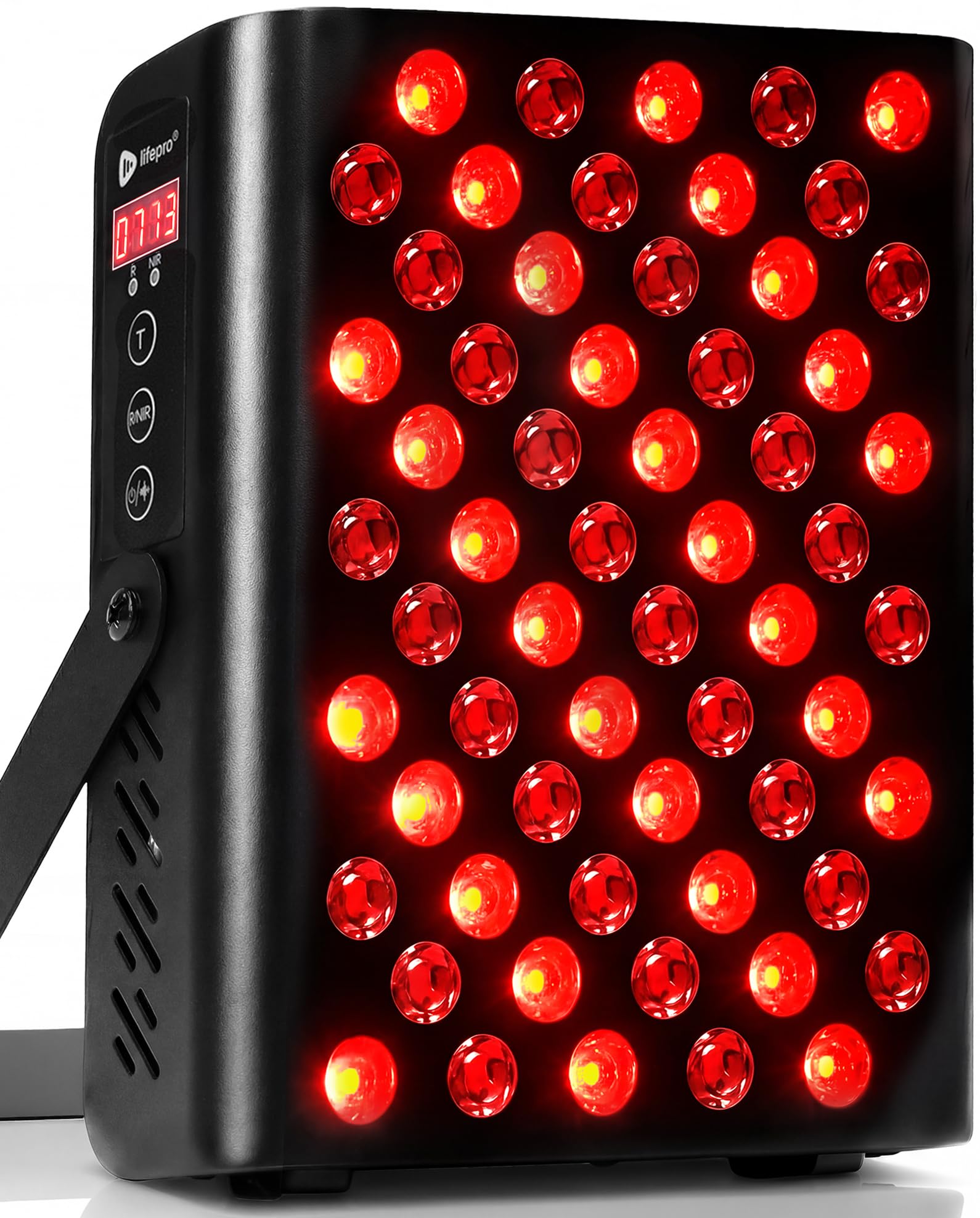
The BioHeal is the panel for someone who wants to cover a back, hip, or thigh without moving a small light around for twenty minutes. Its 120 dual-chip LEDs put out 203 mW/cm² at three inches, the highest stated irradiance in this group, and the panel can stand, lie flat, or hang on a door.

That flexibility is the reason we rank it near the top. A panel that hangs gets closer to a shoulder blade than one that only sits on a table, and one that lies flat works on a bed or floor when you want to treat a larger area. The 1–30-minute timer and three modes keep the session simple; you choose red, near-infrared, or both and let the timer do the rest.

The trade is that it does not have the same dedicated desktop stance. If your routine happens at a dressing table, the BestQool is easier to aim. If you want one panel for the whole body, the BioHeal's output and placement options earn their place.

We also like that the controls are one-button simple. A panel with this much output can tempt you to overcomplicate the routine; the BioHeal keeps the choices down to mode and time, which is the right call for a device you use several times a week.

Pros

  • 120 dual-chip LEDs
  • 203 mW/cm² at 3 inches
  • Hangs, stands, or lies flat
  • 1–30-minute timer and three modes

Cons

  • Larger storage footprint than compact panels
Our verdict

The BioHeal is the panel we choose when output and whole-body coverage matter more than a dedicated desk stand.

Check Latest Price
3

Best Warranty

Hooga PRO300

92 /100
Trail Score Outstanding

Key details

LEDs
60 dual-chip
Power
300W
Warranty
3 years
Wavelengths
660nm and 850nm
Check Price on Amazon

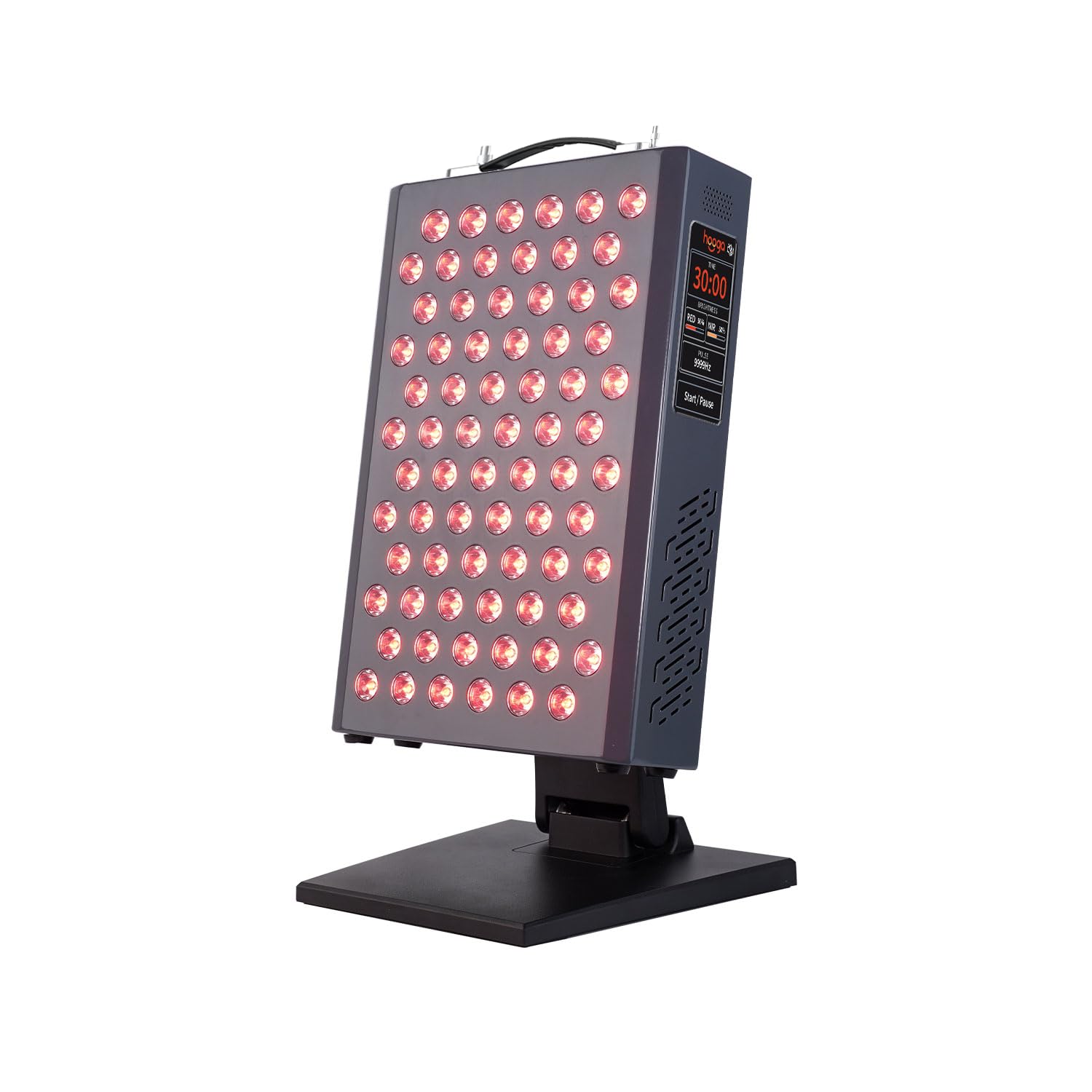
The PRO300 is the Hooga panel for a treatment corner that is not going to move. It uses 60 dual-chip LEDs, each emitting 660nm red and 850nm near-infrared, and its 300W output puts it in a different class from the budget panels here.

The build is the part that stands out. The iron housing and 4.3 kg weight give it a planted feel, and the included tabletop stand and independent red/near-infrared controls make it easy to set a session without a remote. The built-in digital timer is the kind of detail you stop noticing because it just works.

What earns it a recommendation is the three-year manufacturer warranty and the modular PRO Series design. That combination makes it the most deliberate long-term buy in this group: you can start with one panel and add another later if you want a larger setup. We recommend it for a home gym, studio, or spare-room treatment space where it can stay set up.

The trade is weight: at 4.3 kg it is not the panel you move from desk to couch without thinking. If you want a simpler one-piece unit, the BQ60 is easier to live with; if you want a fixture, the PRO300 is the sturdier choice.

Pros

  • 60 dual-chip 660/850nm LEDs
  • 300W output with independent controls
  • Three-year manufacturer warranty
  • Links with other PRO Series panels

Cons

  • Premium price for warranty and modularity
Our verdict

We recommend the PRO300 for buyers who want a dual-chip panel with a three-year warranty and room to expand.

Check Latest Price
4

Best Premium Controls

Hooga ULTRA360

88 /100
Trail Score Excellent

Key details

LEDs
72 quad-chip
Weight
10.3 lb
Controls
Touchscreen, dimmable, pulse mode
Wavelengths
630/660/810/850nm
Check Price on Amazon

Four wavelengths in every LED is the ULTRA360's defining feature. Its 72 quad-chip LEDs each emit 630nm, 660nm, 810nm, and 850nm, so you can cover more of the red and near-infrared range in one session without swapping panels.

The touchscreen is the part we appreciate in daily use. Brightness, session time, wavelength, and pulse mode are all set from the side of the panel, and red and near-infrared brightness adjust independently. That is more control than most people need, but it is useful if you want to compare a 630nm session with a 660nm one or add pulse mode without buying another device.

We recommend it for the buyer who treats light therapy as a hobby as well as a routine. The ULTRA360 is the most adjustable panel here, and the touchscreen makes those adjustments easy to repeat. If you want a simple daily session, the extra controls are more than you need.

The compact ULTRA Series shape still fits on a counter or desk, and the touchscreen turns a fiddly setup into a two-tap routine. We came back to the touchscreen more than the extra wavelengths.

Pros

  • 72 quad-chip LEDs, four wavelengths
  • Independent red and NIR brightness
  • Touchscreen timer and pulse controls
  • Dimmable output with pulse mode

Cons

  • Heaviest panel in this set
  • Premium price for added control
Our verdict

The ULTRA360 is for the buyer who wants the most adjustable wavelength mix and controls here, and is willing to pay for it.

Check Latest Price
5

Best Budget

Viconor 120-LED Panel

87 /100
Trail Score Excellent

Key details

LEDs
120
Stand
Adjustable tripod stand
Panel Size
16.69 x 12.05 x 3.82 in
Wavelengths
660nm red and 850nm infrared
Check Price on Amazon

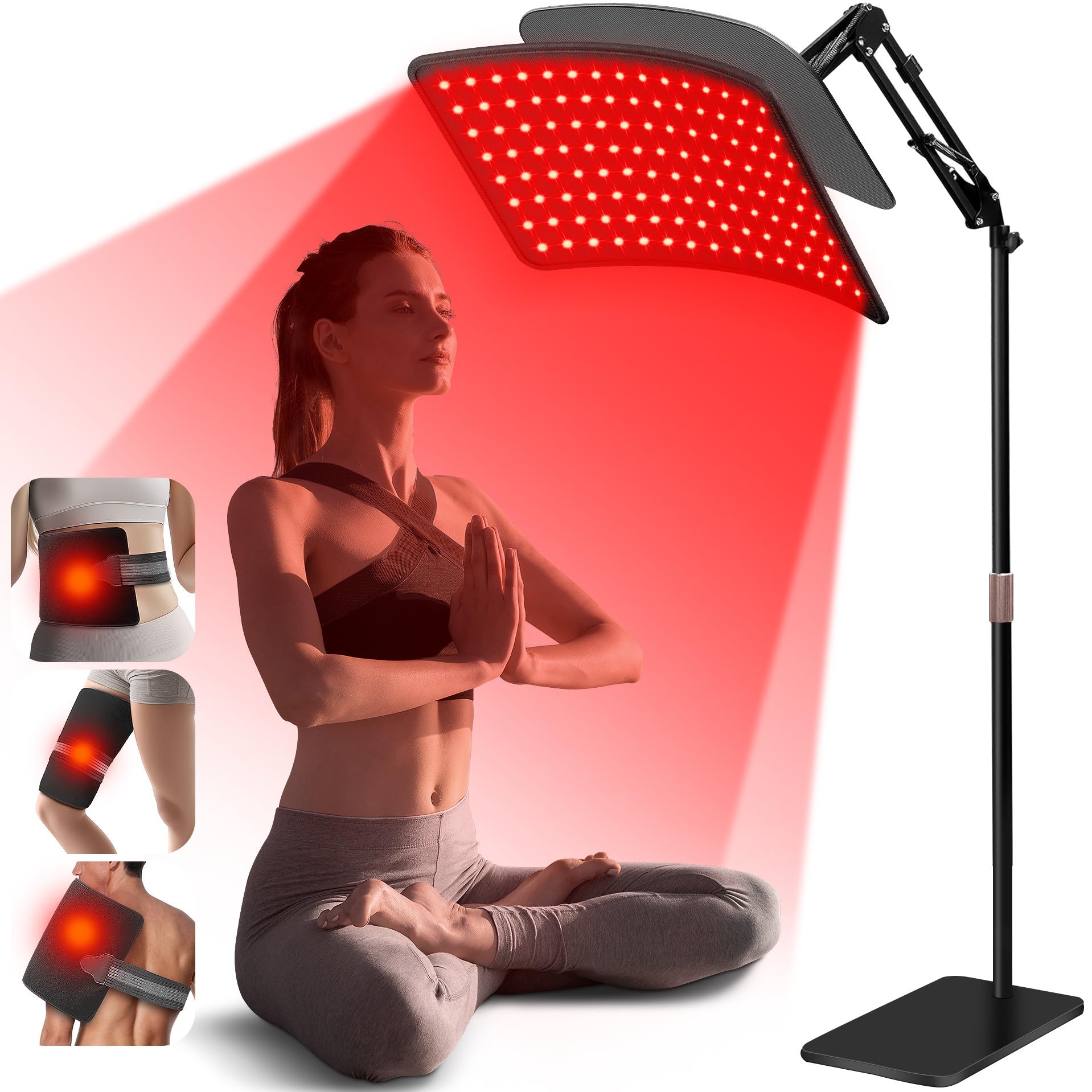
The Viconor is the budget panel we point to when 120 LEDs and a stand matter more than polished construction. It combines 660nm red and 850nm infrared in a curved face that is meant to concentrate the light on a face or a single joint.

Setup is straightforward, and the adjustable stand lets you raise, lower, and angle the panel. The wired controller keeps the buttons simple, and the 120-LED array gives you more coverage than the price suggests. We recommend it for a first panel or a second one for a specific spot, because it does the basic job without asking you to learn a control system.

The light itself is bright and easy to aim, and the 120-LED array gives you more coverage than the price suggests. It is not the panel we choose for a polished living-room setup, but it does the basic job without asking you to learn a control system.

For a spare room or home gym, the simple controller and generous LED count are enough. We do not treat it as a living-room piece, but we do keep it in the rotation for targeted sessions.

Pros

  • 120 LEDs at a budget price
  • 660nm red and 850nm infrared
  • Adjustable stand for targeted sessions
  • Simple wired controls

Cons

  • Stand can be fussy to position
Our verdict

The Viconor is the budget panel we point to when 120 LEDs and a stand matter more than polished construction.

Check Latest Price
6

Best Multi-Wavelength

BONTANNY BO-300

89 /100
Trail Score Excellent

Key details

LEDs
60 dual-chip
Weight
7.94 lb
Controls
Remote control and timer
Wavelengths
630/660/810/830/850nm
Check Price on Amazon

Five wavelengths is the reason to look at the BO-300. It combines 630nm, 660nm, 810nm, 830nm, and 850nm in 60 dual-chip LEDs, which is more wavelength choice than most panels here.

The panel is compact enough for a shelf or counter, and the included remote and timer make it easy to start a session without reaching behind the unit. The 7.94-pound body feels substantial, and the built-in stand lets it sit upright.

We recommend it to someone who likes the idea of choosing between more than the usual red and near-infrared pair. The extra wavelengths and compact body make it a more flexible desk panel than its size suggests. If you do not need that range, a simpler two-wavelength panel is easier to live with.

The compact body is the part that makes it easy to live with; it fits on a shelf and does not need a permanent tripod footprint. The BO-300 is a good fit for a small treatment space where you want to experiment without adding another full-size panel.

Pros

  • Five wavelengths from 630 to 850nm
  • 60 dual-chip LEDs
  • Compact body with built-in stand
  • Timer and remote control

Cons

  • Remote can be fussy to pair
Our verdict

The BO-300 packs five wavelengths, 60 dual-chip LEDs, and a remote into a compact panel for buyers who want to fine-tune their sessions.

Check Latest Price
7

Best Portable Design

INTEO Red Light Panel

88 /100
Trail Score Excellent

Key details

LEDs
Dual-chip
Timer
10–90 minutes
Brightness
5 levels
Wavelengths
Red and near-infrared
Check Price on Amazon

The INTEO's detachable panel is its best idea. The light unit comes off the frame and can be used with an elastic strap, or it can stay mounted on the curved stand for a hands-free session.

Five brightness levels and nine timer settings from 10 to 90 minutes give you more control than most budget panels, and the curved frame is designed to spread light evenly across a face or a shoulder. We like that the stand is a freestanding frame rather than a tripod; it takes up less floor space and is easier to step around in a small room.

At seven pounds it is still portable enough to move between rooms, and the 10-to-90-minute timer is useful for longer body sessions. The three working modes and simple assembly make it a good first panel for someone who does not want a permanent setup.

The panel suits someone who splits sessions between a desk, a couch, and a bed. The ability to pull the panel off the frame is the kind of convenience that makes a routine stick, and the extra timer range is there when you want it.

Pros

  • Detachable panel with elastic strap
  • Freestanding frame instead of a tripod
  • Five brightness levels and nine timers
  • Three working modes

Cons

  • Detachable panel and strap add parts to store
Our verdict

The INTEO is the panel we recommend when you want one device that can hang as a full panel or detach for targeted use.

Check Latest Price
8

Large-Area Coverage

Morfone Tri-Wavelength

86 /100
Trail Score Excellent

Key details

LEDs
200
Weight
6.94 lb
Wavelengths
660/850/940nm
Adjustability
180° rotating bracket
Check Price on Amazon

A 200-LED panel with 660nm, 850nm, and 940nm wavelengths is a lot of coverage for a budget panel. The Morfone's 16 by 8 by 52-inch frame is meant to stand beside a chair or bed rather than sit on a nightstand, and the height puts the light over a shoulder or along a leg without a separate mount.

The 180-degree bracket and height adjustment let you angle the panel down or sideways. The timer and simple controller keep a session short, and the large face means you do not have to chase a sore spot with a small light. That is the appeal of a full-size panel at this end of the price range: coverage without a custom setup.

The 940nm wavelength is the detail that separates it from the cheaper red and near-infrared panels here. It adds an option beyond the usual pair, and it is the reason the Morfone stays in the budget conversation even though the controls are basic.

We recommend it for a home gym or a room where it can stay set up. The large face and three wavelengths give you more coverage than the price suggests. If you want a panel to move from room to room, the INTEO is easier; if you want a large face that stays in one place, this is the budget pick.

Pros

  • 200 LEDs across three wavelengths
  • 660nm, 850nm, and 940nm
  • 180° rotating bracket with height adjustment
  • Large coverage for a budget panel

Cons

  • Bracket takes force to tighten
Our verdict

The Morfone is a budget way to get a large 200-LED panel with three wavelengths, as long as you plan to keep it in one spot.

Check Latest Price

How We Tested (and Kept Using) Eight Red Light Therapy Panels

We started with research, reading published specs against customer reviews to see where the claims and the complaints lined up. From there we narrowed to eight panels that spanned what people actually buy: small desktop units under a foot tall, mid-size panels on rolling stands, and full-body setups you stand in front of. Anything with a vague wavelength claim, or a diode count that didn't match its stated coverage area, got cut before it ever shipped.

Each panel arrived at a tester's home and was assembled solo with a stopwatch running. We noted whether the stand needed tools, whether the unit wobbled on carpet versus hardwood, and how much floor space it claimed. Then we deliberately bumped each one with a hip while walking past — a fair proxy for a small room — and marked down the panels that shifted.

Sessions ran 10 to 20 minutes, usually in the evening after a workout or a long day at a desk, aimed at shoulders, lower backs, and knees. We rated soreness the next morning on a simple scale and compared notes week to week, which isn't a clinical trial but is enough to tell which panels we stopped believing in. Along the way we timed how long it took to get into position, checked whether eye protection stored on the unit, and listened for how loud the cooling fan ran.

Adjustability and the remote got their own scrutiny: we angled heads at a shoulder while seated, raised and lowered stands between users of different heights, and worked each remote from across the room in the dark, counting button presses to change intensity. Quality we judged on the unglamorous stuff — cord length, hinge stiffness, whether the fan rattled by month two. The panels below held up through all of it.

How to Choose a Red Light Therapy Panel

Look at irradiance before wattage

Wattage tells you how much power the panel draws, not how much light reaches your skin. The more useful number is irradiance, usually stated in mW/cm² at a specific distance. A panel rated at 95 mW/cm² at three inches and one rated at 203 mW/cm² at three inches are giving you a real comparison; a wattage figure alone is not.

We prioritize panels that state both the wavelength and the distance for their output. The BQ60 lists 95.6 mW/cm² at three inches, while the BioHeal lists 203 at the same distance. Higher output can mean shorter sessions or more coverage, but it does not make a panel better for every user. Start with the maker's distance and timer, and do not move closer just to chase a stronger dose.

Choose coverage for the body area you treat

A compact panel is easier to live with, but coverage matters once you move beyond the face. The BQ60's 8.4 by 13.1-inch face is sized for a face, neck, shoulder, or knee. A full-body session on a back or hip asks for a larger panel, or one that can hang and be positioned close to the area.

LED count is a rough guide, not the whole story: 60 dual-chip LEDs and 120 dual-chip LEDs can both be useful if the panel is aimed well. Match the size to the largest area you treat regularly, then check the weight and storage footprint. A large panel that stays in a closet helps no one.

Treat the stand as part of the purchase

The stand decides whether the panel gets used. A tabletop U-stand is convenient for face and upper-body sessions, but it sets a fixed angle; you move the panel or your chair to treat a different spot. A tripod or tall bracket gives more height, though it can be fussy to adjust.

Check the base footprint, the tilt range, and whether the panel can hang. If you plan to move it between rooms, a lighter panel with a simple stand is easier to live with. If it stays in one place, a heavier stand is an advantage. The Viconor's adjustable stand is a lot of panel for the money, but it takes more patience to position than the BQ60.

Get the controls and timer you will actually use

A timer is not a luxury on a panel this bright. It keeps a session from turning into an indefinite sit, and it makes it easier to repeat the same routine. Three modes for red, near-infrared, or both are standard here; independent brightness and pulse settings are useful if you like to experiment.

We look for controls that work without a remote you have to find. The BQ60 and BioHeal keep the important buttons on the unit. The BONTANNY adds a remote, but its on-unit buttons are the simpler path. Whatever you choose, wear the included eye protection and do not stare into the LEDs.

Plan for build, warranty, and safe use

A red light panel is a small appliance, so cooling, flicker-free LEDs, and a warranty matter more than a long list of modes. The Hooga PRO300's three-year warranty is the strongest coverage in this group, and its modular design lets you add panels later. The ULTRA360's touchscreen and four wavelengths are the most flexible controls here, but they come with more weight and a higher price.

Use the panel on clean, dry skin and stop if it feels hot or uncomfortable. Keep sessions timed and supervised, and follow the maker's guidance for distance and duration. A panel is a wellness tool, not a replacement for care.

Frequently Asked Questions

Final Verdict

For most people, the BestQool BQ60 is the panel to buy first. It has the combination that makes a routine stick: dual-chip 660/850nm output, a compact body, and a U-stand that aims the light without turning a room into a clinic.

If you want maximum output or a panel that can hang and lie flat, choose the Lifepro BioHeal. If you want a three-year warranty and room to expand, the Hooga PRO300 is the more deliberate long-term buy.