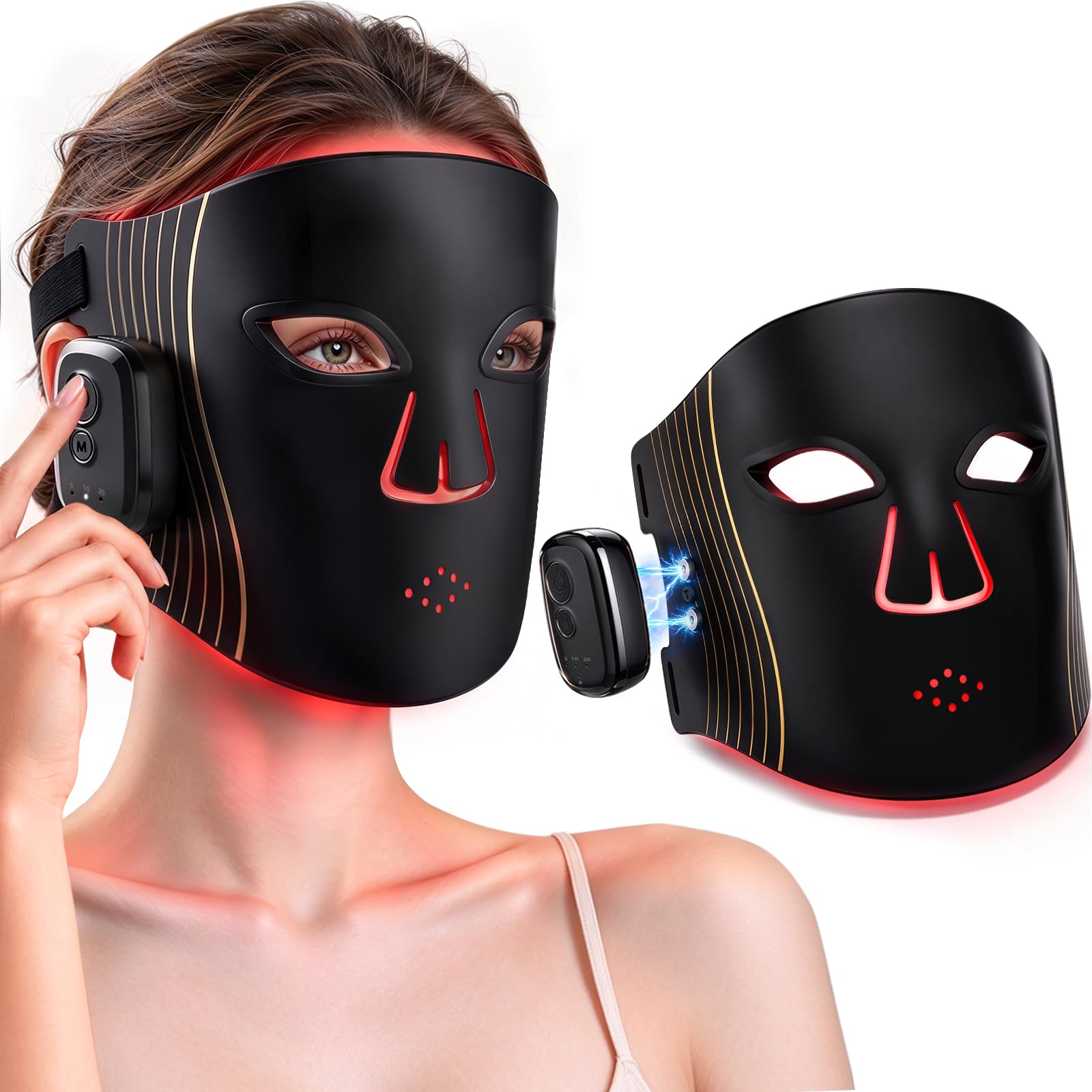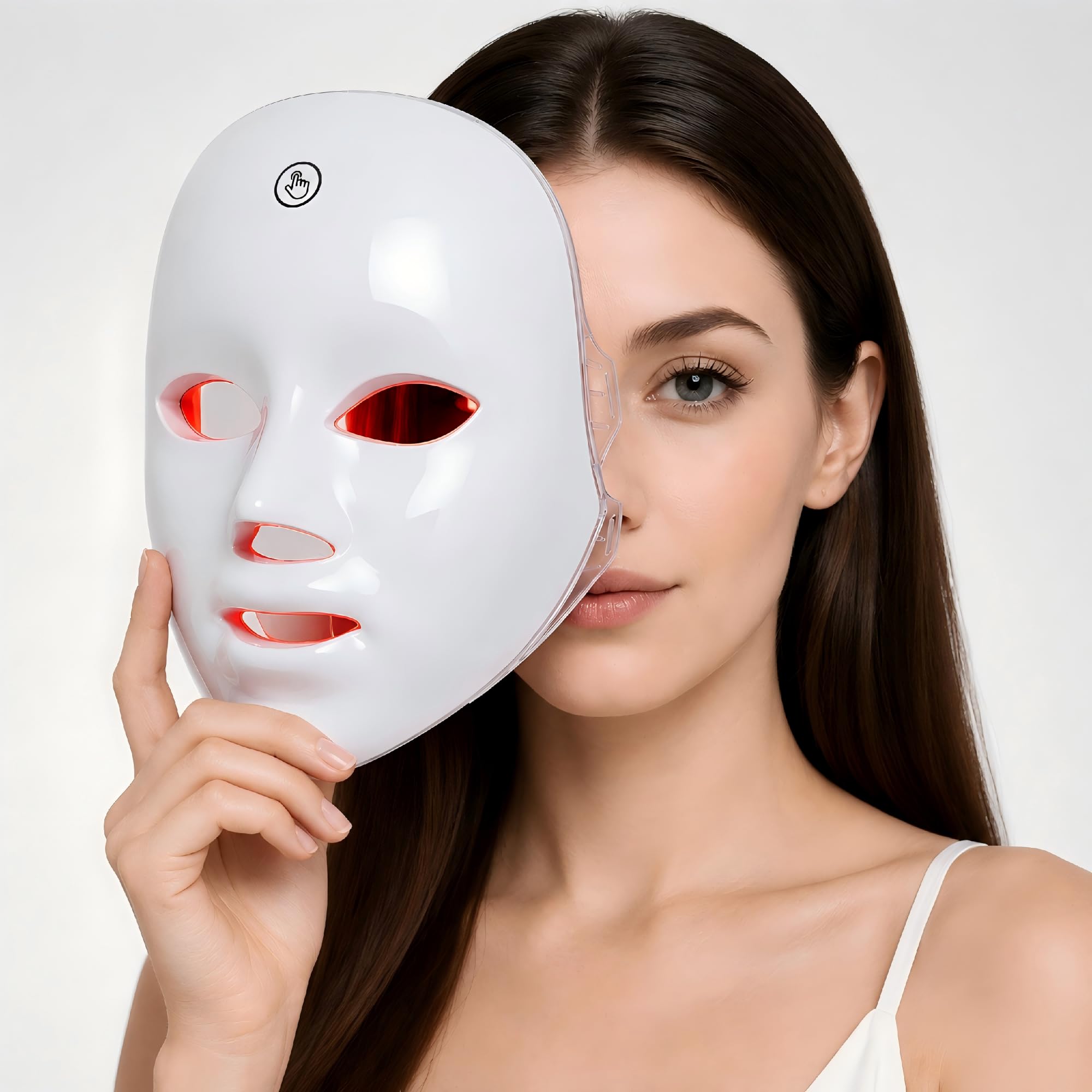
Best Red Light Therapy Masks of 2026

I used to book LED facials the way some people book haircuts — every few weeks, on the calendar, out of the house. Then I tried a red light mask at home and the whole ritual collapsed into ten minutes on the couch with my hands free. What a good one buys you is consistency: the same session, on your skin, at whatever hour you actually have. The catch is that this category is wildly uneven — some masks fit like a plastic bag, some dim within a month, and plenty ask you to trust a wavelength chart with no explanation.

I've lived with nine of them over the past six months, logging which masks I forgot I was wearing, which needed charging every third night, and which I quietly stopped reaching for. One thing first-time buyers don't realize: more LEDs doesn't automatically mean better coverage, and a mask that floats off your cheeks throws light where it doesn't count. The picks below are the ones that earned a permanent spot on my nightstand, sorted by who they suit best.

1

Best Overall

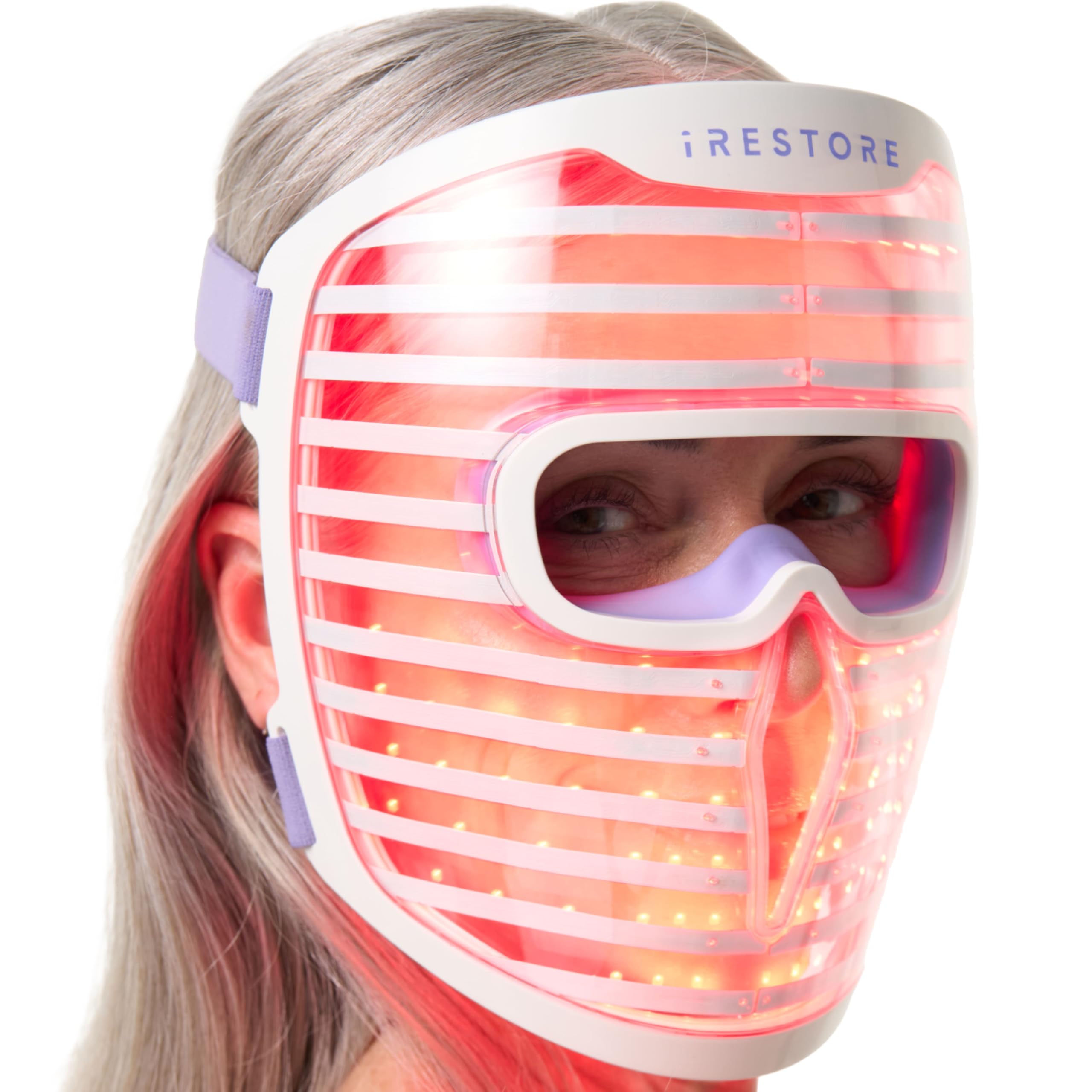
iRestore Red Light Therapy Mask

89 /100
Trail Score Excellent

Key details

LEDs
360
Weight
1.87 lb
Wavelengths
635, 830, and 415 nm
Session Time
10 minutes
Check Price on Amazon

Three wavelengths is the number that matters here: 635 nm red and 830 nm near-infrared for fine lines, texture, and firmness, plus 415 nm blue for the weeks when your skin is breaking out. With 360 LEDs behind that set, it covers both jobs in a ten-minute session, three to five times a week. The dual strap holds the shell off your face, which is how the light spreads evenly instead of pressing into your cheeks.

We recommend it because it is the mask here that never makes you choose. Plenty of red-only masks handle aging and leave breakouts alone; the blue channel gives you somewhere to go when your skin changes, without buying a second device. The session sits in the middle of this group at ten minutes, longer than the Shark's six and shorter than the Nameiec's fifteen, and the auto shut-off means you can lie back instead of watching the clock.

It is also the bulkiest thing we wore at 1.87 pounds, which is fine on a sofa and hopeless if you planned to fold laundry in it. The zip case it ships with matters more than it sounds, because the eye cups and the strap live in one place instead of migrating into a drawer with three unmatched cables. Charge it fully before your first session and it is ready when you are.

Two things we noticed after a few weeks: the shell blocks light from your eyes rather than merely filtering it, so ten minutes is easier to sit through than it looks, and the strap has enough adjustment to keep the shell off your cheeks rather than resting on them. That last part is the difference between a mask you finish the course with and one you quietly stop reaching for.

Pros

  • Three wavelengths for lines, firmness, and breakouts
  • Ten-minute sessions with auto shut-off
  • Holds the shell off the face for even coverage
  • Carrying case keeps the pieces together

Cons

  • Premium price
Our verdict

If you want one mask for both fine lines and breakouts, this is the one we recommend: three wavelengths, ten minutes, and the most complete coverage in this group.
Check Latest Price
2

Best for a Six-Minute Routine

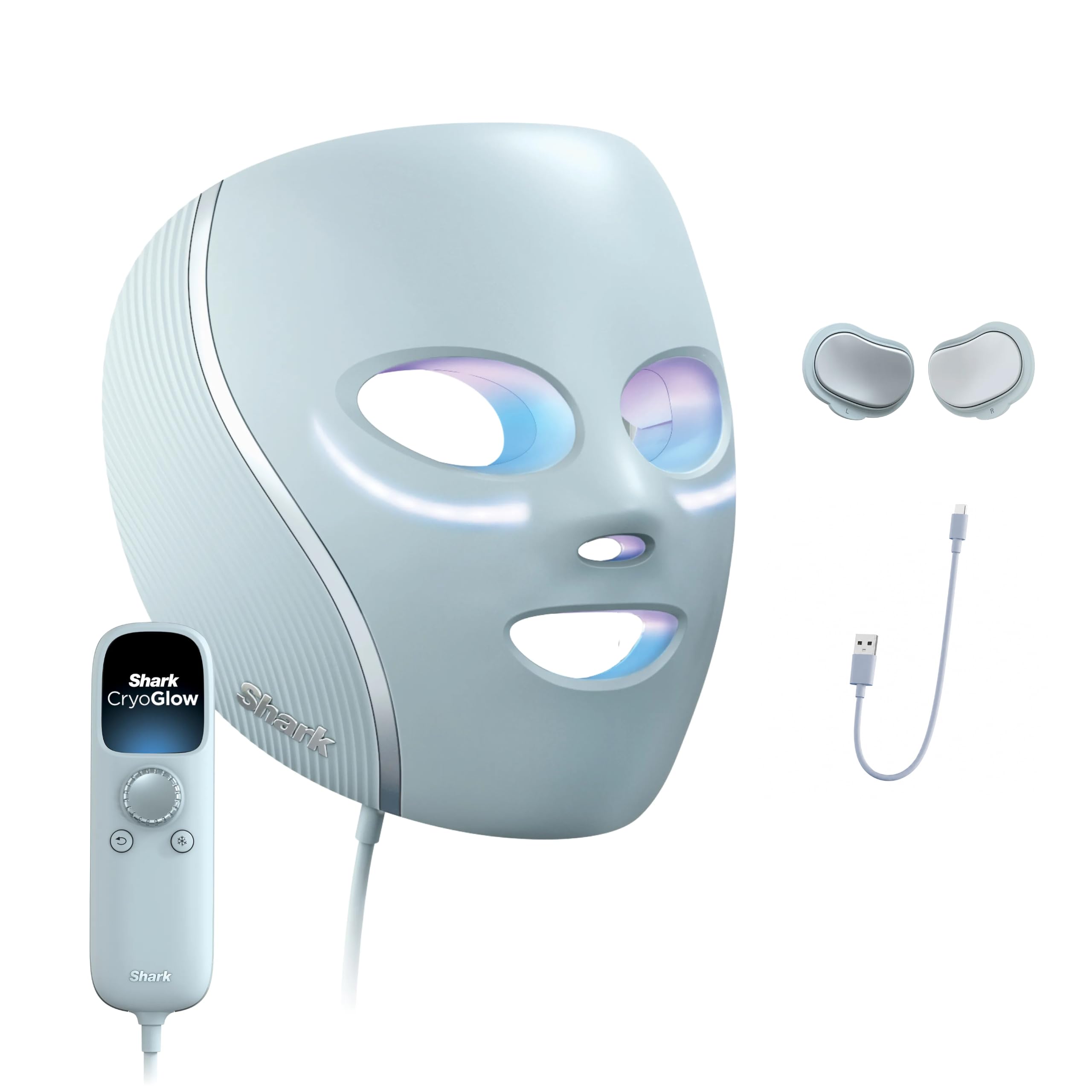
Shark CryoGlow LED Face Mask

87 /100
Trail Score Excellent

Key details

Weight
1.49 lb
Clearance
FDA-cleared
Wavelengths
Red, blue, and deep infrared
Session Time
6 minutes
Check Price on Amazon

Six minutes is the entire argument. Shark's Better Aging treatment runs red and infrared light for six minutes, Skin Clearing runs blue, and Under-Eye Revive adds cooling pads beneath your eyes. If you have bought a mask before and quietly stopped using it, the shorter session is the feature most likely to fix that.

The cooling is the part we did not expect to care about. It changes the tone of the whole session, because this is the one mask here that feels like a treatment rather than a chore, and the pads land where a late night shows first. Shark also has FDA clearance and a 12-week clinical study behind its fine-line claim, which is more documentation than most of this group comes with.

We keep it near the top of the list for the routine rather than the spec sheet. Four programmed treatments map onto a real week, a quick session before an event or a clearing pass when your skin is congested, and no other mask here does under-eye cooling at all. At 1.49 pounds it stays comfortable sitting up, which is more than the rigid shells manage.

The honest measure of it: this is the mask we reached for on nights when we had six minutes and no patience, which is most nights. The mirror verdict arrives in weeks rather than days, and the cooling is what gets you to week three.

Pros

  • Six-minute sessions, the shortest here
  • Under-eye cooling built into the mask
  • FDA-cleared with a 12-week clinical study

Cons

  • Battery needs near-daily charging
Our verdict

For anyone who has abandoned a ten-minute mask before, this is the six-minute one we hand over: four treatments, real under-eye cooling, and a routine you will actually keep.

Check Latest Price
3

Best for Breakouts and Pigmentation

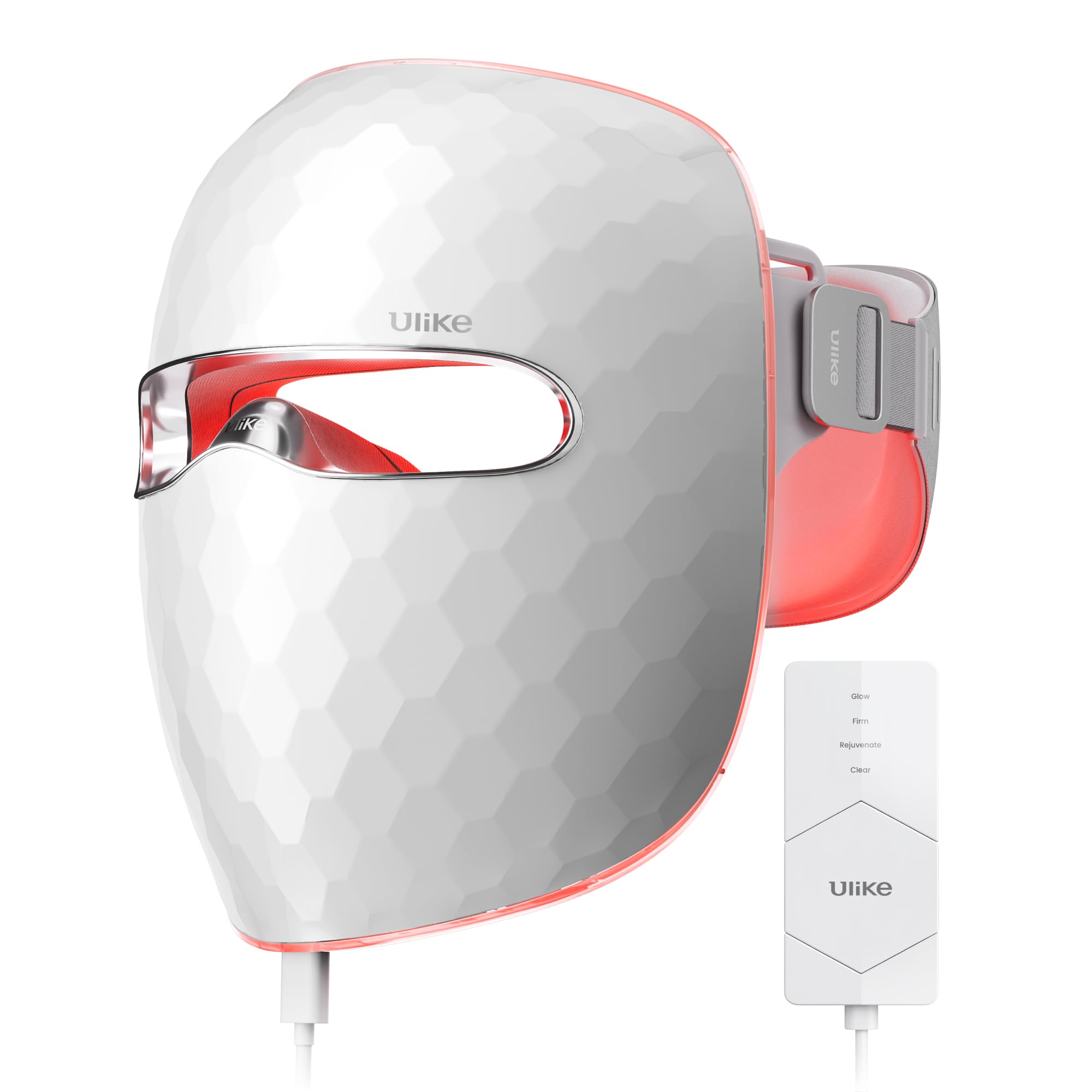
Ulike Reglow LED Face Mask

88 /100
Trail Score Excellent

Key details

Modes
Glow, Firm, Rejuvenate, Clear
Weight
3.04 lb
Coverage
360° full face
Session Time
8 minutes
Check Price on Amazon

Three pounds sounds like a lot for something you strap to your head, and it is. The 3.04-pound shell is rigid, and the rigidity is the point: it holds the LEDs a steady centimeter off your skin for the full eight minutes, so coverage does not depend on how silicone happens to drape. Of the masks here, this is the one we point at anyone whose main concern is breakouts and pigmentation rather than general anti-aging.

The four modes are Glow, Firm, Rejuvenate, and Clear, and they are specific enough to plan a week around: Clear when your skin is congested, Firm before a day you will be photographed. Ulike lists 360-degree coverage and puts pigmentation and redness at the front of its results claims, and this is the mask here with a distinct program for each concern rather than a single red setting you use for everything.

Eight minutes is the shortest routine here after the Shark, and the silicone eye mask goes on before the shell so the light never reaches your eyes. It is a considered design rather than a cheap one, and that is what the weight buys you. If you want to wander the house mid-session, look at the silicone masks instead; this is a lie-back-and-close-your-eyes device.

Pros

  • Four modes, one for each concern
  • Rigid shell keeps the LEDs evenly spaced
  • Eight-minute sessions
  • Silicone eye mask shields the eyes

Cons

  • Pressure on the nose bridge and cheekbones
Our verdict

Our pick for breakouts and pigmentation: four distinct modes and a rigid shell that keeps the light evenly spaced, in exchange for the most weight on your face here.

Check Latest Price
4

Best Midrange Option

INIA Glow 4D Mask

86 /100
Trail Score Excellent

Key details

LEDs
320
Modes
Red, blue, amber, combo
Extras
Magnetic cooling gel pad
Weight
1.9 lb
Check Price on Amazon

Well below what the iRestore, Shark, and Ulike ask, the Glow 4D is where we point anyone who wants a serious mask without premium money, and it does not feel like a compromise in the hand. The shell is flexible medical-grade silicone with 320 LEDs set into it, and it bends to your jaw instead of hovering over it.

Four modes cover red, blue, amber, and a combination, and the dual near-infrared channel is the part worth paying for if firmness is the goal. On a sensitive week the amber mode is the one we used, because it treats without the intensity of a full red and infrared session, and the four-mode layout makes that switch a single press.

The magnetic cooling gel pad is a smart alternative to building coolers into the mask: it clicks in over the eye area and takes the heat and puffiness out of a long day. Wireless operation means you can move around the house in a way the rigid shells do not allow, and the whole thing weighs 1.9 pounds.

Where it lands: the best value in this guide if you want wavelength choice and a conforming shell without paying premium money. We rate it just below the iRestore, because the one-size shell takes more fiddling to sit right and there is no getting around that, but it is a far better first mask than most people start with.

Pros

  • 320 LEDs in a flexible silicone shell
  • Red, blue, amber, and combo modes
  • Magnetic cooling gel pad for the eye area

Cons

  • One-size shell runs large on smaller faces
  • Cooling pad needs re-chilling between uses
Our verdict

The midrange mask we recommend: 320 LEDs, red, blue, and amber modes, and real cooling, for a great deal less than the premium picks ask.

Check Latest Price
5

Best for Neck and Chest Coverage

INTEO Face and Neck Mask

90 /100
Trail Score Outstanding

Key details

LEDs
680
Battery
2000mAh, Type-C
Coverage
Face, neck, and chest
Wavelengths
630, 460, 605, and 850 nm
Check Price on Amazon

The coverage is what separates this one: a face panel plus a neck and upper-chest extension, 100 and 70 light beads respectively with four LEDs in each, for 680 in total. If the years are showing on your neck and décolletage before they show on your face, this is the shape you want rather than a face-only shell and a second device later.

Four modes run 630 nm red, 460 nm blue, 605 nm amber, and 850 nm near-infrared, so the neck panel is not a red-only afterthought. The silicone is soft against the skin, and the magnetic battery detaches for charging, which is the right design for something that sits on your chest rather than hanging from your ears.

At 2.62 pounds it is a mask you wear lying back, and the strap plus the chest panel give it somewhere to sit other than your nose. The strap assembly takes a minute the first time and then it is memorized. We also like the Type-C charging and the adjustable timer on a cordless device this size.

For the money it delivers more coverage than anything else in this guide, and it is the one we name when a reader tells us the neck is the problem. We place it below the premium masks on refinement, not on coverage, and that is the right trade for a lot of people.

Pros

  • 680 light beads across face, neck, and chest
  • 850 nm near-infrared plus red, blue, and amber
  • Soft silicone with a detachable magnetic battery
  • Type-C charging with an adjustable timer

Cons

  • Runs large on smaller faces
  • Needs a recharge every few sessions
Our verdict

The most coverage in this group for a midrange price, and the only mask here that treats your neck and chest in the same session as your face.

Check Latest Price
6

Best Budget Mask

Aimilove 336 LED Mask

92 /100
Trail Score Outstanding

Key details

LEDs
336
Timers
5, 10, or 20 minutes
Weight
1.3 lb
Wavelengths
660, 850, and 460 nm
Check Price on Amazon

There is almost nothing to set up: one button starts it, and the built-in timer offers 5, 10, or 20-minute sessions that end on their own. In use that is the whole appeal. You put it on, press once, and get on with your evening instead of learning a control scheme.

The specification is strong for the money: 336 LEDs across 660 nm red, 850 nm near-infrared, and 460 nm blue, in a silicone shell 1.5 inches thick and 1.3 pounds. A full charge takes about half an hour and gives up to 120 minutes of cordless use, closer to 100 at the highest setting, so a week of sessions fits comfortably inside one charge.

We recommend it as the budget mask to start with, because the wavelengths are the ones that do the work rather than a decorative spectrum, and the weight is low enough to wear while you are doing something else. Go in expecting a first mask rather than a last one: what you are buying here is the routine, and the routine is the part that actually delivers.

Pros

  • Names 660 nm red and 850 nm near-infrared
  • 336 LEDs at 1.3 pounds
  • 5, 10, and 20-minute shut-off timers

Cons

  • No stated light output to compare dose
Our verdict

The budget mask we recommend starting with: the right wavelengths rather than a rainbow, in a shell light enough to wear standing at the counter.

Check Latest Price
7

Long Warranty

HIME SAMA Miracle ACE Mask

91 /100
Trail Score Outstanding

Key details

LEDs
240
Battery
2000mAh
Warranty
2 years
Light Colors
8, including 630 nm red and 820 nm near-infrared
Check Price on Amazon

Eight colors is a lot of spectrum, and the honest answer is that most of them will not get used. What matters is the pair underneath: 630 nm red and 820 nm near-infrared, with 240 lamp beads behind them and a stated precision of about 5 nm. The rest, green, yellow, purple, are options rather than reasons to buy.

What keeps it on this list is the support around the lights: a patented silicone eye holder that keeps the light out of your eyes, an adjustable chin pad that adapts the shell to different face shapes, and a two-year warranty, the longest stated coverage here by a wide margin. For a device with a battery and a controller inside it, that warranty is worth more than two extra colors.

Ten minutes a day is the routine, and the shell is on the heavy side at 2.93 pounds, so this is another sit-down mask rather than one for folding laundry. The chin pad is the detail that makes the fit work. Without it the shell hangs off a narrower jaw and the light lands unevenly, which is exactly the complaint you want a design to solve before you buy.

Pros

  • 630 nm red and 820 nm near-infrared
  • Two-year warranty, the longest here
  • Adjustable chin pad suits different faces
  • Silicone eye holder blocks the light

Cons

  • Frequent recharging
  • Can fail within the first few months
Our verdict

Worth it for the two-year warranty and the adjustable chin pad, not for the eight colors, most of which you will use once and forget.

Check Latest Price
8

Cheapest Way in

Nameiec LED Face Mask

93 /100
Trail Score Outstanding

Key details

Design
4D contoured, cordless
Weight
12.7 oz
Session Time
15 minutes
Check Price on Amazon

What the listing does not tell you is the important part: no wavelength figures and no LED count, so there is no way to compare its dose with anything else in this guide. What it does tell you is a 15-minute session three to five times a week, a 4D contoured shell, and cordless operation. At the bottom of the price range, that is a reasonable way to find out whether you will keep the habit.

The 4D shape is the design decision we like most, because it curves around the cheeks and jaw instead of hanging flat, which is what makes a 15-minute session tolerable without a strap digging into your temples. Charging has a safety lock and the maker specifies a 5V adapter, so use the one in the box rather than a fast-charging brick that the connection is not built for.

It is also the lightest mask here at 12.7 ounces, and that matters more than it sounds. A mask you can wear standing at the sink is one you will still be wearing on the nights you are too tired to lie down, and consistency is the only thing in this category that reliably changes anything.

Pros

  • Cordless and only 12.7 ounces
  • 4D shell curves around the cheeks and jaw
  • 15-minute sessions, three to five times a week

Cons

  • No wavelengths or LED count listed
Our verdict

The least expensive way to try red light at home: cordless, light, and simple, as long as you accept that the listing will not tell you what dose you are getting.

Check Latest Price

What Six Months and Nine Red Light Masks Taught Us

We started by pulling every red light mask we could find that listed its wavelengths and had a real return window, then narrowed to nine based on price, LED layout, and whether the company would state plainly what the device is meant to do. Then we wore them — six months, most days, in the ordinary places a mask actually gets worn: on the couch during a podcast, standing at the bathroom mirror, once while folding laundry. Setup was timed from unboxing to first session, and we noted whether the controls were findable by touch and whether the straps stayed put when we turned our heads.

Battery life was counted in sessions, not specs: we charged each mask fully, ran it until it died, then left it in a drawer for two weeks to see whether it still held a charge. Weight got judged by my neck rather than a scale — ten minutes in, did my jaw ache, and did the panel slide down my nose when I looked down? We wiped each mask after every use, flexed the frame at its seams, and packed it into a weekender bag a few times to check for cracking.

Skin results were tracked with weekly photos taken in the same bathroom light at the same time of day, looking at whether redness settled by morning and whether tone looked brighter at week four or week eight. Comfort came down to whether I forgot I was wearing it at all. And because these aren't cheap, value meant weighing session length, coverage, and warranty against what the same money buys elsewhere. A few masks looked strong on paper and never got reached for a second time.

How to Choose a Red Light Therapy Mask

Match the Wavelengths to the Job

Red light around 630 to 660 nm is the surface wavelength, the one behind most brightness and tone claims. Near-infrared at 830 to 850 nm reaches deeper and is the range tied to firmness and fine lines. Blue, roughly 415 to 460 nm, is there for breakout-prone skin. If aging is your main concern you need red and near-infrared; add blue only if breakouts are part of your picture.

Look for a stated nanometer figure. A mask that says red light without a number is asking you to take its word for it, and extra colors such as green, yellow, or purple are bonuses rather than reasons to pay more. We have never met anyone who bought a mask for the green setting.

Dose Is Output Times Minutes

LED count is the number every listing quotes and the least useful one on its own. What matters is how many LEDs land on your face, how far they sit from your skin, and how long the session runs. A 680-LED mask with 200 of those LEDs in a neck panel is not putting twice the light on your cheeks as a 320-LED mask, and some listings never state output at all.

So pick a session you will complete three to five times a week, then compare LED counts inside the face panel and sessions of similar length. A long session at modest output and a short one at high output can land in similar territory, but consistency beats both.

Fit, Weight, and Eye Protection

Most shells come in one size, so fit is a gamble you can partly predict. Rigid shells hold their shape and press where they land, usually the nose bridge and cheekbones; silicone drapes and conforms but runs loose on a narrow face. If you want to wear a mask while moving around, stay with the silicone masks in the 1.3 to 1.9 pound range. The heavier shells are better suited to lying back for eight or ten minutes.

Eye protection is not optional. Every mask here ships with shields, pads, or a silicone eye piece, so leave them in place and do not lift the shell to check your phone with the lights running.

Charging, Warranty, and the Sixth Month

Batteries and controllers are where these masks fail, not the LEDs. Expect to charge a 2000mAh pack roughly weekly at three to five sessions, and use the cable and adapter the maker specifies, one listing calls for a 5V supply and a safety-locked connection for a reason. Warranty cover varies more than it should: one mask here carries two years, others say nothing at all.

Register the warranty when the box arrives and keep the packaging through the first month, while a return is still simple. If a mask is going to let you down, that is usually when it happens.

Frequently Asked Questions

Final Verdict

We recommend the iRestore to most people. Three wavelengths and 360 LEDs mean a single ten-minute session covers fine lines and breakouts, and the shell holds itself off your face so the light spreads evenly. It is the priciest mask in this guide, and it is the one whose case stays on the nightstand rather than in a drawer.

Two situations change the answer. If six minutes is the difference between a habit and an abandoned purchase, the Shark CryoGlow is the better buy, cooling pads included. If your neck and chest bother you more than your face does, the INTEO covers all three areas for midrange money.