Best Protein Shakes for Kids of 2026

A kid will forgive a lot at breakfast, but not a chalky sip. Protein shakes for kids are supposed to be the easy answer on busy mornings and between activities, yet plenty taste like dessert and read like a supplement—or get refused after one mouthful. The right one fills that gap without turning snack time into a negotiation: a reasonable amount of protein, an ingredient list you can parse, and a texture your child will actually drink.

Over the past six months, my team and I worked through 14 kid-focused protein shakes, and the differences came down to taste, flavor, and what was in the carton. My kids were honest tasters—they noticed aftertaste and thickness immediately, and they told me when a drink sat too heavy or bothered their stomachs. I tracked cost per serving, whether the shake carried them to the next meal, and how much got dumped, because a rejected carton is expensive no matter what it promises. The picks below survived school mornings, practice runs, and the “I’m not drinking that” test.

1

Best Overall

PediaSure Grow & Gain Shake

96 /100
Trail Score Outstanding

Key details

Format
Ready-to-drink, 24-pack
Nutrition Role
Complete nutrition shake
Stated Age Range
2 to 13 years
Protein Per Bottle
0.25 oz
Check Price on Amazon

A flat case of 24 bottles arrives, and that is most of the argument: nothing to measure, nothing to blend, nothing to remember at 7:40 on a school morning. PediaSure Grow & Gain is built as complete nutrition rather than a protein top-up — 7 grams of protein plus zinc and vitamins A, C, D and E — for kids from 2 to 13.

That's why it's our top pick. It's the one here aimed at the kid whose eating is the problem rather than the kid who just needs more protein: the child who leaves half of dinner and will still finish a chocolate bottle. The flavor work is doing real labor. It reads close enough to chocolate milk that it doesn't get treated as medicine, and for a picky eater that's most of the battle.

One thing worth knowing before you count on the growth claim on the box: the research behind it studied two servings a day in children who were undernourished or at risk of it. A single bottle in a lunchbox isn't that, and it isn't sold as though it were — but if growth is the goal, one a day is a supplement, not the protocol.

Protein is the other compromise. At 7 grams a bottle it trails SideKicks by three, so if protein specifically is what you're chasing, that's the better buy. If you're trying to get calories and a broad spread of vitamins into a kid who eats four foods, 7 grams is beside the point.

Pros

  • Complete nutrition, not just protein
  • Chocolate flavor kids finish
  • Works across ages 2 to 13

Cons

  • Biggest up-front outlay of the picks here
Our verdict

Our pick for the kid who leaves dinner on the plate: complete nutrition, a chocolate flavor that gets finished, and one bottle that works from age 2 to 13.

Check Latest Price
2

Best for More Protein

PediaSure SideKicks Shake

95 /100
Trail Score Outstanding

Key details

Format
Ready-to-drink, 24-pack
Stated Age Range
2 to 13 years
Nutrients Targeted
Vitamin D, calcium, fiber, potassium
Protein Per Bottle
0.35 oz
Check Price on Amazon

Ten grams is the most protein per bottle in this group, and it's the number that decides between this shake and the one it shares a brand with. The rest of the bottle is aimed at the gaps a narrow diet leaves: vitamin D, calcium, fiber and potassium, with the brand comparing each to a familiar measure — the protein of an extra-large egg, the calcium of six ounces of yogurt, the fiber of a medium banana.

That gap-filling approach suits a particular kid: one who eats, but eats the same six things, and who'll drink a shake at four in the afternoon and still sit down to dinner. Handing it over is the easy part — it's the same grab-and-go bottle as every other pick — and we noted the formula is free of artificial dyes, a detail that matters more to some families than the protein number does.

Per bottle it works out cheaper than the complete-nutrition version, which is the reverse of what the higher protein figure suggests, and that makes it an easy everyday buy for a household that has already decided a shake belongs in the routine.

Pros

  • Highest protein of the four at 10g
  • Targets vitamin D, calcium, fiber, potassium
  • Made without artificial dyes

Cons

  • A gap-filler, not complete nutrition
Our verdict

Buy this one when protein is the specific gap — 10 grams a bottle, plus the calcium, fiber and vitamin D a narrow diet tends to miss.

Check Latest Price
3

Best Organic

Orgain Organic Kids Dairy Shake

93 /100
Trail Score Outstanding

Key details

Certifications
USDA Organic, Non-GMO
Stated Age Range
4 to 10 years
Protein Per Bottle
0.28 oz
Calories Per Bottle
180
Check Price on Amazon

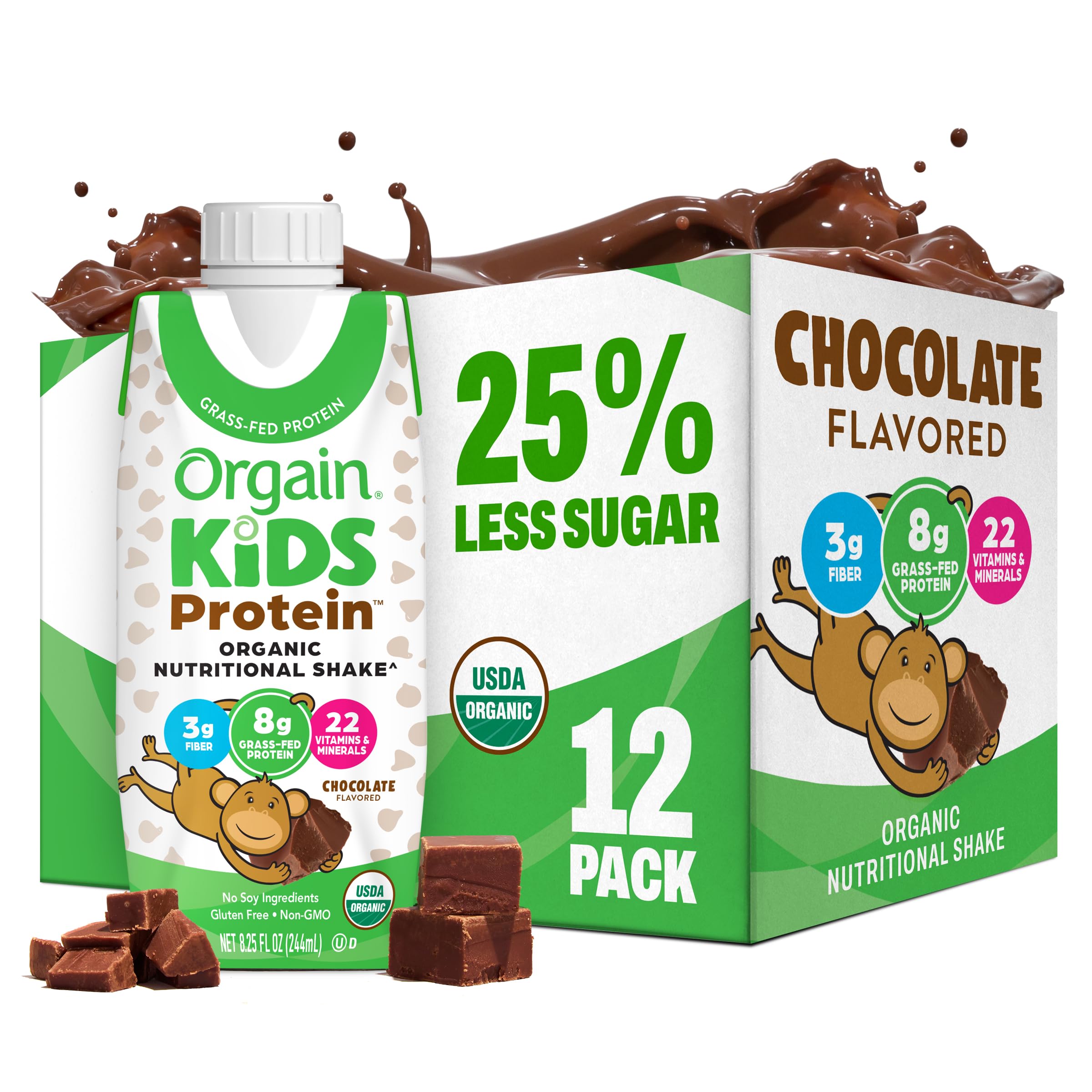
Twenty-five percent less sugar than the leading kids' shakes is the claim across the front of the box, and the precise reading is less, not little. Alkalized cocoa and organic cane sugar build the flavor, so this is still a sweet chocolate drink — it's just a sweet chocolate drink that's USDA Organic, non-GMO and made with grass-fed milk whey protein.

Each 8.25-ounce bottle carries 8 grams of protein with all nine essential amino acids, 3 grams of fiber, 22 vitamins and minerals and 180 calories. The pantry convenience is the part we underrated: the box sits in the cupboard until you open a bottle, so nothing has to be chilled in advance and nothing is wasted when a kid changes their mind about breakfast.

Where it earns its place is the ingredient list. A family that reads labels and wants organic, non-GMO, grass-fed dairy without handing a five-year-old a full nutrition shake has very few options on this shelf, and this is the one we point them to.

Acceptance is the risk. Orgain's cocoa is a different drink from PediaSure's, and some kids take to it in a sip while others won't finish a bottle. That's the argument for starting with the 12-pack rather than stocking up.

Pros

  • USDA Organic, non-GMO, grass-fed whey
  • 8g protein with all nine essential amino acids
  • 3g fiber and 22 vitamins and minerals
  • Shelf-stable until the seal is broken

Cons

  • Stated age range starts at 4
Our verdict

For ages 4 and up, this is the organic, grass-fed option we reach for when a family wants a shorter ingredient list and less sugar than the big brands.

Check Latest Price
4

Best Dairy-Free

Orgain Organic Kids Plant-Based Shake

90 /100
Trail Score Outstanding

Key details

Allergen Profile
Free from top 9 major allergens
Stated Age Range
4 to 10 years
Protein Per Bottle
0.28 oz
Calories Per Bottle
200
Check Price on Amazon

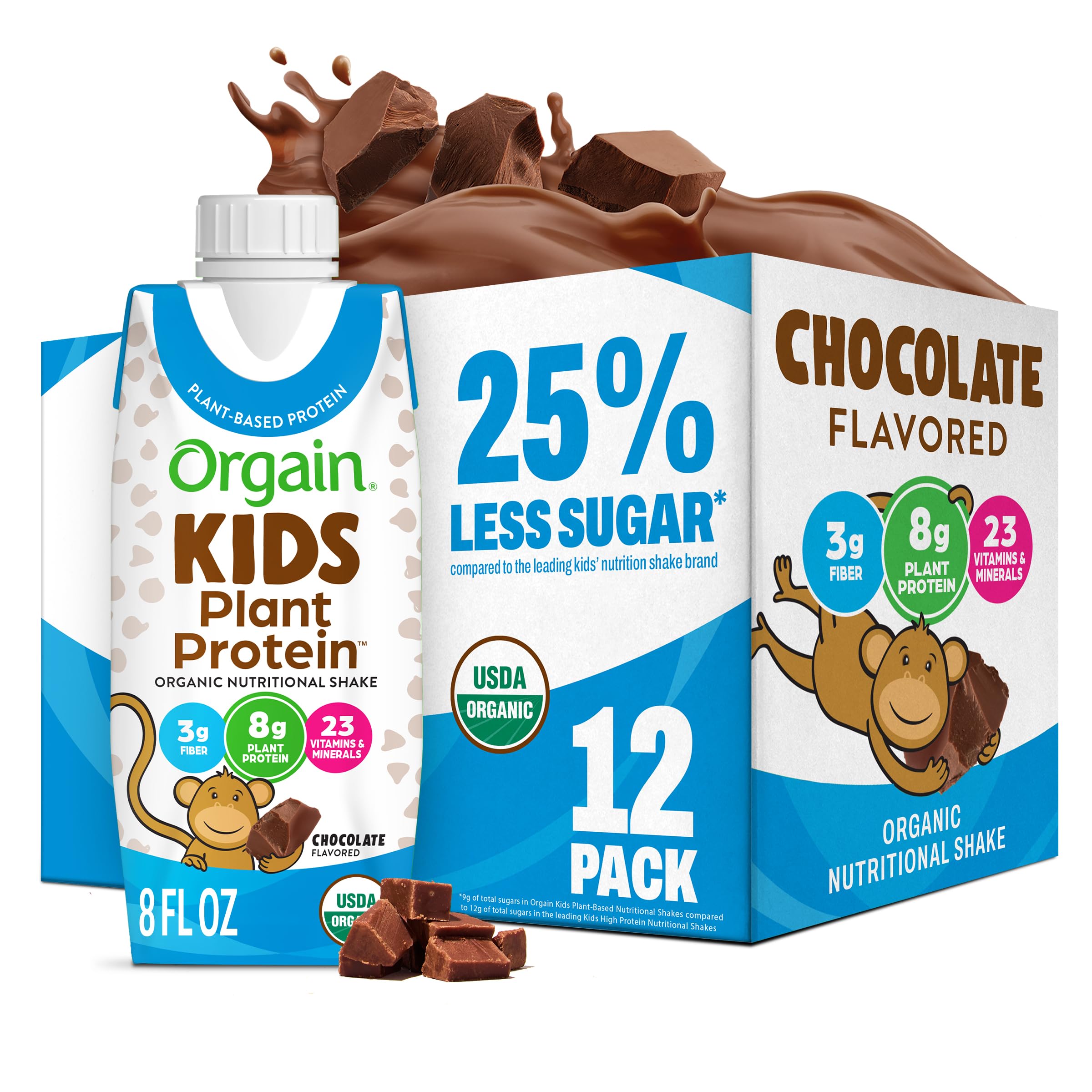
If dairy is off the table, three of the four picks on this page are closed to you, and that is the entire case for this box. Orgain's plant-based kids shake is made without the top nine major allergens, built on organic plant protein, and delivers 8 grams of protein with all nine essential amino acids, 3 grams of fiber and 23 vitamins and minerals.

Two hundred calories buys all that, against 180 in the dairy version — 20 more calories for one more vitamin and mineral at the same protein, which tells you the trade here is formulation rather than dilution. The chocolate is built on alkalized cocoa and organic cane sugar, and the box is USDA Organic, non-GMO, gluten-free and kosher.

Taste is the honest gamble. Plant protein drinks have a texture of their own, and of the four this is the one most likely to come back half-finished with a face attached. The cocoa covers a lot of it, but a kid used to the dairy shake will notice the difference on the first sip — so the first box is a test, not a stock-up.

Pros

  • Free from the top nine major allergens
  • 8g plant protein with all nine essential amino acids
  • Shelf-stable, 12 bottles to a box

Cons

  • Priciest per bottle of the two Orgain shakes
Our verdict

If dairy is off the table, this is the only shake here that works — plant protein, top-nine-allergen-free, and still 8 grams a bottle.

Check Latest Price

What We Looked For in Kids’ Protein Shakes

We started by building a shortlist from the kid-specific shakes and powders sold in mainstream grocery, drugstore, and online listings, then filtered out anything with caffeine, stimulants, or a protein dose that seemed out of step with a child’s serving size. That left 14 options, which we tested over six months. We read every label first—protein source, added sugar, fiber, sweeteners, and allergens—so we knew what we were pouring before anyone took a sip.

The testing happened where these drinks actually get used: at the kitchen counter before school, in lunchboxes, in the car on the way to practice, and after soccer or swim. We handed each shake over in its normal packaging when possible and noted whether kids finished it, asked for more, or handed it back after one sip. We watched for texture—thin, thick, gritty, or slick—and for aftertaste, because a flavor that reads fine to an adult can taste medicinal to a child. We also logged complaints: too sweet, too chalky, weird smell, or “it feels like a milkshake.”

After each trial, we checked the less glamorous stuff: whether the shake held a kid until the next meal, whether anyone reported a stomachache or a too-full feeling, and what the carton cost per serving. A shake that got dumped was a strike against value, no matter how good the label looked. We compared ingredients and nutrition across the group, not just against one another but against what a kid actually needs in a snack—enough protein to matter, not so much sugar or sweetness that it behaves like dessert. The final picks are the ones that got finished, sat well, and made sense for the price.

How to Choose a Protein Shake for Kids

Complete nutrition or a protein top-up

Kids' shakes do two different jobs, and the boxes don't always make clear which one you're buying. A complete nutrition shake — PediaSure Grow & Gain is the example here — is built to carry a broad spread of calories, protein, vitamins and minerals for a child whose overall intake is short. A shake like Orgain's is a top-up: protein, some fiber and a vitamin blend alongside a diet that's otherwise working.

Match the product to the problem. If dinner keeps getting pushed away, you want the first kind. If dinner is fine and the variety isn't, the second does the job without turning a snack into a meal. Buying complete nutrition for a kid who just needs more protein means paying for formula they don't need, and buying a top-up for a kid who isn't eating is fixing the wrong thing.

How much protein a kids' shake should have

Across these picks the protein runs from 7 to 10 grams a bottle, and that range is deliberate — kids' shakes are formulated for small bodies, not for a gym. The trap is assuming more is better and reaching for an adult shake or a scoop of protein powder, which are built around adult doses rather than a child's.

Stay with something formulated for children and let the number break ties between them: 10 grams suits a kid who eats but eats narrowly, while 7 or 8 grams sits comfortably inside a complete-nutrition formula. Neither figure is a target your child needs to hit from a bottle.

Check the age band before you buy a case

The age range is printed on every one of these and it varies: both PediaSure shakes state 2 to 13 years, while both Orgain shakes state 4 to 10. That isn't decoration. A formula built for a seven-year-old isn't automatically right for a two-year-old, and the reverse matters too — a nine-year-old working through a preschool-sized bottle is getting a snack, not a supplement.

In a house with a 3-year-old and an 8-year-old, the PediaSure pair covers both; the Orgain boxes cover only the older one, so a single case can't serve the whole family.

Read the sugar line, not the front of the box

Sugar is where the front panel gets slippery. Twenty-five percent less sugar than leading kids' shakes is a comparison, not a low-sugar guarantee, and every chocolate shake here is a sweetened drink. Turn the bottle over and read grams of sugar per bottle, then hold that against what your kid already drinks in a day.

If chocolate milk is already in the lunchbox, a shake with similar sugar isn't fixing anything — it's adding a second sweet drink. Less sugar than a competitor still leaves you holding a sweetened shake.

Start with the smallest pack

All four picks come in cases — 12 bottles for the Orgain boxes, 24 for the PediaSure ones — and refusal is the one failure mode no spec sheet predicts. Buy the smaller box first. A 24-bottle case of something a child won't drink is a lot of pantry shelf tied up and a lot of money sitting there while you work out what to do with it.

Trial size, then volume. Once you've watched a bottle come back empty twice, the bigger case is the better buy.

Frequently Asked Questions

Final Verdict

PediaSure Grow & Gain is the shake we recommend first, because it's the only pick here built for a kid whose eating is the problem rather than a kid who just needs more protein — and because it's the bottle most likely to come back empty. When protein is the specific gap, SideKicks gives you 3 more grams a bottle.

For a household with kids 4 and up that wants organic ingredients and less sugar, the Orgain dairy shake is the better everyday buy. If dairy is the problem, the plant-based Orgain is the only one that works.