Best Pelvic Floor Trainers of 2026

Pelvic floor trainers come in two designs: a weighted insert you hold with a squeeze, and an electronic device that cues or measures the contraction for you. Which one you need depends on whether you can't feel the muscle at all, or you can feel it and it gives out. What either fixes is the guessing — and the guessing is the real problem, since bearing down instead of lifting can leave you worse off than doing nothing.

Most of us land here after something specific — a leak when you sneeze, a note from a midwife at the six-week check, a run that stopped feeling reliable. I bought a cheap set of cones once and left them in a drawer. My team and I have since spent eight months with 11 trainers, and the ones that stayed in rotation were comfortable enough to forget, quiet enough for a shared apartment, and clear enough in their instructions that you never wondered if you were doing it wrong. These are the ones worth the drawer space.

1

Best Overall

Intimate Rose Kegel Weights

88 /100
Trail Score Excellent

Key details

Type
Vaginal weights
Material
Medical-grade silicone
Daily Wear Time
15 minutes
Check Price on Amazon

The app probes here cost several times as much, need charging, and arrive with a working life built in. This set does the fundamental job with nothing to pair, charge, or update: you insert a weight, wear it for about fifteen minutes, and your pelvic floor spends that time holding it in place. That's the whole mechanism, and it's why we start people here rather than at the top of the shelf.

The feedback is the clever part. Bear down instead of lifting and the weight starts to slip, so a wrong Kegel announces itself before it becomes a habit. For anyone who has never had a physical therapist check their technique, that self-correction is worth more than any number of reps. The silicone is medical grade, seamless, and free of grooves that trap anything, so cleaning takes seconds, and the instructions are clear enough to start the day it arrives.

Retention is where the experiences split: some wear a weight through a grocery run, others find the lightest one slides out within minutes. That's usually a sign the contraction isn't where you think it is rather than a fault in the silicone, and the fix is a technique check rather than a heavier weight. Buy it as a training tool with a beginning, not as a permanent answer, and it's the most sensible money in this category.

Pros

  • Corrects technique through natural feedback
  • Medical-grade silicone with no grooves to clean
  • No app, battery, or charging to manage

Cons

  • Tops out once your pelvic floor is strong
Our verdict

Our default pick: a graded set of silicone weights that teaches correct technique through feel alone, needs no app or battery, and outlasts every powered option here.
Check Latest Price
2

Best App-Guided Trainer

Perifit Pelvic Floor Trainer

88 /100
Trail Score Excellent

Key details

Type
App-connected probe
Power
2 lithium-ion batteries (included)
Weight
5.61 oz
Analysis
Five contraction measures
Check Price on Amazon

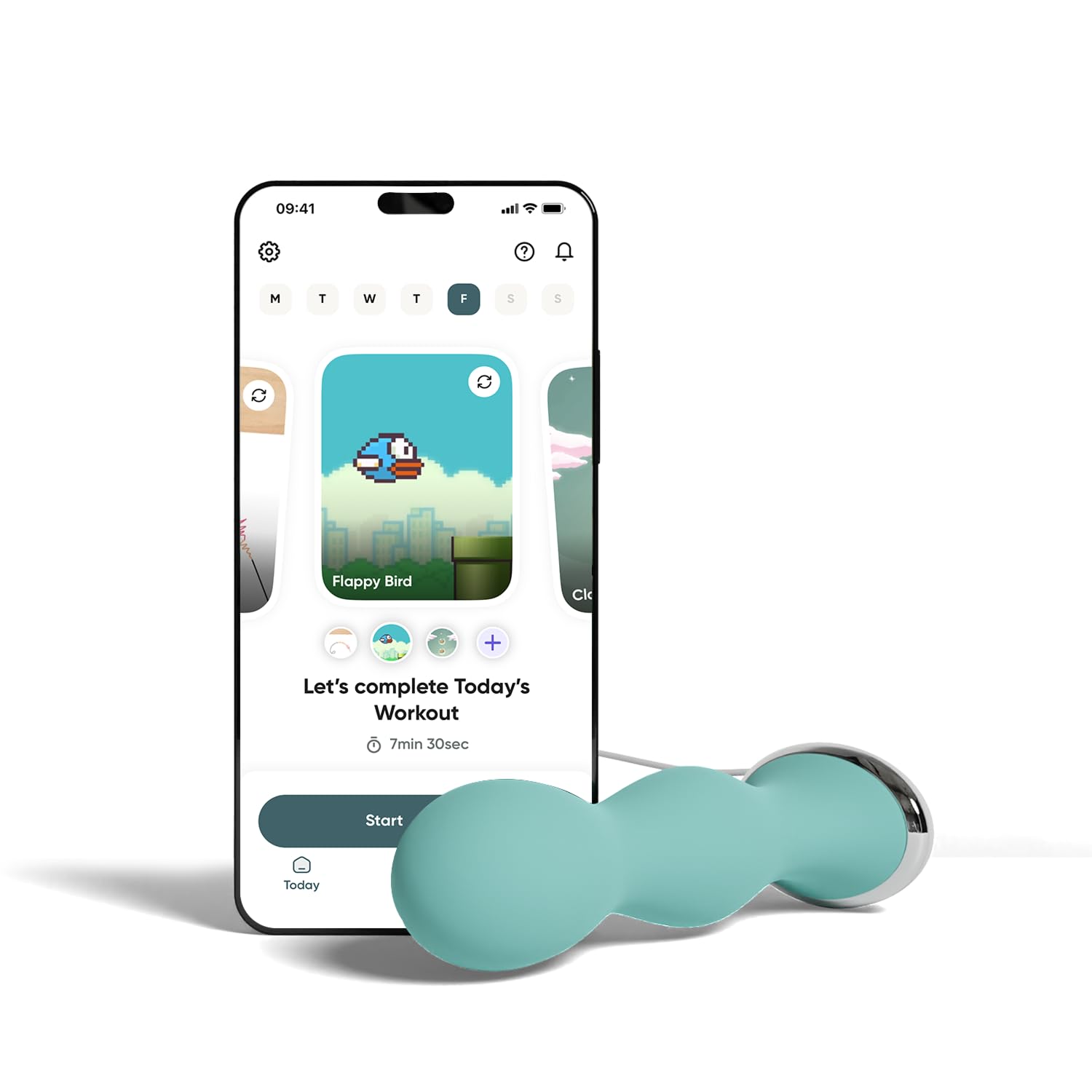
You can do Kegels for months and never learn whether the squeeze is happening where it should. Perifit answers that in the first session. The probe reads the contraction and turns it into a bird on a screen: squeeze and it climbs, relax and it glides down. The app scores each contraction five ways — strength, endurance, precision, quality, and speed — so a weak spot shows up as a number rather than a feeling.

The games are what make it stick, and they're the reason we rank it above the weight set for anyone with a specific leakage goal. Steering a little plane through hoops for ten minutes is the only pelvic floor routine we've kept up with for more than a week, and the progress chart means a flat month reads as data instead of failure. Feedback plus something to look forward to is a combination no set of weights can offer.

Position matters more than the packaging suggests. The probe has to sit where the sensors can read the squeeze, and sitting fully upright can pinch, so we run sessions half-reclined against a headboard. Get that right and the readings settle within a session or two; the calibration routine at the start of each session is worth taking seriously rather than clicking through.

Pros

  • Shows whether a contraction is actually happening
  • Games make a daily routine easy to keep
  • Charts progress across sessions
  • Comfortable and quick to set up

Cons

  • Battery is sealed in and not rechargeable
Our verdict

The pick for anyone who isn't sure a Kegel is landing in the right place: live biofeedback and games turn a guess into something you can see and keep doing.

Check Latest Price
3

Best Non-Insertable Option

OPTP Pelvic Rocker

80 /100
Trail Score Excellent

Key details

Type
Balance disc
Height
3 in
Diameter
11 in
Weight Limit
264 lb
Check Price on Amazon

Not everyone wants to train internally, and after pelvic surgery or during a stretch of pelvic pain it may not be where you want to begin. The Pelvic Rocker is what we point to instead, and it's the recommendation we're most confident about for that group. It's an 11-inch disc you sit on or lie over, and the work is slow: pelvic tilts, small circles, finding the spot where your lower back lets go. Nothing is inserted, nothing needs charging, and a session is over before your coffee goes cold.

What it builds is control rather than strength. There's no spring to progress against, so it won't replace weights or a probe for pure loading; what it does is teach you where the muscles sit and how they move with your breath and your hips, which is the groundwork most people skip on the way to a squeeze count. We came to it expecting a wobble board and found something closer to a mobility tool you happen to sit on.

The soft rubber edge is the detail we appreciate most — bare skin on a hard plastic rim is how these end up in a closet — and it holds up to 264 pounds. It has a non-slip base, though on a polished floor we still put it on a rug, because it creeps. At 11 inches it's compact enough to keep beside a desk, which is where it gets used most.

Pros

  • Nothing to insert and nothing to charge
  • Soft rubber edge cushions contact points
  • Compact 11-inch footprint for a desk or mat

Cons

  • No resistance or progress feedback
Our verdict

The one we suggest when an internal device isn't an option: it builds pelvic control and hip mobility from a seated position, without resistance or a readout.

Check Latest Price
4

Lower-Body Strength

TINRIEF 77 lb Adjustable Trainer

92 /100
Trail Score Outstanding

Key details

Assembly
None required
Material
Alloy steel and PP
Warranty
1 year
Resistance
22 to 77 lb
Check Price on Amazon

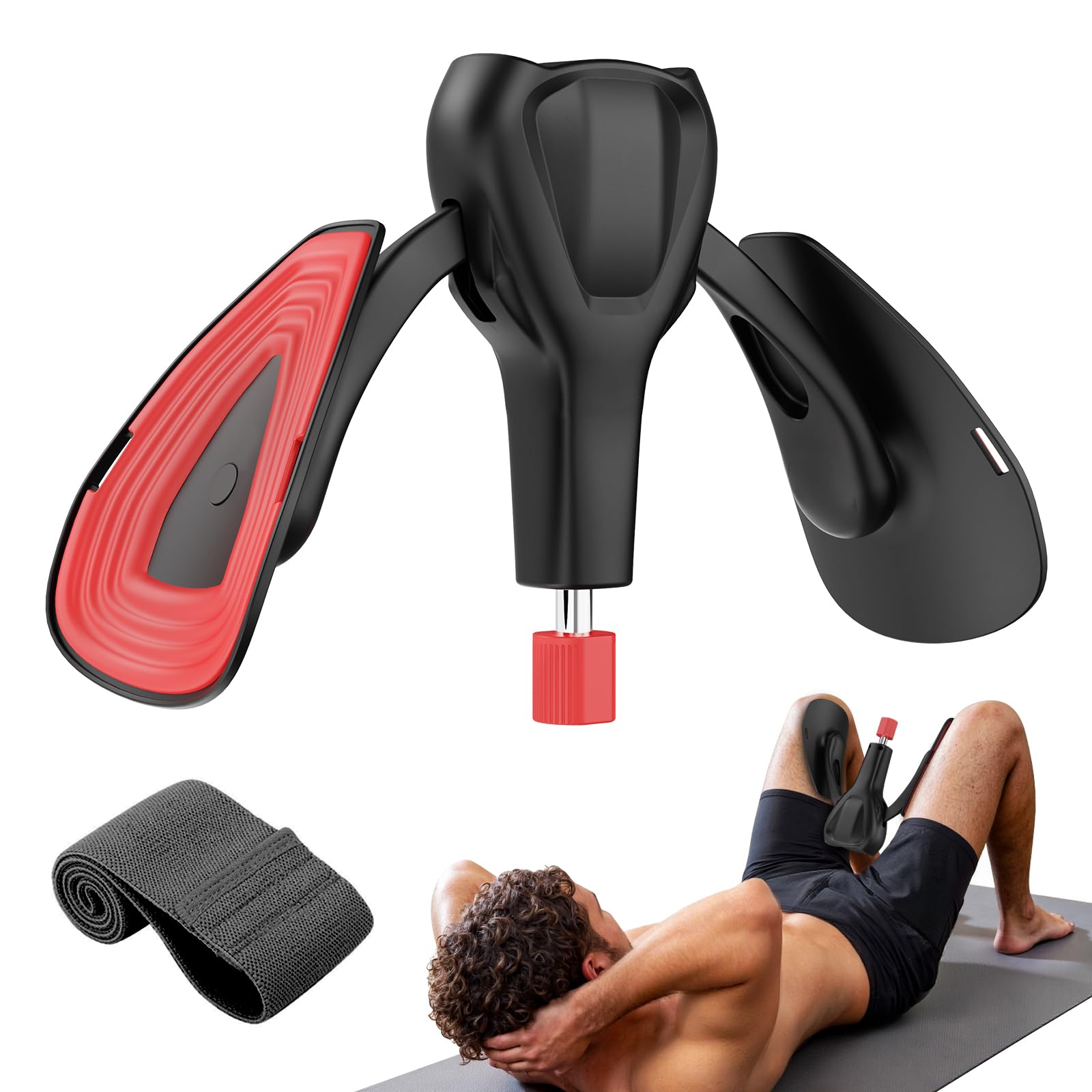
Start with what this is: a spring-loaded inner-thigh exerciser. Squeeze your knees together and your adductors do the heavy lifting, with the pelvic floor joining in as part of the chain. That's a genuine lower-body workout and it's how the device actually gets used, but it isn't the same as isolating the pelvic floor, and no amount of packaging language changes that. If you want a leg-day tool that also asks your pelvic floor to switch on, that's a fair reason to buy it — just don't buy it as your only answer to leaking when you sneeze.

As this style goes, it's the most capable version on the page. Resistance runs from 22 to 77 pounds on a knob, so you can warm up light and finish heavy, and 77 pounds is a serious ceiling for a device you squeeze between your knees. It arrives assembled, the triangular frame sits stably rather than twisting, and the rotating leg plates let you change the angle to reach glutes, arms, and hamstrings instead of just the inner thigh. A one-year warranty backs it.

The reason to pick it over the cheaper squeezers is the adjustment: this is the version you won't outgrow in a month, and the knob makes progression obvious rather than guesswork. Treated as the leg-day device it is, paired with a routine that genuinely targets the pelvic floor, it earns its place in the corner of a room.

Pros

  • Adjustable from 22 to 77 pounds
  • Arrives assembled and ready to use
  • Rotating leg plates change the exercise angle
  • One-year warranty

Cons

  • Runs smaller than expected between the knees
Our verdict

The best of the thigh-trainer style: 22 to 77 pounds of adjustable resistance, ready to use out of the box, and honest about being an adductor workout rather than a targeted Kegel device.

Check Latest Price
5

Budget Starting Point

KVKVMO Thigh Trainer with LED Display

79 /100
Trail Score Very Good

Key details

Weight
12.8 oz
Display
Time, reps, calories
Warranty
24 months
Included Band
20 lb
Check Price on Amazon

The little display is the reason this one made the list. It counts reps, time, and calories, so a set has a score and you can tell a five-minute session from a fifteen-minute one — none of the other squeezers here give you that. For a device that only works if you use it daily, a number to beat is worth more than it sounds, and it's the difference between a habit and a thing under the couch.

The rest is modest but sensible. It weighs 12.8 ounces, so it lives in a desk drawer; the leg plate rotates a full 360 degrees; and there's a 20-pound band in the box for arms and shoulders once the spring stops being enough on its own. A 24-month warranty is the longest of anything on this page, which is not nothing on a device this cheap. What it won't do is soften itself: the shell is hard, unpadded plastic, and on bare thighs it digs in. Leggings thick enough to blunt the edges fix most of that, and the display is worth the trade.

Pros

  • Counts reps, time, and calories
  • Includes a 20-pound resistance band
  • 24-month warranty

Cons

  • Hard plastic digs in on bare skin
Our verdict

A cheap way to try the thigh-trainer idea: it counts reps, time, and calories, ships with a band, and asks almost nothing of your budget.

Check Latest Price

How We Tested Pelvic Floor Trainers at Home

We started by pulling every trainer we could find in stock and cutting anything with a warranty under a year, vague or missing instructions, or materials we couldn't identify — in a category where a rough seam is a real problem. That left 11: weighted cone sets, app-connected probes, and a couple of stim units, each used near-daily for at least three weeks by two or more testers across those eight months.

None of it happened on a lab bench. Sessions ran in the morning before a shower, in bed at night, on a living-room rug mid-episode, and — for the weighted sets — standing at the kitchen counter, which is where fit shows itself: a cone that shifts when you walk or cough isn't staying in for the full set. Our testers included people after vaginal delivery, a distance runner, and someone post-menopause, so size and comfort got compared across very different bodies.

We logged how long we could hold a lift, how many quick pulses we could manage, and how often we leaked on a sneeze or a cough, then repeated the log at week three and week six. Ease of use came down to a stopwatch and a bad memory: time from box to first session, and whether we still needed the manual open on day two. We read instructions cold and marked whether they explained how to tell a lift from a bearing-down, and checked noise with the bathroom door shut and a housemate listening on the other side.

Weighted sets were judged on whether the gaps between weights were small enough to progress through without stalling, and every trainer got a value read — what came in the box, whether it survived repeated washing, whether it fit a bedside drawer, and whether it looked like something you'd want to leave out. Four are still in rotation.

How to Choose a Pelvic Floor Trainer

Work Out Which of Three Things You're Buying

Search results for pelvic floor trainers mix three products. Weighted inserts and biofeedback probes train the muscles directly. Seated rockers build control and mobility without anything internal. And the spring-loaded device with two leg pads is an adductor trainer: it works your inner thighs, and your pelvic floor contracts alongside them rather than under load.

That last kind is a decent lower-body workout, and we've kept the best of them on this list — but if your goal is fewer leaks when you sneeze, it isn't the tool that gets you there. Read the mechanism, not the title, and be suspicious of any squeeze device that never explains how it reaches the pelvic floor specifically.

Weights or Biofeedback?

Both work, and they solve different problems. A set of weights gives the muscles something to hold and corrects you by feel — bear down and the weight slips — which is why it's the cheapest effective place to start. A probe measures the contraction and shows you whether it's happening at all.

We steer first-timers to weights and anyone who has never had their technique checked toward a probe. The extra money buys certainty about technique, not a stronger muscle on its own; if you already know you can isolate the muscle, spend it on something else.

Fit, Retention, and Body-Safe Materials

Insertables should be medical-grade silicone, seamless, and free of grooves that hold residue; those three things matter more than the shape. Retention is the variable nobody warns you about. If the lightest weight slides out within minutes, the usual cause is technique rather than a weak pelvic floor or a bad product, so treat it as a signal to get your contraction checked before you buy a heavier set.

Comfort is the other half of the decision. A device you dread inserting gets used twice and then lives in a drawer, and that's a worse outcome than spending more on something you'll actually reach for.

What It Costs to Keep Running

Weights are the only option here with no running cost: silicone, warm water, done. A powered probe has a battery inside it, and on some models that battery is sealed and not replaceable, which turns the device into a few-years purchase rather than a permanent one.

Ask whether the battery is user-replaceable before you pay a premium for a probe, and ask how long the maker expects the probe itself to last. For an insertable device, a one-year warranty is a reasonable floor.

Build a Routine You'll Actually Keep

Fifteen minutes with a weight, ten minutes of games, a few minutes of rocking while the kettle boils — the format matters far less than the frequency. The devices people stay with are the ones that slot into a moment that already exists in the day: a thigh trainer at a desk, a rocker beside the TV, a probe in the ten minutes before a shower.

Pick the routine first and the device that survives it second. That order is why we put a plain set of weights at the top of this list and a games console of a probe right behind it.

Frequently Asked Questions

Final Verdict

Start with the Intimate Rose set. It's the least expensive way to train the muscle properly, it corrects bad technique by feel, and it has nothing inside it that can fail. Buy the Perifit instead if you've never been sure your contraction is landing right, or if you've already climbed past the heaviest weight in a set — the biofeedback is what you're paying for, and the games are what will keep you using it.

If internal devices are off the table entirely, the OPTP rocker is the one to take home. And if what you actually want is a lower-body squeeze you can do at a desk, buy the TINRIEF adjustable model and keep a real pelvic floor routine alongside it.