Best Breast Pumps of 2026

A breast pump is the rare baby purchase you can't try before you need it, and the one you'll use more than almost anything else in the nursery. The 3 a.m. session in the dark, the bag you haul to work, the flange that fits and the one that leaves you raw — those details decide whether pumping feels manageable or miserable. What you're actually buying is output without pain, from a machine that holds its suction when you've got fifteen minutes and a meeting in twenty. We've spent six months with ten pumps, and the gap between a good one and a frustrating one shows up fast.

Our testers ran from exclusive pumpers to moms who nurse all day and pump twice, and the wish list was the same: steady suction, flanges that don't chew you up, and a motor that doesn't quit mid-session. Here's what nobody tells you before your first pump — flange fit changes your output more than the motor does, so get sized before you blame the machine. The picks below held up to all of it.

1

Best Overall

Spectra S1 Plus

93 /100
Trail Score Outstanding

Key details

Weight
3.3 lb
Pump Type
Double electric, rechargeable
Noise Rating
45 dB
Flanges In Box
24mm and 28mm
Check Price on Amazon

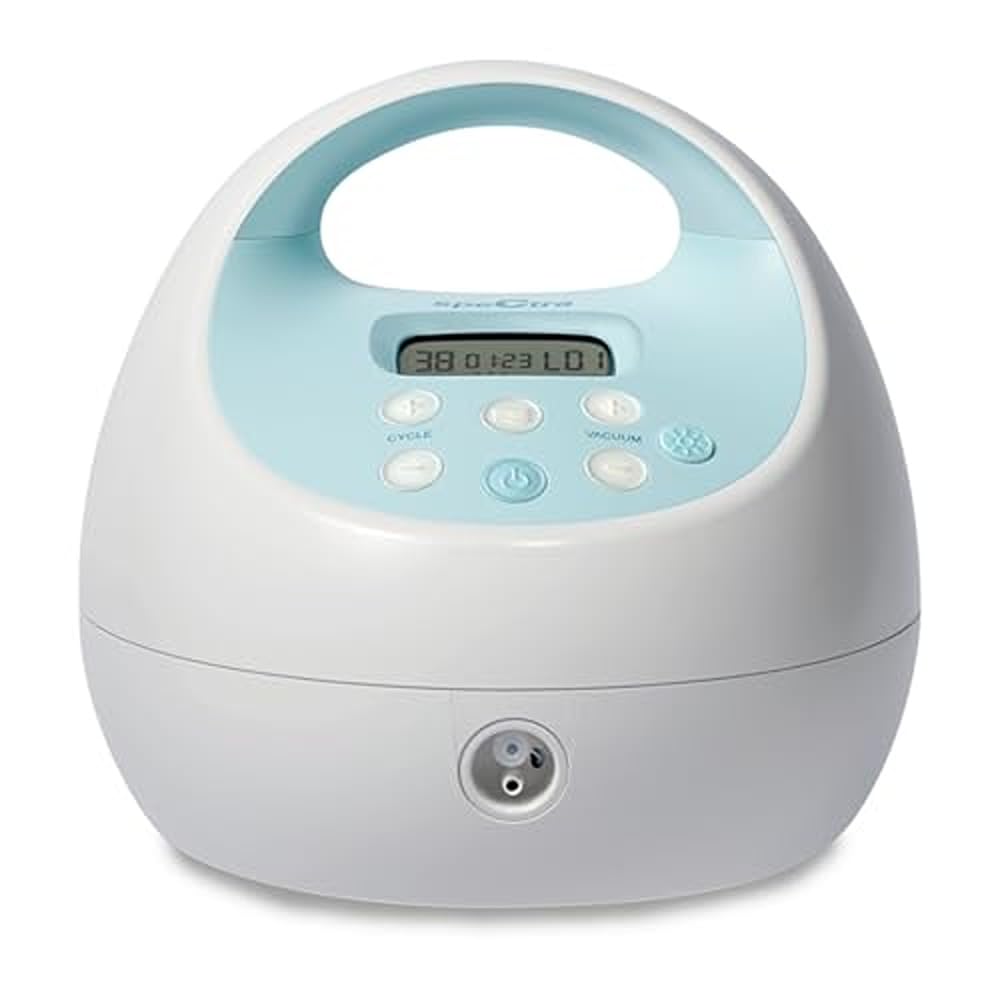
The S1 Plus is the pump we recommend as a primary — the one that does the daily work rather than sitting in a bag as backup. The reason is the built-in battery: it runs corded or on its own charge, so a session is not tied to an outlet. That sounds minor until you are pumping in a car, a closet, or a room with no free socket, and it is the design decision that separates this from a plug-in double.

What the battery buys is a pump that can move around your day. It is rated at 45 dB, quiet enough for a shared room, and speed and suction adjust separately, so you can run fast and shallow to trigger let-down and then slow down and pull harder. Two 24mm and two 28mm flanges come in the box, which means most pumpers find a workable fit without ordering parts before the first session.

The hygiene details are the ones we notice now. Backflow protectors put a physical barrier between milk and motor, so the tubing stays dry and the wash pile stays small, and the kit breaks down without tools. The pump carries a two-year warranty and the accessories 90 days — the longest coverage of anything in this guide, and worth weighing against the price.

Size is what it costs you. At 3.3 pounds and roughly eight inches on each face, it eats nightstand space and stays there; this is not a pump you carry to work and back. Suction preference is the other open question: the S1 leans toward comfortable rather than forceful, so if your supply responds only to strong, steady vacuum, try one before committing.

Pros

  • Rechargeable battery or corded power
  • Rated 45 dB for quiet sessions
  • 24mm and 28mm flanges included
  • Two-year warranty on the pump

Cons

  • 3.3 pounds, the heaviest pump here
  • Premium price among these picks
Our verdict

For the pump that does the daily work, we point to the S1 Plus: it runs on its own battery, stays quiet, and ships with the two flange sizes most people need.
Check Latest Price
2

Best Manual Pump

Medela Harmony

91 /100
Trail Score Outstanding

Key details

Shield
PersonalFit Flex, 360° rim
Cleaning
Dishwasher-safe parts
Pump Type
Manual hand pump
Bottle Capacity
5 oz / 150 ml
Check Price on Amazon

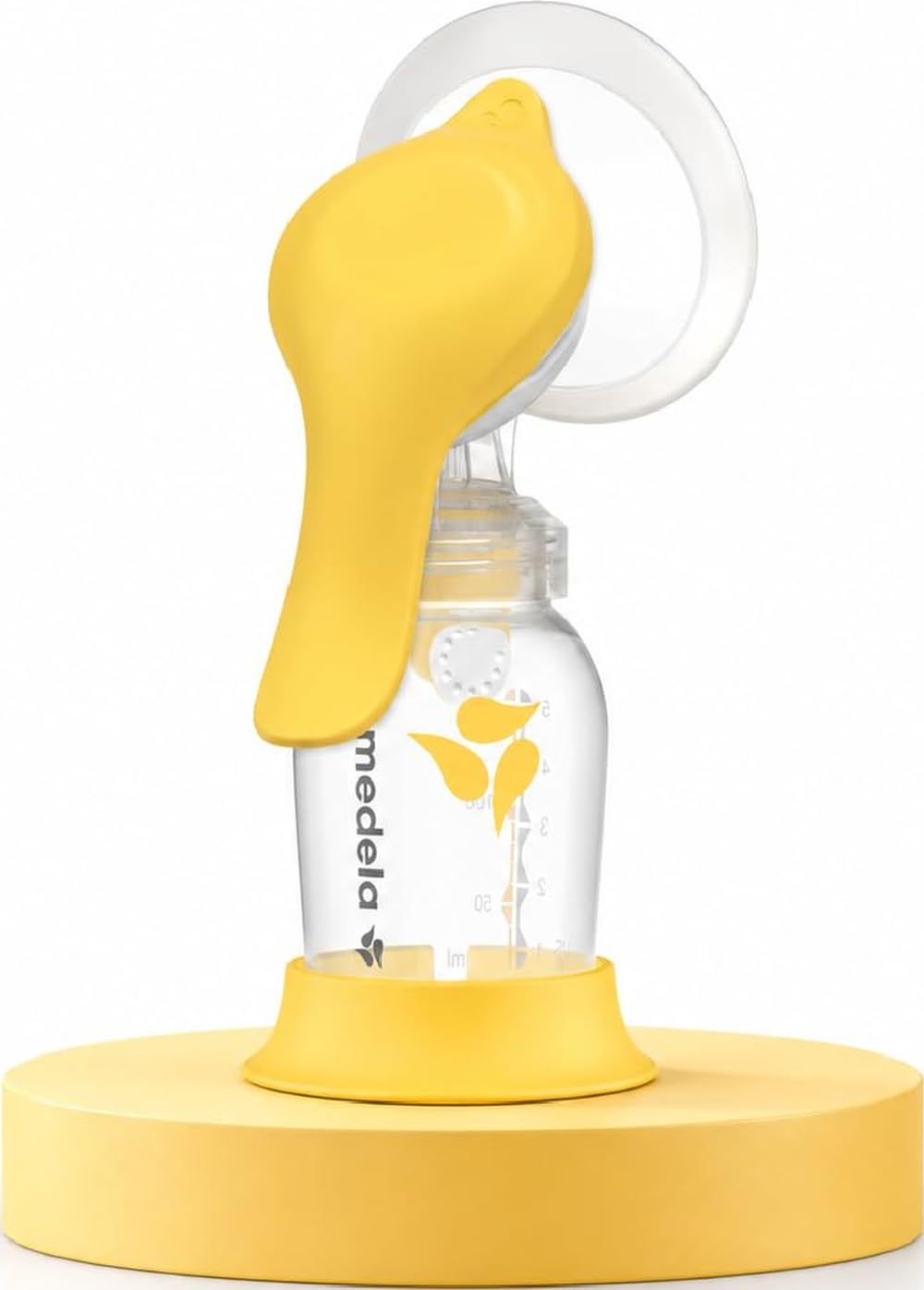
Set the Harmony next to the double electrics in this guide and the appeal is obvious. There is no motor, no tubing, and no charger — just a handle, a shield, and a 5-ounce bottle that fit in the corner of a diaper bag. It is the pump we picture living in the car, the office drawer, or the bag you grab on the way out.

The handle is what makes it worth owning. Medela's two-phase action takes short, quick strokes to trigger let-down and longer holds to express, so you are not locked into one squeeze, and the PersonalFit Flex shield has a soft oval rim that rotates 360 degrees to sit at the angle your breast actually is. Of the hand pumps here, this is the one we hand someone who needs to genuinely empty a breast away from home.

It stores without a second container: pump into the bottle, twist on the lid, refrigerate. There are few parts and they are dishwasher safe, so cleanup is a couple of minutes rather than a sink full of valves — a real consideration at the end of a day when the alternative is washing a double-electric kit.

It is a second pump, not a replacement for one, and a manual session cannot match a double electric for speed on a workday. Run it through a full session in the first week, too: a hand pump that will not hold its seal out of the box is not going to improve with practice.

Pros

  • No cords, batteries, or assembly
  • Two-phase handle for let-down and expression
  • Pumps straight into the included 5 oz bottle
  • Few parts, dishwasher safe

Cons

  • Suction comes from your hand, not a motor
  • Pumps one breast at a time
Our verdict

This is the pump we reach for when the bag is already full: no power, no setup, and a two-phase handle that empties a breast better than a hand pump should.

Check Latest Price
3

Best for Catching Let-Down

haakaa Manual Pump

93 /100
Trail Score Outstanding

Key details

Weight
3.2 oz
Capacity
4 oz / 100 ml
Pump Type
Manual silicone collector
Check Price on Amazon

The haakaa is the least expensive thing in this guide and the one that earns its place fastest. It is a single piece of silicone — no motor, no tubing, no valves — that you squeeze to create suction and set on the breast you are not nursing from.

What it does is turn the opposite side from a leak into a stash. With suction it draws a slow, steady stream; worn inside a bra without suction, it simply catches the let-down that would otherwise soak a pad. Nothing to charge, nothing to assemble, so it works at 3 a.m. as well as it works in a parking lot.

The cleaning is what sold us. It can be boiled, and there is no joint or valve for milk to hide in — which is the difference between using it every feed and leaving it in a drawer. It is also the item we recommend to someone who is nursing directly and does not want a pumping routine at all.

The suction is the part that takes getting used to. It comes from how firmly you squeeze, so on tender days a lighter hold and a longer session is the way to use it rather than chasing a fast fill. Start gentle, and treat a full cup as the end of that side's session rather than something to push through.

Pros

  • One piece, so nothing to lose or scrub
  • Works with or without suction
  • No batteries, cords, or assembly
  • Boil-safe silicone

Cons

  • Collects let-down rather than emptying a breast
  • Can slip off as it fills
Our verdict

Worth buying before almost anything else here if you are nursing directly: it costs little, cleans in seconds, and turns leaked milk into stored milk.

Check Latest Price
4

Best Budget Double Electric

NCVI 8782

88 /100
Trail Score Excellent

Key details

Battery
2,200 mAh
Pump Type
Double electric, rechargeable
Noise Rating
40 dB
Modes And Levels
4 modes, 9 levels
Check Price on Amazon

The 8782 is a conventional double — bottles and flanges on both sides, a hose to the motor, a control panel you learn in a day. Nothing clips into a bra, so you are either holding both bottles or wearing a pumping bra, and that is the one place this pump asks more of you than a wearable does.

The battery is the feature that matters most. It is a 2,200 mAh cell, and the maker rates it for roughly three sessions per charge; plugging it into a power bank covers a long day away from an outlet. At a rated 40 dB it has the lowest noise figure in this guide, which makes it the one to consider for a shared office or a bedside feed.

Where it earns the recommendation is the spread of settings. Nine levels sounds like marketing until you are two weeks in and need to back off a notch; the range here is wide enough to find a workable setting, and the anti-backflow design keeps milk out of the tubing so cleanup stays short.

Suction is the honest compromise: it is adjustable and effective for most sessions, but if you are pumping exclusively, spend more and get the Spectra. This is the pump for someone who needs both sides going at once and cannot justify premium money for it.

Pros

  • Four modes and nine suction levels
  • 2,200 mAh battery, chargeable from a power bank
  • Lowest noise rating in this group at 40 dB
  • Anti-backflow design keeps milk out of tubing

Cons

  • Battery life falls short of the rated sessions
Our verdict

If a double electric has to fit a tight budget, this is the one: four modes, nine levels, and a battery, with the understanding that you supply the pumping bra.

Check Latest Price
5

Best Wearable Collector

Boon Trove

90 /100
Trail Score Outstanding

Key details

Capacity
3 oz per cup
Cleaning
Top-rack dishwasher safe
Pack Size
2 count
Pump Type
Wearable passive collector
Check Price on Amazon

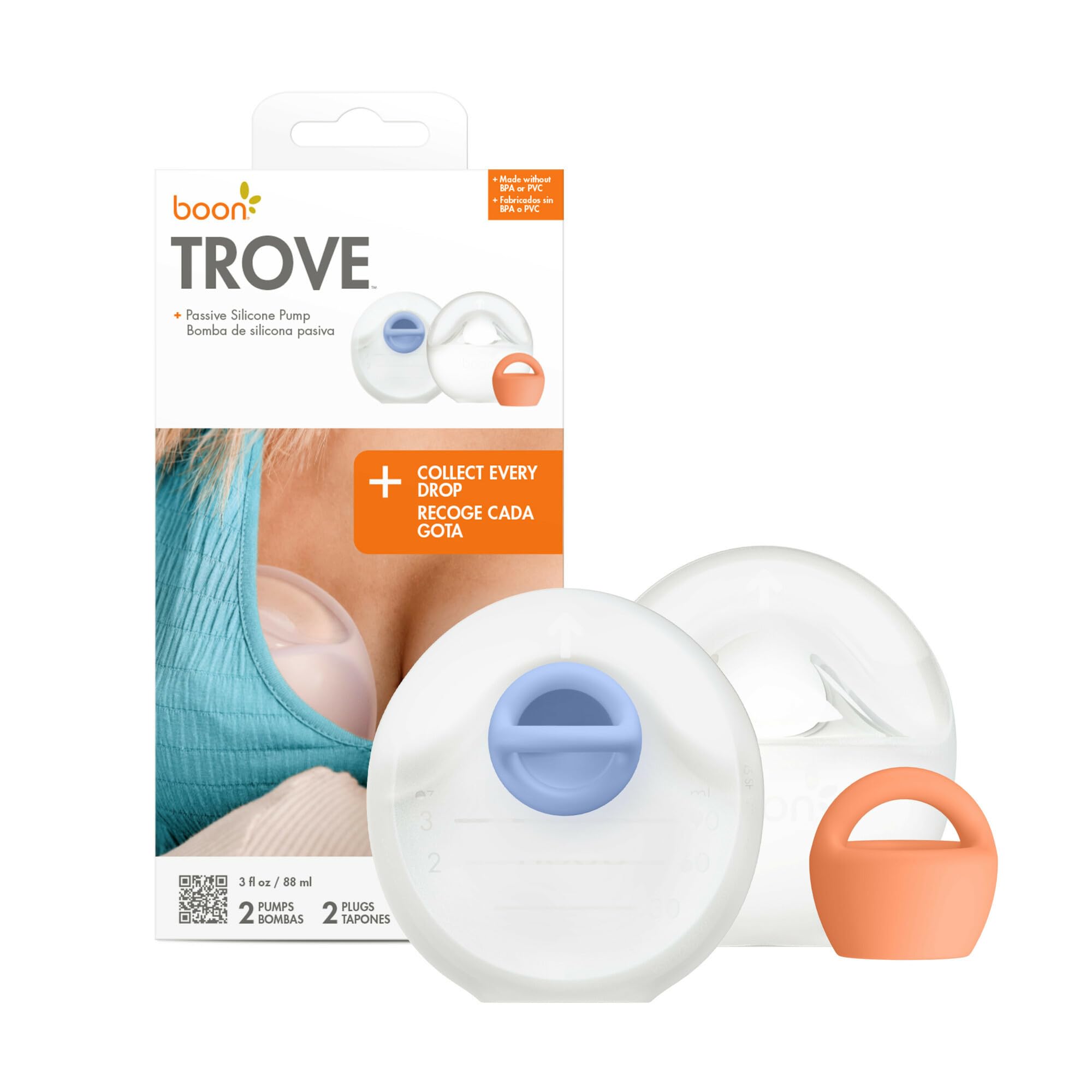
The Trove solves one specific, recurring moment: you are nursing on one side at 2 a.m., the other side is letting down into a pad, and the last thing you want is to hold a bottle in place. These are two small silicone cups that sit inside your bra and collect what would otherwise be lost.

Compared with the haakaa, the appeal is that nothing hangs off you. The cup sits inside the bra, so a kicking baby cannot catch it, and it stays put when you switch sides or lie down. We keep one at the bedside and the haakaa in the living room, and that split tells you most of what separates the two designs.

The small details are thoughtful: each cup stands on its own on a nightstand, so pouring into a storage bag does not end in a tip-over, and the two-pack means one is always clean. Top-rack dishwasher safe, BPA- and PVC-free silicone, and a travel pouch in the box.

The limit is what passive suction can do. It catches milk that is already flowing, so it works alongside a pump rather than instead of one, and a heavy let-down can fill a cup before a feed is over — empty it and reseat it mid-session and it keeps up.

Pros

  • Stays seated inside a nursing bra
  • Two-pack means one is always clean
  • Stands on its own for spill-free pouring
  • Top-rack dishwasher safe

Cons

  • Three ounces per cup
  • Needs a snug bra to stay seated
Our verdict

For the overnight feed and the toddler who kicks, these cups stay where you put them and quietly collect what would otherwise be lost.

Check Latest Price
6

Best Hands-Free Wearable

Elvie Double

88 /100
Trail Score Excellent

Key details

Modes
Stimulation and expression
Control
App with real-time volume
Pump Type
Wearable double electric
Set Weight
14.8 oz
Check Price on Amazon

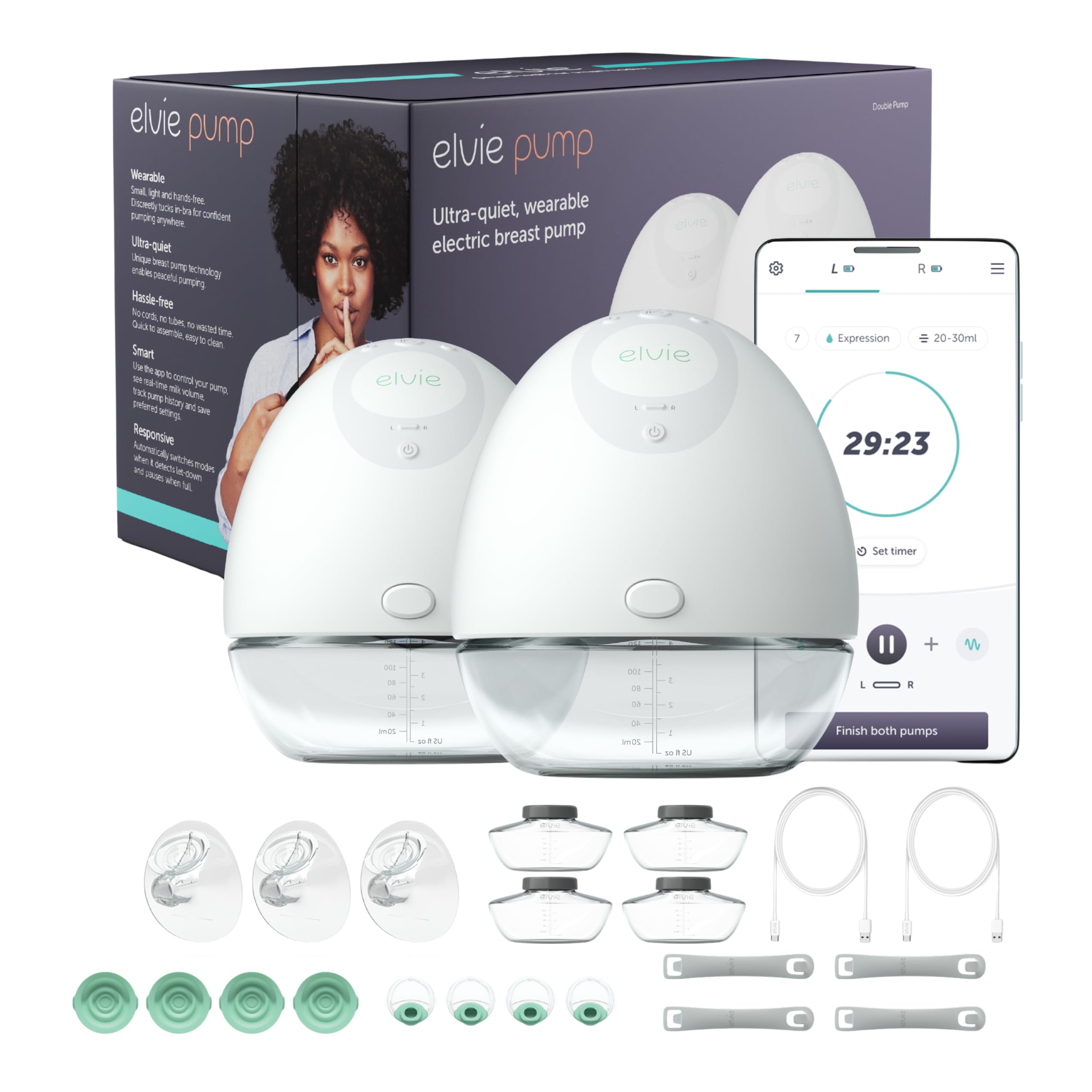
The Elvie is the only pump here that runs itself. Infrared sensors measure how much is in the bottle and switch the pump from stimulation to expression without you touching a button, and the app mirrors the volume in real time and keeps a history of your sessions. The motor is a set of tiny Piezo discs oscillating 21,000 times a second, which is why there are no tubes to route under a shirt.

What that buys is a session you can have in front of other people. Each cup sits in the bra, the silhouette stays close to natural under clothes, and you are not anchored to a table. If you are pumping in an office, on a commute, or while chasing a toddler, this is the design that makes it possible rather than merely less bad.

We rate it as the pick for discretion and nothing else. The automation is genuinely useful — checking volume without reaching into your bra is a small dignity worth paying for — and the double set weighs under a pound, so it travels. It is a supplement to a primary pump rather than a substitute: the motor is built to be small and quiet, not to match a full-size double for pull.

The costs are money and parts. It is the most expensive pump in this guide by a wide margin, and every session leaves you with two cups, two shields, and two valves to wash. Neither is a dealbreaker if discretion is what you are buying; both are worth knowing before you commit.

Pros

  • Sensors switch modes automatically
  • App shows volume in real time
  • Sits inside the bra with no cords
  • Double set weighs under a pound

Cons

  • Highest price in this guide
  • Two cups and several small parts to wash per session
Our verdict

The pump to buy when discretion is the requirement: it runs itself from an app, hides under clothes, and costs accordingly.

Check Latest Price
7

Backup Manual Pump

Lansinoh Manual Pump

89 /100
Trail Score Excellent

Key details

Bottle
Wide-neck, NaturalWave nipple
Phases
Let-down and expression
Weight
4.8 oz
Pump Type
Manual hand pump
Check Price on Amazon

This is the manual for the parent who wants a second pump without thinking hard about it: something in the diaper bag for the feed that runs long, the flight, or the day the electric's battery dies. It costs about the same as the Medela Harmony and does the same two-phase job — short strokes to let down, longer holds to express.

The handle is shaped to reduce hand fatigue, and the pump can be used with a pumping bra, which means you can, oddly, go hands-free with a hand pump. It comes with a wide-neck bottle and a slow-flow NaturalWave nipple, so you can pump, cap, and feed from the same container, and Lansinoh's bottles interchange across its range.

Parts are few and BPA- and BPS-free, and let-down and expression are separate phases rather than a single squeeze with a suggestion of two. Set against the Harmony, the difference is mostly in the shield and the handle rather than the mechanism.

On a long day, technique is what separates it from its rival: two-phase pumping works only if you commit to the pattern of short strokes and long holds, and a rushed session gets you very little. Treat it as a backup and it earns its place; treat it as your only pump and you will feel the effort.

Pros

  • Two-phase pumping at the low end of the price range
  • Can be used with a pumping bra
  • Includes a NaturalWave slow-flow nipple
  • Few parts to assemble and clean

Cons

  • Handle can develop a squeak over time
Our verdict

A sensible second pump: two-phase pumping, a bottle you can feed from, and enough control to make a manual session worth the effort.

Check Latest Price

How We Tested Breast Pumps at 3 A.M., at Work, and in the Car

We started by pulling every pump sold at major retailers — wearables, battery portables, and full double electrics — then cut anything with fixed suction settings, an open system that lets milk creep into the tubing, or replacement parts that were hard to source. That left ten pumps, which we matched to testers at different stages: exclusive pumpers doing eight sessions a day, moms pumping twice around nursing, and one person who needed something that worked on a commute.

Each pump got six months of ordinary use, with testers keeping a session log: ounces per session, how long it took to feel emptied, and whether output held steady from morning to night. We timed setup one-handed and in the dark, counted parts to wash and whether they survived the dishwasher, and noted which pumps offered flange sizes beyond the default — most people need a different one. Comfort went in the same log, including whether suction had to be turned down, whether anyone was sore the next morning, and whether a twenty-minute session felt like a chore or a break.

Reliability was the slow part. We ran batteries to zero and timed them, watched for suction that faded after a few weeks of daily use, and checked how easily and how cheaply you could reorder a valve or membrane, since a budget pump with pricey yearly parts isn't a bargain. Ranking came down to what testers actually cared about: whether the pump emptied the breast, how quickly, and whether they minded sitting down with it.

How to Choose a Breast Pump

Start With the Job, Not the Motor

A primary pump does the daily work: both sides at once, several sessions a day, a return to work. A double electric with a real battery earns that role, which is why the Spectra S1 Plus leads this guide. A second pump is the one that lives in a bag or beside the bed, and a collector like the haakaa covers that for very little money.

Buy for the sessions you will actually do. If you are nursing directly and only need to stop leaking, a passive collector is enough and a double electric is overkill. If you are pumping exclusively, the primary is the only one that matters and it is worth spending more on it.

Fit Decides More Than Any Setting

The flange is the funnel that sits against the breast, and a mismatched one causes most of the soreness and low output people blame on the pump. Too small and it pinches; too large and air gets in, so the seal leaks and suction disappears. Measure across the base of the nipple and compare against the maker's chart before your first session.

This is the practical reason to check what comes in the box. The Spectra S1 Plus includes both 24mm and 28mm flanges, so you can try two sizes without ordering anything; many pumps ship a single size, and a spare flange is a small purchase that saves a painful week.

What Suction Numbers Actually Tell You

Millimeters of mercury and level counts are the easiest specs to compare and the least informative on their own. What matters is whether the pump separates stimulation from expression and lets you set speed and suction separately, so you can start fast and shallow and slow down as milk flows. Five well-spaced levels beat nine that crowd the top of the range.

Some pumpers need a strong, steady pull to let down; others do better with a gentle, quick pattern. That is why comfort is the honest test. If a session leaves you sore, change the flange before you blame the pump, then try a different mode before you buy a different machine.

Battery, Noise, and Where You'll Pump

A rechargeable pump buys you rooms without outlets, not airports. A double electric with bottles, flanges, and tubing still needs a table or a pumping bra, so portability is about the setup as much as the battery. Weight matters more than you expect once you are carrying it daily: the Spectra is a 3.3-pound stay-at-home pump, while the hand pumps here weigh a few ounces.

Rated noise in the 40 to 45 dB range is quiet enough for a shared office or a bedside feed, and the gap between those two figures is audible in a silent room. Treat any maker's noise figure as a comparison point between models, not a promise about your nursery.

Cleaning, Parts, and What Wears Out

Every pump has parts that touch milk and parts that must not, and the design detail worth paying attention to is the barrier between them. Backflow protectors on the Spectra and the anti-backflow design on the NCVI keep milk out of the tubing, which is the difference between rinsing a few pieces and cleaning a hose.

Part count is the daily tax. A one-piece silicone collector washes in seconds; a double electric leaves you with shields, valves, membranes, and bottles after every session. Before you buy, count the pieces you will wash twice a day for a year, and check that replacements are easy to find.

Frequently Asked Questions

Final Verdict

If you are buying one pump and want it to handle daily output, get the Spectra S1 Plus. The internal battery, the comfortable spread of suction settings, and the two flange sizes in the box make it the pump we point to first, and the two-year warranty covers the part that is expensive to replace.

The case for spending more is a pumper whose day happens away from a table: the Elvie Double is the only powered pump here built to disappear under clothes, and the sensors mean you are not reaching into your bra to check a level. If money is the constraint, the NCVI 8782 double-pumps for a fraction of the price, as long as you accept a shorter, less predictable battery and a pumping bra.