Best Overall
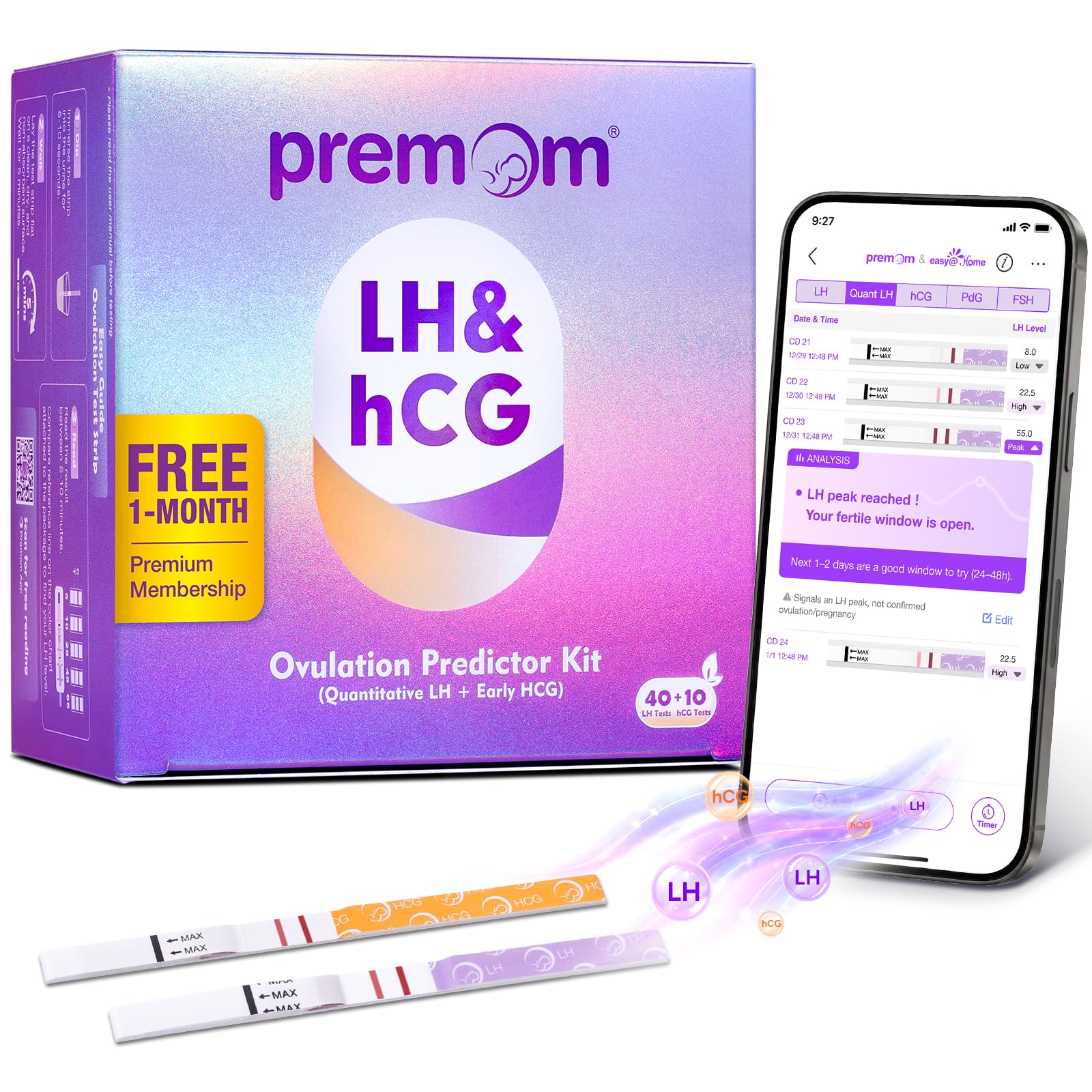
Premom Quantitative Ovulation Kit
Key details
- App
- Premom reader and tracker
- Test Type
- Quantitative LH strips
- LH Readout
- Numeric value in app
- Pregnancy Sensitivity
- 25 mIU/mL
The hard part of testing with PCOS isn't the dipping, it's deciding what the line means. LH can sit elevated for days at a stretch, so a strip that looks nearly positive on Tuesday looks nearly positive on Friday, and comparing the test line to the control line stops telling you much. The Premom Quantitative kit sidesteps that by turning each strip into a number: the Premom app photographs the strip and assigns an LH value, so you're watching a trend rather than a shade. That's why it's our top pick for this particular job.
The strips handle like any other — five seconds in the sample, lay it flat, read the window in a few minutes. What's different is what happens after, when the app logs the value and plots it against your earlier tests, so a rise is something you can point at instead of argue with yourself about. The kit also covers early pregnancy testing, with strips that detect hCG at 25 mIU/mL, and the test lines are built to come up solid rather than faint, which takes one more judgement call off the table.
Where it gives ground is consistency. The app's reading depends on the photo, and light, angle, and how long the strip has sat all nudge the number, so the values are only as useful as your routine is repetitive. Its track record here is thinner than the big combo kits, and there are stretches where the numbers wobble from one test to the next. For a reader who wants a mountain of confirmation before buying, easy@Home is the safer bet. For PCOS specifically, we think the number is worth the trade.
Pros
- Numeric LH values show a trend, not a shade
- App plots each result against your history
- Pregnancy strips detect hCG at 25 mIU/mL
Cons
- Reading depends on getting a consistent photo
- Costs more per strip than the big combo kits
Our top pick for PCOS because it hands you an LH number instead of a line to squint at, so a real surge stands out from your baseline.