Best Otoscope for Home Use of 2026

A home otoscope is one of those purchases you hope to never need—until someone wakes up at 2 a.m. tugging at an ear. The appeal is simple: a clear look at the eardrum and ear canal without a clinic run, plus a better answer to whether this is worth calling the doctor about. But a dim, poorly focused light can leave you less informed. Over the past eight months, my team and I tested 14 home otoscopes, from basic models to digital ones that pair with a phone.

The best ones share a few traits: a focused beam, a speculum that seals comfortably, and controls you can manage with one hand. We learned that the view matters more than the attachment count, and that ease of use isn't a luxury—if it takes two hands and a flashlight to get a clear look, you won't reach for it when it counts. Value here is a reliable view and a battery that lasts, not a drawer full of extras. The picks below earned a permanent spot in our bathroom cabinet.

1

Best Overall

Dr Mom 4th Gen Pocket Pro

95 /100
Trail Score Outstanding

Key details

Body
Anodized aluminum
Light
Soft white LED
Specula
Adult and pediatric disposable
Magnification
4X
Check Price on Amazon

The 4X lens is why this is our first recommendation. It gives a more magnified view than the plain 3X scopes here, and it does it through a pocket aluminum body rather than a full-size handle. The kit includes adult and pediatric disposable specula and a hard plastic case, which is the combination we want in a drawer: ready when someone wakes up with an earache, with no app to open and no charging routine.

The disposable tips are a practical choice for a household. We prefer them when more than one person uses the scope: peel one off, fit a fresh one, and you are not scrubbing a reusable cone before the next check. The anodized aluminum body has a more substantial feel than a plastic scope, and the soft-white LED keeps the canal looking natural instead of blue-tinted. The 4X view is strong enough to show wax and the eardrum without feeling like you are looking through a keyhole.

The specula need a firm seat; if one feels loose, twist it down before you insert it. That is a small routine, not a reason to skip the scope. A fresh tip and a quick twist are all the setup it needs, which is why it stays in the drawer rather than in a box of accessories.

Pros

  • Clear 4X optical view
  • Adult and pediatric disposable tips
  • Protective hard case included
  • Pocket aluminum body

Cons

  • Light output can be less than expected
  • Disposable tips add ongoing cost
Our verdict

We recommend the 4th Gen Doctor Mom as the default home otoscope: its 4X lens, adult and pediatric tips, and aluminum pocket body make a clear exam easy without a phone.

Check Latest Price
2

Best Budget Optical

Dr Mom 3rd Gen Slimline

91 /100
Trail Score Outstanding

Key details

Body
Stainless steel
Light
Soft white LED
Power
2 AAA batteries included
Specula
4 mm adult, 3 mm child, 2.5 mm infant
Check Price on Amazon

The 2.5 mm infant speculum is the reason to choose this one over our top pick. It also includes 3 mm child and 4 mm adult tips, all in a slim stainless body with a soft-white LED. For a household with a baby, that range matters more than a small step up in magnification.

We like the simplicity here. Two AAA batteries, a push-button, no app, no charging, no pairing. The 3X lens is less magnified than the 4X top pick, but the view is still useful for wax, redness, and the general shape of the canal. The stainless body feels sturdier than plastic, and the slim profile slips into a diaper bag or a glove box.

The tip connection is the part to check before each use; a speculum that is not seated fully can feel loose. The lower magnification is a fair trade for the smaller body, and the soft-white light is strong enough for a quick look in a dim nursery. Batteries are included, and replacements are standard AAA, so there is no proprietary charger to lose.

Pros

  • Three speculum sizes, including infant
  • Slim stainless body
  • Simple two-AAA operation
  • Soft-white LED

Cons

  • No hard storage case
Our verdict

We recommend the Third Generation Dr Mom for families with an infant or a tight budget: three speculum sizes, a stainless body, and a simple LED view without an app.

Check Latest Price
3

Best Wireless Camera

ScopeAround WiFi Otoscope

86 /100
Trail Score Excellent

Key details

Lens
3.9 mm
Battery
Included
Connection
WiFi
View Angle
70 degrees
Check Price on Amazon

The appeal here is seeing the ear on your phone, and the 3.9 mm WiFi camera delivers that without a cable. The 70-degree angle is designed to fit the canal, and the app offers full-screen and split-screen views. The split-screen mode is the feature we appreciate most: it lets you set a previous image beside the live view and compare the same spot over a few days.

Setup is the trade-off. The WiFi link can drop or refuse to reconnect, and a failed connection mid-exam is exactly when a nervous child stops cooperating. We treat connection as the first thing to test after charging; if it will not hold, return it rather than fight the app. The overheat protection is welcome, but the unit still needs a pause if it gets warm.

For a phone-first household, the ability to capture a still or a short video outweighs the lack of a built-in screen. The scope is small and light enough to keep in a bathroom drawer, and the split-screen comparison is more useful than a single snapshot. The image is good enough to show wax and the general canal, though it is not the equal of the best optical view here.

Pros

  • Wireless phone viewing
  • Split-screen image comparison
  • Photo and video capture

Cons

  • WiFi connection can drop or fail to pair
Our verdict

We recommend the ScopeAround WiFi otoscope for phone-first households that want to save and compare images; the wireless link is convenient when it holds.

Check Latest Price
4

Best Wired Digital

AnyScope Digital Otoscope

83 /100
Trail Score Excellent

Key details

Lens
0.15 inch
Connection
Wired
PC Support
No
Compatibility
iOS 9.0+ and Android 8.0+
Check Price on Amazon

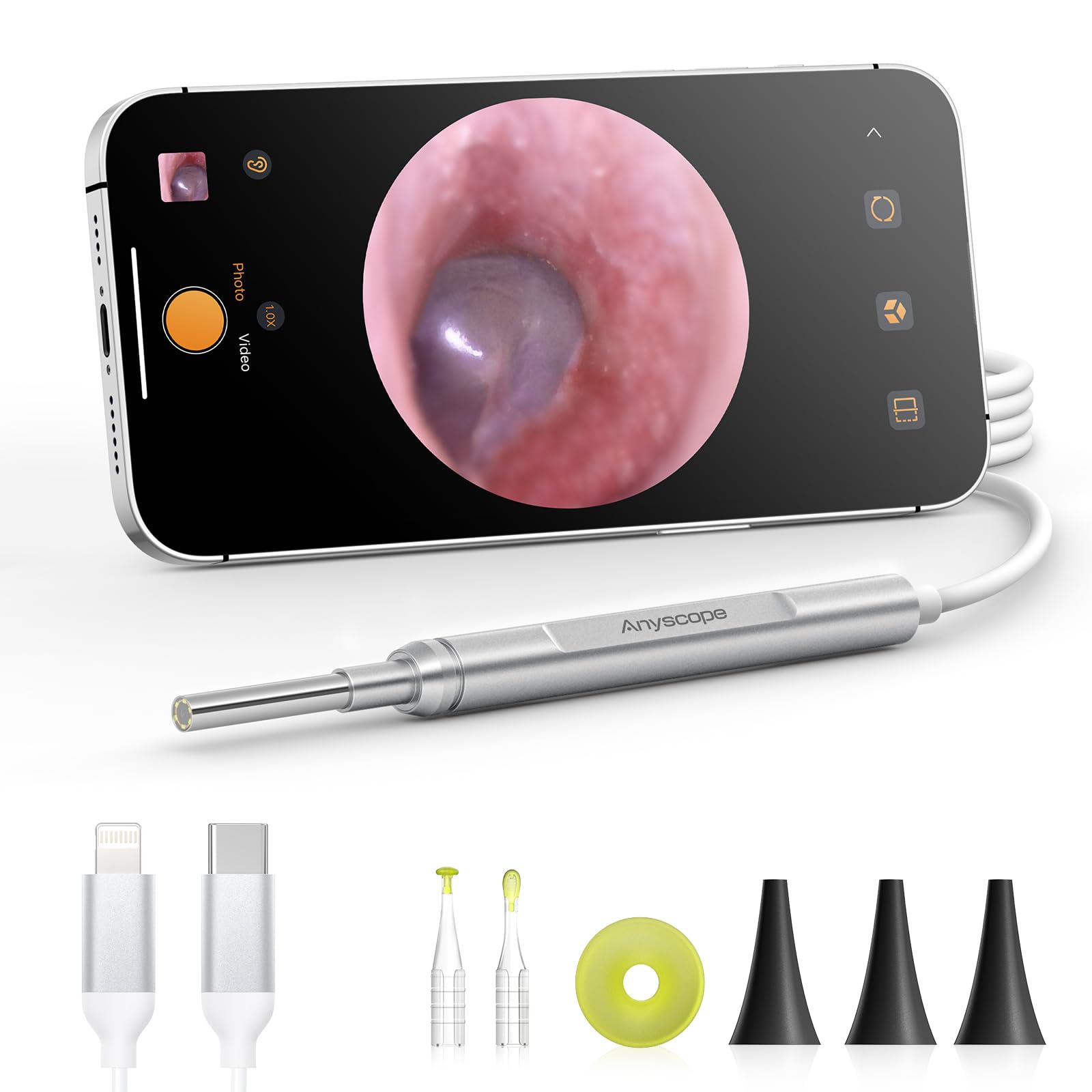
The cable is the feature. Instead of pairing over WiFi, this scope plugs into the phone's charging port and opens a live view in the app. For a quick check, we prefer that directness: no network to join and no battery in the scope to charge.

It works with iPhones on iOS 9.0+ and Android 8.0+ with OTG and UVC support. The 0.15 inch lens is slim, and the adjustable protection cover is a sensible touch for a nervous first-timer. A live image appears as soon as it is plugged in, which is the kind of setup that suits a scope kept in a travel kit.

The app is the weak spot. It asks for broad access to your photo library, which we do not like on principle, and image sharpness is not consistent from one session to the next. Holding still and cleaning the lens help. For the price, it is a useful travel scope or a second camera for a household that already has an optical scope, not the one we choose for a first purchase.

Pros

  • Plug-in, no pairing
  • Works with iOS and Android
  • Slim 0.15-inch lens

Cons

  • No PC support
Our verdict

We recommend the AnyScope for a phone-first buyer who wants a wired, no-pairing camera at a budget price; it is best as a travel or backup scope.

Check Latest Price
5

Best No-Phone Screen

ScopeAround SA160

86 /100
Trail Score Excellent

Key details

Lens
3.9 mm
Screen
Built-in HD screen
Storage
8GB card included
Resolution
720p
Check Price on Amazon

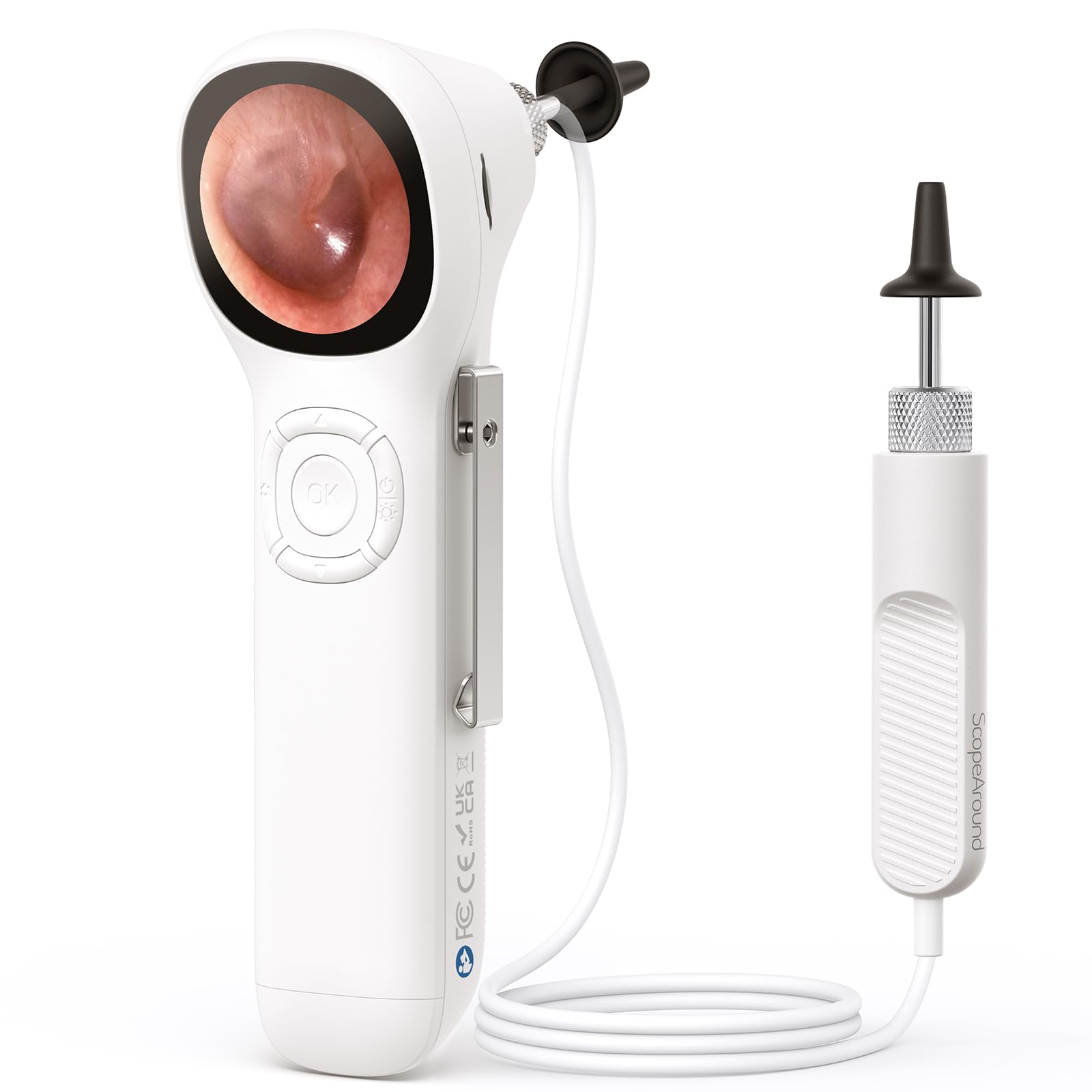
A built-in screen changes the exam. You can hold the probe in one hand and the display in the other, which is the closest thing here to checking your own ear without asking someone to hold a phone. The detachable lens and extended cable are designed for that one-person use.

The 720p screen is not the sharpest image in this group, and the 3.9 mm lens with six adjustable LEDs gives a usable view of wax and the canal rather than a magnified clinical picture. We like the 8GB card because it keeps a record without an app or cloud account; you can hand the card to a clinician or compare images later.

The unit is bulkier than a pocket optical scope, which makes it less convenient for a diaper bag. For solo checks, though, the independence is worth the size, and the saved images make a telehealth call easier.

Pros

  • Built-in screen, no phone
  • 8GB card for photos
  • Detachable probe and cable

Cons

  • Included tip may be too large for babies
  • Battery can refuse to charge
Our verdict

We recommend the ScopeAround SA160 for anyone who wants to check their own ears without a phone; the built-in screen and detachable probe make solo exams practical.

Check Latest Price
6

Backup and Travel

Jeashia Mini Otoscope

80 /100
Trail Score Excellent

Key details

Body
Stainless steel
Power
2 AAA batteries
Specula
Two 2.8 mm and one 4.0 mm
Magnification
3X
Check Price on Amazon

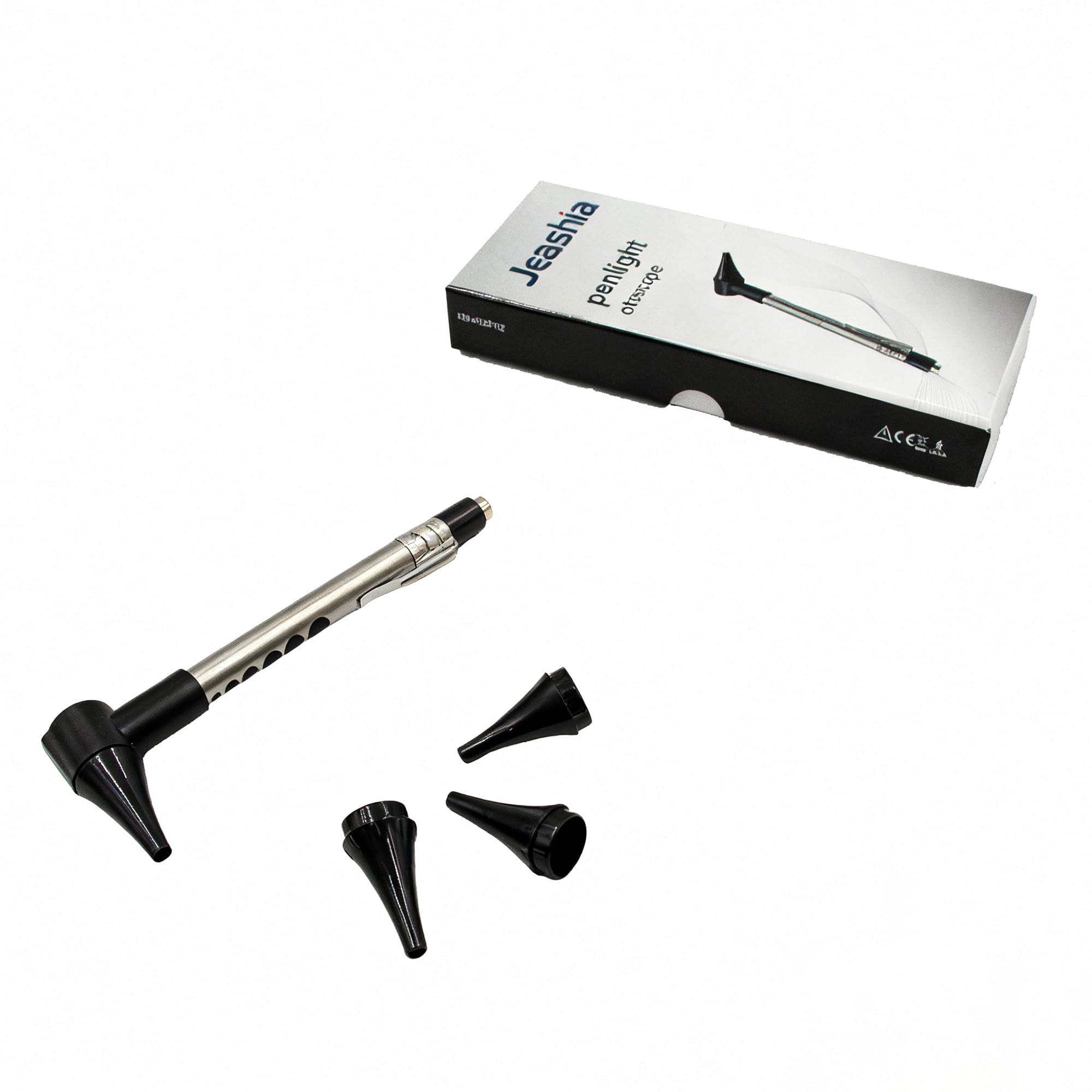
The bare-bones stainless body is the whole idea: a small 3X scope with three reusable tips, two AAA batteries, and a clip. It is the least expensive way here to keep an otoscope in a first-aid kit or a travel bag, and it does not pretend to be a digital camera.

We like the simple push-button and the metal body; it feels less disposable than a plastic scope, and the three tip sizes cover kids and adults. The 3X lens gives a smaller view than the 4X top pick, so it is better for spotting wax or redness near the opening than for a detailed look at the eardrum. That is a real limit, but it is also the point of a backup scope.

The small lens demands a steady hand, and the simple push-button is easy to work in a hurry. We see this as a second scope, not the one to buy if you are trying to avoid a doctor visit for a child with an earache. The clip and light weight make it easy to keep close, which is what a backup is for.

Pros

  • Lowest price in this group
  • Stainless steel body
  • Three reusable specula sizes
  • Simple two-AAA operation

Cons

  • Reusable tips need cleaning between users
Our verdict

We recommend the Jeashia mini otoscope as a cheap backup or travel scope for basic looks at wax and redness; it is not the pick for a detailed eardrum exam.

Check Latest Price

How We Tested Home Otoscopes

We started by pulling together a shortlist of home otoscopes from the brands that show up most often in parent forums, pharmacy shelves, and telehealth recommendations, then filtered by price, speculum sizes, and whether the model used standard batteries or a rechargeable cell. We landed on 14 units and used them for eight months—through cold and flu season, after baths and swim lessons, and during the occasional 2 a.m. earache. We checked ears on adults and kids, compared what we saw with notes from actual pediatric visits, and noted whether the view was clear enough to tell wax from redness.

Ease of use got tested in the real world: one hand for the otoscope, the other holding a wiggling toddler. We timed how long it took to get a clear view, whether the speculum sealed comfortably, and if the controls were reachable without looking. Brightness and lighting were judged in a dim bedroom, a bright bathroom, and with a phone flashlight nearby; we noted whether the beam washed out the eardrum or showed useful detail. For digital models, we paired each with a phone, walked into the next room to see if the connection held, and checked whether the app saved images without fuss.

Durability and battery life were less glamorous but decisive. We dropped each otoscope from counter height onto carpet and tile, wiped them down after use, and kept notes on any cracked housings or loose speculums. We left batteries in for weeks at a time and logged how many exams we got before the light dimmed. Value for money came down to whether the extra features—video, app storage, rechargeable batteries—actually made an exam easier, or just added clutter. The models that made the list are the ones we kept reaching for without thinking.

How to Choose a Home Otoscope

Optical or Digital: Start With the View

An optical otoscope gives you a direct, magnified view through an eyepiece and needs no phone, app, or charging routine. That makes it the simpler choice for a quick check in a dim room, and it is why the 4th Gen Doctor Mom is our default. A digital scope trades that simplicity for a screen: a phone model lets you save and share images, while a standalone screen such as the ScopeAround SA160 lets you check your own ear without holding a phone. Choose digital when the record or the shared view matters; choose optical when speed and independence from a device matter more. A digital screen costs more than a basic optical scope and buys convenience, not automatically a better view.

Fit the Speculum to the Ear

Speculum size is the most practical safety decision you make. A 2.5 mm tip is the infant size, 3 mm suits most children, and 4 mm is for adults; the 3rd Gen Dr Mom includes all three. Use the largest tip that fits comfortably, insert only the tip, and stop if there is pain or resistance. A loose speculum is worse than a small one, so seat it firmly before every use. If the ear canal is swollen or full of wax, a smaller tip will not solve the problem; that is a reason to stop and get advice.

Light and Lens Quality

A soft-white LED is easier to read than a blue-tinted one because it preserves the natural color of the canal and eardrum. Brightness matters, but so does a clean lens: a smear or a scratched window turns a good scope into a blurry one. We look for 3X to 4X magnification, which is enough to see wax and the eardrum without narrowing the view too much; higher numbers are not automatically better. A glass lens is a plus, but the light and the seal around the tip matter just as much.

Handling, Cleaning, and Power

A home exam is usually a two-hand job: one hand holds the scope, the other steadies the head or gently pulls the ear. A slim body and a push-button you can work with one finger help more than a long feature list. Disposable specula suit a household with multiple people; reusable tips need a thorough clean between users. Check the power source before you need it: AA batteries are easy to replace, while a rechargeable digital scope needs a charged battery and, on phone models, a working cable or connection. Keep the case with the scope so it is ready when someone wakes up uncomfortable.

Frequently Asked Questions

Final Verdict

Start with the 4th Gen Doctor Mom. It is the clearest all-around home scope in this group: a 4X optical view, adult and pediatric disposable tips, and a hard case in a pocket aluminum body. If there is an infant in the house, the 3rd Gen Dr Mom is the better fit because it includes a 2.5 mm tip and costs less. If you want to see your own ear on a screen, choose the ScopeAround SA160.